The Motorcycle Apparel Manufacturer Behind Your Kit: A Workshop Run Like a Race Team
Run Moto Apparel is the custom motorcycle apparel manufacturer line of Wuhan Beiyi Network Technology Co., Ltd, a sportswear customization company working with Western teams, clubs and brands since 2011.
This page is about the company itself: how it is organised, which capabilities were built in which order, who signs what, and where we draw the line. The home page covers product ranges and the order workflow; here you find out whether you can work with us for years.
Motorcycle apparel manufacturer for group orders: whose business we take, whose we do not
The company is built for group orders; single-rider retail is not a line we run
Built for orders that share one design across many bodies
A team roster, a club chapter, a dealership's staff and customers, a brand's size run. The print room files color profiles by customer. The pattern room grades from one approved size to a whole run. Packing is by rider name or by size stack. None of this pays off for one jacket, so we do not sell one jacket.
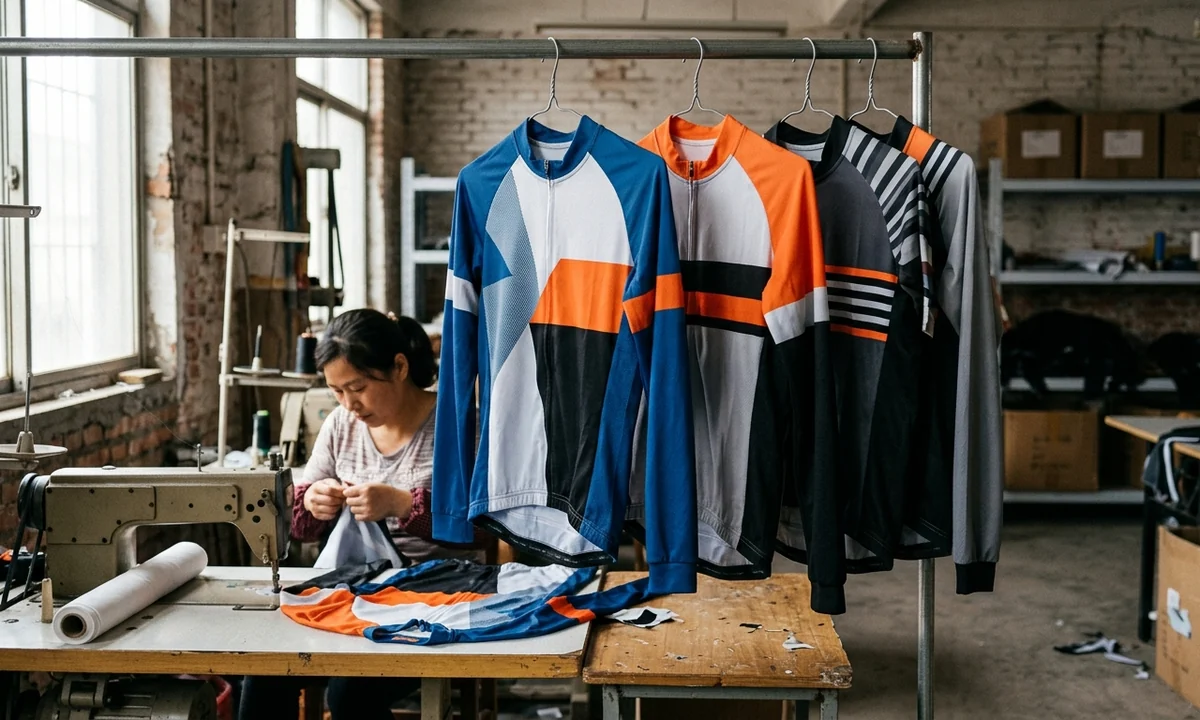
Where it started: in 2011 with team uniforms, cycling wear and event apparel for clients in Europe, North America, the UK and Australia. Sublimation color management, roster-based team orders and small-run private label were daily work long before the first motocross jersey; the riding-gear line was built on that base with a leather workshop, riding-position blocks and CE-armor-pocket construction.
Lines we have decided not to run
No single jackets. A retailer serves one rider better than a group-order workshop can.
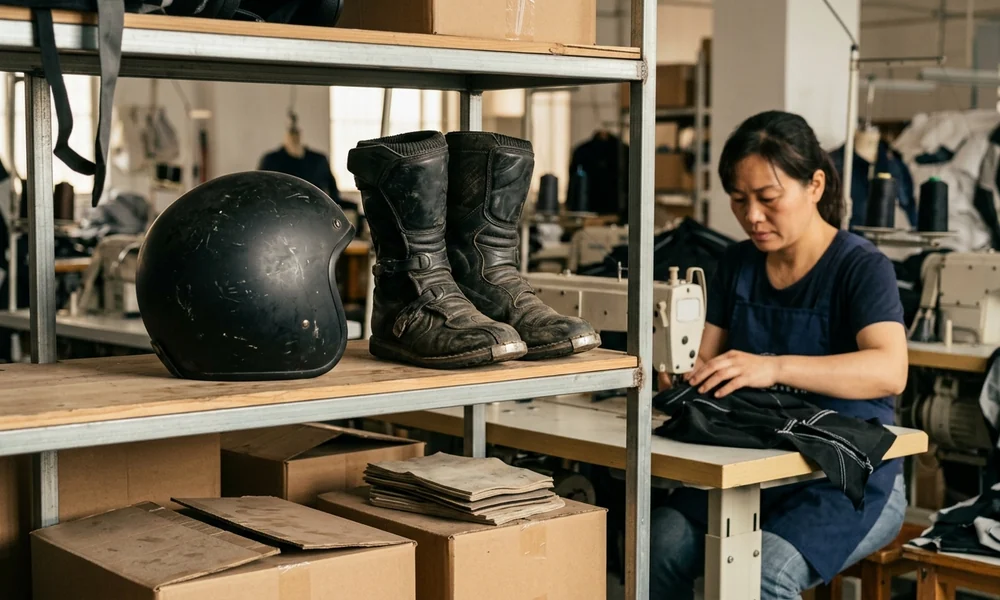
No helmets, no boots. Safety products with their own certification regimes and factories.
No motorcycle parts, no bike customization. Different trade, different tools.
These are not gaps hidden behind vague language. Doing them badly would cost a customer more than not doing them at all.
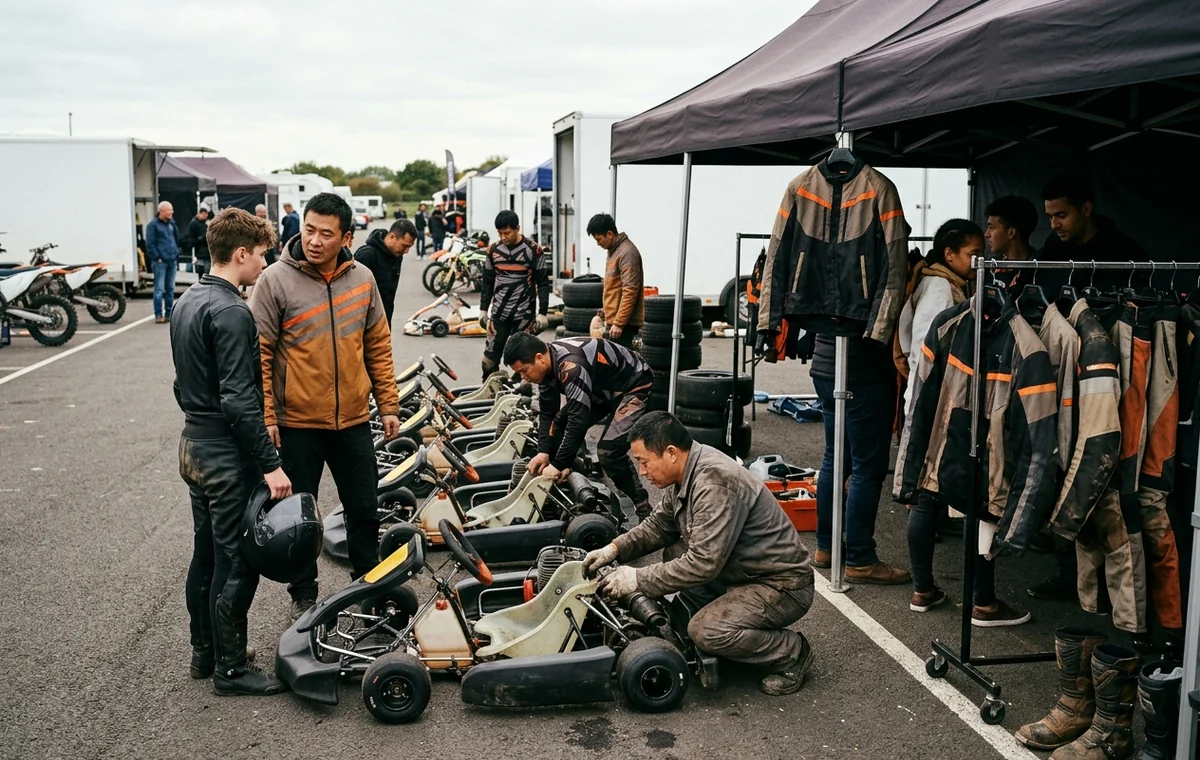
Who we do sell to: race teams and clubs, karting centres and academies, powersports dealers and distributors, and riding-gear brands running OEM or private-label programs.
How the capability was built
Motocross gear factory history: five capability stages, 2011 to now
Each stage of becoming a motorcycle apparel manufacturer, described by what it let us do that we could not do before
01Sublimation
02Roster ordering
03Riding blocks
04Leather workshop
05Archives
01
Sublimation for Western team clients
The first years were team uniforms and cycling kits for European and North American clubs. What it taught us: colors must match across a whole roster and across reorders, so the color-profile archive and the physical color-strip check were built here, long before riding gear.
Stage 01 · team kits
02
Roster-based ordering
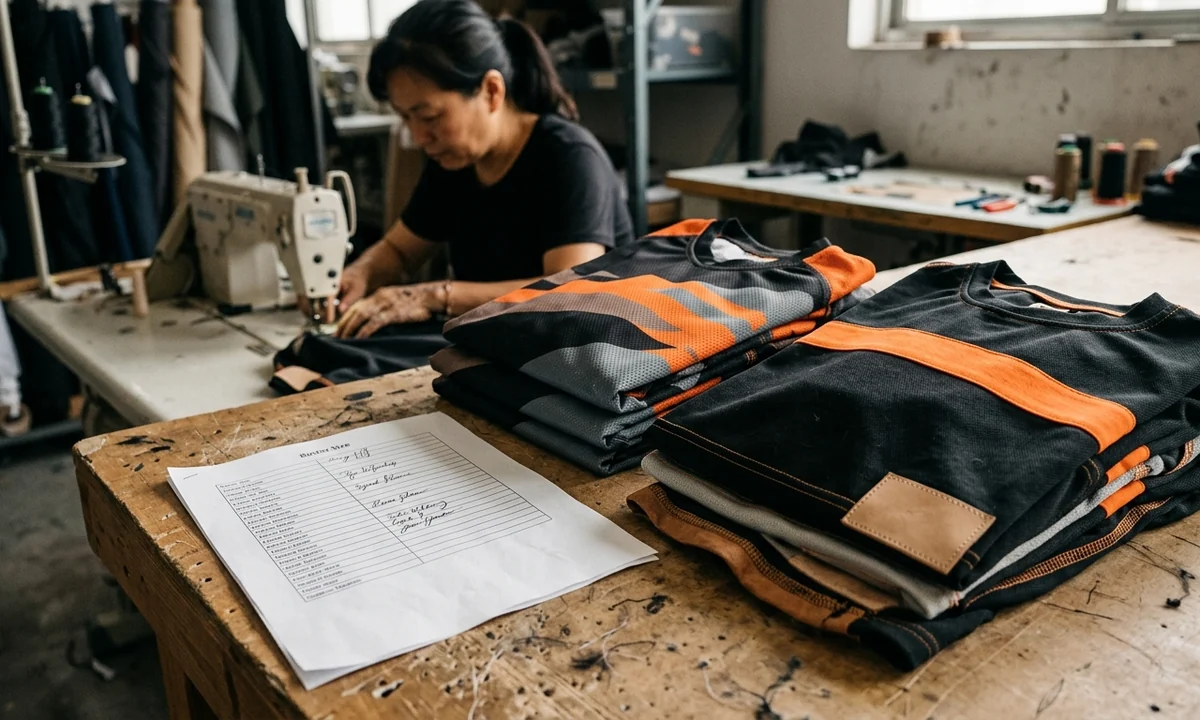
As orders grew from a dozen pieces to whole seasons, the size-sheet discipline came in: one line per rider, sizes confirmed in writing before cutting, garments packed by name. This is the same sheet a motocross team signs today.
Stage 02 · size sheet
03
Riding-position pattern blocks
Moving into motocross meant our flat sportswear blocks were wrong. New blocks were drawn from the attack position, tested on riders, and graded from youth to 4XL. This is the point where Run Moto Apparel became a riding-gear maker rather than a sportswear house printing bikes on jerseys.
Stage 03 · riding blocks
04
Leather workshop and armor pockets
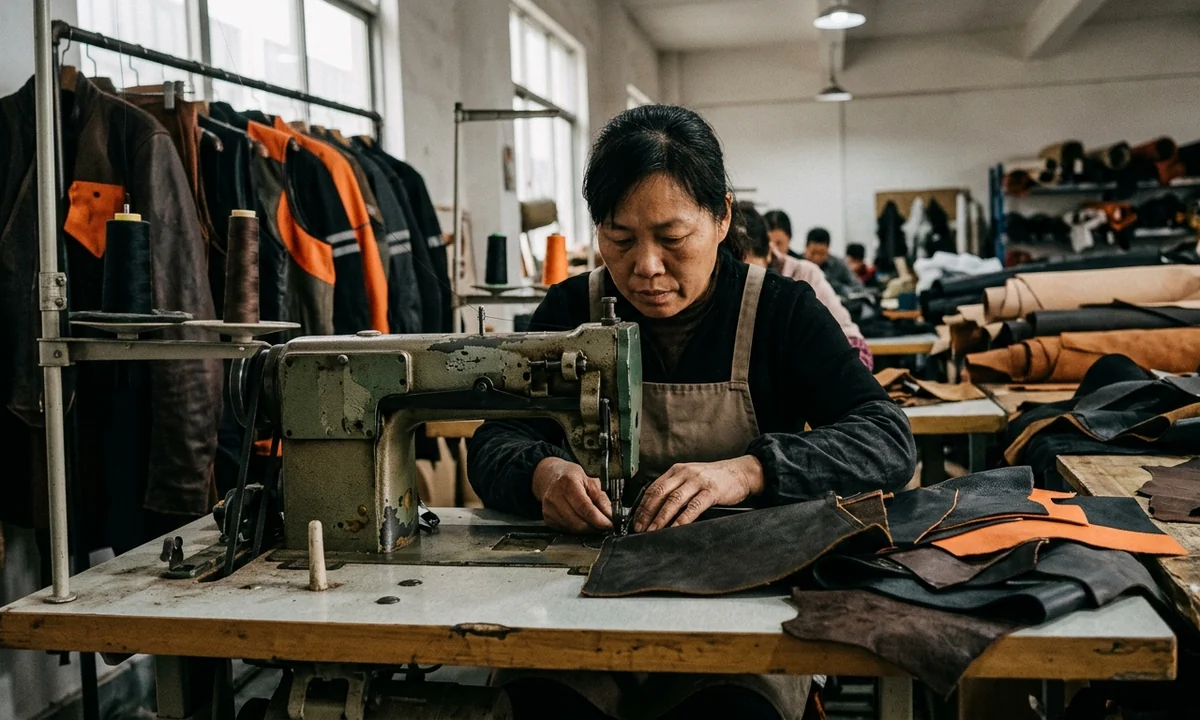
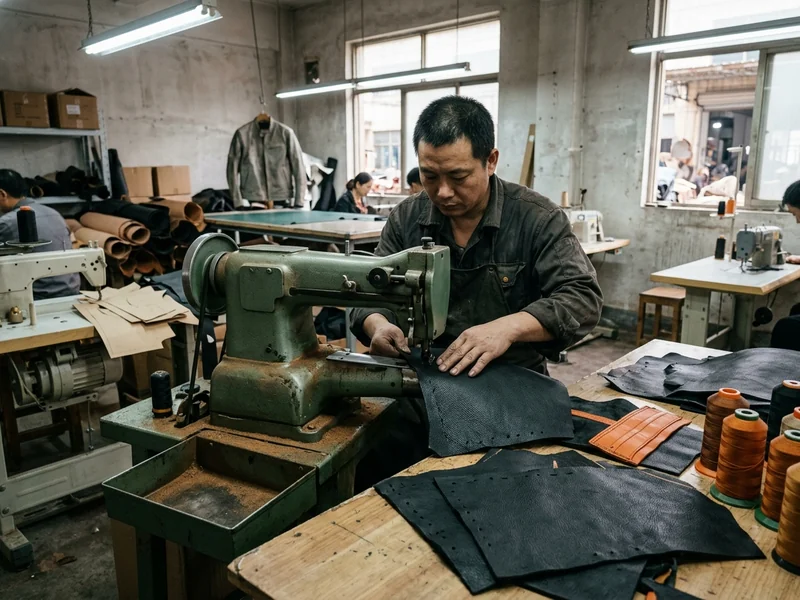
Race suits and jackets needed skills the textile lines did not have: hide selection, skiving, heavy-duty seams, stretch-panel insertion, CE-armor pocket placement. A separate leather workshop was set up under the same management so a team could order textile and leather gear in one colorway.
Stage 04 · leather workshop
05
Archives for reorders
Color profiles, graded pattern sets and fabric lot records were formalised into three archives per customer, so a club that comes back in two years gets the same jersey, not a close match.
Stage 05 · three archives
The turning point
Riding gear blocks drawn from a rider, not a mannequin
The first riding jerseys fitted standing up and bound on the bike
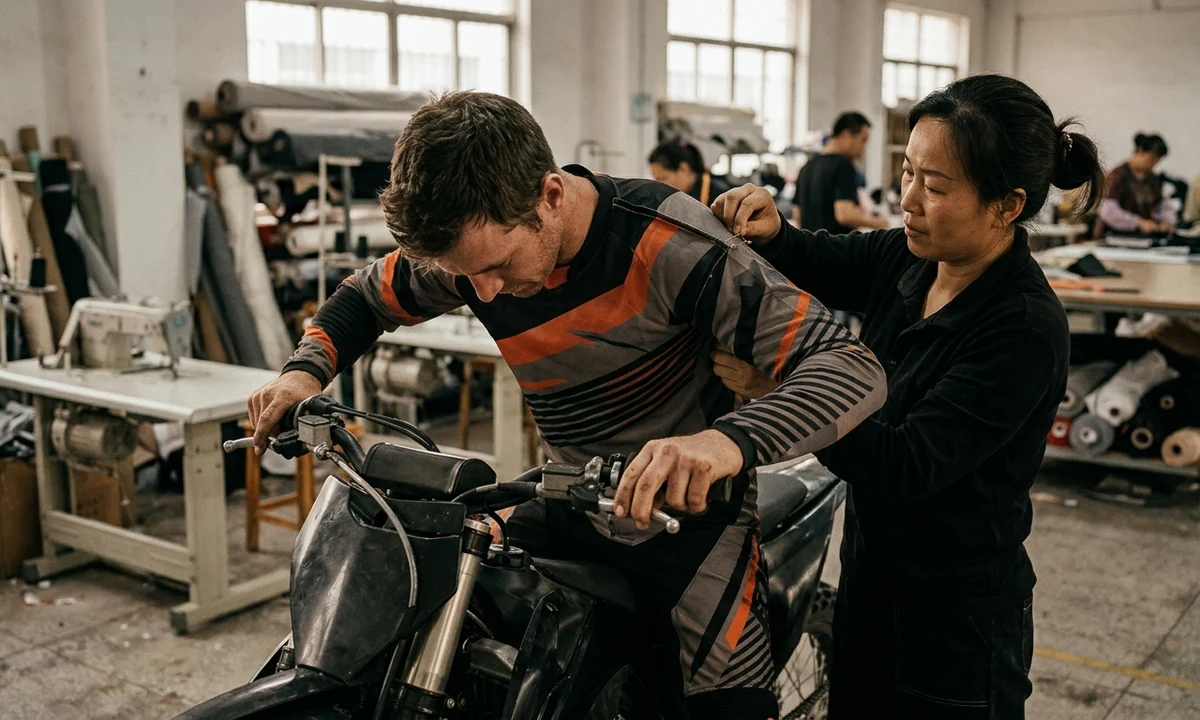
When the first motocross orders came in, we cut them on cycling blocks. They looked right on the table and pulled at the shoulder the moment a rider leaned into the attack position. Rather than adding ease everywhere, the pattern room rebuilt the block from photographs and measurements of riders on their bikes.
Measure on the bike: torso length in the crouch, arm reach to the bars, knee bend on the pegs.
Sew a sample, ride it, mark it: tailor's chalk where it pulled or bunched.
Redraw and repeat until the chalk marks stopped appearing.
Grade the approved block from youth to 4XL; repeat the whole method for kart suits, where shoulder and knee stretch panels come from sitting in a kart seat, not from a size chart.
The result is the block set we still grade from: longer back, forward sleeve pitch, stretch gusset under the arm, pre-shaped knee and stretch yoke on the pants.
Chalk marks where it pulledRedrawn block, graded youth to 4XL
How we decide
Custom riding gear company values, written as three season decisions
Values written as decisions, not as words on a wall. Three conflicts that come up every season, and what we do each time.
Deadline vs quality
Wedonotshipuncheckedpiecestohitadate.
If a batch cannot pass mid-line inspection and still make the race date, the team manager is told the same day and given the choice: a partial shipment of checked pieces, or the full order one round later.
Sale vs honesty
Asalewecannotstandbehindisacustomerwelose.
If a dealer asks for helmets to complete a range, we say we do not make them and point to the lines we do.
Speed vs records
Everyreorderprintsagainstthearchivedstrip.
Even when the print room is sure it remembers the color. The archive exists precisely for the days when everyone is in a hurry.
Print room fact
Color strips from the first season are kept on file under the team name.
Equipment and lines
Motorcycle apparel manufacturer equipment and lines, and the range each covers
What is on the floor, which process it serves and what it can and cannot make
Not on the floor
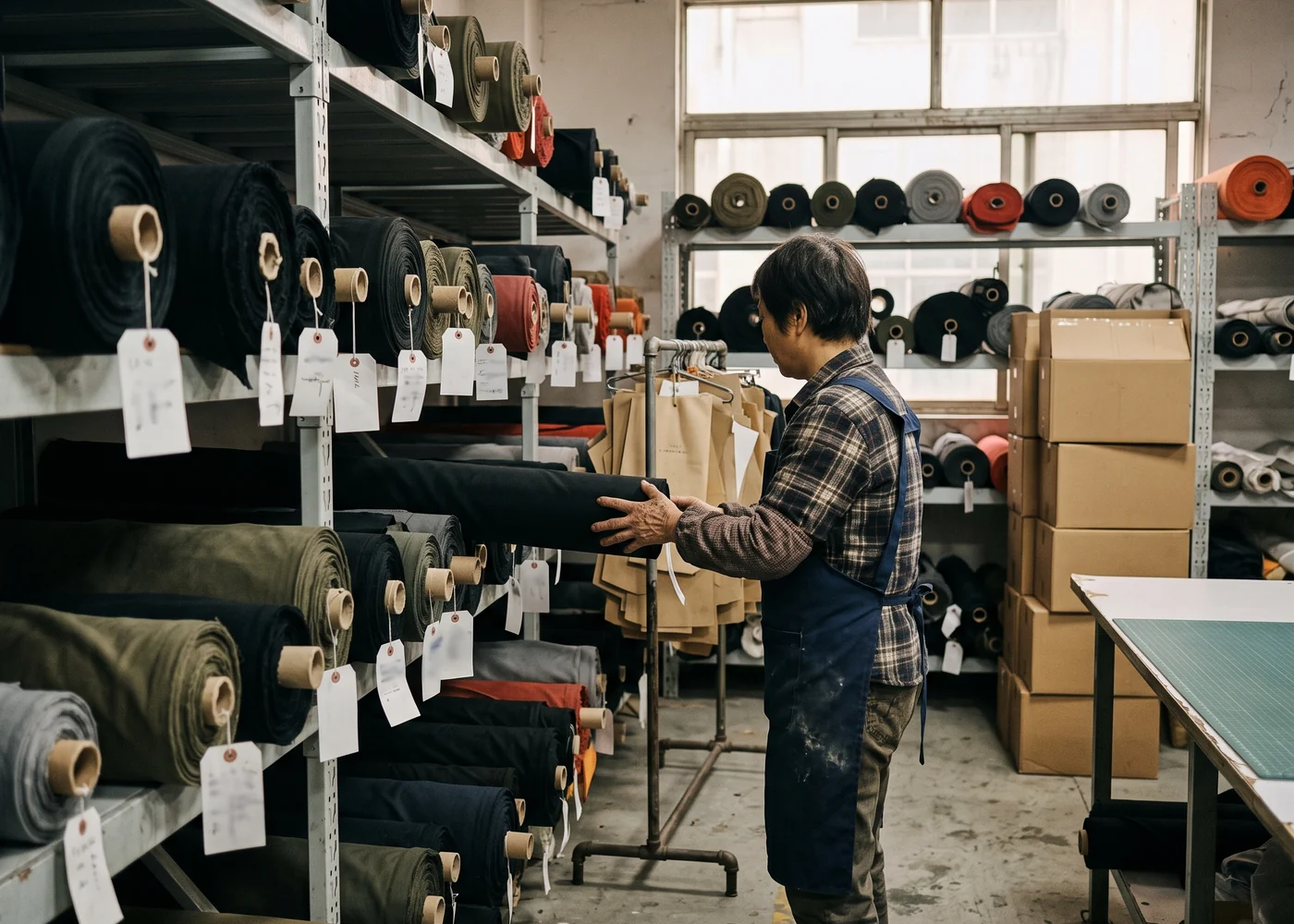
Helmet and boot manufacturing, protector certification, and any motorcycle-parts machinery. Fabric and hardware come from a supplier network built over 15+ years, with lots recorded per order.
Print room
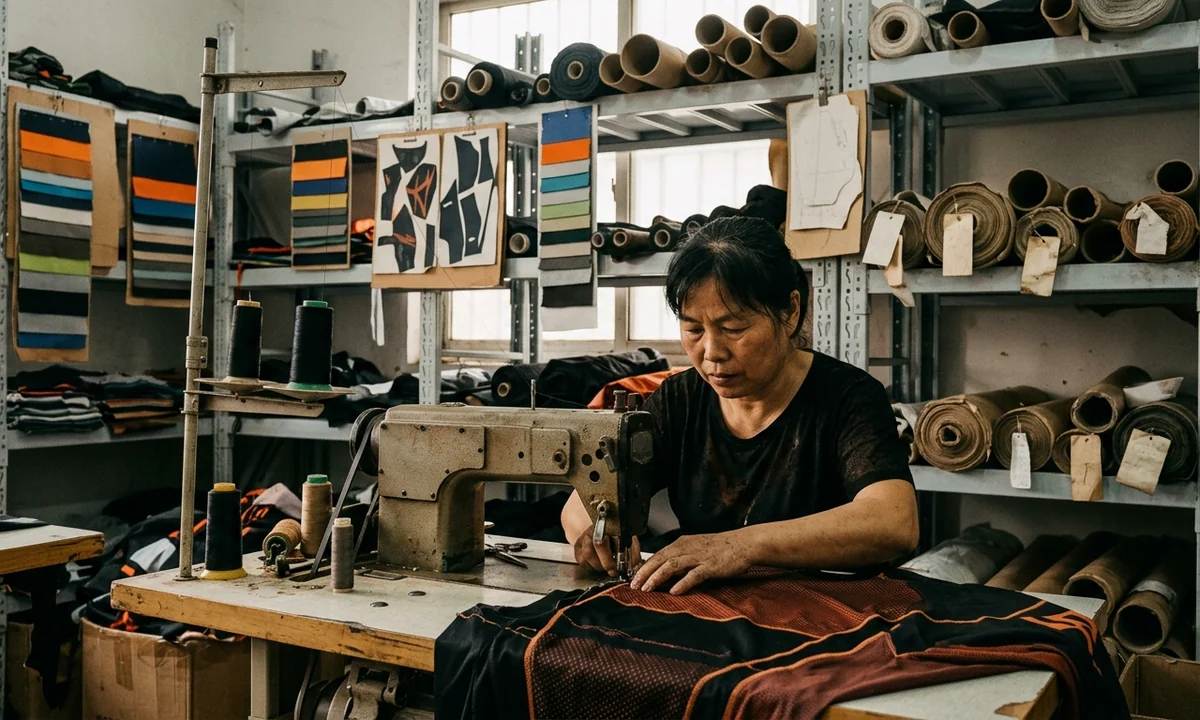
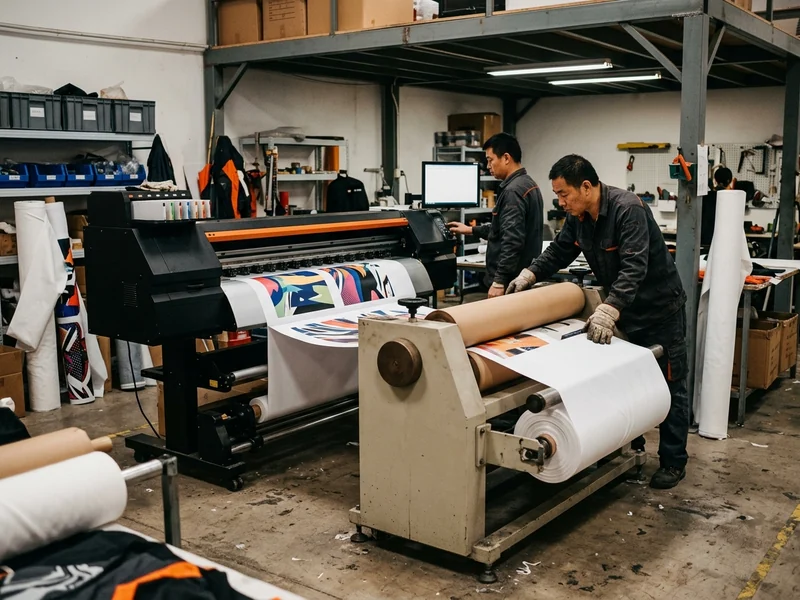
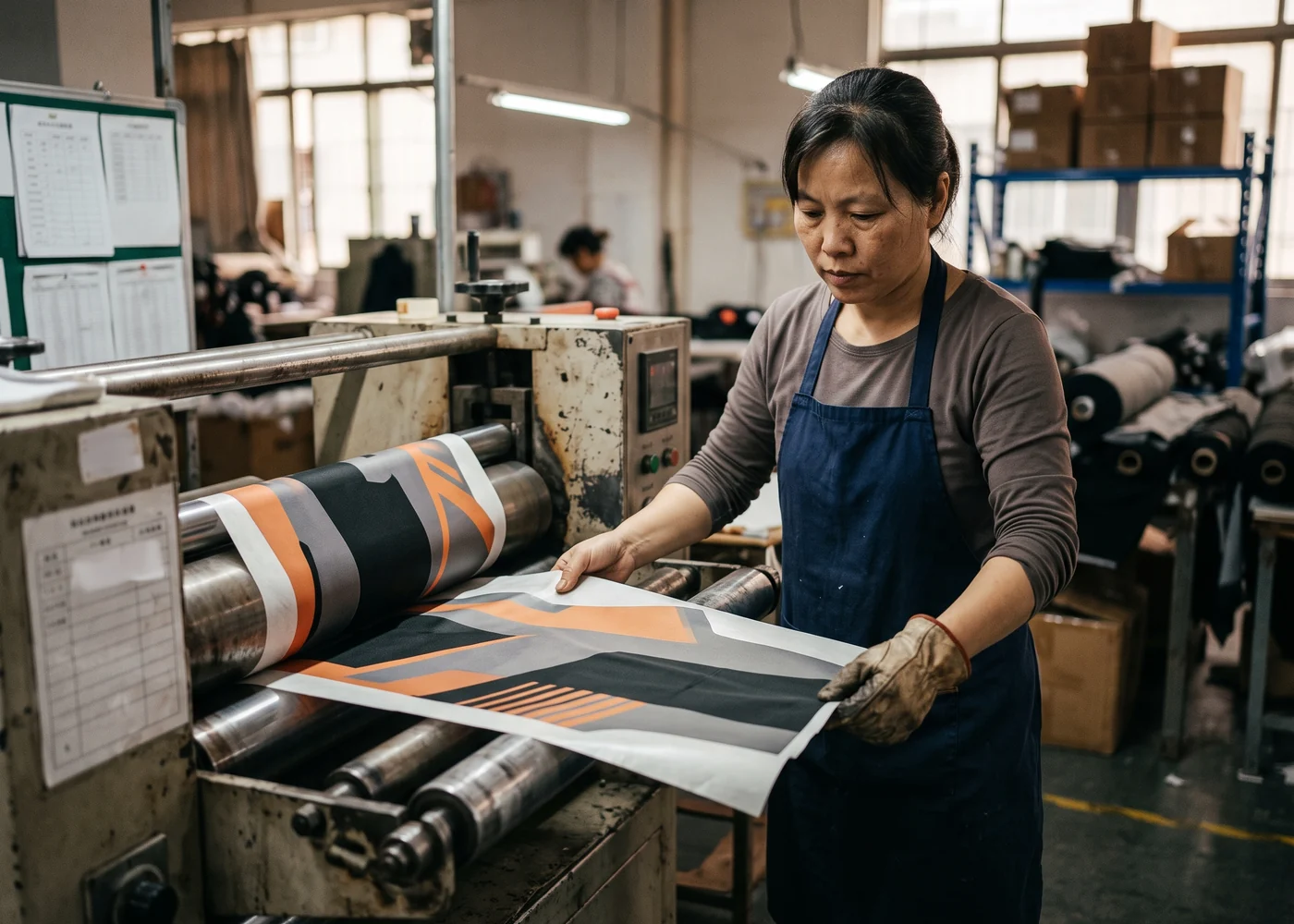
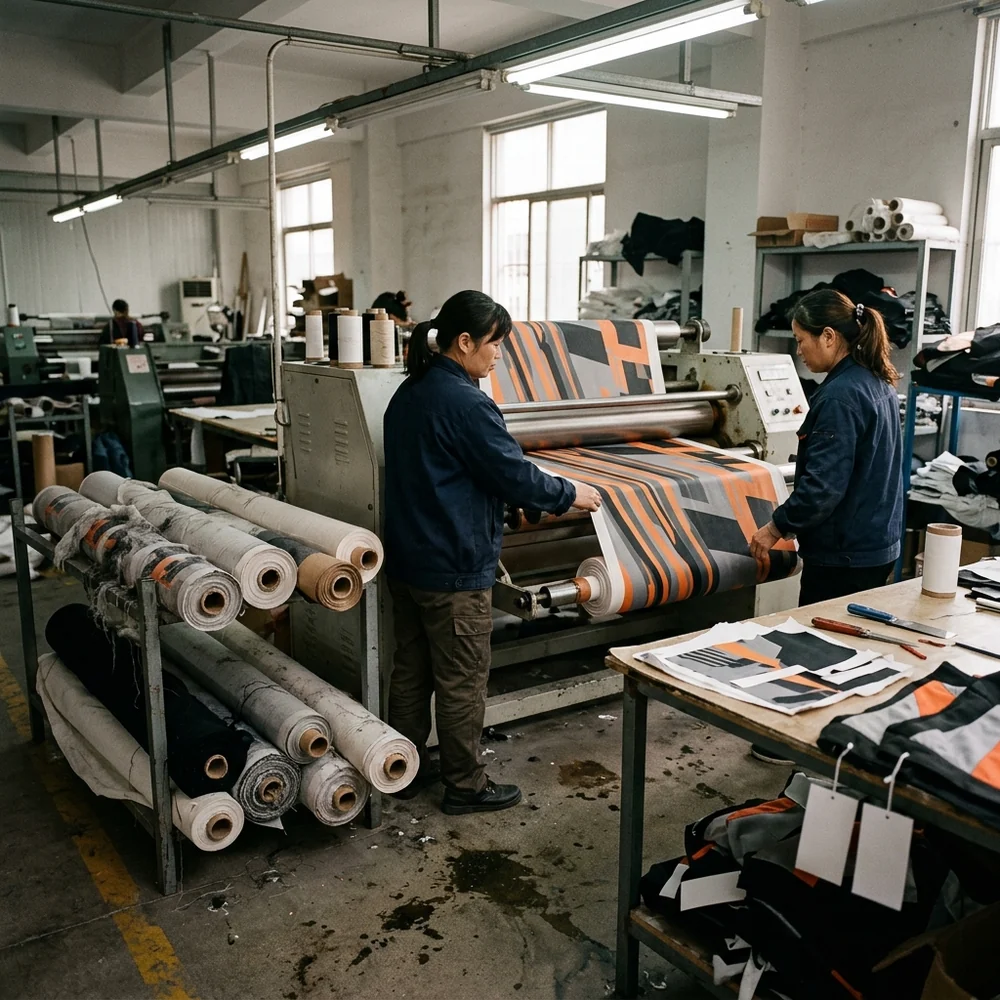
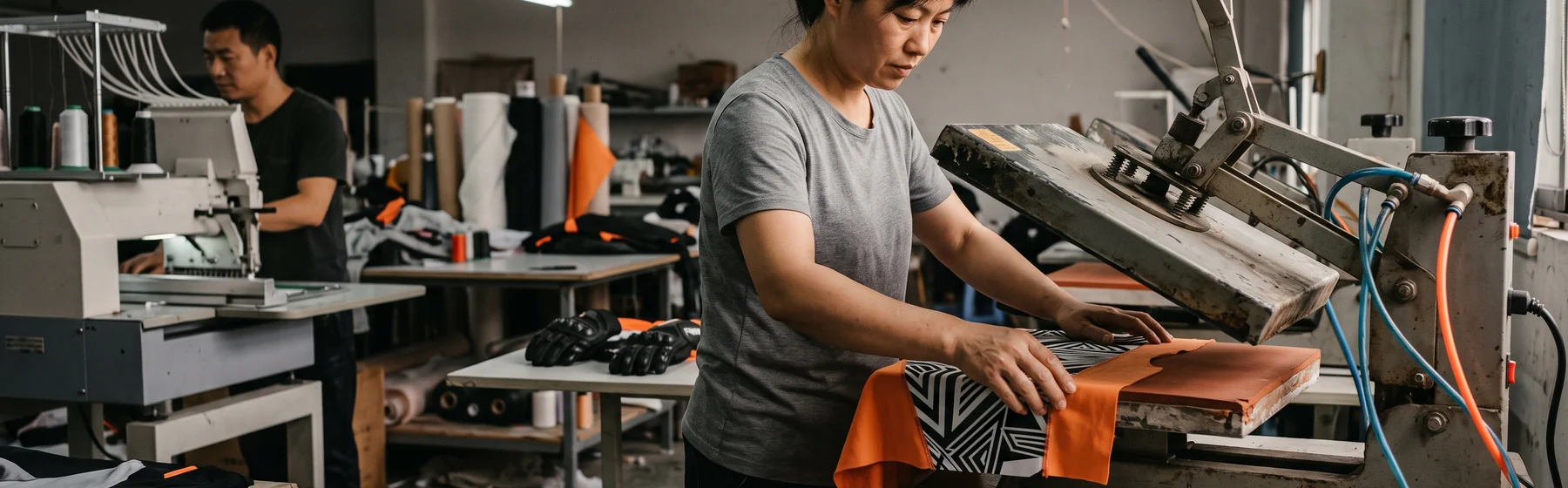
Wide-format sublimation printers and heat calenders for all-over printing on 140–160 gsm polyester mesh and other sublimation-grade fabrics; color profiles filed per customer.
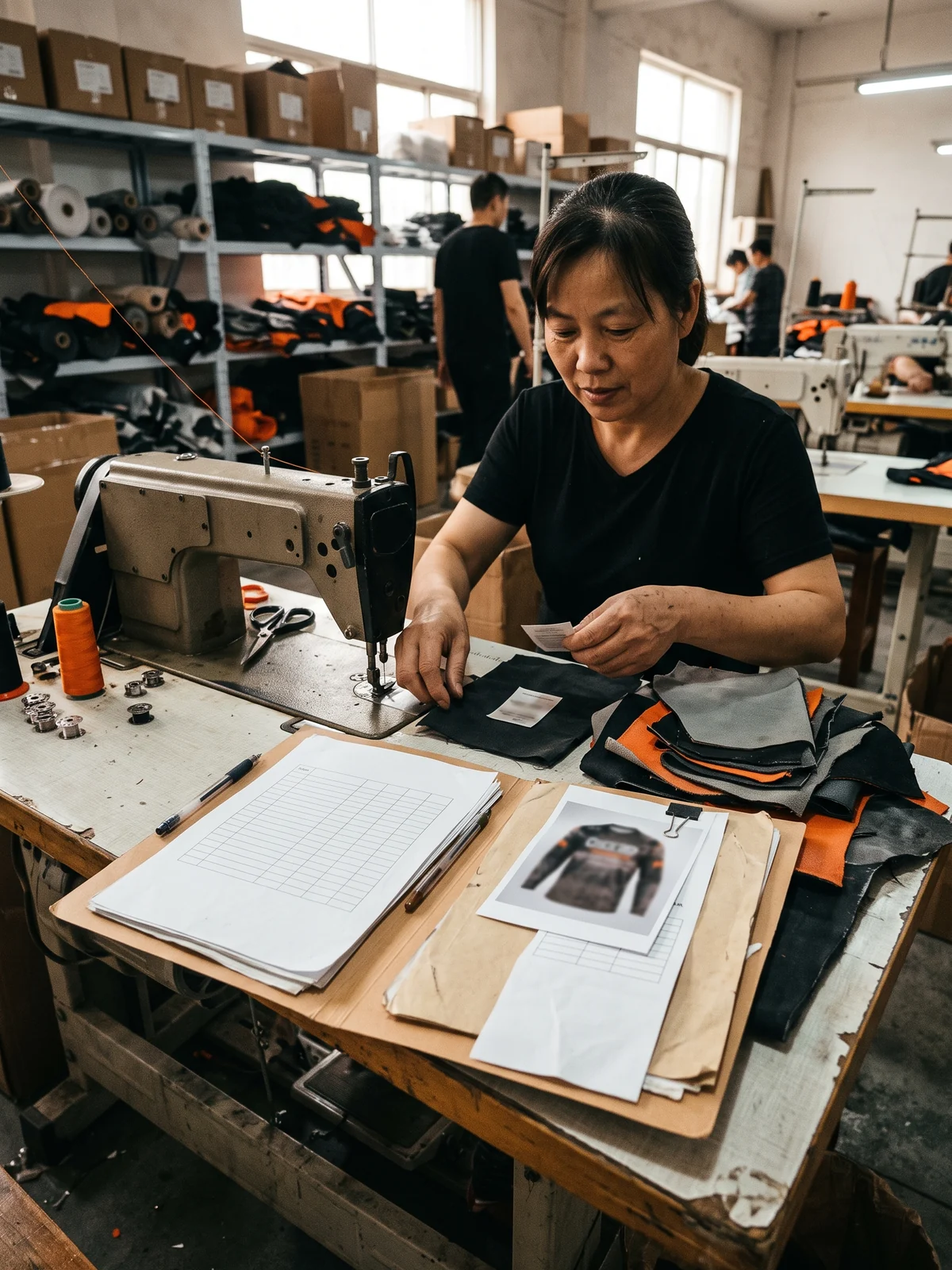
Cutting and sewing lines
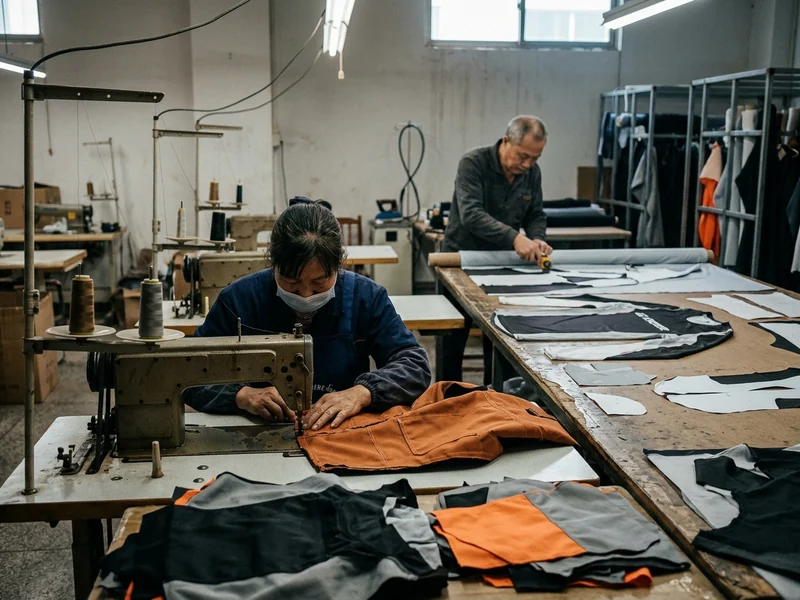
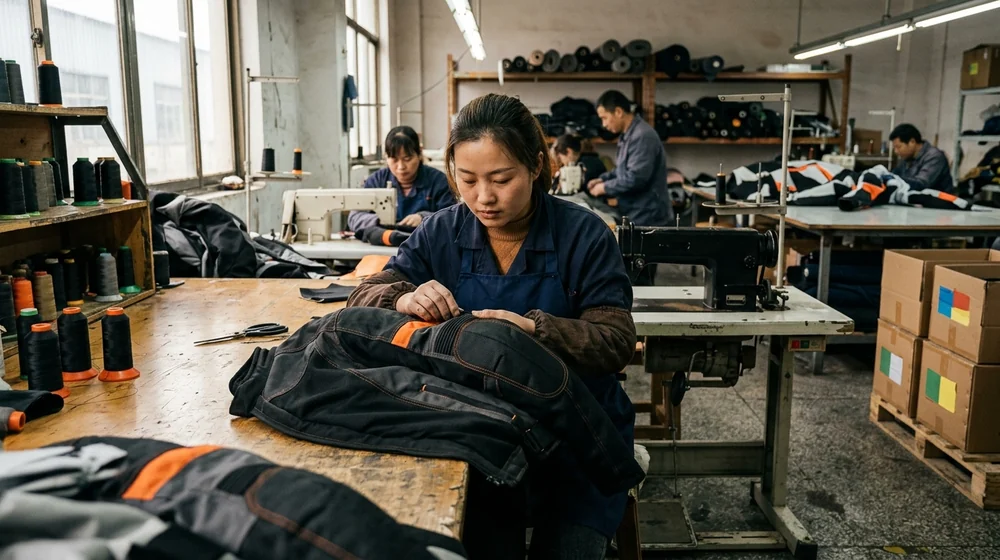
Jerseys, motocross pants in 600D polyester, textile jackets, fleece hoodies at 280–320 gsm, polos and tees; 4-way stretch panel insertion and reinforced stress-point stitching.
Leather workshop
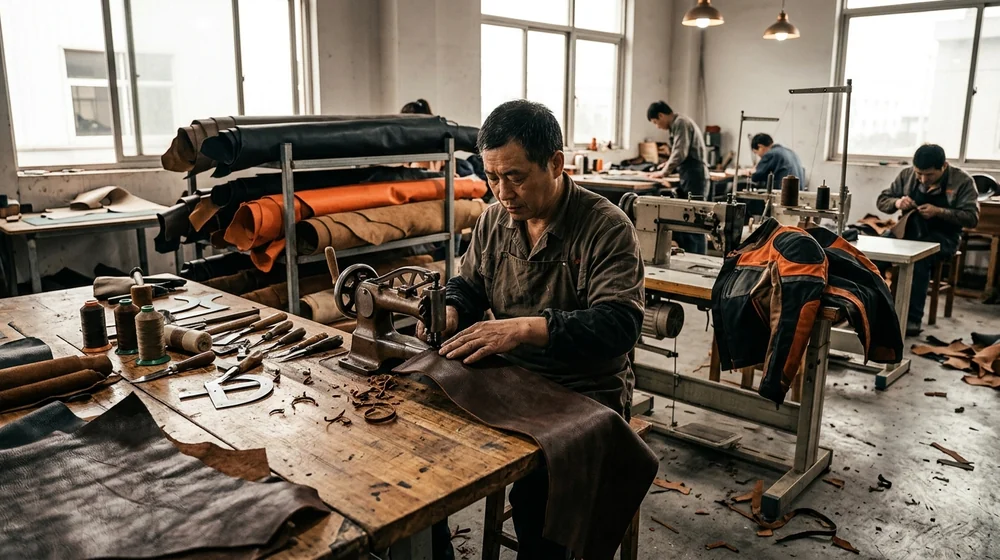
Skiving and heavy-duty machines for 1.1–1.3 mm cowhide race suits, jackets and gloves, including stretch-panel insertion and external CE-armor-ready pockets.
Decoration
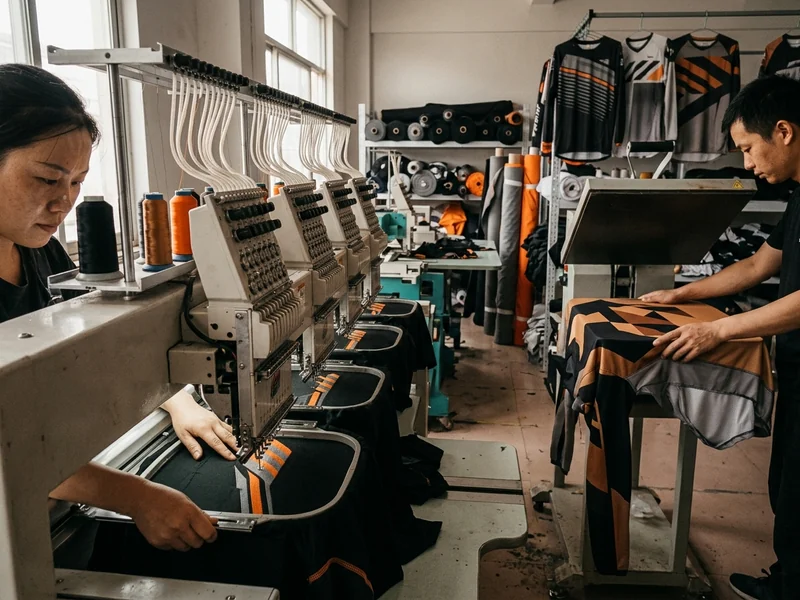
Embroidery heads and heat-transfer presses in the same building as the print room, so a single order can carry sublimation, embroidery and transfer decoration without leaving the site.
Heat calender · temperature, pressure, dwell
One machine, one batch
The heat calender that decides whether the third reorder matches the first
A print can be perfect on paper and still shift when it meets the fabric
In sublimation, ink on transfer paper becomes gas under heat and pressure and bonds into the polyester. The color a rider sees depends on how evenly the calender holds temperature, pressure and dwell time across the full width of the panel and across every panel in the batch. A press that drifts a little from the first panel to the sixtieth produces sixty jerseys that are each fine and, side by side, do not match.
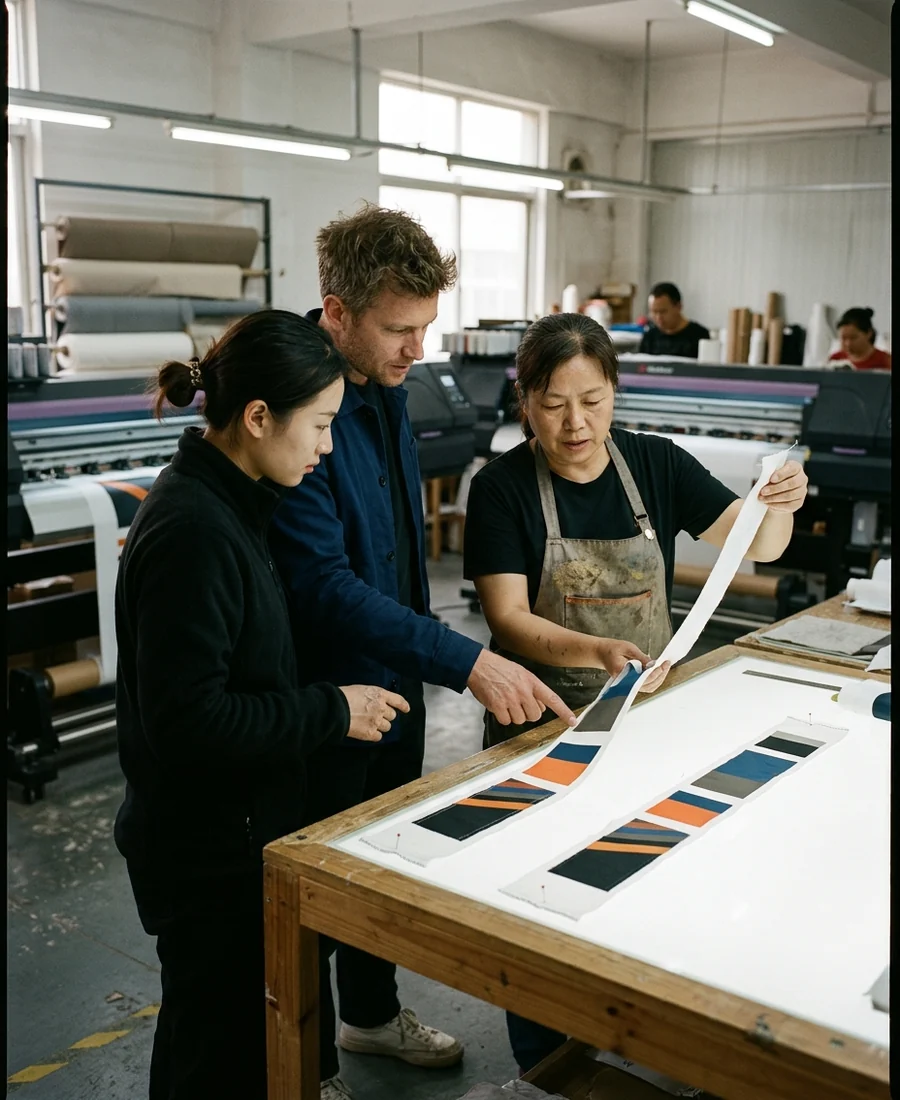
Test strip on the current fabric lot before every batch and reorder.
Daylight-lamp comparison against the archived strip.
Run starts only when the two match. The machine is watched, but the strip is what proves it, and the strip is what a customer can hold.
Core techniques
Motocross gear factory techniques we hold, and what each one solves
Four capabilities, where they came from and what problem each answers. None is an entry ticket; each is a specific construction or control a buyer can check on any motorcycle apparel manufacturer’s sample.
Sublimation color management
From
Developed in-house over 15+ years of team orders
Solves
Color drift across a roster and across reorders
Riding-fit pattern making
From
Built in the pattern room by testing blocks on riders
Solves
Jerseys that bind at the shoulder, pants that gap at the waist, jackets whose armor sits wrong on the bike
Leather construction
From
A dedicated workshop under the same management
Solves
Race suits, jackets and gloves in the same colorway and order as the textile kit
Decoration engineering
From
Embroidery, heat transfer and printed-in graphics chosen by garment and washing pattern
Solves
Peeling names, thickened sponsor lettering, logos that fade before the season ends
Process control · leather
Leather race suit hide control: gauged per hide, not assumed per batch
Hide selection and thickness: measured per hide, not assumed per batch
1.1–1.3MM COWHIDE
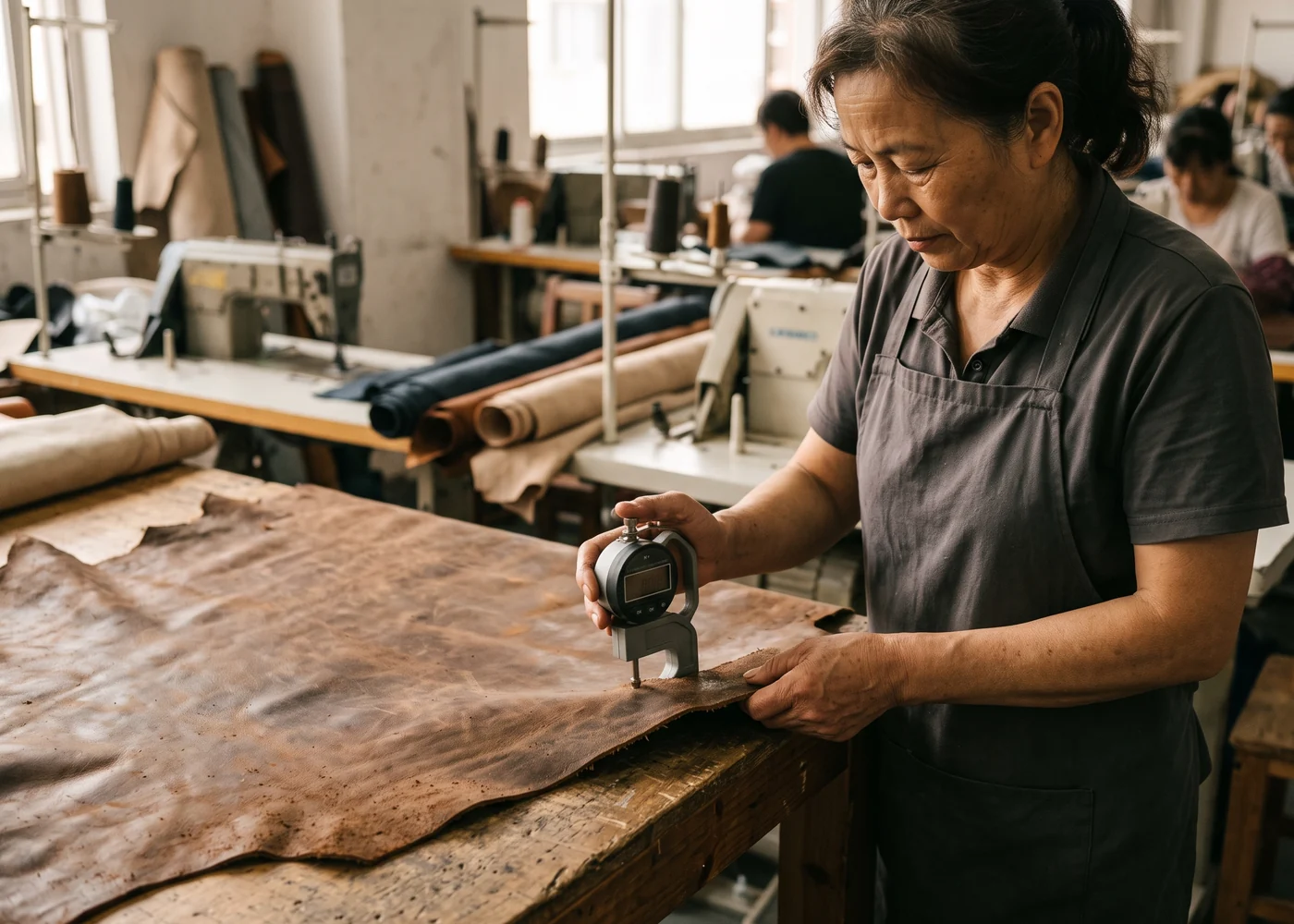
Cowhide varies within one shipment; the specification does not. Each hide is gauged at several points before cutting; a hide outside the range is not used for that suit, and a hide with a thin zone is marked so that zone is cut for a non-stress panel or set aside. Stretch panels, seams at the stress points and CE-armor pockets are sewn on heavy-duty machines by the leather team, not on the textile lines.
Written into the order record: which hides went into which suit, so a made-to-measure suit can be repaired or matched later.
Gauged at several points before cutting
Inside the workshop
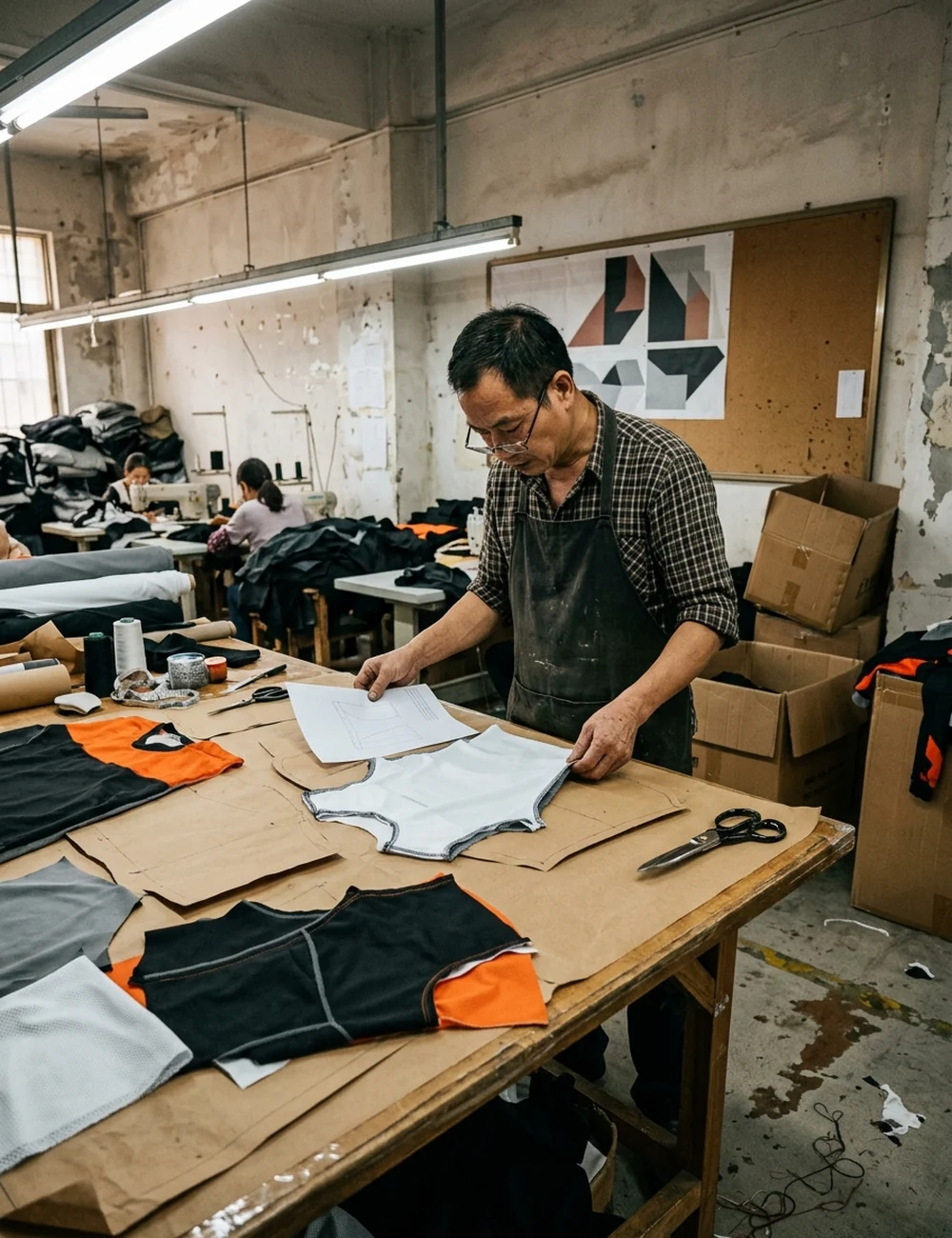
Inside the motorcycle apparel manufacturer workshop, room by room
What each room does, described so a visitor knows what they are looking at. Six rooms, in the order an order moves through them.
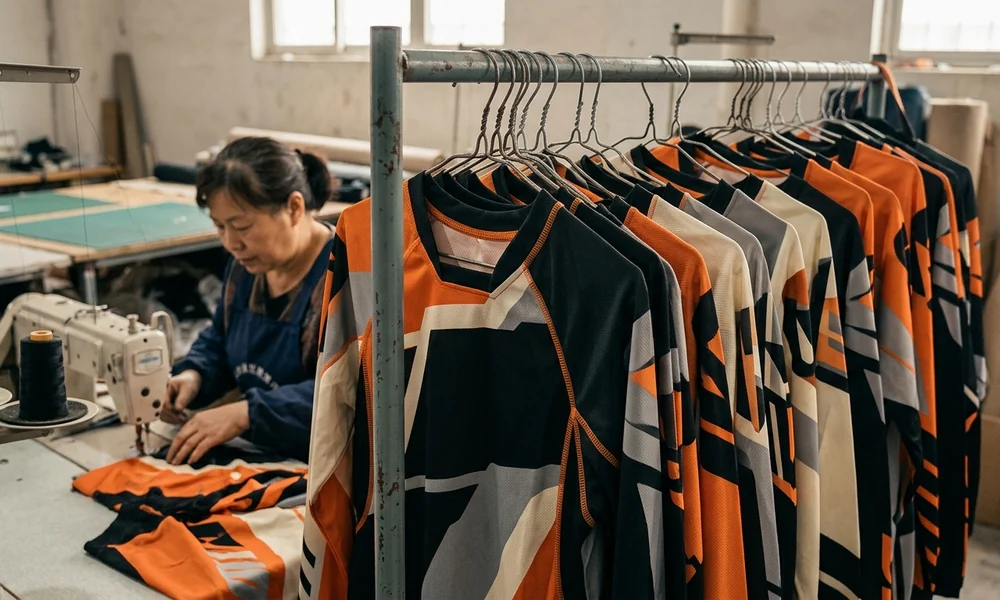
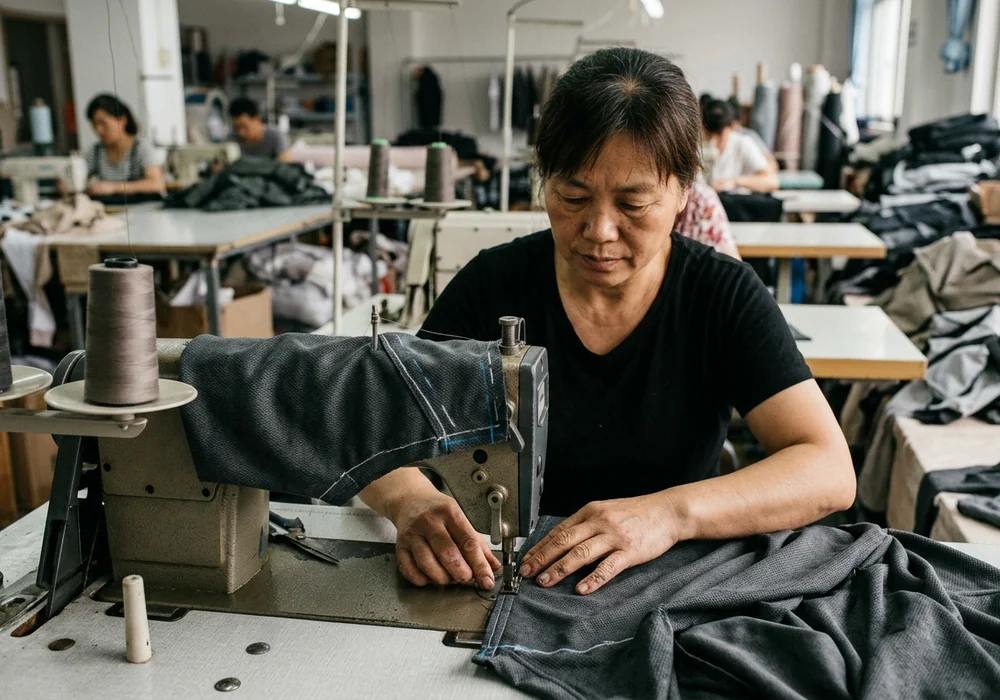
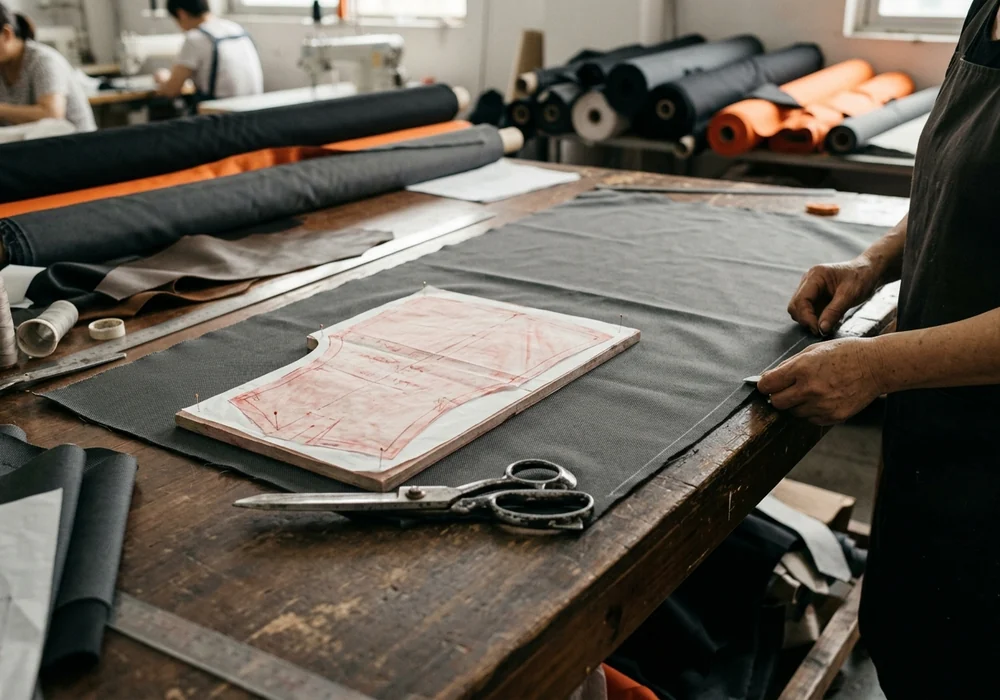
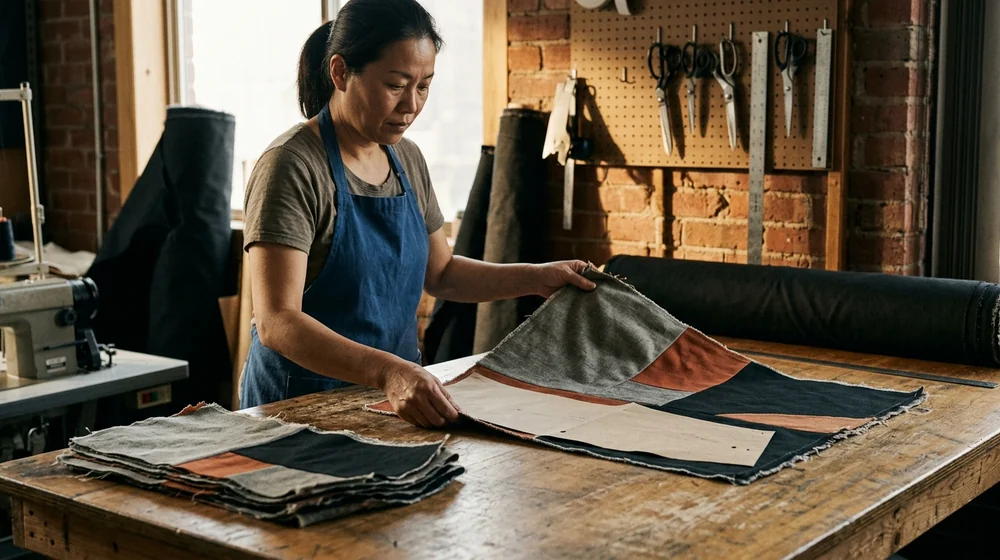
Print roomTransfer printing and calendering; the color-strip archive lives here.Cutting tablesPanels are printed first and cut after, so seams follow the design.Sewing linesJerseys, pants, jackets and club apparel; mid-line inspection pulls pieces here.Leather workshopHide gauging, skiving, race suits, jackets and gloves.Inspection and packingStart-of-line, mid-line and final checks; packed by rider or size, photo set before shipping.DecorationEmbroidery heads and heat-transfer presses.
Who does what
Run Moto Apparel roles: six owners, one sign-off each
Roles in the order chain, and the sign-off each one owns. Six roles, one named owner per hand-off; the QC lead is the only one who can release a batch.
Sales manager (Anna)
Owns the order from first message to the post-delivery window: feasibility answer, size sheet, ship date, and the single point of contact for the customer.
Signs: order confirmation · ship date
Design team
Turns logos, sponsor lists and tech packs into print-ready layouts and archives the cleaned files.
Signs: layout release
Pattern room
Owns fit: block selection, grading, the size-run set, and the questions that stop a wrong order early.
Owns hide selection, construction and armor-pocket placement.
Signs: hide record per suit
QC lead
Independent of production. Owns the three inspection stages and the authority to stop a line.
Signs: release from each stage
Pattern room intake
Pattern room intake: five questions before any riding gear is cut
Five intake questions that catch most wrong orders. The cheapest place to fix an order is before the first panel is cut.
Fit intent: race-tight or relaxed? A club that wants comfort over a hoodie is graded differently from a team that wants nothing flapping at speed.
Armor: will protectors be fitted, and which sizes? Pocket placement changes with the answer, and an empty pocket sized for the wrong protector is worse than none.
Youth and adult in one order: are there riders under the adult size range? If so, the sheet is split and youth grading is applied rather than shrinking the adult block.
Reorder or new: is this a repeat of an archived design? If the customer thinks it is a repeat but the archive shows changes, the difference is flagged before printing.
Requests we push back on: a race number too small for the sublimation method, a sponsor logo supplied as a low-resolution screenshot, or a leather suit sized from a T-shirt size. Each is returned with the reason and the fix.
Intake sheet · five questions
Workshop fact
Every hide for a made-to-measure suit is gauged at several points before it is cut.
Quality system
The quality system of a motorcycle apparel manufacturer, as an institution
Standards set by the approved sample, monitored by a QC lead who does not report to production
The standard is two documents the customer approved
Inspection compares against these two, not against an inspector's opinion.
Approved sampleFixes color, print position and construction.
Signed size sheetFixes measurements per rider or per size.
Monitoring is separated from making
The QC lead reports to management, not to the production lead.
Only the QC lead releases a batch from one stage to the next.
Production can argue a finding; it cannot overrule it.
Stopping the line
QC line-stop authority, and the escalation path for a deviation
A rule that cannot stop production is a suggestion
FindStart-of-line or mid-line inspection finds a deviation from sample or size sheet.
StopThe QC lead stops that style.
CauseProduction lead, and print room lead where color is involved, identify the cause and propose a fix.
Re-checkPieces already sewn are re-checked against the finding, not waved through.
TellIf the ship date moves, the sales manager tells the customer the same day with the options.
After delivery: any issue reported within 7 days is decided within one business day — repair, remake or replace — and the decision is written down so both sides can point to it.
Stopped style · sample and size sheet on the table
Hand-offs
A custom riding gear order at Run Moto Apparel, seen from inside
The hand-offs between roles, and what each one has to receive before it starts
Intake answers
Layout release
Signed size sheet
Start-of-line photo
Final release
Photo set
01The sales manager does not quote until the pattern room has answered the five intake questions.
02The design team does not release a layout until the print room has confirmed the colors can be held on the chosen fabric.
03Cutting does not start until the size sheet is signed.
04Bulk sewing does not start until start-of-line inspection accepts the first piece.
05Packing does not start until final inspection releases the batch.
06The shipment does not leave until the photo set has been sent. Each hand-off has a named owner and a document that proves it happened; that is what makes the customer-facing steps on the home page true on the floor.
One folder, six signed hand-offs
Honest limits
Helmets, boots and parts: what this motocross gear factory does not make
Honest limits are part of the product. A line we do not run is a promise we do not have to break.
No helmets, no boots
Both are safety products with their own certification regimes and factories built around them. We would be a motorcycle apparel manufacturer reselling helmets and pretending to make them.
No protector certification
CE armor is a sourced component; we build pockets to standard armor sizes and fit armor on request, but the certificate belongs to the protector maker, and we say so.
No motorcycle parts, no bike customization
Different trade, different tools.
No single-rider retail
The workshop is organised for group orders, and a retailer serves one rider better than we can.
Supply
Riding gear fabric supply, and what happens when a fabric goes away
For a motorcycle apparel manufacturer, long-term consistency is a sourcing problem before it is a sewing problem
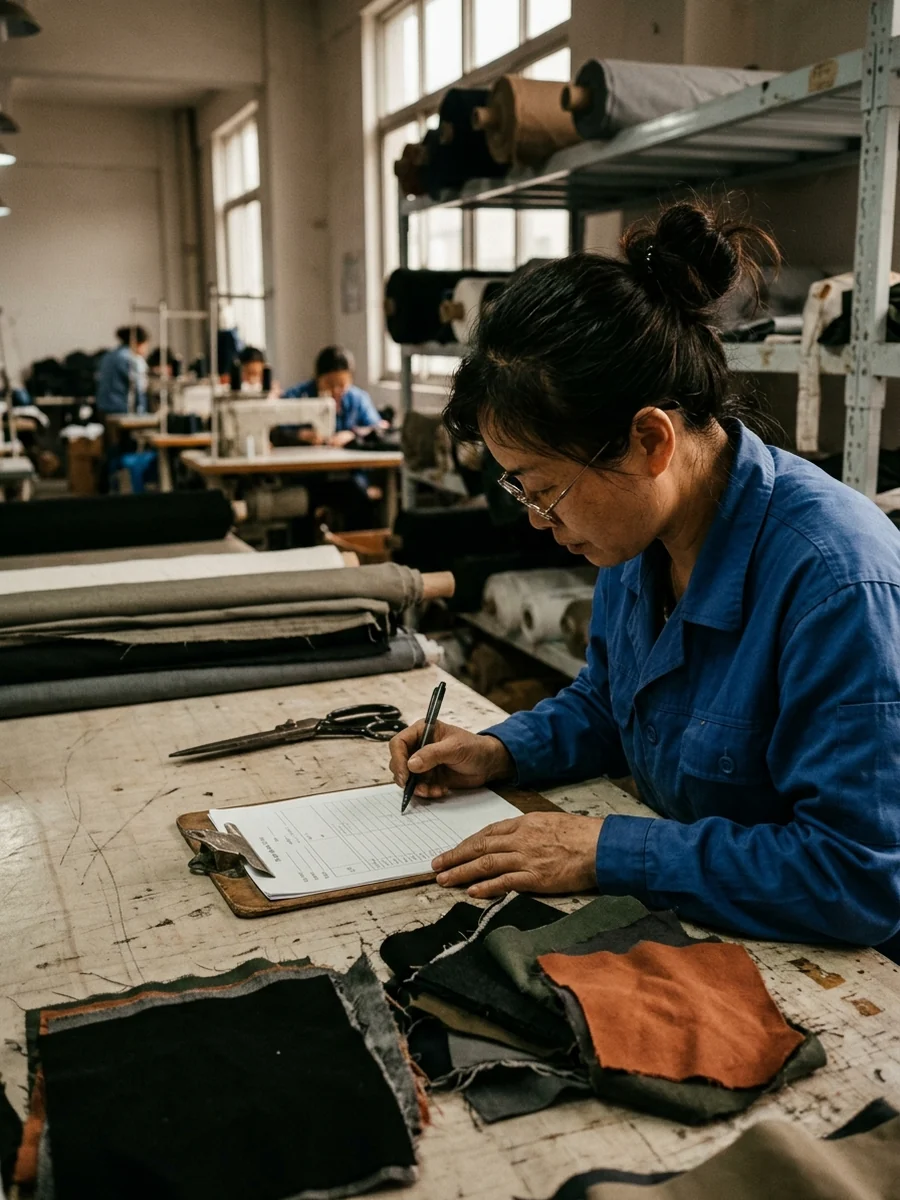
A supplier network built over 15+ years. Sublimation-grade polyester, 600D shell fabric, fleece, cowhide, protector inserts and hardware come from suppliers developed since the company's sportswear years. Each order records the fabric lot and supplier, so a reorder can be checked against the recorded weight and hand.
Discontinued fabric: the customer is told before the reorder is confirmed; a swatch of the replacement is sent.
Re-stripped color profile on the new fabric, so the difference is measured rather than discovered.
Two qualified suppliers where an equivalent fabric exists, so one closure does not stop a team's season.
Lot and supplier recorded per order
Who we work with
Motorcycle apparel manufacturer customers: four types, four cooperation modes
Customer types and the cooperation modes each one uses. Described by type and model, not by name; we do not publish client names or logos without written agreement.
Teams · academies · brands · dealers
20–100+SETS
Race teams and clubs
Season kits and club apparel ordered from a roster, with mid-season additions from the archive; team runs from 10 pieces per design.
5PCS MIN
Karting centres and academies
Rental and instructor gear built for daily use; kart suits from 5 pieces per design, with a standing reorder path for replacement sizes.
2–5SKUS
Riding-gear brands
OEM and private-label programs from a tech pack or reference garment; brands start at 50 pieces per style and scale on the same blocks.
SizeRUNS
Dealers and distributors
Own-label size runs and staff wear, with batch color matching and reorders instead of holding a season of stock.
Come and see
A Run Moto Apparel workshop visit, following the order chain
If you come to see the motorcycle apparel manufacturer behind your kit, this is what you will be shown
Print room strip test
Cutting table
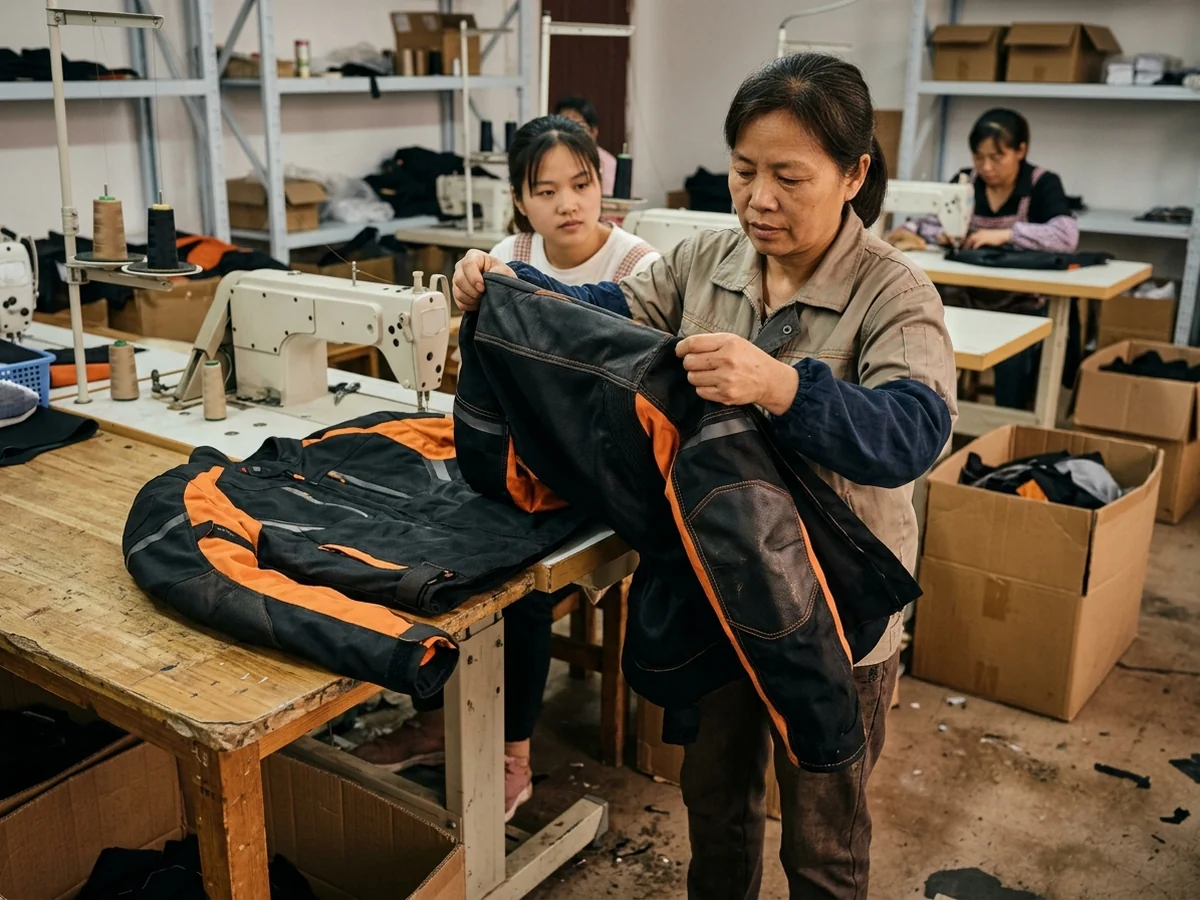
Sewing line, mid-line inspection
Leather workshop
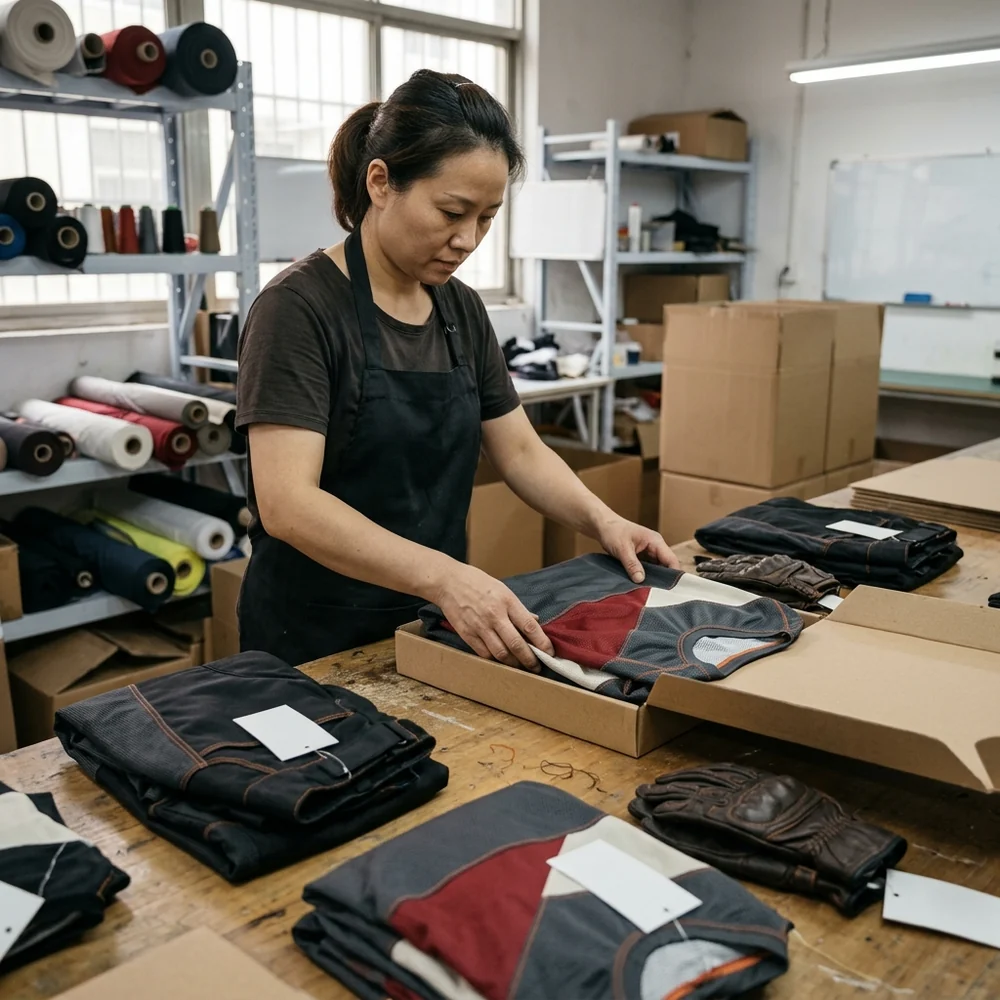
Packing by rider name
A visit is arranged through the sales manager and follows the order chain: the print room strip test against an archived strip, the cutting table where printed panels are matched to pattern pieces, the sewing line with a mid-line inspection in progress, the leather workshop gauging hides, and the packing area with an order laid out by rider name. Brands bring their tech pack and leave with a sampling plan; teams bring a roster and leave with a size-run schedule.
First stop · the strip test
Talk to the people who will make your kit
Send your roster, tech pack or a question about how we work
Anna replies within 24 hours on business days with a real answer about your order, not a brochure.