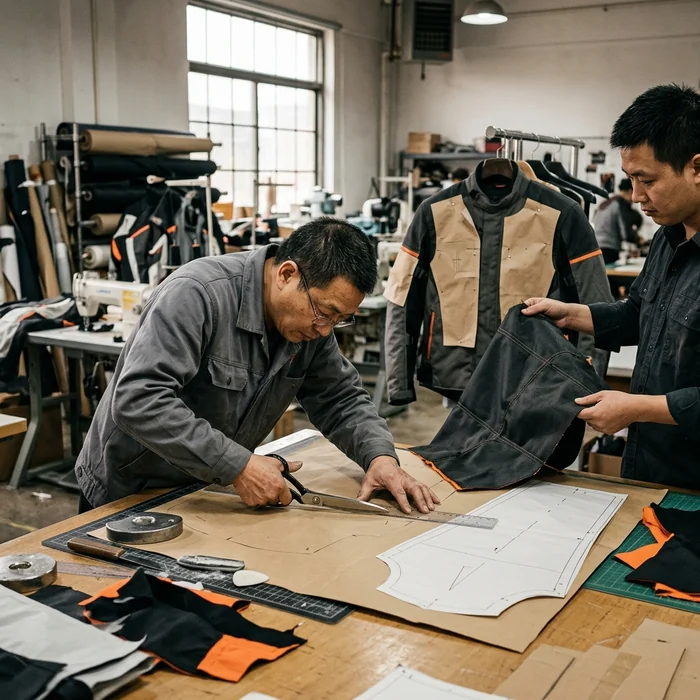
MOTORCYCLE TRAINING PROGRAMS

Custom Riding Academy Instructor Gear for Training Schools

Branded jackets, mesh jerseys, high-visibility vests, riding pants and staff apparel that keep motorcycle instructors visible, identifiable and professionally coordinated.
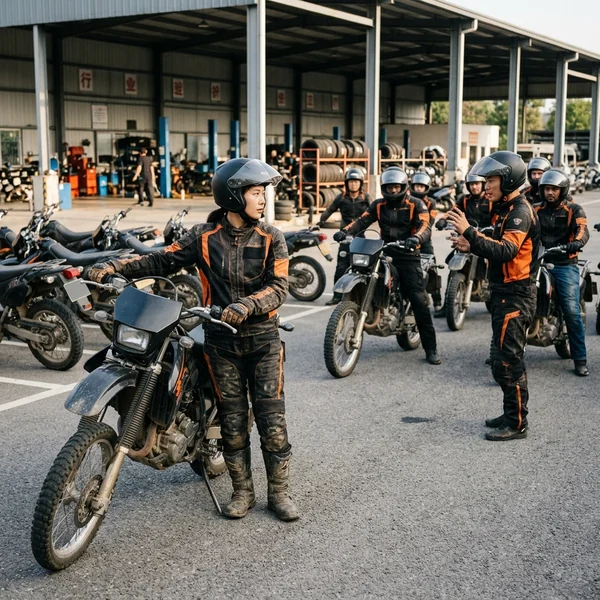

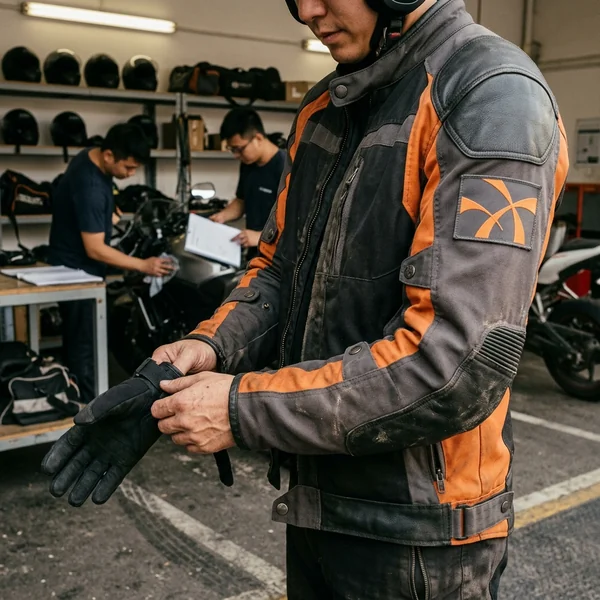
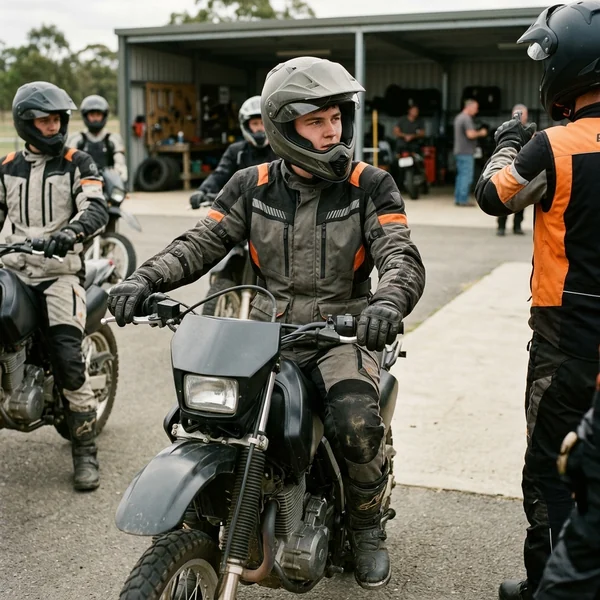
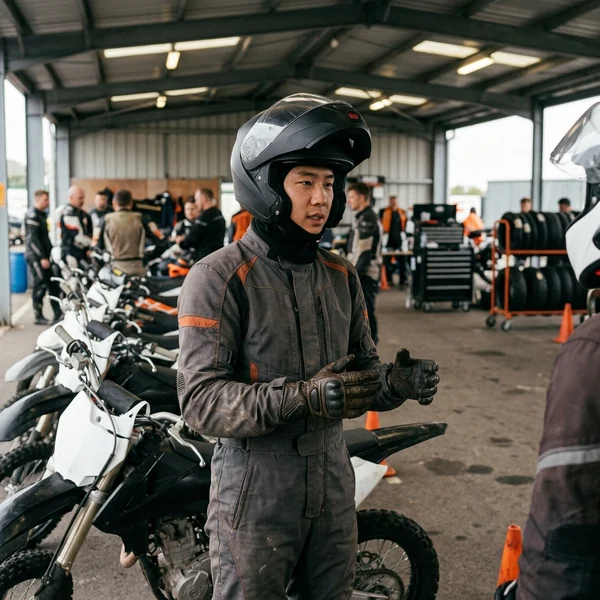
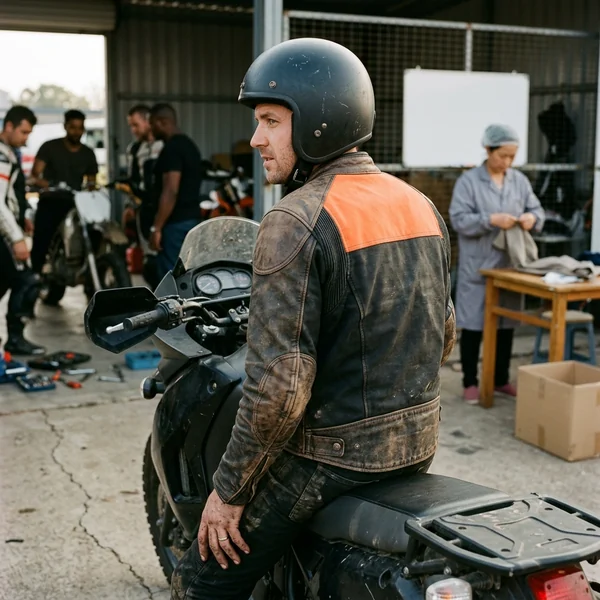
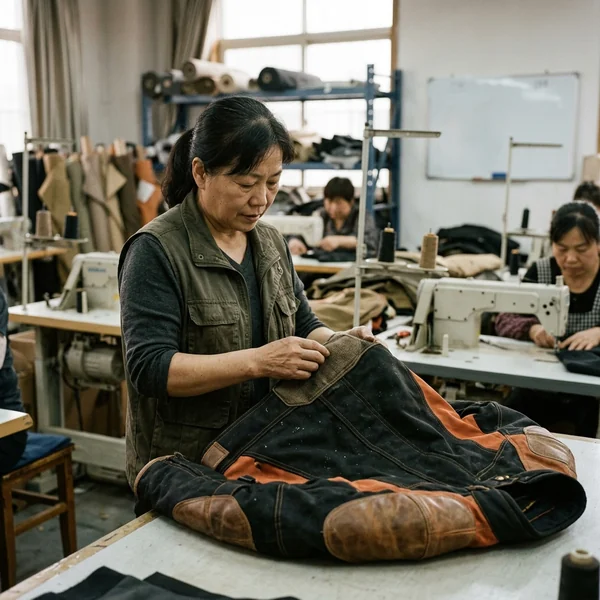
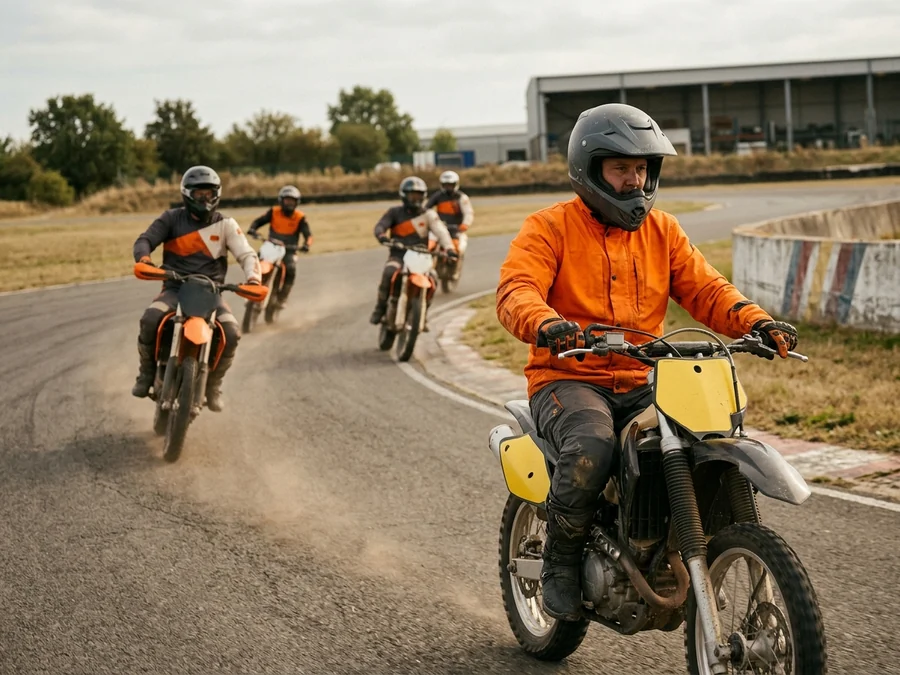
A student in a training group
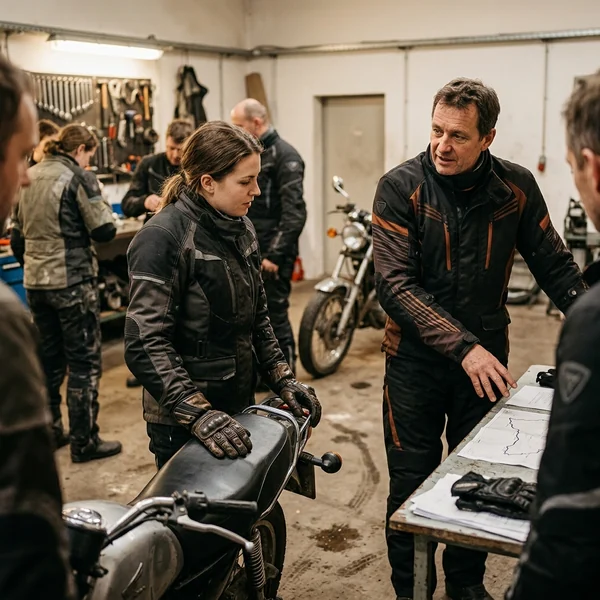
The instructor, identifiable at a glance in a group
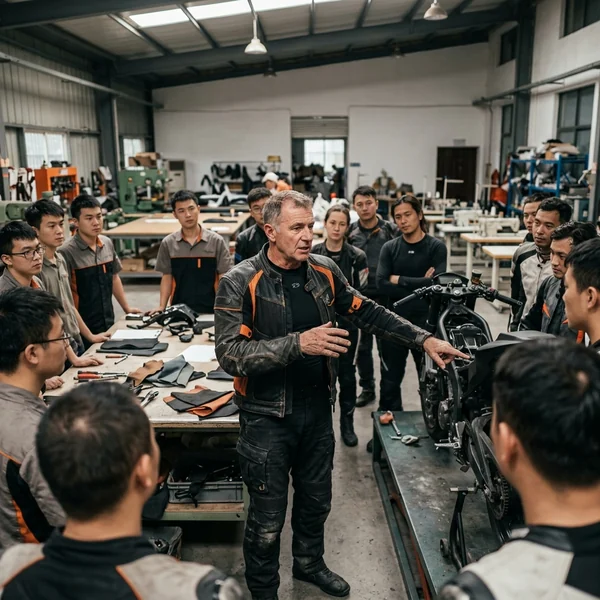
A student in a training group
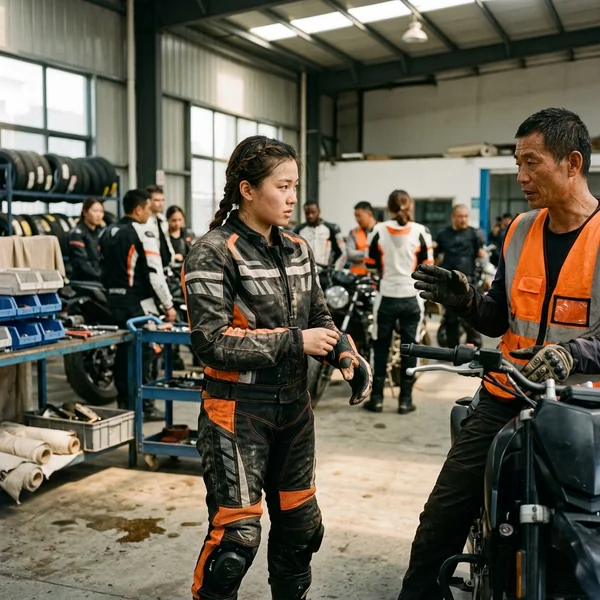
One second to find them, or the kit has not done its first job
Instructor gear range

Custom Motorcycle Riding Academy Instructor Gear

Coordinated riding gear and staff apparel for motorcycle instructors, training schools and rider education programs.

Motorcycle instructor in a custom academy riding jacket on a training ground

Instructor Riding Jackets

For everyday instruction on the training ground.

  • Cut for freedom of movement
  • Abrasion-resistant zones
  • Academy branding
Request This Style →
Instructor in a lightweight long-sleeve mesh jersey at a sunny training course

Summer Mesh Instructor Jerseys

For hot weather and low-speed training-ground instruction.
  • Lightweight long-sleeve cut
  • Breathable mesh fabric
  • Academy colors and logo
Request This Style →
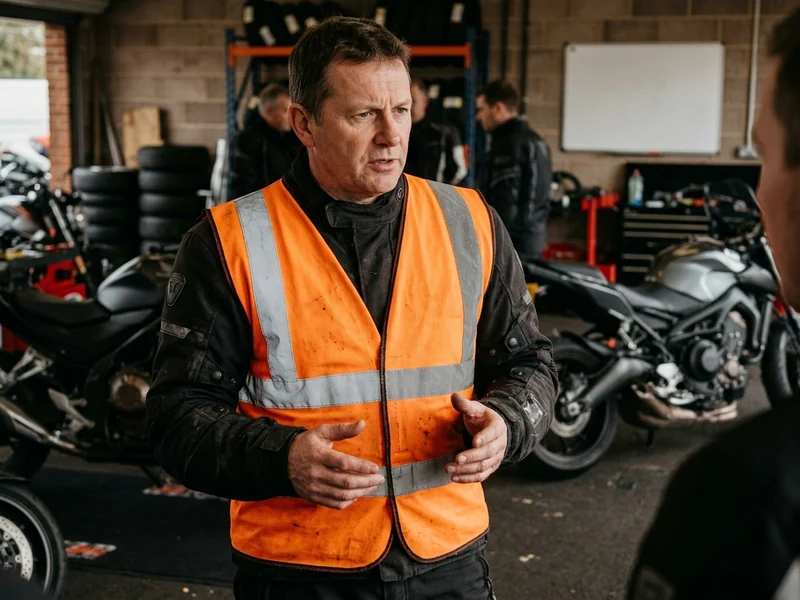
High-visibility instructor vest with reflective strips worn over a riding jacket

High-Visibility Instructor Vests

Worn over the riding jacket so students can spot the instructor at a glance.

  • High-visibility colors
  • Reflective strips
  • Bold Instructor marking
Request This Style →
Instructor in a waterproof riding jacket on a wet training course

Waterproof Instructor Jackets

For rainy days and changeable weather.
  • Waterproof outer layer
  • Adjustable cuffs
  • Academy logo
Request This Style →
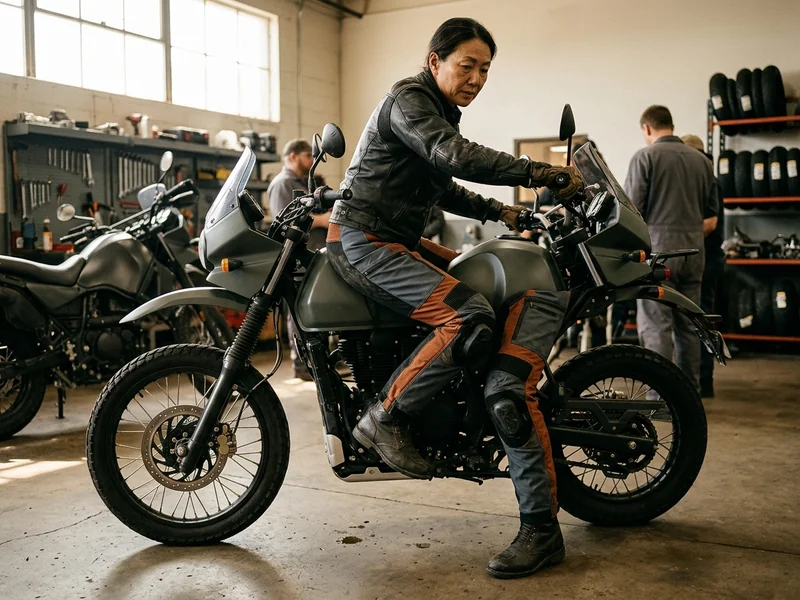
Instructor demonstrating a riding position in custom riding pants

Instructor Riding Pants

For riding demonstrations and full teaching days.

  • Active fit for movement
  • Abrasion-resistant zones
  • Practical pockets
Request This Style →
Academy staff in matching polos at a training school reception

Academy Staff Polos & Teamwear

For classroom teaching, reception and off-bike work.

  • Unified academy colors
  • Academy logo
  • Staff identification
Request This Style →
Who orders it

Who orders it: academies, centres, fleets and training providers

Four kinds of school, all with the same identification problem before they have any other.
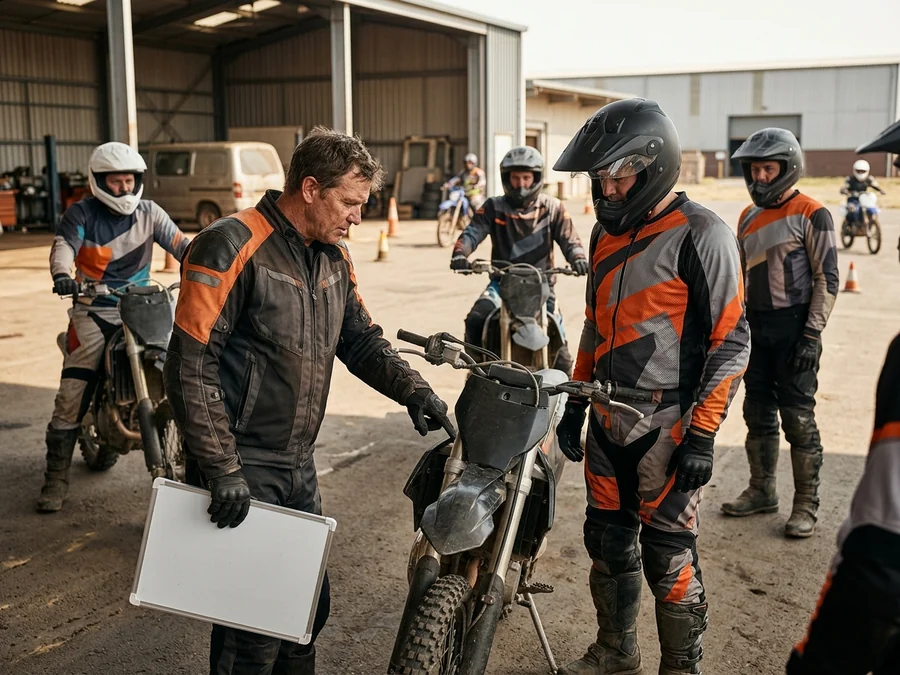
A rider training academy running a mixed group session

Rider training academies

Run courses with mixed groups and need instructors visible to students and to traffic at the same time.

Wants · visible both ways
Track day instructors among riders who do not know them by sight

Track day organisers

Put instructors on circuit among riders who have never met them and will not learn faces in a morning.

Wants · recognisable to strangers
An off-road school working at distance across terrain

Off-road and adventure schools

Work at distance across terrain, where colour does the job a badge cannot.
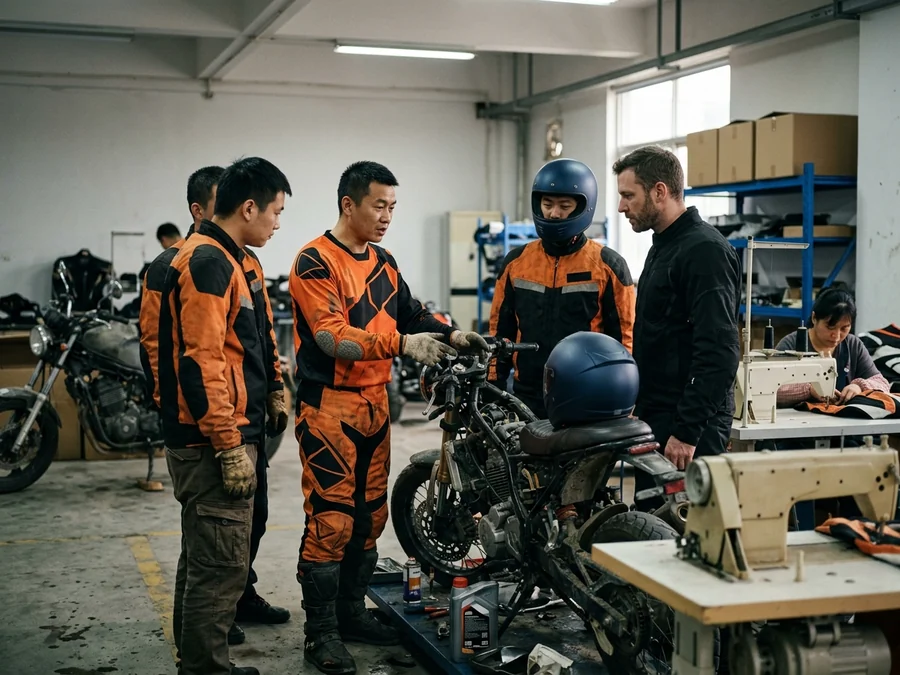
Wants · colour that carries
A corporate fleet training session with staff in official kit

Fleet and corporate providers

Run in-house training and need staff kit that reads as official rather than improvised.

Wants · to look official
Not this page
  • Student rental fleets, which sit in centre suits
  • Club apparel, which has its own page
Identification first

Identification is contrast, not decoration

Scroll: the group goes flat and one rider stays. That is the whole test — and a logo cannot pass it, because a logo is readable at three metres and invisible at thirty.
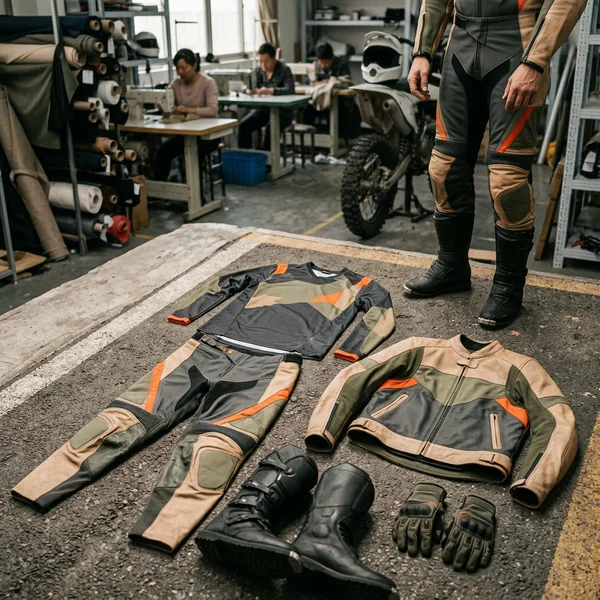
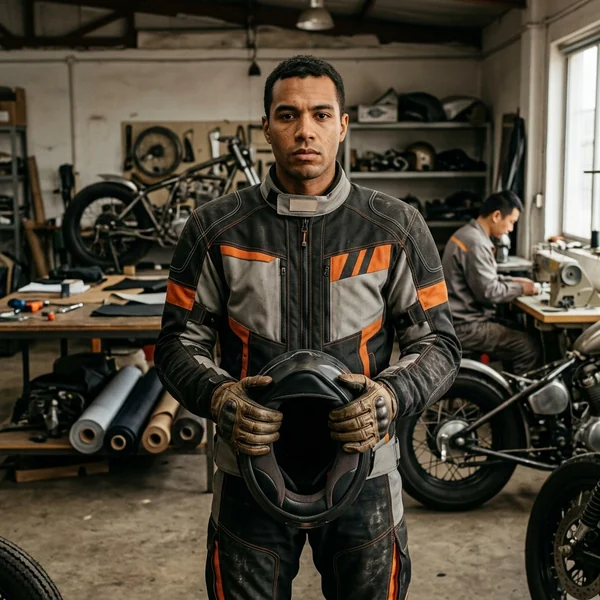
A rider in the group, shown flat for contrast
The instructor cell, kept bright while the rest go flat
A rider in the group, shown flat for contrast
Reads at 30 m · illustration

What actually reads at distance

Large areas of contrast, a consistent silhouette across the instructor team, and a treatment that survives being seen from behind — which is the angle a student is usually at. Small print on the chest is invisible to everyone except the person standing directly in front of the instructor, who already knows who they are.

  • A high-contrast block — a panel, a yoke or a sleeve treatment — rather than a badge.
  • Branding sits on top of identification as a second layer, and never replaces it.

Why branding cannot do this job

A logo is designed to be recognised, not to be found. Those are different problems: recognition happens once a viewer is already looking at the right person, and finding happens before that. A school that puts its budget into a beautifully reproduced logo and nothing else has bought the second half of the solution and skipped the first, which is why so much staff kit looks professional in a product photo and disappears in a group shot.

How to check itStand thirty metres back from a group photo and find the instructor. If it takes more than a second, the kit has not done its first job.
Roles

Roles that need to be distinguishable

In a bigger school there is more than one kind of staff member, and each one gets a defined treatment within the same design language.

Lead instructor at the front of a group

Lead instructor

Position · at the front

The person a student follows, and the highest-contrast treatment in the whole kit.

Assistant riding sweep behind a group

Assistant or sweep

Position · behind the group

Often the first person a struggling student actually sees, which makes this role more visible than it sounds.

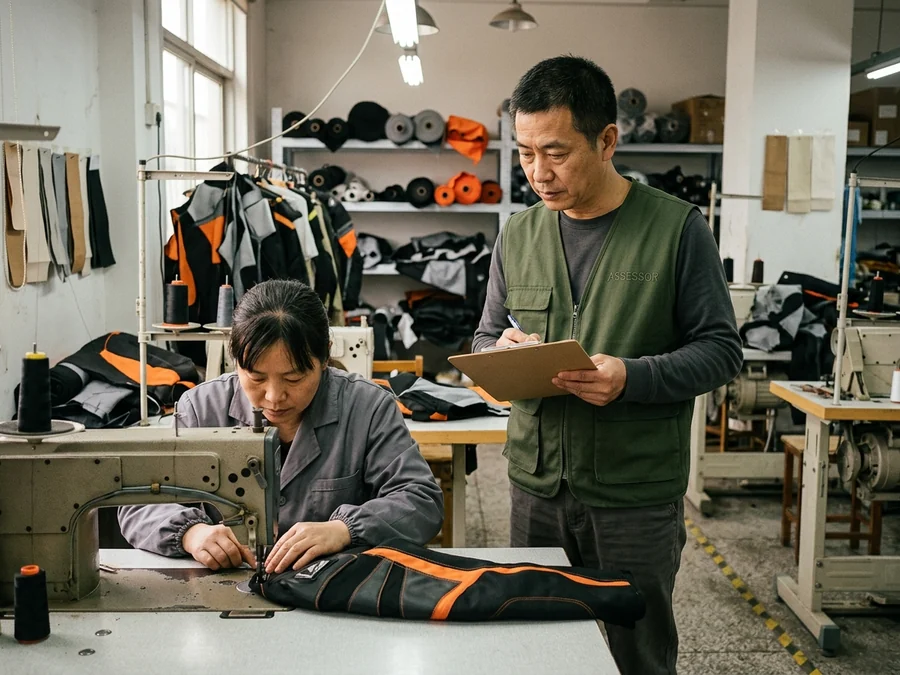
An examiner observing an assessment

Examiner or assessor

Position · observing

Needs to be identifiable as not an instructor during an assessment — a distinction students notice immediately.

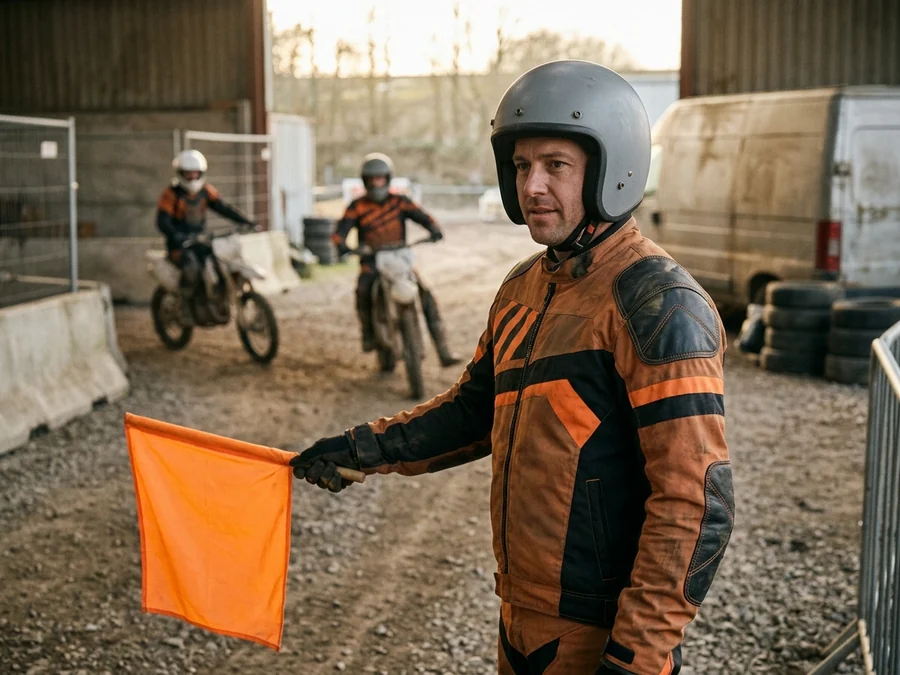
A marshal visible to traffic at a training site

Support and marshals

Position · at the edges

Visible to traffic and to riders, and clearly distinct from teaching staff.

Why the roles are drawn together rather than one at a time

A school rarely starts with four roles — it starts with two and adds the others as it grows. If each addition is designed on its own, the fourth one is a compromise between three existing treatments that were never meant to sit beside it, and the set stops reading as one school. Drawing the whole scheme at the start costs one conversation; retrofitting it costs a re-order of everything.

One language, four rolesThe four read as one school and still read as four roles. That is a layout decision made once — and it stops a school reaching for a different supplier every time it adds a role.
Reflective

Reflective goes on the parts that move

Road work, dusk sessions and escort riding change what the kit has to do

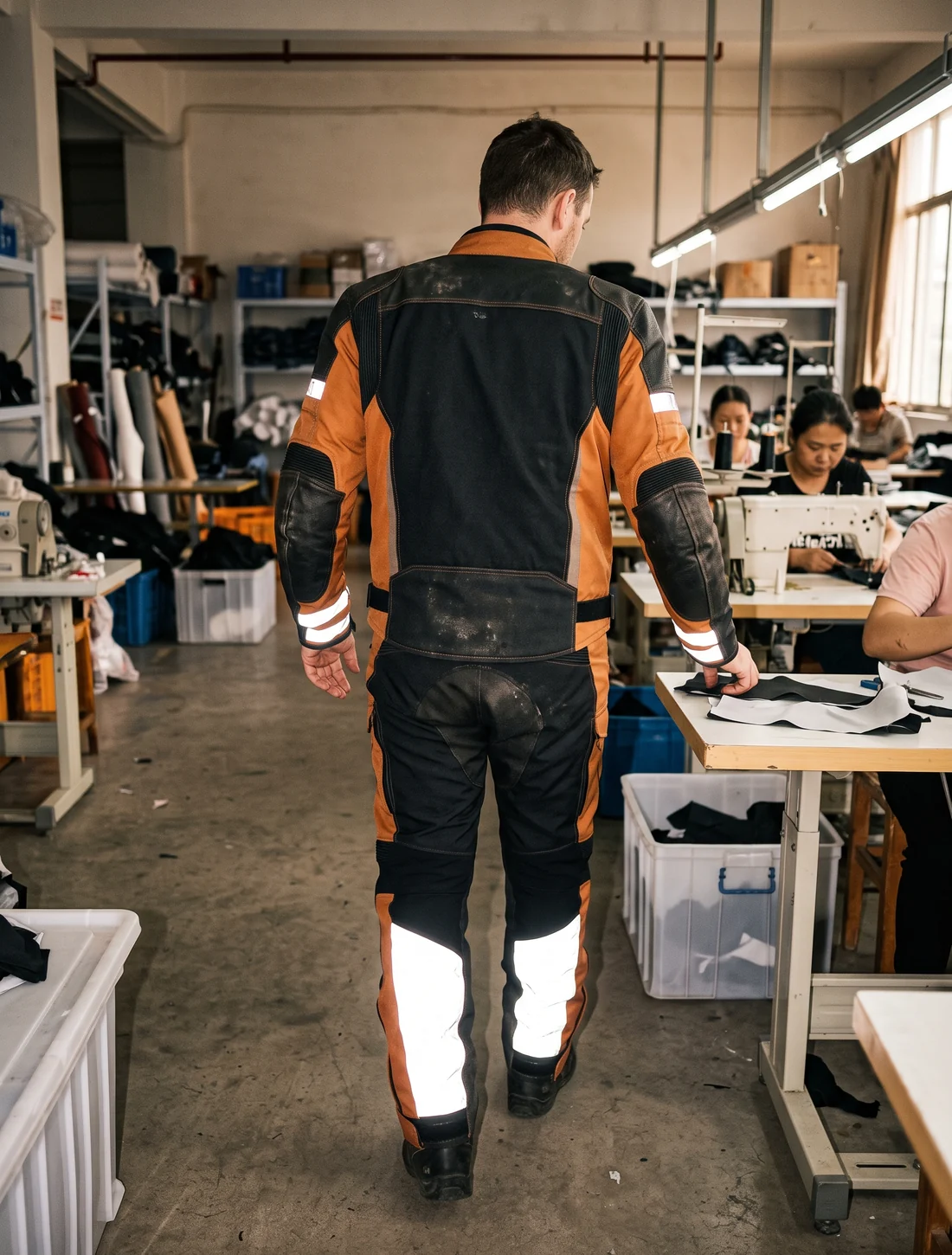
Where sessions run on public roads, at dusk, or in escort formation, reflective treatment is applied as transfers rather than stitched — and placed where the garment moves, because motion is what makes a reflective mark register to a driver.

  • ShouldersThey move with every head check and every signal, which is exactly when you want a driver to notice.
  • The backThe surface a following driver sees for longest, and the one a static chest panel does nothing for.
  • Outside of the armsWhere an arm signal happens. A signal nobody sees is a signal that was not made.
How to check itPhotograph the kit from behind with a flash. What lights up is what a driver sees — and a static reflective panel on a chest is present and useless.
A flash photograph from behind showing which reflective areas light up
Flash from behind · the real test
One second
from behind

A logo is readable at three metres and invisible at thirty. Identification and branding are two different jobs.
Daily wear

Built for five days a week, not five weekends a year

An instructor wears their kit far more than any customer wears theirs. The failure points come from repetition, not from crashing.
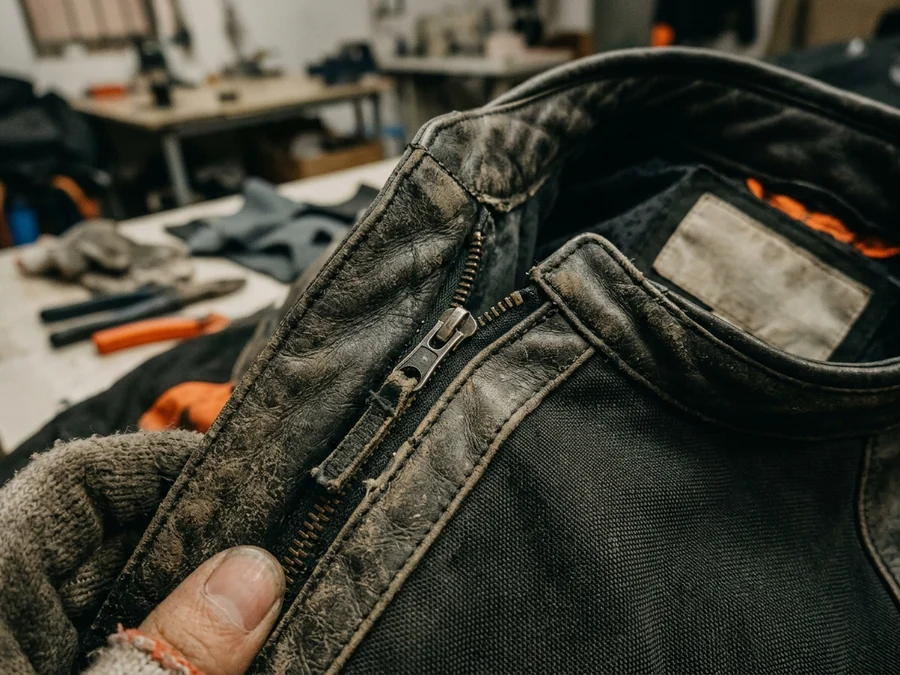
A jacket closure worn from daily use
01

Closures

Fails · from on-and-off

Opened and closed several times a session, over armor, in car parks, in gloves.
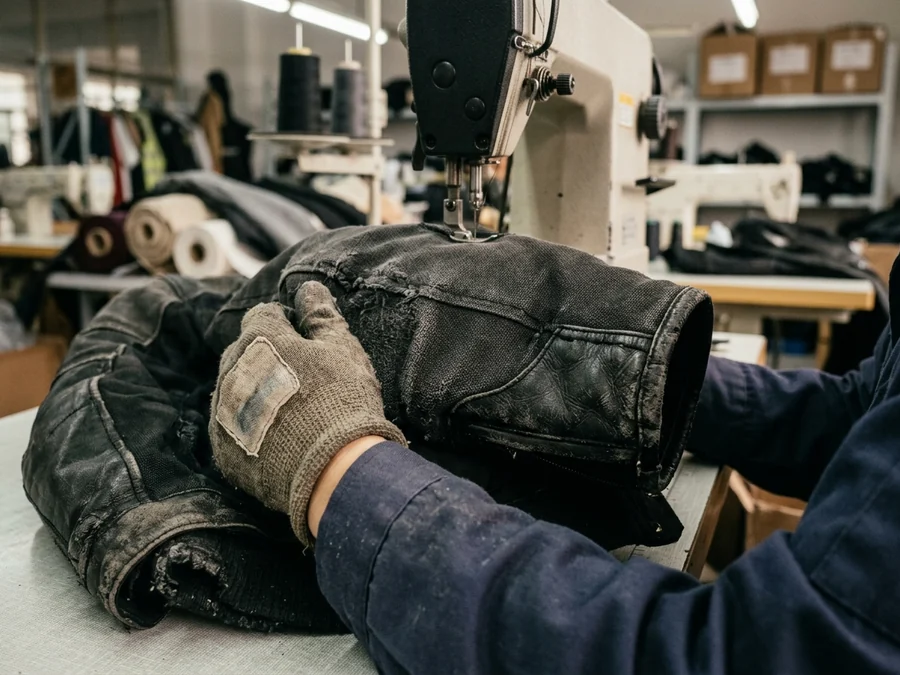
Cuff wear from repeated glove changes
02

Cuffs

Fails · from glove changes

Pushed up and pulled down all day, which wears the edge long before the fabric.
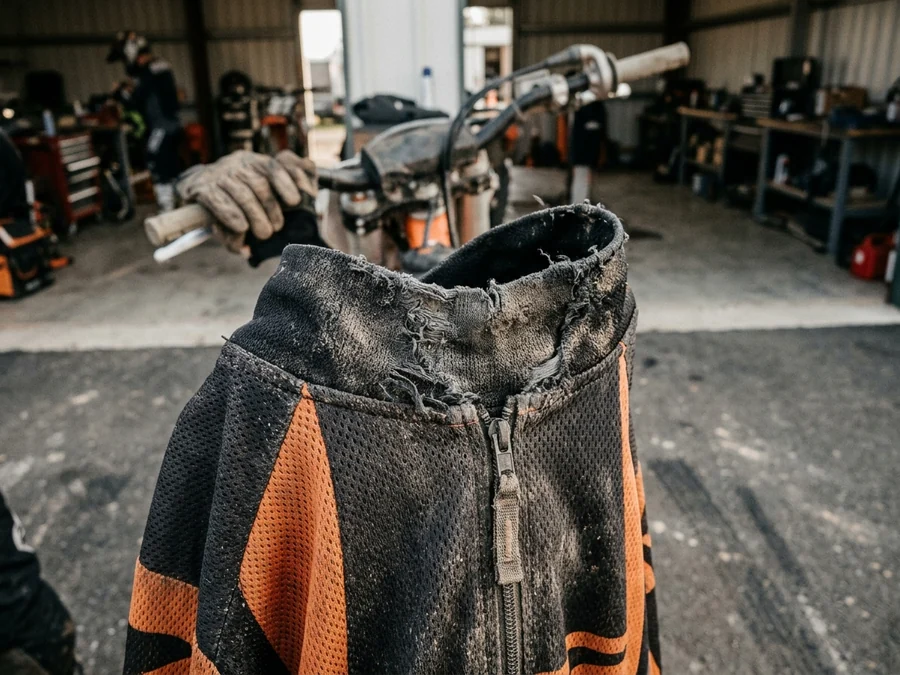
Collar abrasion where a helmet strap sits
03

Collar

Fails · under a helmet strap

Abrasion exactly where a strap sits, on a garment that goes under a helmet several times a day.
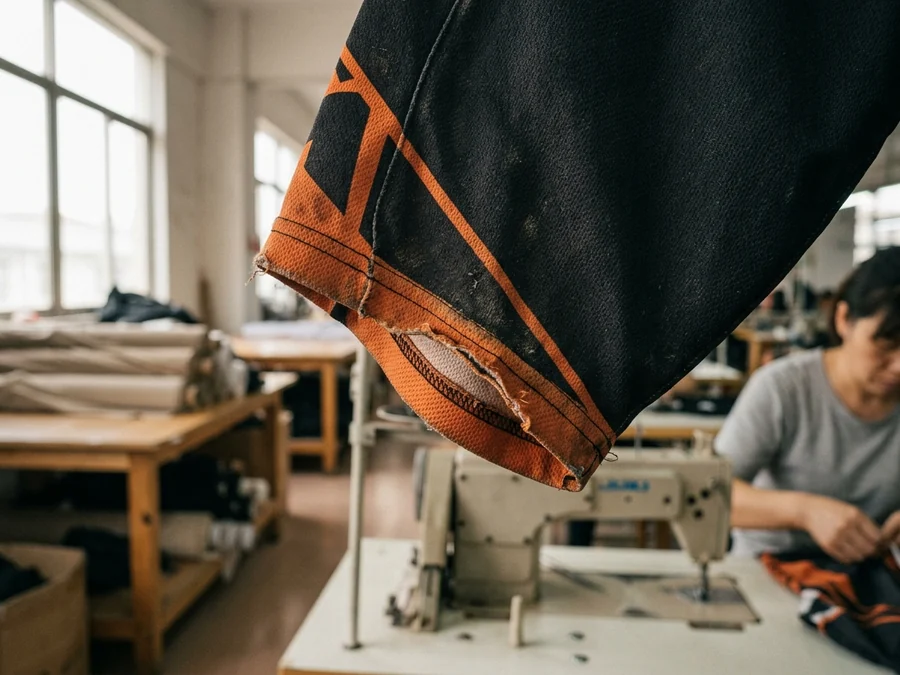
A decoration edge starting to curl after repeated washing
04

The decoration

Fails · and everybody sees it

The first thing a school notices going wrong, because it is the thing every student is looking at.

The repetition problem, stated plainly

A customer's jacket might see thirty days of use in a year; an instructor's sees two hundred. Nothing about that is dramatic and that is exactly the difficulty — there is no single event to design against, just the same small loads applied over and over until something gives. Every one of the four points above is chosen with that number in mind rather than with a crash in mind, which is a different engineering brief from almost everything else on this site.

Built in, not stuck onIdentification panels are built into the garment where possible rather than applied onto it. Where they are applied, the route is chosen for repeated washing rather than for the cheapest press — a curled edge on an instructor's shoulder is visible to every student for the rest of the season.
Decoration route

Three ways to put identification on, and when each is right

The choice is made against washing frequency and panel size, not against unit cost — which is the usual mistake.

RouteBest forWhat to watch
Built into the garmentLarge identification blocksDecided at pattern stage; cannot be added later.
Heat transferReflective and role markersEdges are what lift; settings recorded per fabric.
EmbroideryThe academy name and small marksBacking choice decides whether it still sits flat in month six.
Ask it before you chooseAsk what happens to the identification after fifty washes — and ask it while the route is still open, not after the first order has been running for a season.
1SECONDTo find an instructor in a group
4ROLESOne design language, four treatments
3REFLECTIVE AREASShoulders, back, outside of the arms
1FILE, REUSEDLater hires match the first order
Sizes

Sizes come from your staff list, not a forecast

A school fits a specific set of people, not a market

An instructor team is a known list of people, which makes it an easier problem than a retail range and a harder one than a rental fleet. The run is built from that list, and the block is the riding block for the discipline the school teaches — so instructors are not the worst-dressed riders on their own site.
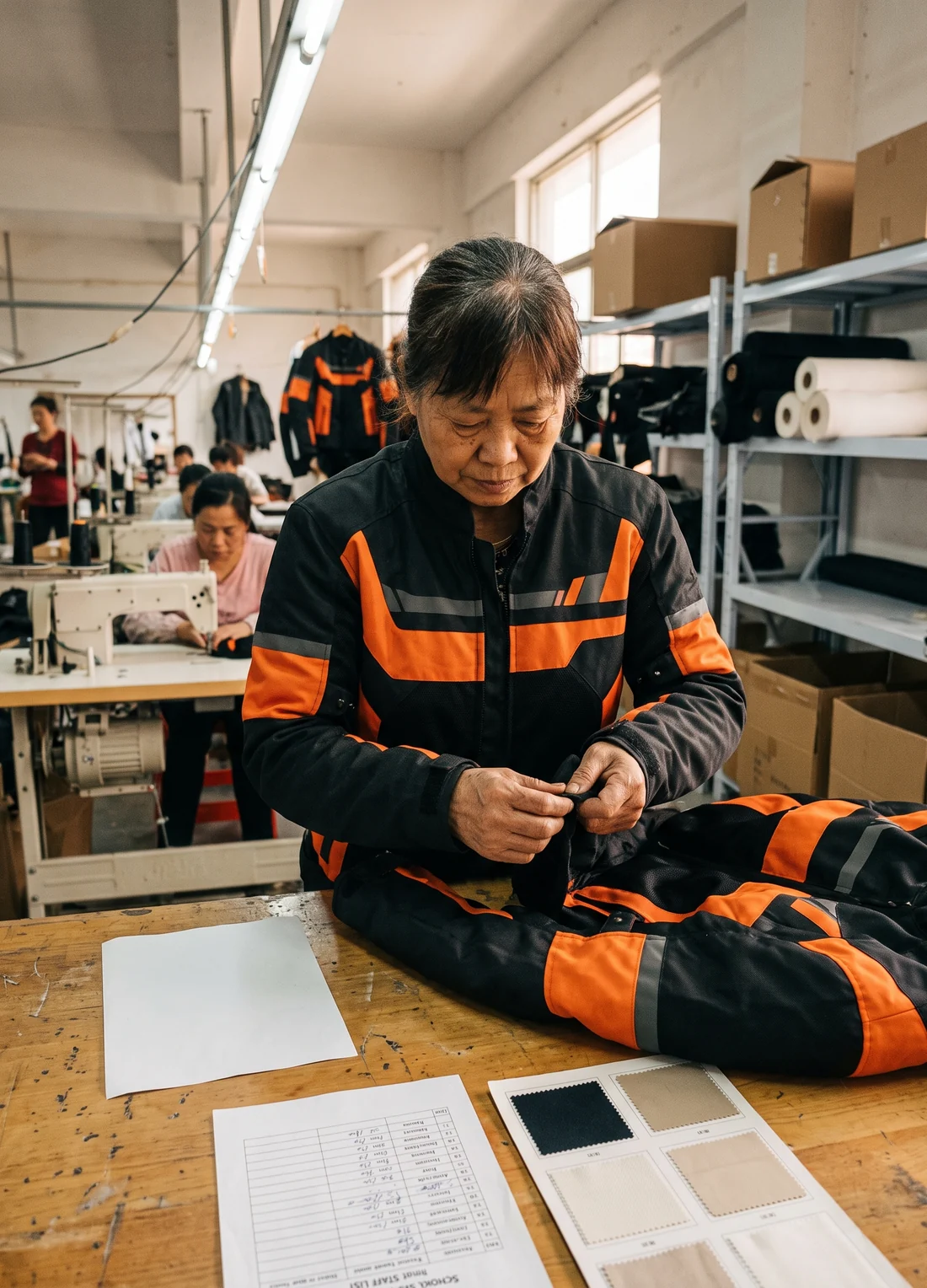
How to check itAsk whether the quote was built from your staff list or from a standard size curve. They are different documents, and only one of them fits your people.
The one thing a list gives you that a curve cannotCertainty about the ends. A curve guesses how many 3XL you need; a list tells you there are two, and that both of them teach every Saturday. That changes what gets ordered and it changes which sizes get the careful fitting attention, which on a team of twelve is a completely manageable amount of care.
A size sheet built directly from a school staff list
From the list · not a curve
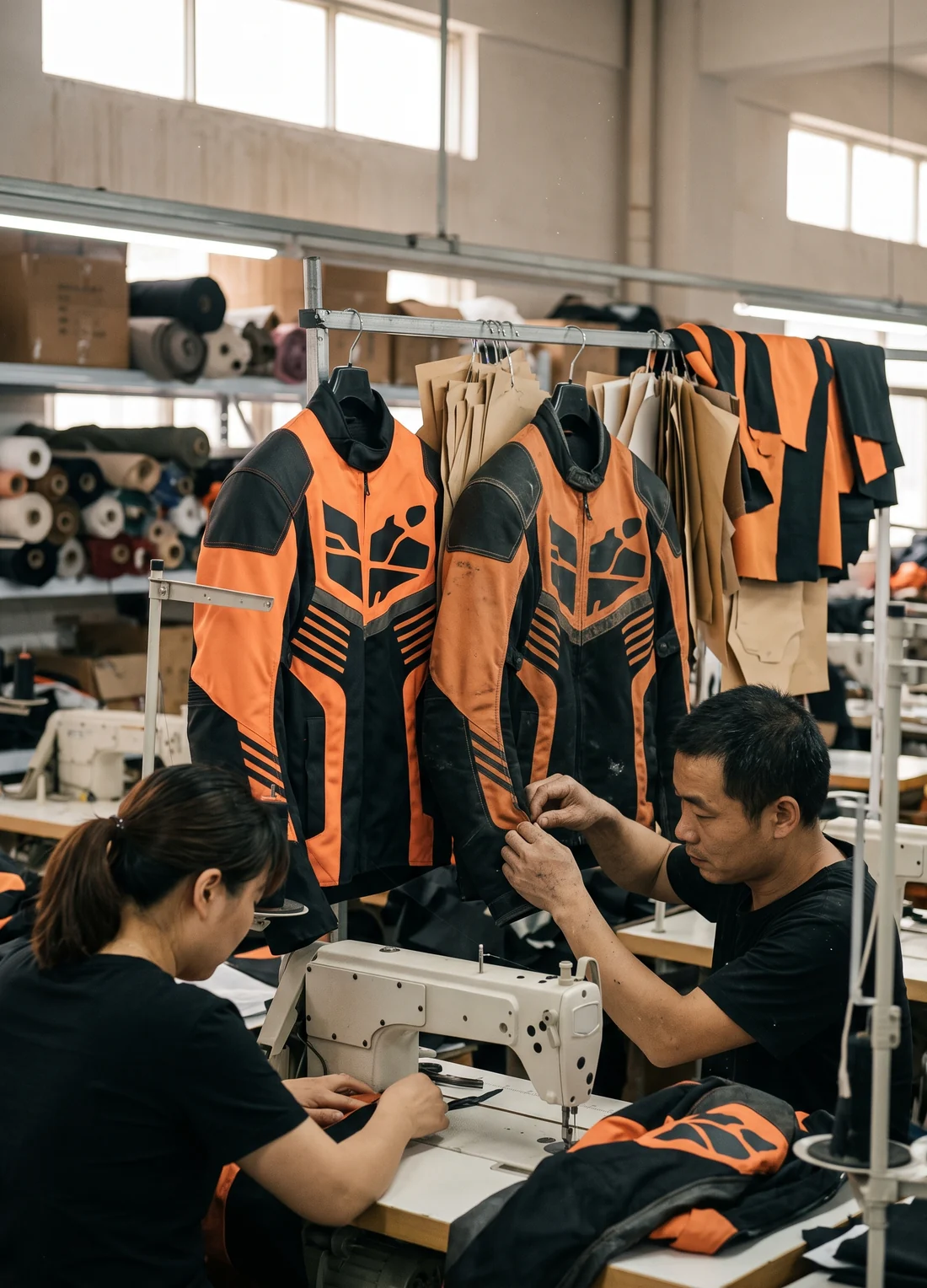
Kit from two different seasons hanging together and matching
Two seasons · one file
Mid-season hires

Adding staff without a mismatch

Schools hire in ones, and the new person has to look like the old ones

After the first order, the design, the colour profile, the decoration files and the block are archived under the school's name. A new instructor is then a single garment made from the same files — same colours, same identification treatment, same placement.

How to check itAsk what one extra jacket costs in time in month eight. If the answer involves a new sample, the file was not kept.
A season of hires, not a season of kitsThree people joining in three different months should produce three identical garments, not three slightly different interpretations of the same brief. That only happens if the files were archived on the first order rather than reconstructed each time from whatever photo somebody still has.
What the kit says

Students and parents read the kit before anyone speaks

A school is judged on the way it looks before it is judged on the way it teaches.

Consistent staff kit is a signal that the school is organised, and it is read by exactly the people who are deciding whether to hand over money or hand over a teenager. Neither of them can assess your teaching before they book; both of them can see your staff from the car park.

Why this is a commercial argument, not a design oneIt is the reason a school usually upgrades instructor kit right before its busiest season rather than after it — and the reason the upgrade tends to pay for itself in the same season it happens.
  • A parent decides in the car park, before anyone has spoken to them.
  • A returning student notices the year the kit stopped matching, even if they never mention it.

None of this is about looking expensive. A school in plain, consistent, obviously-considered kit reads as competent; the same school in four different jackets bought at four different times reads as improvised, whatever the teaching is actually like. The gap between those two impressions is one order and one archived file.
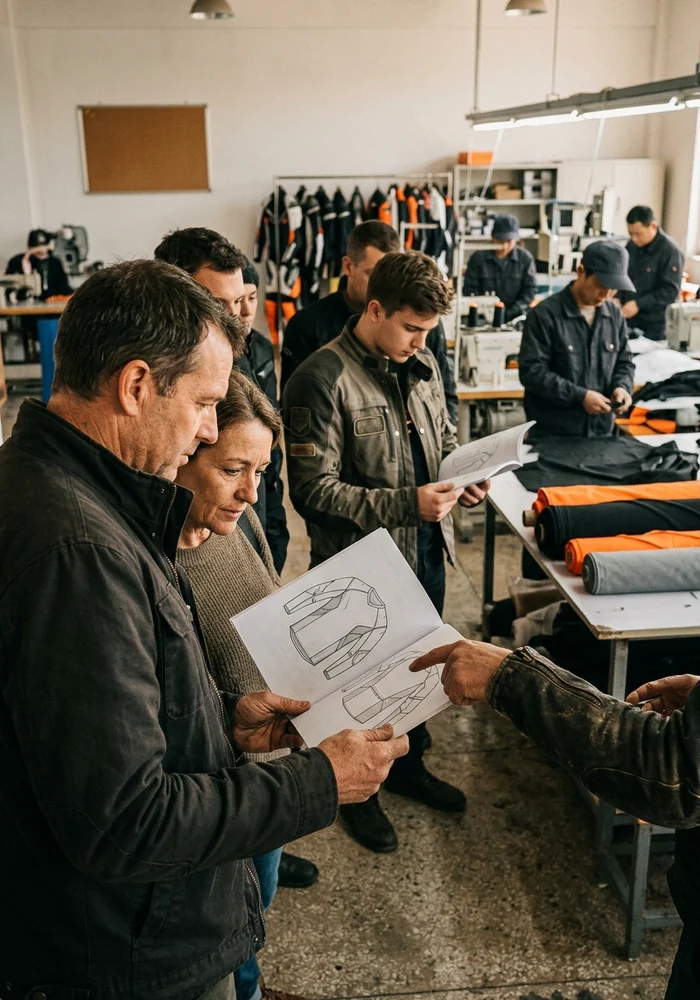
Parents watching a session from the side of a training site
Read from the car park
Staff list and discipline

Send your staff list and what you teach, and we will propose a scheme

With the first order

The first order: kit, files and a reference set

The kit, the files and one physical reference set the school keeps.
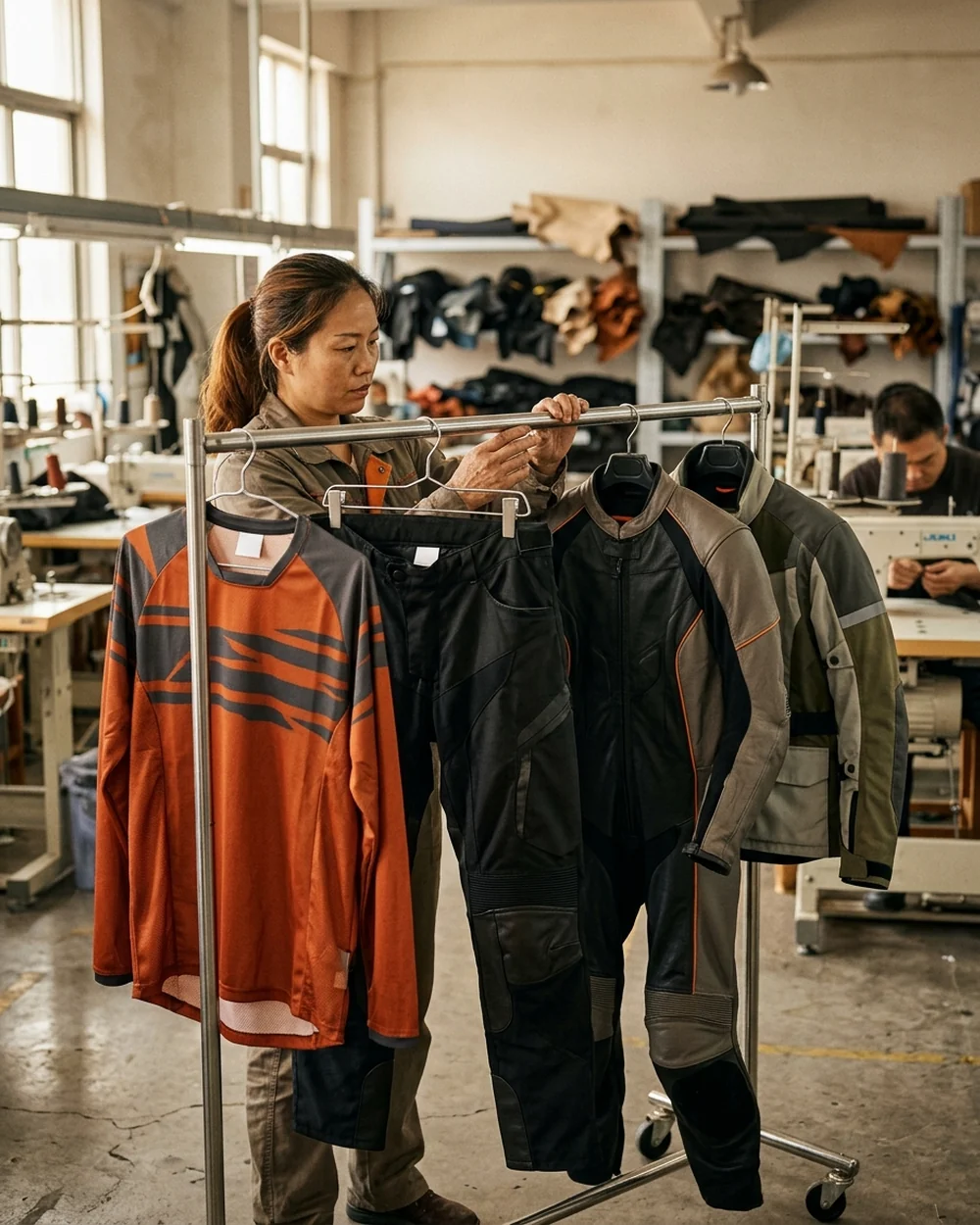
A reference set with one garment per role treatment
One per role · kept by the school
The instructor kit in the sizes from the staff list
In your staff sizes
The placement map showing where each element sits per size
Placement map
  • The instructor kitIn the sizes on your staff list, with the identification treatment applied.
  • A reference setOne of each role treatment, so a future order is checked against something physical rather than a memory.
  • The placement mapWhere each element sits, per garment and per size.
  • The file recordWhat is archived under the school's name, and what a single addition actually needs.
Six things

Instructor kit quote: the six things to send

Send these six and Anna comes back within 24 hours on business days with an identification scheme and the lead time.
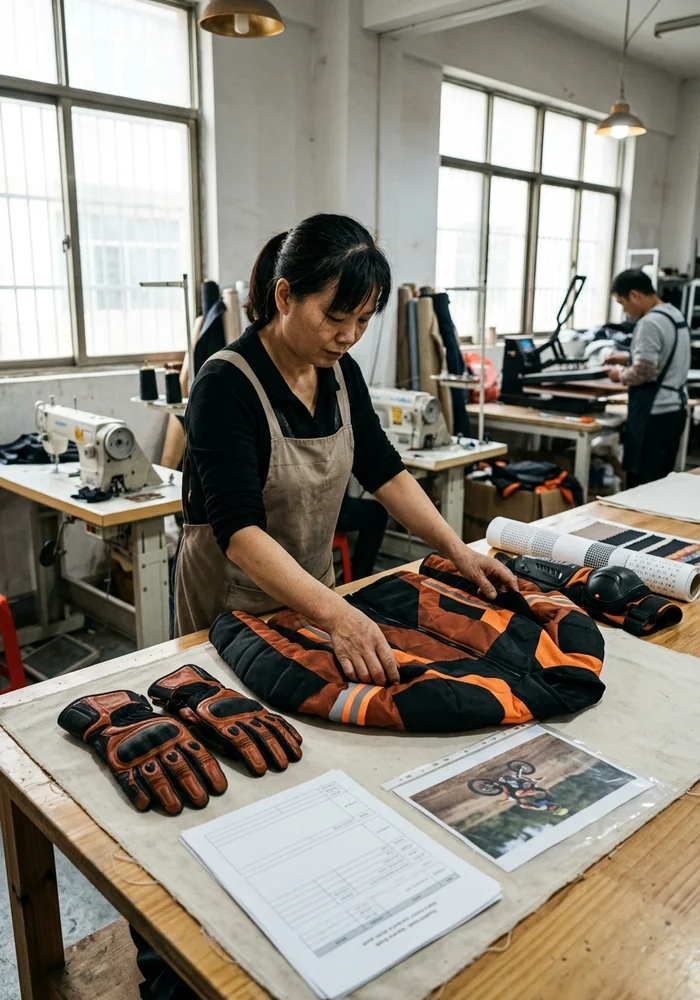
  1. What you teach

    Road, track, off-road or a mix; it decides the block and the garments.
  2. Your staff list by size

    The actual list — not an estimate.
  3. The roles to distinguish

    Lead, assistant, examiner, support, or whatever your structure is.
  4. Where sessions run

    Road, circuit, private land, dusk — it decides the reflective treatment.
  5. Your name and artwork

    For the branding layer, which sits on top of the identification one.
  6. Your season start

    We count back from it.
A staff list, artwork and a session plan laid out ready to send
Six things · one email
Staff list and discipline

Send your staff list and what you teach, and we will propose a scheme

Anna replies within 24 hours on business days with an identification scheme for your roles, which garments it sits on, what the reflective treatment needs to be for your sessions, and the lead time to your season start.
Anna · Sales Manager WhatsApp / phone: +86 177 0272 7677 Email: sales@runmotoapparel.com Mon–Sat 9:00–18:00 (GMT+8)