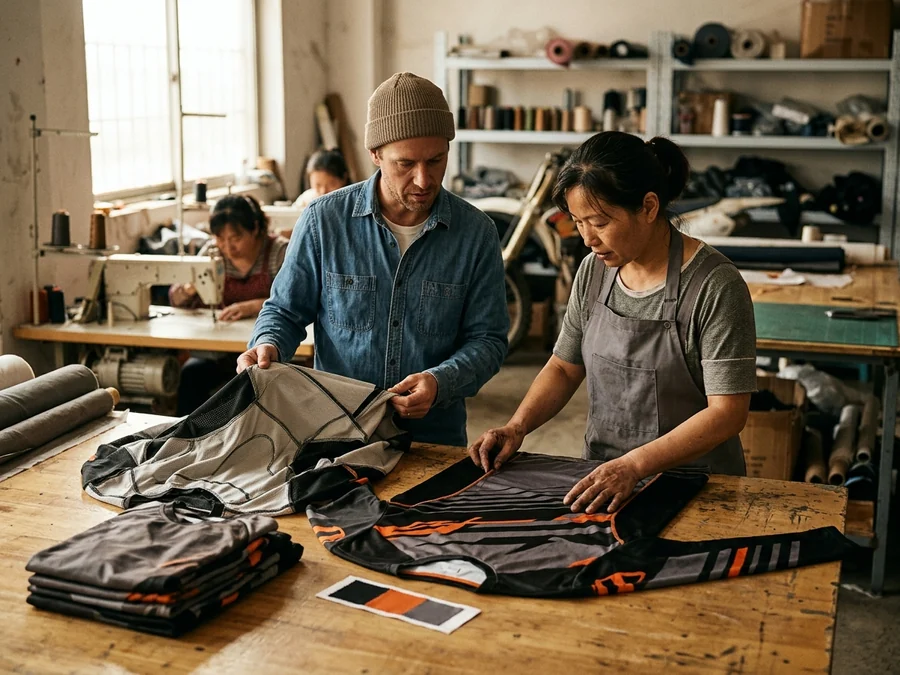
 7–10DAYS
Sublimated sample
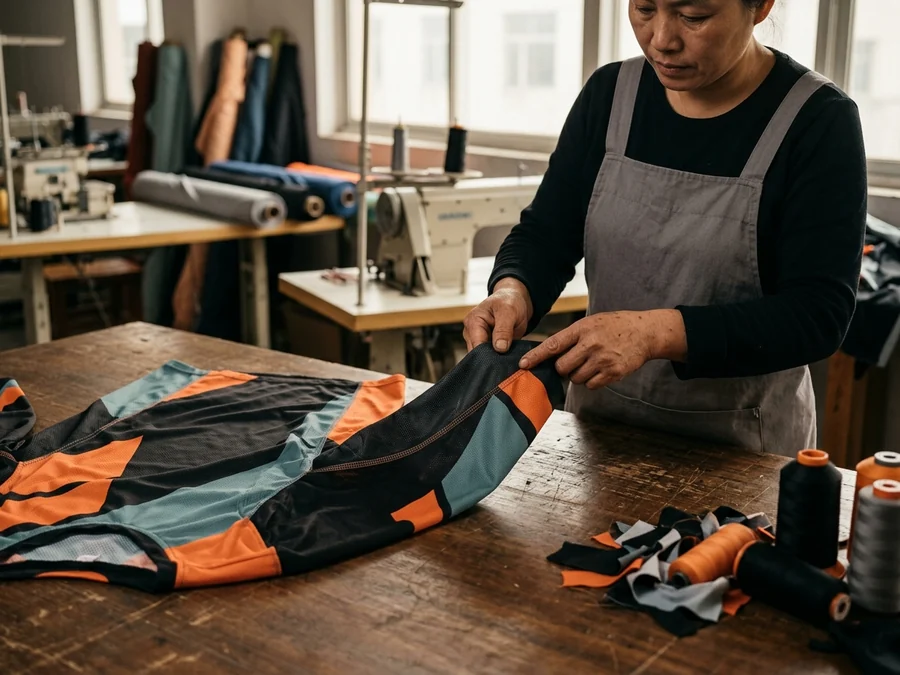
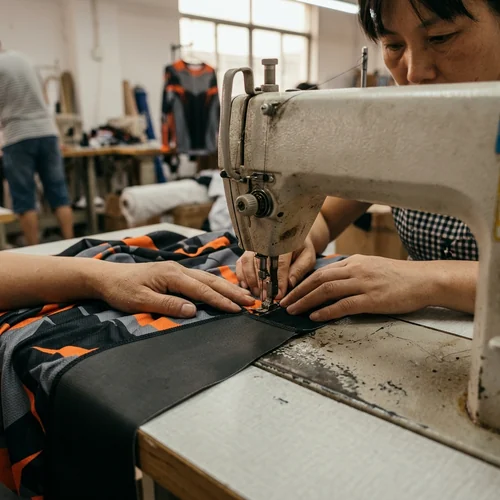
Answers · color and layoutA jersey, pant, crew shirt or club piece printed from the saved color profile with one rider's fields. The strip is archived when it is approved.
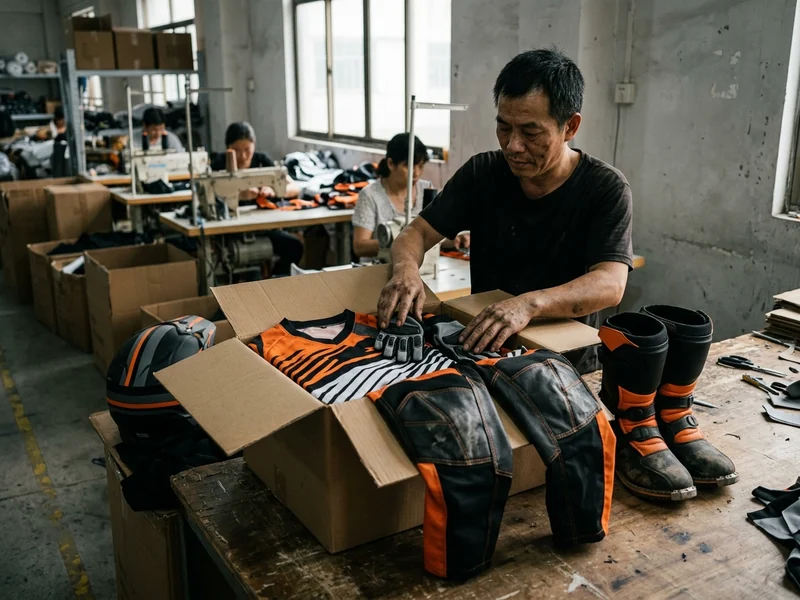
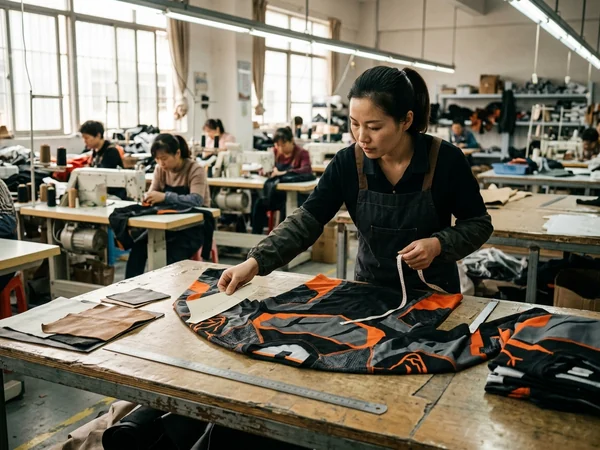
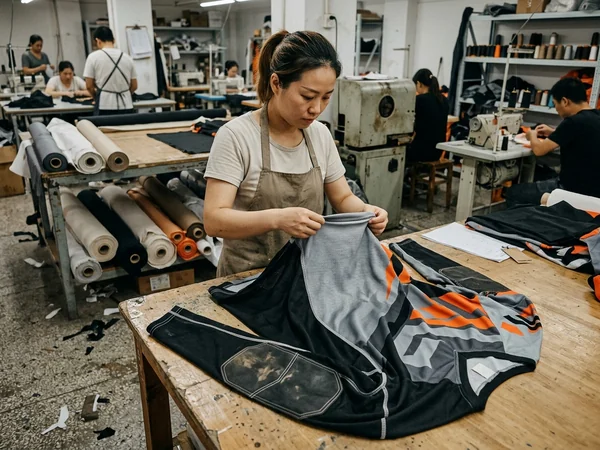
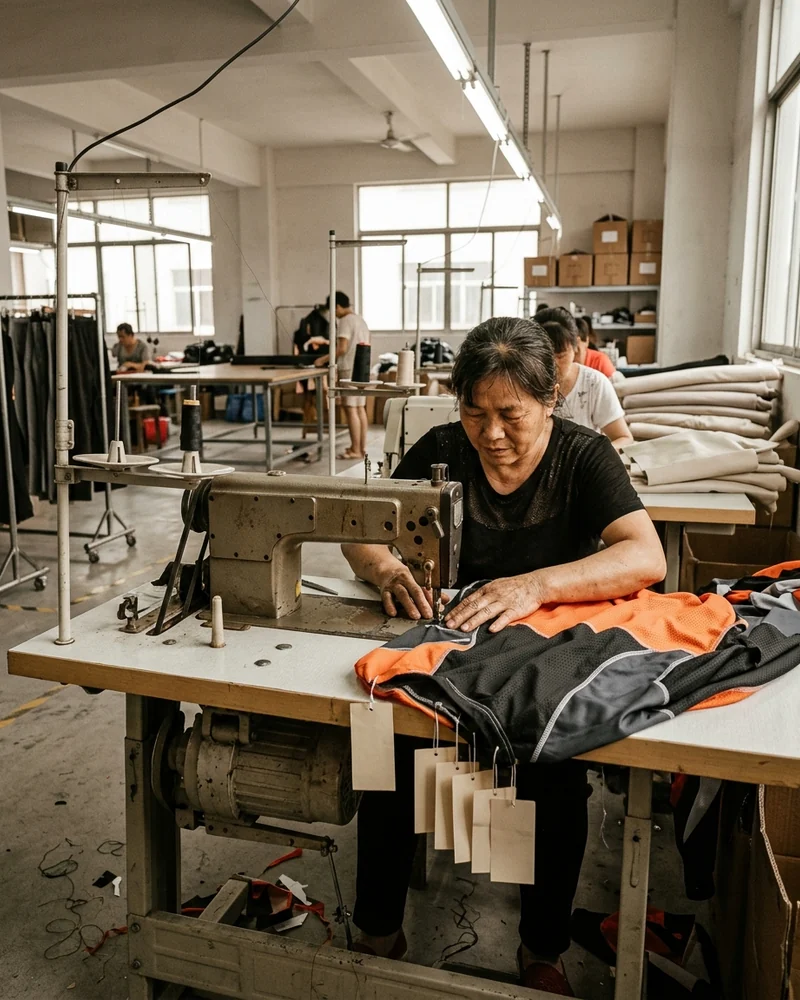
Three samples before bulk, three inspections during it. The sampling and production process at Run Moto Apparel: a sublimated sample in 7–10 days or a construction sample in 15–20, a size-run set on real people, then start-of-line on the first piece of each size, mid-line after the first 20 percent, and final on every piece, run by a QC lead who reports to nobody on the production floor.
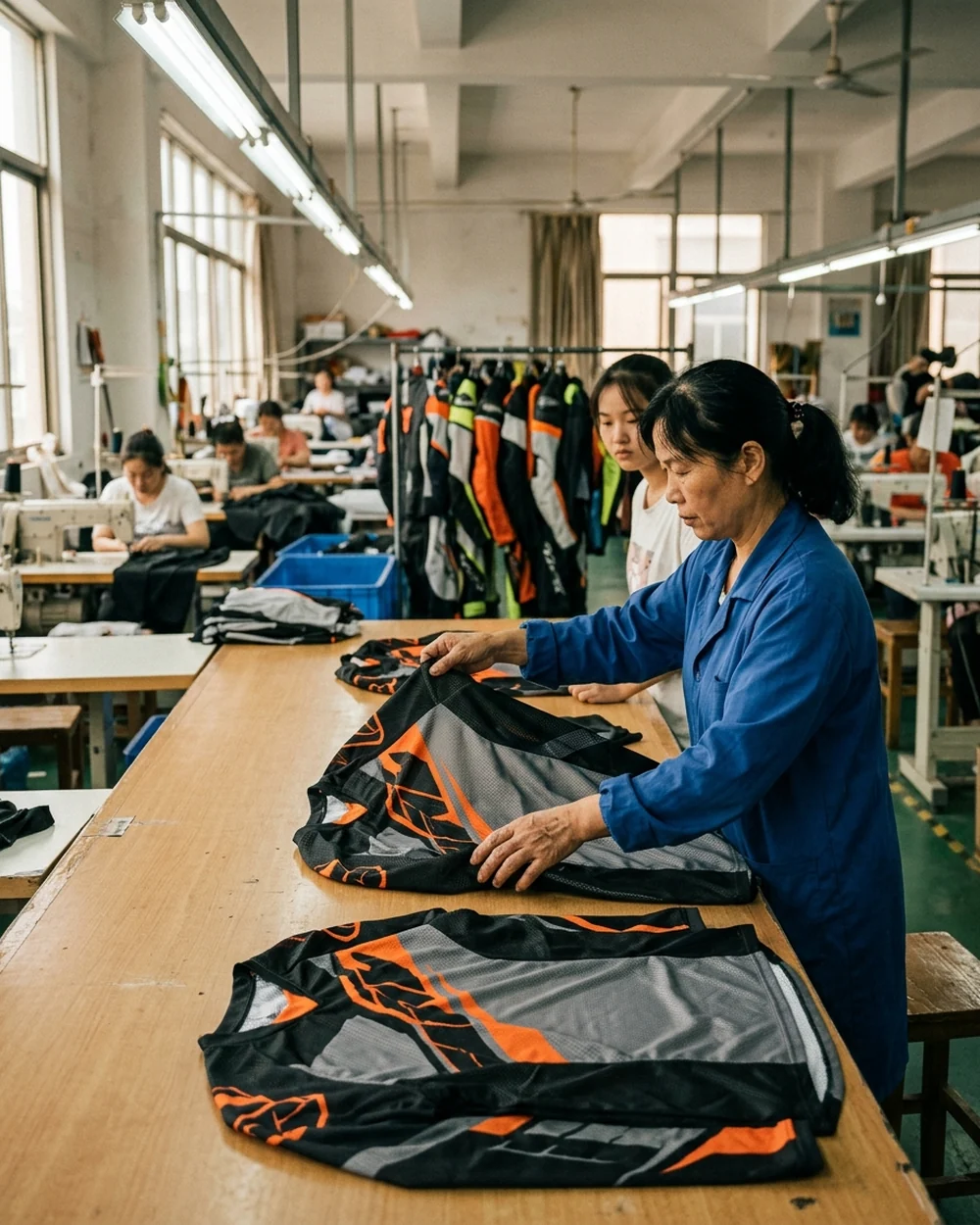
A motorcycle apparel sample answers one question; the three together answer color, construction and size, and start the sampling and production process.
7–10DAYSA jersey, pant, crew shirt or club piece printed from the saved color profile with one rider's fields. The strip is archived when it is approved.
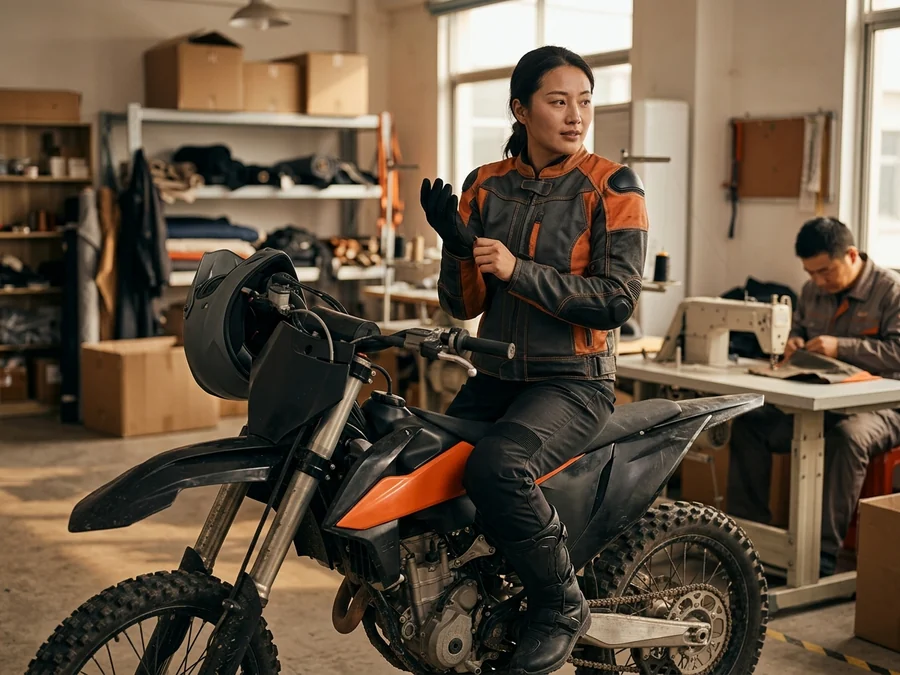 15–20DAYS
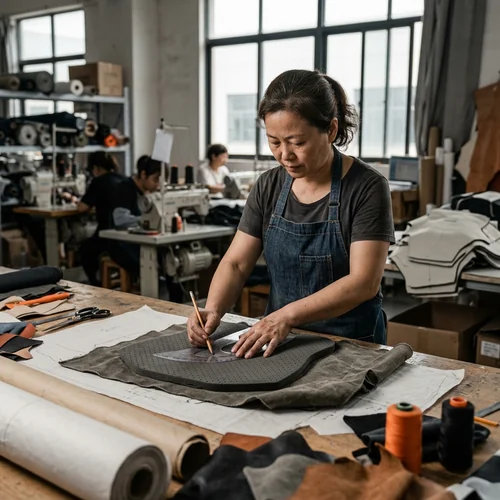
A jacket, glove, leather suit, kart suit or fire suit sewn in the core size. Fit comments are taken on the bike, armor in.
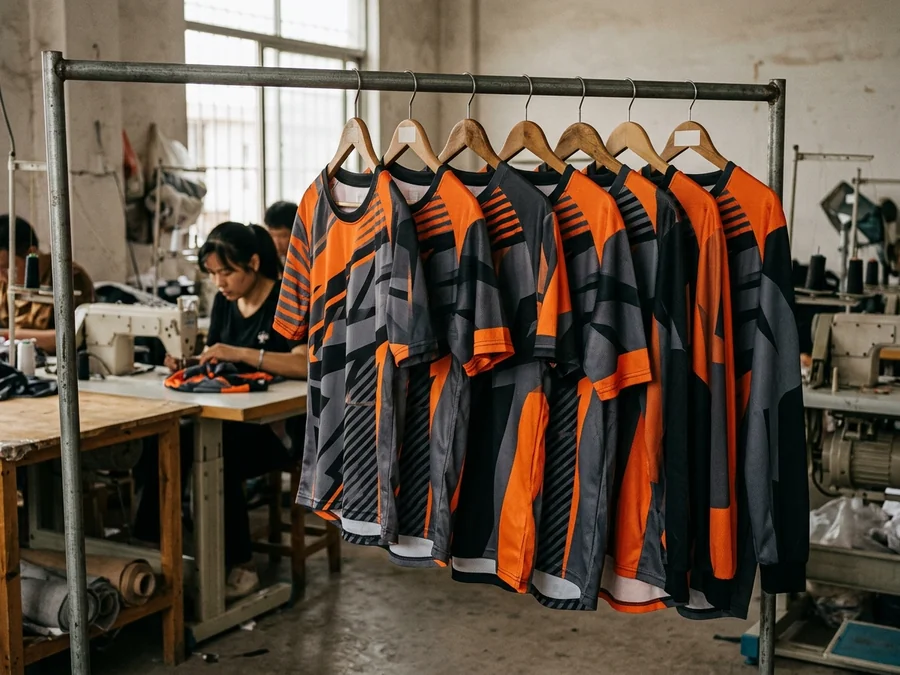 BeforeBULK
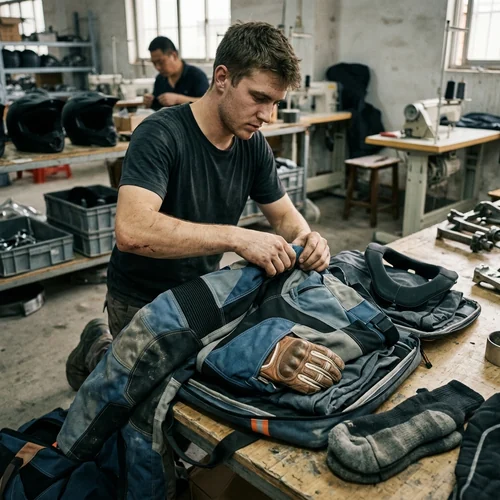
One garment per size, tried on real people with the gear they ride in. The signed size sheet comes out of it and travels with the order.
In the sampling and production process the sample is not sent alone; the four documents around it are what the approval is made against
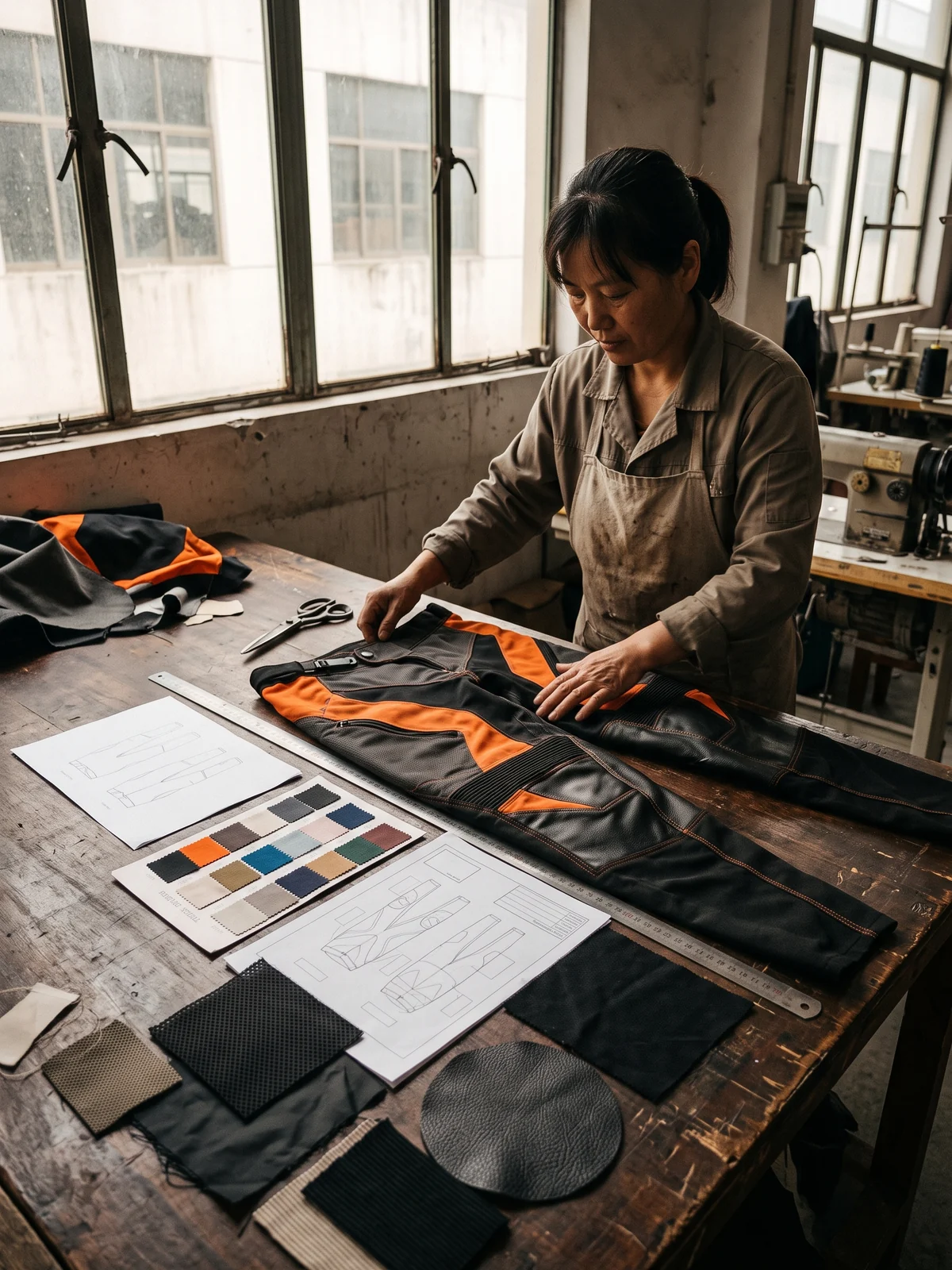
The cheapest place to find a wrong measurement is the first piece; the most expensive is the box
Released size by size. When bulk starts, the first finished piece of each size is laid on the signed size sheet and measured before the size is released to the line. A size that measures off is corrected on the pattern or the machine setting before a second piece is sewn. For sublimated pieces, the first printed panel of the run is also laid against the archived strip under daylight before the press runs the batch.
Photographed. The start-of-line photo, with the size sheet in the frame, is taken at this check and sent before shipping.
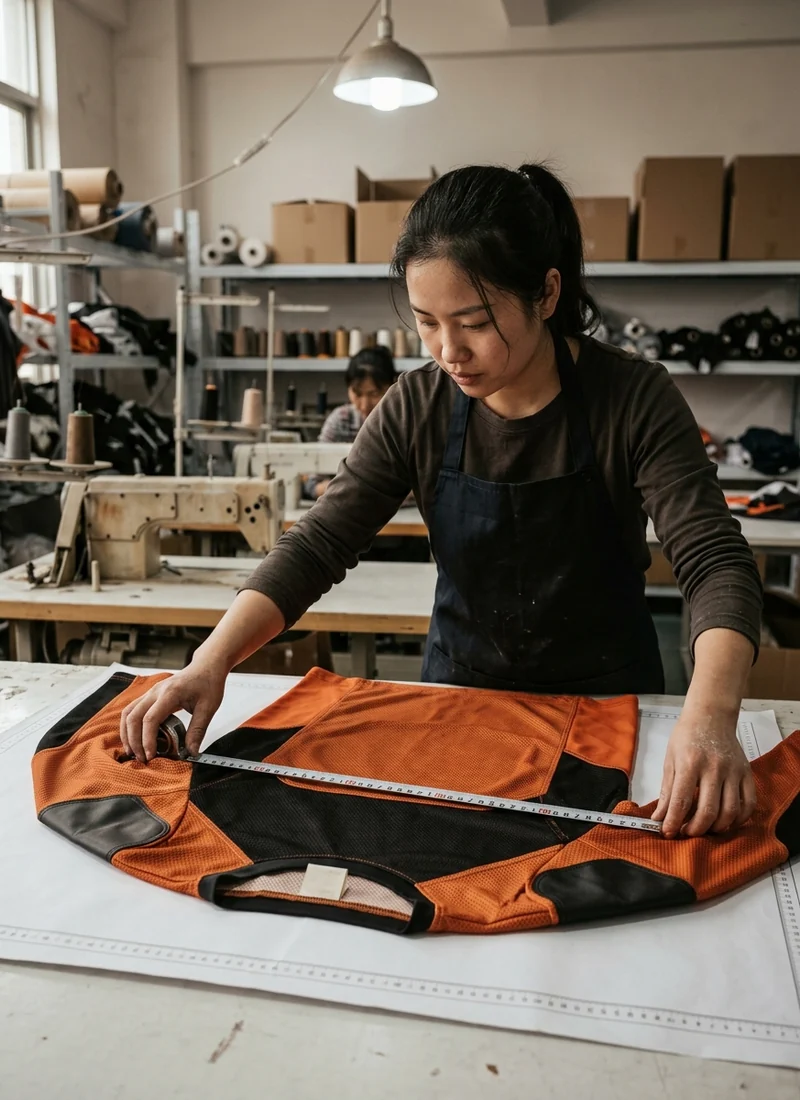
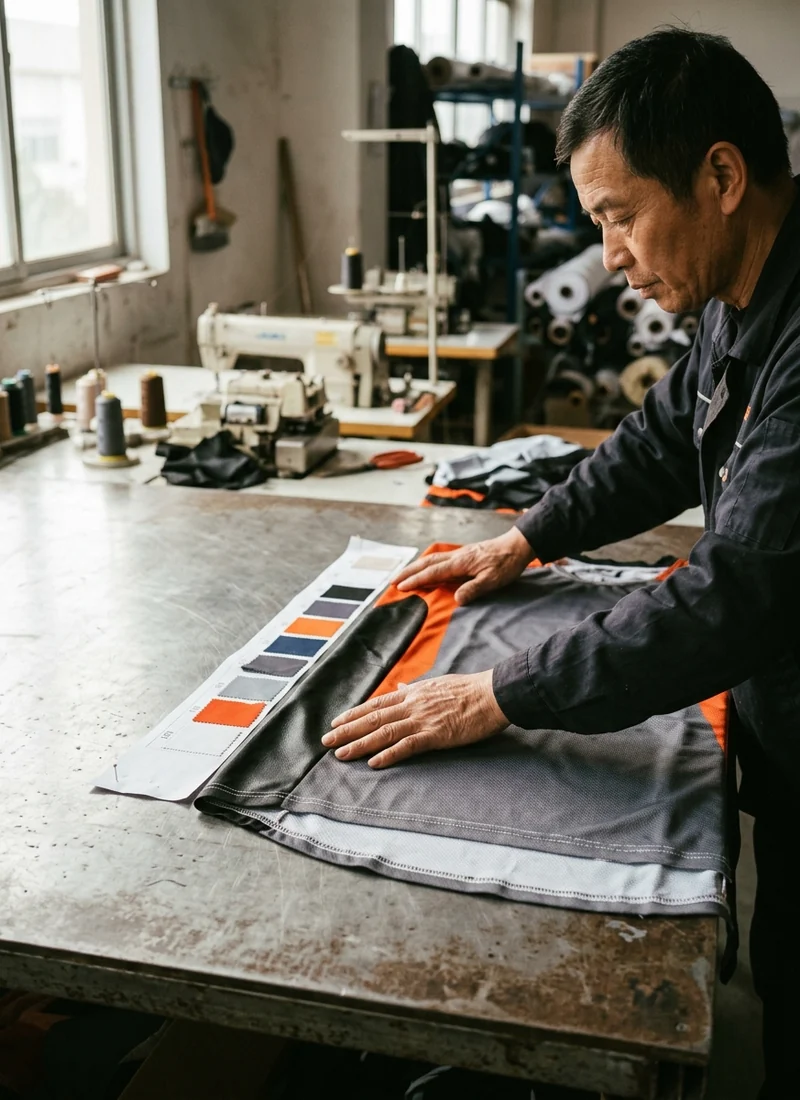
One apparel batch inspection in the middle of the run, with the authority to stop it, catches what drift and fatigue put into the second half. Scroll: the batch fills to the gate.
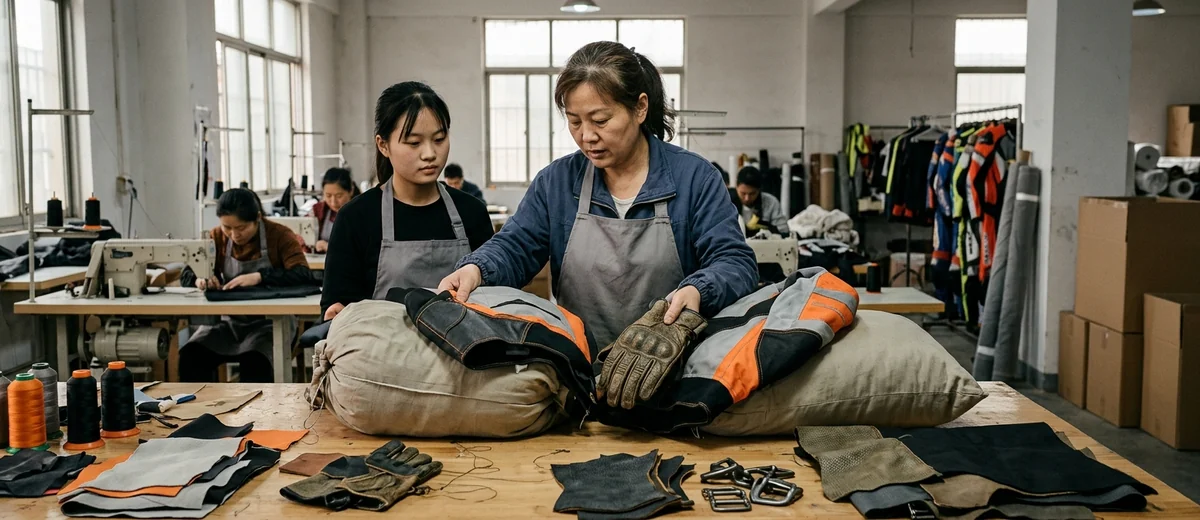
Pulled across sizes, checked against everything. After the first 20 percent of a batch is sewn, the QC lead pulls pieces across sizes, not from one bundle, and checks them against the size sheet, the layout and the strip. A failed mid-line stops the line until the cause is found and the pieces sewn since start-of-line are re-checked.
Why 20 percent. Early enough that a stopped line costs a day, not a batch, and late enough that the line has settled into the run and the drift, if there is any, has started.
A failed mid-line stops the line. A line lead cannot wave it through to hit a date, and the sales manager cannot ask.
Final is not a statistical sample; every piece is checked, because every piece has someone's name on the bag
Every piece, every field. At final, every piece is checked: measurements against the size sheet on a spot basis, every name and number against the roster line, every badge and logo against the layout, every zip and closure worked, every armor pocket with armor in where fitted, every seam tape line on a membrane shell. Pieces that fail are repaired or remade before packing, not packed with a note.
Then the box. The batch is packed by rider, member or size, and the packed-order photo set is taken with every bag in the frame before the box is sealed.
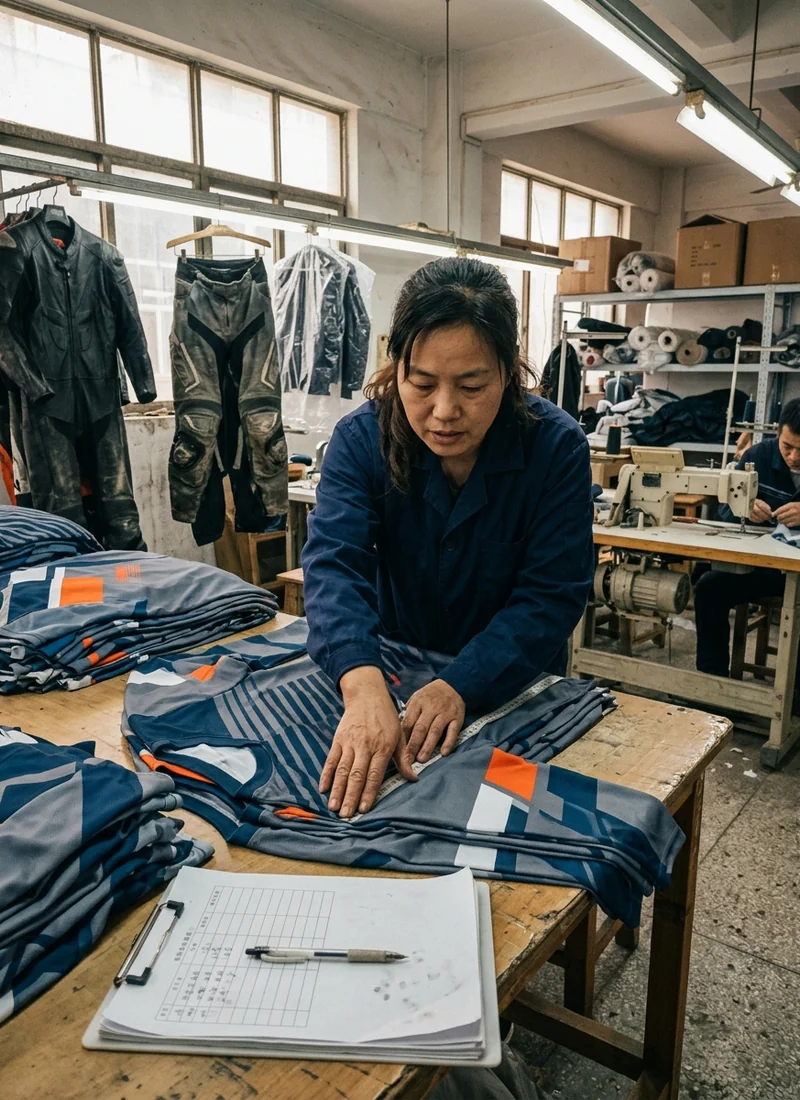
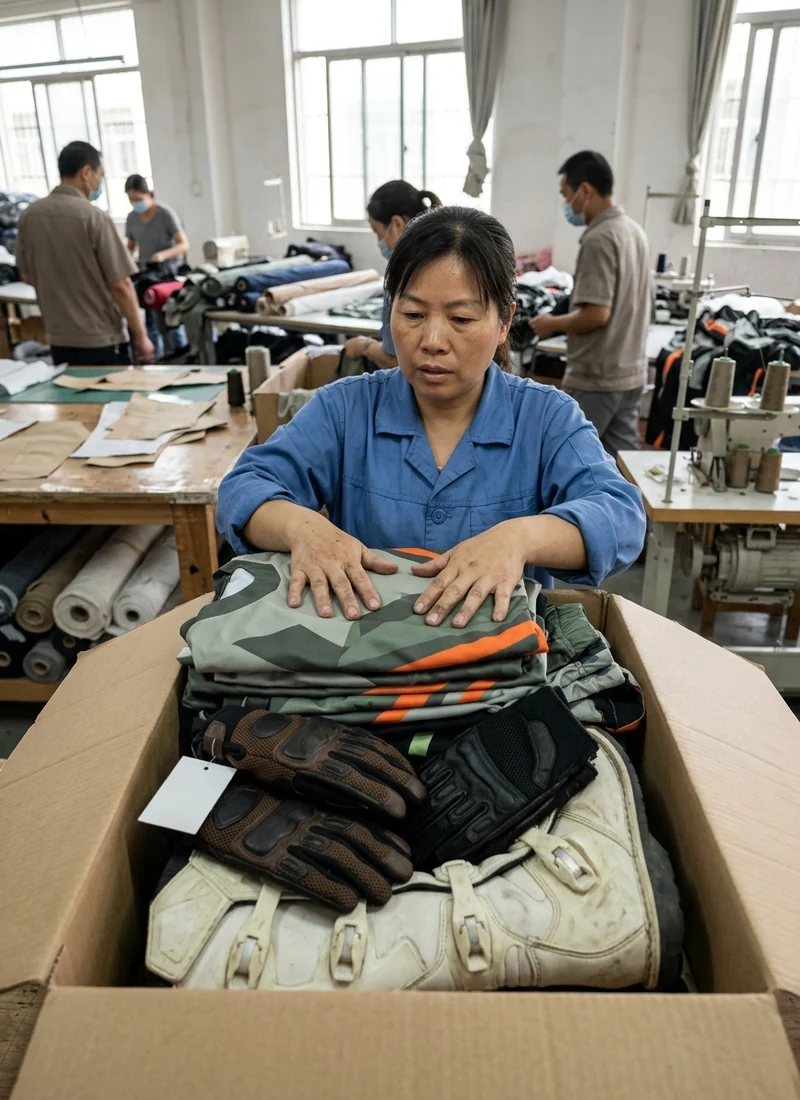
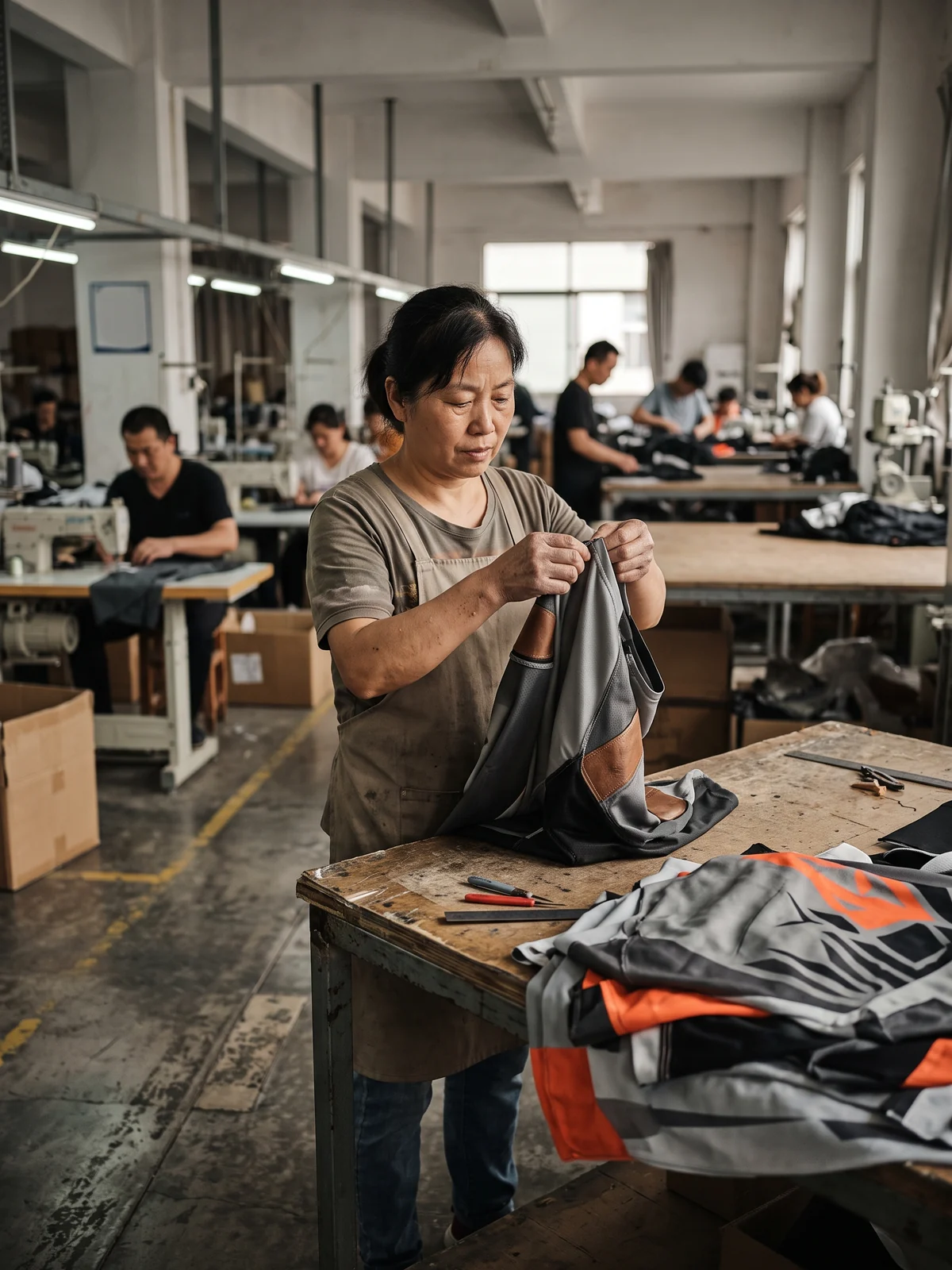
Quality control that reports to production finds what production wants found
Authority to stop and to hold. The QC lead runs the three inspections and reports outside the production floor. The lead has the authority to stop a line at mid-line and to hold a batch at final, and the sales manager who owns the order is told the same day. That independence is why the stop rule works: a line lead cannot wave a batch through to hit a date, and the sales manager cannot ask for it.
And the sample pack. The lead is also the person who checks the sample pack against the sample before it leaves, so the four documents match the garment the customer receives.
Records, not claims. None of the three checks is a claim on a certificate wall; each leaves a record a customer can ask for: the start-of-line photo per size, the mid-line result with the date and the sizes pulled, and the packed-order photo set. A buyer who has never visited the floor can still read the three records against the roster and the size sheet and know the batch was checked the way this page says.
A failed check is a decision, not a discussion; here is who makes it and how fast
The pattern or machine setting is corrected before a second piece is sewn; no decision needed.
Pieces since start-of-line are re-checked; the cause is fixed; the sales manager is told the same day.
Before packing; the batch is held until every piece passes.
A quality issue reported within 7 days, decided within one business day of being confirmed, by the sales manager who owns the order.
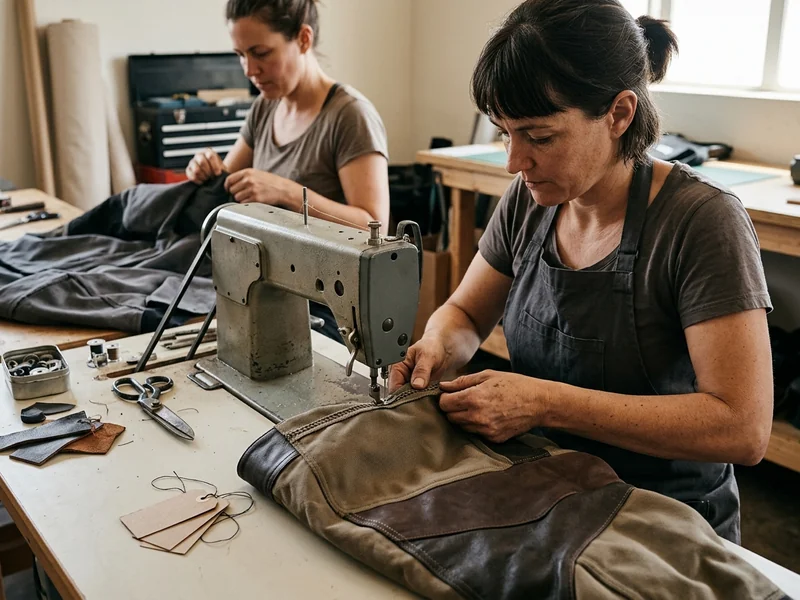
Two photo sets and one strip; the customer sees the sampling and production process, not a claim that it happened. Taken by the QC lead, filed with the mid-line result.
The first piece of each size on the signed size sheet, sent before shipping.
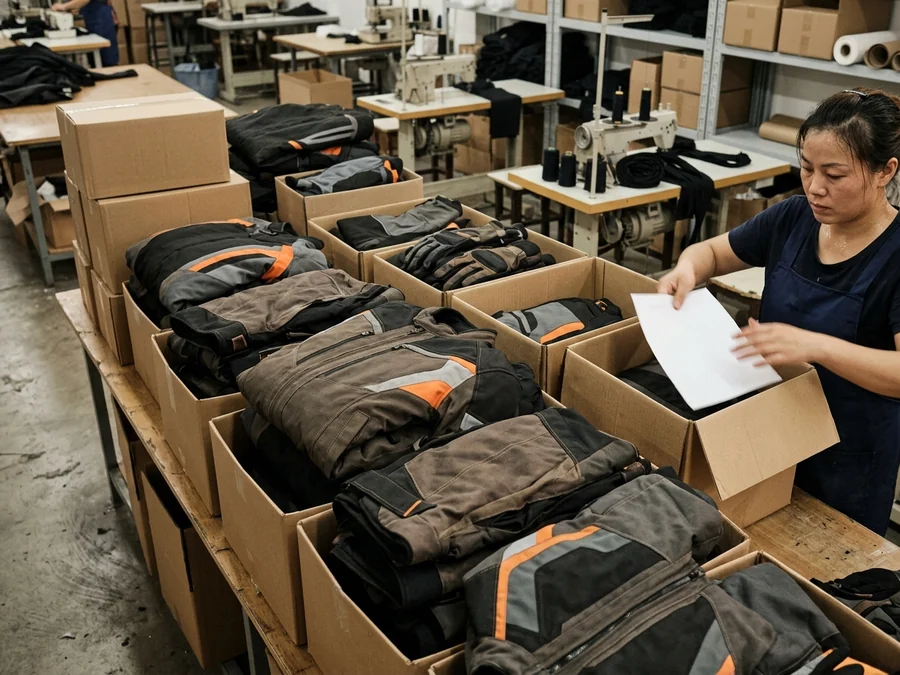
Every bag or every carton in the frame.
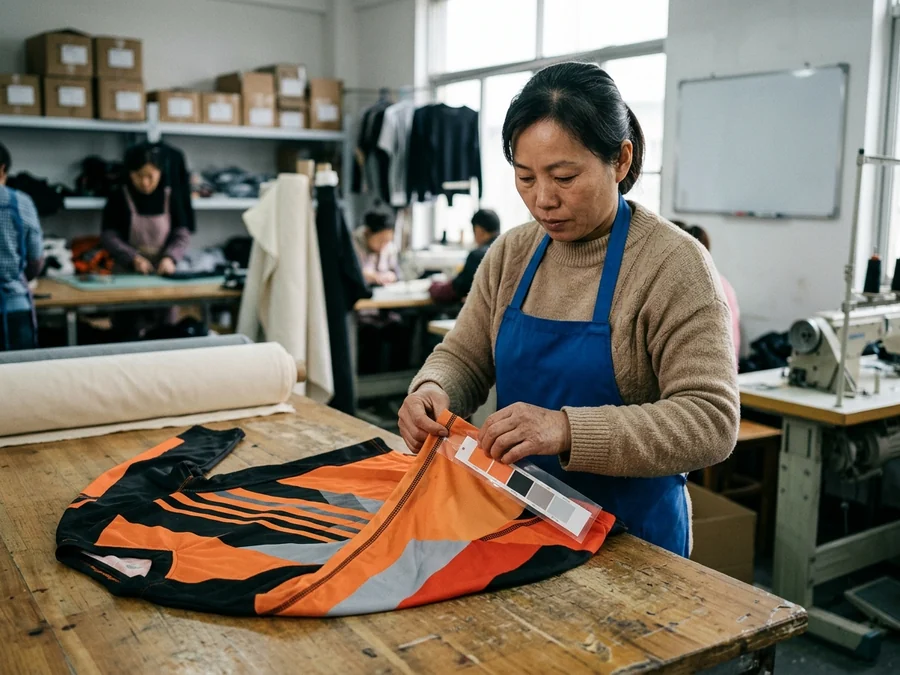
For sublimated orders, so the customer can check the next run against it.
The same six stations as every line page, with the three inspections placed where they happen. Dark dots are the check points.
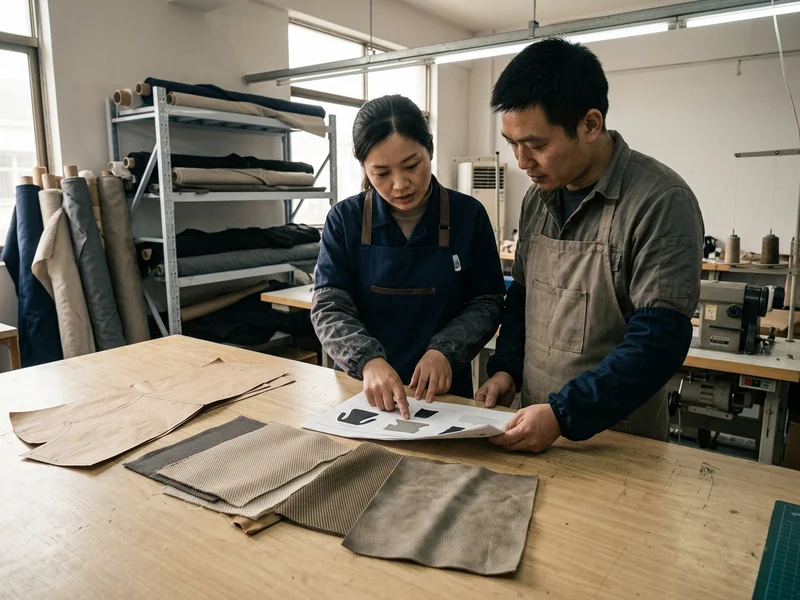
Read and questioned; the sample type decided.
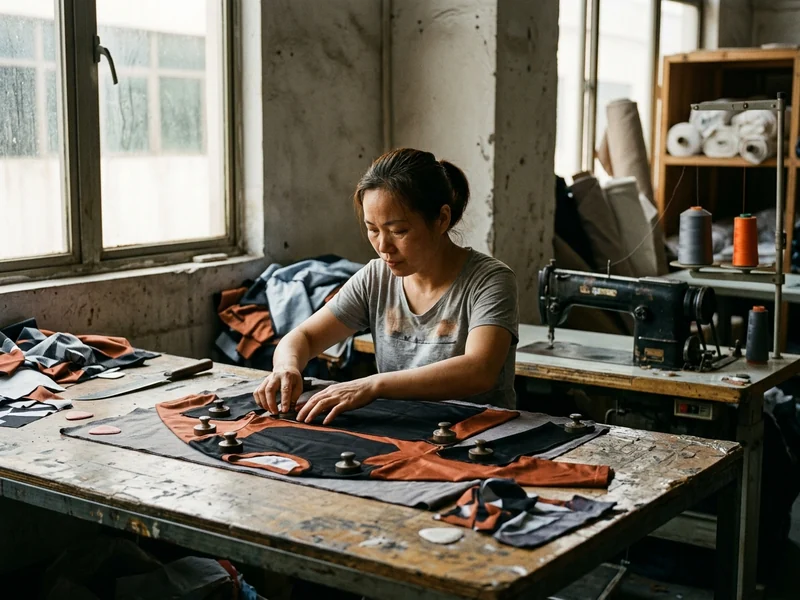
Layout for sublimated pieces; block for a construction sample.
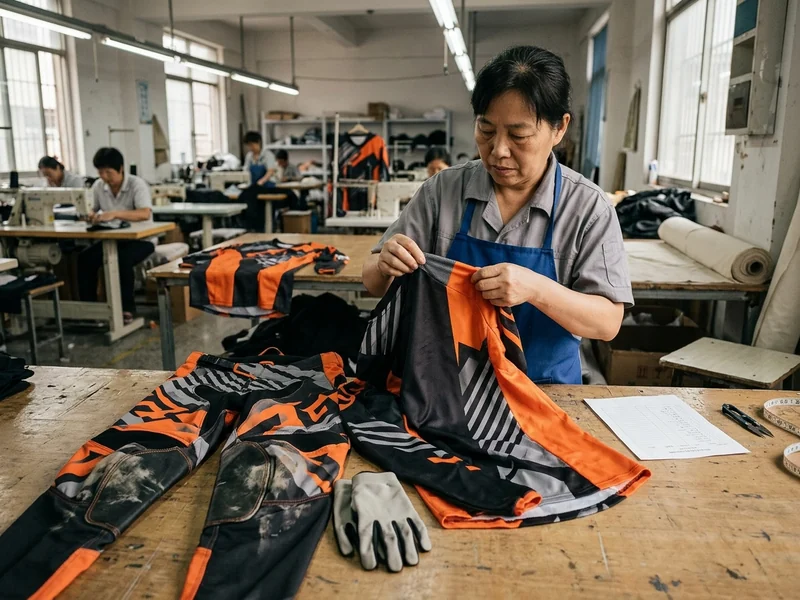
The sample pack assembled by the QC lead.
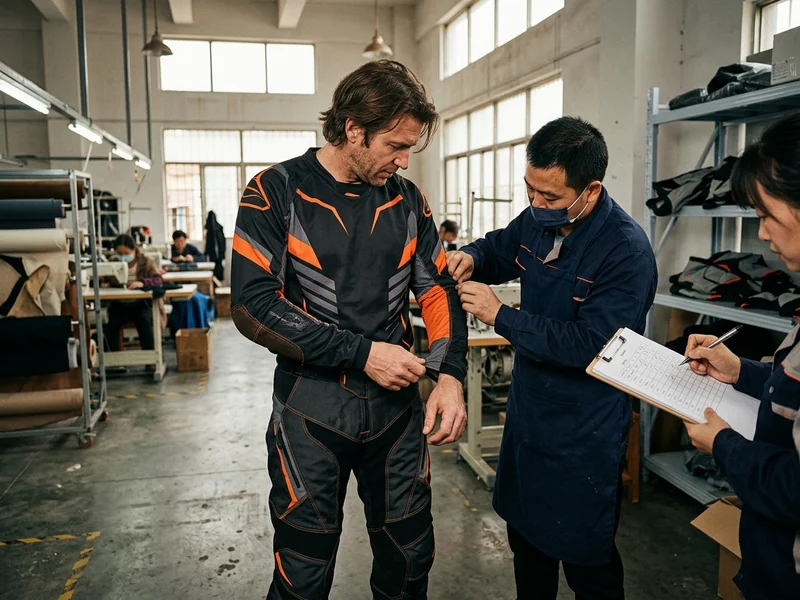
One garment per size, tried on; the signed size sheet returned.
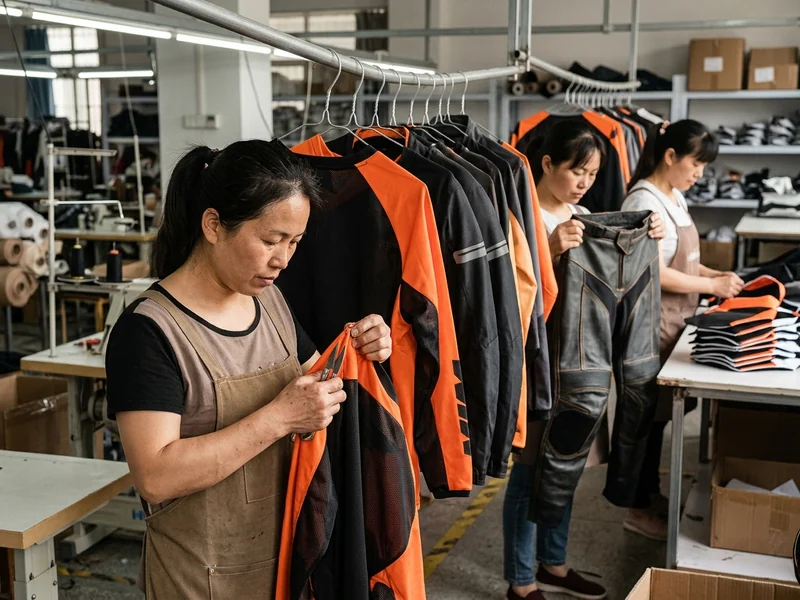
Start-of-line per size; mid-line with the stop rule; final on every piece.
By rider, member or size; the packed-order photo set.
Five checks on the sampling and production process a team manager or a product manager can do with the sample pack and the photo sets, without us there.
Against the size sheet, the strip, the layout and the swatches, in their numbering.
One garment per size on real people in their gear; sizes written on the sheet.
One per size, the size sheet in the frame.
On the order file, with the date and the sizes pulled.
Every bag counted against the roster or the carton list.
One sales manager owns the order from the first message to the 7-day window; the QC lead owns the three checks.
Changes before the sample is cut cost nothing; the table shows the ones that move the schedule
| Layout or development sheet changed before the sampleEdit the sheet, nothing else moves. | 0DAYS |
| Second sublimated sampleOnly if the layout moves. | 7–10DAYS |
| Second construction sampleOnly if a seam or the fit moves. | 15–20DAYS |
| Size added after the size-run setOne size-run garment for the new size before bulk. | +1GARMENT |
| Mid-line stopThe pieces since start-of-line re-checked. | A dayNOT A BATCH |
| Bulk after sample approvalScheduled backwards from your date. | 25–35DAYS |
Send these and Anna answers with the sample type and the sample date within 24 hours
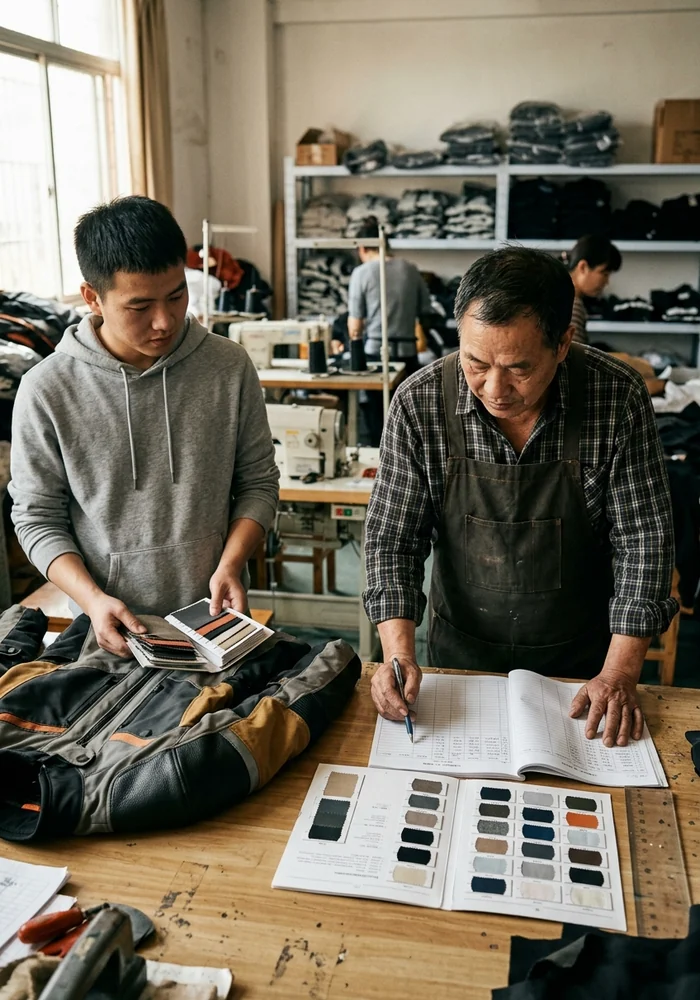
Where the three checks happen, and the process pages behind them
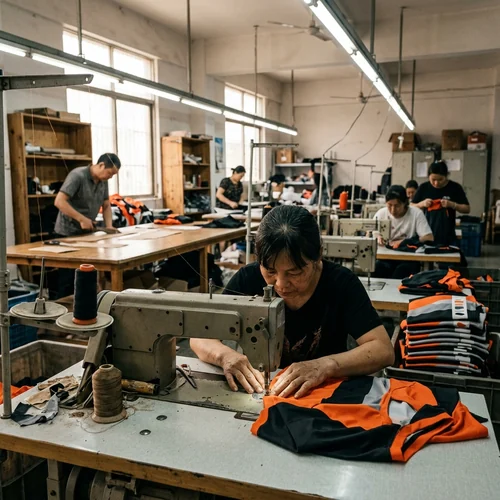
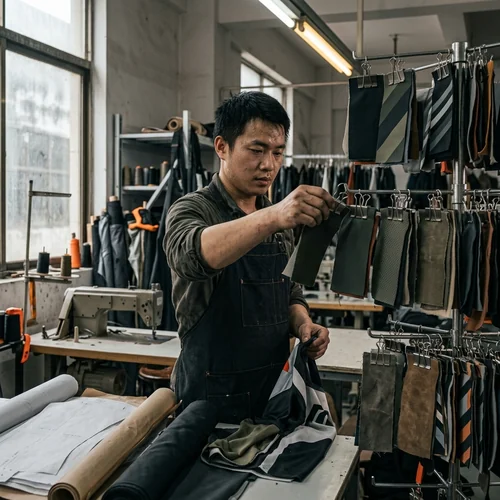
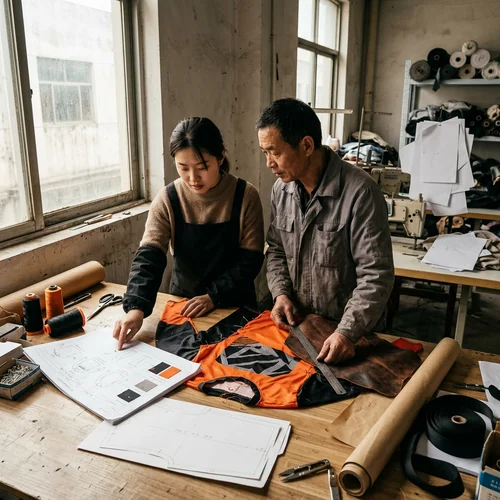
Anna replies within 24 hours on business days with the sample type, the sample date and the next step. No brochure, no price list; a real answer about your batch.