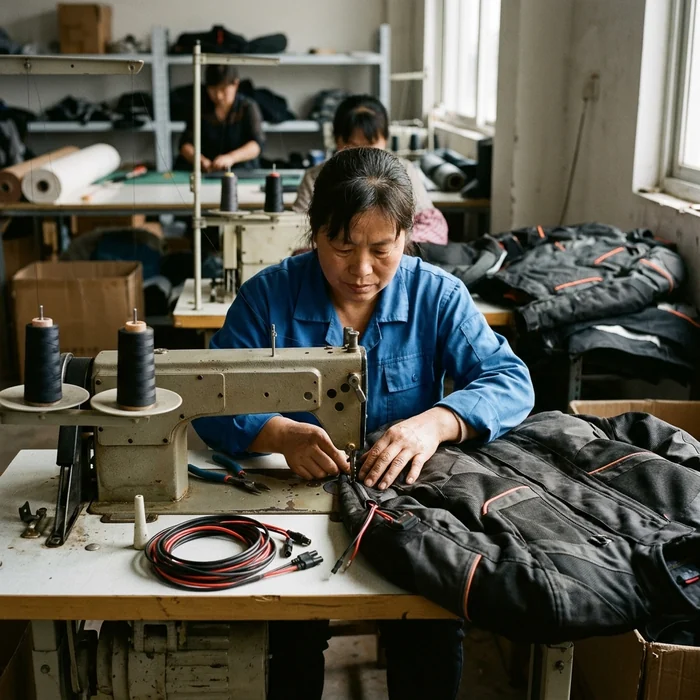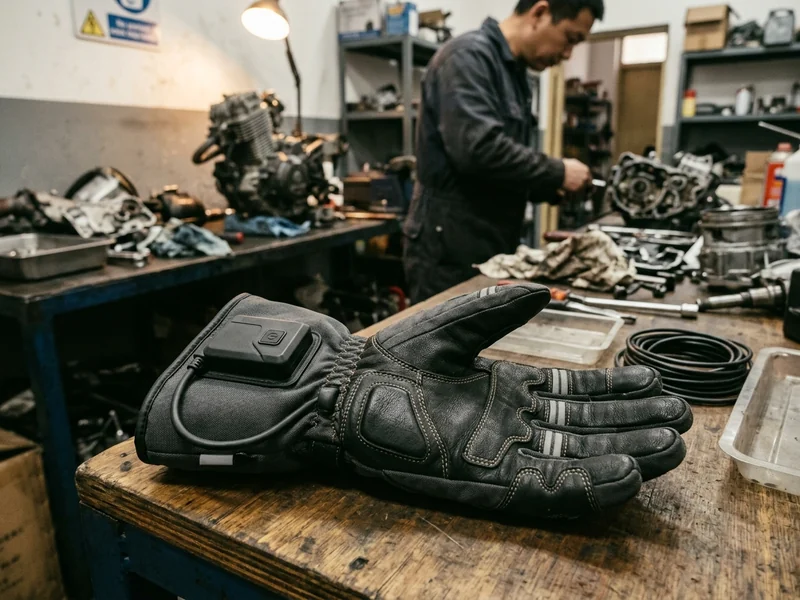
Elements carried to the fingertips

Heated Motorcycle Gloves: Where the Heat Actually Has to Go

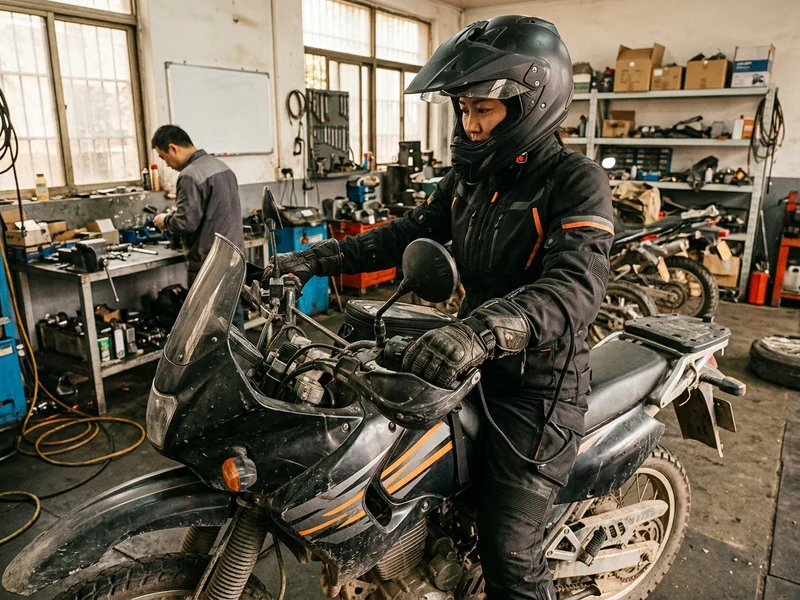
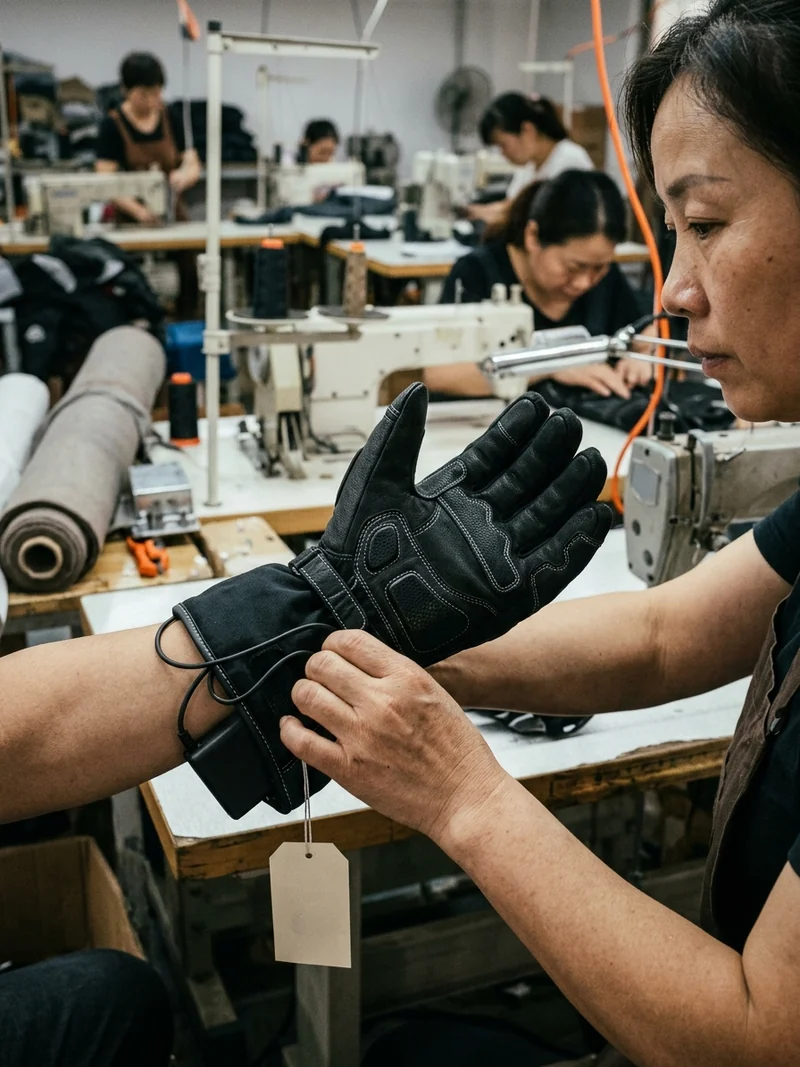
A heated glove lead running down the sleeve to a connector at the jacket
Bike power12 V, constant
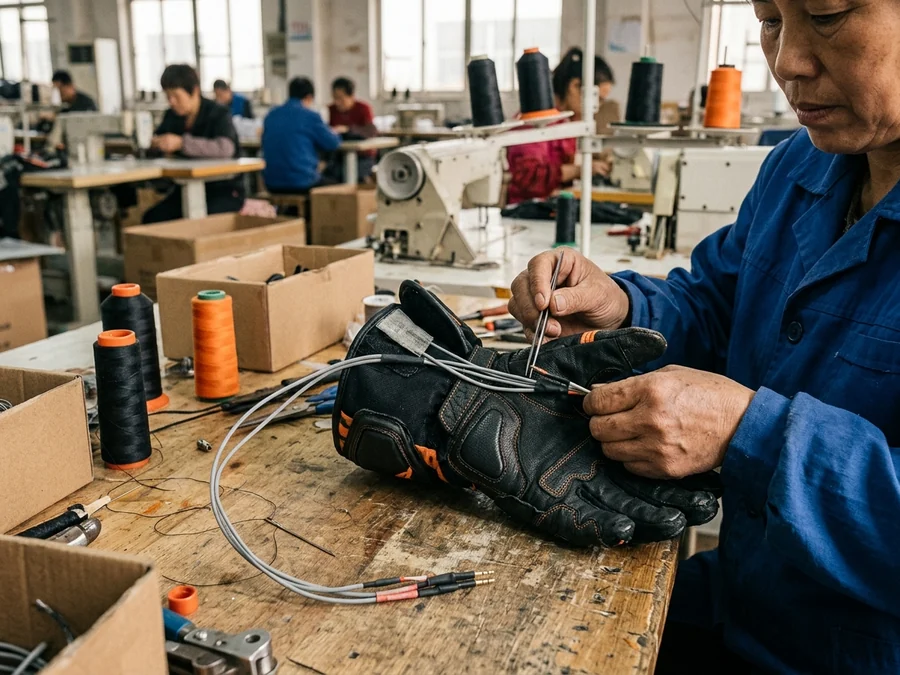
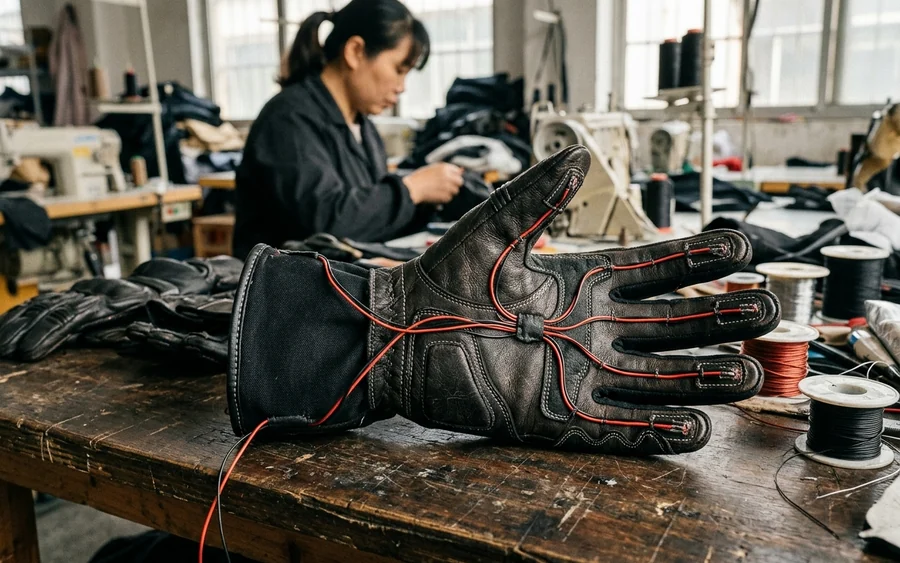
The back of a heated glove showing where the elements run to the fingertips
Where they runto the last two centimetres
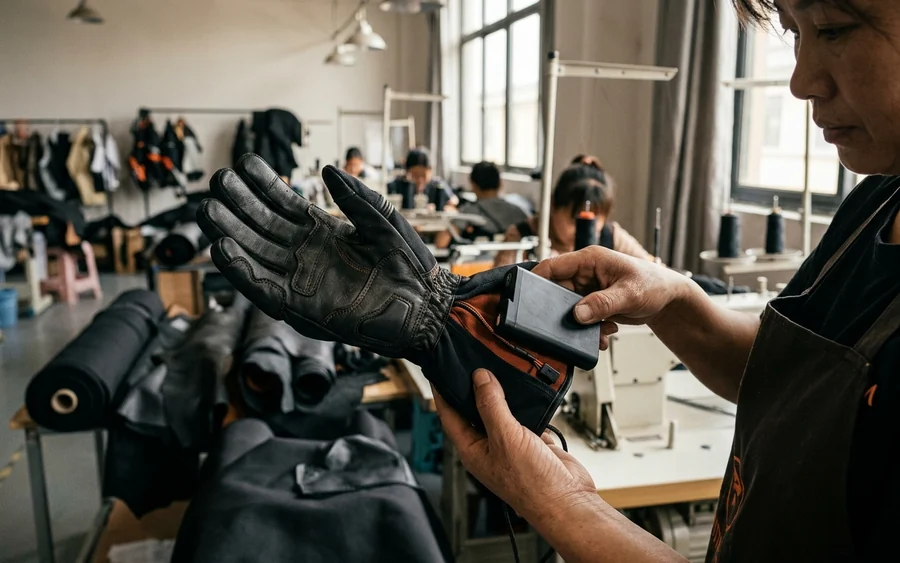
A removable battery pack sitting in the cuff pocket of a heated glove
Battery packin a cuff pocket

Cold hands on a bike are not a comfort problem, they are a control problem — a rider who cannot feel a lever brakes later. Most heated gloves are sold on a wattage figure and a claimed runtime, and most of them are cold in exactly the place a rider notices: the last two centimetres of the fingers.

Heated glove range

Custom Heated Motorcycle Gloves Collection

Battery-powered, motorcycle-connected and hybrid heated gloves developed for private-label brands, wholesalers and cold-weather riding programs.

Rechargeable battery heated motorcycle glove with the removable battery pack at the cuff

Rechargeable Battery Heated Gloves

A removable rechargeable battery built into the glove, with no connection to the motorcycle needed—suited to city commuting and short rides.

Request This Style →
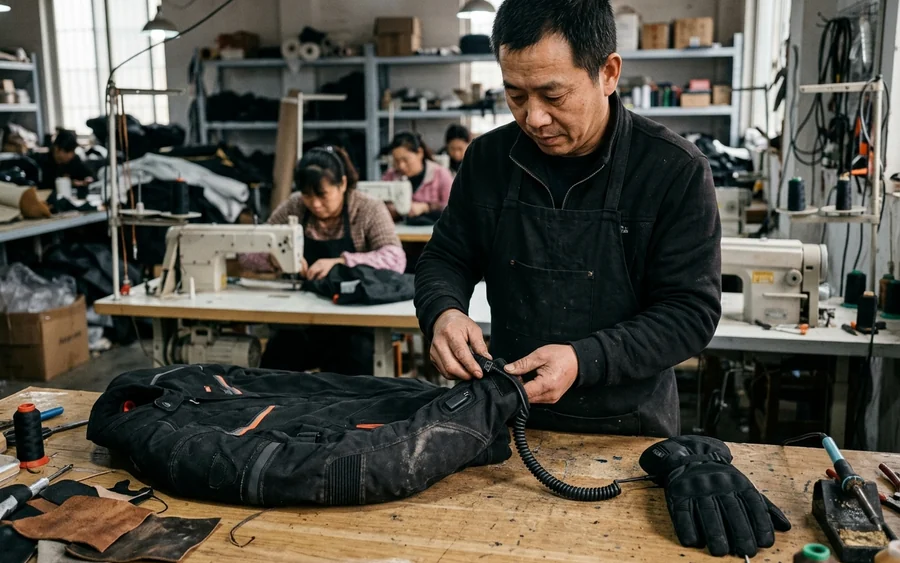
12V motorcycle-powered heated glove with its power lead running to the bike

12V Motorcycle-Powered Heated Gloves

Connects directly to the motorcycle’s 12V power supply for continuous heating—suited to long winter rides.

Request This Style →
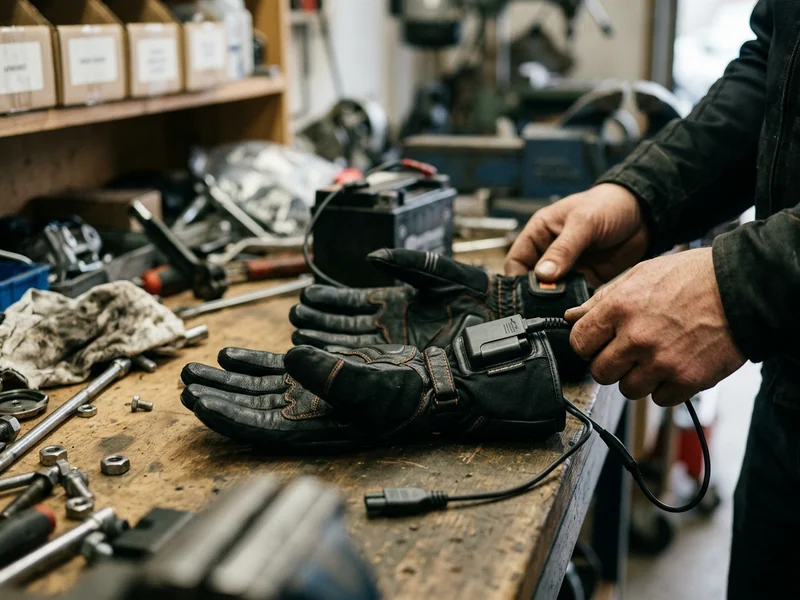
Hybrid dual-power heated motorcycle glove shown with both the battery pack and the bike power lead

Hybrid Dual-Power Heated Gloves

Runs on either the rechargeable battery or the motorcycle’s power supply, switching easily between commuting and long-distance riding.

Request This Style →
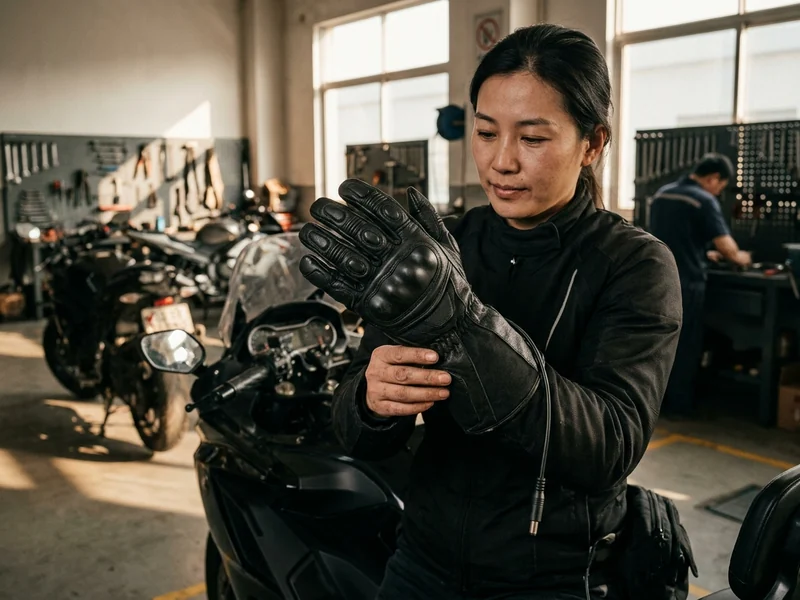
Heated touring motorcycle glove with a long gauntlet and knuckle protection

Heated Touring Gloves

Long gauntlet, waterproof membrane, insulation layer and knuckle protection—suited to winter touring and ADV riding.

Request This Style →
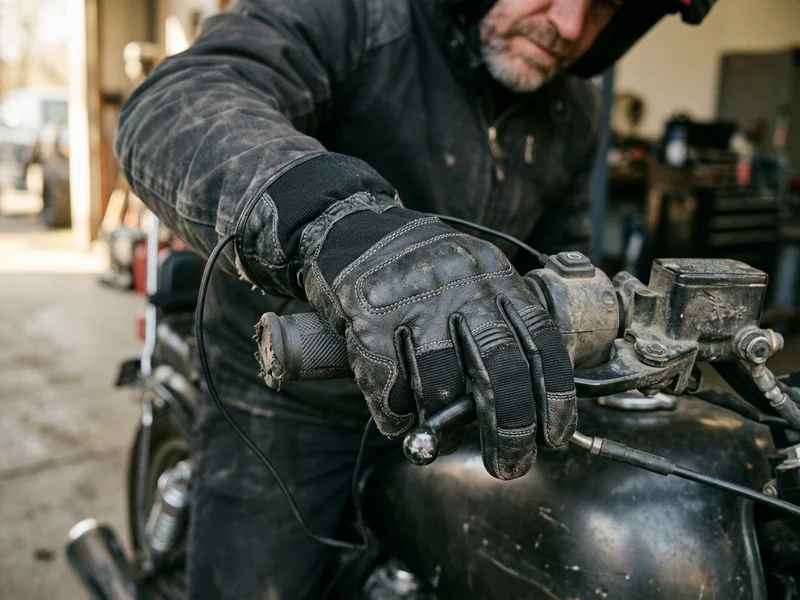
Three-finger heated motorcycle glove on a rider’s hand at the handlebar

Three-Finger Heated Gloves

A three-finger construction reduces heat loss while keeping full control of the throttle, brake and clutch.

Request This Style →
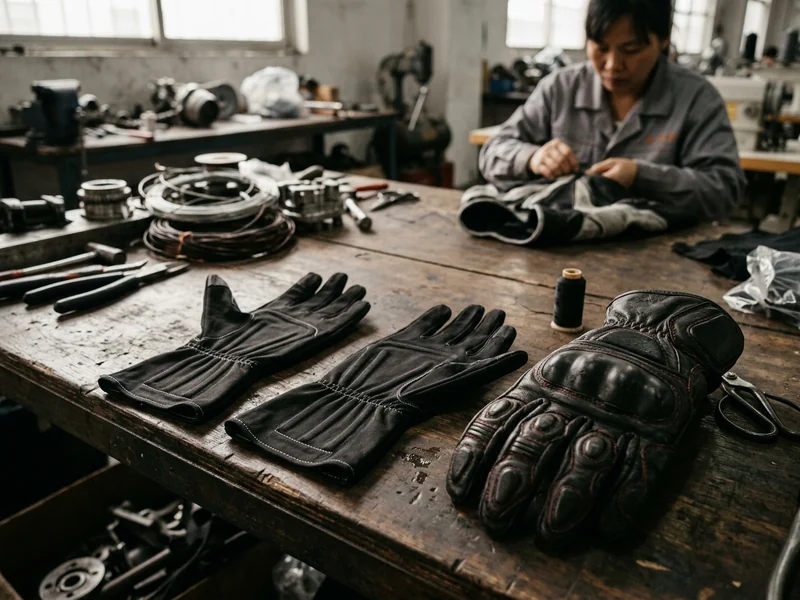
Thin heated motorcycle glove liner laid flat beside a protective outer glove

Heated Motorcycle Glove Liners

Thin heated liners that pair with existing protective gloves—suited to brands expanding their heated accessory range.

Request This Style →
Who buys them from a factory

Who buys heated gloves from a factory: brands, dealers, fleets and clubs

Four buyers, and none of them is actually buying a heat figure.
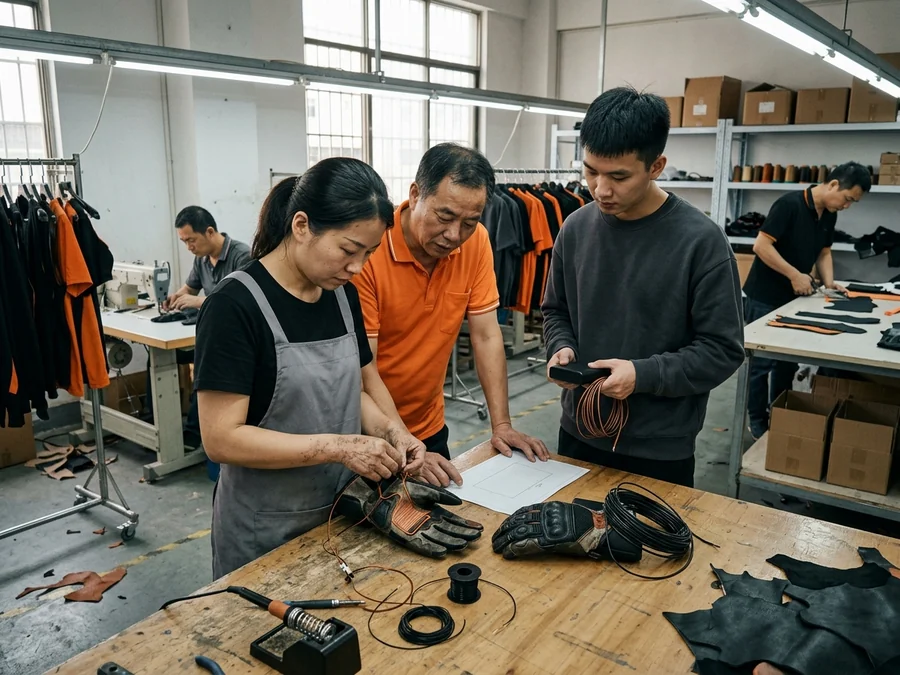
Brand team adding a heated model to an existing glove range

Riding-gear brands

Add a heated model to a glove range and need the build to match the rest of the line.
Wants · consistency with the line
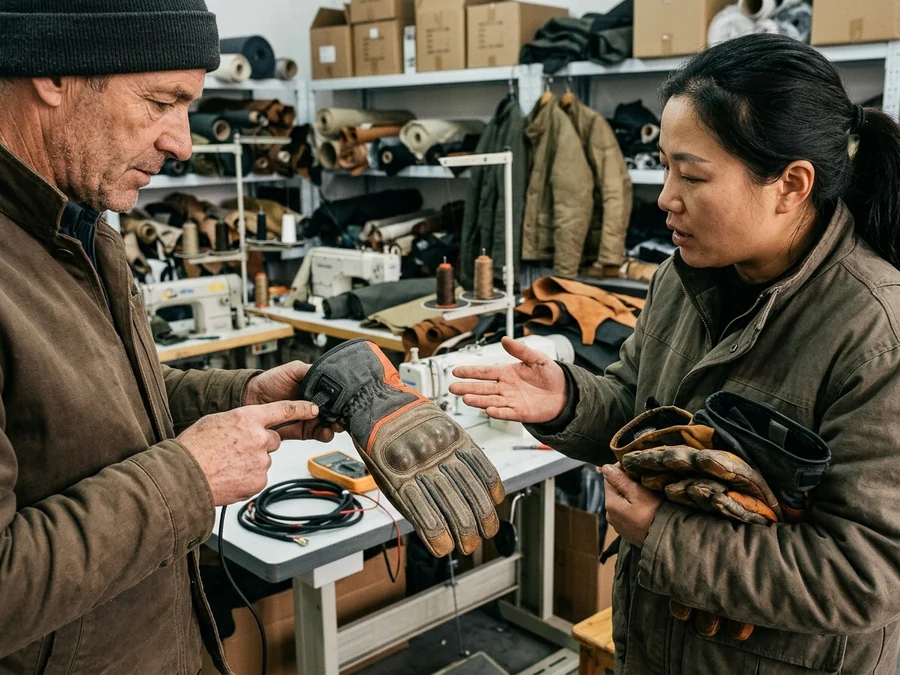
Dealer stocking a heated glove as a winter piece

Dealers with their own label

Want a winter piece their customers come back for, in a run they can actually commit to.
Wants · a small winter run
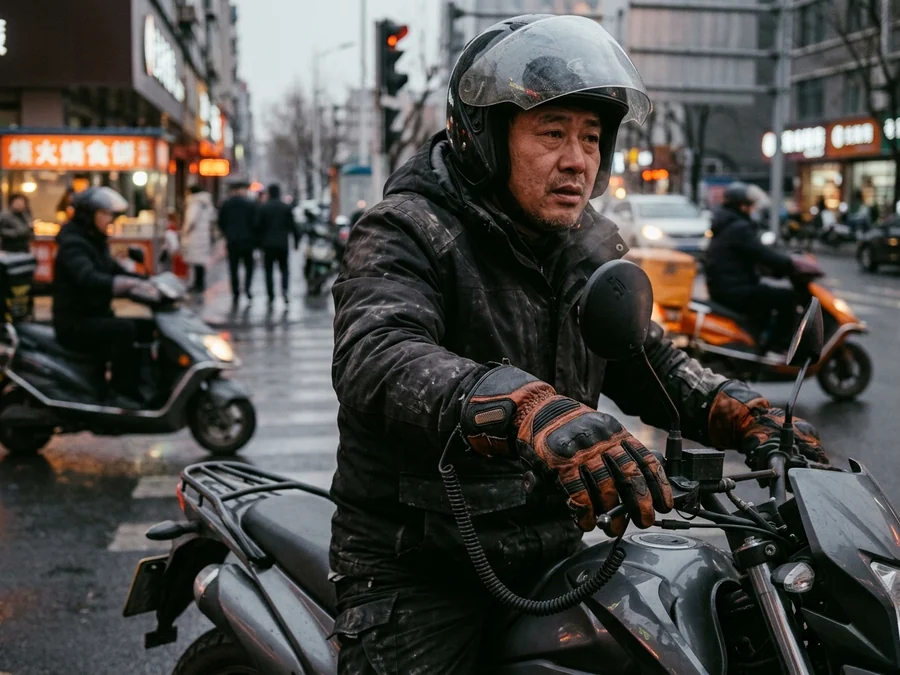
Courier riding all day in the cold with heated gloves

Fleets, couriers and instructors

Buy for people who ride all day in the cold and will find every weak point within a month.
Wants · the weak points fixed
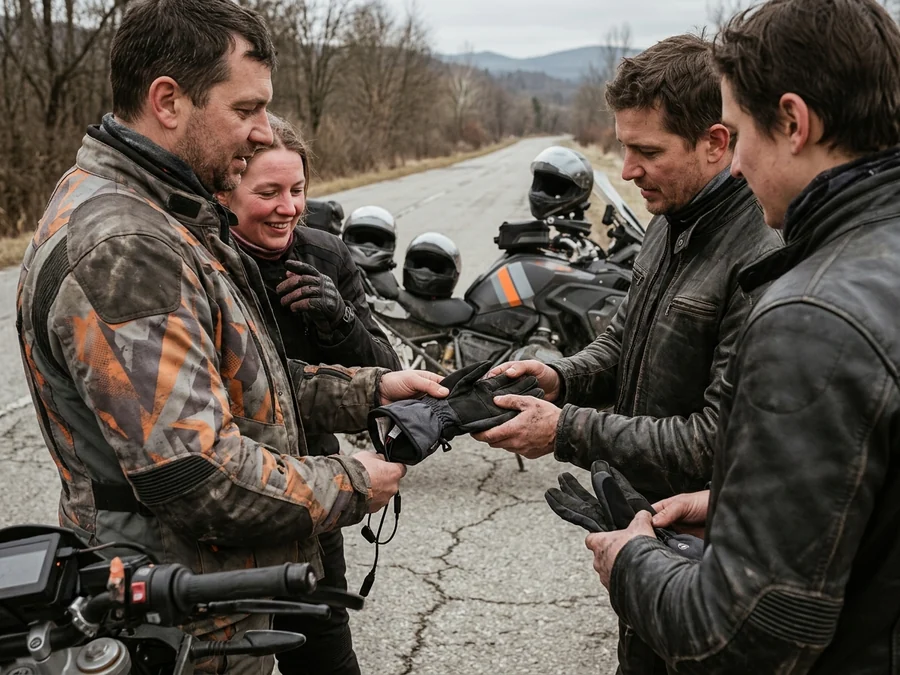
Touring club riders comparing gear on a winter ride

Touring clubs and rider groups

Order for members who ride in winter by choice and compare notes ruthlessly afterwards.

Wants · to survive the comparison
Not this page
  • Standard riding gloves without heating, which have their own page
  • Heated jackets and liners, which are a different build
Where the elements run

The fingertips are the test, not the back of the hand

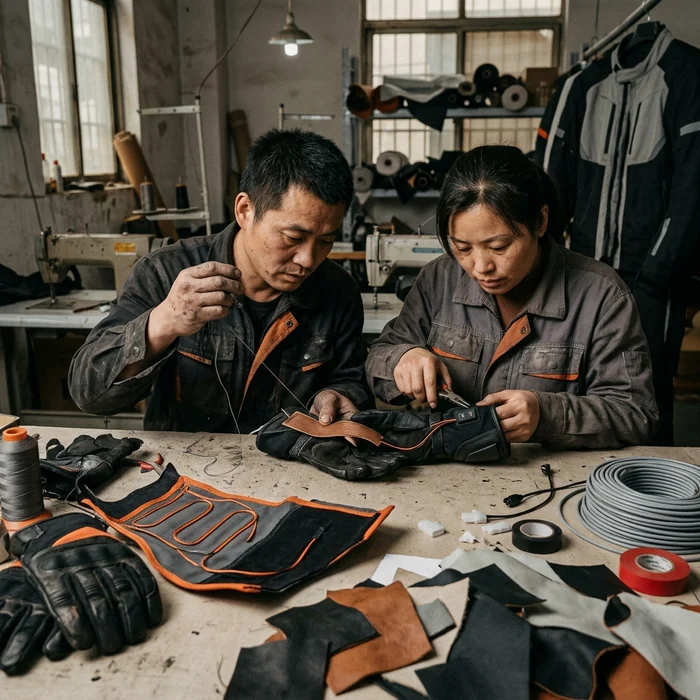
Scroll: the circuit powers up from the cuff and runs out to the tips. Cheaper gloves stop at the knuckle line — and heat the part of the hand that was never the problem.

1Enough for a dry commute
2The one most riders live on
3For the worst of it

Why the back of the hand, and not the palm

The palm is against a heated grip or against the bar, and blood warmed across the back of the hand reaches the fingers anyway. An element in the palm also sits exactly where a rider needs feel, and exactly where the glove has to survive abrasion.

  • Routing an element to the end of a finger means it survives a joint bending thousands of times per ride — that is the expensive part, and it is the part that gets skipped.
  • Three levels sit on an inline controller; the number of levels is not the interesting part, the position of the control is.

What the routing costs to do properly

An element that runs to a fingertip crosses two joints that bend on every single input — the clutch, the brake, the throttle, a glance at a mirror. It has to be laid with slack rather than tension, joined off the crease, and held by the pattern rather than by the adhesive, and all three of those add time to a glove that could otherwise be finished at the knuckle line and still photograph well.

How to check itPut the glove on, switch it on, and hold your own fingertips. If the tips are cool while the back of the hand is warm, the elements stop at the knuckles.
Two power routes

Bike power or a battery pack: the choice changes the glove

Not just what comes in the box — the cuff itself is built differently for each, which is why it is chosen before the pattern.
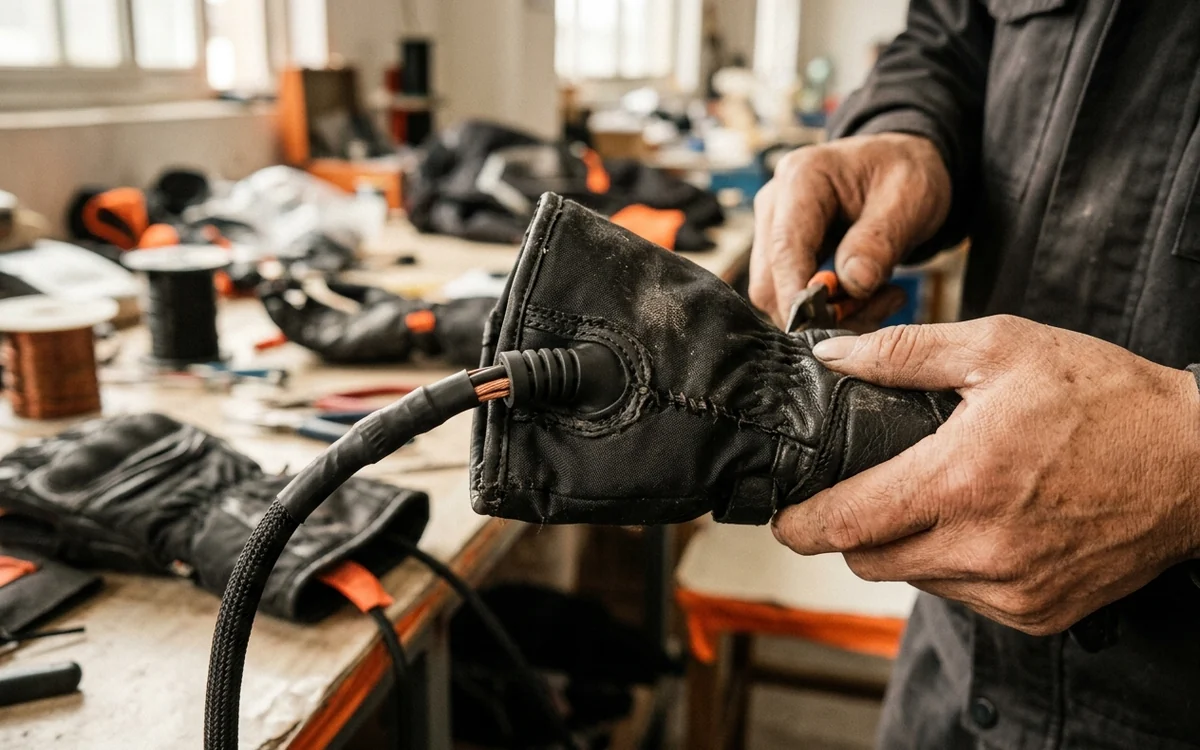
The lead exit at the cuff of a bike-powered heated glove, with its strain relief
Bike leadexit and strain relief built in
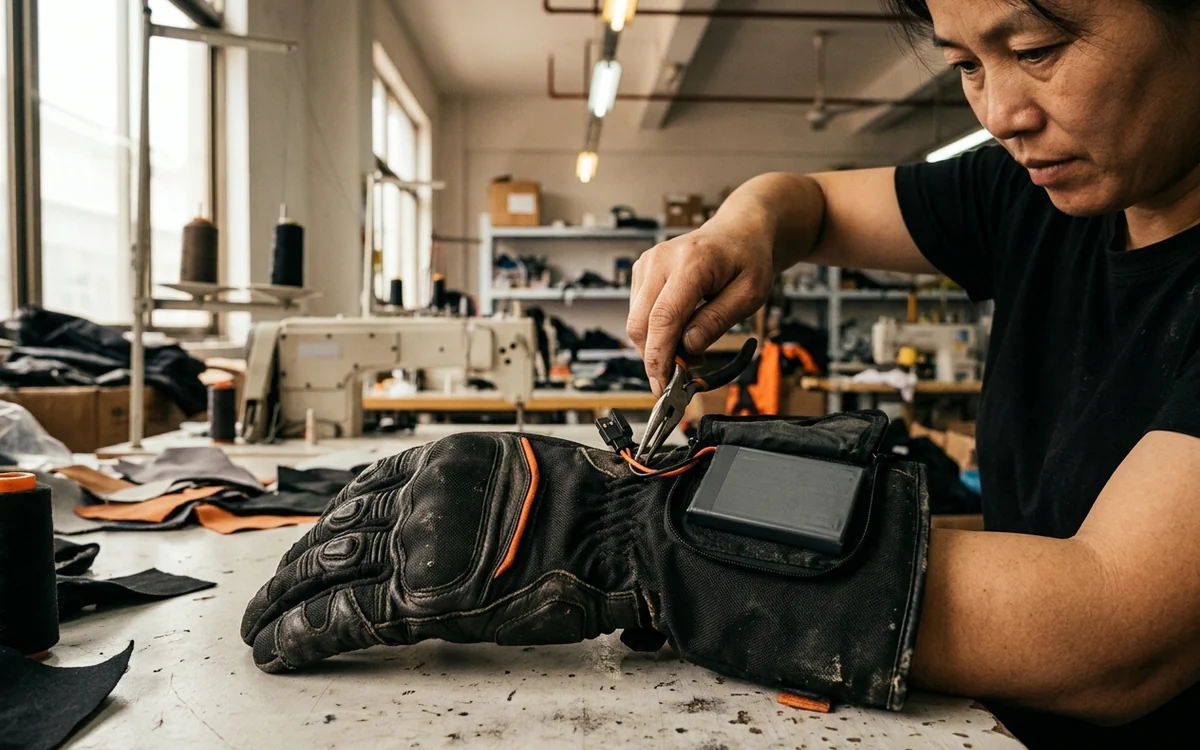
The battery pocket of a heated glove, positioned clear of the wrist bone
Battery pocketsized, padded, positioned
 From the bikeFrom a pack
RuntimeAs long as you rideAs long as the pack lasts
RoutineUnplug every time you get offCharge and remember the pack
What it changes in the gloveLead exit and strain relief in the cuffA pocket sized, padded and positioned off the wrist bone
SuitsCommuters, couriers, long daysRiders who get on and off constantly
How to check itAsk where the lead exits the cuff and what holds it there. "There's a cable" is not an answer — and a glove built for one route and adapted to the other is always a compromise.
The controller

Three levels, and a control you can work with gloves on

The control is a glove problem, not an electronics problem

It is operated by a hand wearing the other glove, often at a set of lights, often in the rain. A control that needs a fingernail is a control that gets left on one setting for the whole winter — which makes two of the three levels decoration.
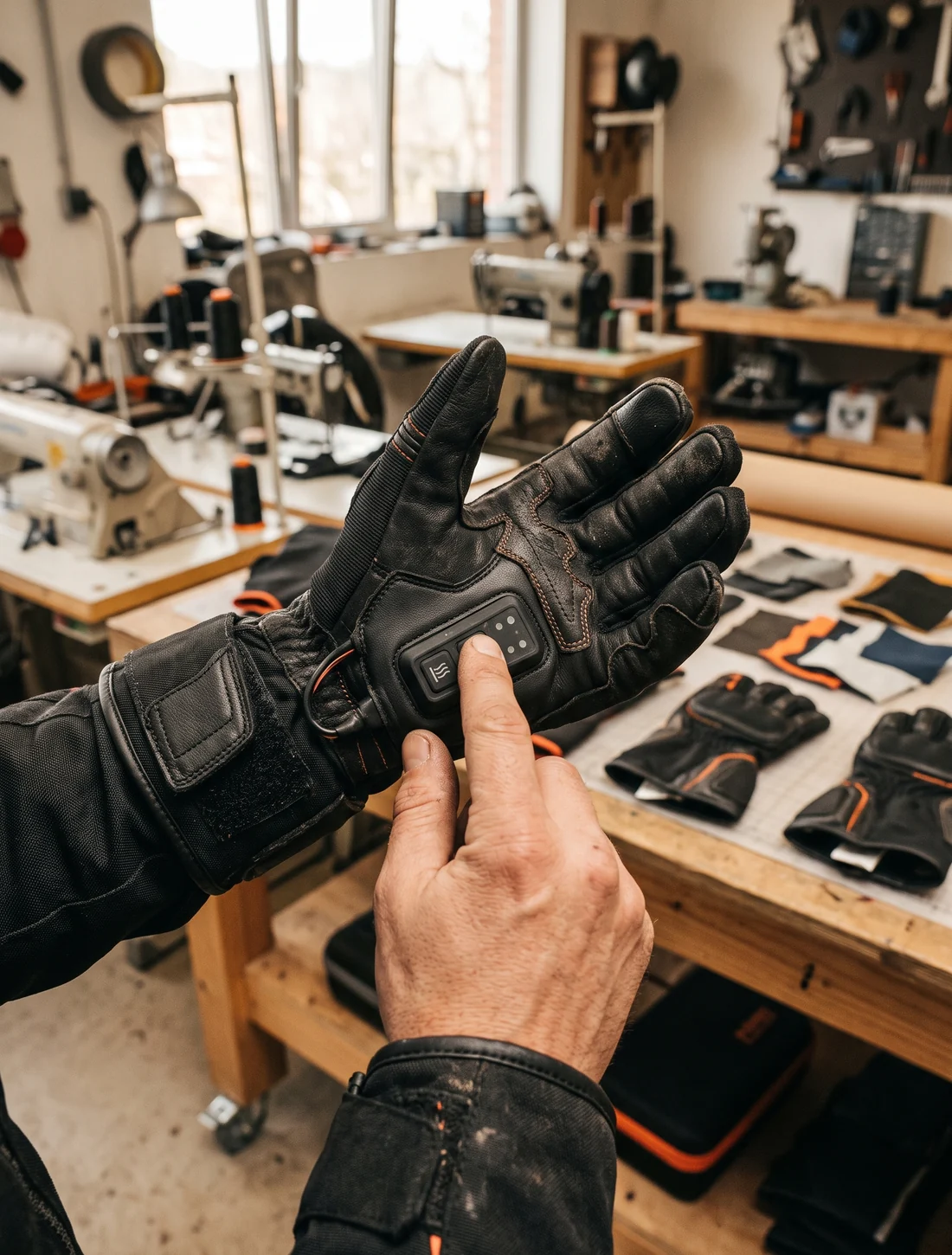
  • Size and position are specified for a gloved hand, not for a bare thumb on a bench.
  • Placed where it is reachable without letting go of the bar longer than a gear change.
  • Feedback you can feel through a glove, because you cannot look at your wrist at speed.
How to check itTry changing the level with both gloves on. If you have to take one off, the control is in the wrong place.
A heated glove controller being operated by a hand still wearing the other glove
Operated with the other glove on
The last two
centimetres

A rider who cannot feel a lever brakes later. That is what a heated glove is actually for.

Layer order

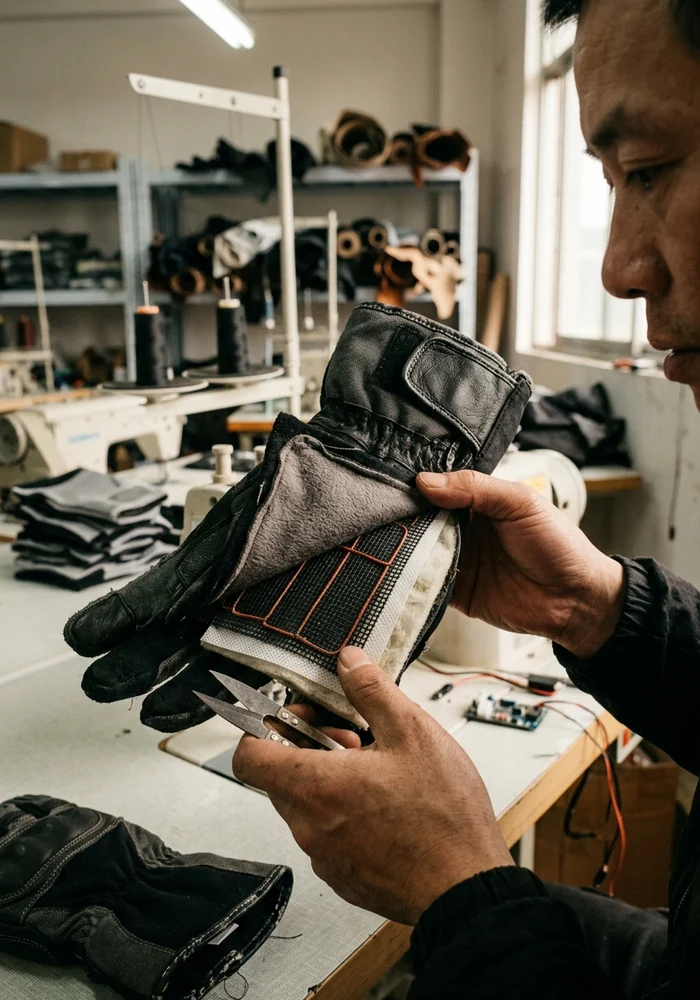
The layer order: element, membrane, insulation, shell

A heated glove is a waterproof glove with one more layer, and the order is what decides whether it works. Reverse any two and you get a glove that is either wet or warming the air outside it.
01
LinerAgainst the hand, so the glove goes on and off without dragging
innermost
02
InsulationChosen against the heating, not independently of it
inside the element
03
Heating elementOutside the insulation so the heat goes towards the hand — inside the membrane so it is never in the water path
the one that moves
04
Waterproof membraneOutside the element, sealed, never pierced by the wiring
water barrier
05
ShellGoat leather or synthetic palm, with the knuckle protector pocket
outermost
Cross-section of a heated glove showing liner, insulation, element, membrane and shell
Inside out · in one line
How to check itAsk for the layer order in writing. Any factory building it properly can list it in one line — and the two decisions that matter are both about where the element sits.
Where they fail

Four join points, and why gloves fail there

Four places a returned glove almost always comes back from, which is why all four are specified before anything is heated.
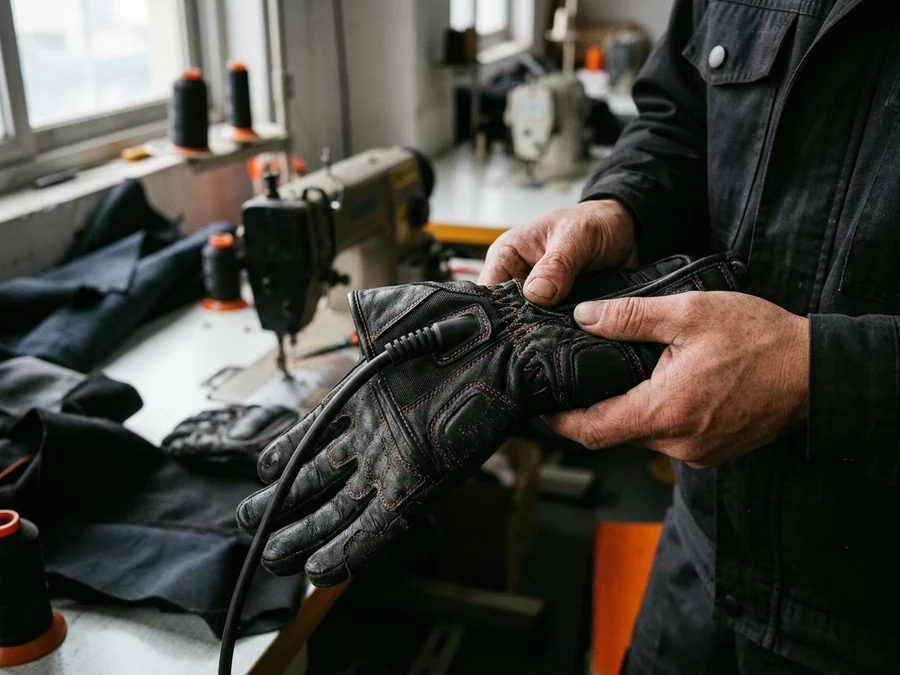
The strain-relieved lead exit at the cuff of a heated glove

The cuff exit

Pulled · every time it comes off

Strain-relieved rather than just sewn through, because this join takes a tug on every single removal.
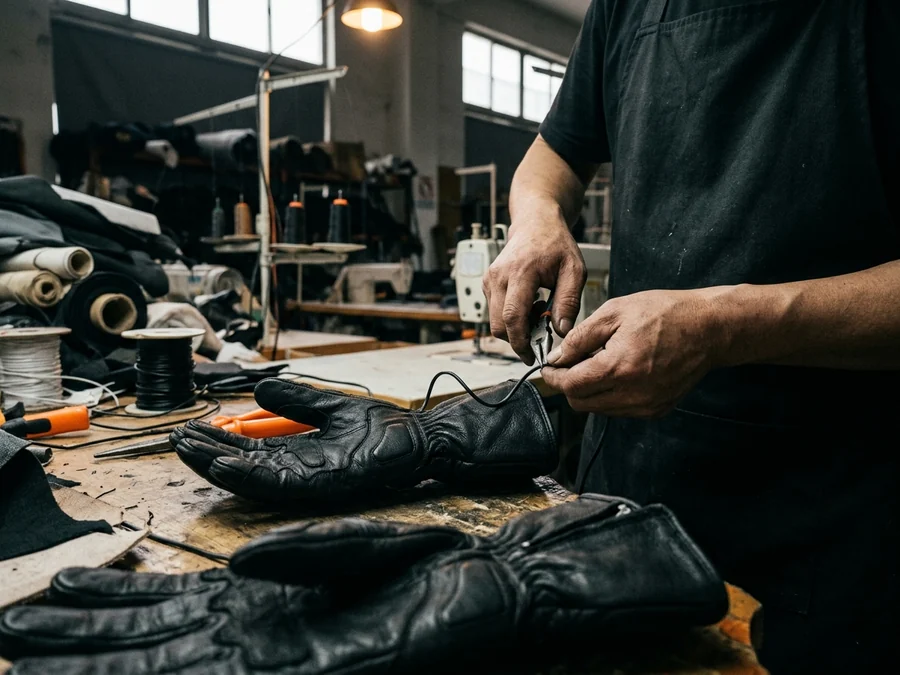
Wire routed with slack across the wrist flex point of a glove

The wrist flex point

Bent · on every clutch pull

Routed with slack instead of pulled straight, so the wire flexes rather than working against its own tension.
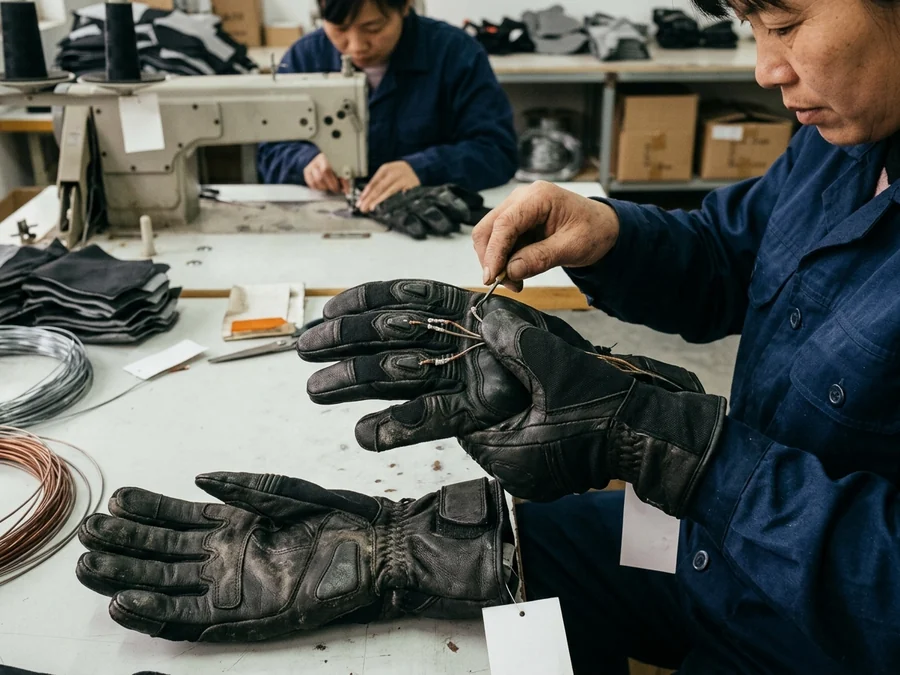
Finger element joins positioned off the crease of the knuckle

The finger joins

Creased · thousands of times a ride

Where each finger element meets the back-of-hand circuit — positioned off the crease rather than on it.
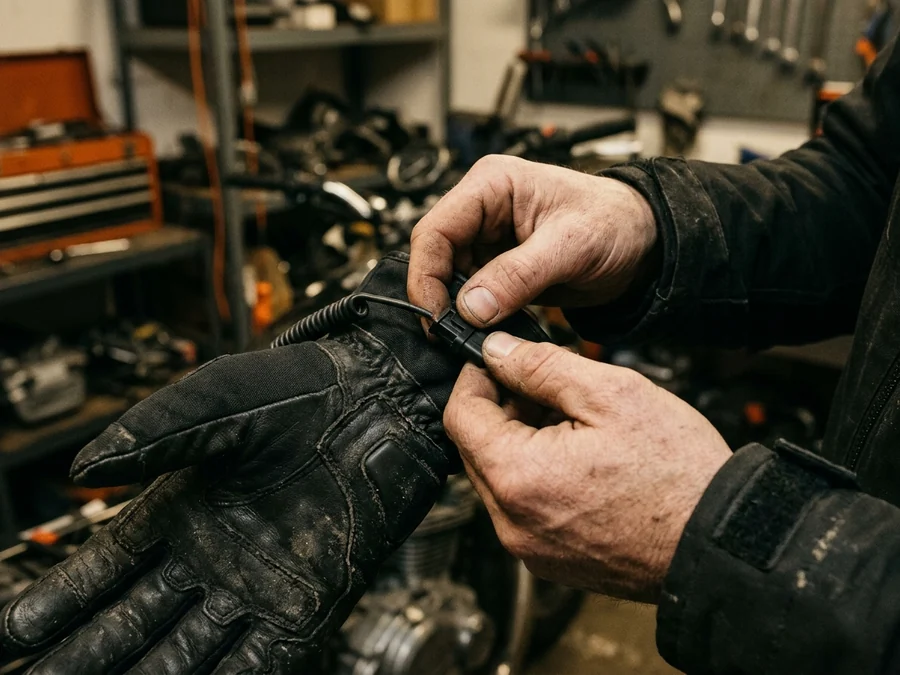
A glove connector being mated with cold hands in poor light

The connector

Mated · with cold hands, in the dark

Where it meets the bike or pack lead, and whether it can actually be connected without taking the other glove off.

5LAYERSLiner, insulation, element, membrane, shell
2POWER ROUTES12 V from the bike, or a removable pack
3LEVELSOn an inline controller you can reach
4JOIN POINTSSpecified before anything is heated
Protection and feel

The trade every heated glove makes, handled on purpose

A heated glove is thicker than a summer glove, and pretending otherwise is how it ends up unusable

A knuckle protector pocket goes where it goes, but the extra layers change the fit and the feel. The honest way to handle that is to design for it rather than around it.
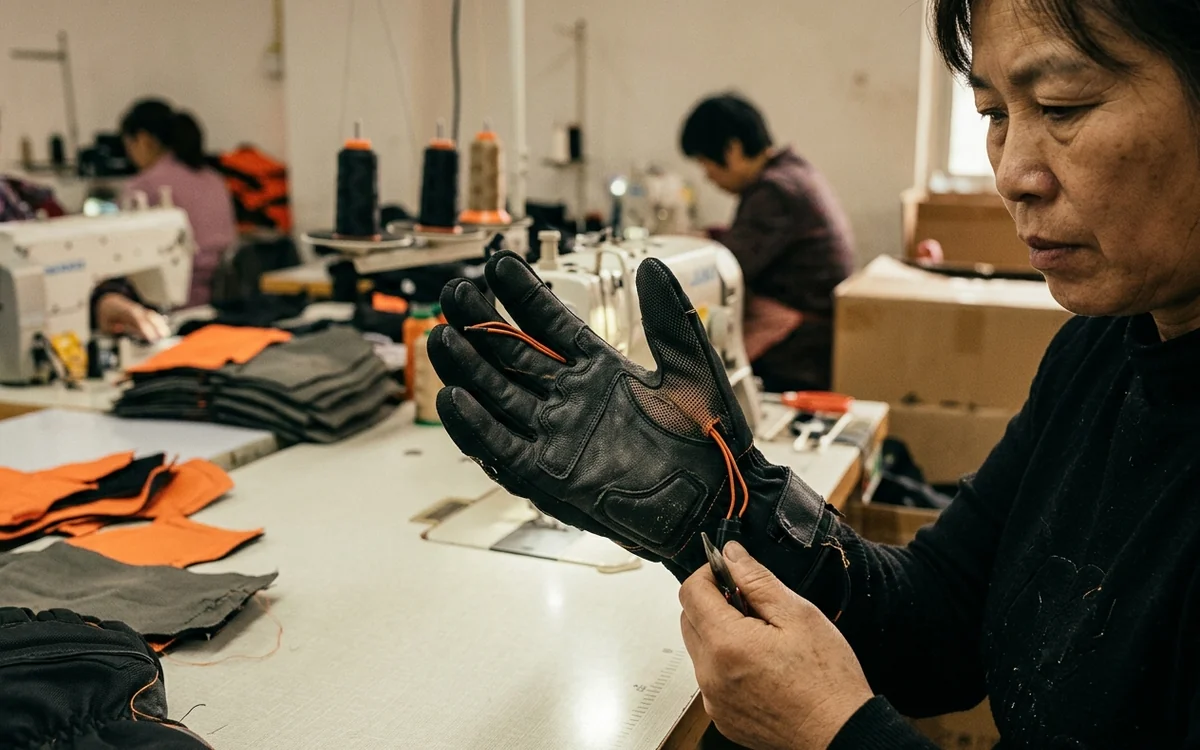
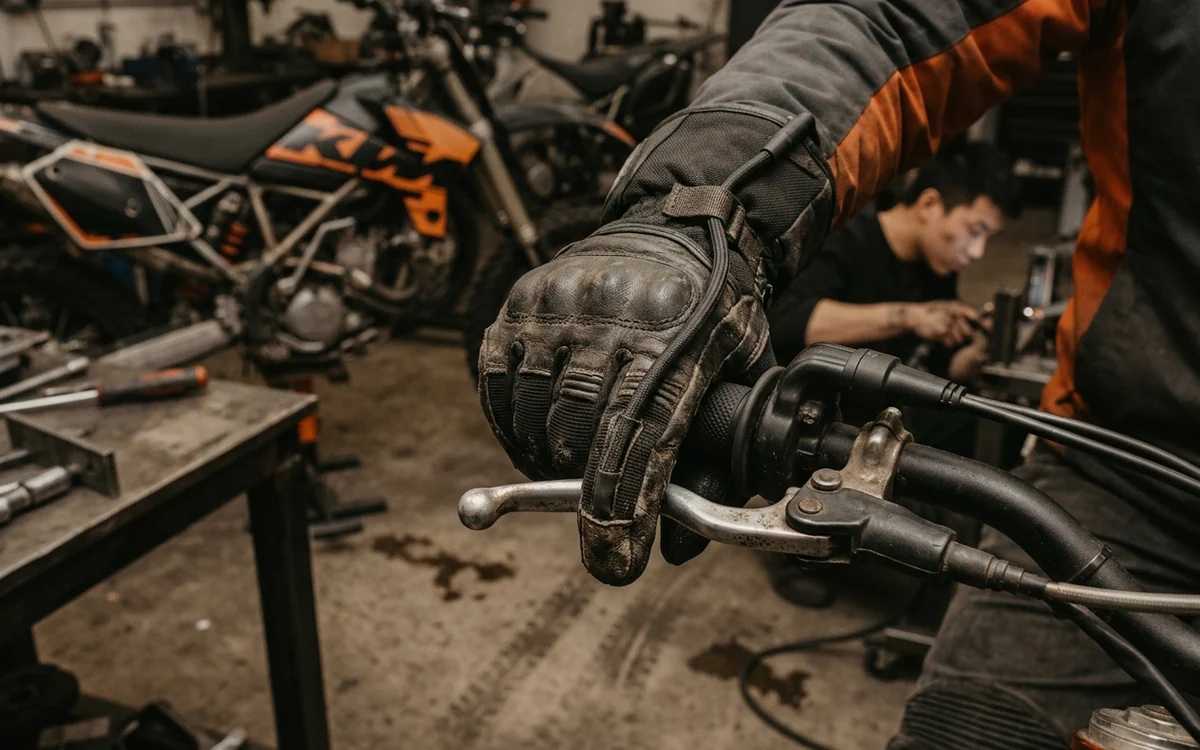
  • The palm stays as thin as the abrasion requirement allows — that is where feel lives.
  • The pre-curve is built into the pattern, so the hand is not fighting the glove at rest.
  • The bulk goes to the back of the hand, where nothing needs feel and the elements already are.
How to check itPut the glove on and pull a brake lever with two fingers. If you cannot, no amount of heat will fix it.
The palm of a heated glove kept as thin as the abrasion requirement allows
Palm · kept thin
A two-finger brake lever pull with heated gloves on
Two fingers · on the lever
Sizing

A heated glove is not the same size as your summer glove

The extra layers have to be in the pattern, not taken out of the rider's hand

XS–4XLON ITS OWN BLOCK

Heated gloves are graded on their own block, because adding layers to a standard glove pattern makes a glove that is tight across the back and short in the fingers — which is exactly where the elements are. A size run is tried on real hands before bulk rather than measured flat.
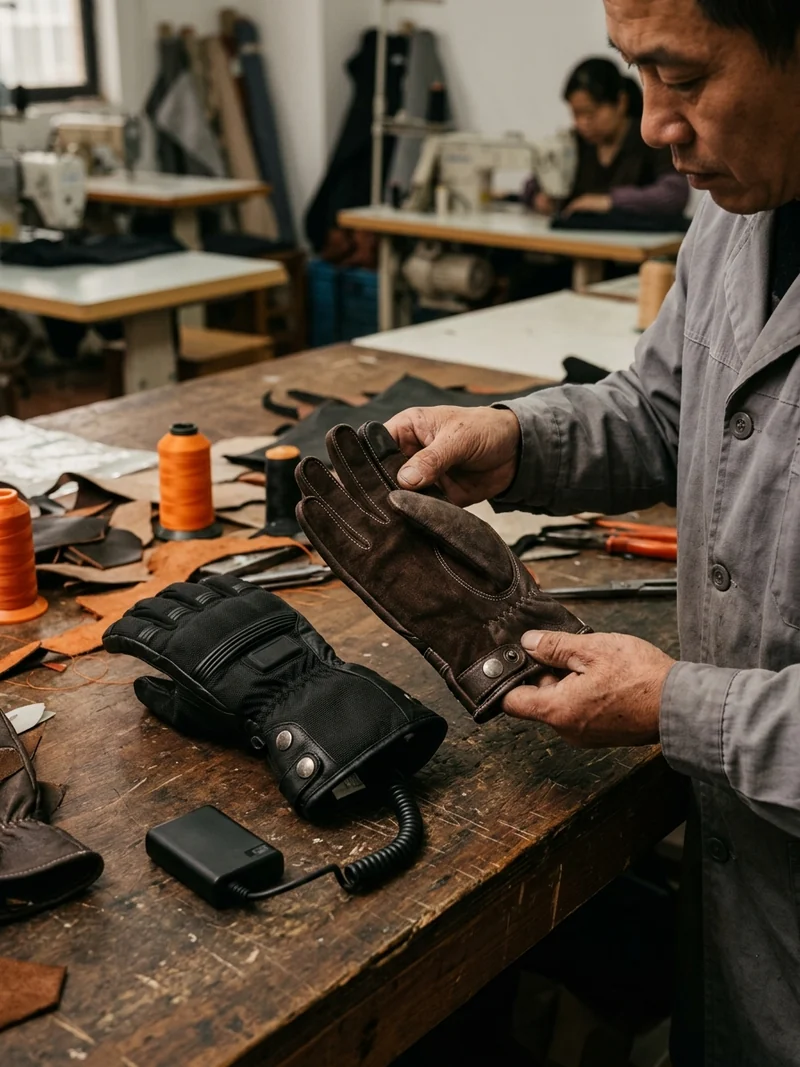
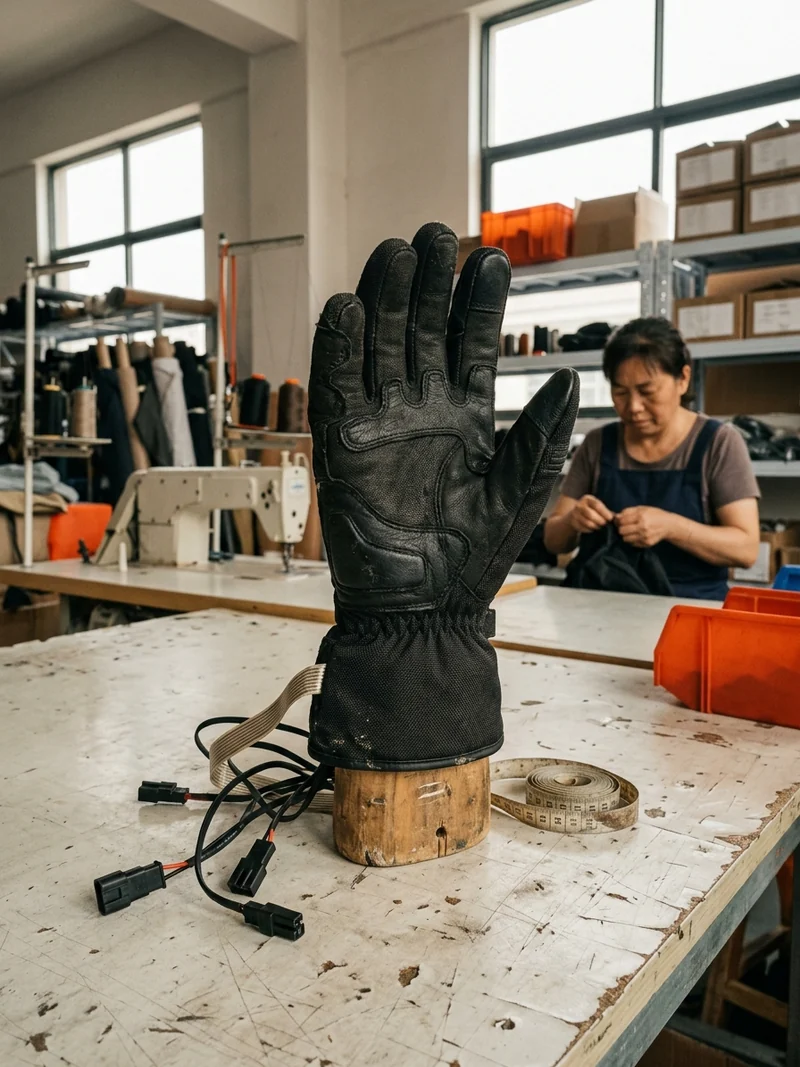
How to check itAsk whether the heated model uses the same block as the unheated one. If it does, order a size up and expect it to be wrong anyway.
An unheated riding glove shown for reference
Unheated
The heated model in the same nominal size, on its own block
Heated · same size
Heated gloves being tried on real hands before bulk
Tried on
The electrical set

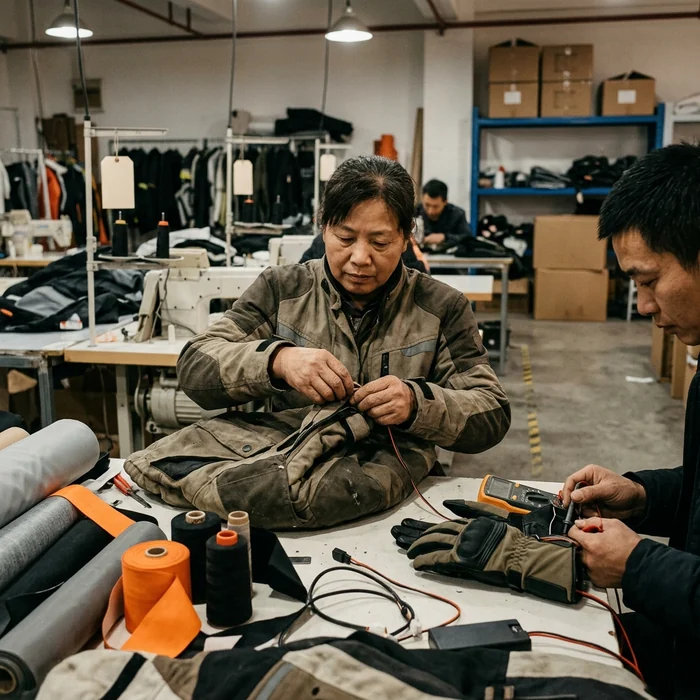
We build the glove; we do not certify the electrics

The one thing this page will not do is quote you an electrical number we have not measured.
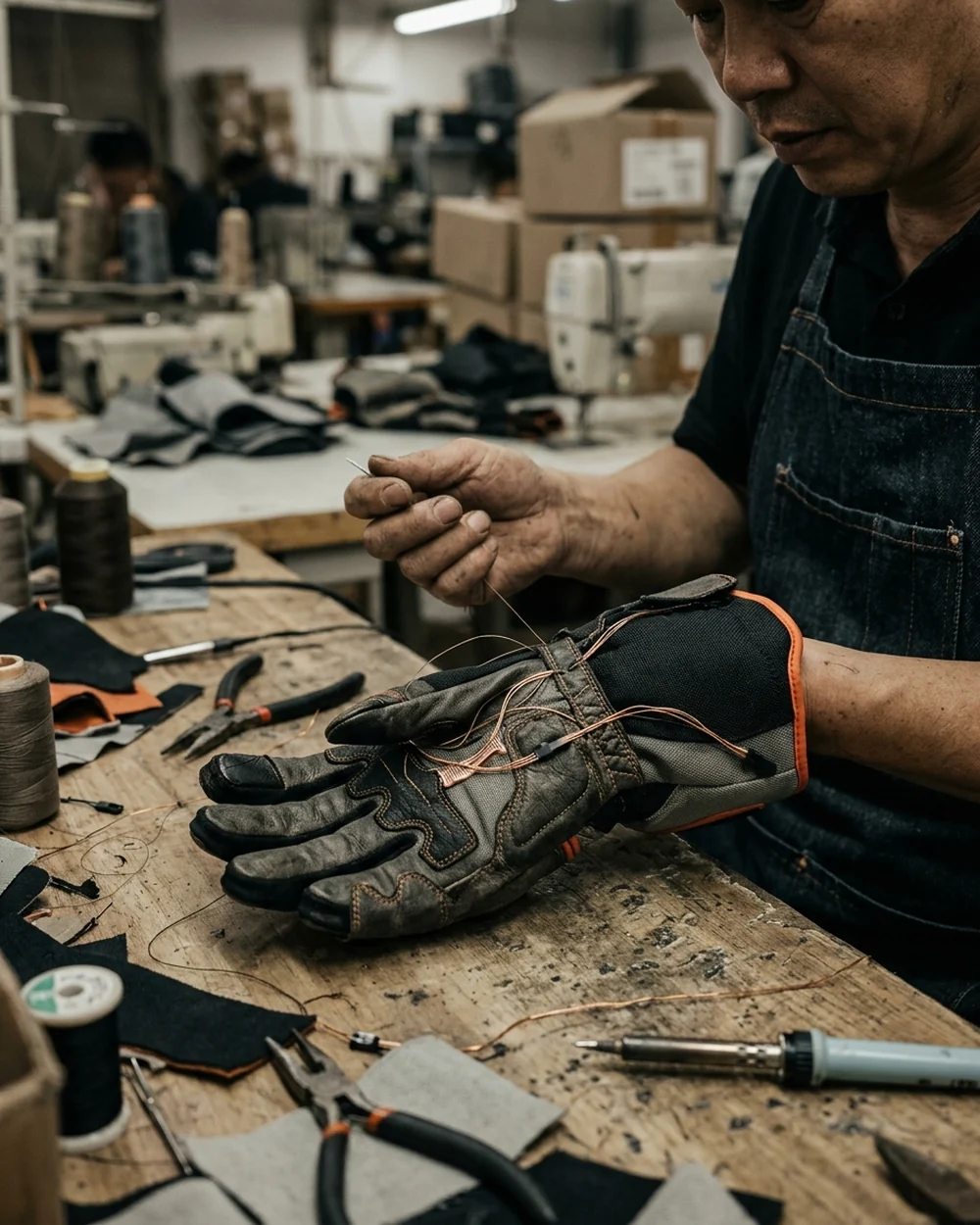
An electrical set specification sheet from its own supplier
Their document · their numbers
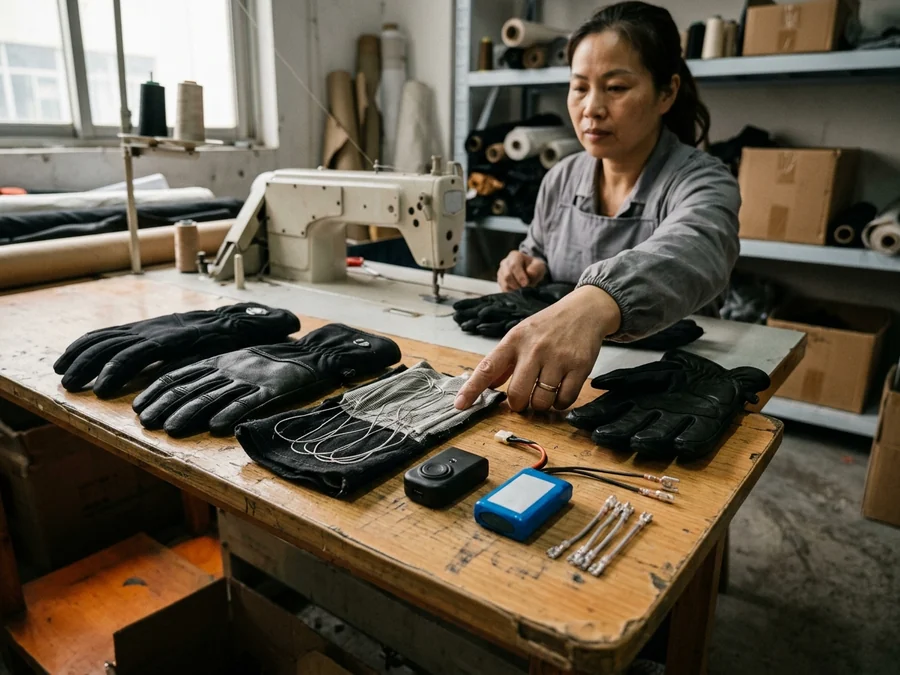
Elements, controller, connectors and battery laid out as a set
The set
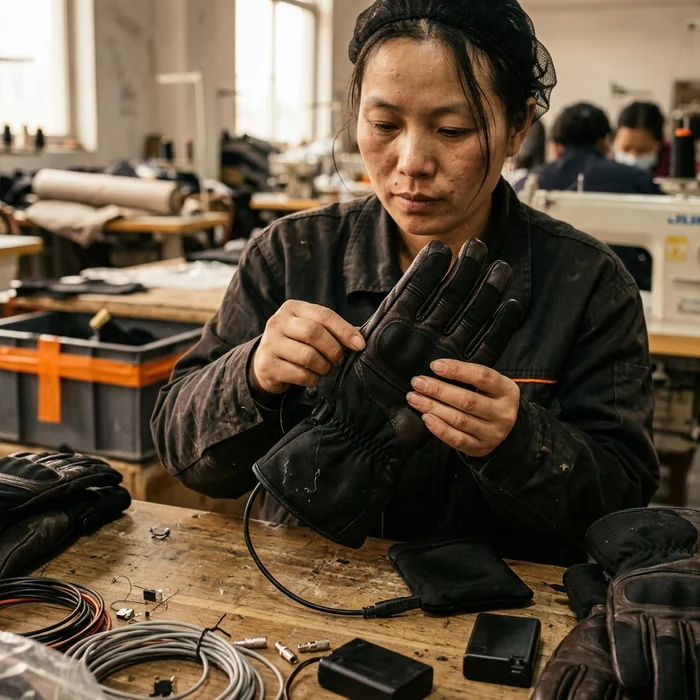
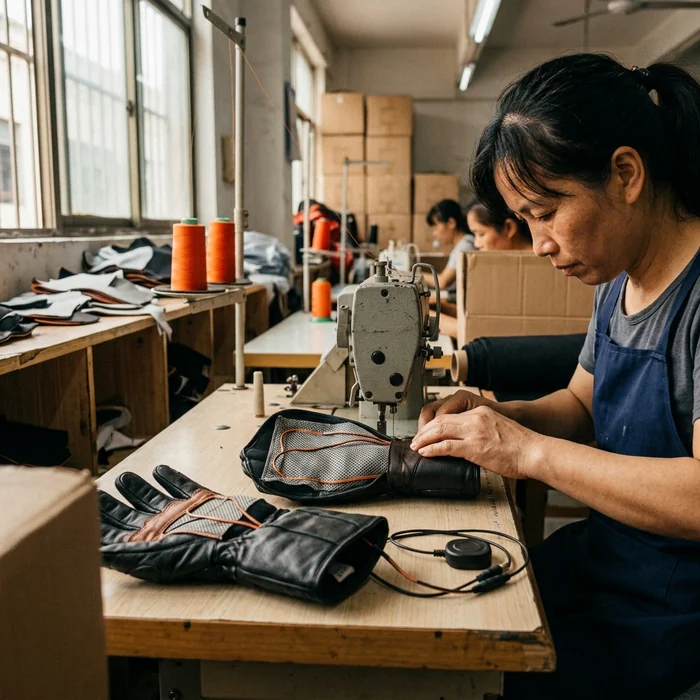
The electrical set being fitted into the glove during assembly
Fitted by us
We build
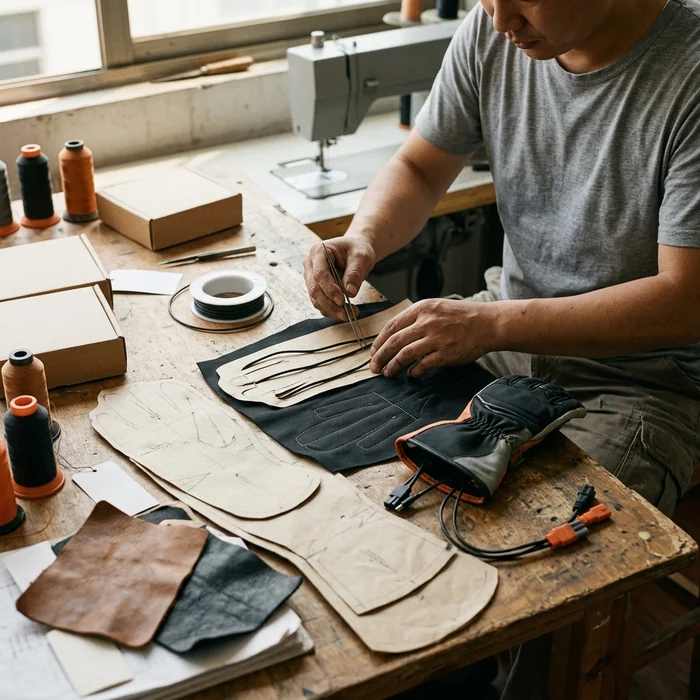
  • The pattern and the layers
  • The element routing and strain relief
  • The cuff, the pocket and the closure
  • The fit, on its own block
We do not
  • Certify the electrical set
  • Publish a wattage or a runtime
  • Quote a temperature figure
  • Write your packaging claims

You either bring your own electrical supplier, in which case we build to their set, or we work to a set you approve. Either way the numbers on your packaging come from their documentation — and you know exactly where every claim on your own box came from.

How to check any supplierAsk for the source of their wattage figure. The answer separates the two kinds of supplier immediately, and it costs you nothing to ask.
Power route and use case

Tell us how it will be used, and we will tell you how we would build it

Samples and lead times

Samples, changes and lead times

What each stage takes, and which changes are still cheap — there is one on this list to avoid.
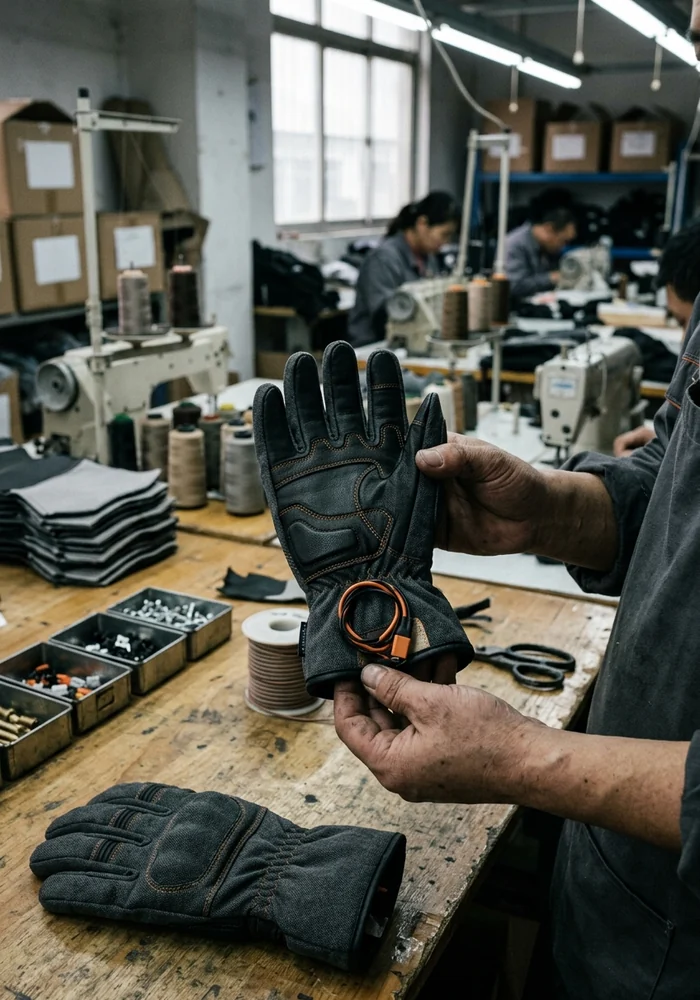
Construction sampleA full glove in the core size with the electrical set fitted
15–20days
Bulk after sample approvalScheduled backwards from your date
25–35days
Power route changed after samplingNew cuff construction and a new sample — this is the change to avoid
Newsample
Element routing changedNew sample; the pattern usually survives it
Newsample
Shell colour or trim changedNothing structural moves
Noneno effect
Repeat orderFrom the archived block and specification
Noneno new sample
A construction sample glove with the electrical set fitted, ready for review
One sample · set fitted
Six things

Heated glove quote: the six things to send

Send these six and Anna comes back within 24 hours on business days with the construction and the sample route.
  1. Power route

    Bike lead, battery pack, or tell us the use case and we will say which we would build.
  2. Your electrical set

    Your supplier's specification — or tell us you need us to propose one for your approval.
  3. The use case

    Commuting, touring, courier fleet or instruction; it decides the palm, the cuff and the bulk.
  4. Shell material

    Goat leather or synthetic palm, and gauntlet or short cuff.
  5. Size range and quantities

    Per size if you have it, or your market and we propose a curve.
  6. The date

    Winter season dates move fast; we count back from yours.
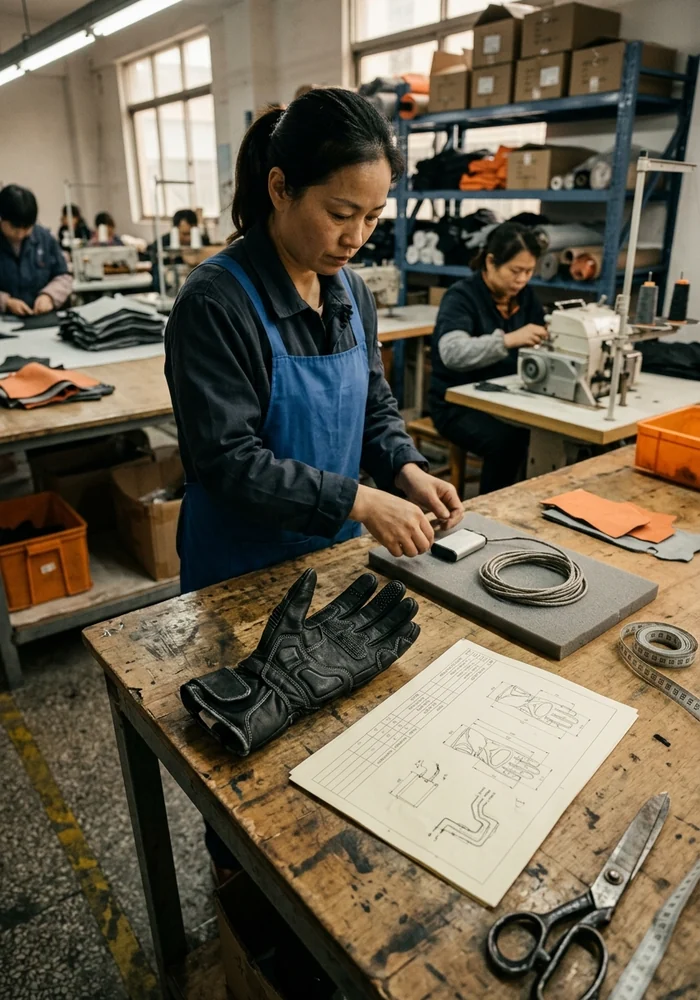
A specification sheet and a reference glove laid out ready to send
Six things · one email
Power route and use case

Send the power route and the use case, and we will tell you how we would build it

Anna replies within 24 hours on business days with the construction we would propose, which power route it is built around, what the electrical set needs to specify, and the sample route to your date.
Anna · Sales Manager WhatsApp / phone: +86 177 0272 7677 Email: sales@runmotoapparel.com Mon–Sat 9:00–18:00 (GMT+8)