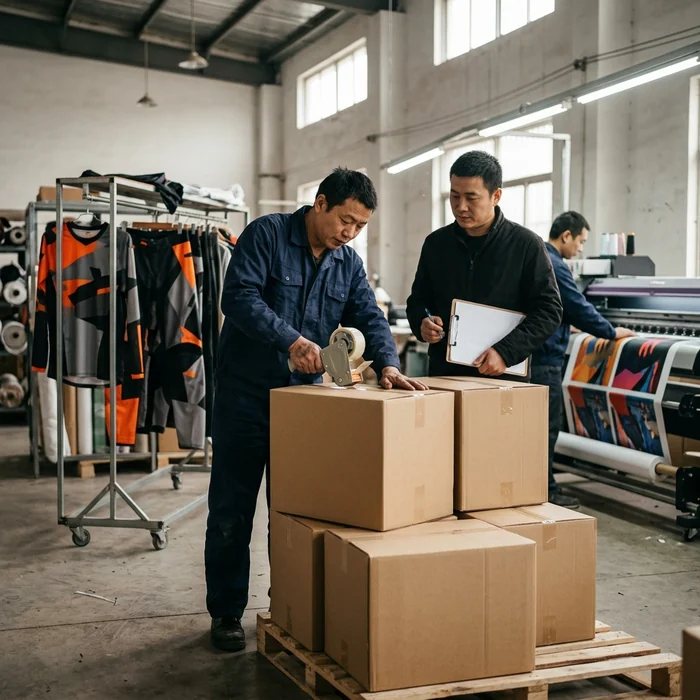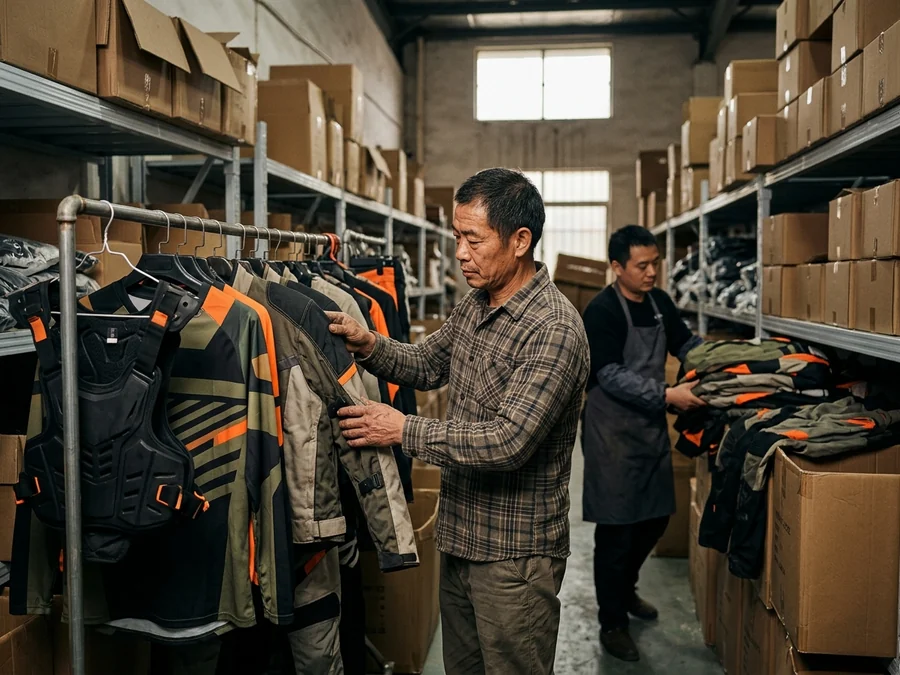
Distributors
Carry a range across a territory and need consistent repeats plus a size curve that matches their market.
Wants · repeatability
Most wholesale problems are not price problems. They are the wrong sizes in the wrong boxes, a repeat that does not match the first run, a carton mark that does not fit your system, and an XXL rail still full in March.
The shape above is an illustration, not your curve. Yours is built from your market, your discipline and your own sell-through — which is the whole point of this page.
Four kinds of buyer with the same problem — stock that sells through, not stock that sits.
Carry a range across a territory and need consistent repeats plus a size curve that matches their market.

Put their shop name on gear and want to start small without starting badly.
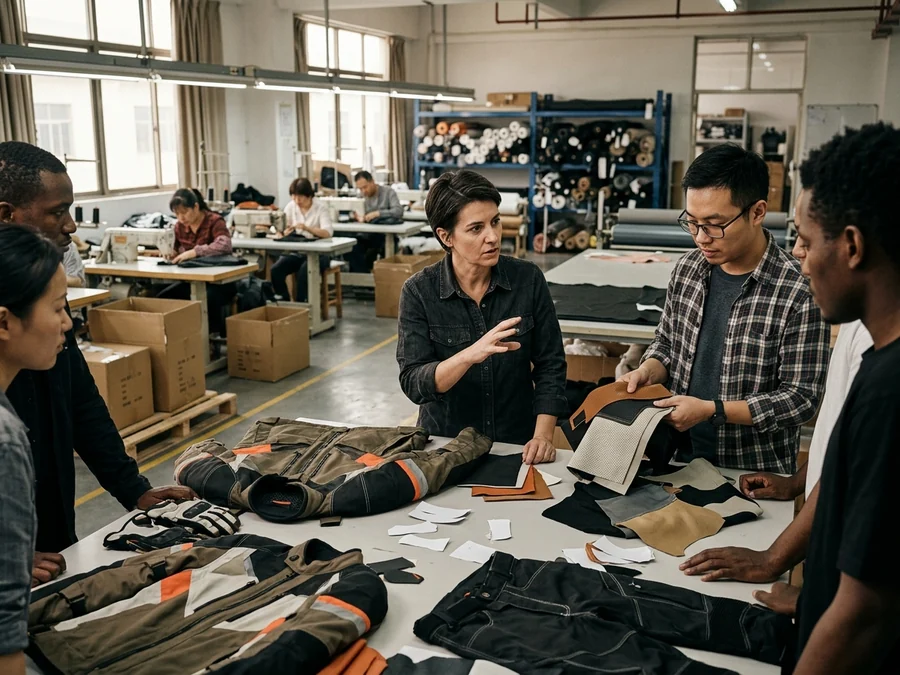
Have their own designs and need a factory that will hold a block and a spec across seasons.
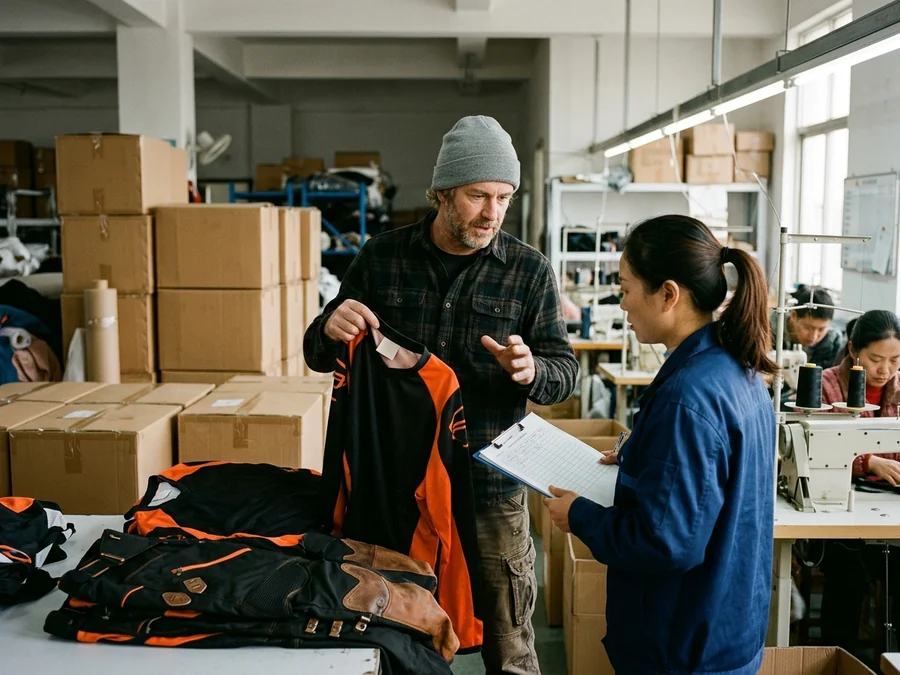
Buy in sizes rather than styles, and re-buy the middle of the run constantly.
The minimum is per style, not per order — and that is what makes a first range possible
Because a factory's cost is in setup, not in units. The pattern, the marker, the line changeover and the first-piece checks all happen once per style regardless of quantity. Spreading a small order across seven styles means seven setups — which is what makes small multi-style orders expensive everywhere, not just here.
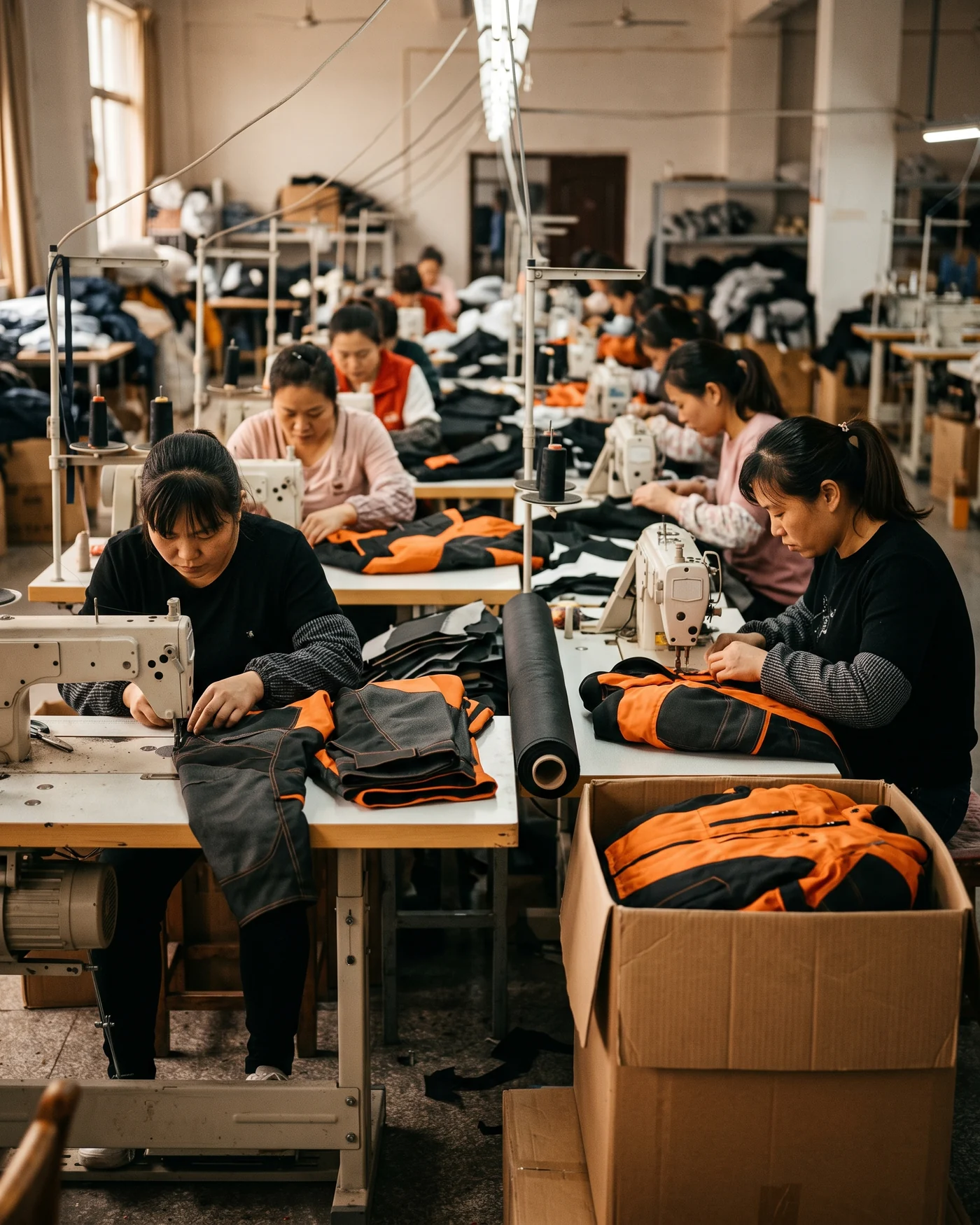
Sizes are a forecast. Scroll: a curve is built out of four inputs — and none of them is "standard".
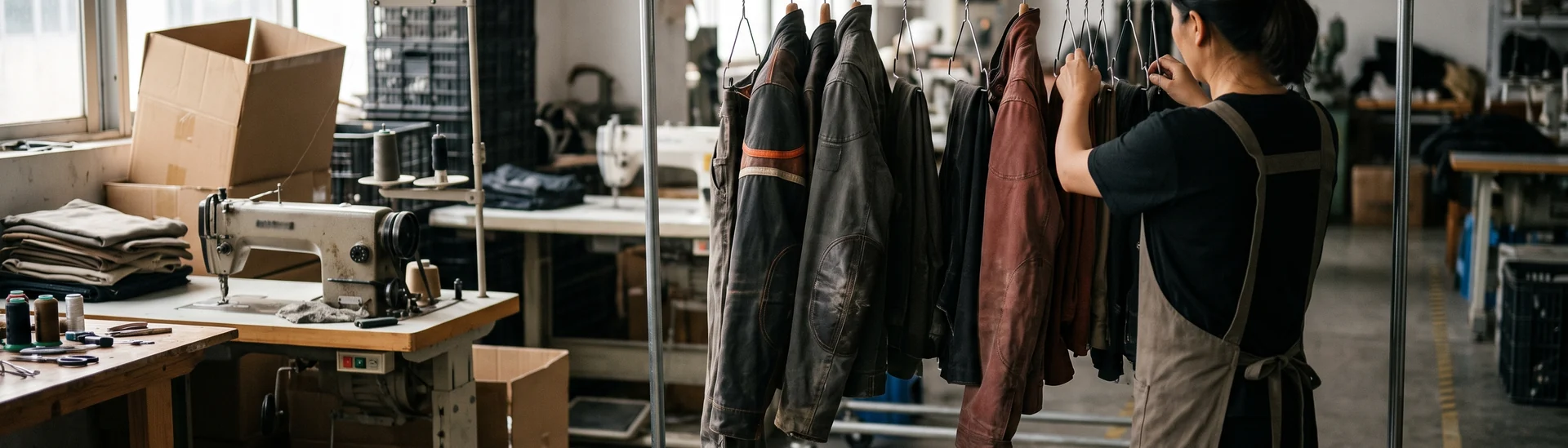
A size curve is the proportion of each size in a run — how many S, M, L, XL and up per hundred pieces. It is the single decision that decides whether a season sells through, and it is different per market, per discipline and per garment. A curve copied from another market is the most common reason a wholesale order ends with a rail of the wrong sizes.
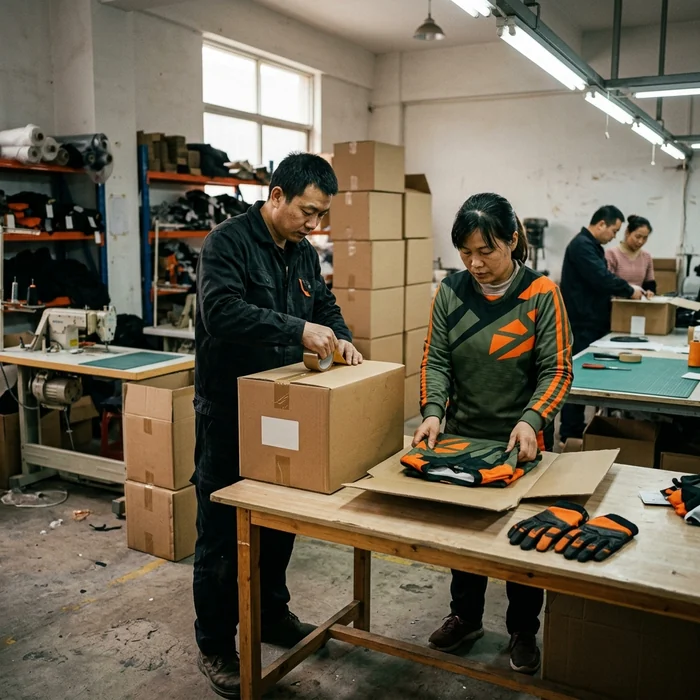
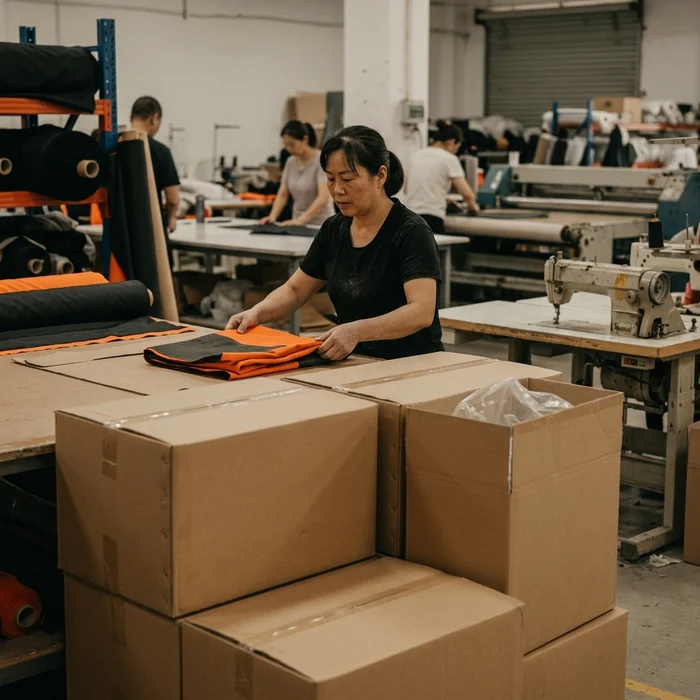
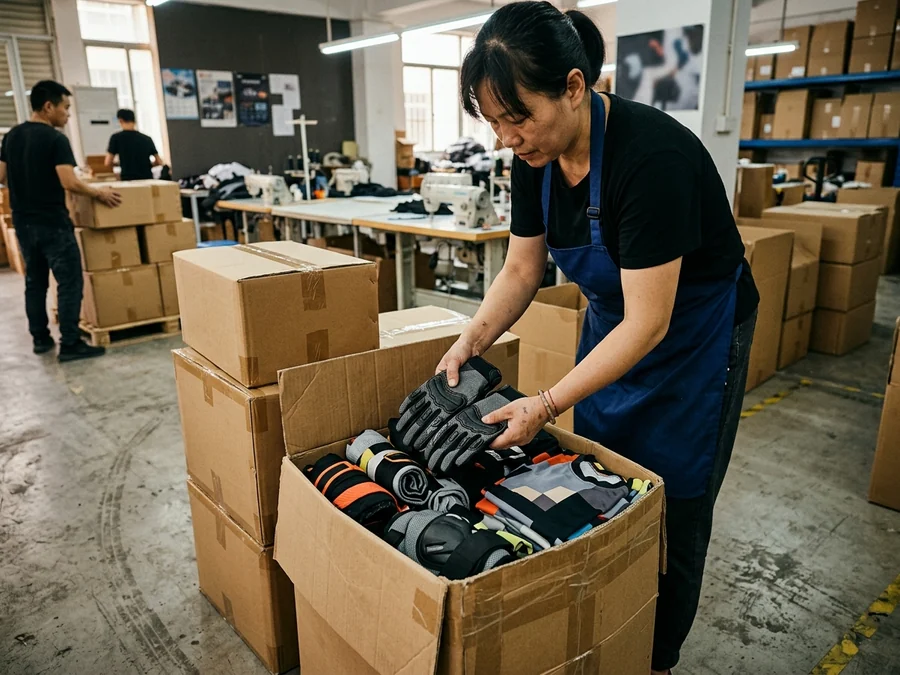
Cartons are packed to a plan you can receive — not to whatever came off the line first.
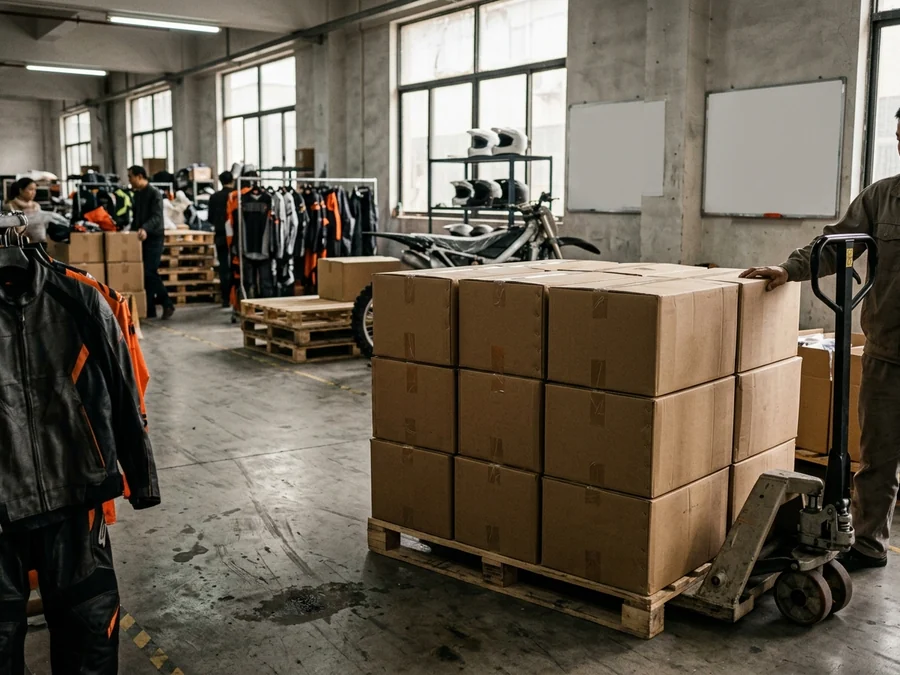 01
01For your fastest sizes, where the volume justifies a whole carton and your receiving team wants it simple.
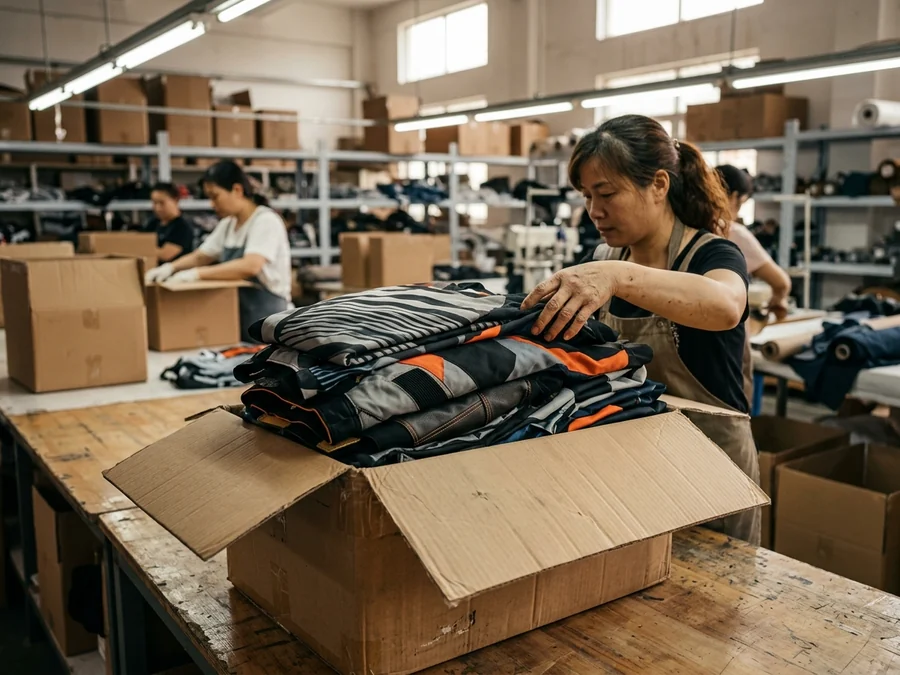 02
02One carton per curve. The default for most of a range, because it lets a shop receive a sellable spread in one box.
 03
03So a slow style does not need a whole carton of its own, and a top-up does not need a whole shipment.
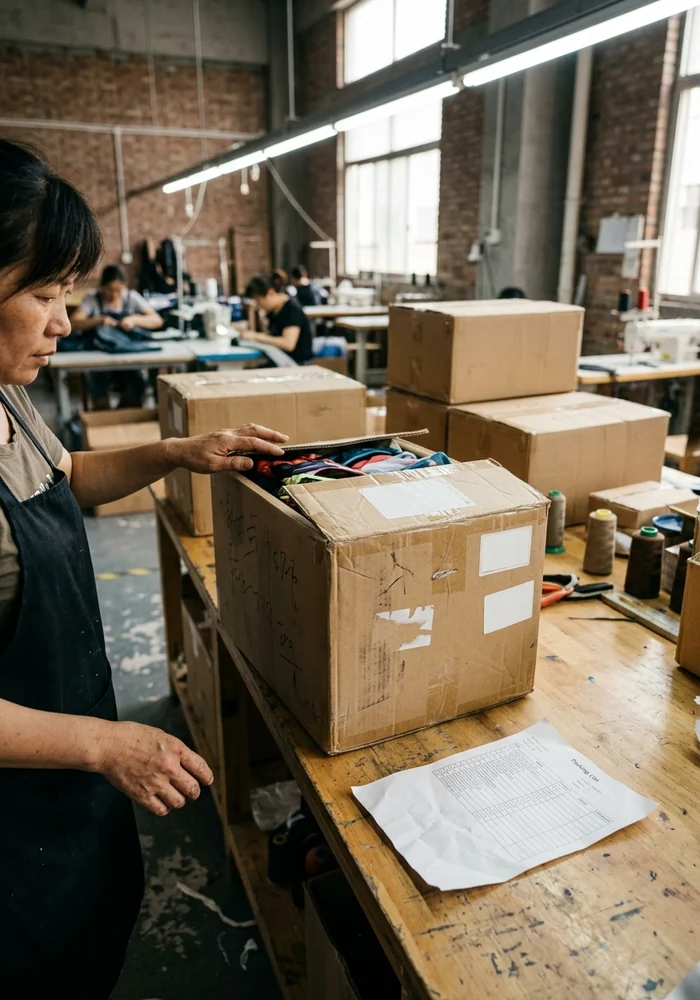
A receiving team works from the carton marks. Everything else you agreed lives in an email nobody at the dock is reading.
Marks are printed to your system, not ours, and they are checked before the cartons are sealed.
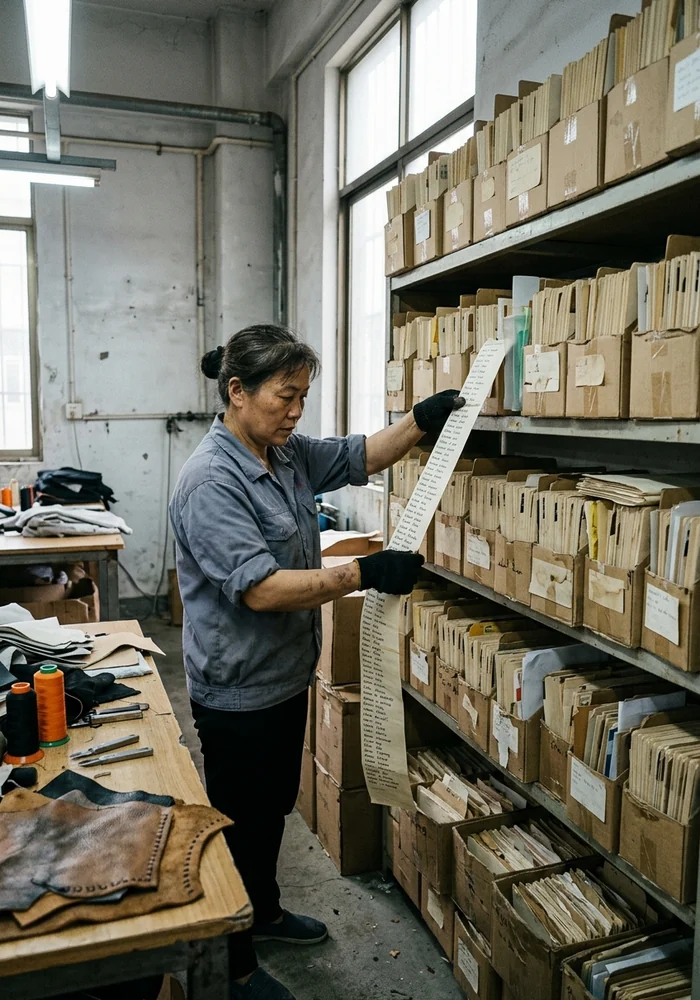
A repeat is fast because the work that took time is already on file — provided it was filed.
A clear boundary is worth more than a long capability list — half of a distributor's problems come from assuming the factory is doing something nobody agreed to do.
| We do | We do not | We are not |
|---|---|---|
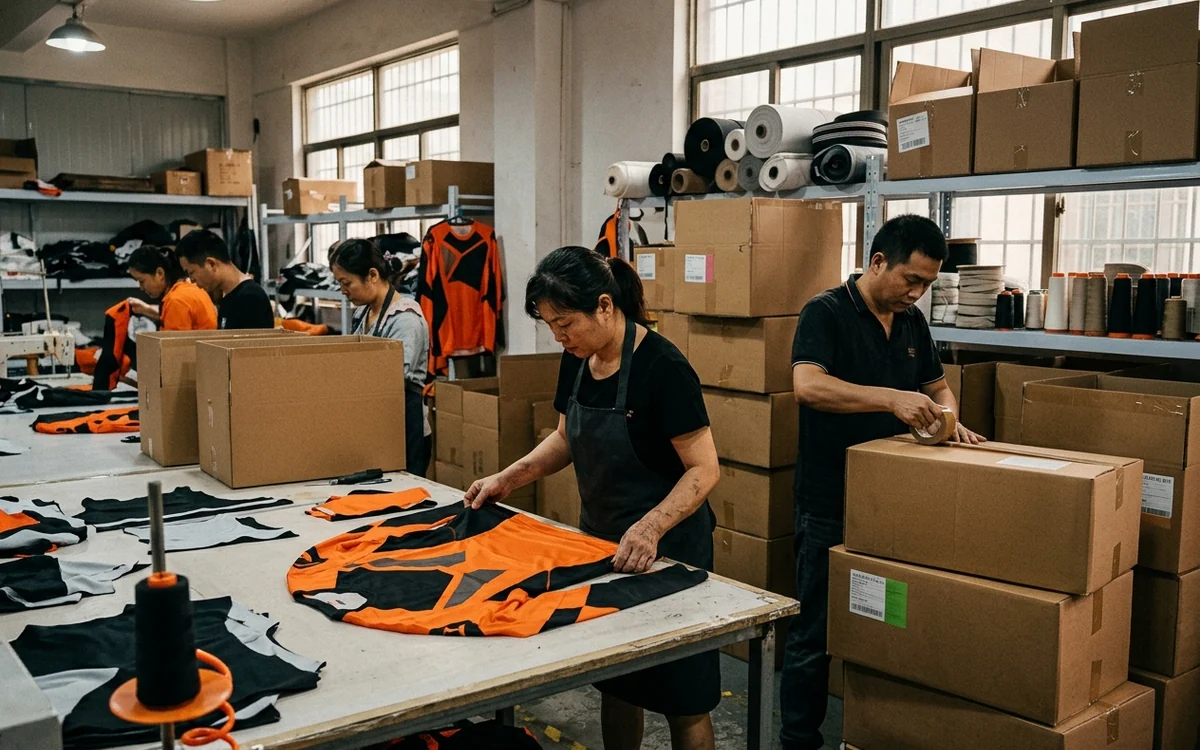

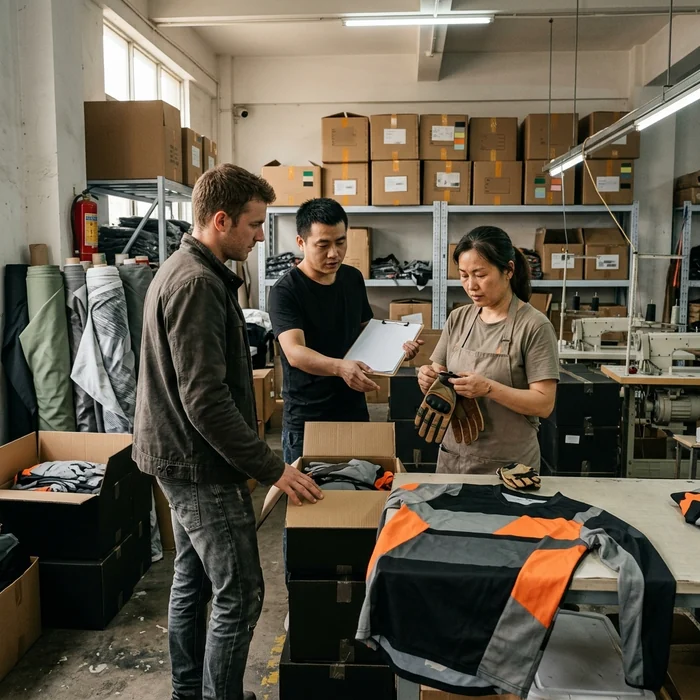
Three inspections and a photo set, so an audit does not need a flight.
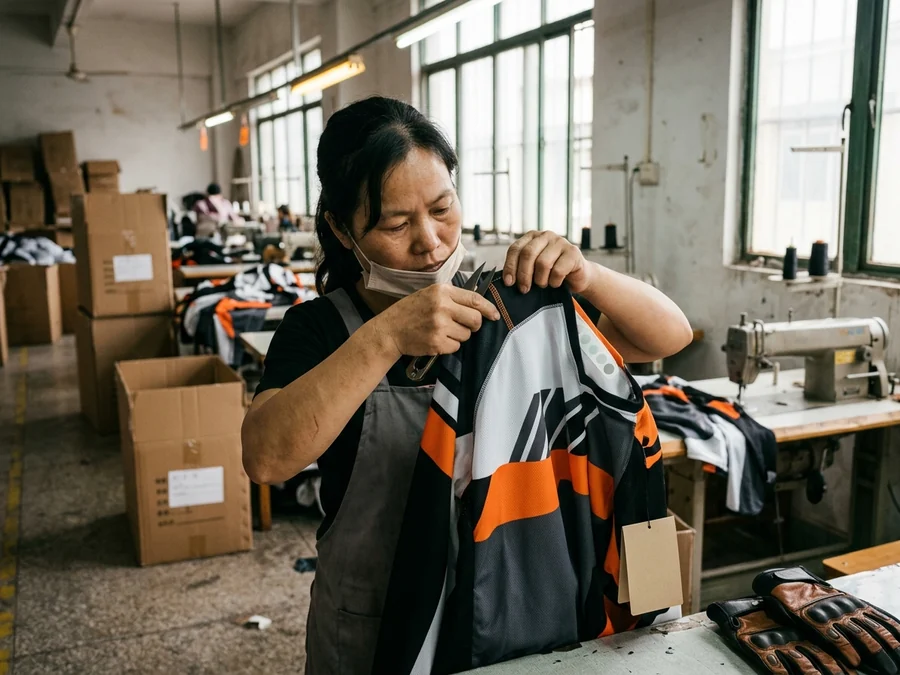
The first finished piece of each size is measured on the signed size sheet before that size is released to the line.
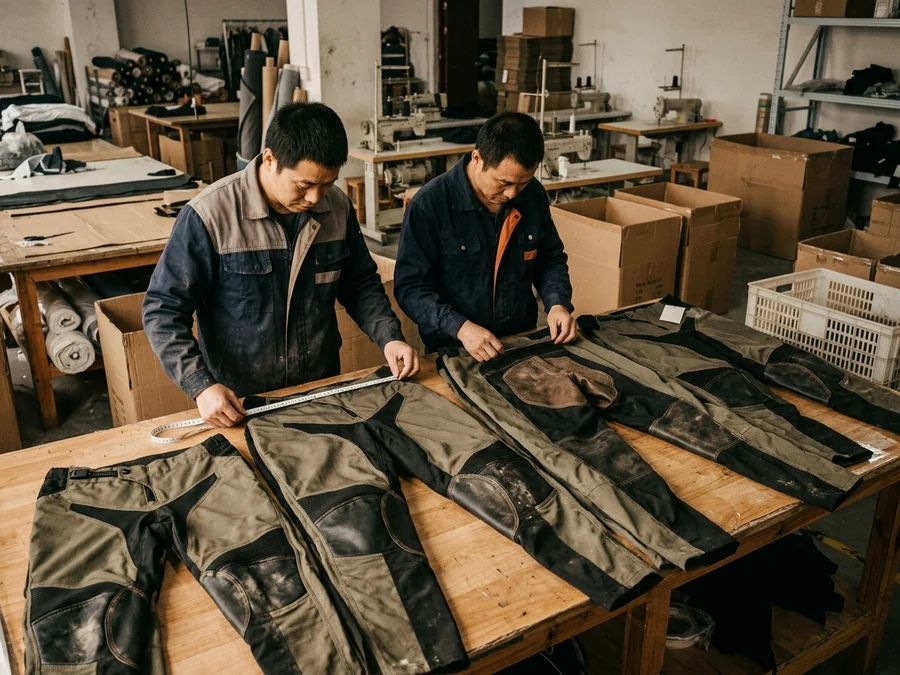
Pieces pulled across sizes rather than from one bundle. A failed check stops the line until the cause is found.
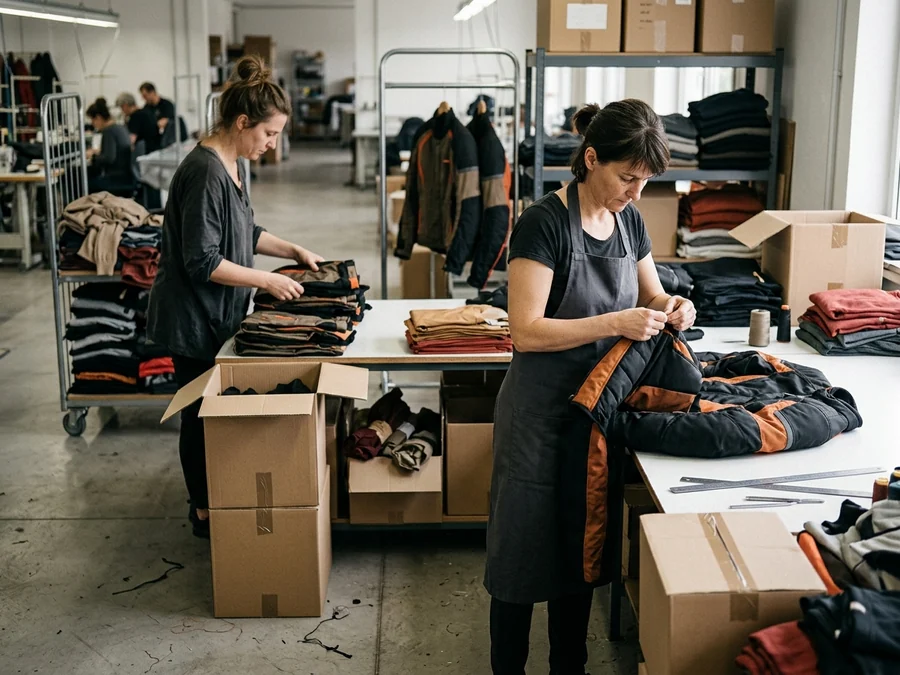
Every piece checked before packing — repaired or remade rather than shipped and discounted later.
Express, air or sea, DDP on request — and documents built to match the cartons exactly.
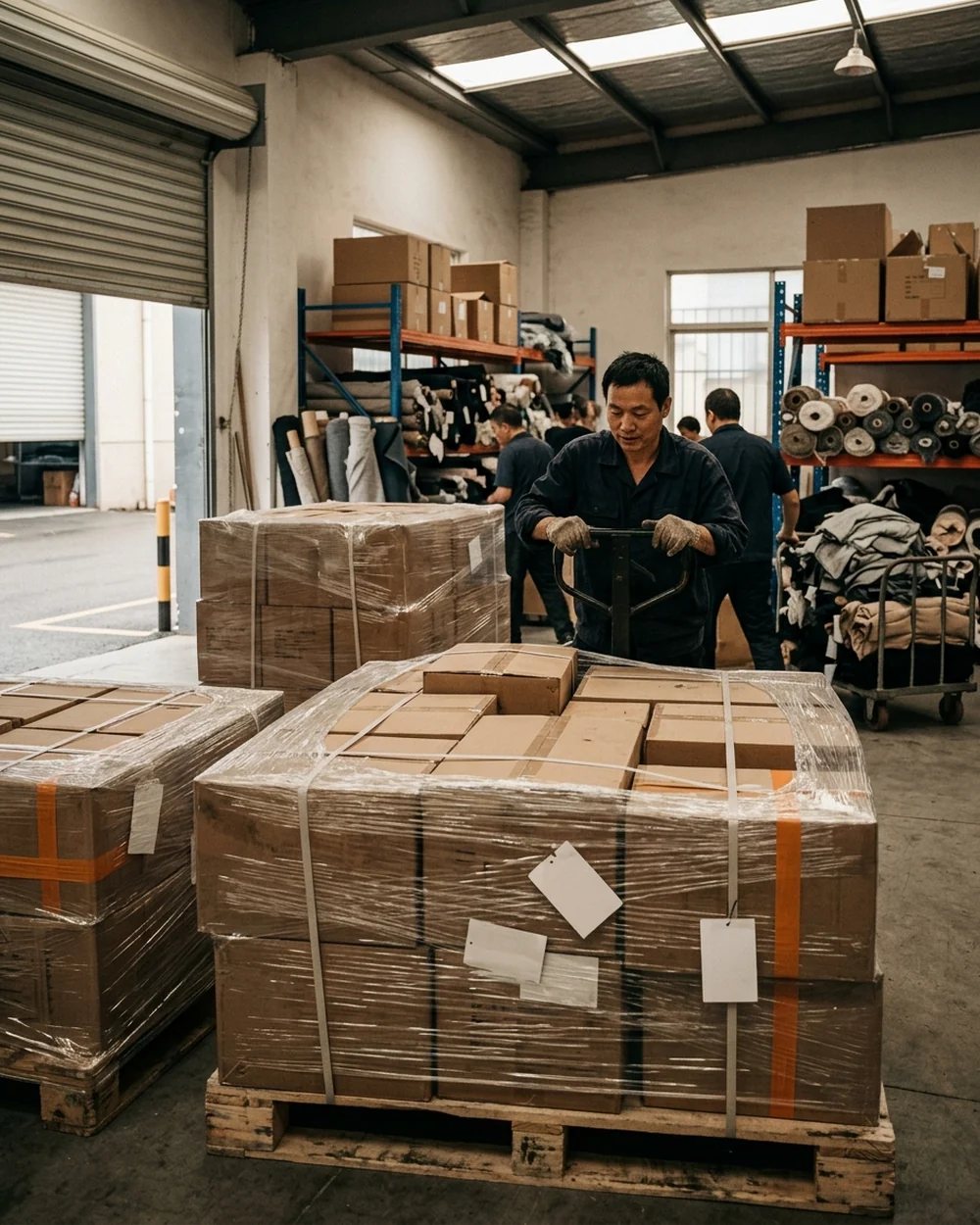
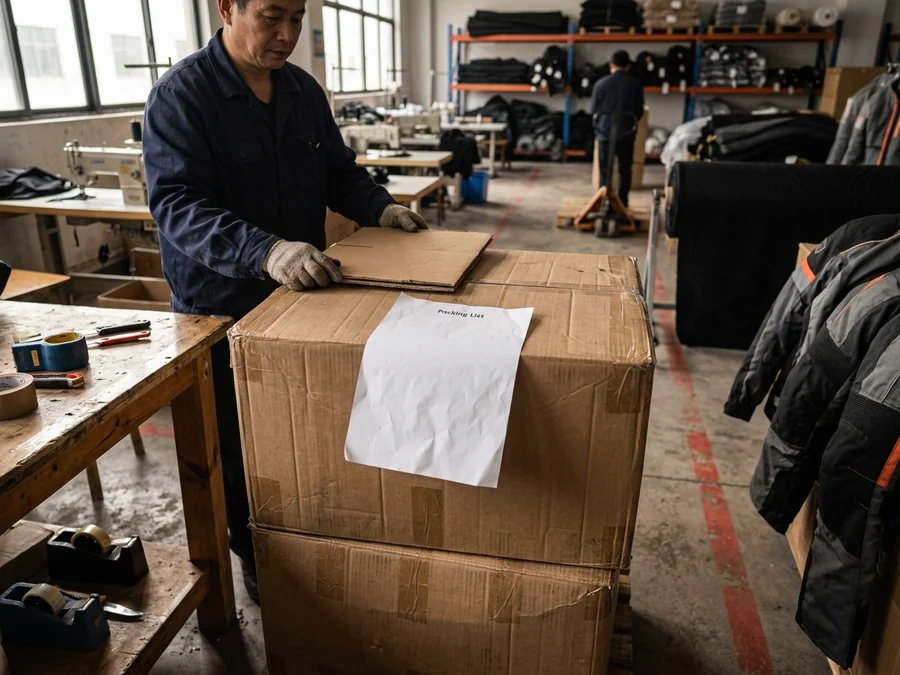
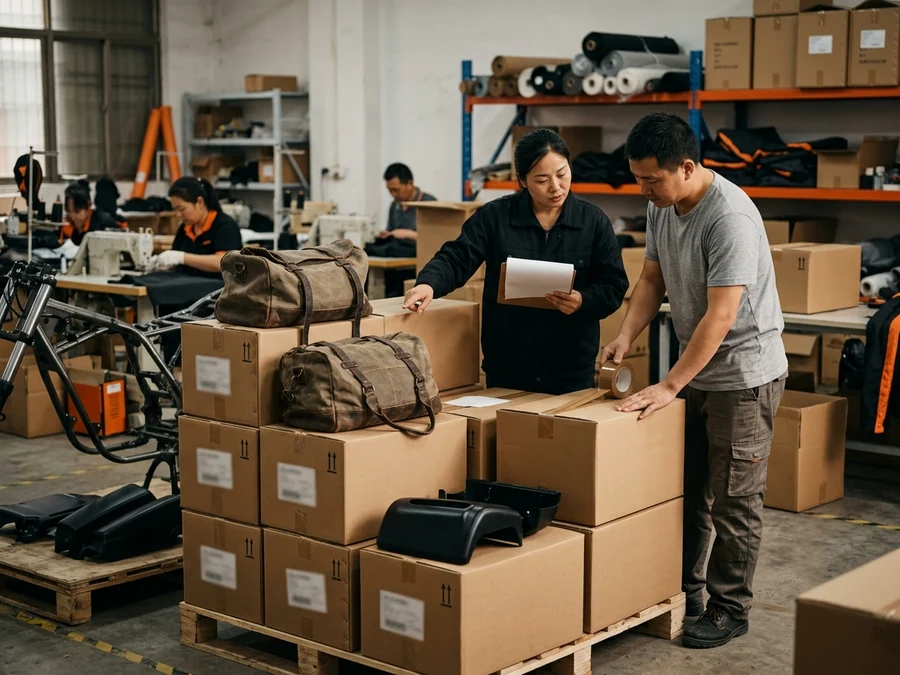
Goods go by express, air or sea depending on your date, and DDP is available on request. The documents that travel with a shipment — packing list, invoice, and whatever your market requires for composition and origin — are prepared to match the cartons exactly.
Season two is where a wholesale relationship is actually made or lost
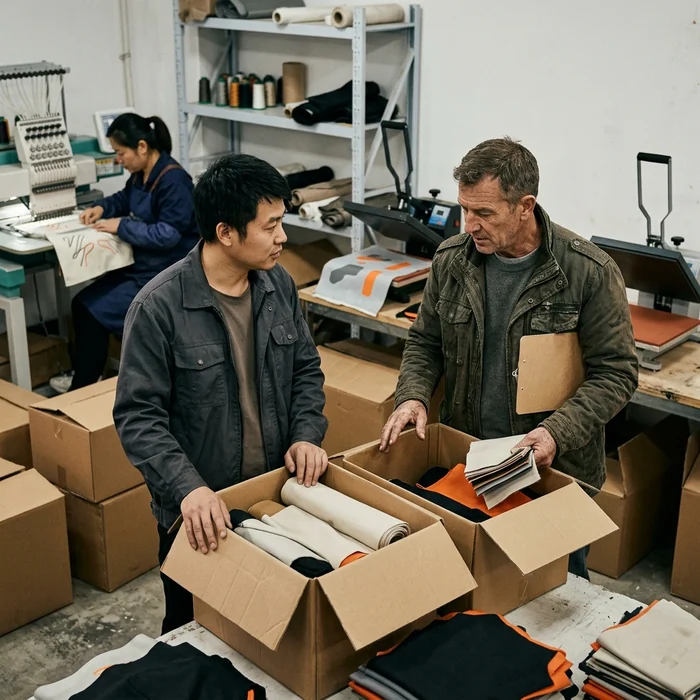
With those on file, season two is an order rather than a project, and you can change one style without re-opening the rest.
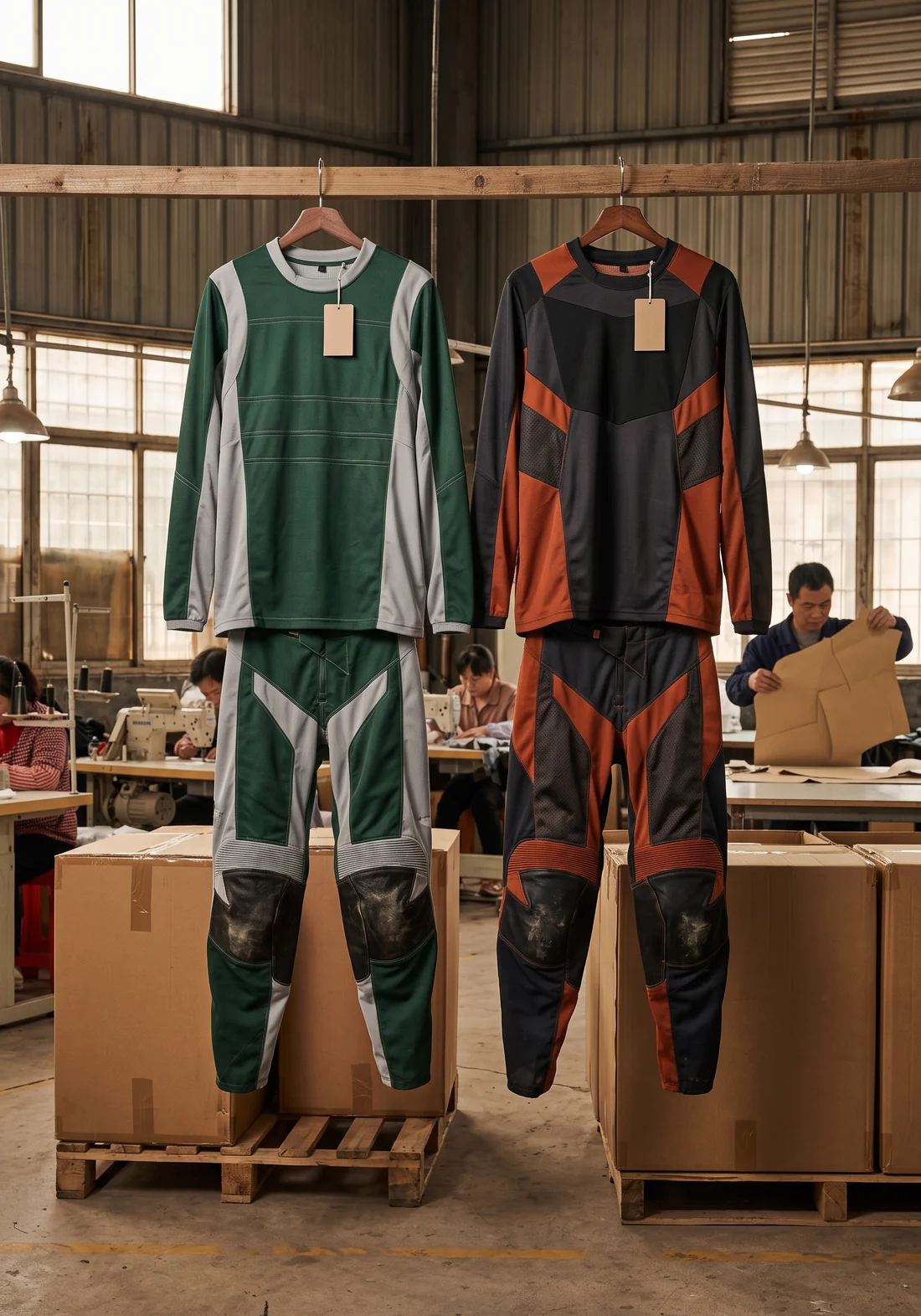
Send these six and Anna comes back within 24 hours on business days with the setup and the lead time.
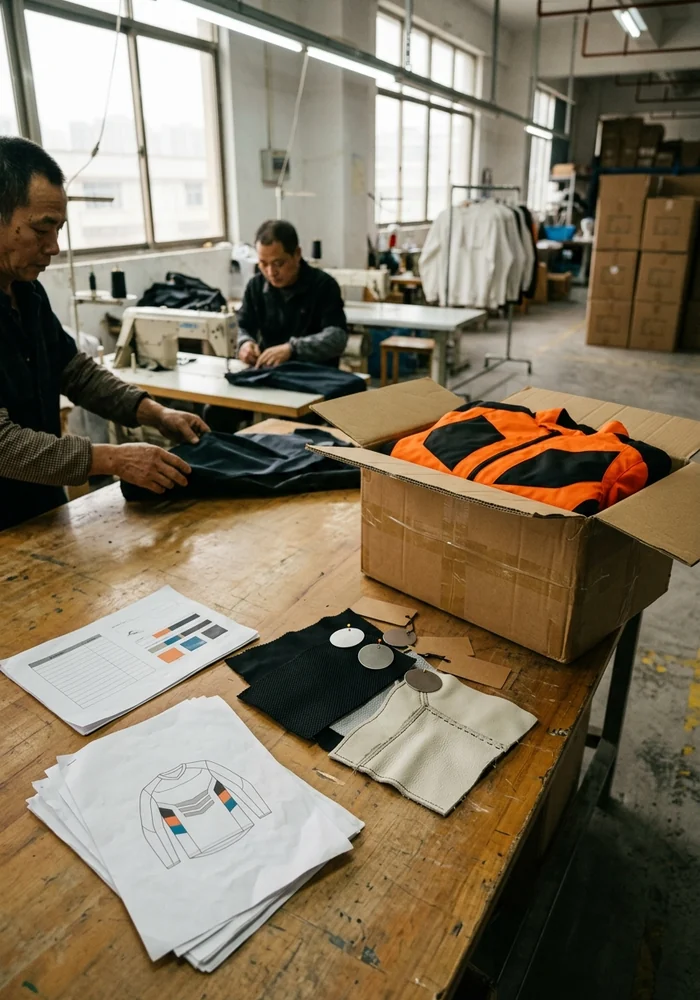
Where a range is developed, made and checked — the six pages a wholesale buyer usually reads next, in the order the work actually happens.
Anna replies within 24 hours on business days with what it takes to set the programme up, the size curve we would propose and why, the carton plan, and the lead time to your date.