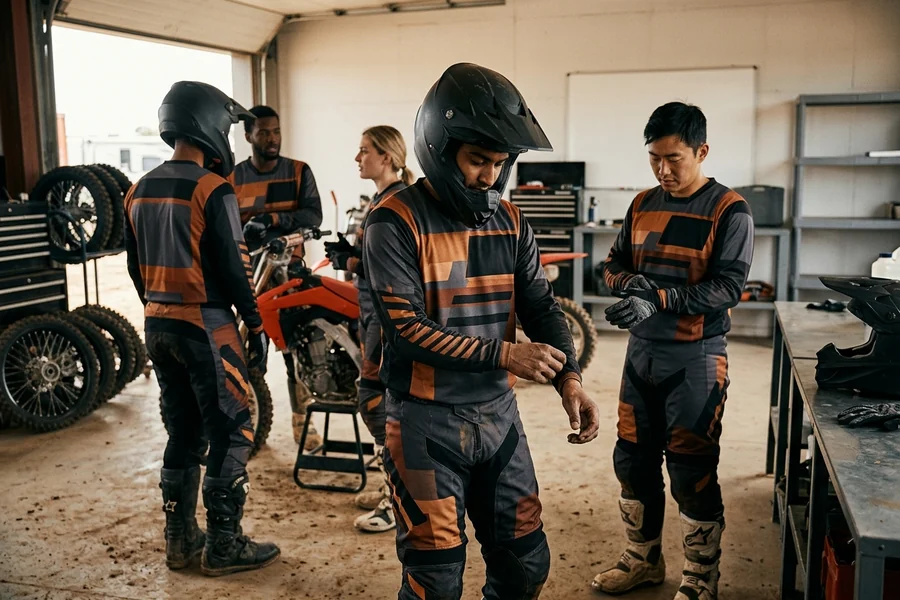
Team season kit
A roster with names and numbers, a sponsor list, and a first-round date. The jersey is usually ordered together with the pants so both print from the same saved color profile.
Start with the roster
A custom motocross jersey from Run Moto Apparel is printed flat on 140–160 gsm moisture-wicking polyester mesh, cut on a block drawn from a rider in the attack position, and ordered from a roster: one line per rider, name, number and sponsor logos in the print itself.
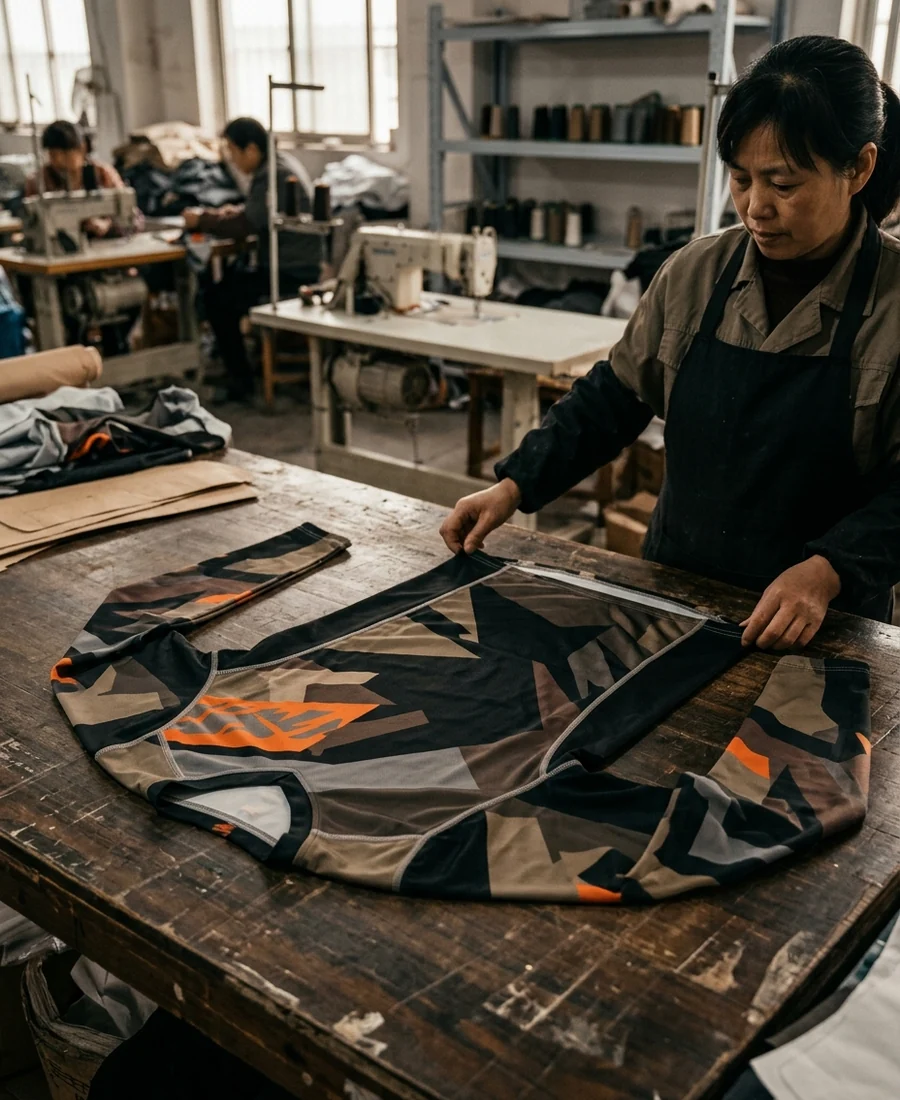 Front
Front
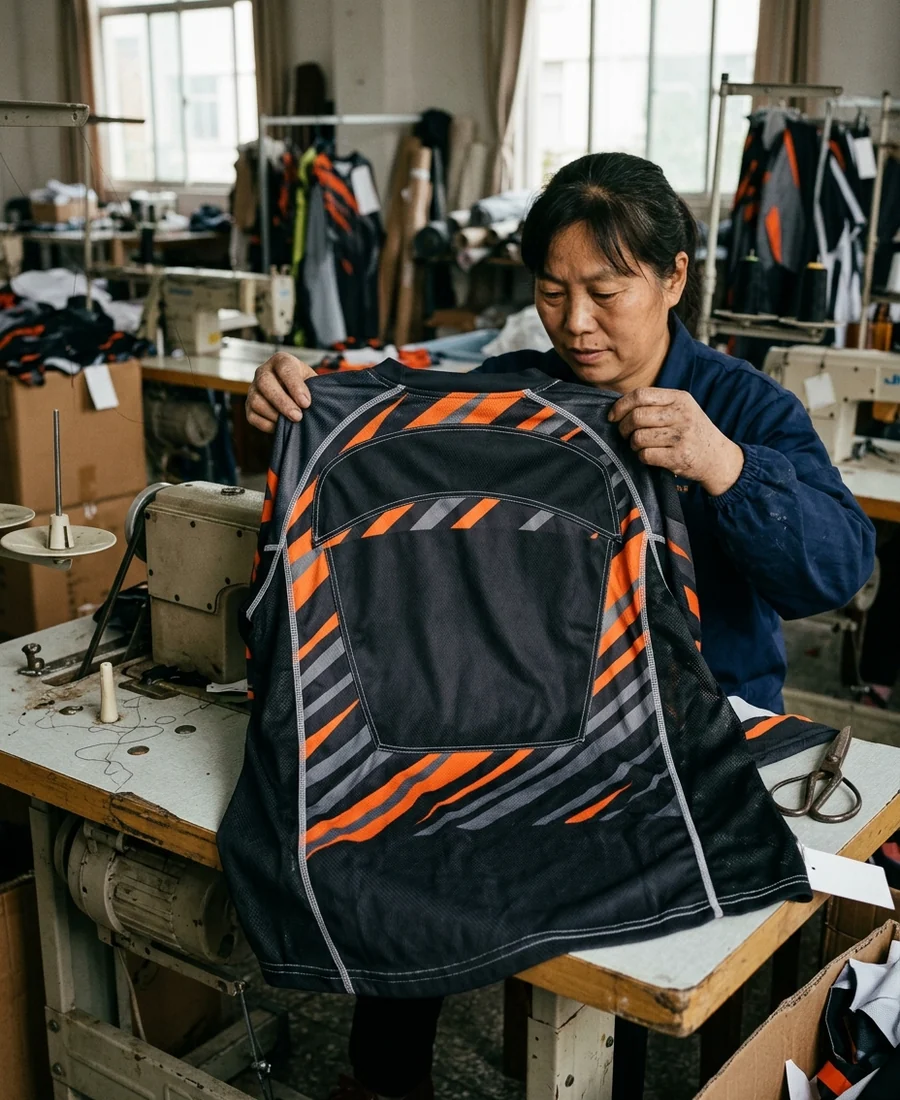 Back
Back
Three kinds of custom motocross jersey order come through this page, and one does not. Each starts with a different document, so the first message can be short.
A roster with names and numbers, a sponsor list, and a first-round date. The jersey is usually ordered together with the pants so both print from the same saved color profile.
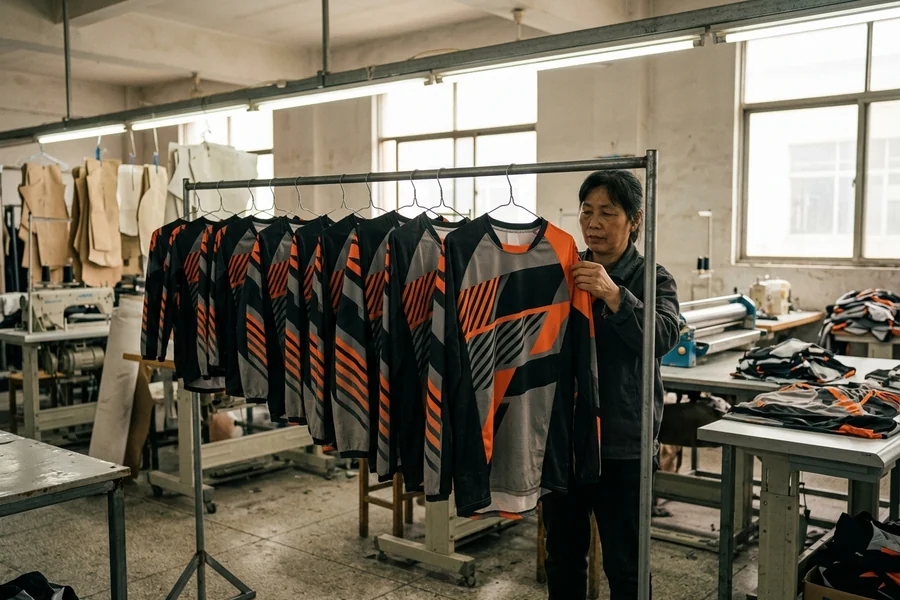
One design, members across youth and adult sizes, and new members joining mid-season. The layout, pattern set and color strip are archived so the twelfth member's jersey matches the first.
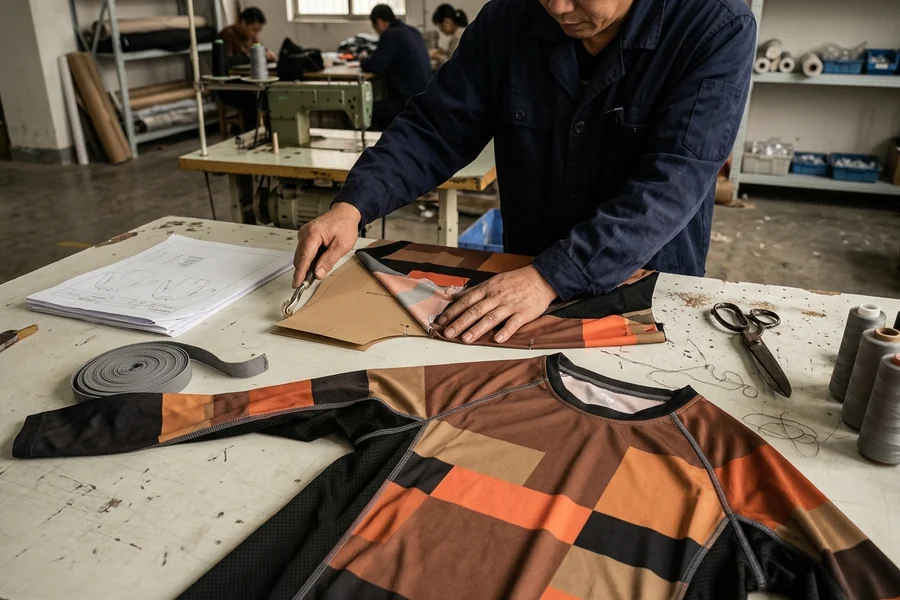
A jersey developed from your tech pack or a reference garment on a shared base block, sampled in your core size, produced from 50 pieces per style with your label. The private label motorcycle apparel path is described on the home page.
Fabric weight, sleeve construction, fit and block decide how the jersey behaves; artwork only decides how it looks
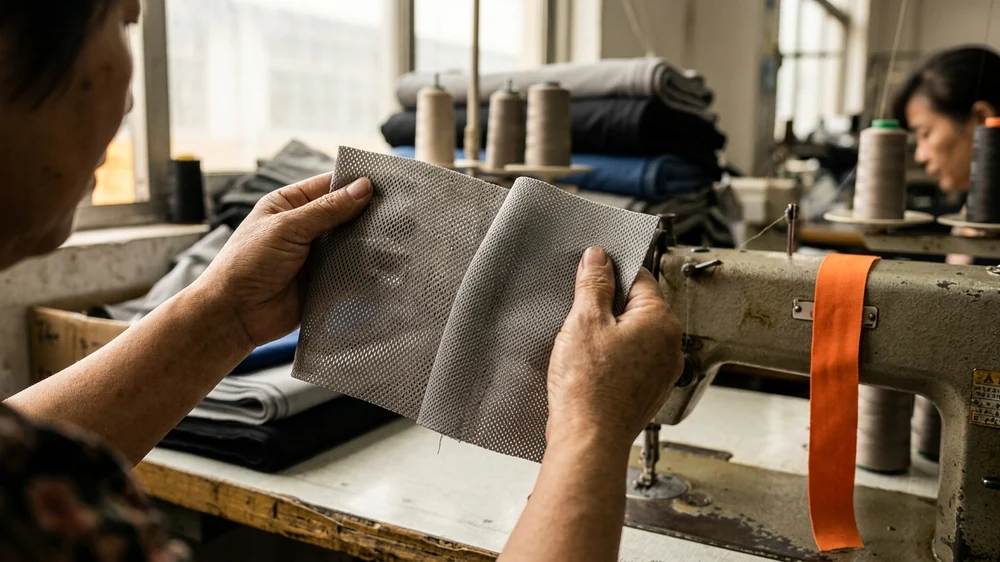
Both are sublimation-grade polyester mesh. 140 gsm is lighter and more open, for hot climates and short motos. 160 gsm is denser, holds fine print detail better and takes more washes.
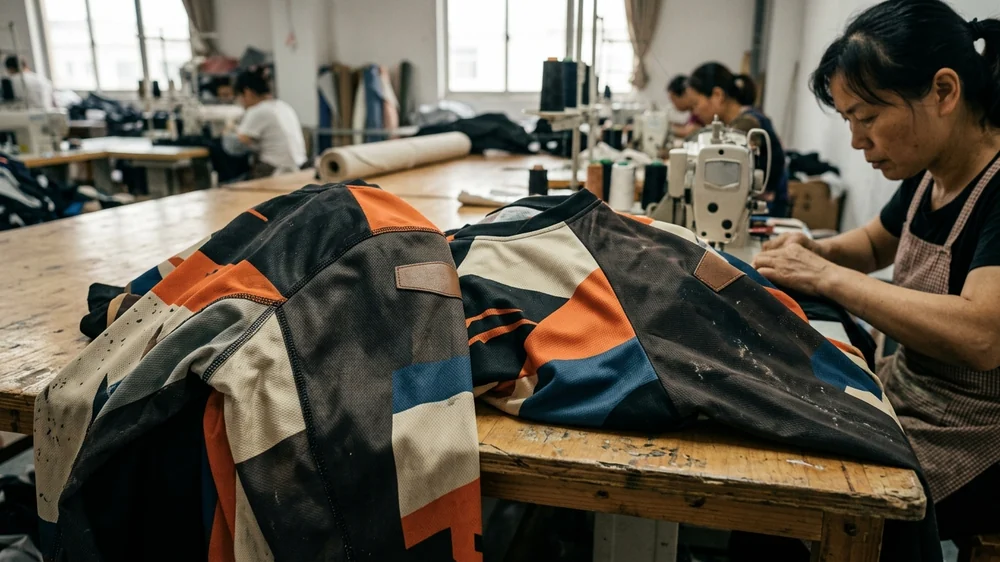
Raglan keeps the whole shoulder seam-free for sponsor blocks and rotates with the arm when elbows come up. Set-in gives a tailored shoulder line that brand buyers often want.
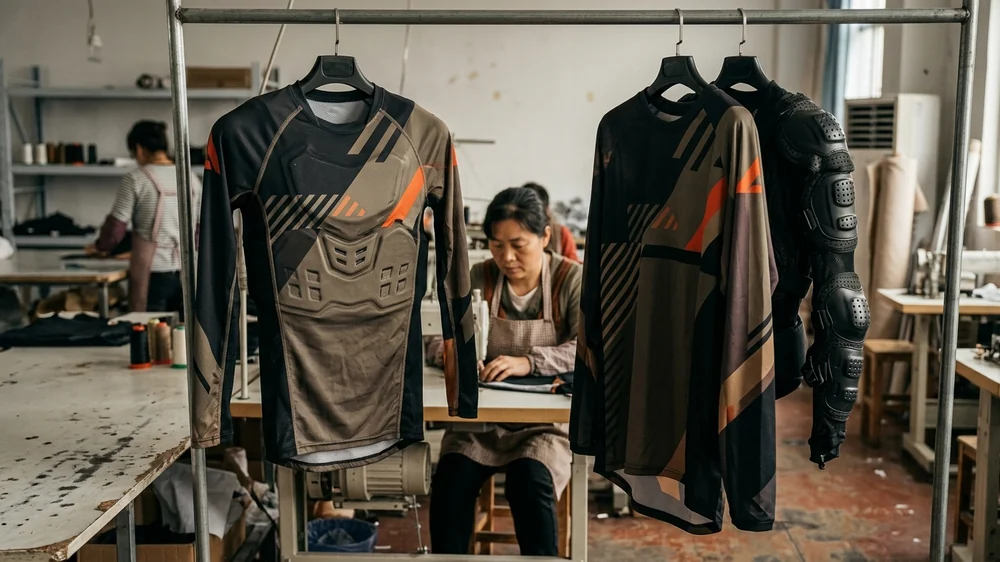
Race fit sits close to the body so nothing flaps under a chest protector. Relaxed fit goes over roost deflectors and body armor, and suits club riders.
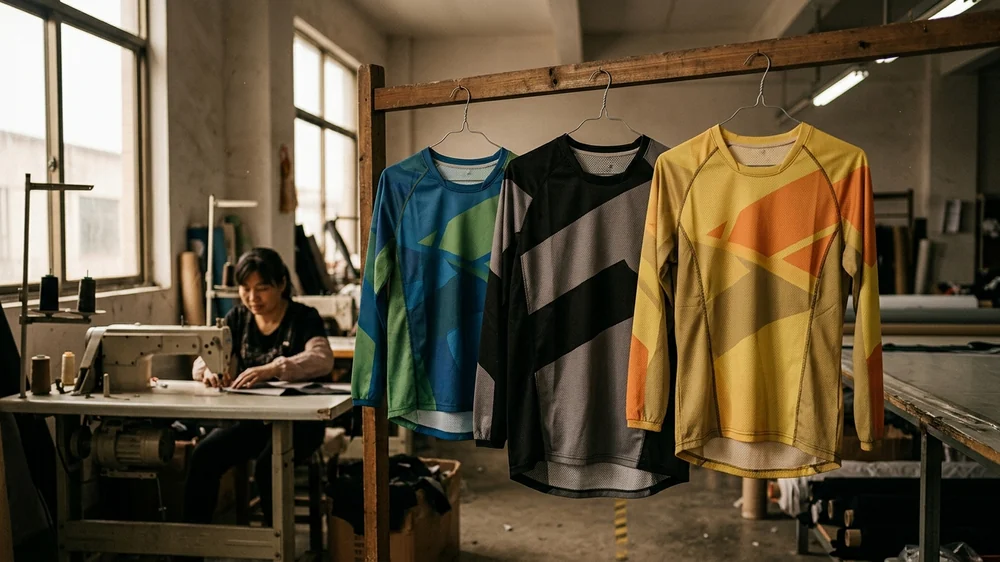
Youth is graded on its own block, not shrunk from the adult pattern; women's gear is cut on women's blocks.
Click a choice to bring it forward. All four are confirmed on the size-run set before bulk.
The custom motocross jersey reference table; the four choices above tell you which row matters for your order
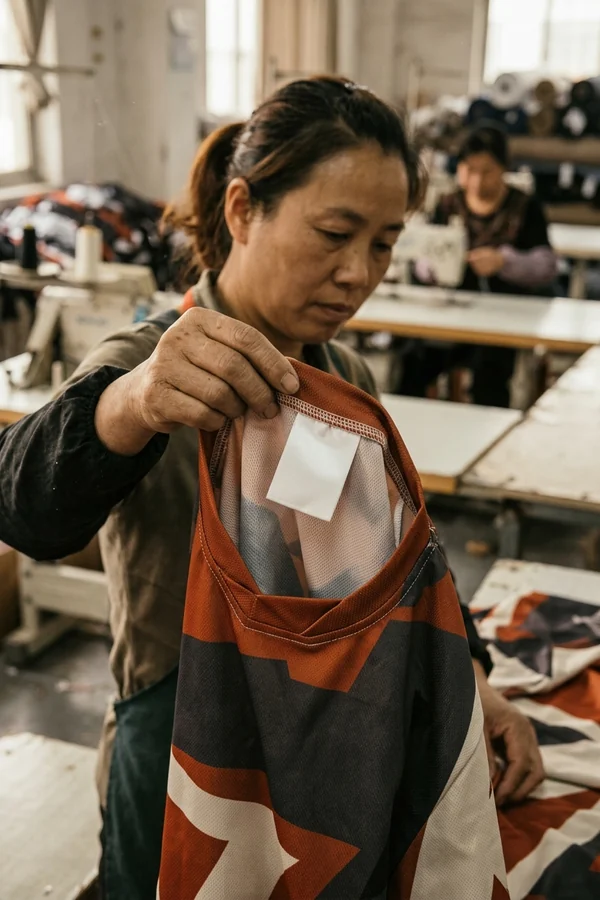
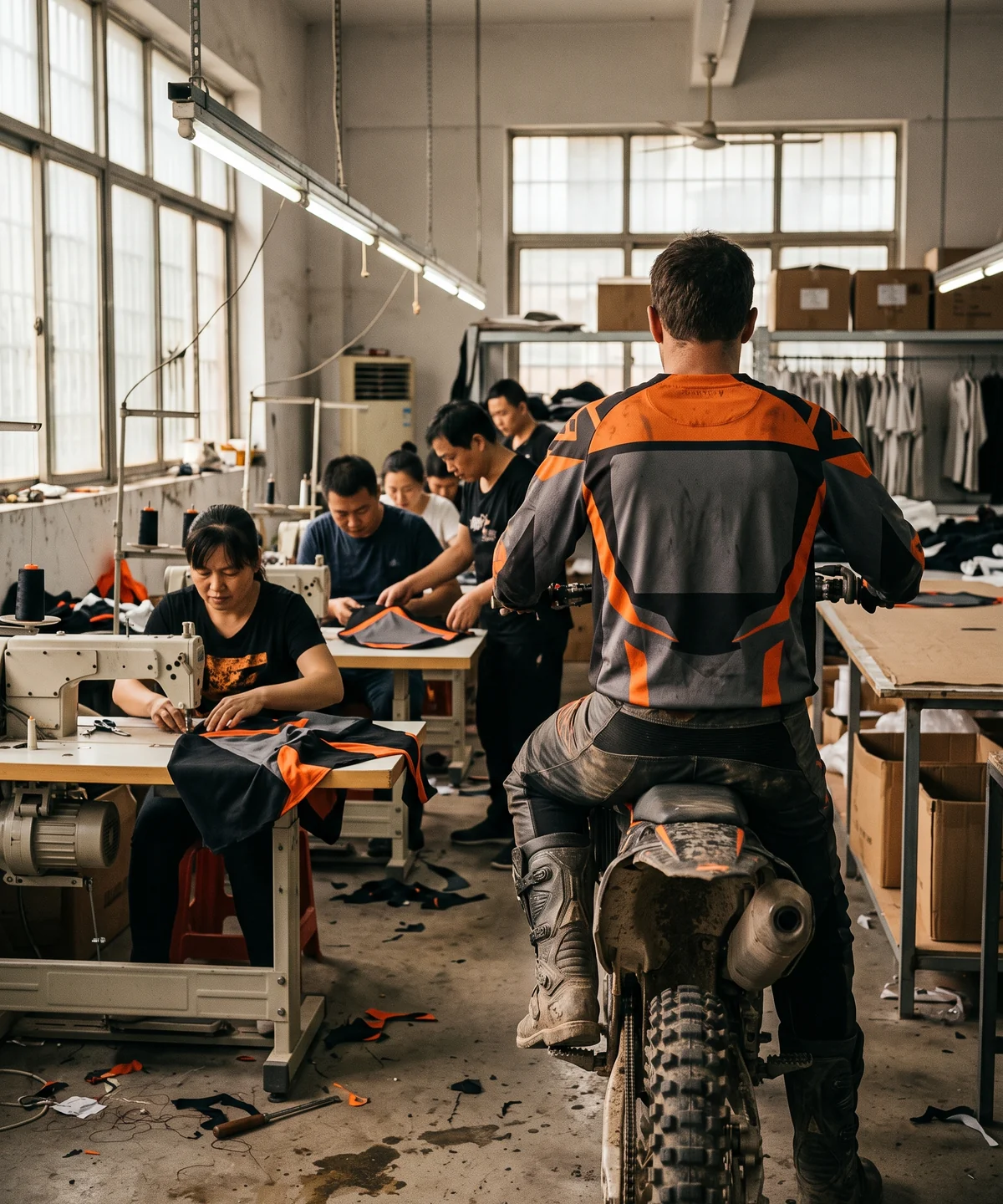
A jersey is read at speed, from the side of the track, with the rider bent forward
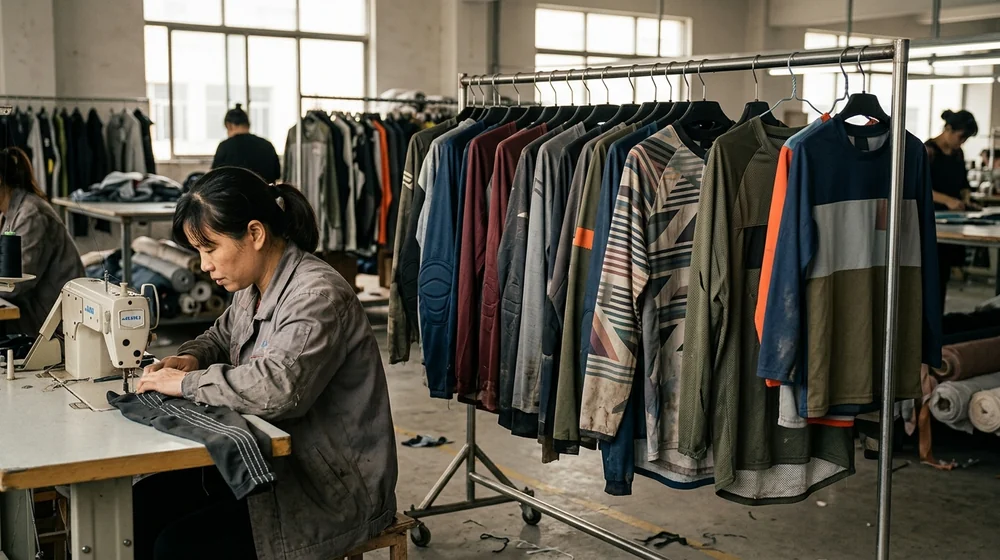
Same print room, different blocks and purposes; each row links to its own page
| Jersey | Built for | What is different | Page |
|---|---|---|---|
| Motocross and dirt bike jersey | Moto and race day | 140–160 gsm mesh, all-over sublimation, names and numbers per rider | This page |
| Enduro riding gear | Long days, changing weather | Worn under or over a jacket, fewer sponsor blocks, same mesh family | Enduro riding gear |
| Club and team apparel | Members off the bike | Jerseys, tees and hoodies; heavier knits and embroidery | Club apparel |
| ATV and UTV racing jerseys | Seated riders | Same construction, different number placement and sponsor fields | ATV/UTV jerseys |
| Youth and women's motocross gear | Growing riders, women's blocks | Same design, graded on youth blocks or cut on women's blocks | Youth gear · Women's gear |
| Custom motocross pants | The other half of the kit | Ordered with the jersey so the colorway matches across both | Motocross pants |
One layout, locked to the pattern pieces. A sponsor swap next season is an edit, not a redesign.
Seven parts, each with a job; the print runs across all of them without a break. Switch the season to see the sponsor blocks change while every seam stays where it is.
Pattern outline and seams do not move between seasons; only the sponsor fields are re-issued on the layout.
The seam you cannot see from the stands is the one that decides whether the sleeve twists
The seam runs diagonally from underarm to collar, so when a rider lifts the elbows the seam line rotates forward instead of the sleeve pulling on the body panel. The shoulder becomes one uninterrupted print field, which is why most team kits carry their main sponsor block there.
It gives a tailored line that brands ask for, and it is the right choice when the shoulder carries no logo. A logo printed across a set-in seam distorts each time the arm rises, so when a brand insists on both we move the logo below the seam and show it on the layout.
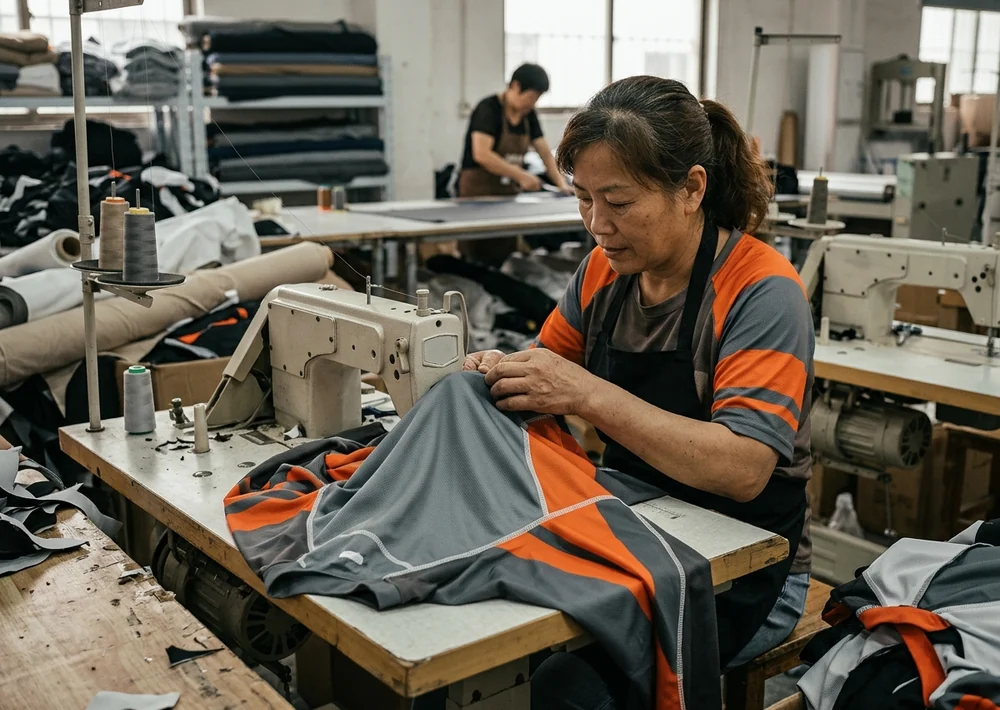
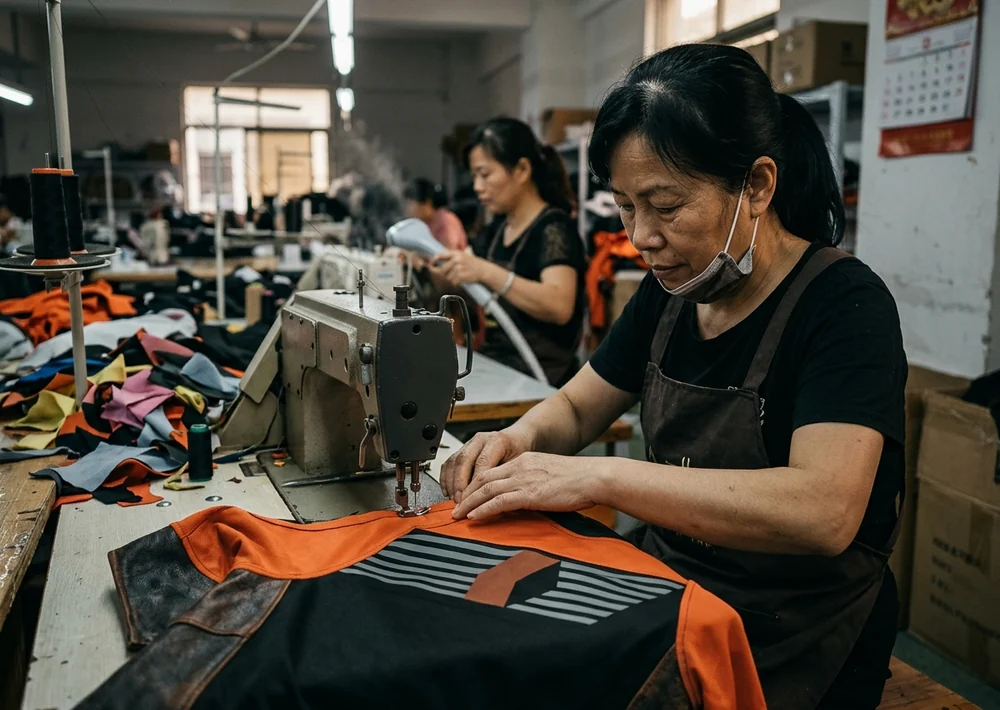
Each variant has a case it fits; none changes the price of a wrong choice later. Pick from the pairs, or send us the use and we pick with you.
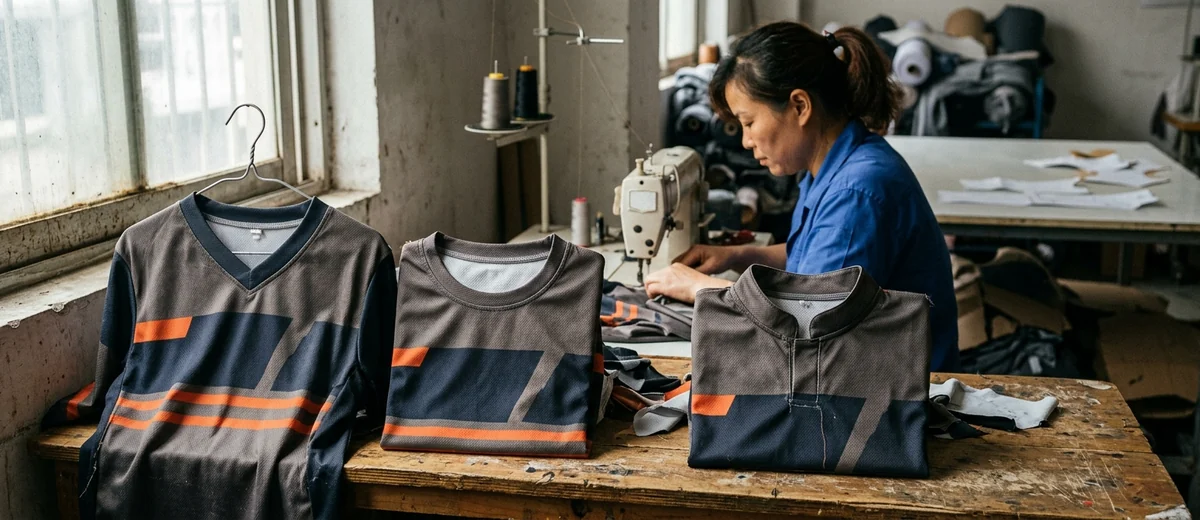
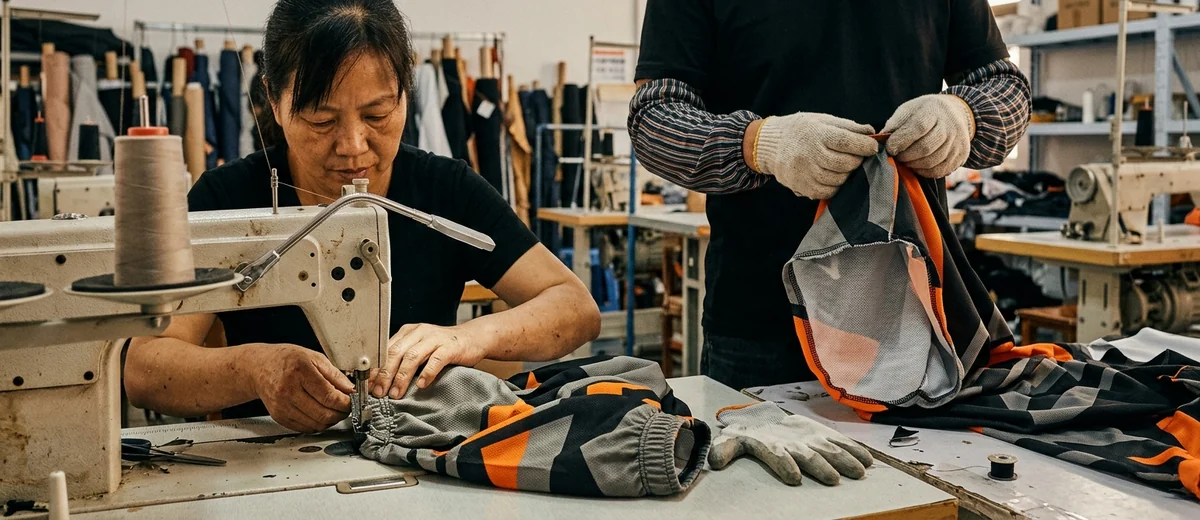
A custom motocross jersey order moves through five stations; each one hands a checked result to the next. The rail fills as you scroll past them.
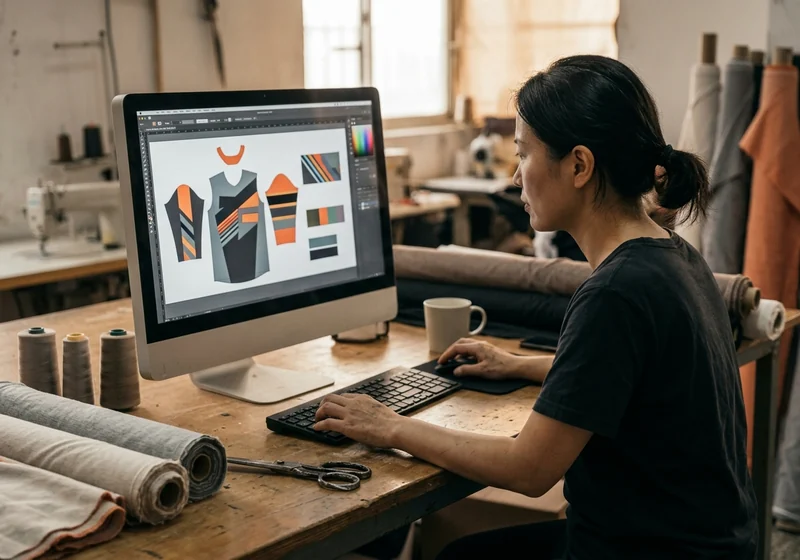
Artwork, names, numbers and logos are placed on the pattern pieces; a print-ready layout comes back to you within 48 hours for approval.
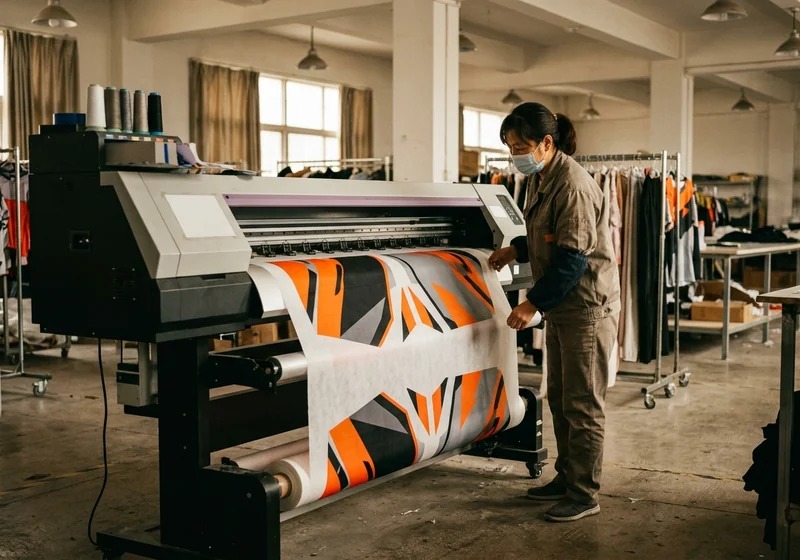
Panels are printed on transfer paper using the team's saved color profile; a test strip is printed first and laid against the archived strip.
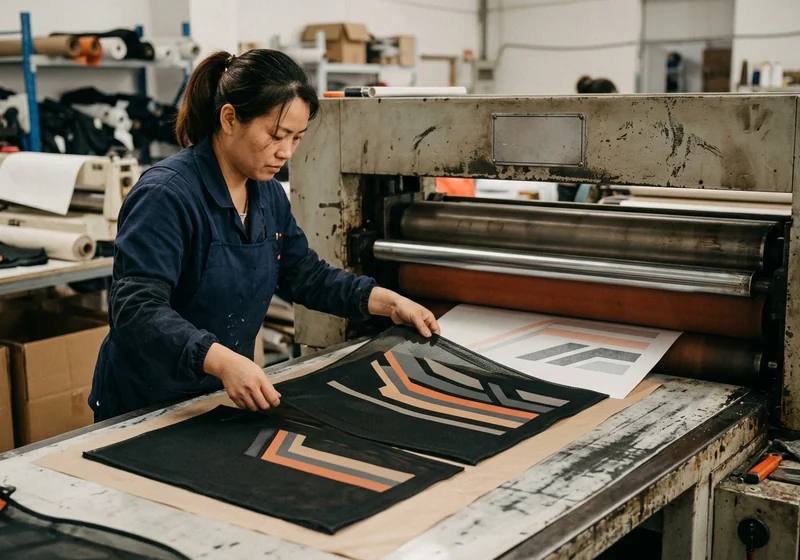
Heat and pressure bond the ink into the polyester. Panels are printed flat, before cutting, so seams follow the design.
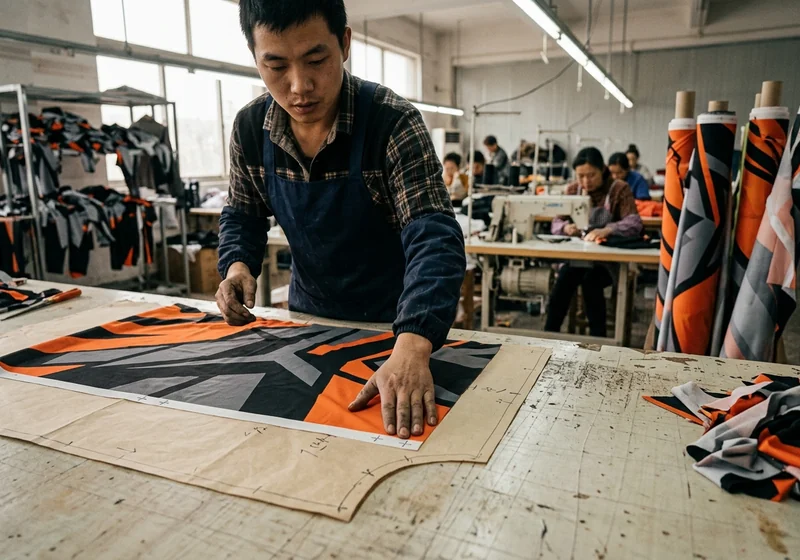
Each printed panel is matched to its pattern piece by registration marks; a panel that has shifted is reprinted, not trimmed.
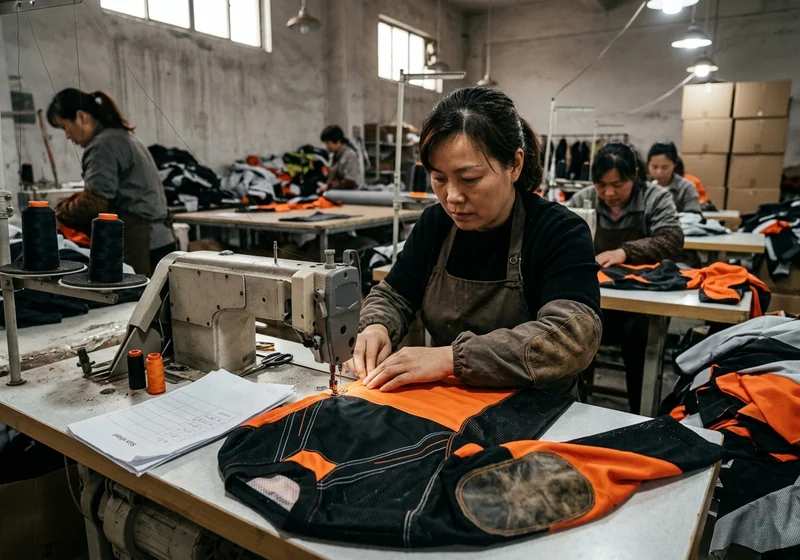
Start-of-line: the first jersey of each size is measured against the signed size sheet. Mid-line: after the first 20 percent, an inspector pulls jerseys across sizes. Final: every jersey checked, then packed by rider.
A sublimated jersey has nothing to peel, so the only place it can go wrong is where two printed panels meet
At the cutting table each panel is laid over its pattern piece with the registration marks aligned; the operator checks that the design elements meant to continue across a seam land at the same height on both pieces.
At the mid-line station the inspector checks three places on jerseys pulled across sizes:
You receive a start-of-line photo of the first finished jersey next to the size sheet, and the packed-order photo set before the box leaves.
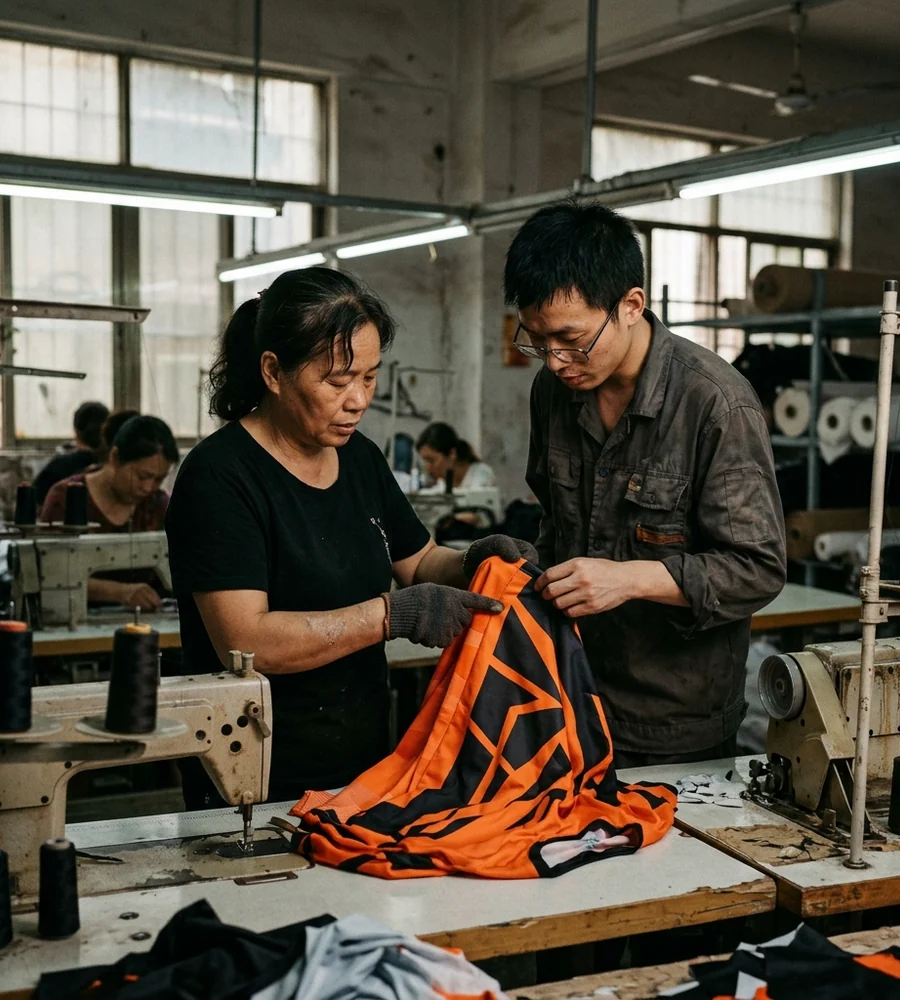
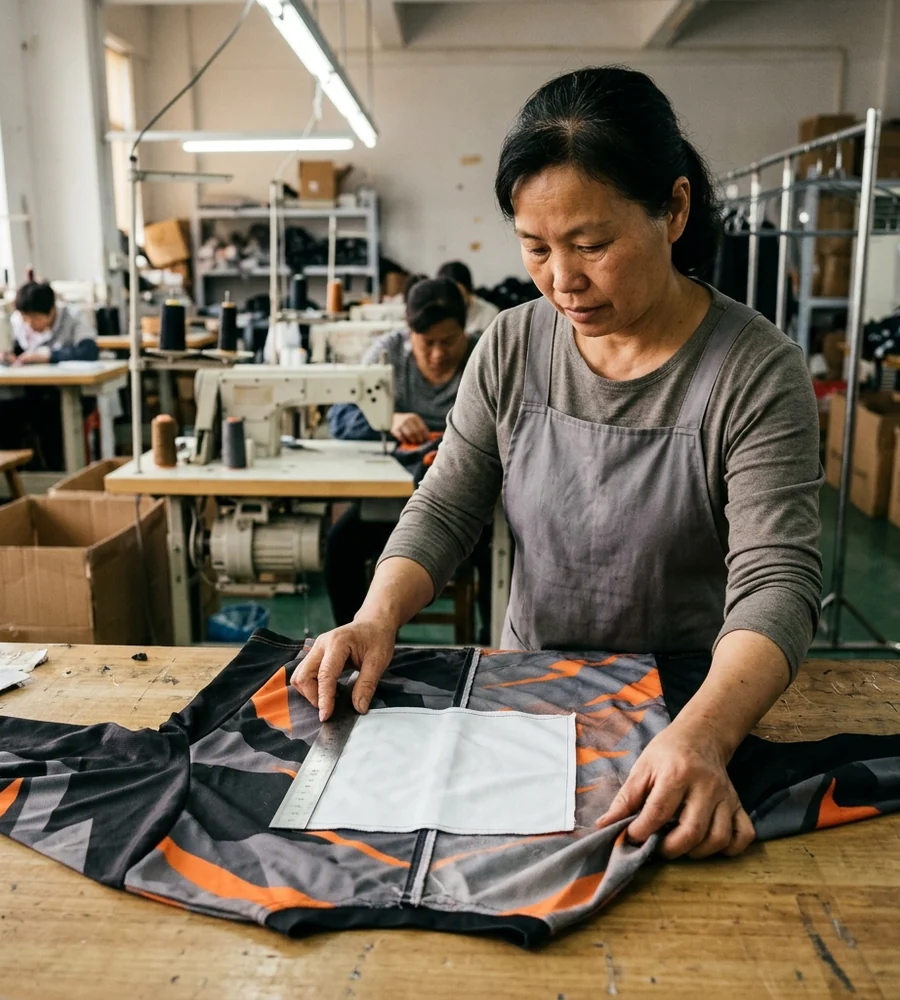
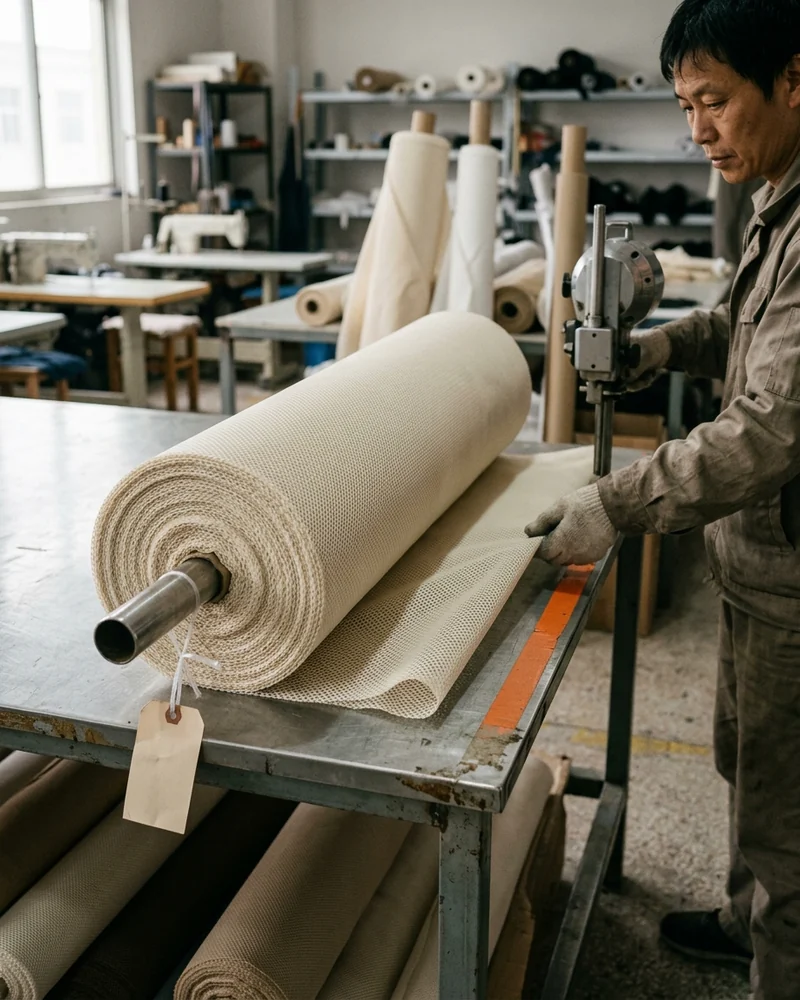
Why it is polyester, why it is mesh, and what you can specify
Why polyester, why mesh. Sublimation ink bonds into polyester fibre, which is why the jersey is 100% polyester and why cotton is not offered for a printed jersey. The mesh knit leaves open area for airflow and moisture wicking; the weight, 140 or 160 gsm, is the one variable you choose.
What you can rely on between orders. Each order records the fabric lot; if a lot changes the color strip is re-tested on the new lot before printing, and if a fabric is discontinued you get a swatch of the replacement before the reorder is confirmed.
Six checks a team manager can do on a custom motocross jersey sample without us in the room. Run them, then sign the size sheet.
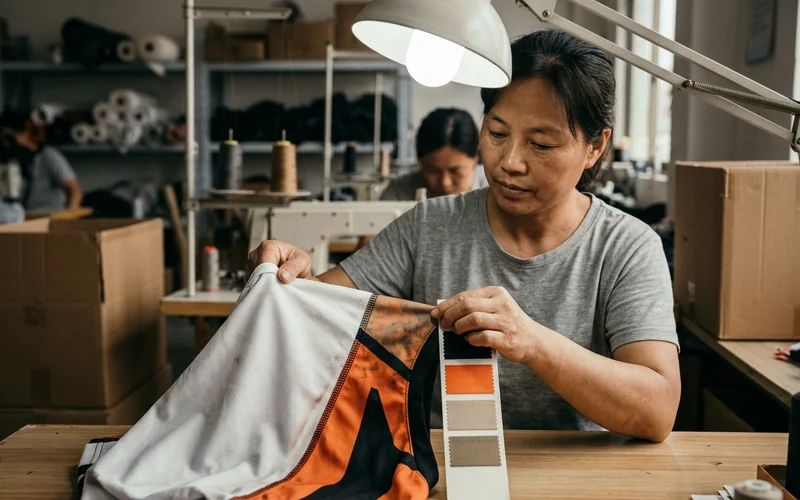
Hold the jersey next to the color strip cut from its own print run, under daylight.
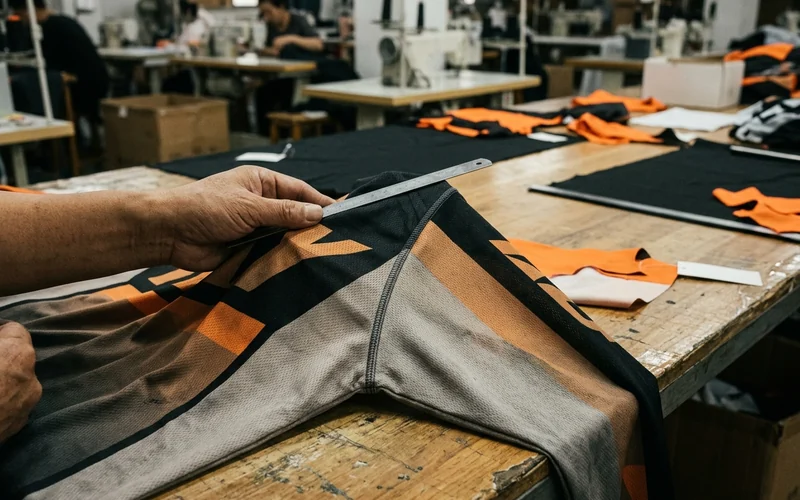
Follow a design line across the side seam and the raglan seam.
Line by line, spelling and number, before the size sheet is signed.
Elbows up, chest protector on, check the shoulder and the drop tail.
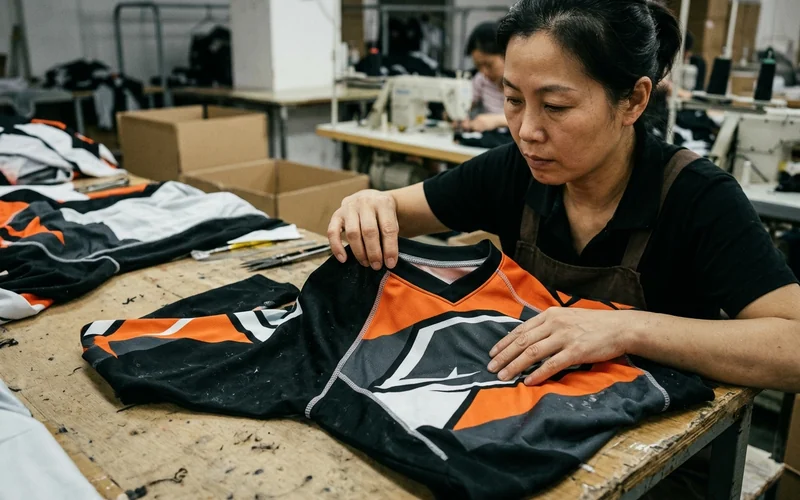
Machine wash the sample and look at the print and the collar afterward.
Chest and sleeve against the production sizes written on the sheet.
One sales manager owns the order from the first message to the 7-day post-delivery window.
Most changes cost nothing if they land before layout approval; the table shows the ones that do
Every one of these is caught at the layout stage of a custom motocross jersey order, inside the 48 hours, not on the sample
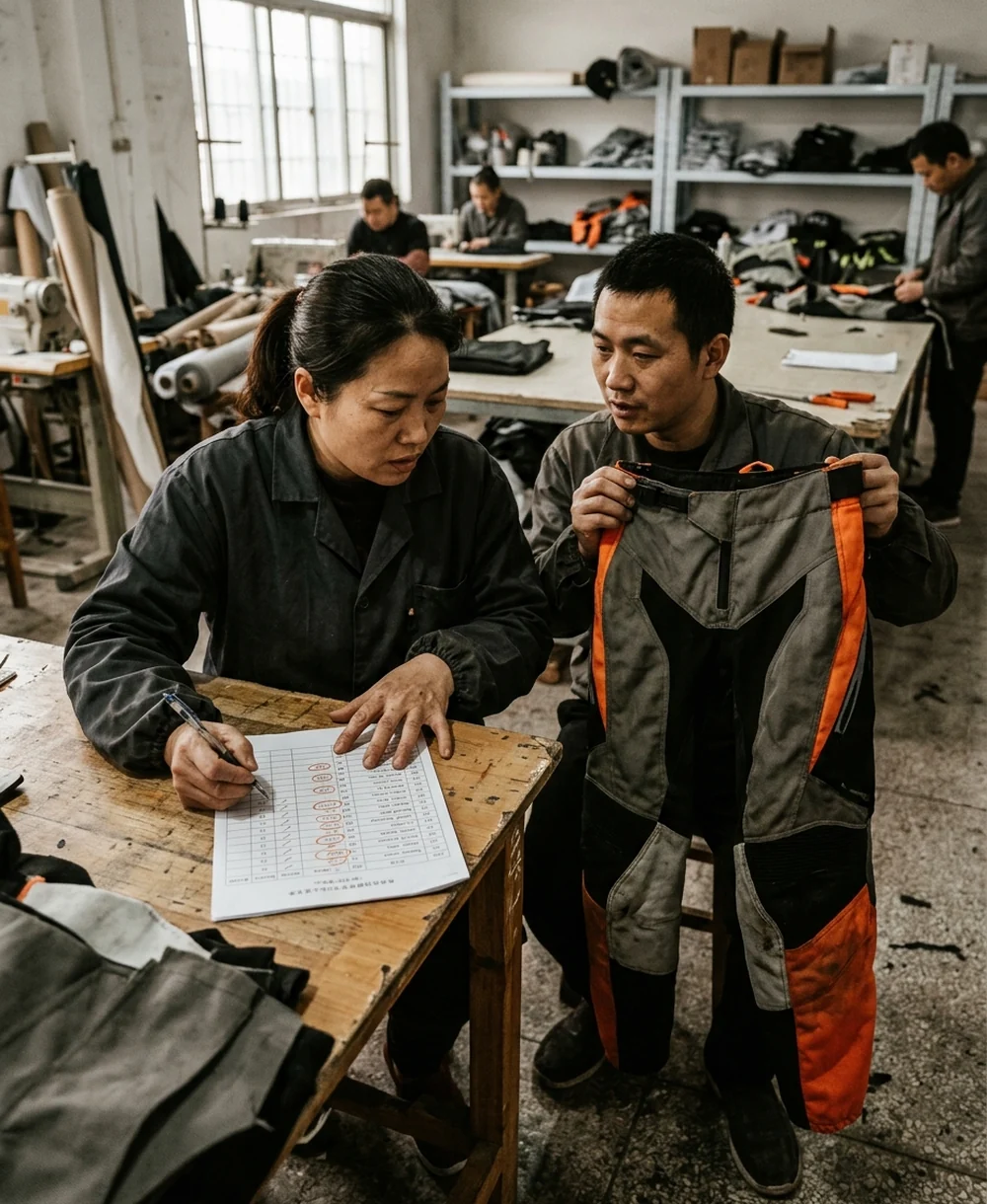
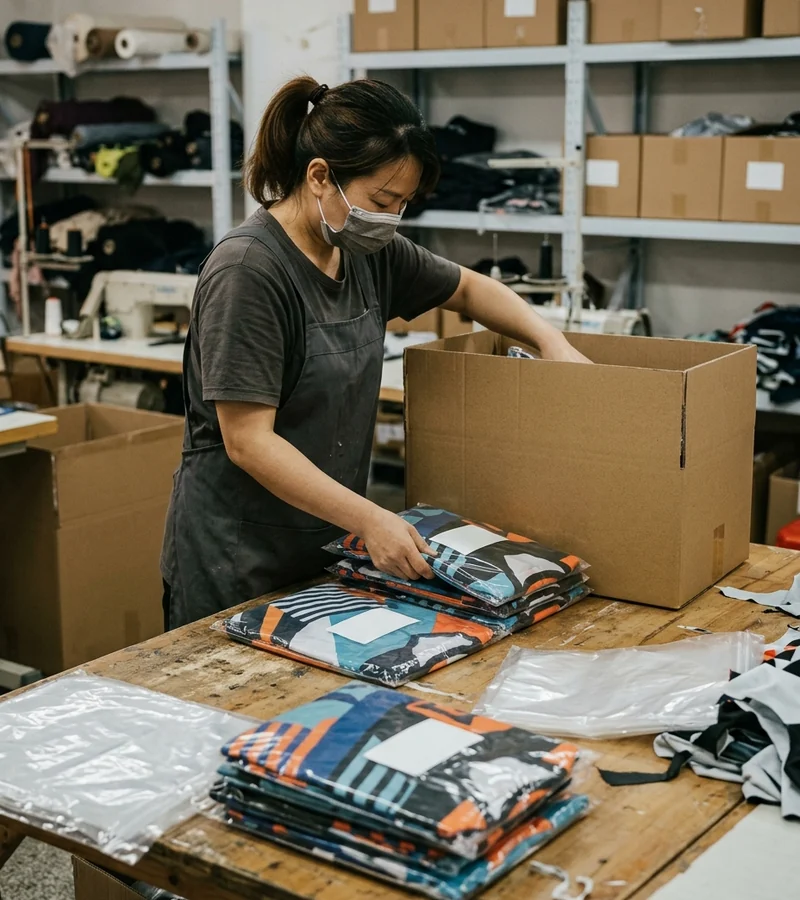
A custom motocross jersey box is packed for the person who has to hand the jerseys out at the track
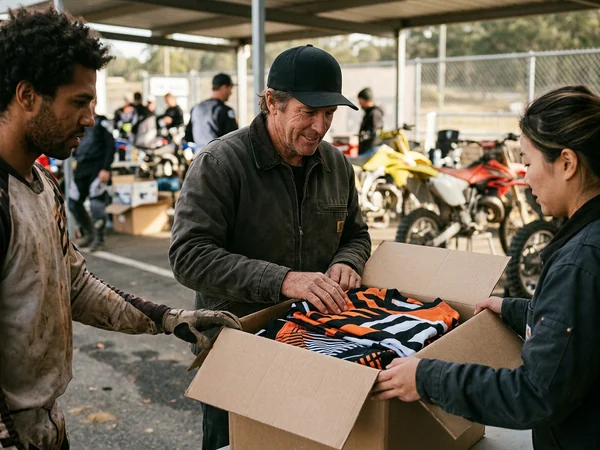
One bag per jersey, labelled with name, number and size, then sorted by rider, or by size for a dealer run. The carton list matches the signed size sheet line by line, and the packed-order photo set shows every bag before the box is sealed.
Brand orders carry your neck label and hangtag. Shipping is express, air or sea, DDP available on request.
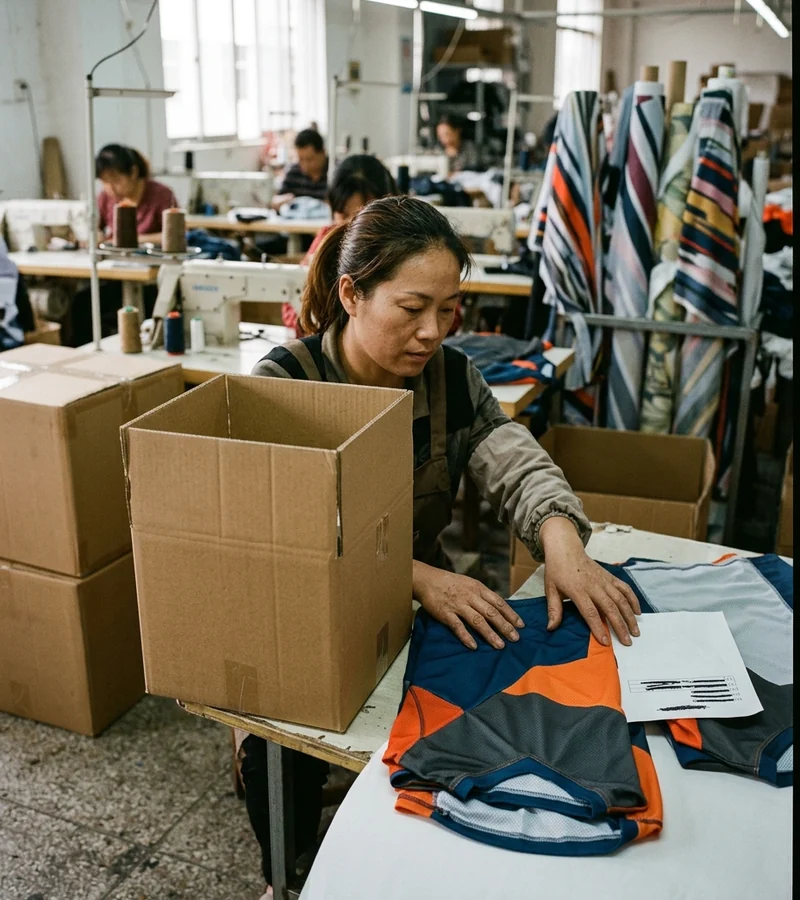
Send these and Anna answers with a feasibility check within 24 hours, not a brochure. Missing items are asked for, not guessed.
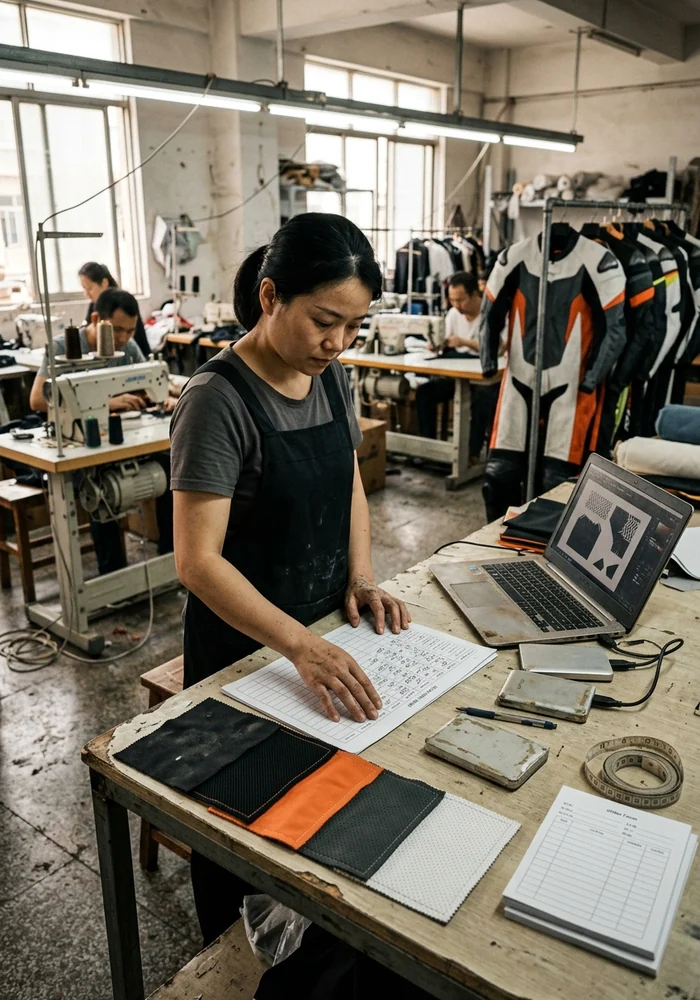
The pieces most teams order with the jersey, and the process pages behind it
Anna replies within 24 hours on business days with a feasibility answer and the next step. No brochure, no price list; a real answer about your jerseys.