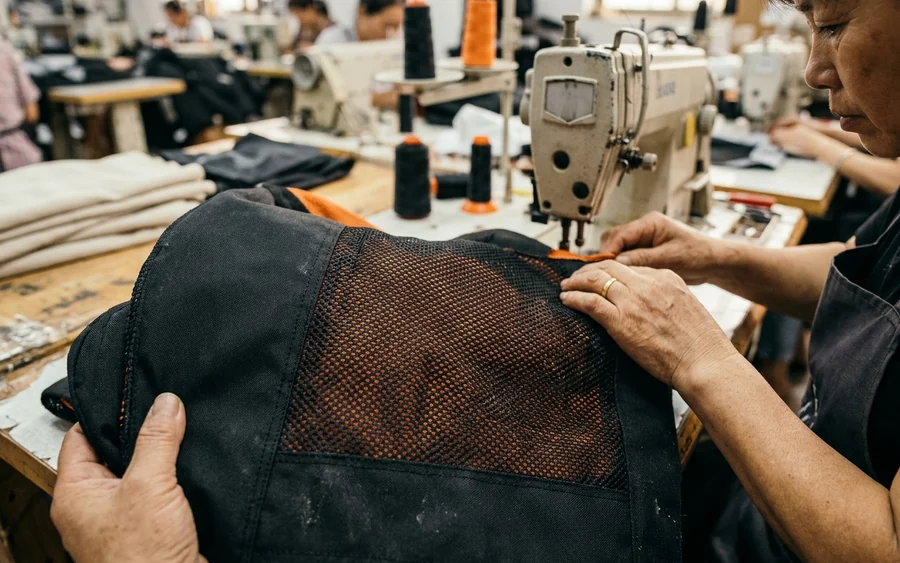
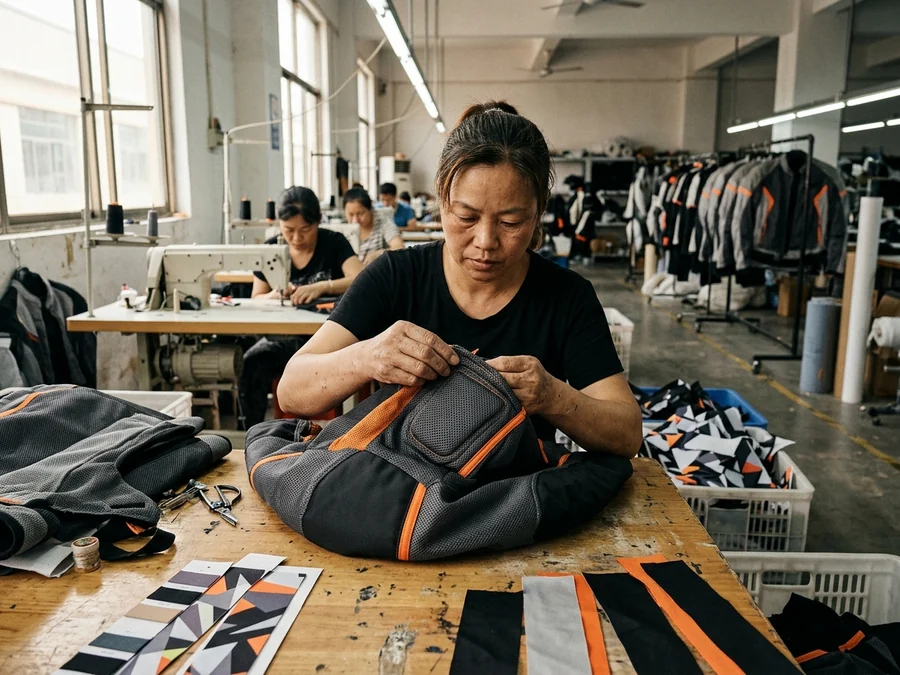
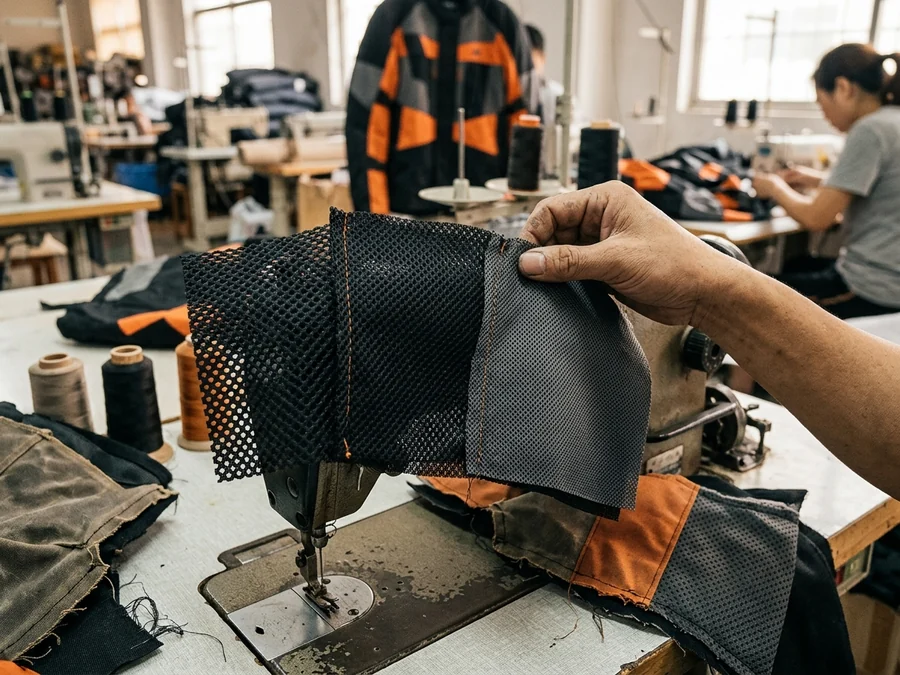
Macro of an open mesh weave with large apertures
Openmost air, least abrasion
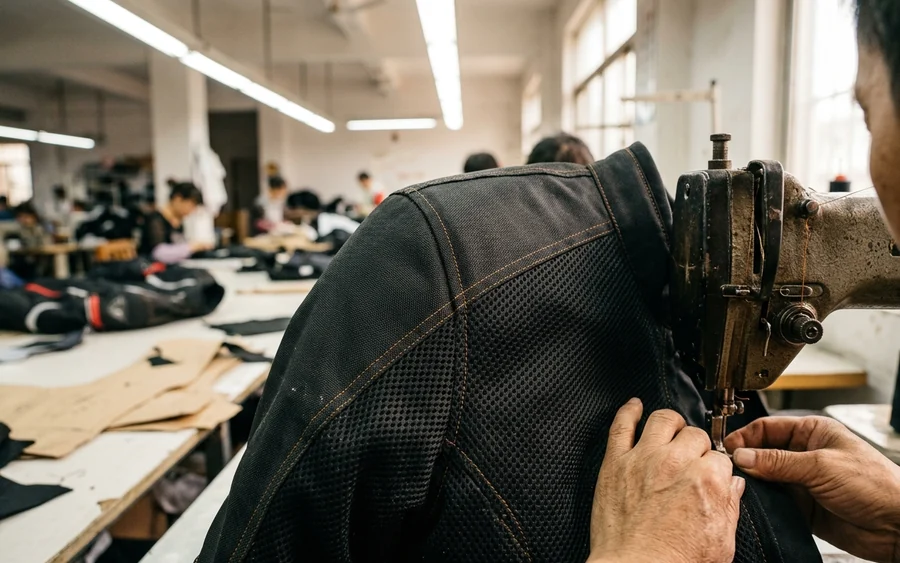
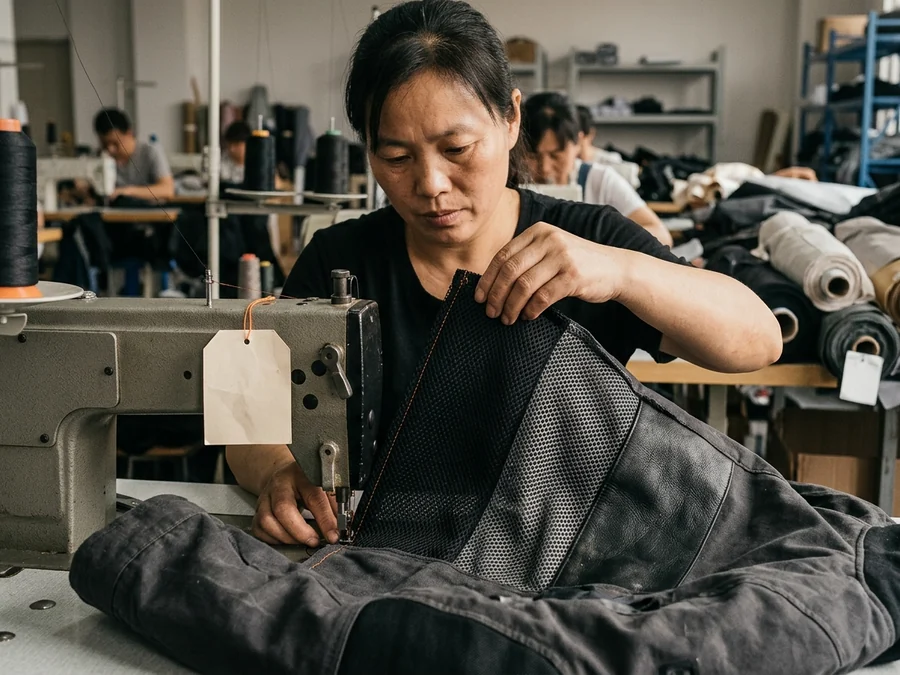
Macro of a medium mesh weave that holds its shape at speed
Mediumthe usual compromise
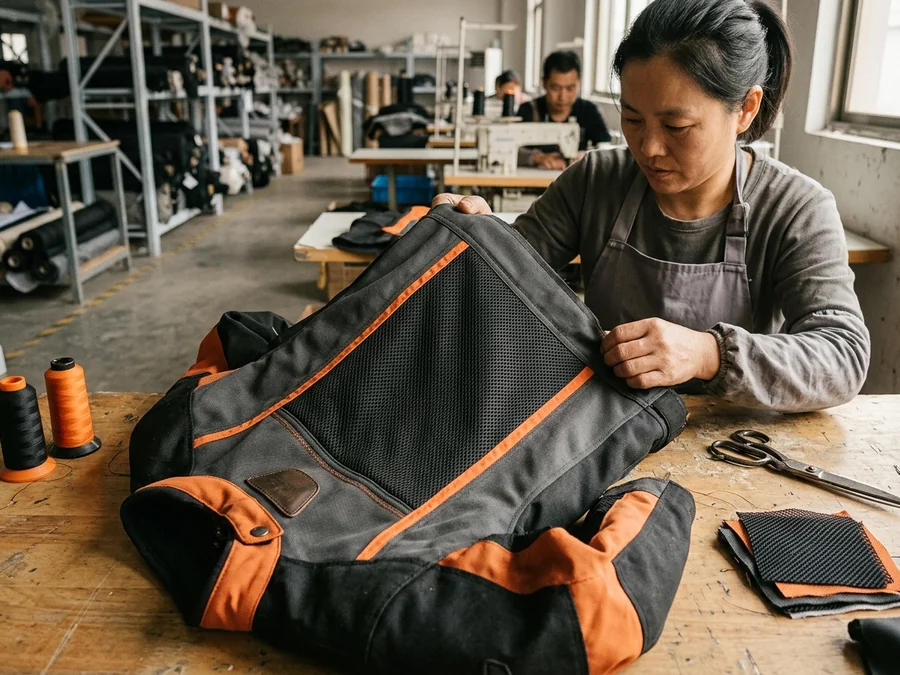
Macro of a tight mesh weave with a denser structure
Tightless air, more abrasion
HOT-WEATHER MESH MOTORCYCLE JACKETS

Custom Summer Mesh Motorcycle Jackets for Hot-Weather Riding

Develop ventilated motorcycle jackets with high-airflow mesh, reinforced high-wear zones and custom branding for urban, sport, touring and adventure collections.

Summer mesh jacket range

Custom Summer Mesh Motorcycle Jacket Collection

Ventilated motorcycle jackets developed for hot-weather commuting, sport riding, touring and adventure programs.

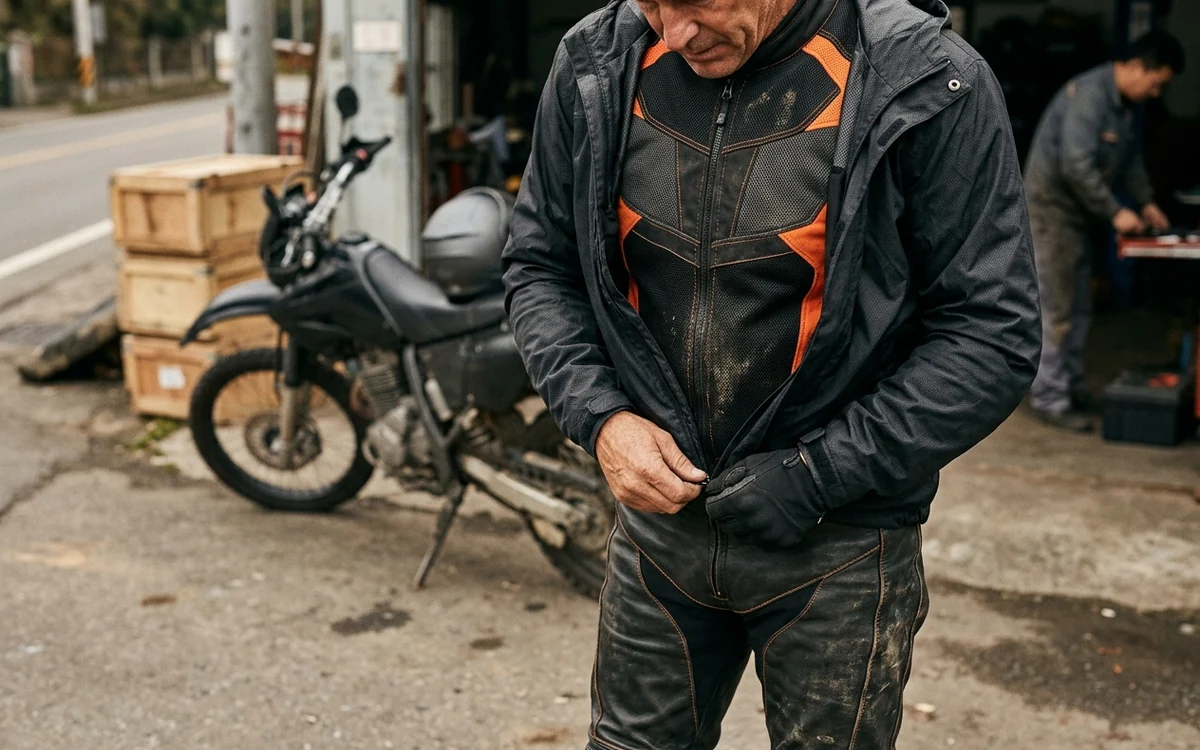
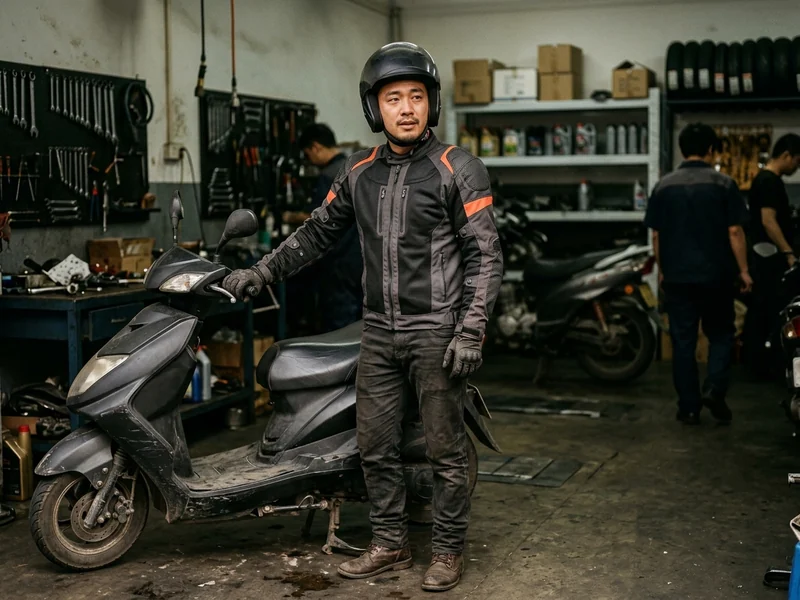
City rider in a lightweight urban mesh motorcycle jacket beside a scooter

Urban Mesh Motorcycle Jackets

For city commuting and everyday riding.

  • Lightweight construction
  • Clean, understated look
  • Mesh ventilation for stop-and-go traffic
Request This Jacket →
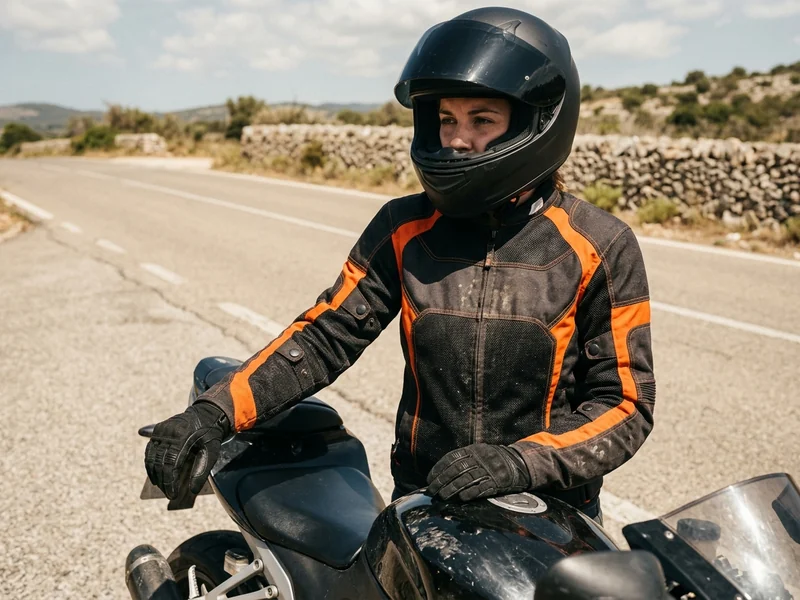
Rider in a sport-cut mesh motorcycle jacket on a sunny road

Sport Mesh Motorcycle Jackets

For sport riding on the road.

  • Sport fit
  • Stretch panels
  • Reinforced shoulder and sleeve zones
Request This Jacket →
Touring rider in a mesh jacket with storage pockets on a long summer road

Touring Mesh Motorcycle Jackets

For long-distance riding in hot weather, where comfort over the day comes first.

  • Through-flow ventilation
  • Adjustable fit
  • Storage pockets
Request This Jacket →
Rider in an adventure mesh jacket on a hot gravel road

Adventure Mesh Motorcycle Jackets

For hot-climate adventure riding and mixed road surfaces.
  • Abrasion-resistant mesh
  • Articulated panels for movement
  • Multi-pocket design
Request This Jacket →
Mesh motorcycle jacket shown with its removable windproof inner liner

Mesh Jackets with Removable Liner

For summer riding when the weather changes during the day.

  • Mesh outer shell
  • Removable windproof or waterproof inner liner
  • Liner zips in or out between stops
Request This Jacket →
Who orders them

Who orders mesh jackets: brands, dealers, fleets and hot-climate importers

Four buyers, all trying to get a rider to keep the jacket on in summer.
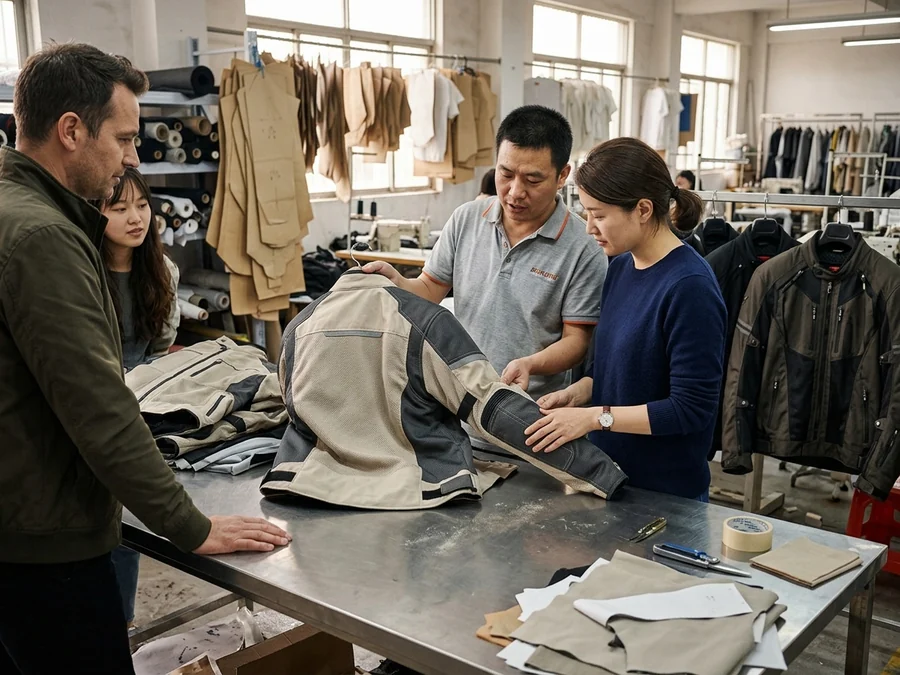
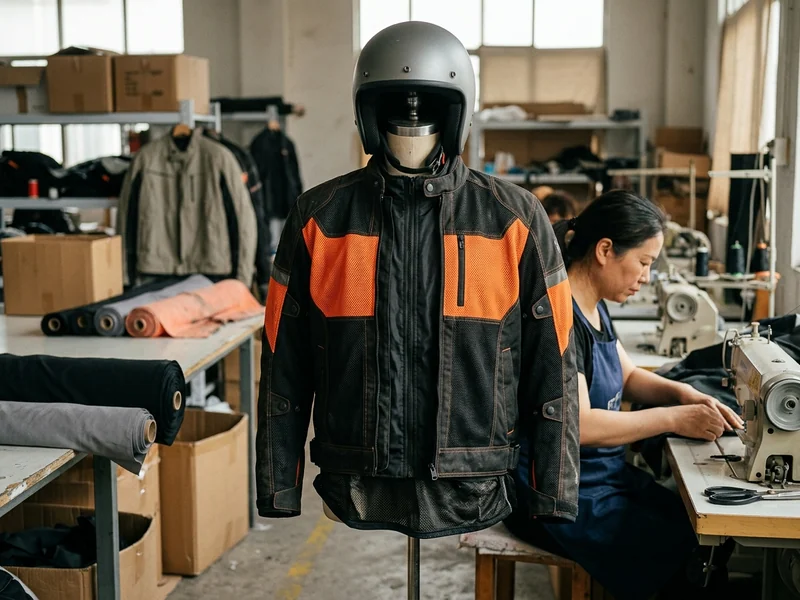
Brand team reviewing a summer model beside their all-season jackets

Riding-gear brands

Need a summer model that sits next to their all-season jackets without contradicting them.
Wants · a coherent range
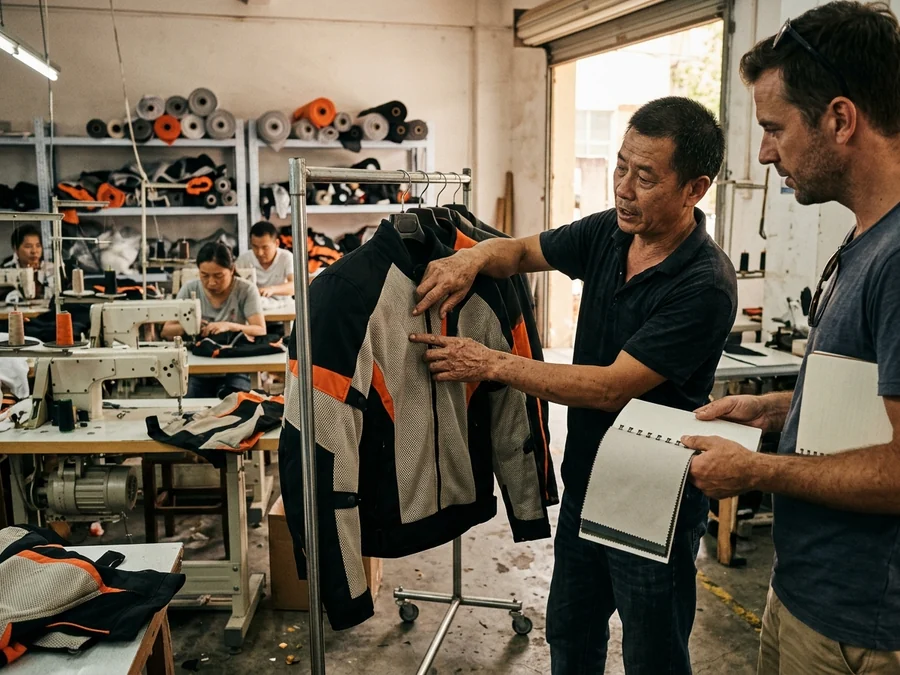
Dealer in a hot market with a summer jacket on the rail

Dealers in hot markets

Sell one season a year and need the jacket to be the reason a customer stops riding in a t-shirt.
Wants · a reason to wear anything
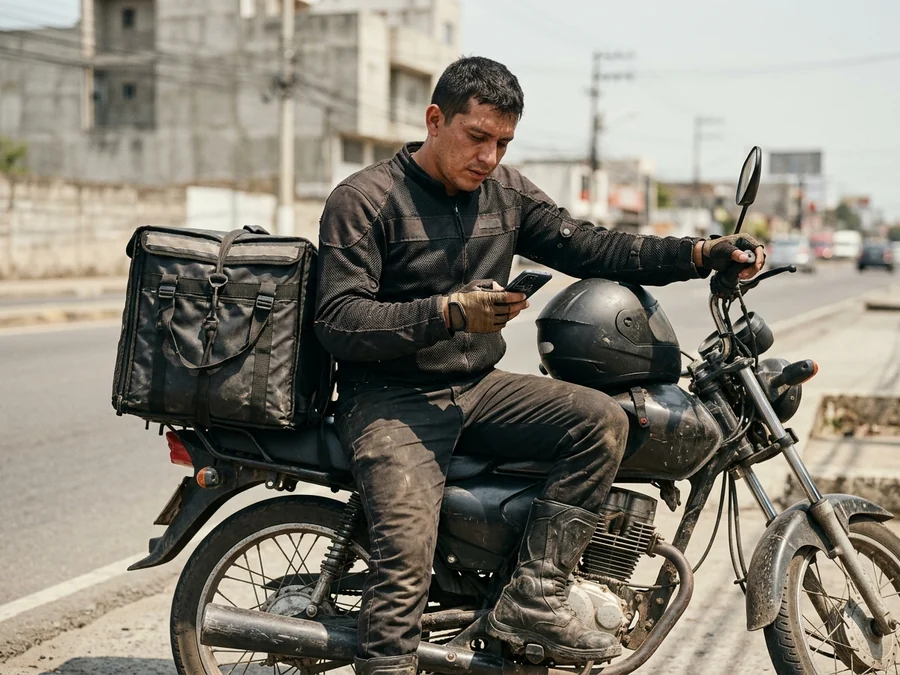
Delivery rider working all day in heat

Courier and delivery fleets

Buy for people who ride all day in heat, stopping constantly, where airflow only exists while moving.
Wants · cool at the lights too
Importer planning a wide size range for a hot climate market

Hot-climate importers

Order across a wide size range for markets where a solid jacket will simply not be worn.

Wants · the whole run to sell
Not this page
  • Waterproof gear, which has its own page
  • Motocross jerseys, which are a different garment entirely
The panel map

The panel map: what can be mesh and what cannot

Scroll: the mesh zones fill in, then the panels that stay solid are outlined. This is the whole design — everything else follows from it.

Not a compromise A jacket that is mesh at the shoulder is not a summer jacket with a trade-off — it is a shirt with a zip. That is why a good mesh jacket still looks substantial across the top.
  • Mesh · chest and frontWhere airflow enters, and where an impact is least likely to be a slide.
  • Mesh · back panelWhere the air has to leave — behind a back protector, not instead of one.
  • Mesh · outer arms, in partAbove the elbow, where airflow is strongest and the abrasion risk is lower than at the shoulder.
  • Solid · shouldersFirst contact in almost every slide. This panel does not become mesh, in any design, at any price.
  • Solid · elbows and forearmsSecond contact, and the panel a rider puts out instinctively.
  • Solid · the whole armor zoneWherever a pad sits, so the pad has something to stay attached to.
Three mesh weights

Mesh is not one fabric: three weights and what each buys you

A second map laid over the first — and the difference between a jacket that flows air and one that just has holes in it.
An open mesh panel used on a shielded inner area01

Open mesh

Buys · maximum airflow

Minimum abrasion resistance, so it goes on inner panels and under-arm areas that are shielded by something else.
A medium mesh panel on the chest of a riding jacket02

Medium mesh

Buys · air plus structure

The usual compromise for chest and back panels: real airflow with enough structure to hold its shape at speed.
A tight mesh panel used where a panel is exposed03

Tight mesh

Buys · abrasion, at a cost

Denser weave, noticeably better abrasion performance, less air. Used where a panel needs to breathe but is exposed.

How to check itAsk how many mesh types are in the jacket. "Mesh" as a single answer means nobody made this decision — and it is a decision, not a material.
Airflow

Airflow: through the jacket, not around it

A jacket with intakes and no exits is a bag that holds warm air

Air enters at the chest and must leave at the back. The difference between a jacket that cools and one that merely has mesh is whether those two are connected: the lining must not block the path, the back panel has to exhaust rather than seal, and the fit has to be close enough that air is pulled through the garment instead of around it.
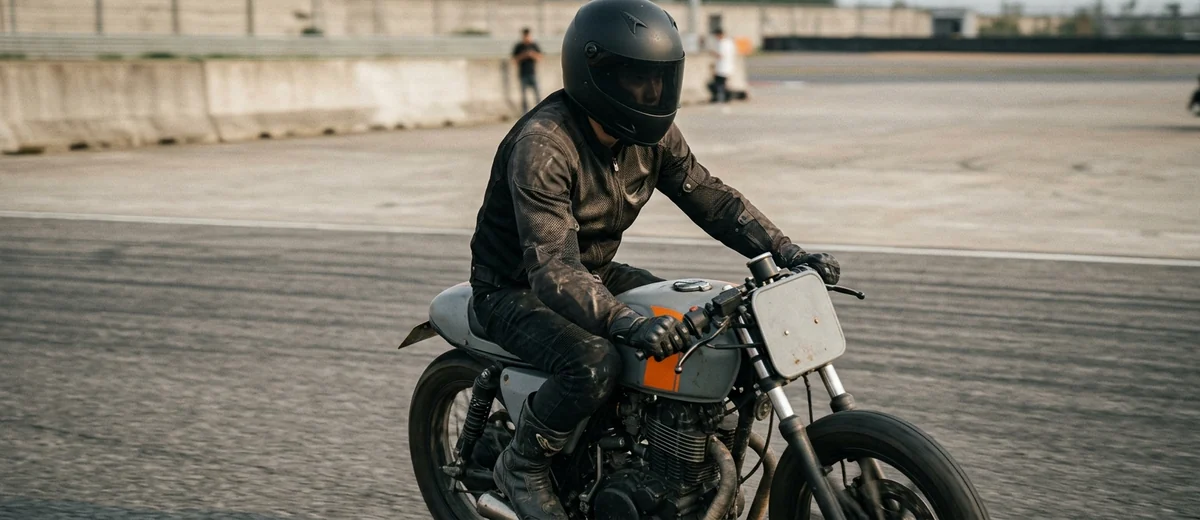
  • A loose mesh jacket is hotter than a fitted one: it holds a cushion of still air inside while the moving air streams past outside.
  • It is also noisier and more tiring on a long ride, for the same reason.
How to check itPut it on and have someone hold a fan at your chest. You should feel air at your back — not just at the front.
A rider at speed in a fitted mesh jacket with air pulled through the panels
Pulled through · not around
The map is
the design

A jacket that is mesh at the shoulder is not a summer jacket with a trade-off. It is a shirt with a zip.

Flapping

Flapping: the problem nobody mentions until the first long ride

Mesh has less structure than a solid shell, so the pattern has to provide it

A panel that flaps is a panel doing nothing except making noise and wearing out its own seams. Mesh jackets control it three ways, and all three are pattern decisions rather than features.
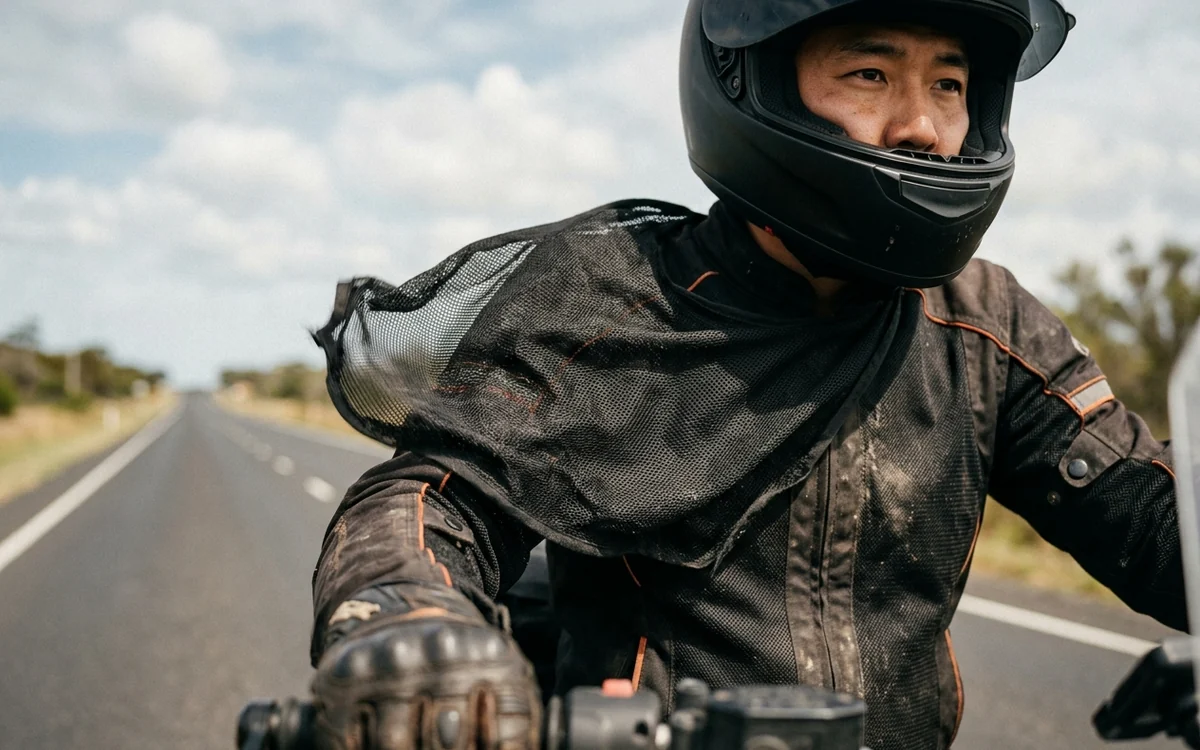
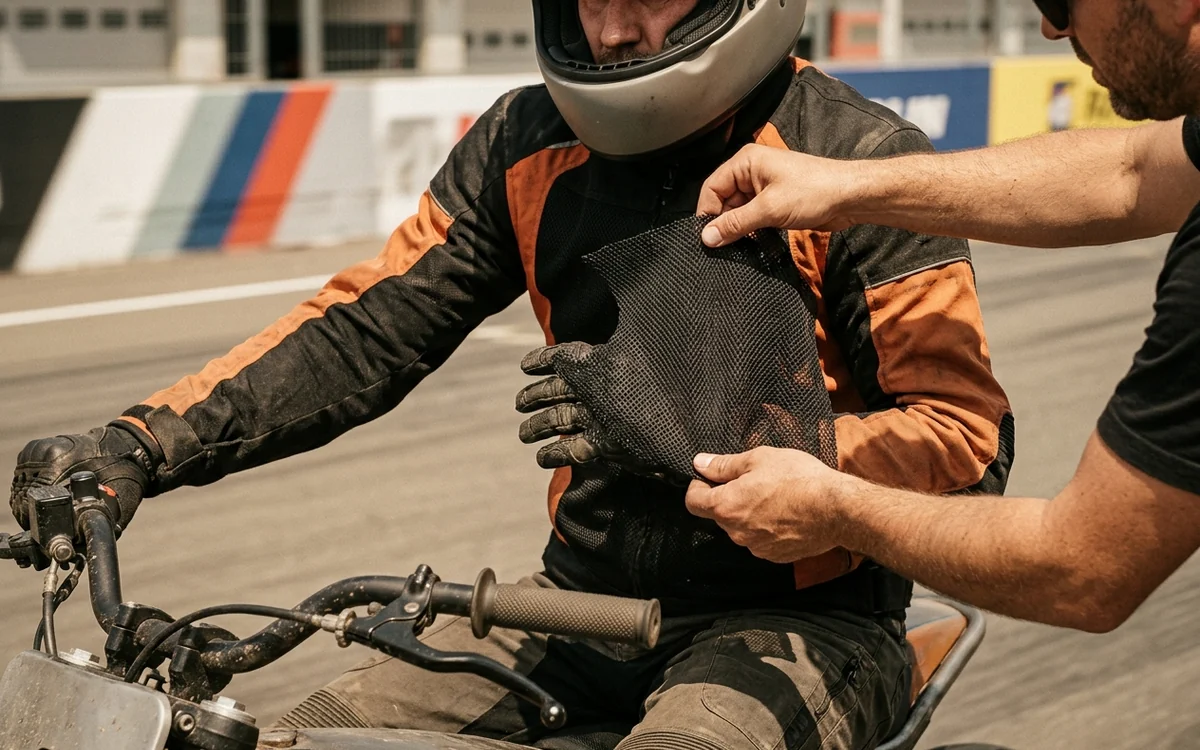
  • Adjustment at the waist and forearms that actually pulls the panel in, rather than a strap that looks like it might.
  • Panel sizes small enough to hold their own shape — one large back panel drums, two smaller ones do not.
  • A cut that keeps the garment against the rider in a riding position, not a standing one.
How to check itRide at speed with the jacket empty of a liner. If the back panel drums, the panel is too big or the adjustment is decoration.
Why it is worth caring aboutFlapping is usually filed under comfort, and it is not. A panel beating against itself at motorway speed works its own seam allowance loose over a season, which is why a mesh jacket that felt fine in the first month can start showing seam wear in the third — on a garment that has never been crashed in or even rained on.
A loose mesh panel drumming at speed
Too big · it drums
A correctly sized mesh panel held against the rider at speed
Held · it works
Armor mounting

Armor in a mesh jacket: same protection, harder mounting

Pads need a solid panel to be held by, and a mesh jacket has fewer of them

Shoulder, elbow and back pockets sit on solid panels, and the surrounding construction has to hold the pad with less material around it than a textile jacket has.
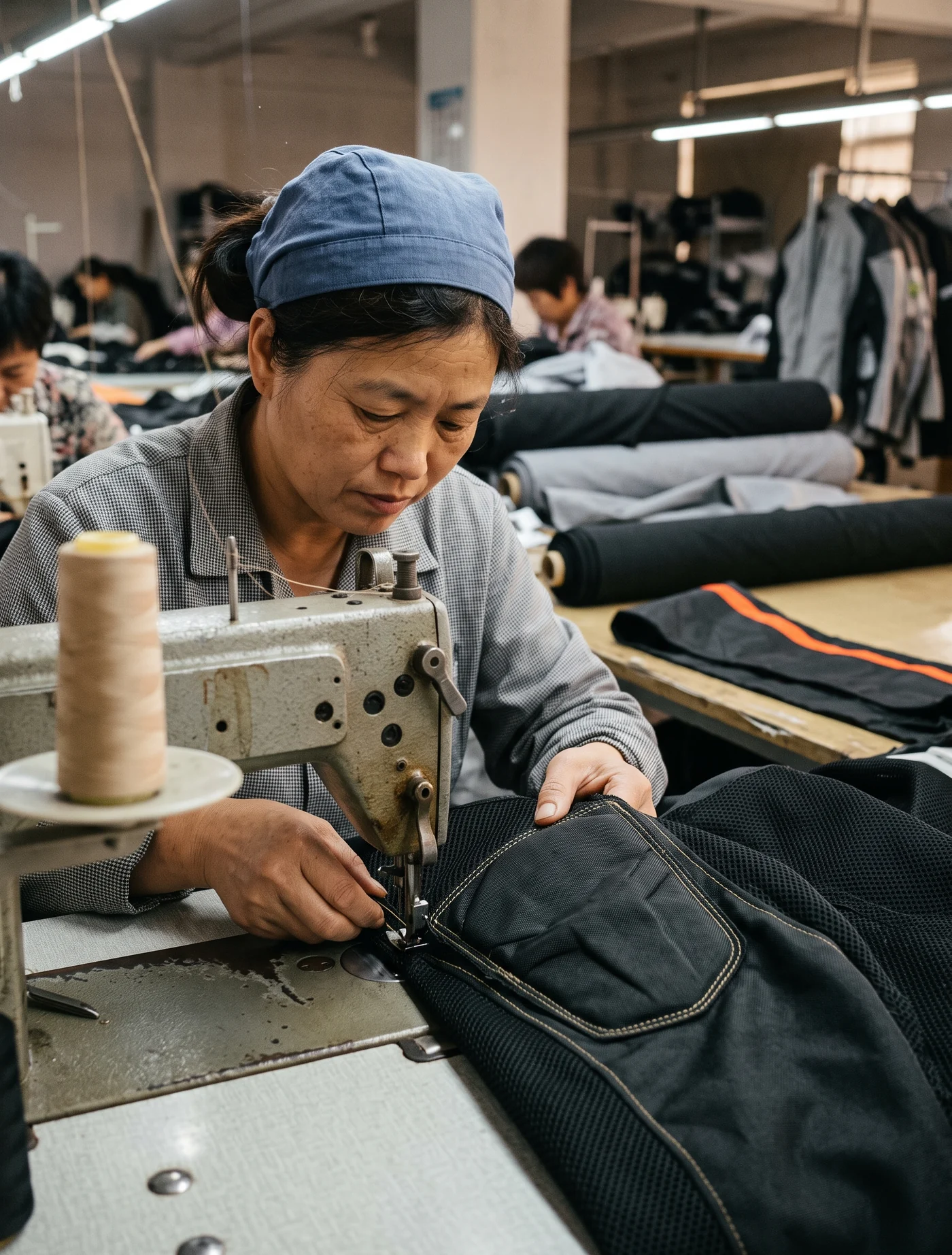
  • The pocket is anchored into the seams rather than floated in mesh.
  • The panel shape is worked out on the block, so the pad stays over the joint when the arms come forward.
  • The solid zone is drawn around the pad first, and the mesh gets whatever is left — not the other way round.
How to check itPut the armor in, get into a riding position and look at the elbow pad. If it has migrated to the inside of the forearm, the mounting was an afterthought.
An armor pocket anchored into the seams of a solid panel on a mesh jacket
Anchored · not floated
3MESH WEIGHTSUsually two per jacket
3PANELS NEVER MESHShoulders, elbows, the armor zone
0MEMBRANENo waterproof claim
XS–4XLOWN GRADENot shared with the textile model
Rain

Rain: two honest layers beat one that claims both

A mesh jacket has no membrane, and we do not claim otherwise. Air passes through it in both directions — which is exactly the point of the garment, and water does precisely the same thing on the way in.

 Mesh jacketPackable rain shell“Waterproof mesh jacket”
In heatAir straight throughStays in the tail bagNeither cool nor dry
In rainWets through, dries fastPulled on over the topA drop liner inside mesh panels
What we claimNo waterproofing at allThe waterproof page appliesWe do not build it
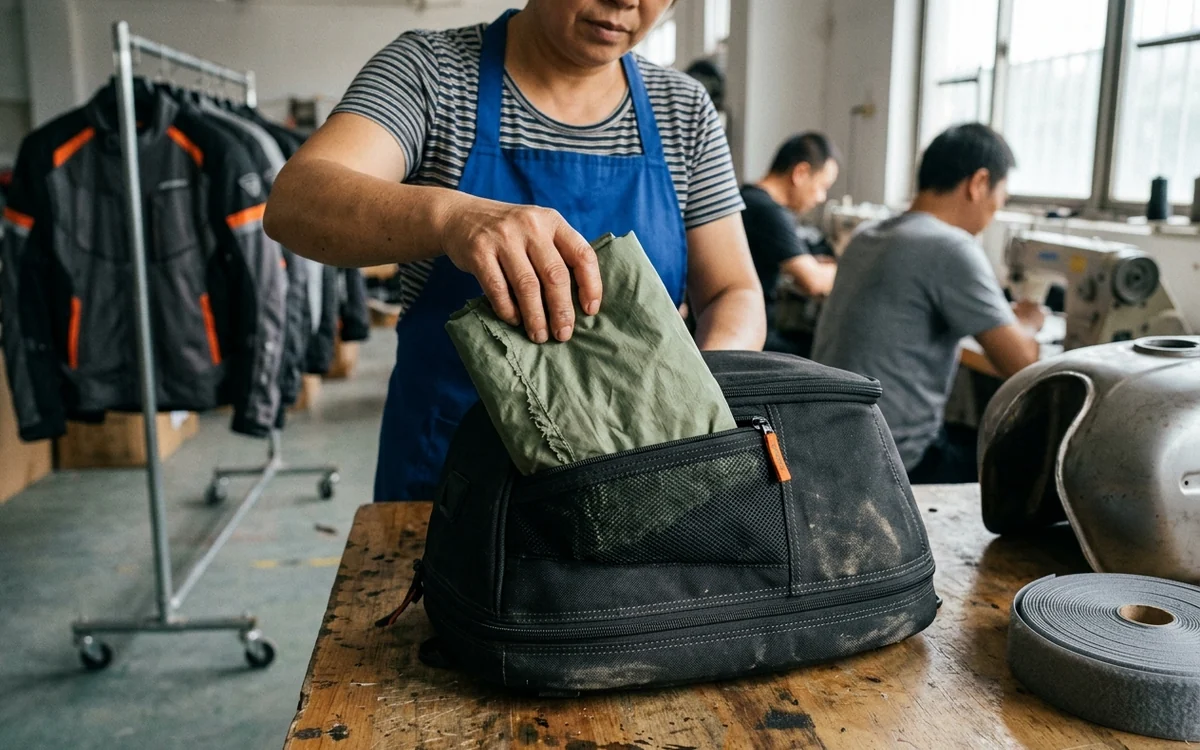
A packable rain shell folded into a tail-bag pocket
Packable · carried, not worn
The rain shell pulled on over a mesh jacket at the roadside
Over the top · when it turns

The workable answer for a hot-climate rider

A light packable rain shell carried in a pocket or a tail bag and pulled on over the top when the weather turns. It weighs almost nothing, it costs a fraction of building a compromise into the jacket, and it means the jacket you actually wear for three hundred dry hours is not carrying a membrane it does not need for the twelve wet ones.

The alternative that gets marketed is a drop liner fitted inside mesh panels. That garment exists. It is neither cool nor dry, and it is the single clearest sign that a range was designed by somebody writing a feature list rather than by somebody who has ridden in July.

The one-question testIf a supplier offers you a waterproof mesh jacket, ask them to explain the airflow path. The same holes that let heat out let water in, and the explanation will not survive being asked twice.
Fit

Fit for heat: closer than almost every buyer expects

Riders ask for a roomier summer jacket because loose feels cooler standing still. On the bike it is the opposite.
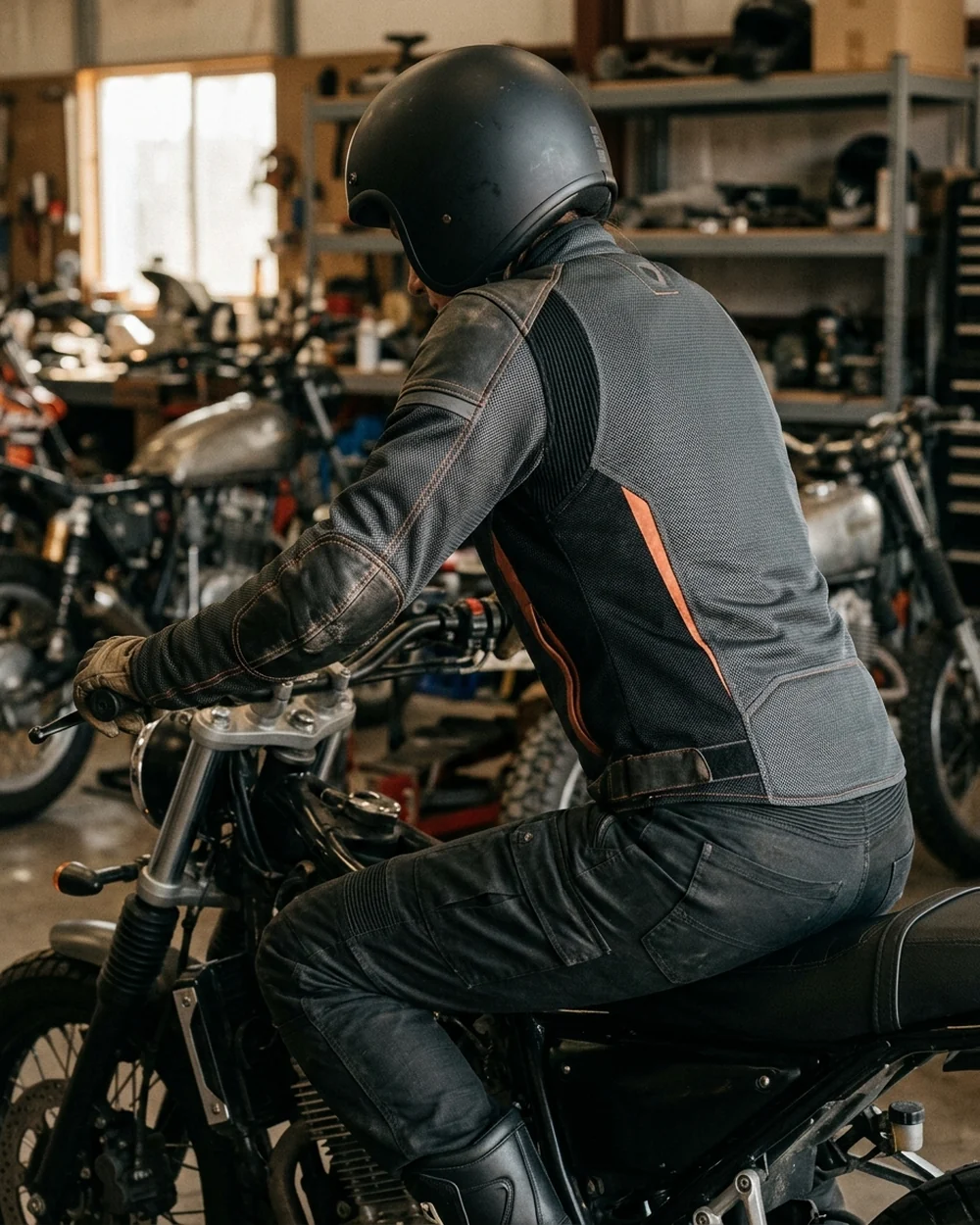
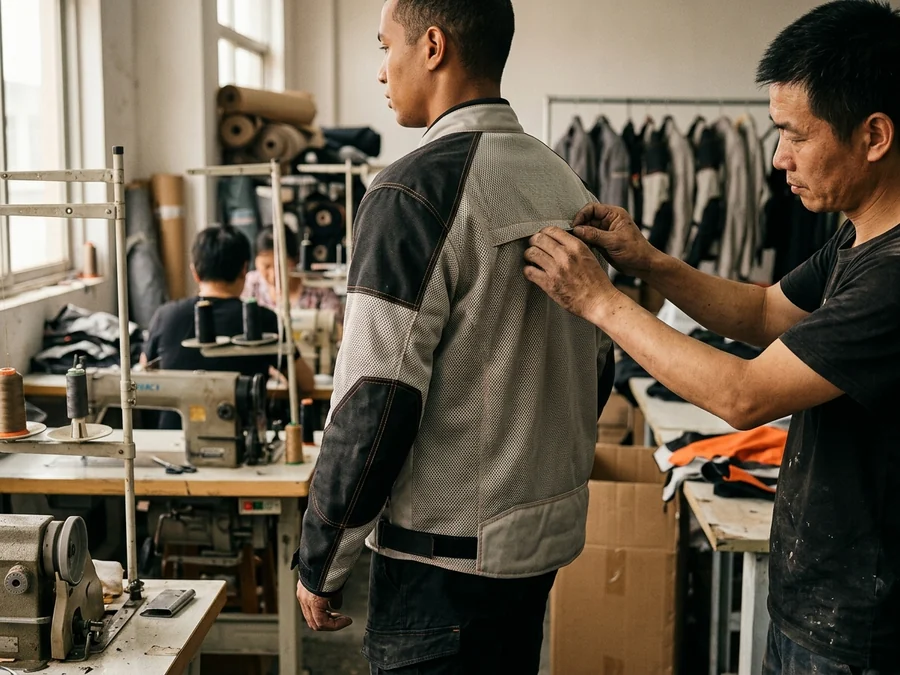
A fitted mesh jacket on a rider in the riding position
Fitted · air does the work
A loose jacket that feels cooler standing still
Standing · feels cooler
The same loose jacket trapping still air at speed
At speed · traps air

A fitted jacket lets moving air work on the body, while a loose one traps still air and flaps. The jacket is cut on the riding block for its discipline, with enough room for the armor and a base layer — and no more than that.

How to check itCompare the chest measurement of a summer model to the all-season one from the same maker. If it is bigger, it was built for a shop floor rather than for a road.
The conversation this causesEvery buyer asks for it roomier at least once, and the honest answer is to show them rather than argue: a fitted sample and a loose one, both at speed. It is the fastest way to settle a specification that would otherwise be re-opened in season two.
Grading

Grading: the mesh model gets its own set

Mesh stretches and recovers differently to a solid shell, so the grade is not simply carried over

A solid jacket and a mesh jacket in the same nominal size do not fit the same, because the mesh panels give where the solid ones do not. The mesh model is graded on its own set, with the give of each mesh type accounted for, and the size run is tried on before bulk like any other garment.
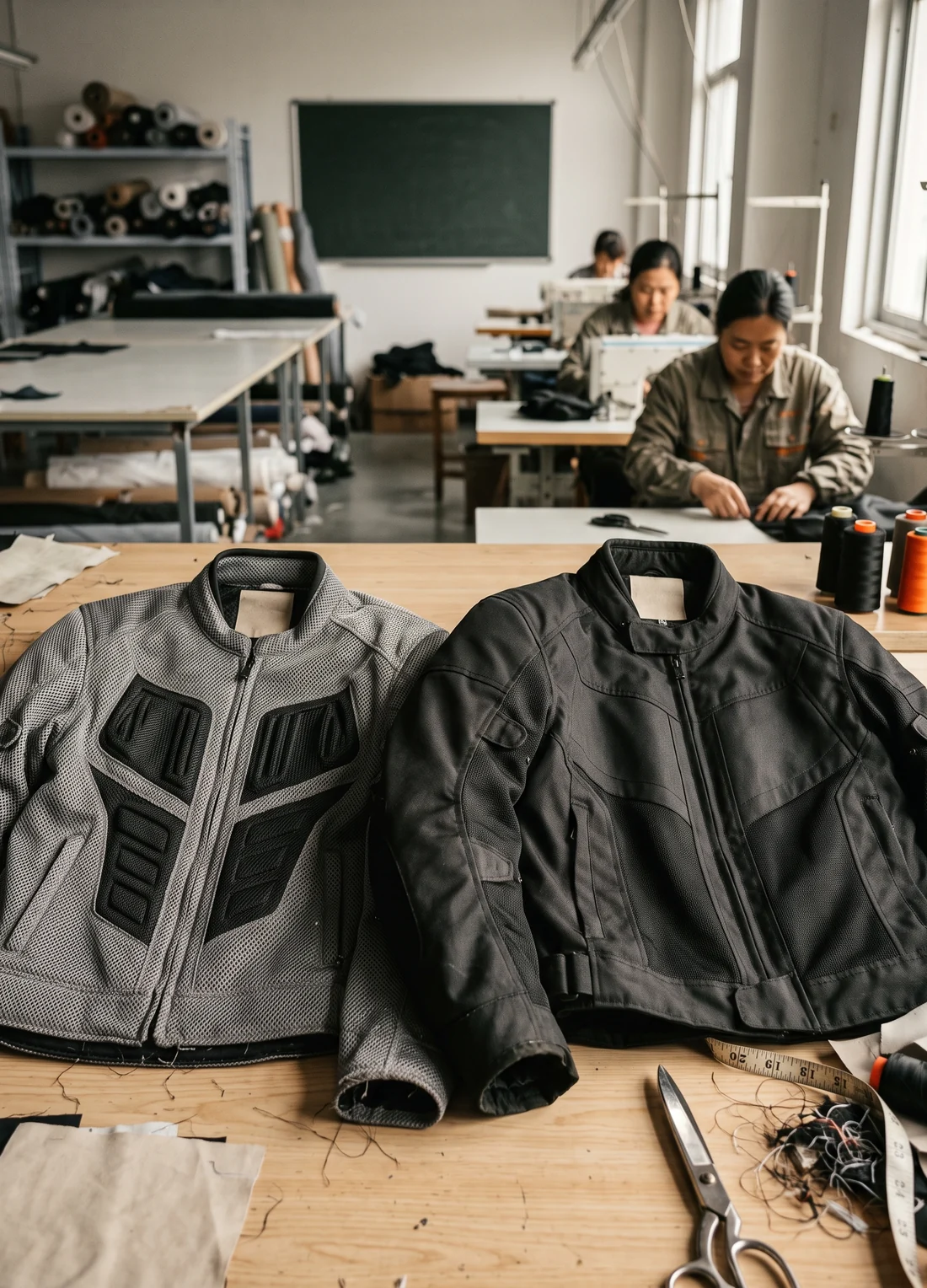
How to check itAsk whether the mesh model shares its grade with the textile one. A shared grade means one of the two is wrong — and it is usually the one you are holding.
What a shared grade actually does to youIt does not show up at the sample size, which is why it survives approval. It shows up at the ends of the run, where the give of the mesh compounds with the grade increment and an XL fits like an XXL — on the sizes you ordered most of.
A mesh model and a textile model in the same nominal size, side by side
Same size · different garments
Market and position

Send the market and the riding position, and we will send back a panel map

Lead times

Lead times, and what each change costs

What each stage takes, and the one decision to settle before sampling rather than after.
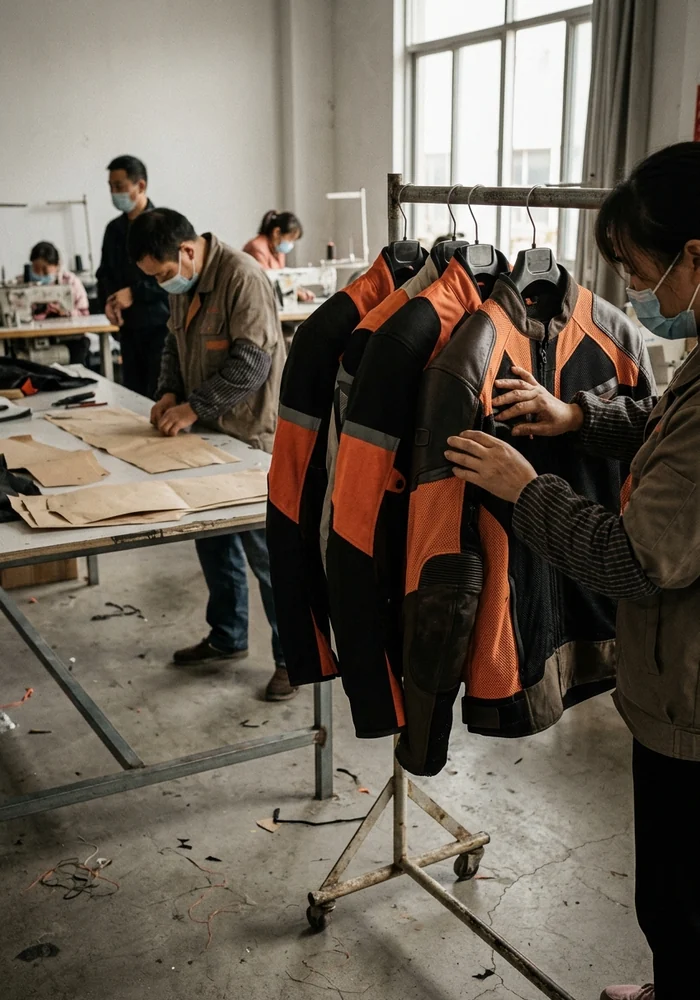
Construction sampleA full jacket with the panel map, mesh types and armor pockets as specified
15–20days
Bulk after sample approvalScheduled backwards from your date
25–35days
Panel map changedThis is the decision to settle before sampling — it is the garment
Newsample
Mesh type swapped in one panelA new sample if it changes the structure; a note if it does not
Dependson structure
Colour or trim changeNothing structural moves
Noneno effect
Repeat orderFrom the archived block and specification
Noneno new sample
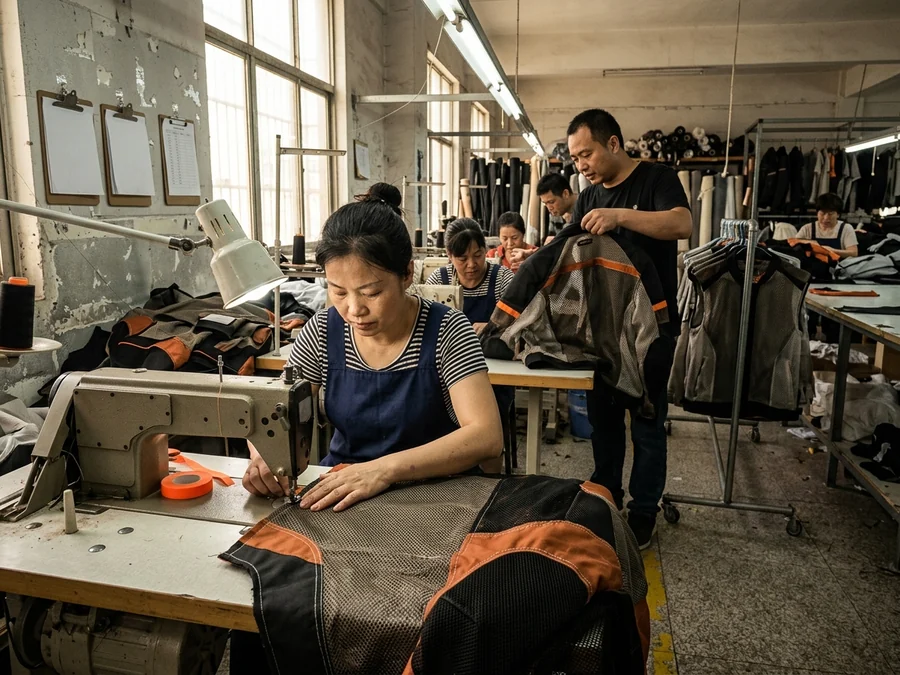
Mesh jacket samples on the rail awaiting review
One sample · map settled
Six things

Mesh jacket quote: the six things to send

Send these six and Anna comes back within 24 hours on business days with a panel map and the mesh types.
  1. The market and the heat

    Where it will be worn, and whether riders stop constantly or ride continuously.
  2. The riding position

    Sport, ADV, urban or cruiser; it decides the block and where the air enters.
  3. Your panel-map preference

    Or tell us the use and we propose one — including what we will not make mesh.
  4. The armor

    What goes in the pockets, so the solid panels are drawn around it.
  5. A matching rain layer?

    A packable shell, sold with it or separately.
  6. Sizes, quantities, date

    So the grade and the schedule are built for the real order.
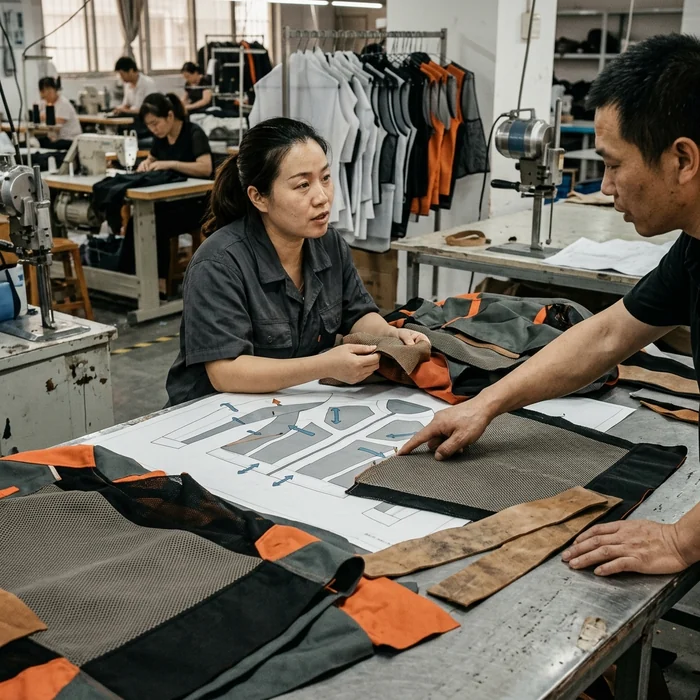
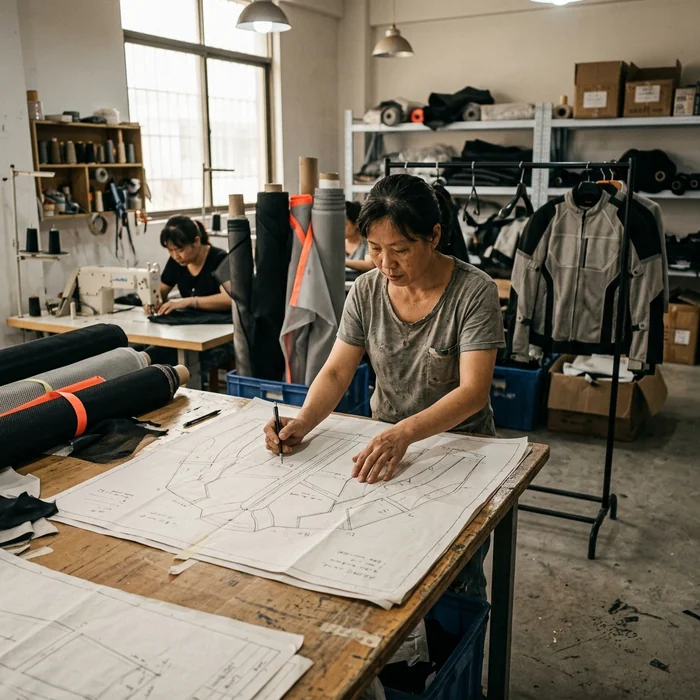
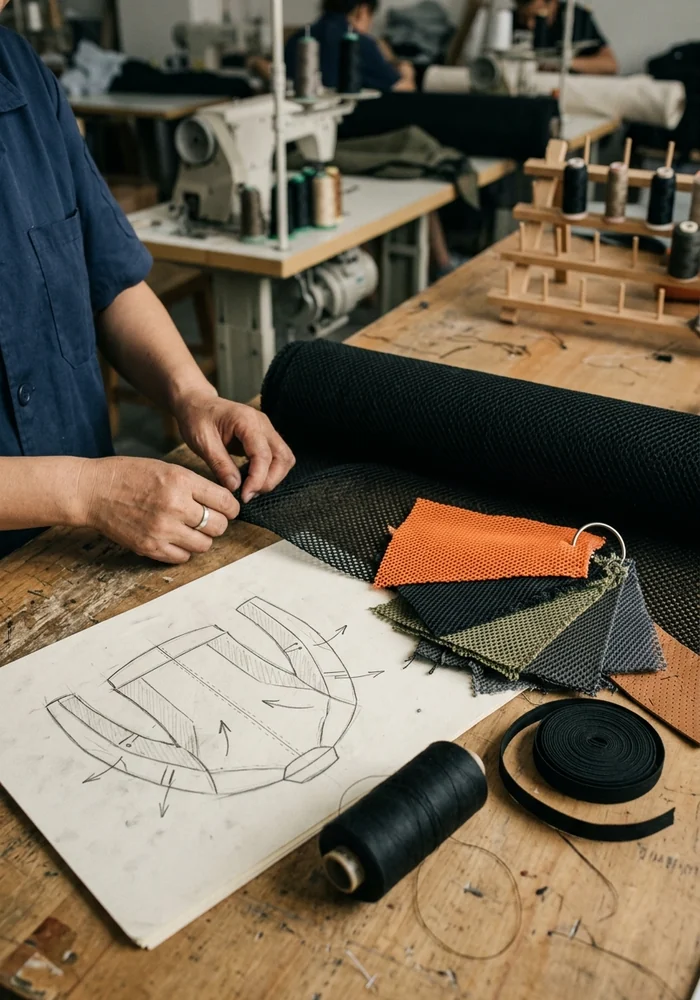
A panel sketch and mesh swatches laid out ready to send
Six things · one email
Market and position

Send the market and the riding position, and we will send back a panel map

Anna replies within 24 hours on business days with the panel map we would build, which mesh goes where, what stays solid and why, and the lead time to your date.
Anna · Sales Manager WhatsApp / phone: +86 177 0272 7677 Email: sales@runmotoapparel.com Mon–Sat 9:00–18:00 (GMT+8)