Brand product managers
Need a block they can build eight styles on, and a grade that holds across the whole size range.
Wants · one block, many styles
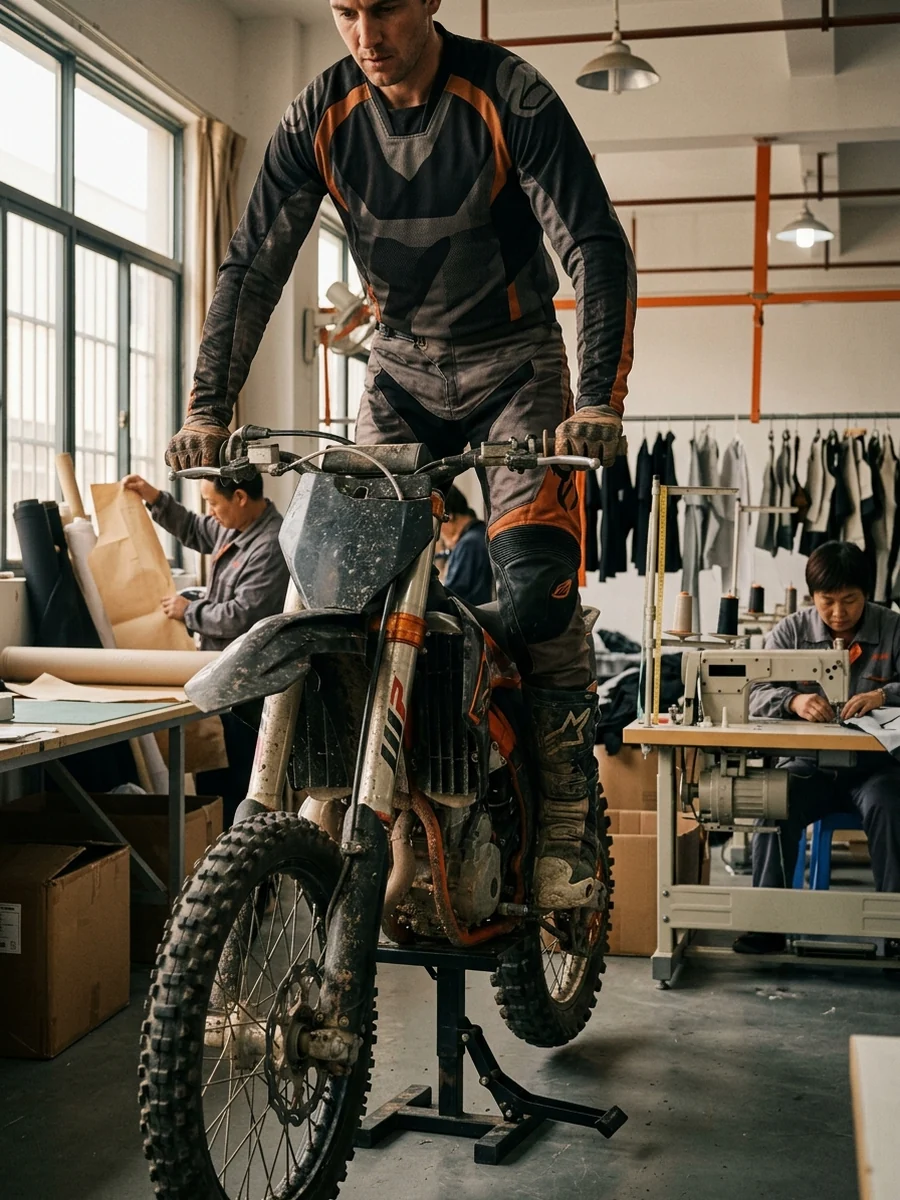
A jacket that fits beautifully on a shop floor can ride badly ten minutes later: the hem rides up, the cuffs pull back off the wrists, the collar gapes at speed and the back armor slides off the joint over a bump. That is not a sewing fault. It is a pattern cut for a person standing with their arms down, worn by a person leaning forward with their arms out.
 MotocrossMX12°
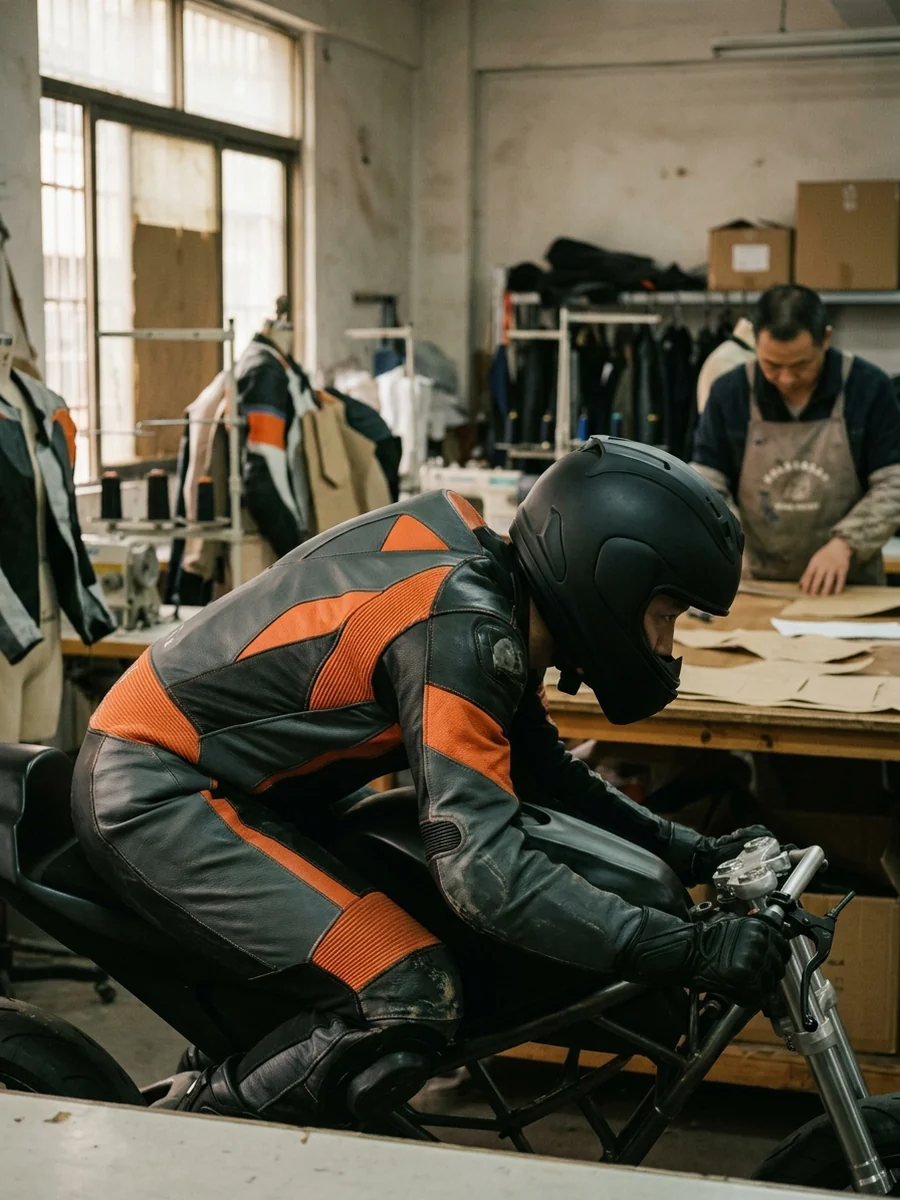 Sport / streetSport38°
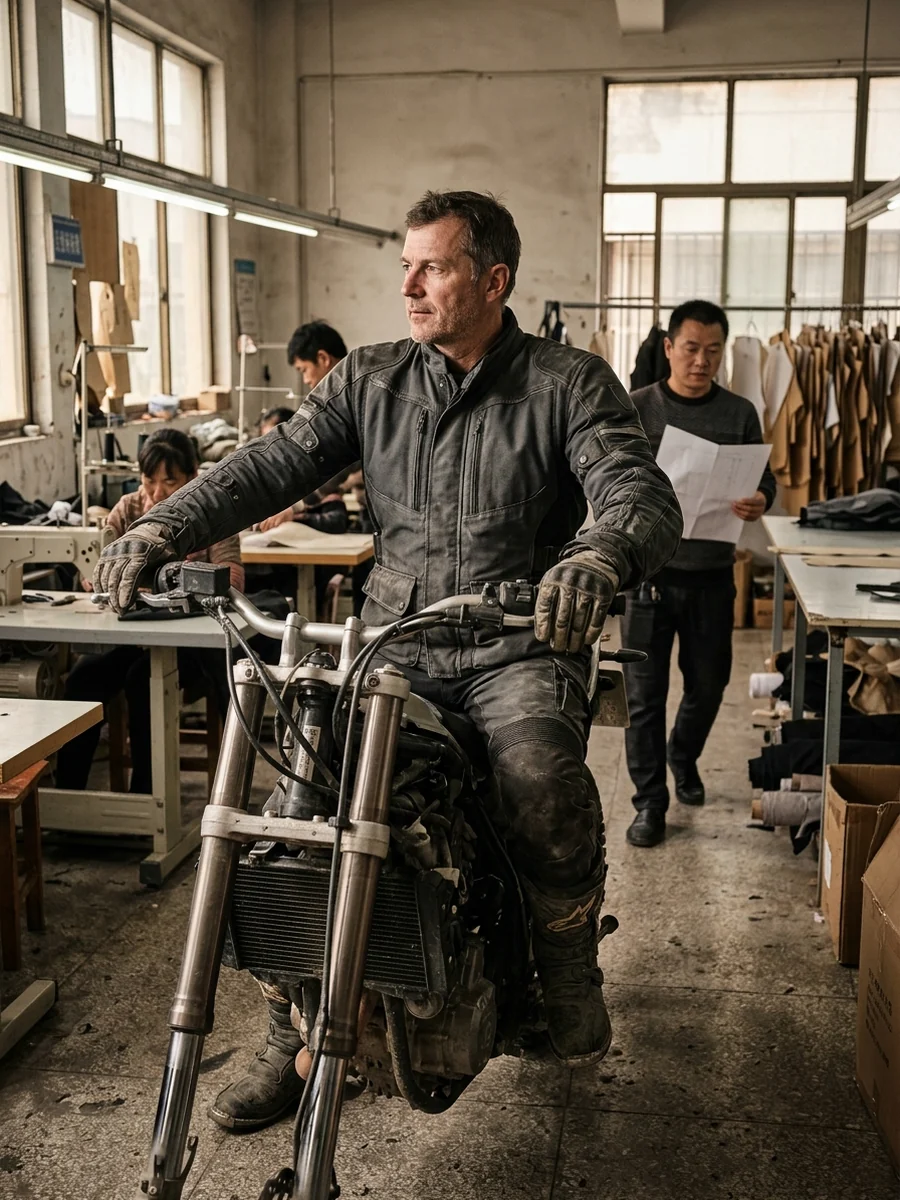 ADV / touringADV8°
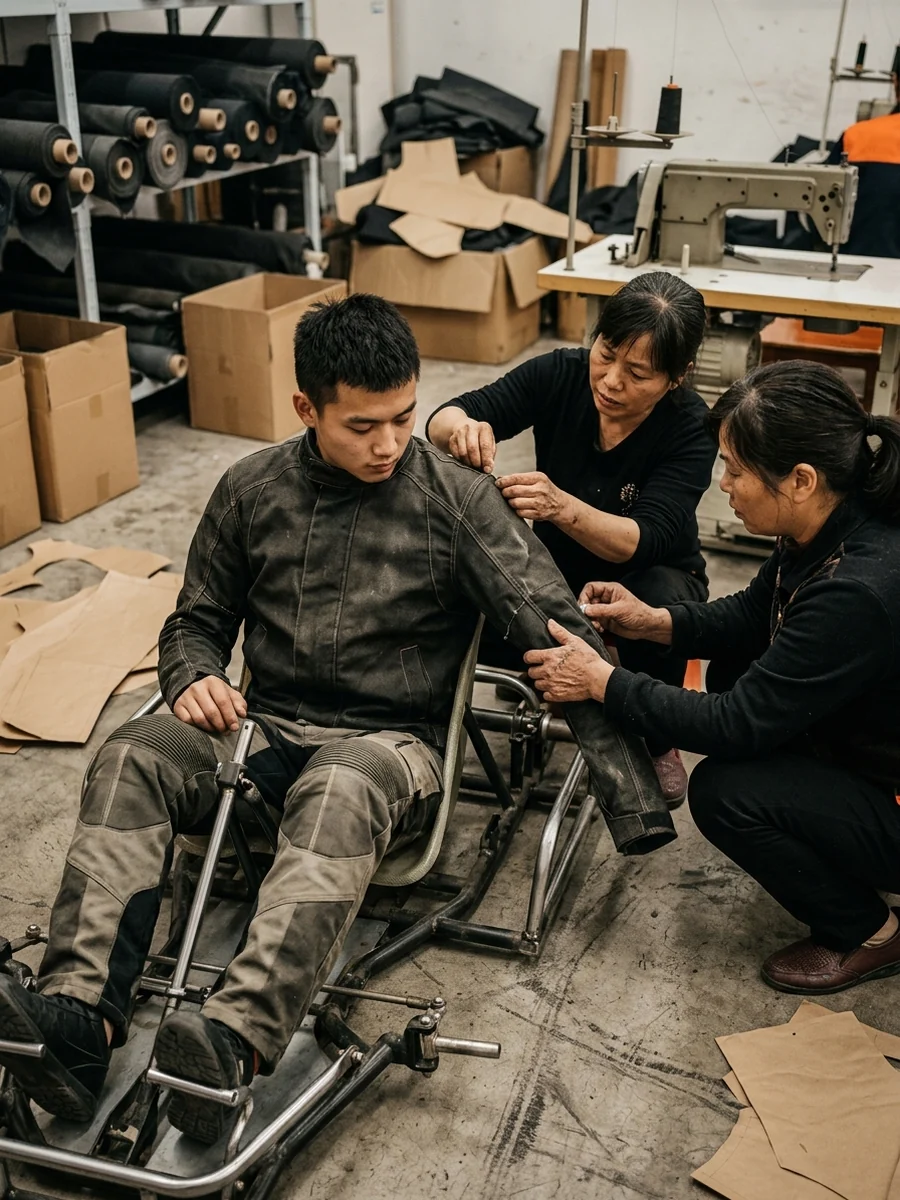 KartingKart52°
Four readers who know that a fit problem found after bulk is the most expensive problem there is.
Need a block they can build eight styles on, and a grade that holds across the whole size range.
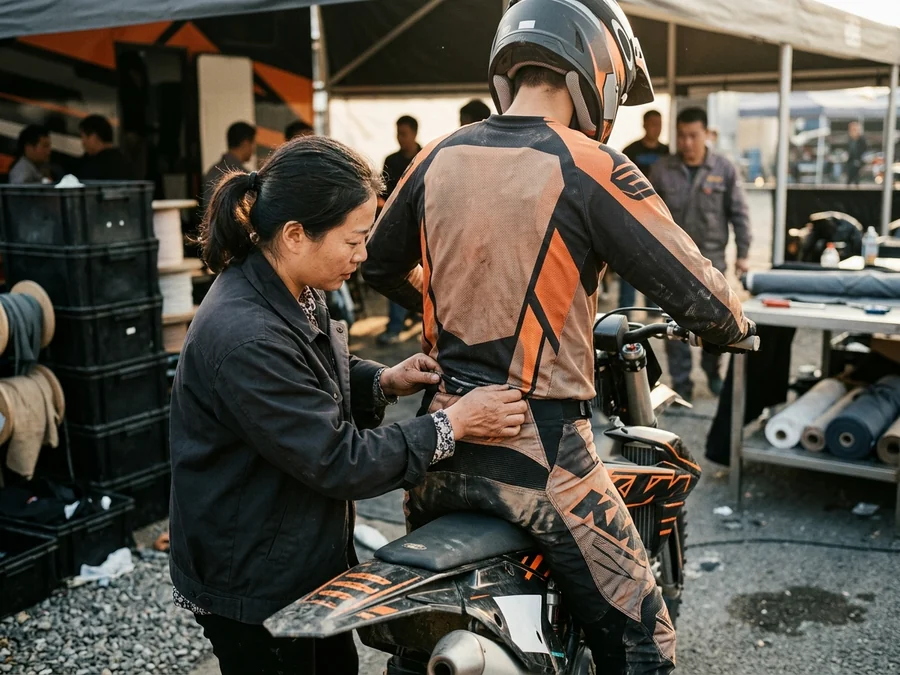
Want jerseys that stay tucked and pants that do not pull at the knee through a whole moto.
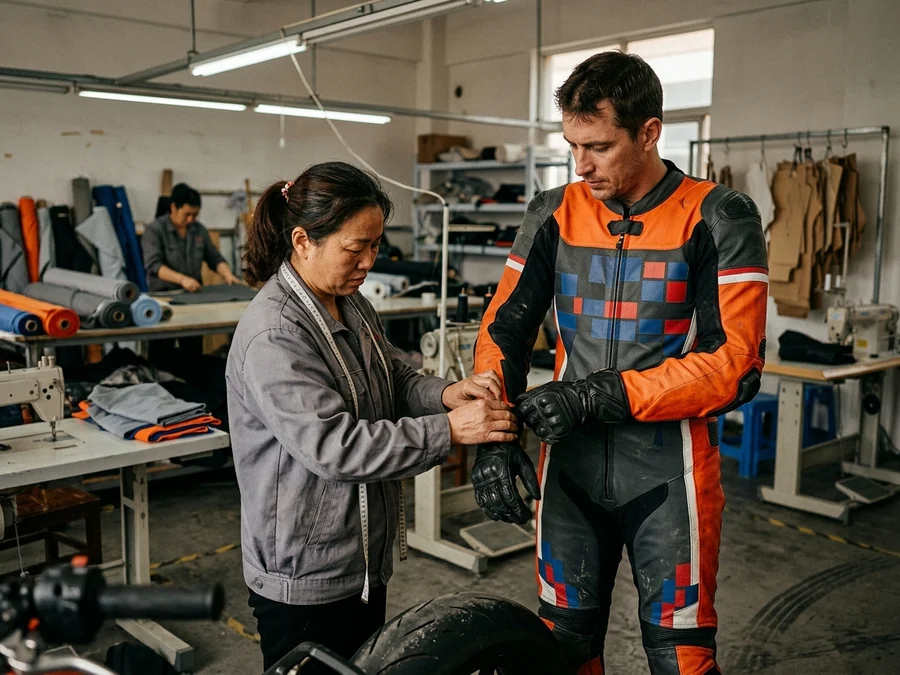
Fit a fleet to a hundred different bodies, so the middle sizes have to be right rather than average.
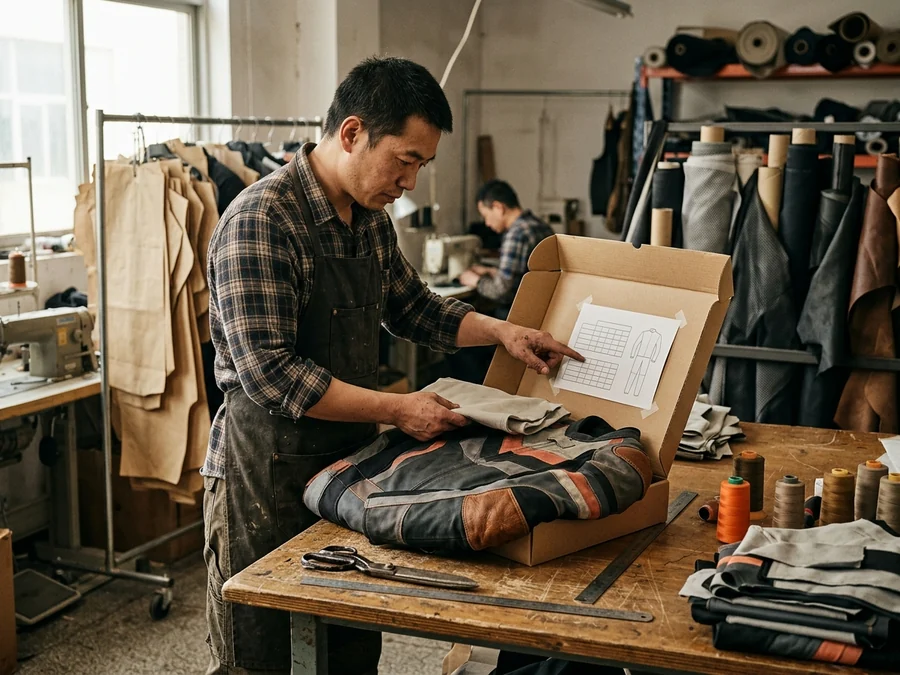
Return fewer garments when the size chart on the page matches what is actually in the box.
Four changes happen when a rider gets on a bike, and each one does something specific to a garment cut flat.
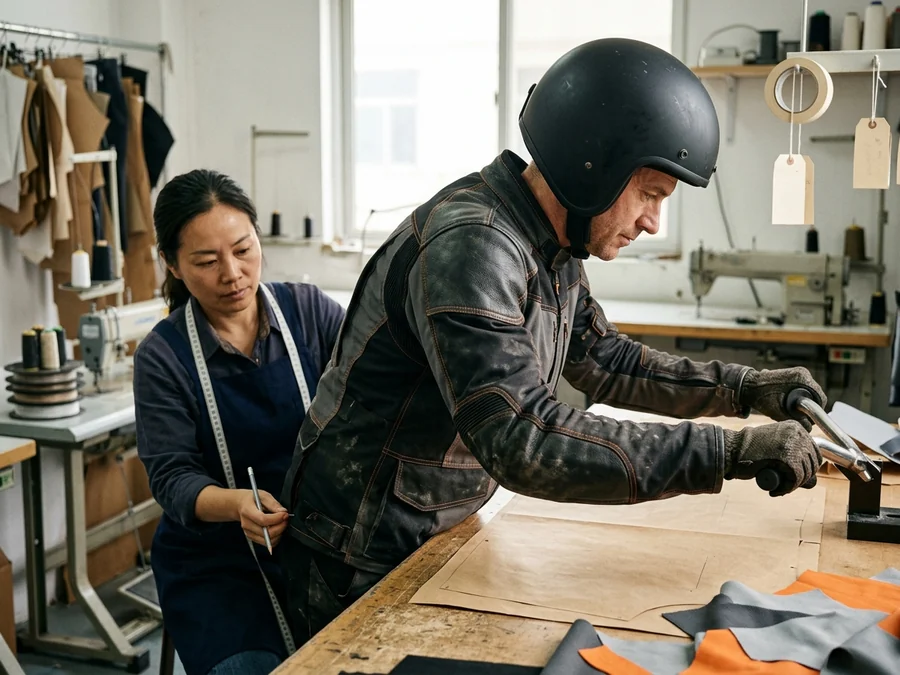
The back gets longer and the front gets shorter. A jacket cut for a straight back rides up at the hem and pulls across the shoulder blades.
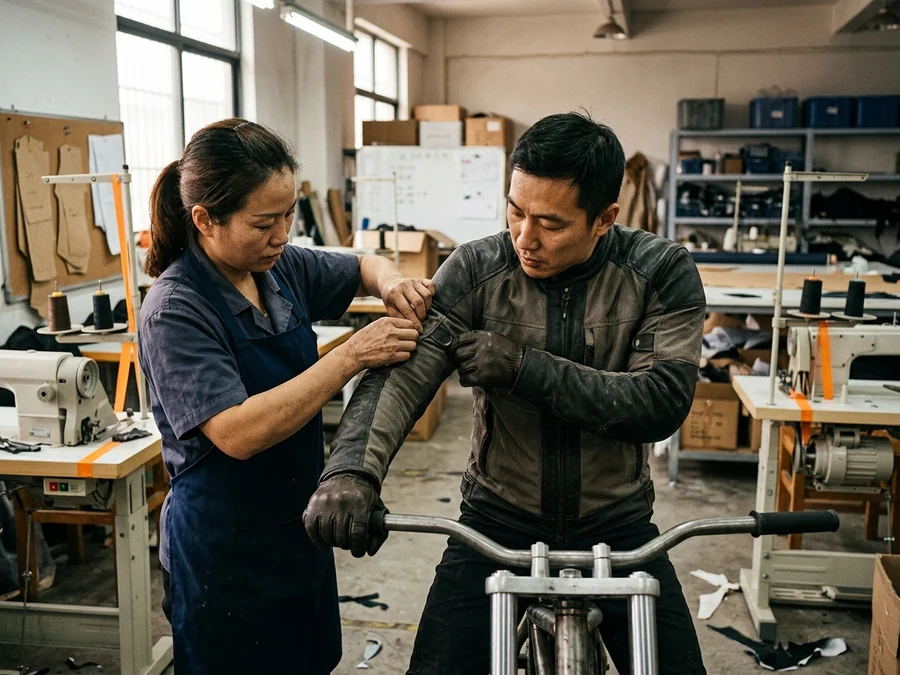
The sleeve head rotates and the sleeve needs length on the outside of the arm. A standing-fit sleeve drags the cuff back off the wrist.
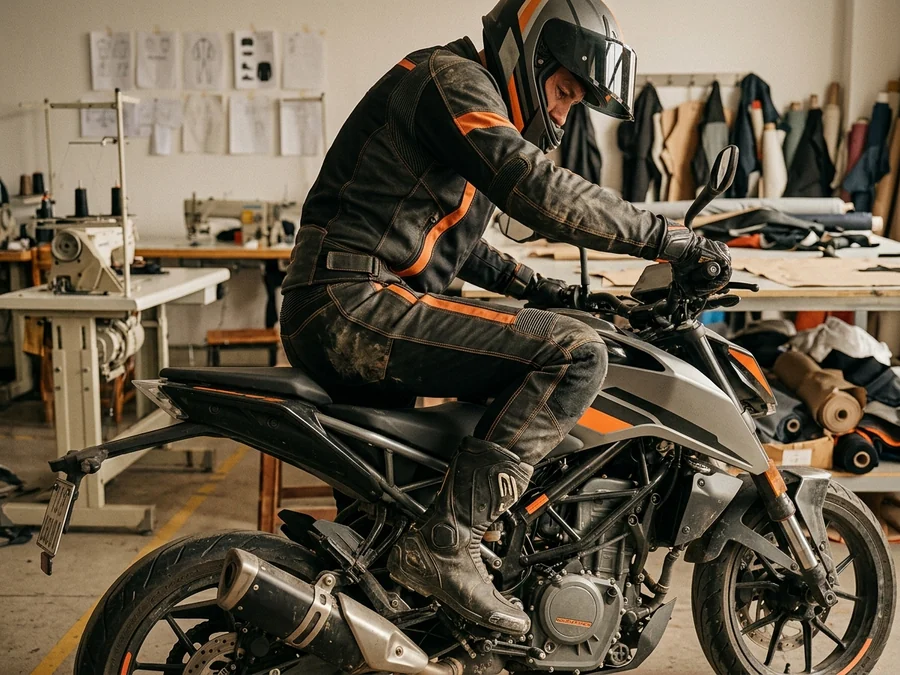
The front of the thigh needs length and the back of the knee needs room. Pants cut straight pull the hem up the boot and bind at the knee.
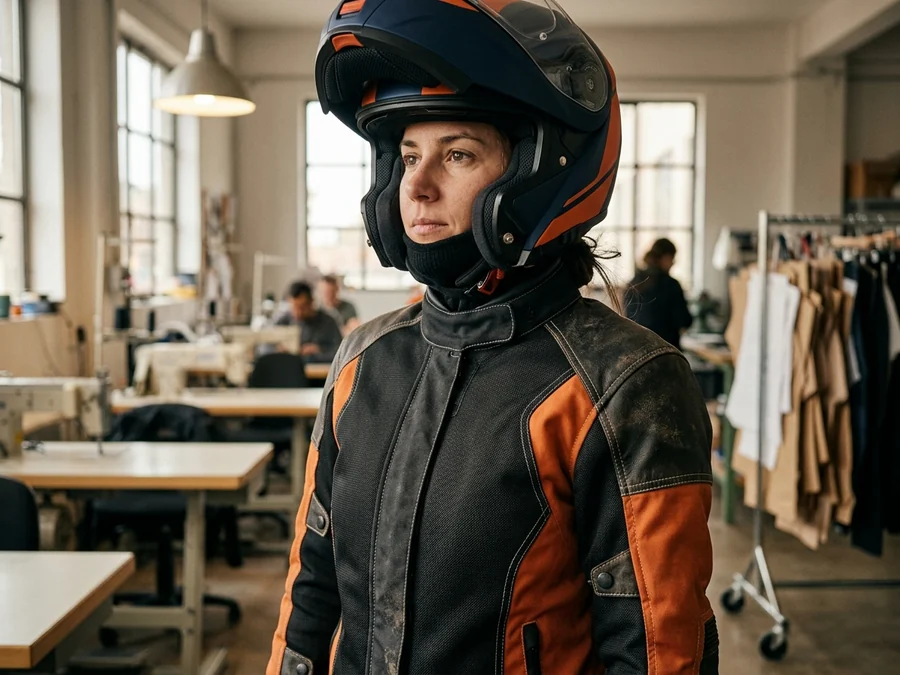
The collar has to clear a helmet and sit against the neck with the head in the riding position, not looking straight ahead.
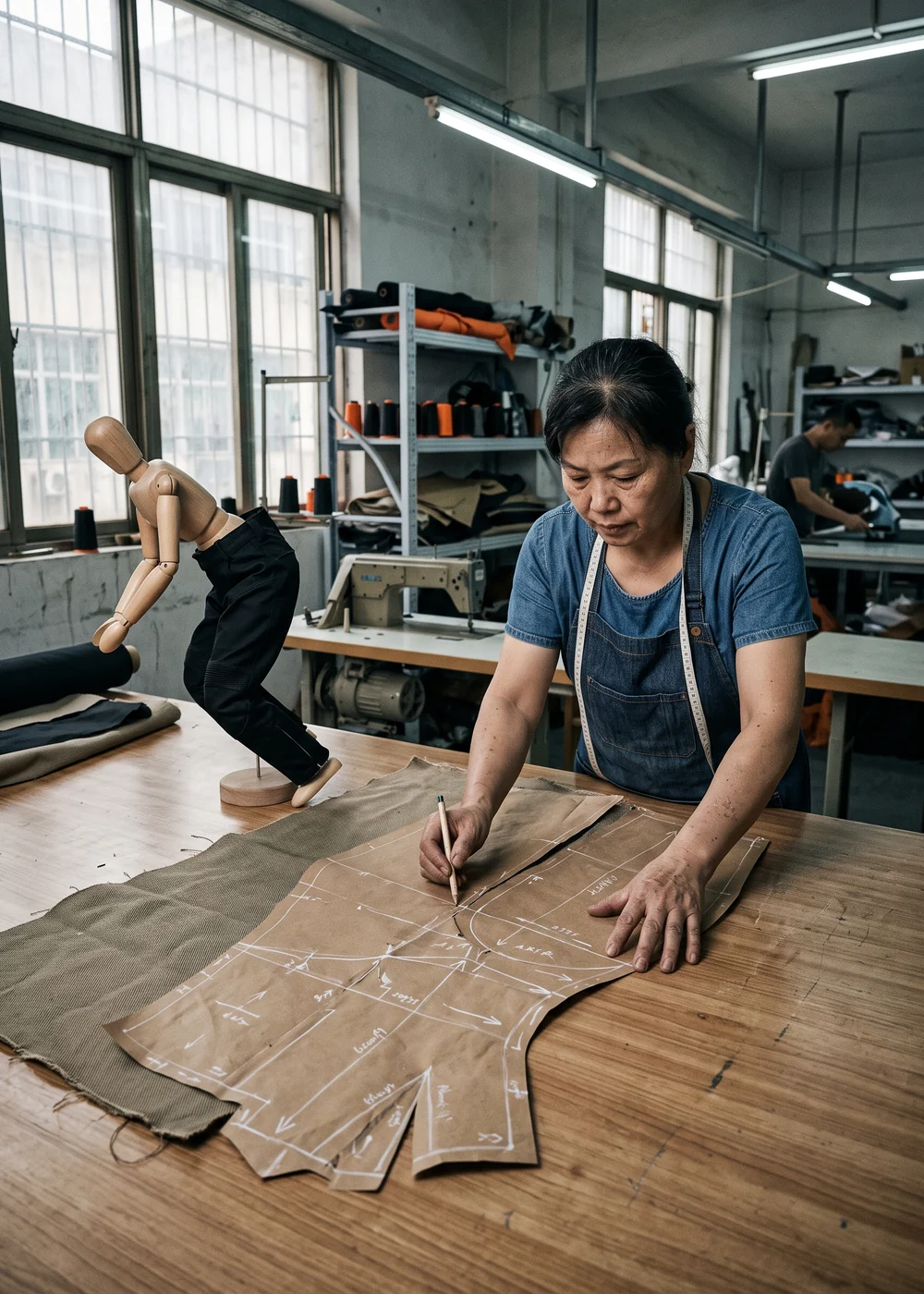
A block is the base pattern a family of styles is built on — and ours are built in the riding position from the start
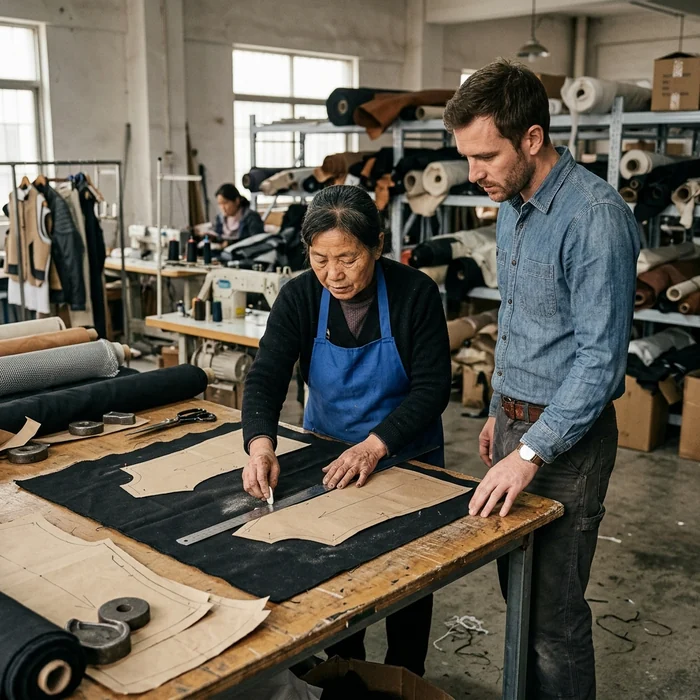
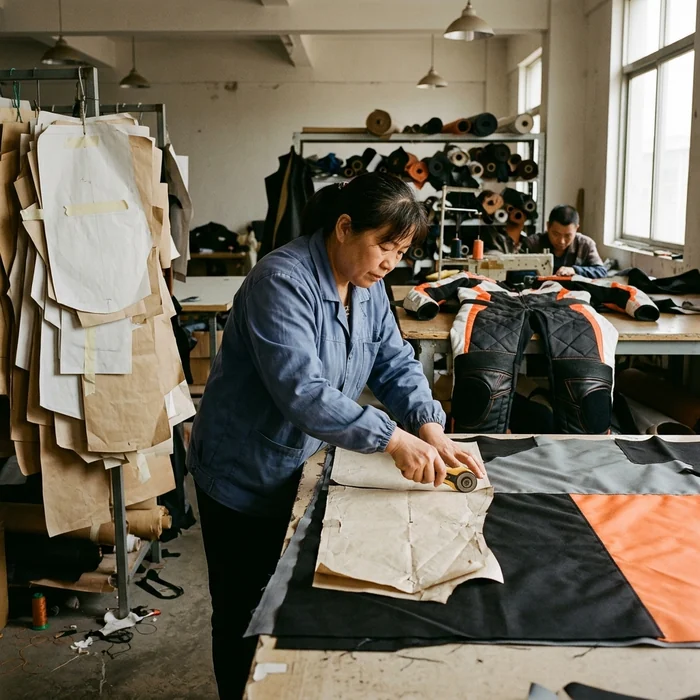
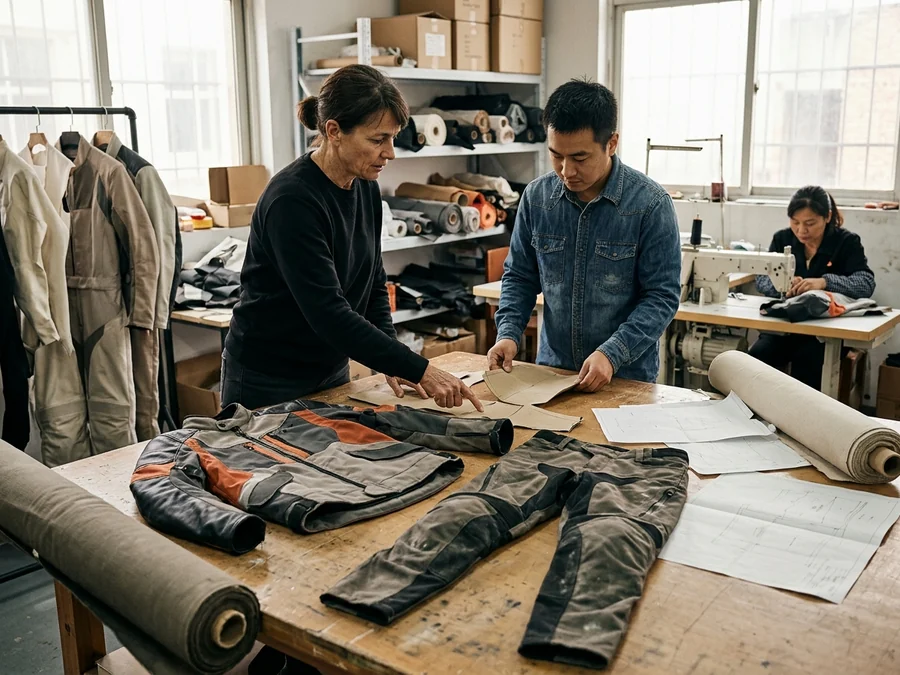
A block is not a garment. It is the base set of pattern pieces — body, sleeve, collar, front and back rise — that every style in a family is developed from, with no styling on it. Building one starts from the body measurements of the target size, adds the ease the discipline needs, then moves the whole thing into the riding position: back length extended, front shortened, sleeve pitched forward, knee broken at the angle the discipline sits at.
Four riding positions, four different blocks. A brand launching across two disciplines gets two blocks — not one block with a note on it.
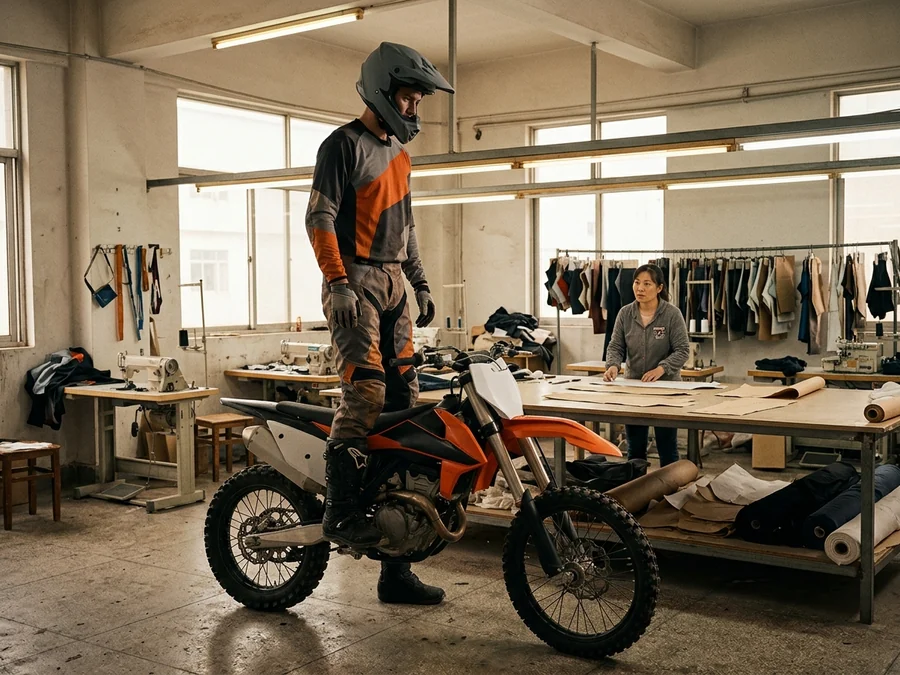
The most room through the shoulders and the shortest front, because the rider is upright and constantly moving.
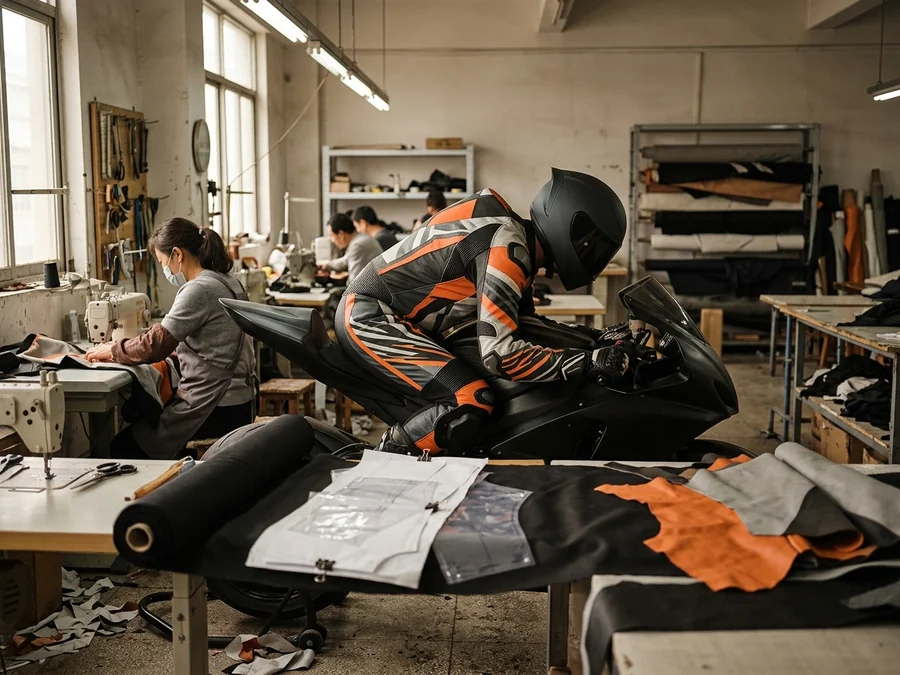
The longest back, the strongest sleeve pitch, and a collar that clears a helmet in a head-up position.
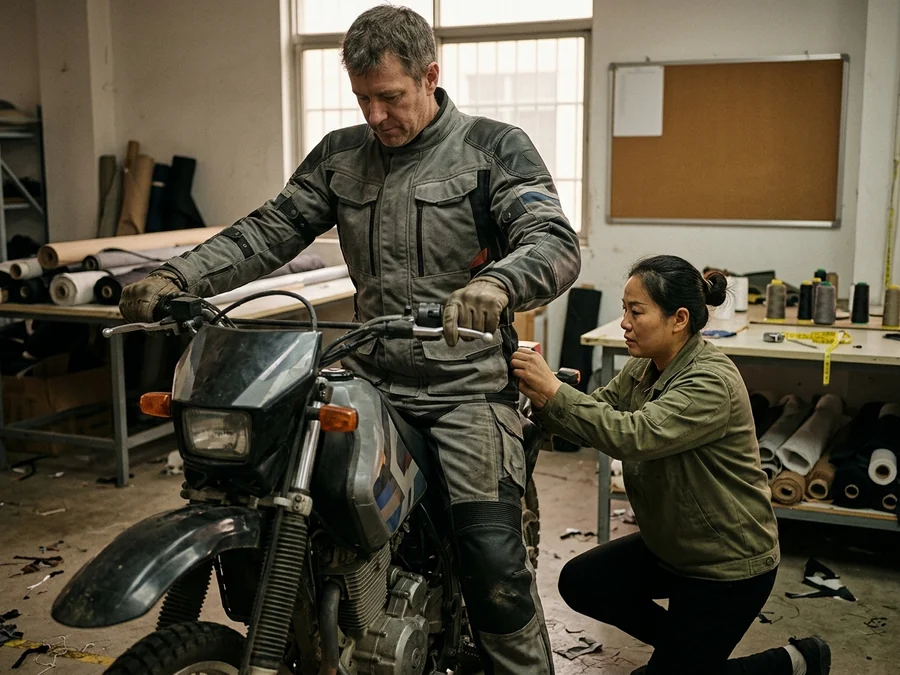
Moderate pitch, the most room for layers underneath, and a length that works both seated and standing.
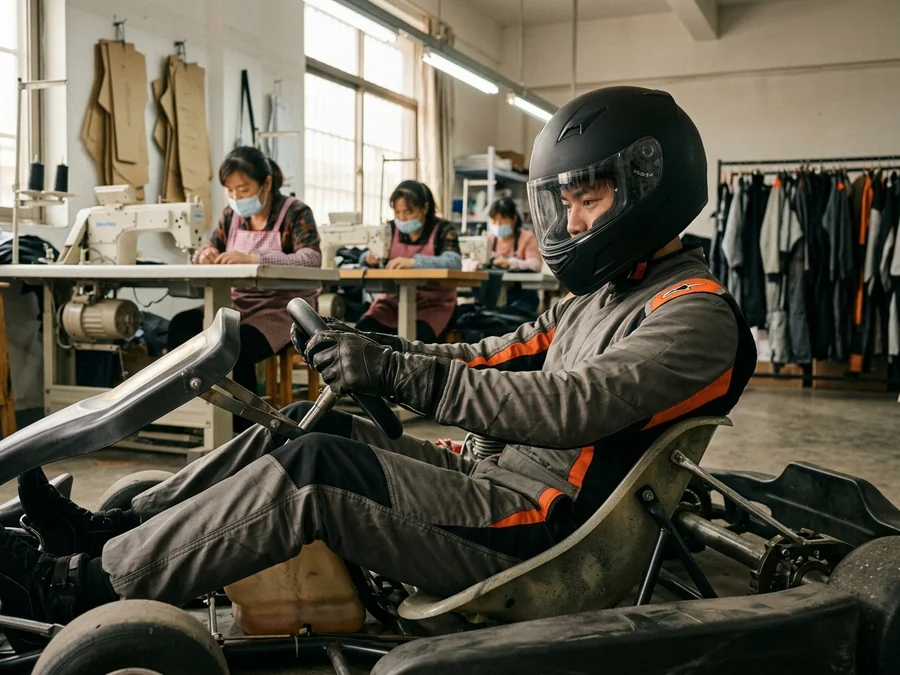
A short rise at the back, a deep knee break, and shoulders cut for a steering wheel rather than a handlebar.
A fitting on a mannequin proves nothing about a garment that will be worn at a forward lean.
Scroll: the rider folds into the riding position, and the two measurements that decide whether the jacket works go with them.
A riding-fit jacket looks slightly long in the back and slightly forward in the sleeve on a hanger. That is the pattern doing its job: the extra back length disappears the moment the rider leans, and the forward sleeve straightens out as soon as the arms reach the bars. Judged flat, it looks wrong. Judged on the bike, it is the only one that stays where it should.
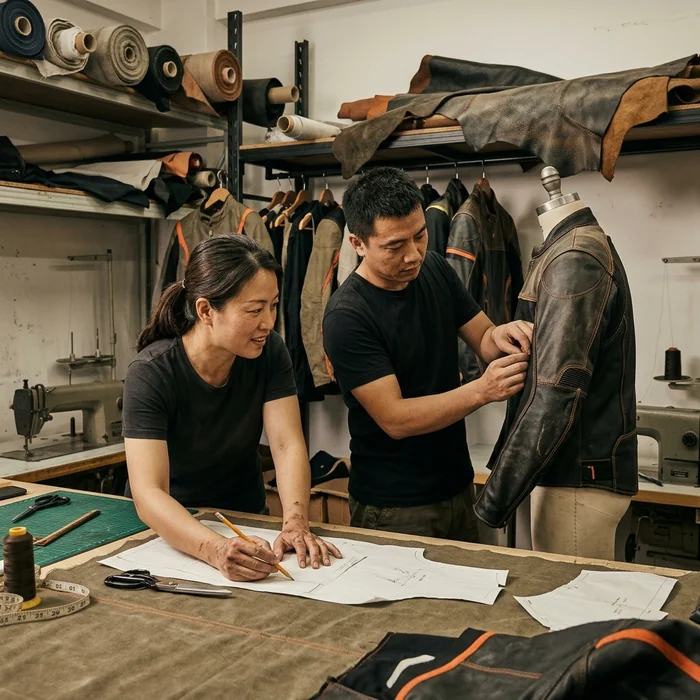
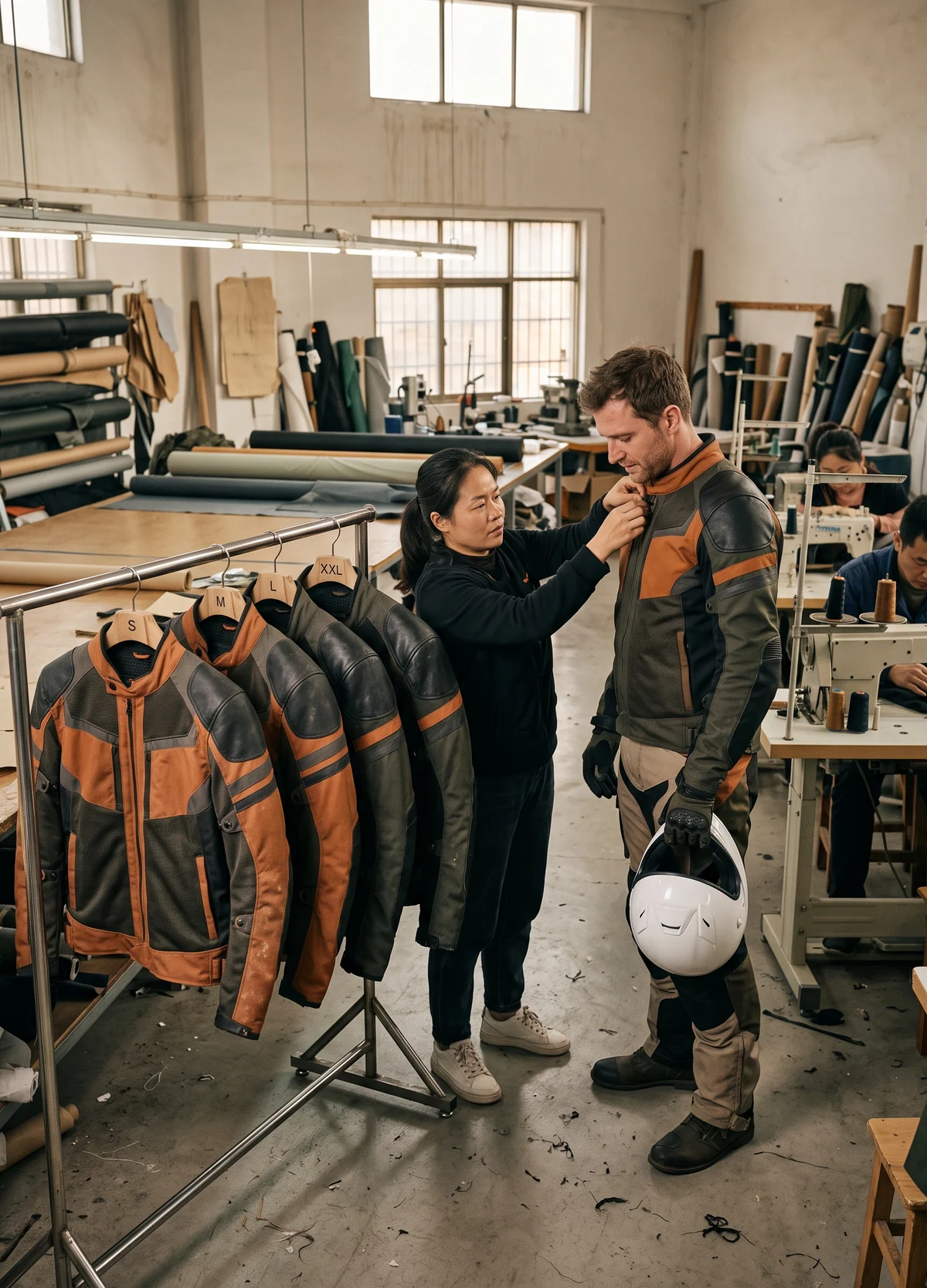
Every construction sample is fitted on a real person, on a bike, with the armor in its pockets — and the same set of points is checked every time.
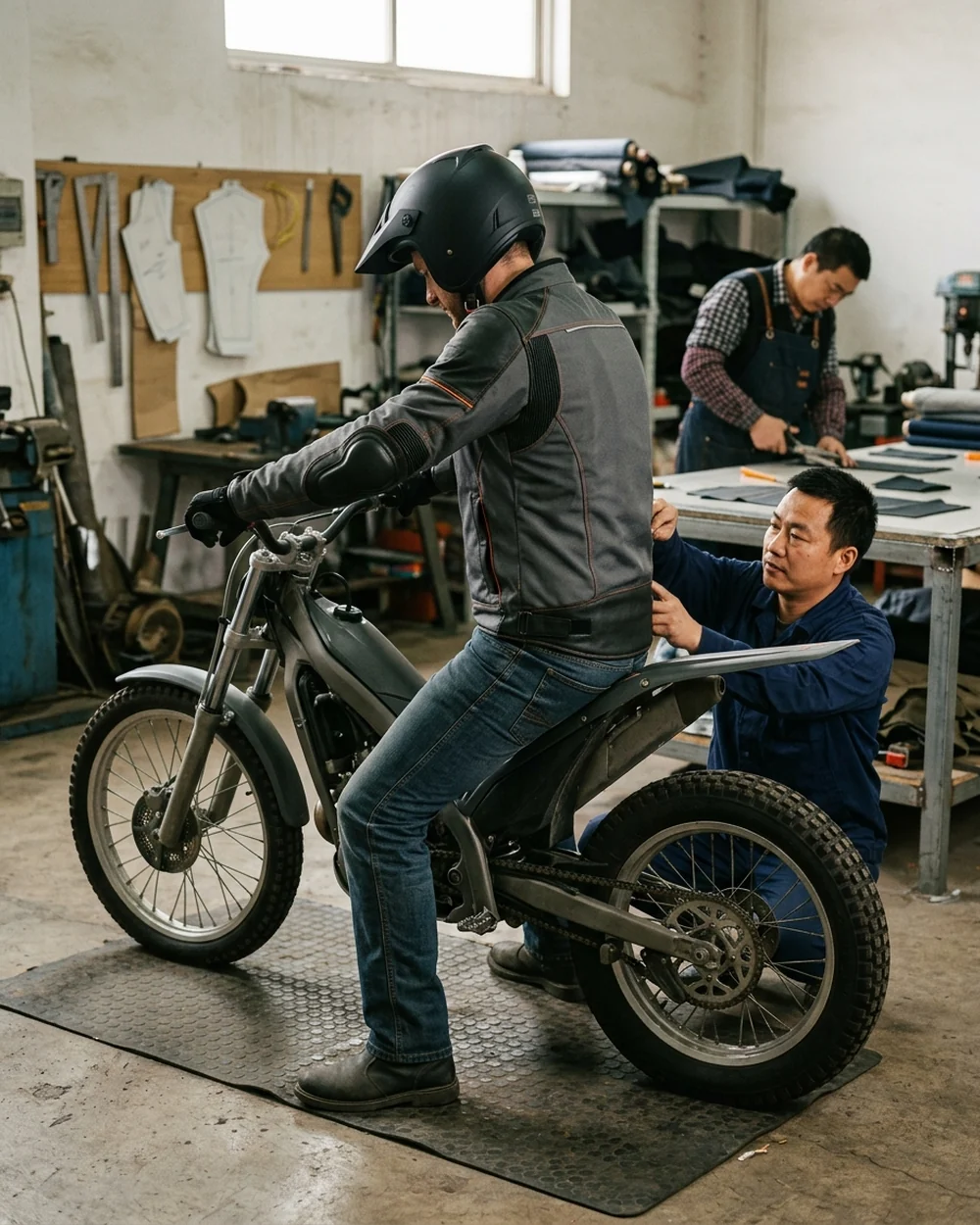
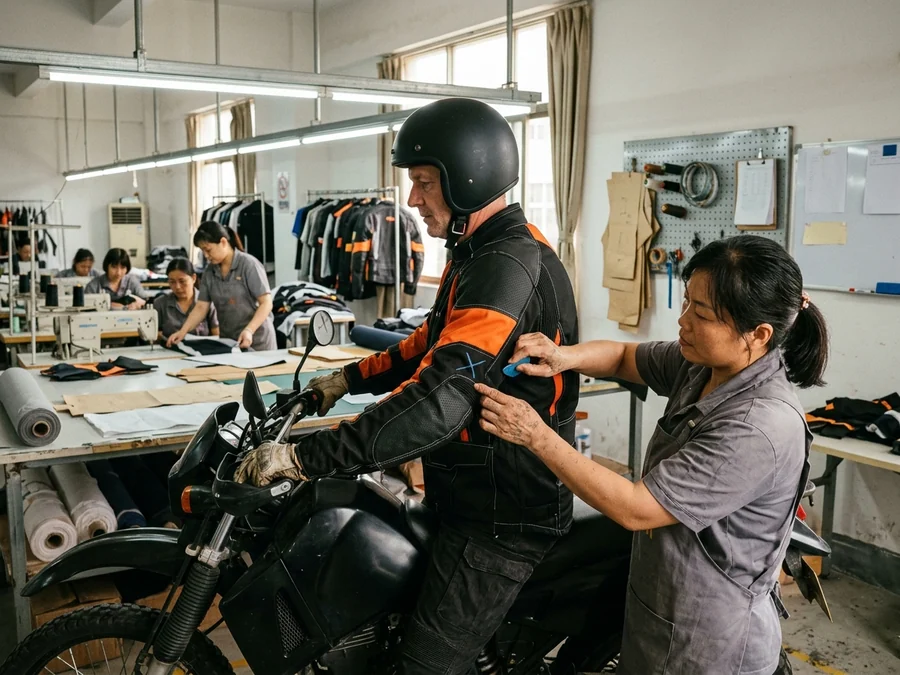
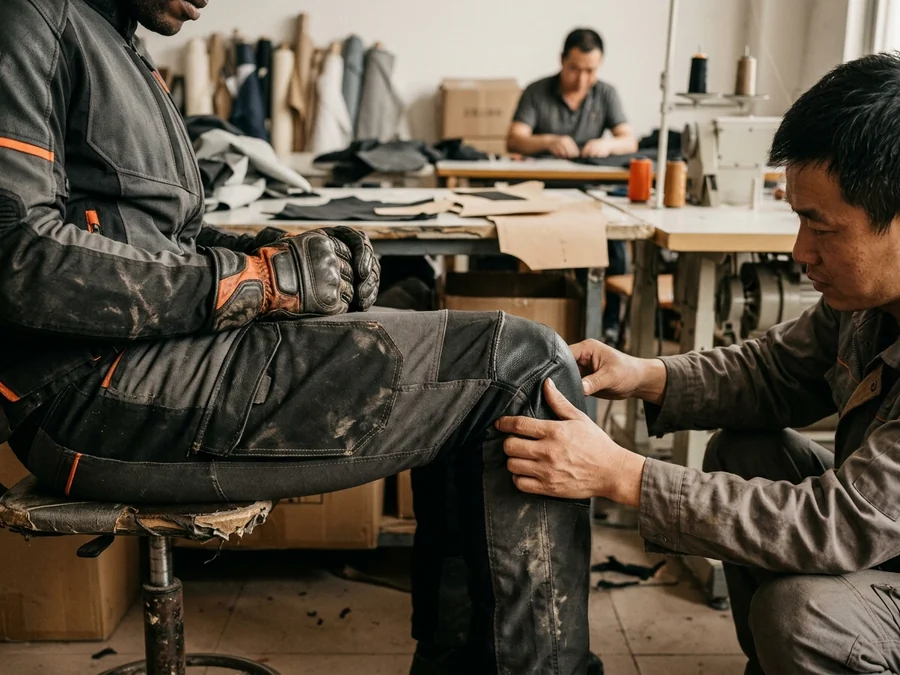
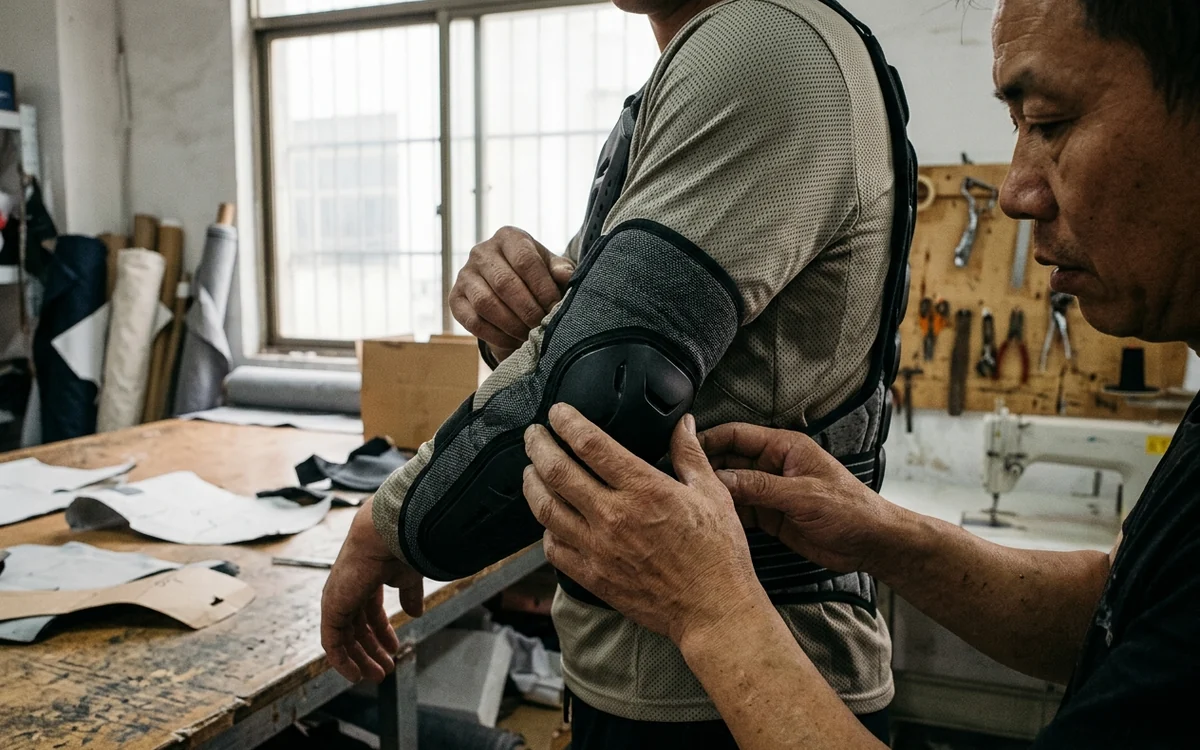
Armor that moves off the joint under load is a pattern problem, and it is solved at the block
Pockets at shoulder, elbow, knee and back only stay over the joint if the panel they are sewn into stays in place when the rider moves. So the pocket position is set on the block in the riding position, the seams around it are placed so they do not run across it, and the panel is shaped so the pocket sits on the outside of a bend rather than being dragged around it.
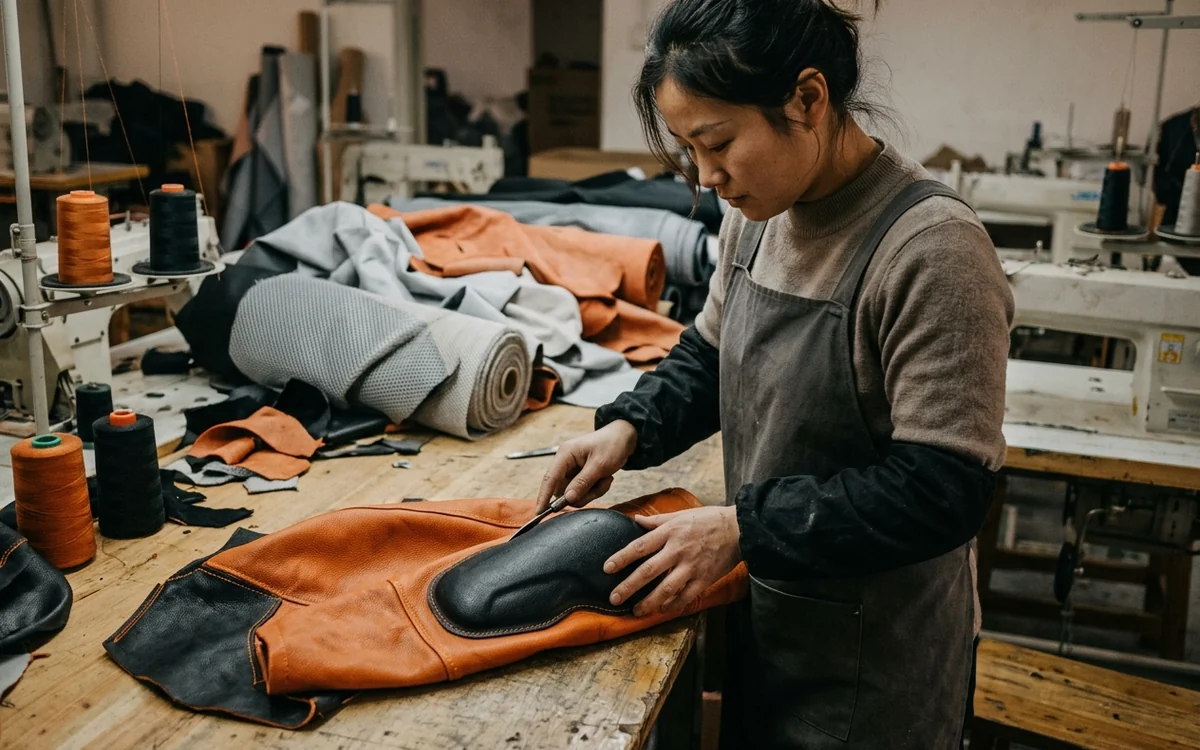
A size run is not one pattern scaled up. Each measurement grows by its own increment, because a body two sizes up is not a uniformly larger version of the same body.
| Measurement | How it grows | Scale one pattern up and… |
|---|---|---|
| Its own increment | Fine at the sample size, tight at the top of the run. | |
| Grows slower than chest | A 4XL collar you could fit a second neck into. | |
| Grows slower than body | An XS with a sleeve off a different garment. | |
| Changes differently again | Pants that ride down exactly where a rider leans forward. | |
| Tied to the armor, not the chest | Armor that no longer fits its own pocket at the ends of the run. |
One garment per size, on real bodies, in the gear they ride in — the last gate before the line starts
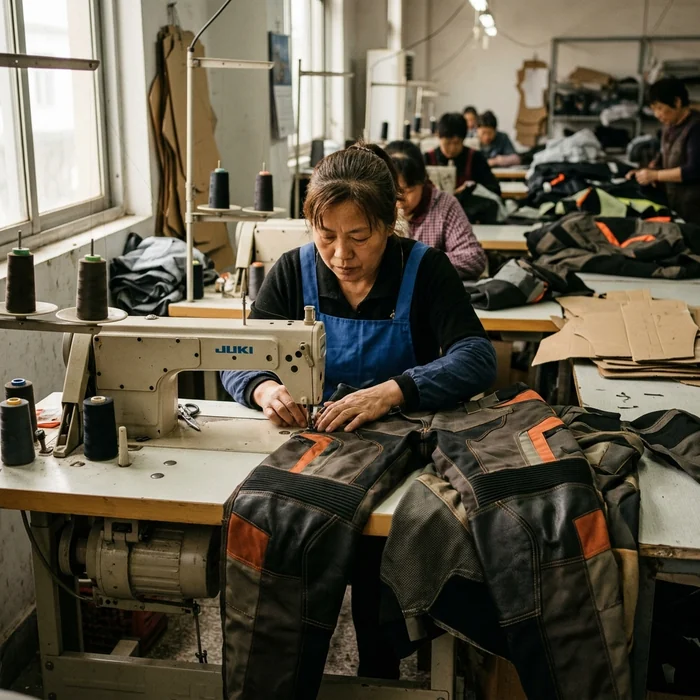
Comments are collected per size, not as one average. Before bulk, one garment per size is made and tried on real people with the kit they actually ride in: base layers, armor, boots. Any correction goes back into the graded pattern before the line is released.
Ease is deliberate room, and every discipline has its own amount in each place
Ease is the difference between the body measurement and the garment measurement. It is not slack, it is designed room: for the armor, for the layers underneath, for the movement the position demands, and for the material's own behaviour. It is also where a fit brief gets specific — "race fit" and "touring fit" are not adjectives here, they are different ease numbers at chest, waist and bicep on the same block.
Blocks, corrections and graded sets are kept by name — so a repeat is a cut, not a redevelopment.
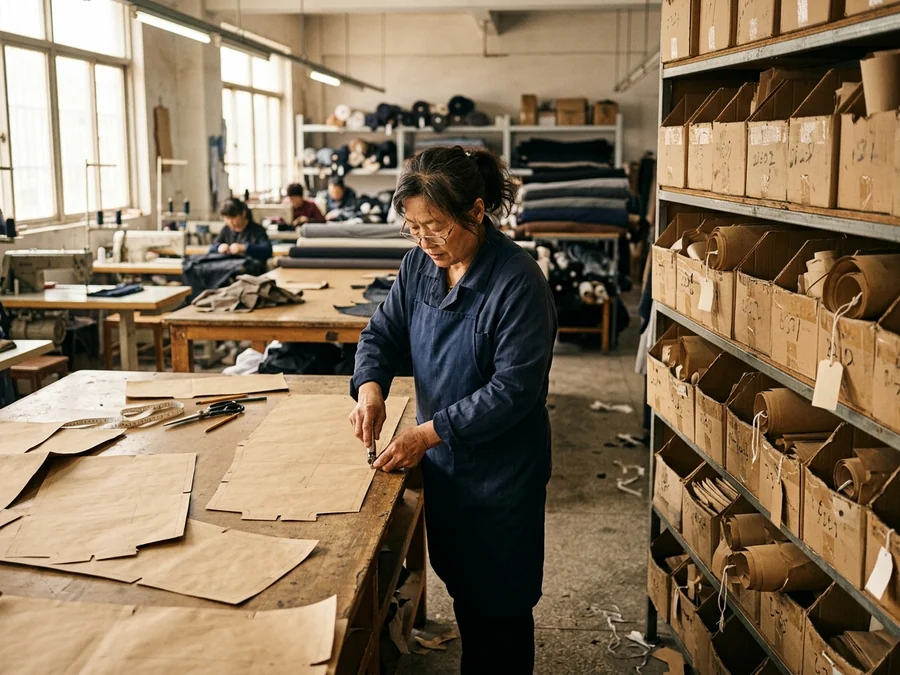
Yours, with the discipline, the armor and the ease it was built with written on it.
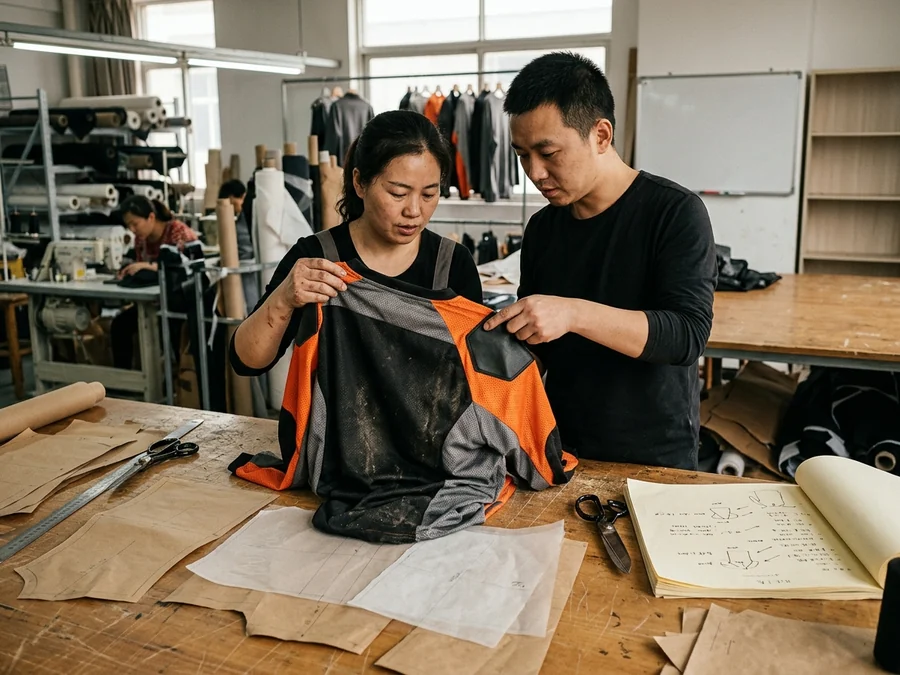
Every fitting change that was made and why, so a change is never quietly undone later.
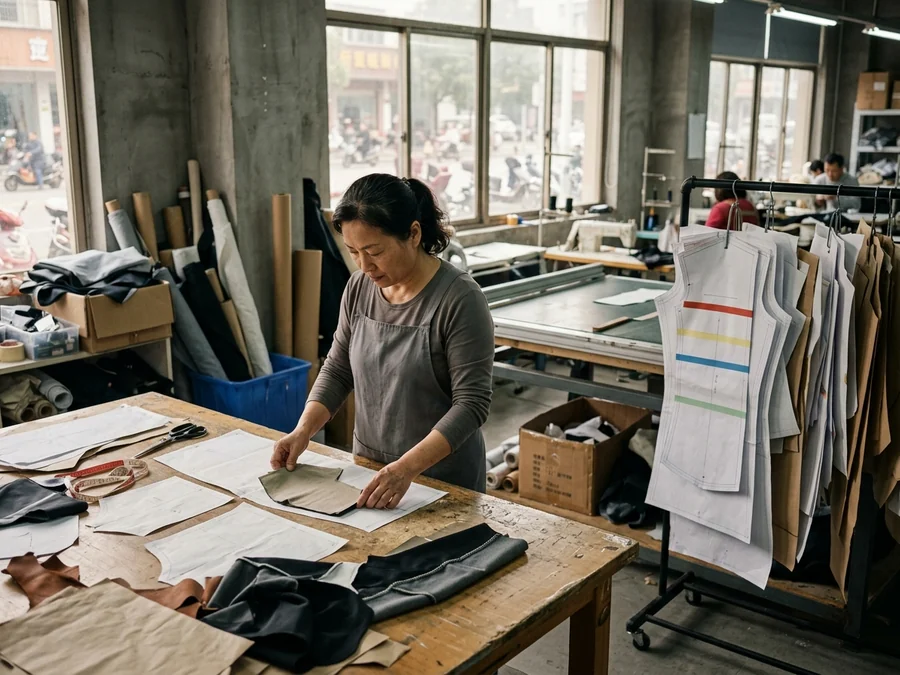
The full size range as approved, with the grade rules kept beside it rather than derived again.
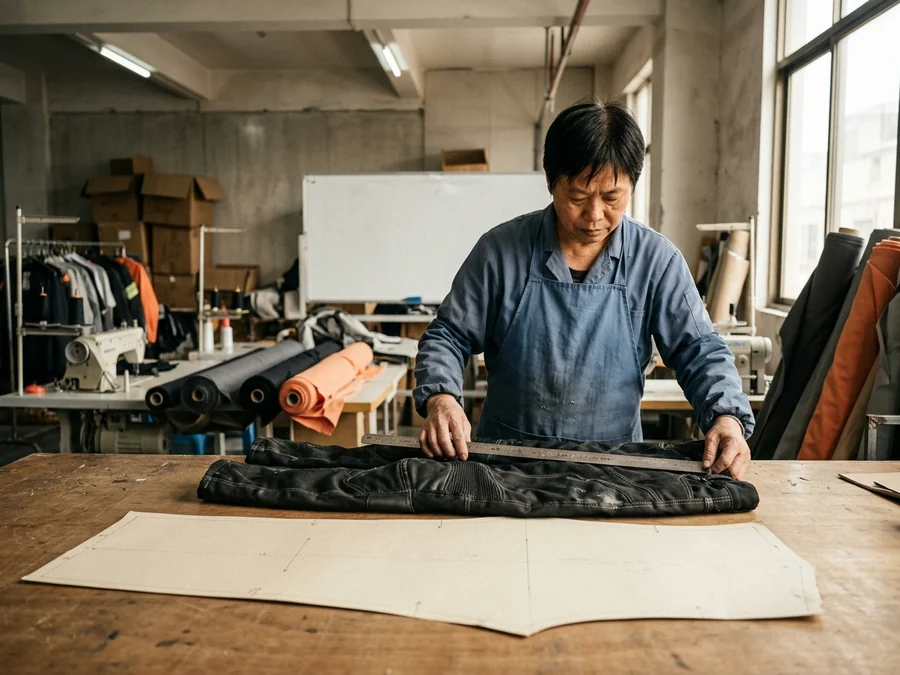
What the size run was approved at — and what production measures the first piece of each size against.
Which corrections are free, which need a new sample, and which have to happen before bulk.
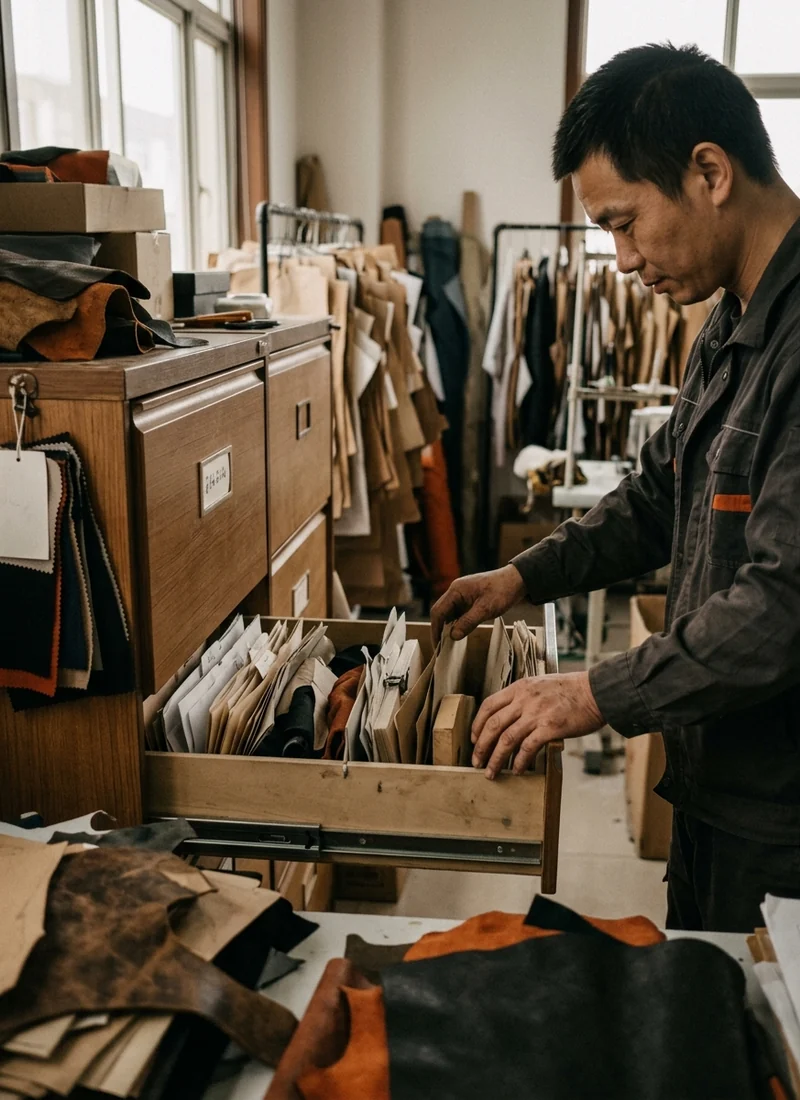
Send these six and Anna comes back within 24 hours on business days with the block it starts from.
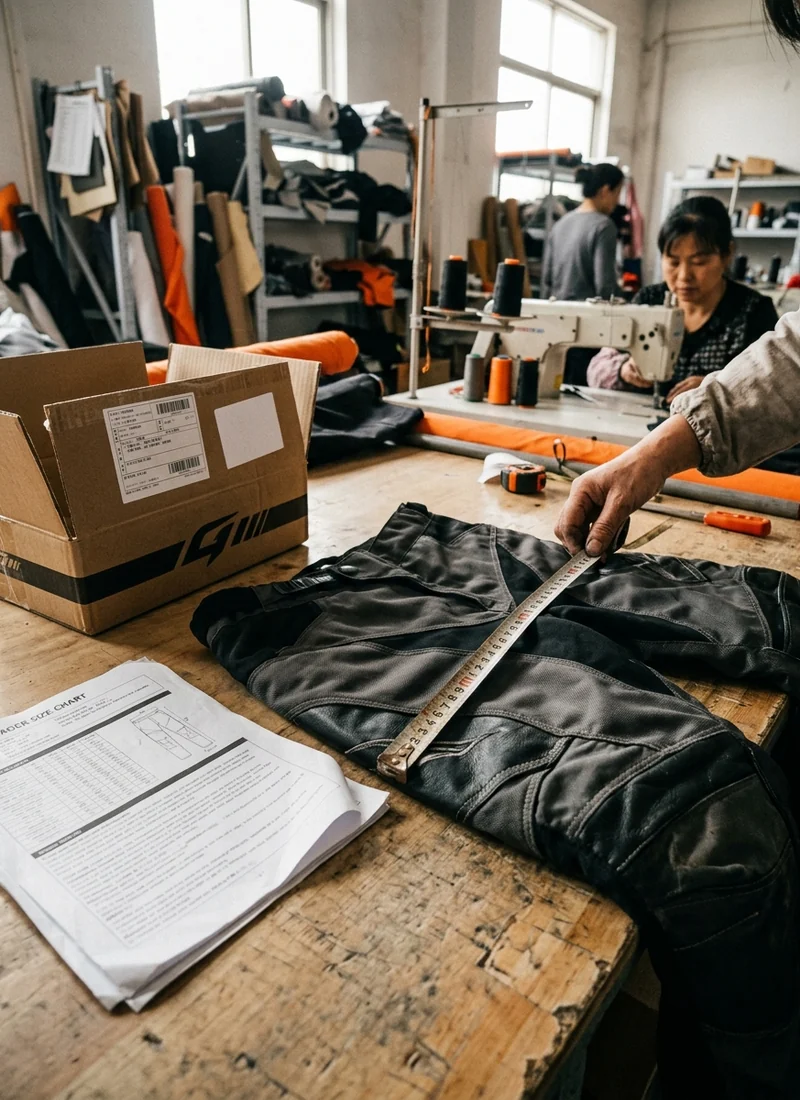
Where a block goes next, and where the garments it produces live.
Anna replies within 24 hours on business days with the block it starts from, whether an existing one can be used, and what the fit route looks like from there to a signed size sheet.