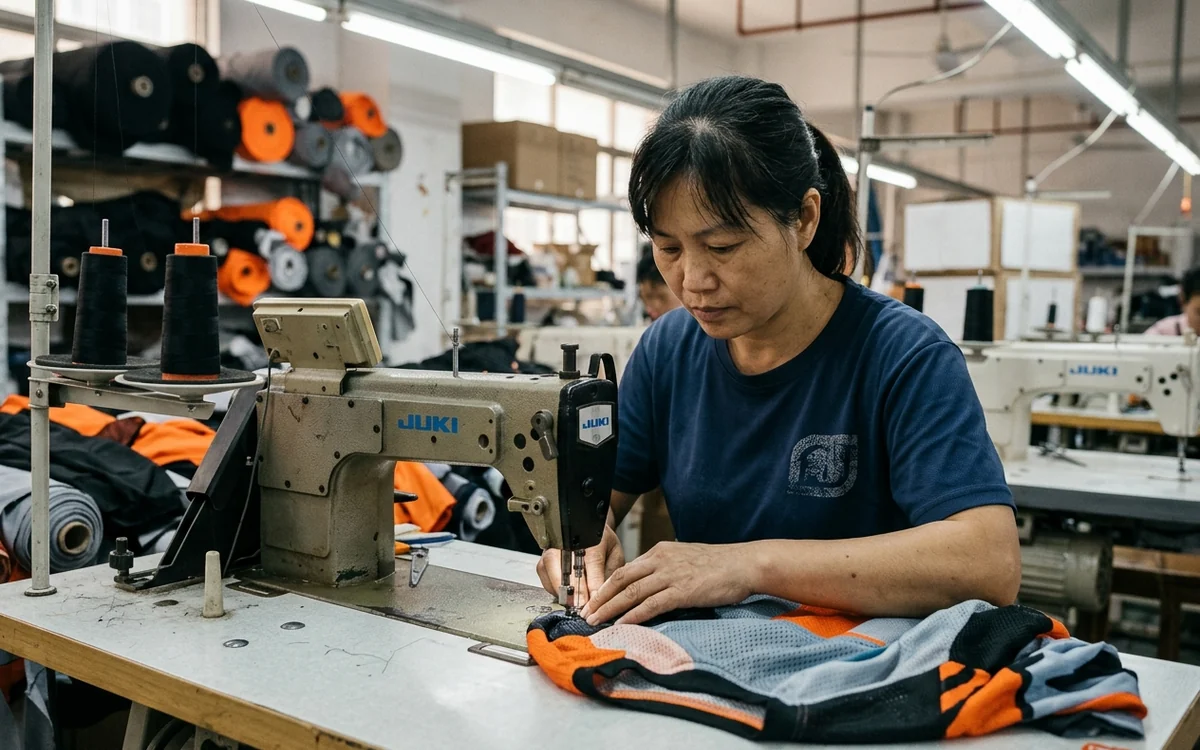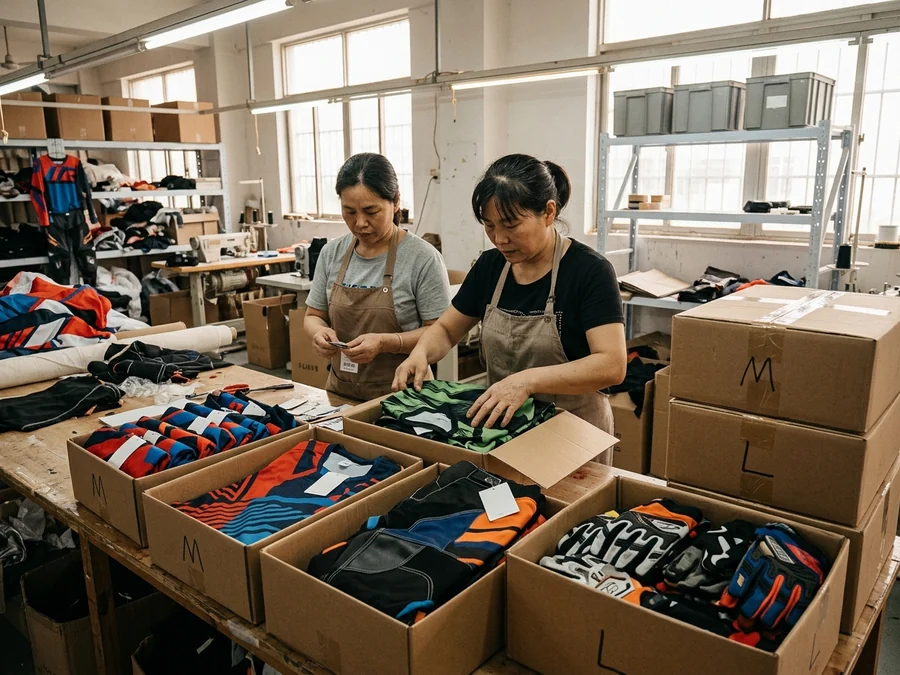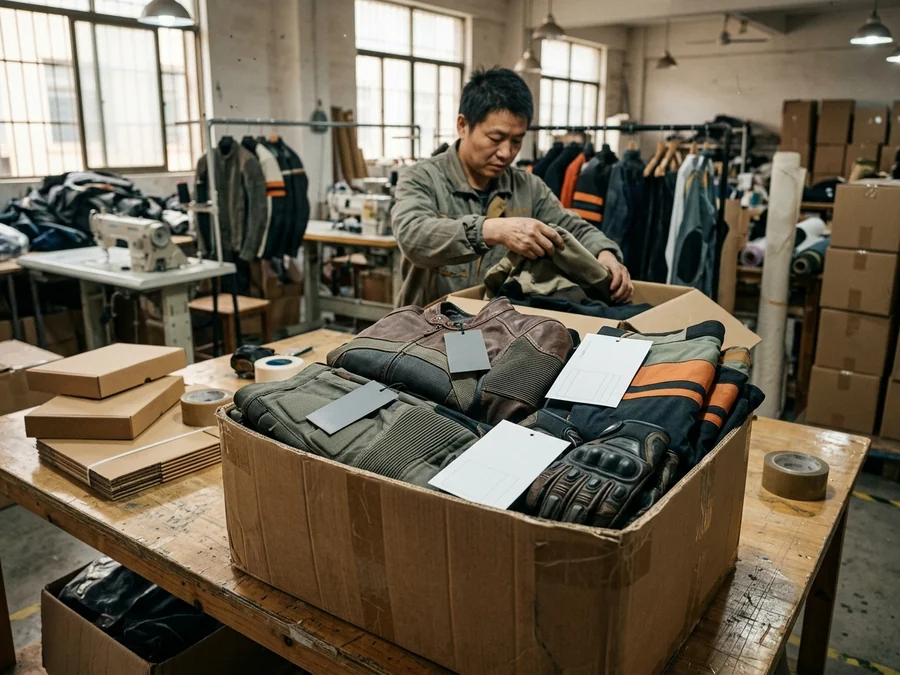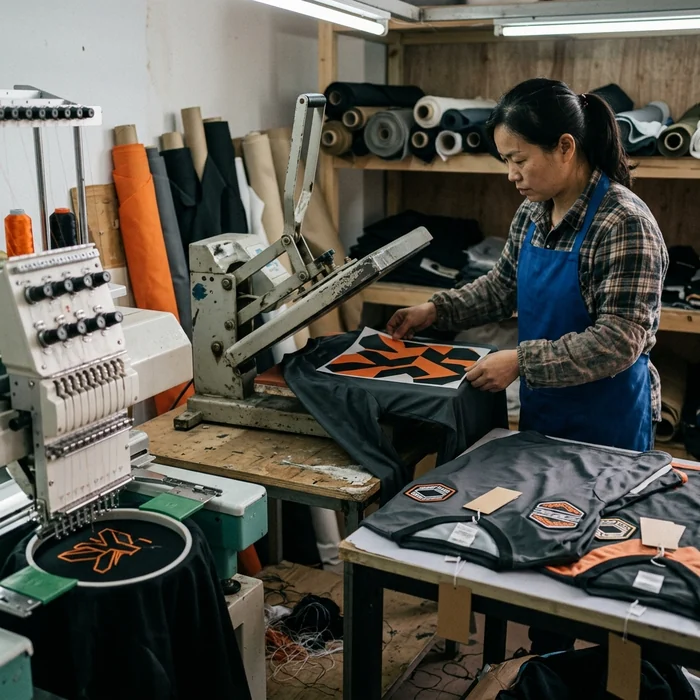
Four places · one name

Dealership Branded Apparel: Your Name on Gear People Actually Ride In

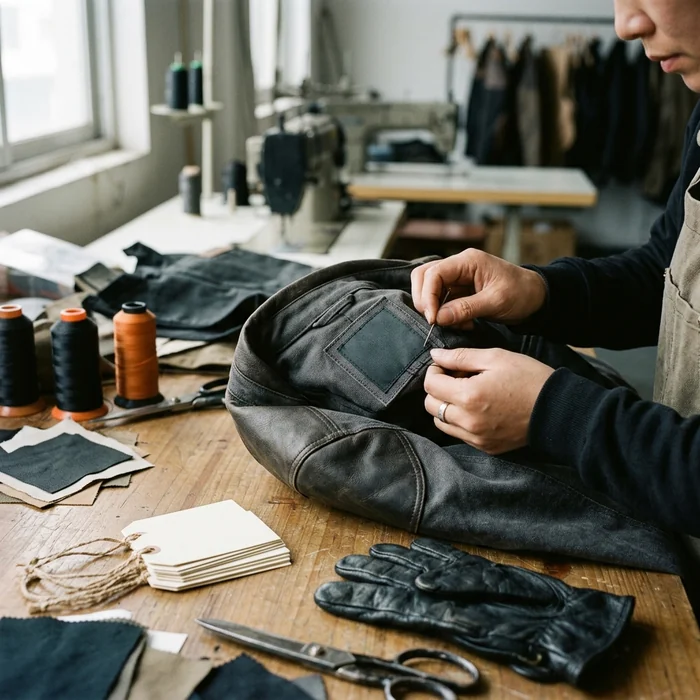
Most dealership merchandise is a printed tee and a cap. It sells once, to people who already walked in. The gear your customers wear on the bike is the shelf where your name stays visible for years — and it is the shelf most dealers never fill, because the factories that make it want container quantities.
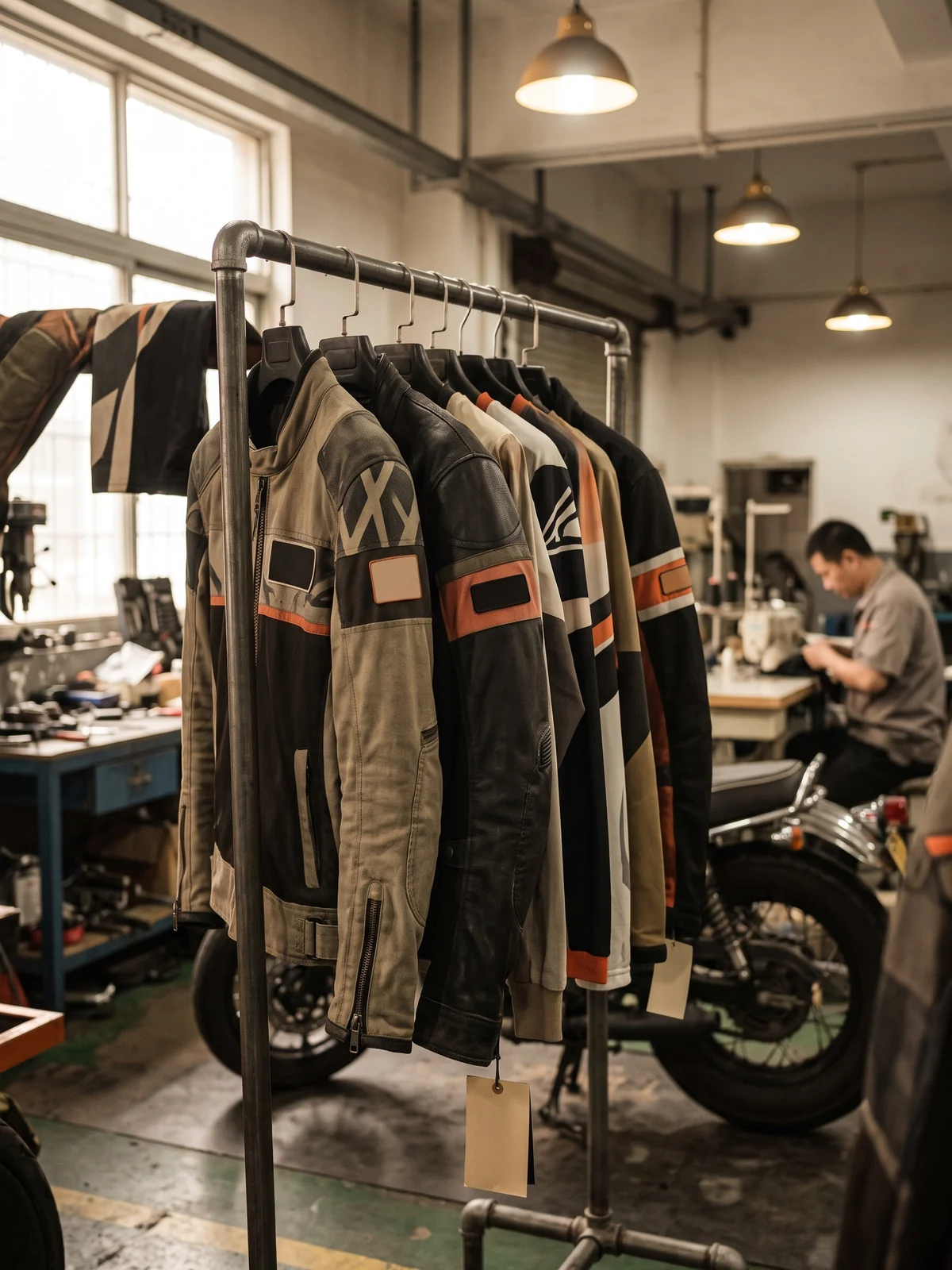
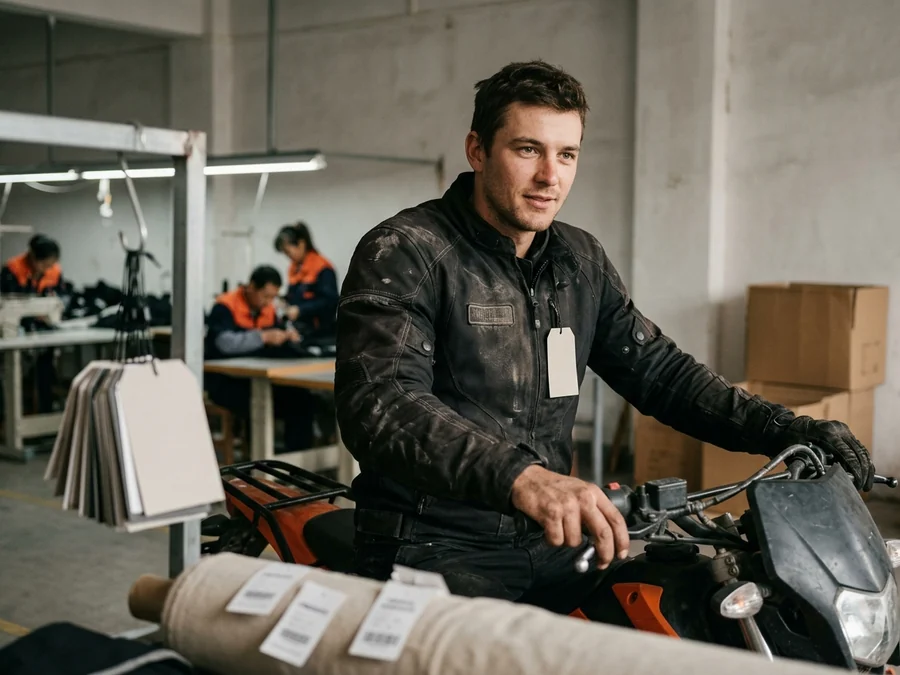
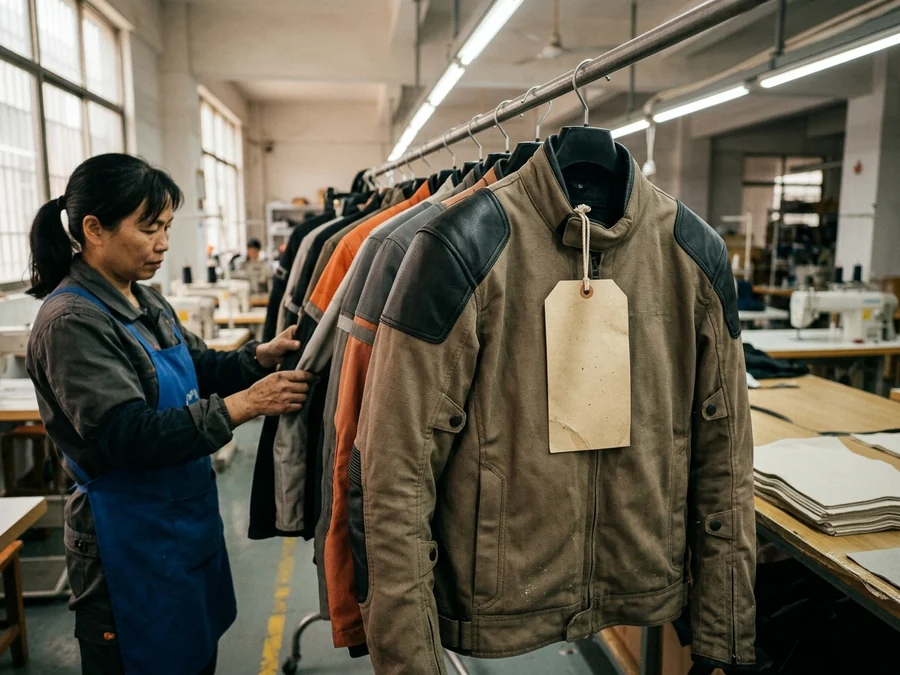
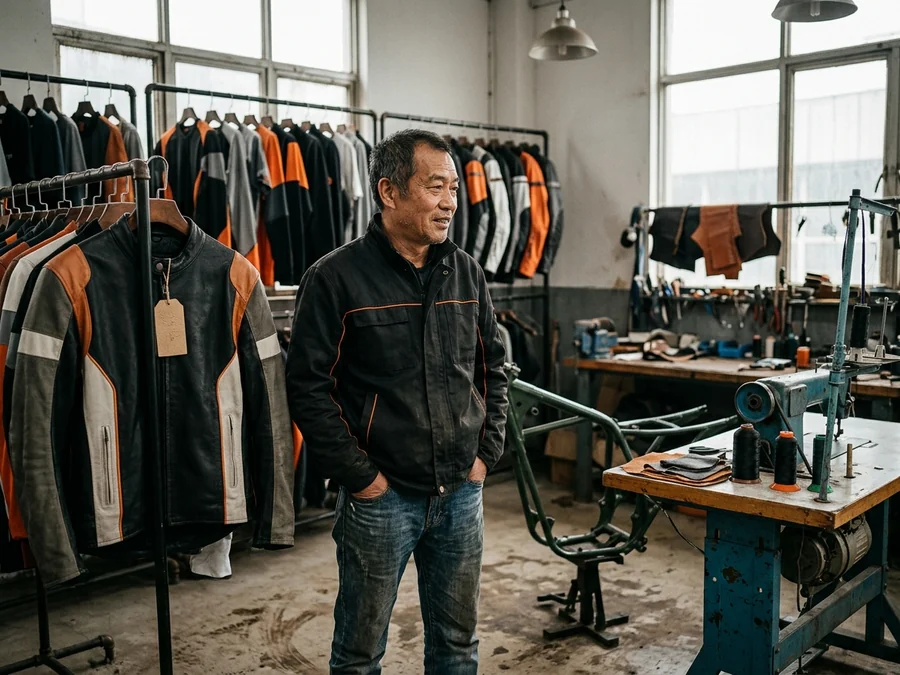
Branded riding gear hanging on a dealership rail with the shop name on the chest
Your rail · your name
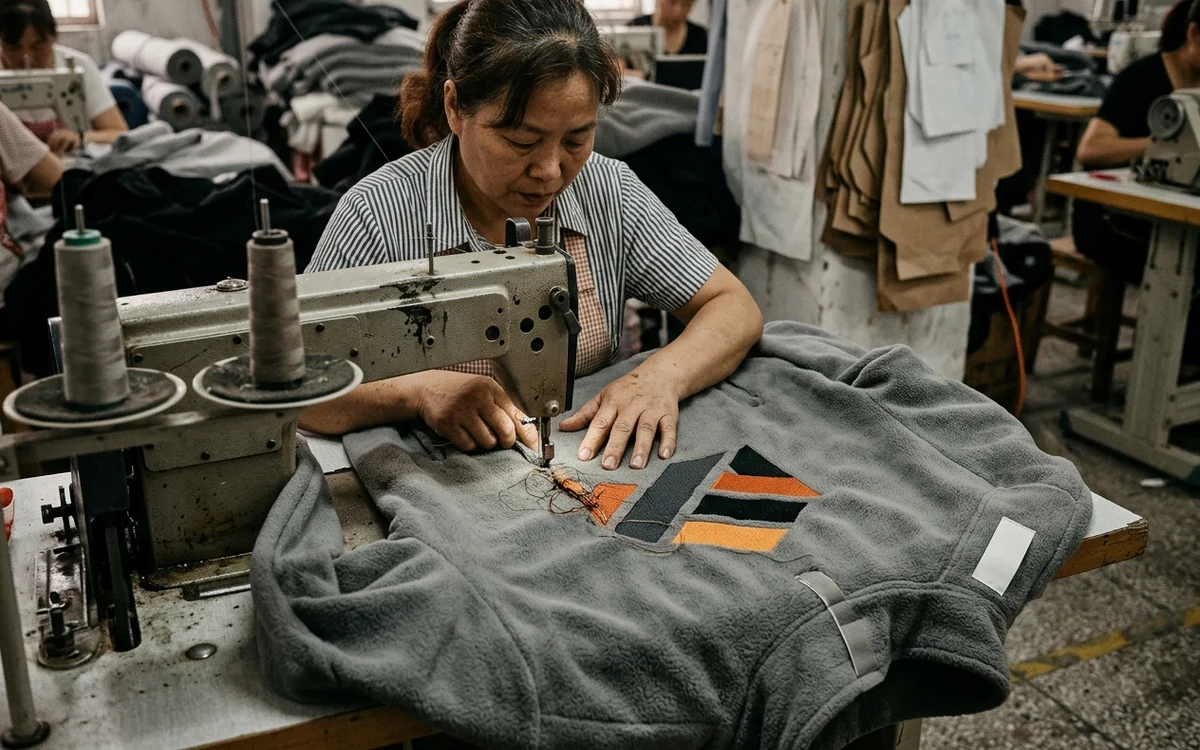
Dealership name embroidered on the chest of a riding jacket
Outer markon the road
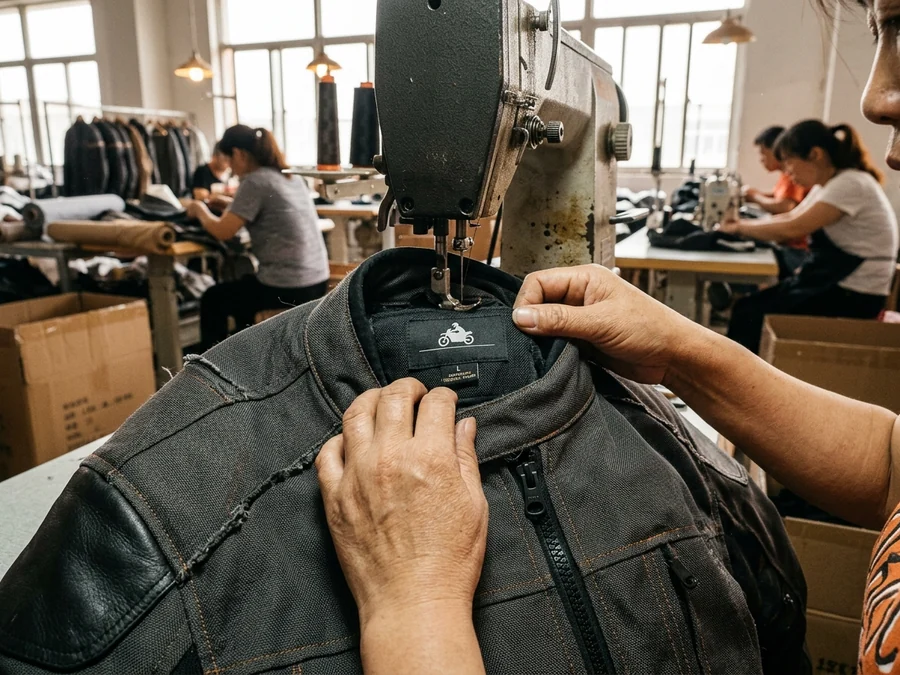
Woven neck label carrying the dealership name, size and composition
Neck labelin the hand
Printed hangtag with string, attached to a garment on the rail
Hangtagon the rail
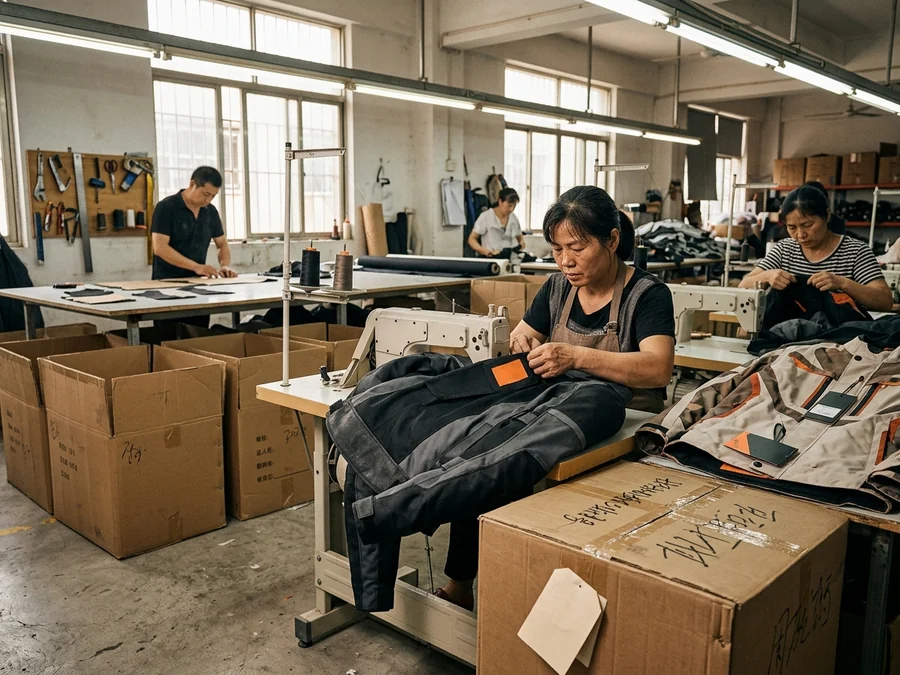
Carton marked with the dealership codes for receiving
Carton markin the back room
Who this is for

Who this is for: single-site dealers, groups, service centres and importers

Four kinds of dealership buyer, all trying to put their name on something worth wearing.

Single-site dealer standing in their own showroom

Single-site dealers

Want a small range with their name on it that does not need a container to start.
Wants · a range, not a pallet
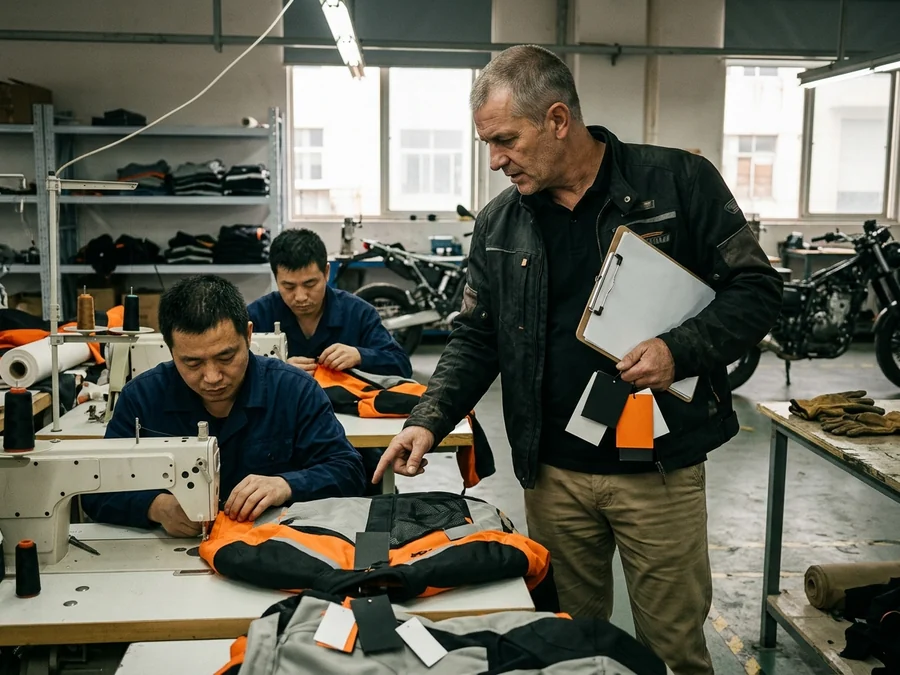
Dealer group manager coordinating a range across several sites

Dealer groups

Need the same range across several sites with one consistent look and one re-order route.
Wants · one route for all sites
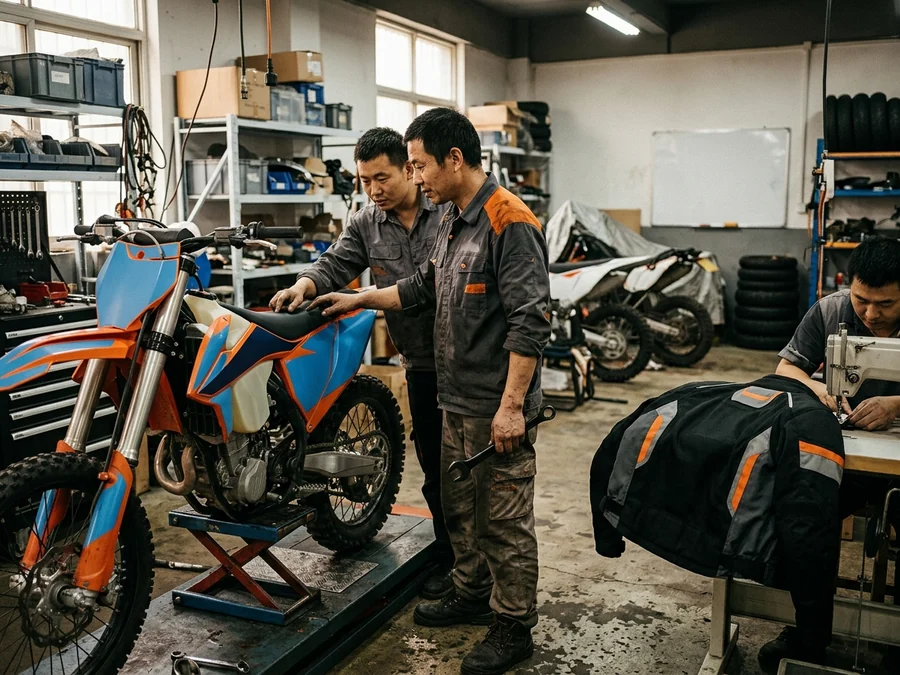
Service centre mechanics in branded workshop crew wear

Service centres and workshops

Want durable crew wear their own staff will keep wearing after the first wash.
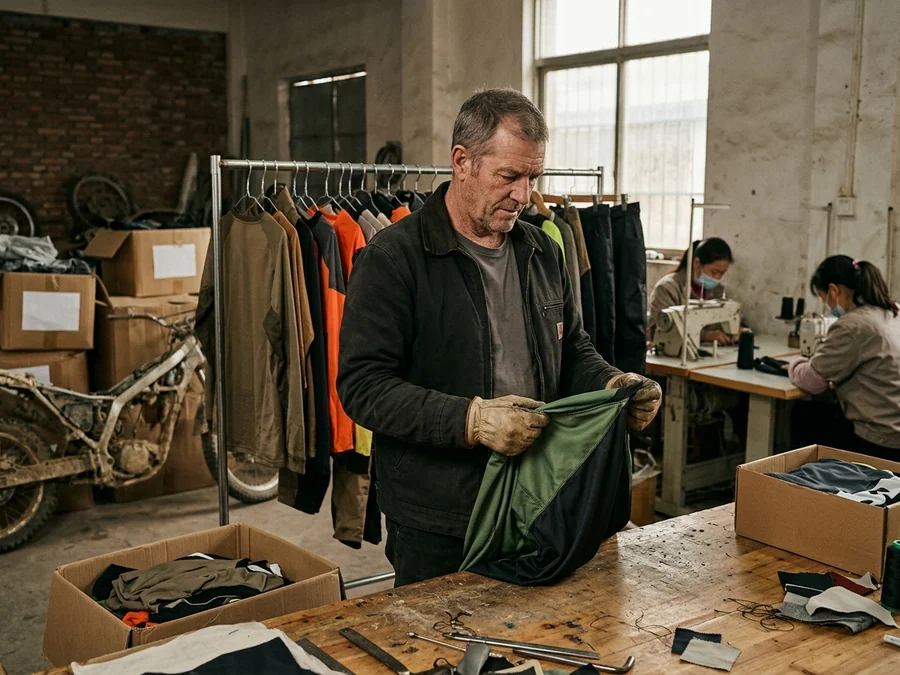
Wants · crew wear that survives
Importer with a retail arm reviewing their own shop range

Importers with a retail arm

Run both a wholesale programme and a shop, and need the shop range to feel different from the brands they carry.

Wants · a range of their own
Not this page
  • Wholesale supply of unbranded ranges
  • Team race kits, which have their own pages
The starter range

The starter range: what a first order actually looks like

A range is two to five styles at fifty pieces each — not one style in bulk. You learn which of them sells in your shop, and you learn it in one season rather than three.
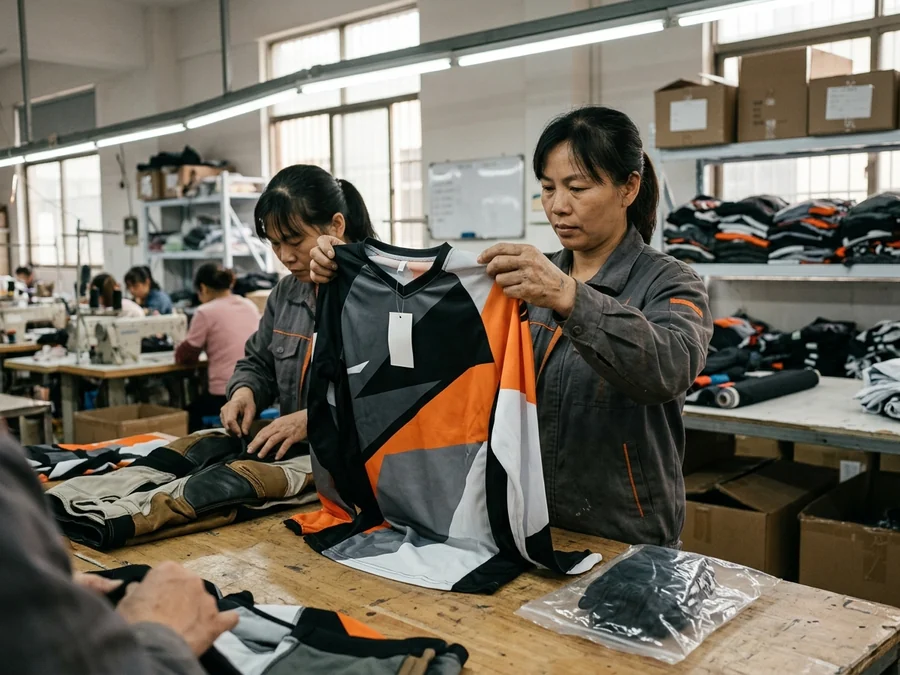
Branded workshop crew wear worn daily by service staff
01

Workshop crew wear

Worn · in the workshop

Polos, work shirts and softshells your own staff wears every day — the best advertising a dealership has, and the piece most often left out.
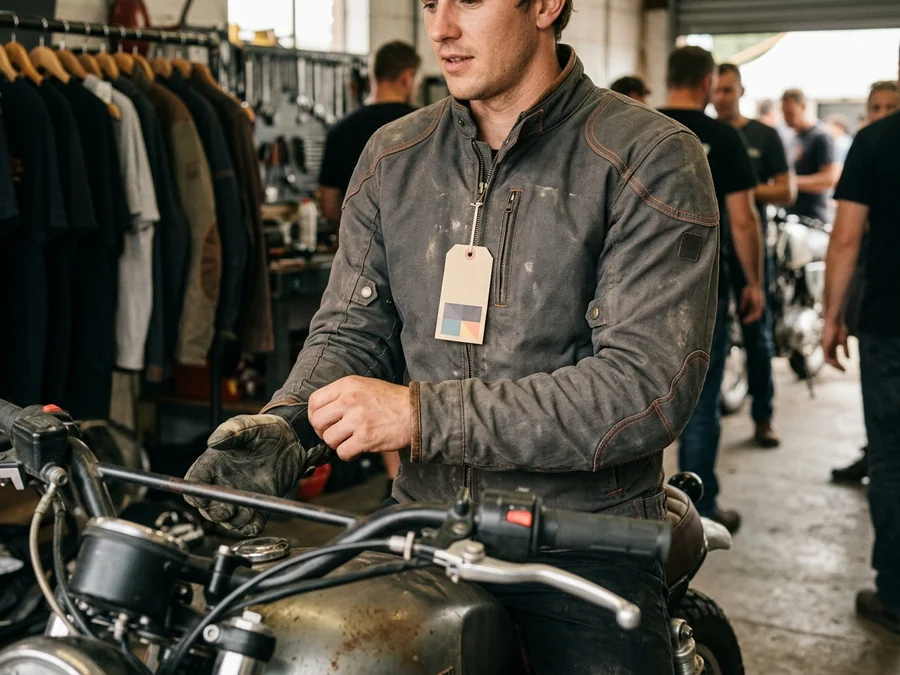
Branded riding jacket worn on a bike
02

One on-bike piece

Worn · on the road

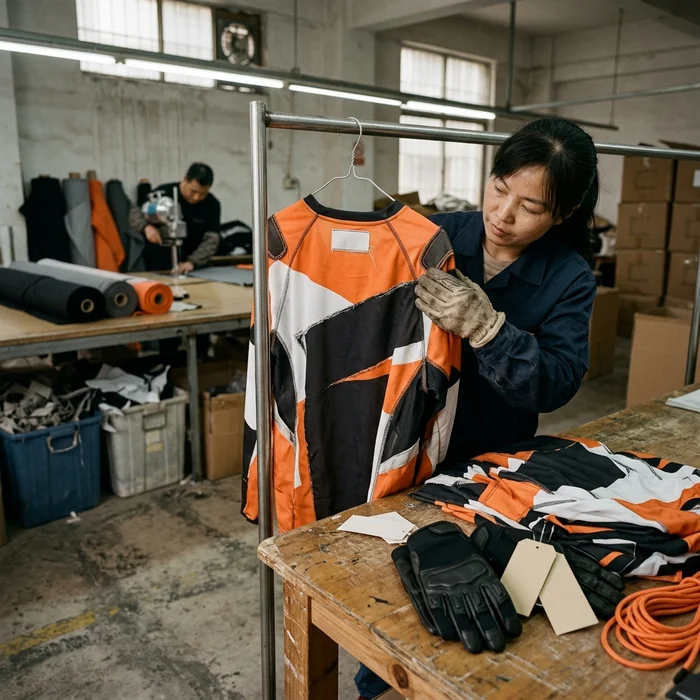
A jacket, riding shirt or gloves built on our riding blocks, with the armor pockets that garment needs.
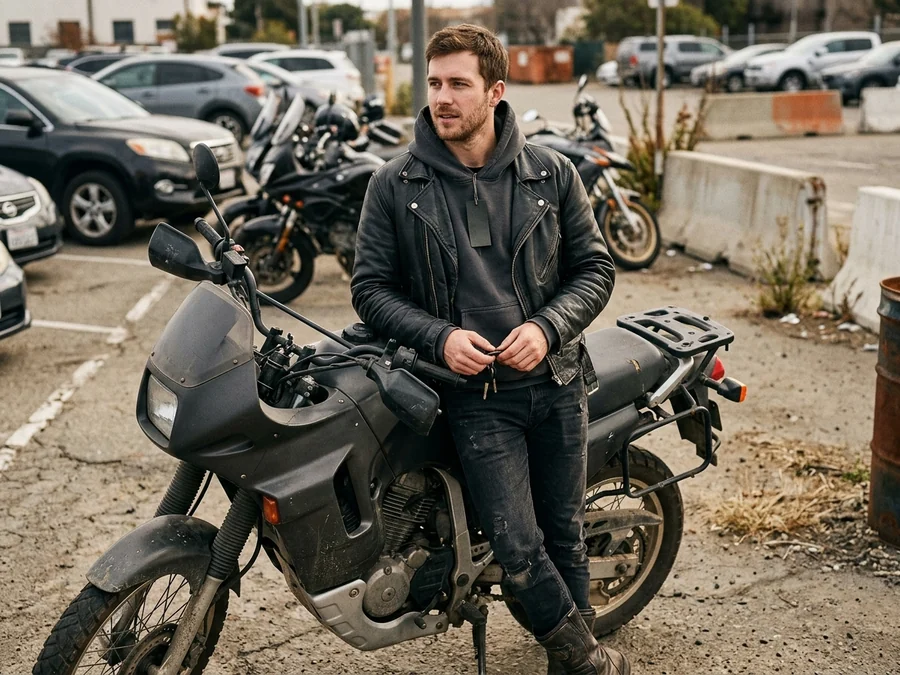
Branded hoodie worn off the bike in a car park
03

One off-bike piece

Worn · everywhere else

A hoodie, tee or cap, where the badge and the fabric weight decide whether it gets worn twice or for two years.
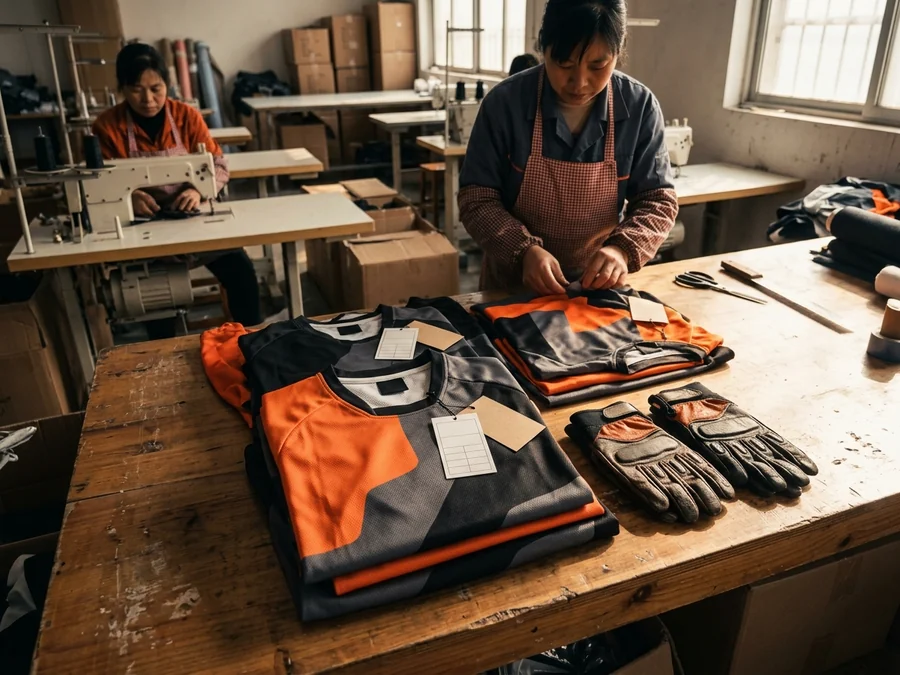
Seasonal branded piece ordered in a smaller quantity as a test
04

A seasonal test

Worn · for one season

A summer mesh piece or a winter item, ordered smaller as a test rather than a commitment.

Why spread itThat spread puts your name in the workshop, on the road and in the car park — three places rather than one. Ask a supplier what they would do with 200 pieces: if the answer is one style in five colours, they are selling you their setup rather than your range.
Four places

Your name goes in four places on one garment

Scroll: each of the four lights up in turn. Each one has a different lead time and a different minimum, which is why they are decided together at the start.

Outer mark Neck label Hangtag Carton
  • The outer markEmbroidered, printed or transferred on the chest, back or sleeve. This is the one people see on the road.
  • The neck or inner labelWoven or printed, with your name, the size and the composition. This is what a customer sees when they pick it up.
  • The hangtagCard, string and your logo. This is what makes a rail look like a brand rather than a box of stock.
  • The carton markYour codes on the outside, so your own receiving and stock system works without anyone opening a box.
Why all four at onceEach has a different lead time and a different minimum. Added one at a time as somebody remembers them, they become four separate delays instead of one decision.
Choosing the range

Choosing what goes in the range, by where it is worn

Workshop, road and off-bike are three different garments with three different lifetimes — and mixing them is what makes a range look considered instead of like a merch table.
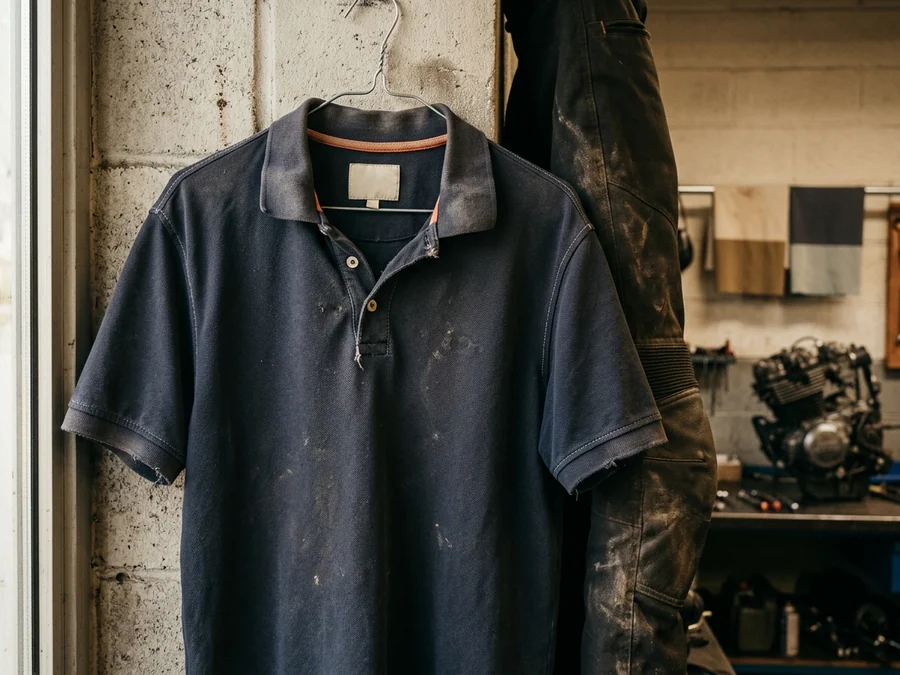
Workshop polo after a season of daily wear and washing

Workshop crew wear

Judged on · the wash

Worn daily and washed constantly. Durability and how the badge survives matter more than fashion.
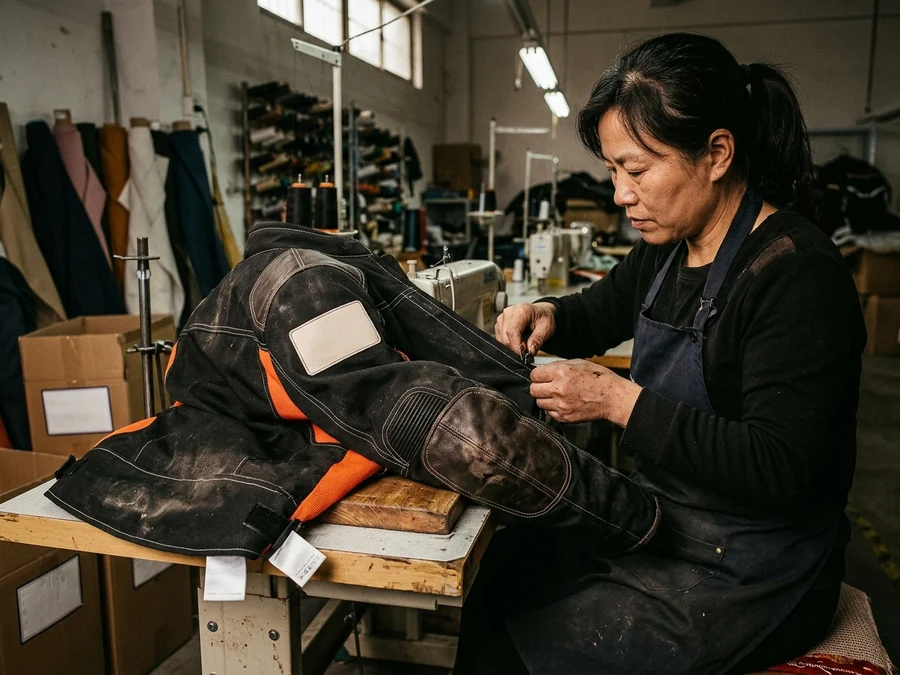
Branded riding jacket on a rider, cut on a riding block

On-bike gear

Judged on · the fit in position

Built on our riding blocks with the armor pockets the garment needs — the fit is what stops it being merch.
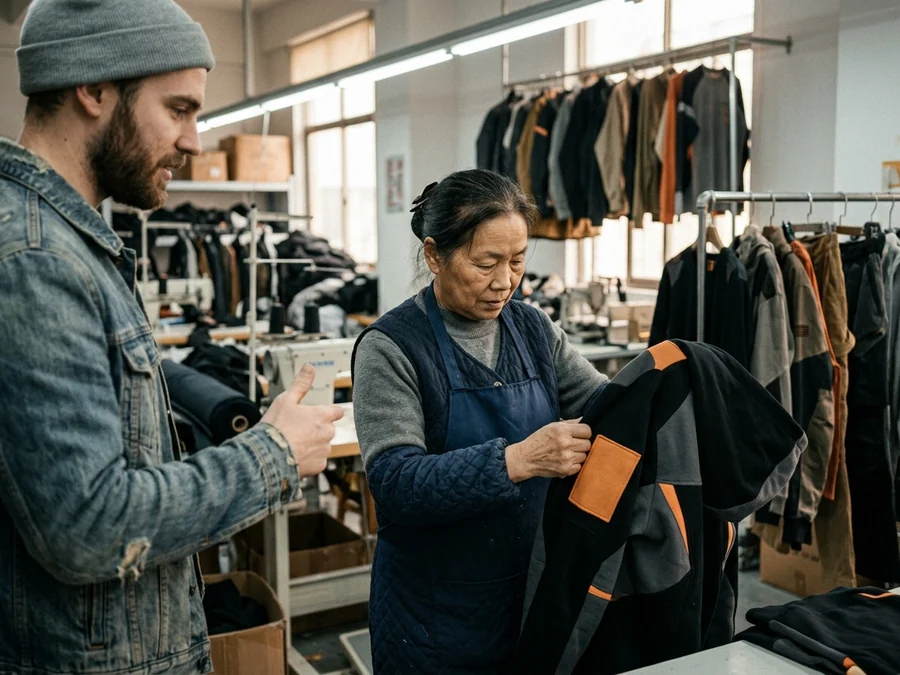
Branded hoodie, where fabric weight and badge decide repeat wear

Off-bike pieces

Judged on · weight and badge

Hoodie, tee or cap. The fabric weight and the badge decide whether it gets worn twice or for two years.
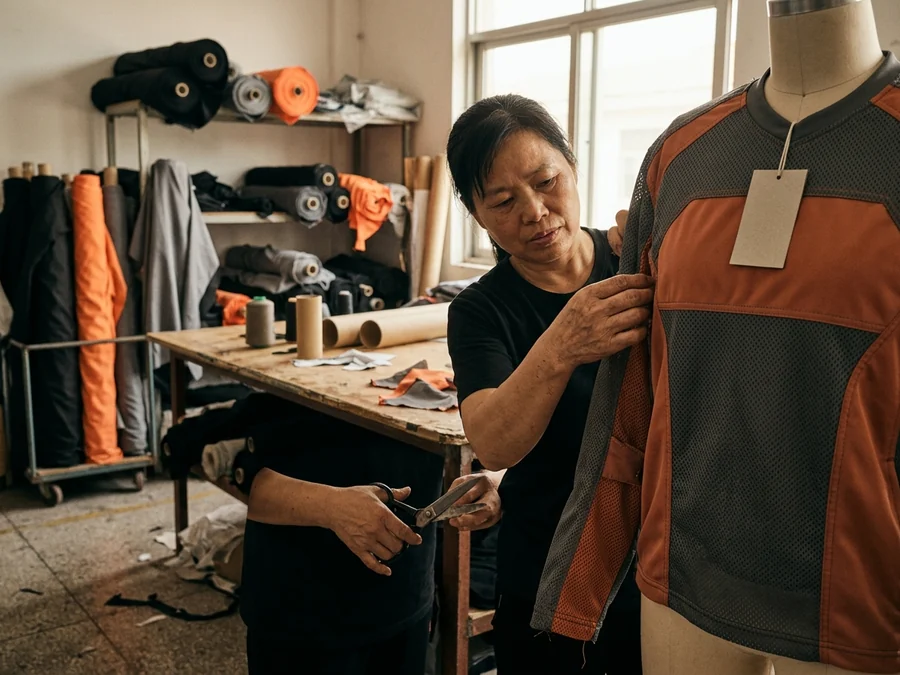
Seasonal mesh piece ordered as a smaller test run

Seasonal

Judged on · sell-through

A summer mesh piece or a winter item, ordered smaller so a wrong guess costs a test rather than a season.

Worn by
your own staff

The garment your service manager wears every day is seen by more customers than any poster in the showroom.

Decoration by fabric

Your logo lands differently on every fabric

A logo is not one file. Each fabric gets its own, and they are matched to each other so the badge on the hoodie and the print on the shirt read as one logo under daylight.

FabricRouteWhat decides it
Fleece hoodie 280–320 gsmEmbroideredThick enough to carry a dense badge, with backing behind it.
Polyester crew shirtPrintedSublimation puts the colour in the fibre, so nothing sits on the surface to crack.
Cotton teeHeat transferA dense stitch on a light knit puckers; the mark goes on the surface instead.
Waterproof shellTransfer onlyA needle hole is a leak path straight through the membrane.
LeatherPatch or perforationA needle hole in a hide is permanent, so placement is fixed first.
The dealership logo embroidered in thread on fleece
In thread · on fleece
The same dealership logo printed on a polyester crew shirt
In print · on polyester

One logo, two files, two rooms

The thread version is digitized for the fleece it sits on, and its colours are matched against the printed strip under a daylight lamp, on the actual fabric — not against a thread chart. That is why a matched pair reads as one mark rather than two cousins.

It is also the single thing most dealership ranges get wrong, and the reason is ordinary rather than technical: each garment is ordered separately, often months apart, and nobody ever puts the two of them next to each other until a customer picks up the hoodie while wearing the shirt they bought last season. Matching them at the file stage costs one photograph and ten minutes. Matching them after the run costs a run.

How to check itAsk to see your logo on two different fabrics side by side before the run. If they do not match in that photo, they will not match on the rail.
Minimums

Minimums, and three ways to start smaller

Fifty per style is the floor — and there are three legitimate ways to stay near it

50PCS / STYLEThe floor, per style
2–5STYLESWhat makes it a range
What does not lower a minimumAsking for fewer pieces of a fully custom garment. The cost sits in the setup — pattern, marker, changeover, first-piece checks — not in the fabric.
01
Same style, several coloursColours share a pattern and a marker, so a 50-piece style can run as two colours without a second setup.
02
Shared blocks across stylesA polo and a work shirt built on the same block cost less to develop than two unrelated garments.
03
Decoration-only on a built styleYou take one of our existing styles and only the branding is yours — the fastest way into a first range.
4PLACESOuter, neck, hangtag, carton
50PCS / STYLEWhere a branded range starts
25–35DAYS REPEATBulk, from the archived block
3INSPECTIONSStart-of-line, mid-line, final
Season two

The second order should be an email

After a first order, your block, graded set, logo files per fabric, label artwork and carton plan are on file under your dealership's name. A repeat is then a quantity and a date.
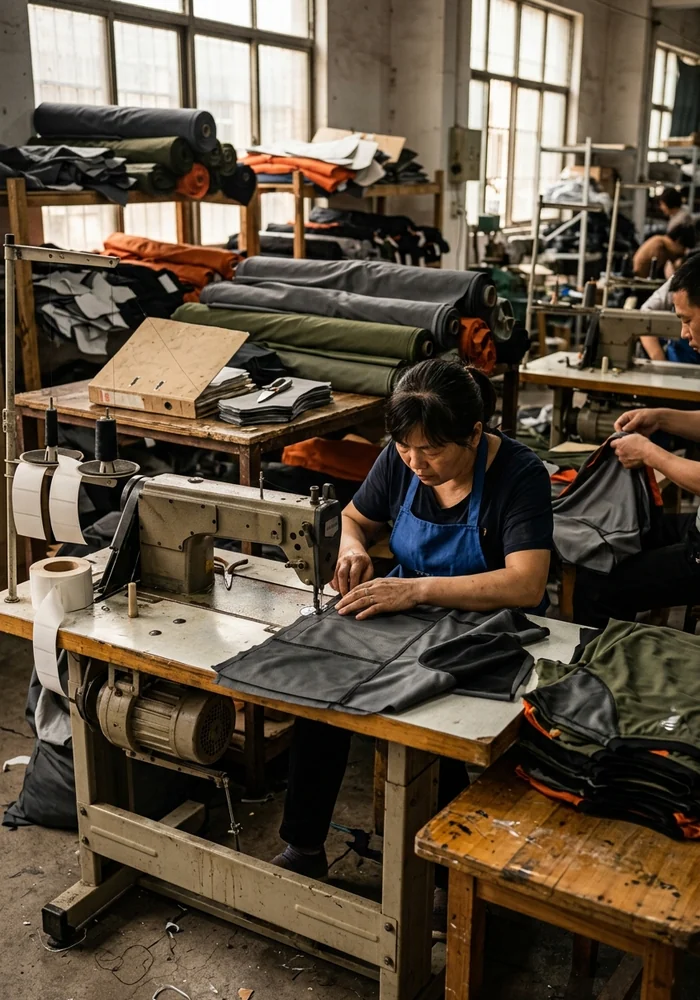
Same range, more piecesNothing re-developed, nothing re-approved
25–35days bulk
Sublimated piece repeatedFrom the archived colour profile and strip
15days
New colour of an existing styleNew profile or thread match; pattern and grade unchanged
Profileonly
New style joins the rangeBuilt on a block you already have on file
Blockreused
A dealership file on the shelf holding the block, size sheet and label artwork
Filed under your name
What does not change quietlyThe block. Colours change easily and sizes come from the graded set, but a block change is a fit change — and your regulars will notice it before you do.
Inspections

Quality, in the words a dealership cares about

Three inspections on every run — and one decision made before the run that matters more than all three.
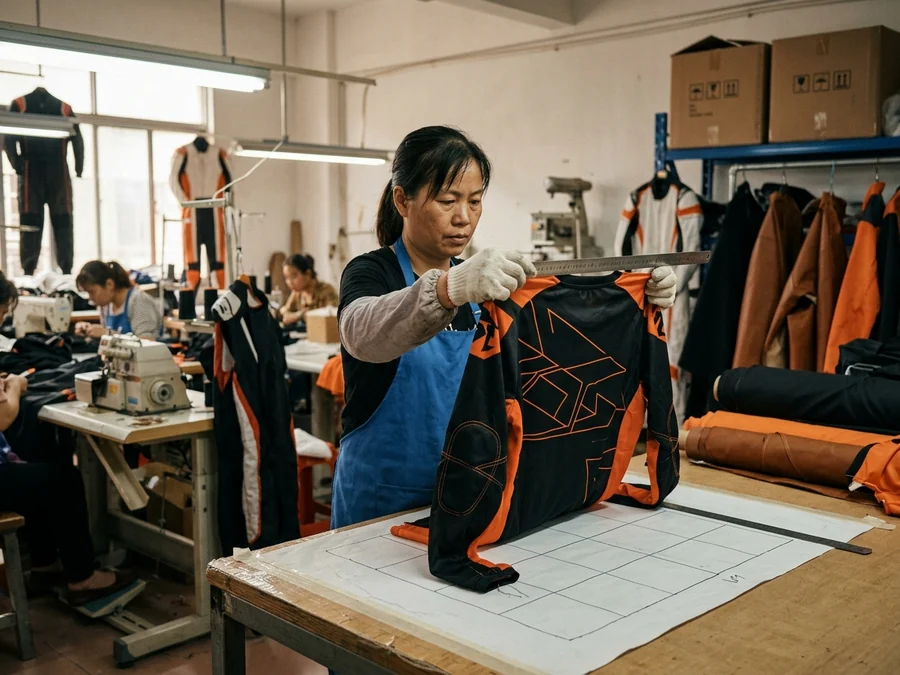
First piece of a size measured against the signed size sheet
01

Start-of-line

The first piece of each size is measured against the signed size sheet before that size runs.
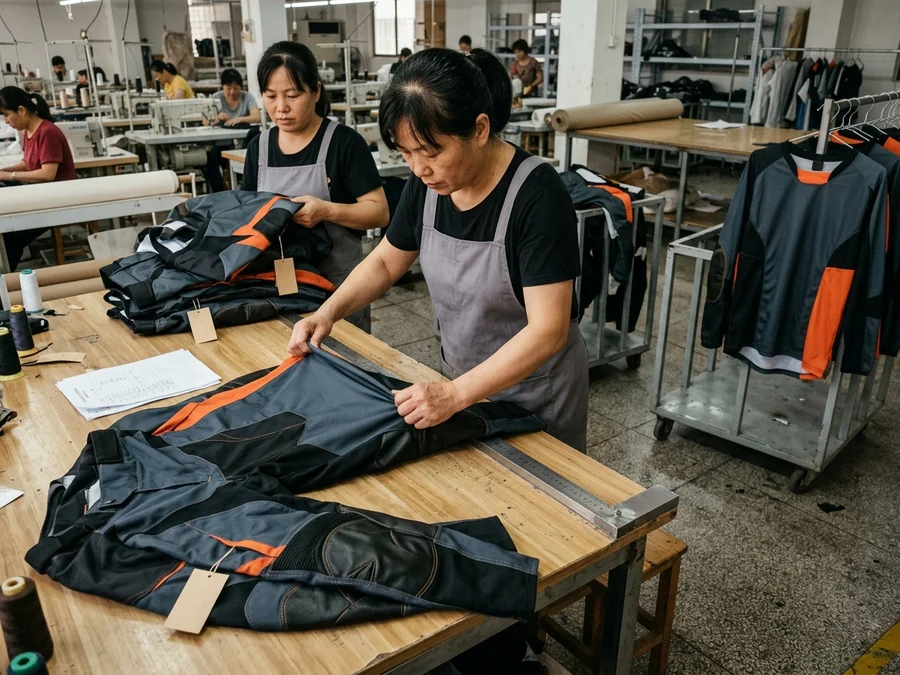
Pieces pulled across sizes at the mid-line check
02

Mid-line at 20 percent

Pieces pulled across sizes rather than from one bundle. A failed check stops the line.
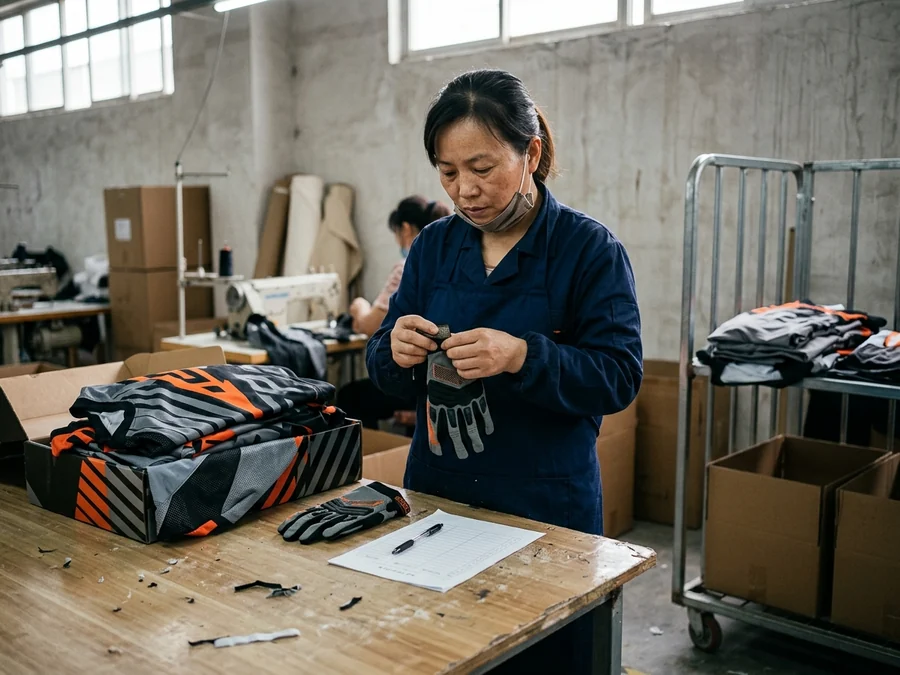
Every piece checked before packing at the finishing table
03

Final

Every piece checked before packing — repaired or remade rather than shipped and sorted out later.

The one that actually bitesWhat damages a dealership's image is not a fault on day one. It is a logo that starts curling after a few washes on the garment your service manager wears every day — and that is a backing and decoration-route decision made before the run, not a QC problem found after it.
Packing

Packed for a shop, not for a warehouse

Cartons and hangtags arranged so a range goes on a rail the day it arrives.
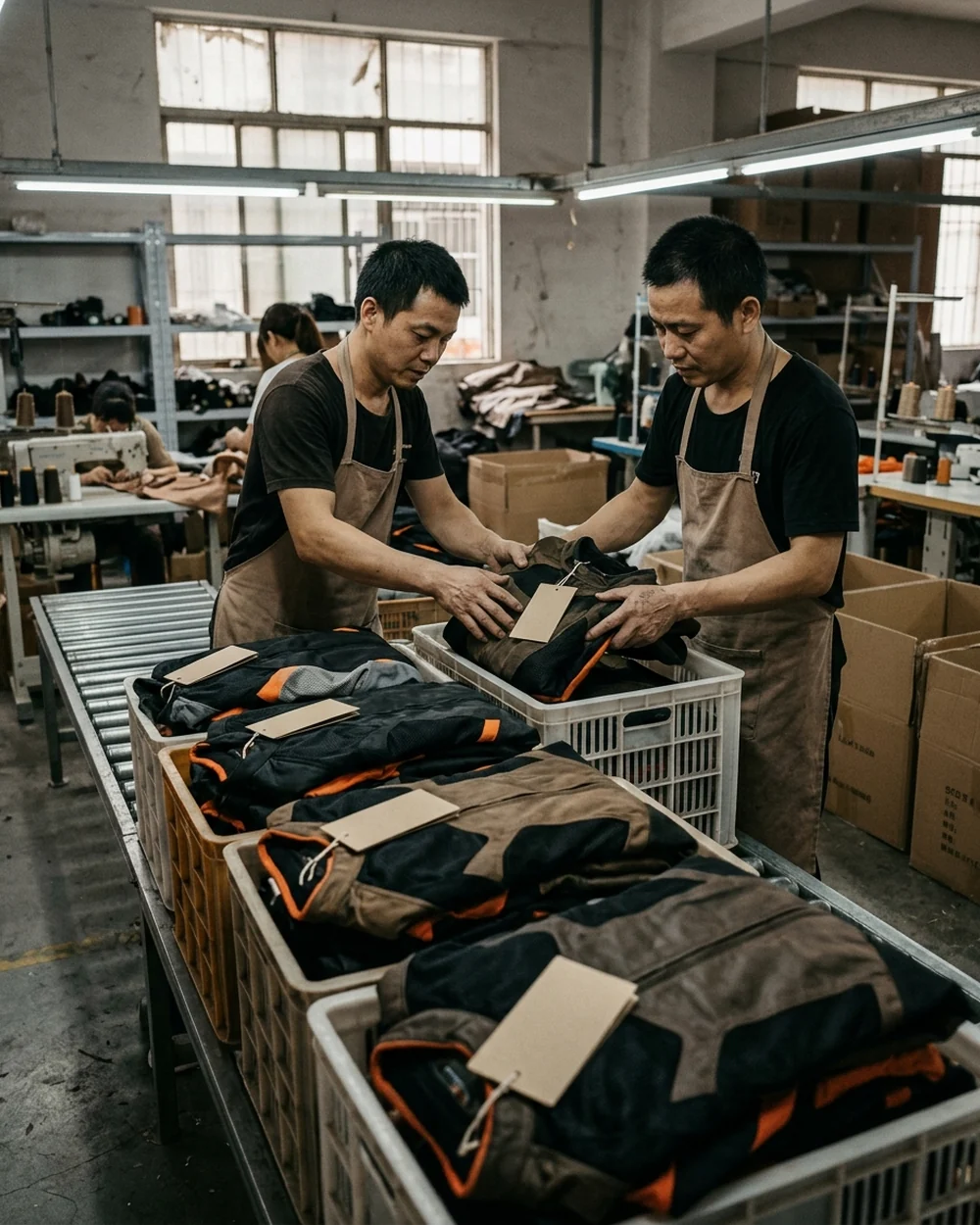
Garments packed with their hangtags already attached, ready for the rail
Tagged before it ships
Cartons packed by style and size curve for a shop floor
By style · by curve
Packed-carton photo set sent before shipping
Photographed before shipping

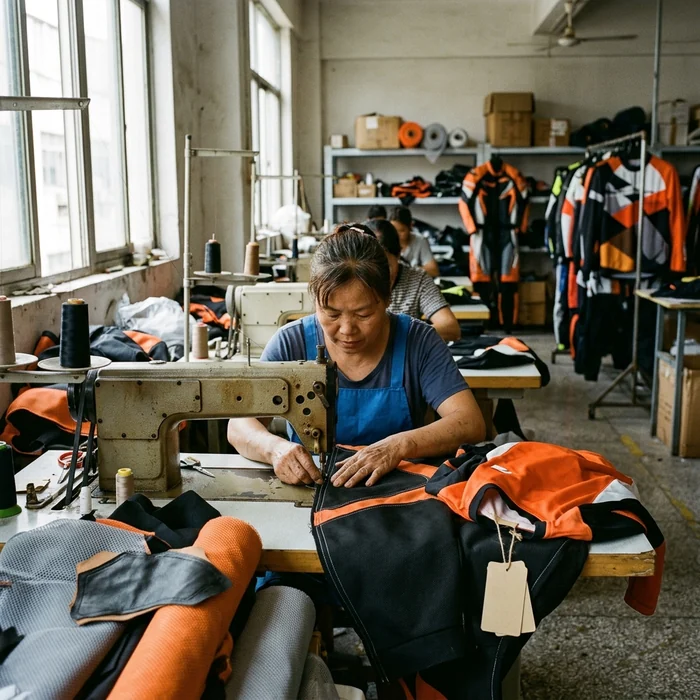
For dealership orders, cartons are packed by style and size curve with the hangtags already attached, so the range goes from box to rail without a tagging session in the back room. The carton marks carry your style codes, and a packed-carton photo set is sent before shipping.

  • Hangtags attached, not bagged — the difference between a morning and an afternoon.
  • Carton marks in your codes, so your stock system works without opening anything.
  • Photo set before shipping, so a mismatch is found in our warehouse rather than yours.
How to check itAsk whether hangtags come attached or in a bag. It is a small question that tells you who the packing was designed for.
Your logo, our range

Send your logo and what you want in the range, and we will come back with a spread

The boundary

Our side of the line, and yours

A short boundary stated up front, because a dealership's worst experience with a factory is almost never a fault in the garment — it is almost always something nobody actually agreed who owned until the week it mattered.
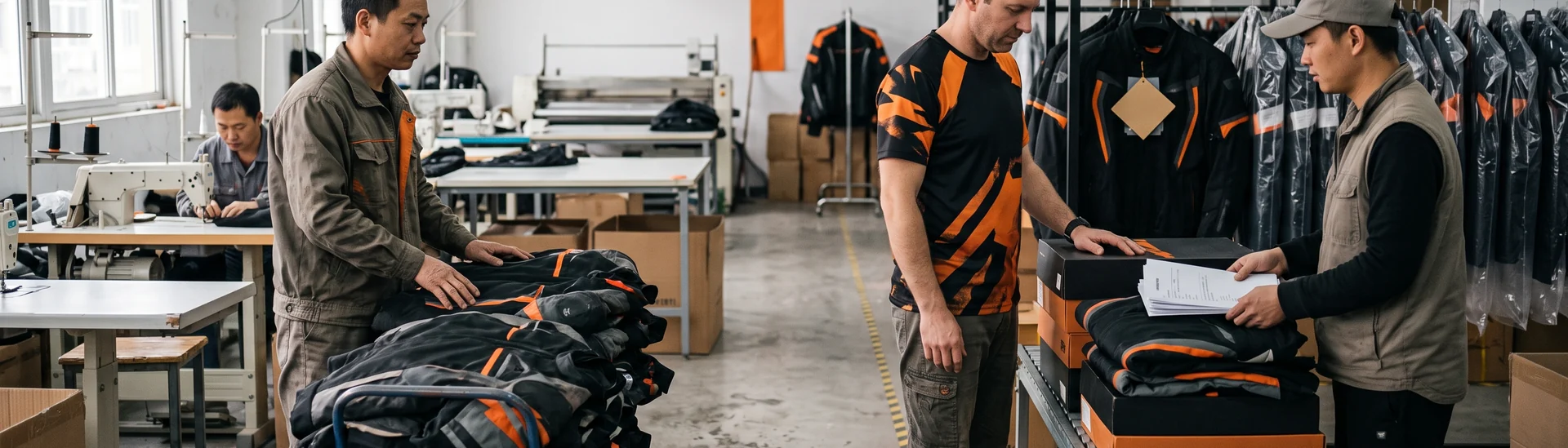
The handover point where the factory side ends and the dealership side begins
Where one side ends and the other starts

We do

  • Develop the range with you
  • Make it, and brand it in four places
  • Pack it to your plan, tagged
  • Ship it with matching documents

We do not

  • Certify protective equipment
  • Hold stock for you
  • Sell to your customers
  • Handle your retail or clearance

You do

  • Decide the range and quantities
  • Own the artwork you send us
  • Choose the armor you fit
  • Run your own shop
Six things

Dealership quote: the six things to send

Send these six and Anna comes back within 24 hours on business days with a proposed range and the branding plan.
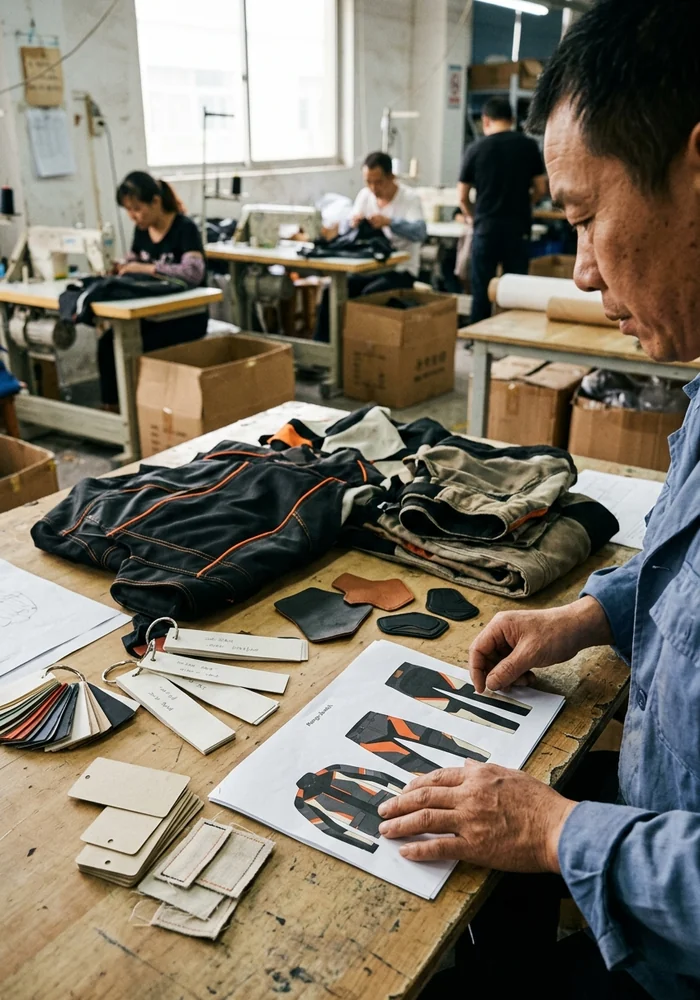
  1. Your logo

    Vector if possible; a photo of an existing garment if not.
  2. What you want in the range

    Or tell us about the shop and we propose a spread.
  3. Quantities per style

    Even roughly — it decides how the setup is shared.
  4. Label and hangtag wishes

    Woven or printed labels, hangtag style, and whether you use barcodes.
  5. Your size mix

    Or your market, and we propose a curve.
  6. The date

    Season opening, a rally or a shop event — we count back from it.
Logo files, label samples and a range sketch laid out ready to send
Six things · one email
Logo and range

Send your logo and what you want in the range, and we will come back with a spread

Anna replies within 24 hours on business days with a proposed range for your shop, where your name would go on each piece, what each branding route needs, and the lead time to your date.
Anna · Sales Manager WhatsApp / phone: +86 177 0272 7677 Email: sales@runmotoapparel.com Mon–Sat 9:00–18:00 (GMT+8)