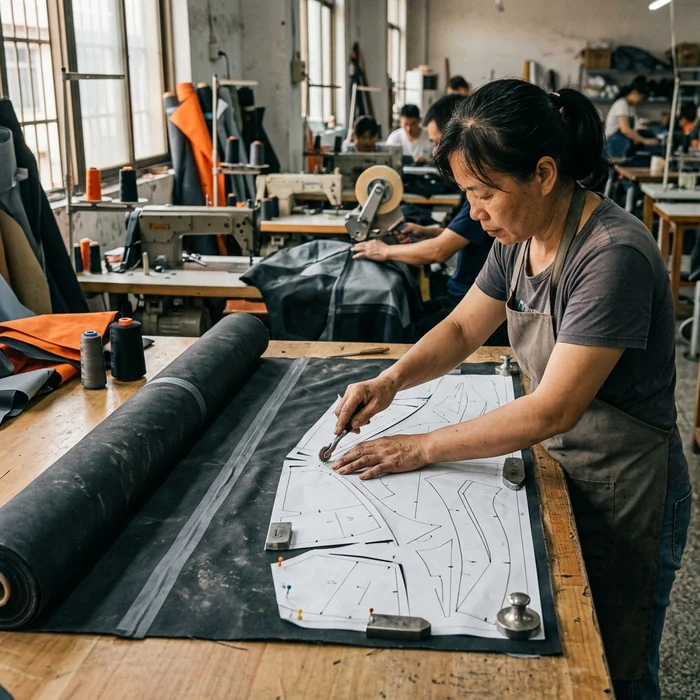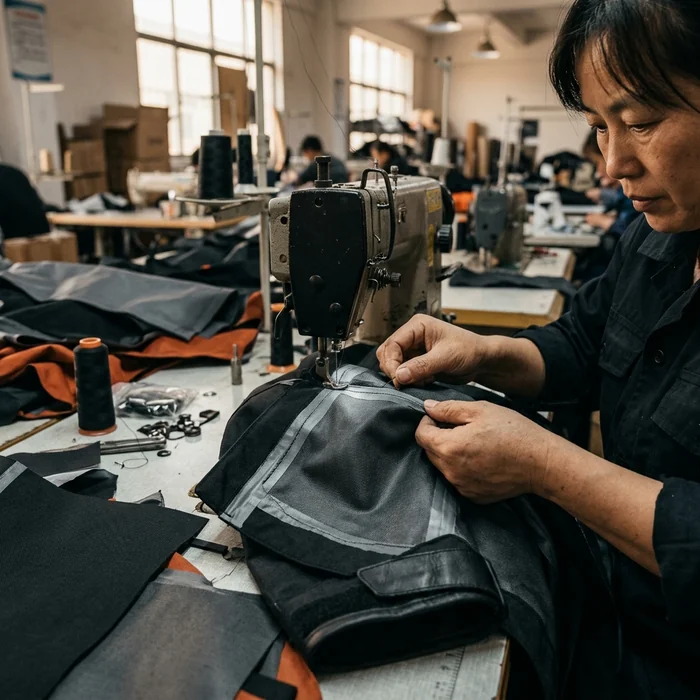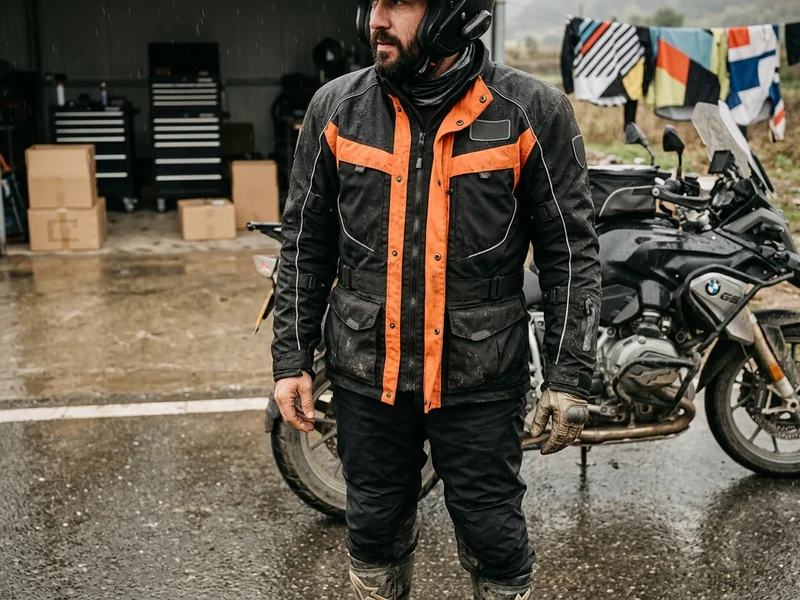
Waterproof Motorcycle Jackets
For commuting and long-distance riding in the rain.
- Waterproof membrane
- Storm flap and sealed pockets
- Adjustable cuffs
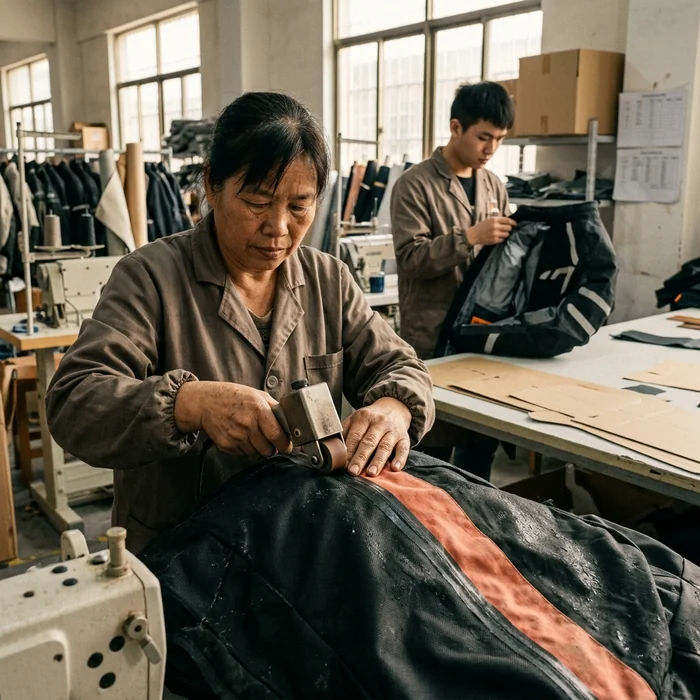
Every waterproof garment works in a shower test. The difference shows up at 100 km/h in rain that is not falling but arriving horizontally — finding the gap behind a collar, the underside of a cuff, the top of a pocket, and the one seam somebody decided did not need taping.
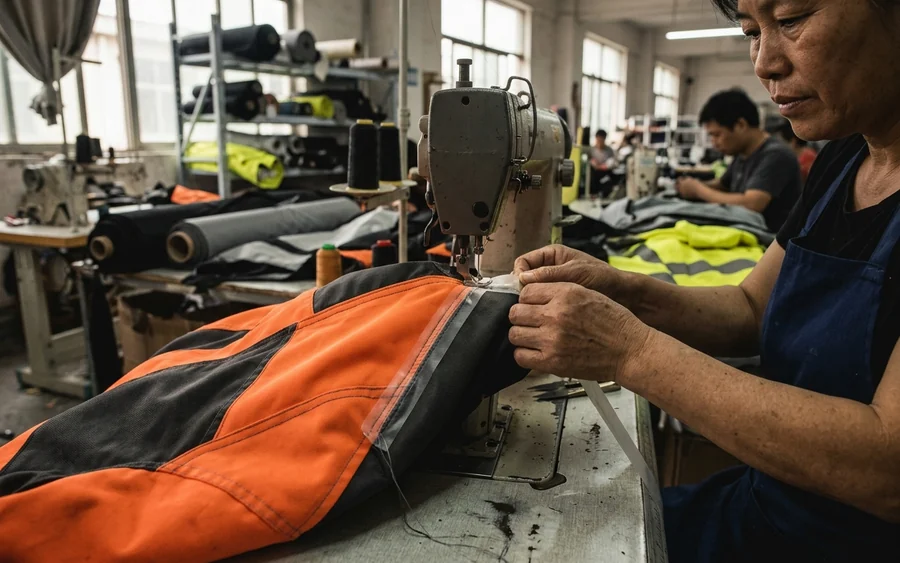
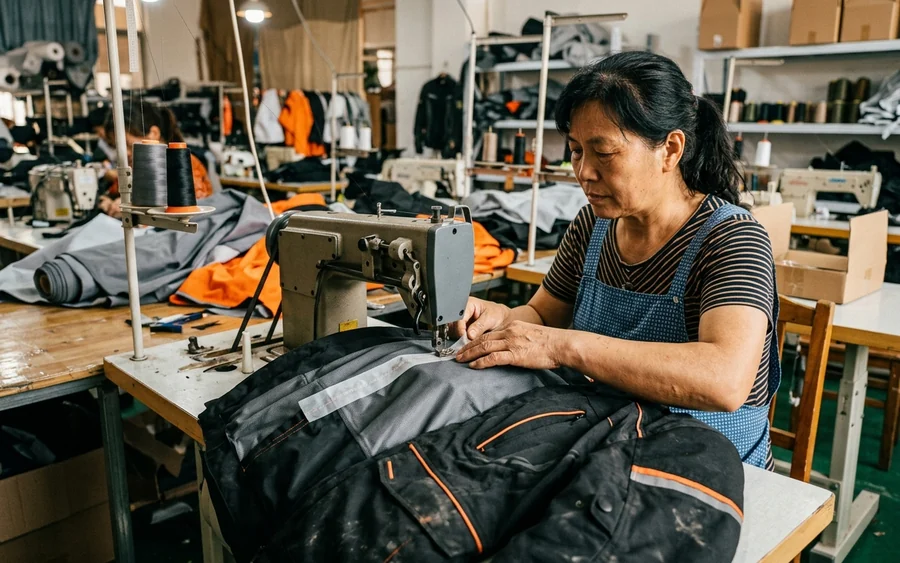
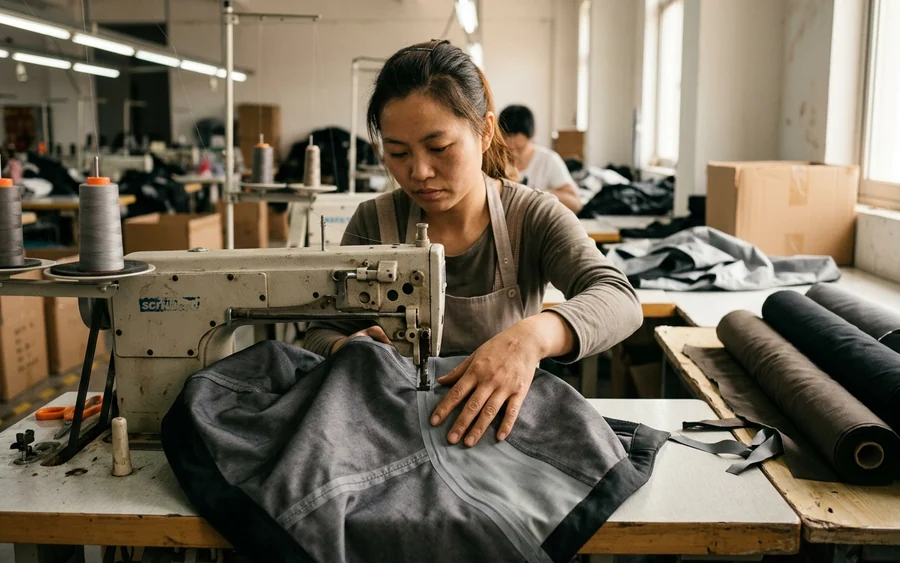
Waterproof jackets, pants, rain suits and packable outer layers developed for touring, commuting and wet-weather motorcycle programs.
For commuting and long-distance riding in the rain.
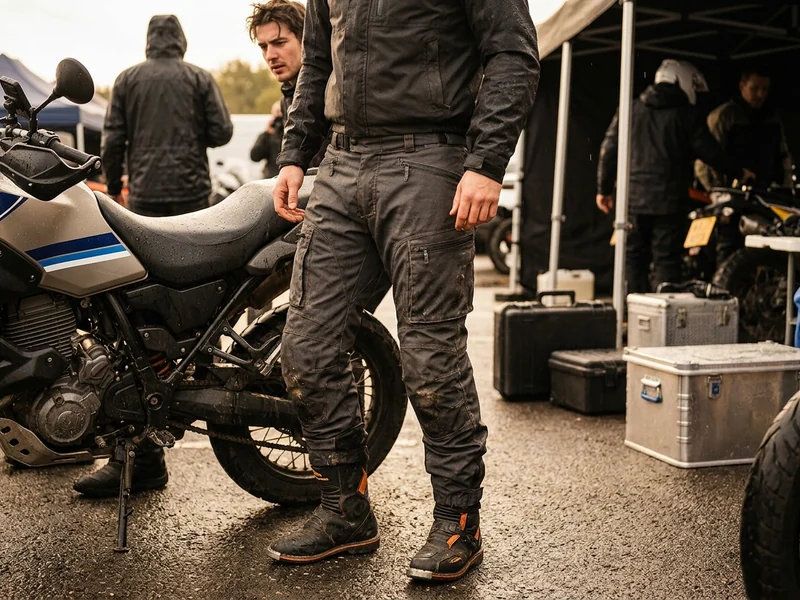
For riders who need the lower half as dry as the jacket.
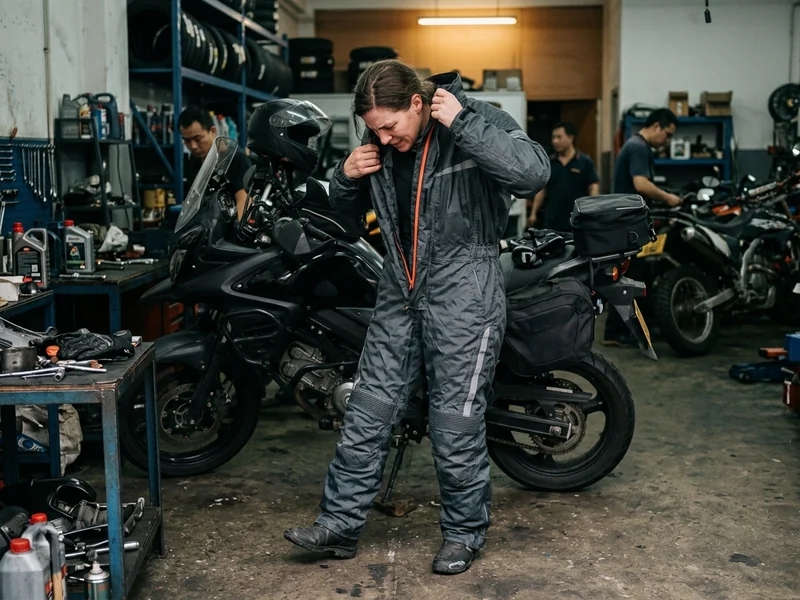
For carrying on the bike and pulling on when rain arrives without warning.
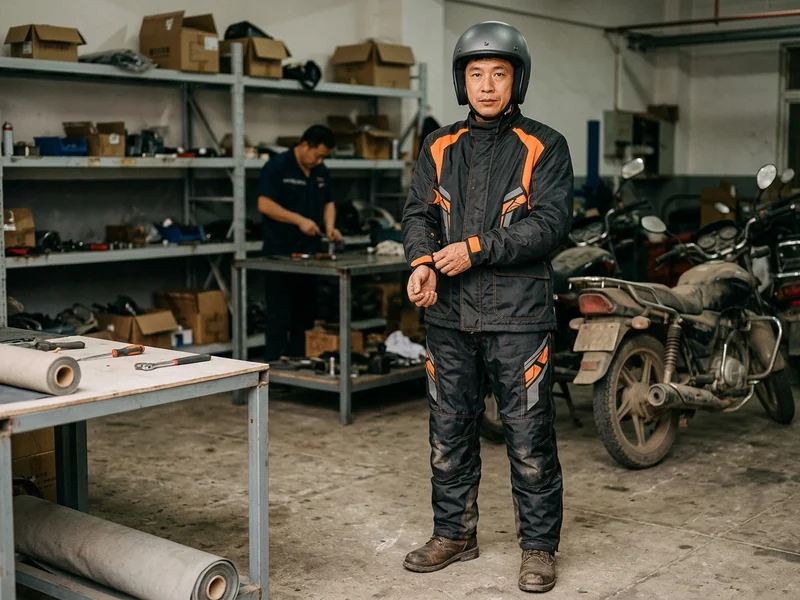
For riders who want a rain jacket and rain pants they can wear together or on their own.
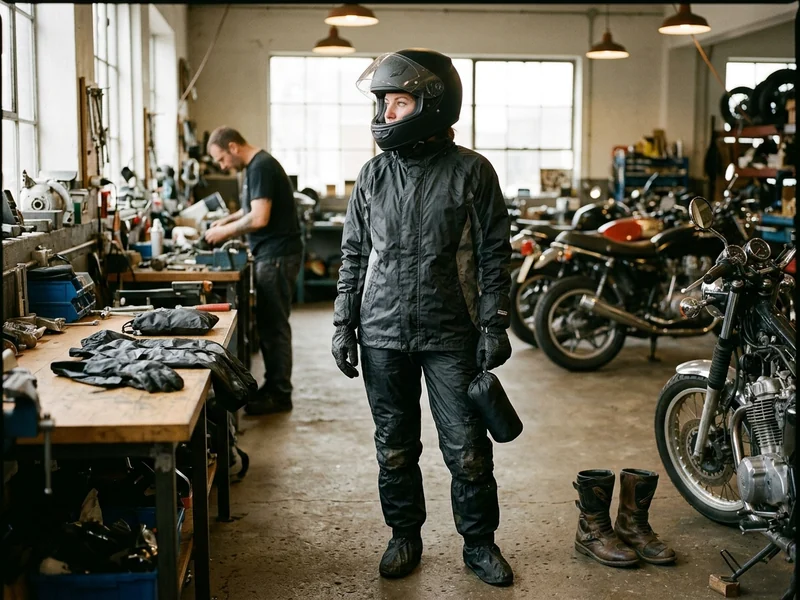
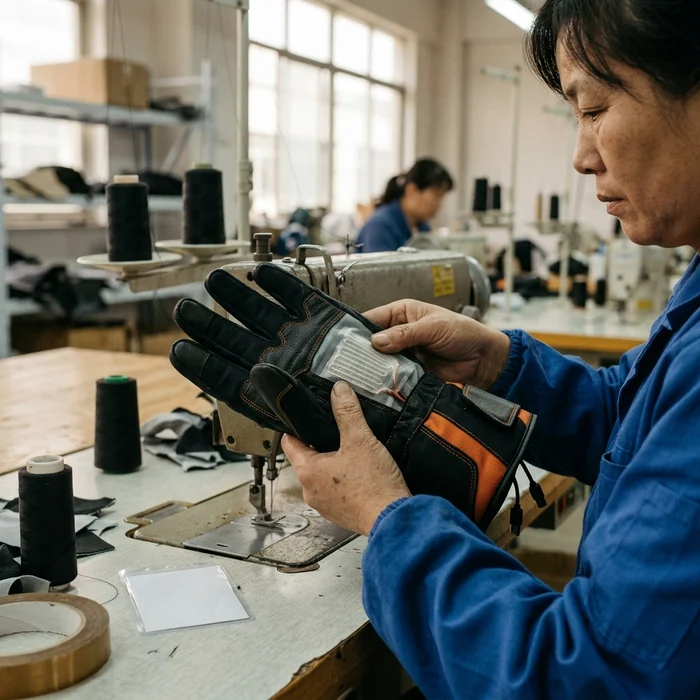
For adding rain protection to the hands and feet.
Four buyers, all judging the same garment on the worst day of the year.
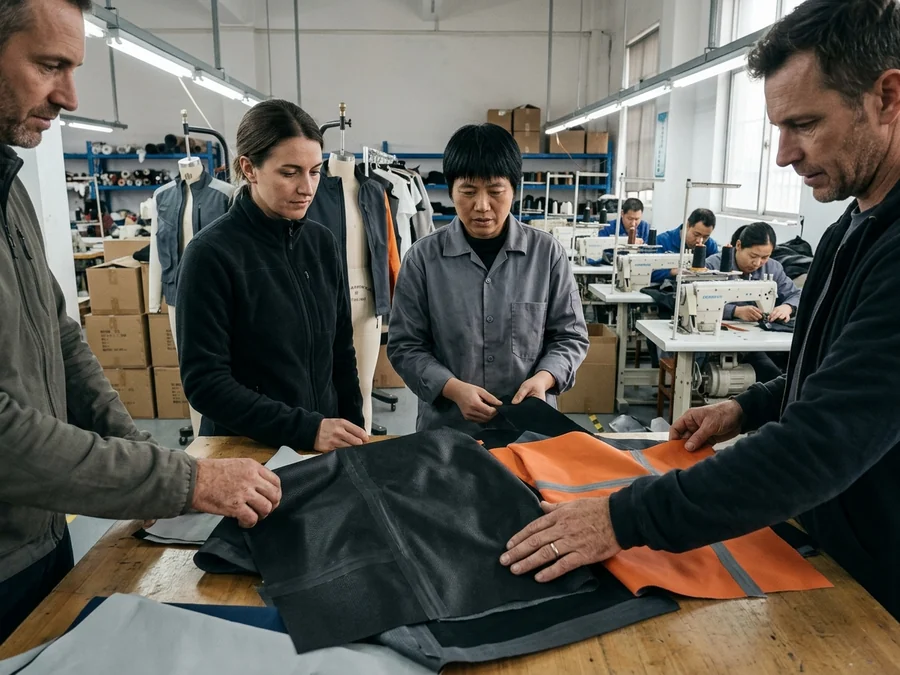
Need a laminate range that performs consistently and can be explained to a customer standing in a shop.
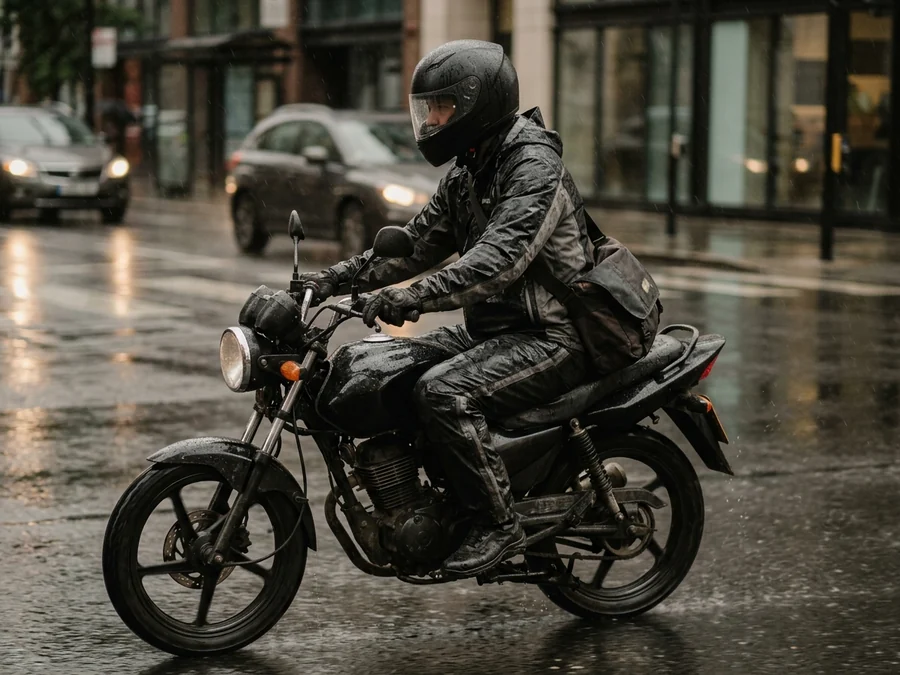
Buy for people who ride in rain daily and will file a complaint the first time a shoulder wets out.
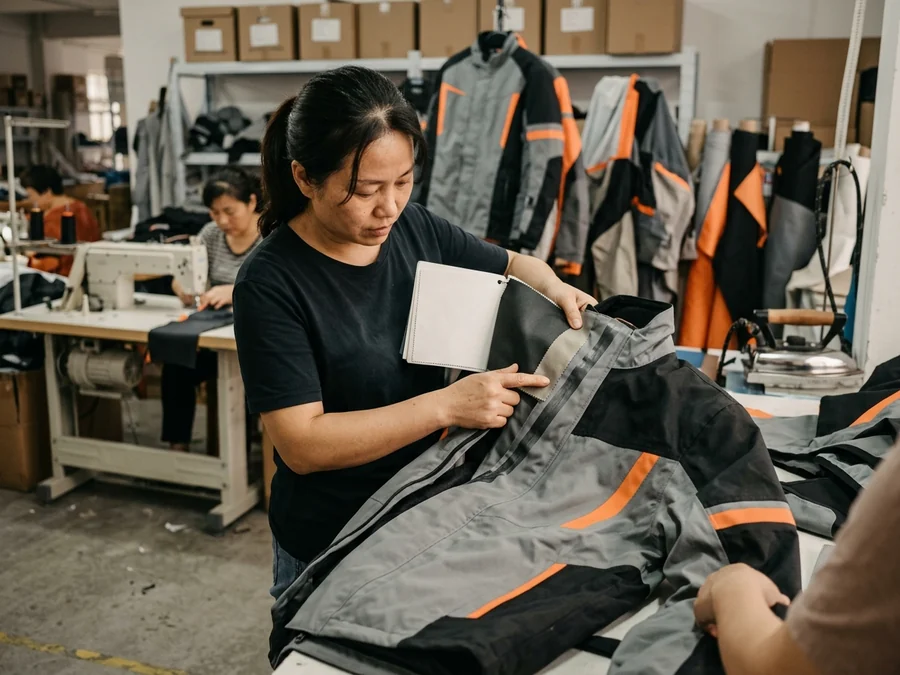
Want one honest rain piece in the range rather than three optimistic ones that all get returned.
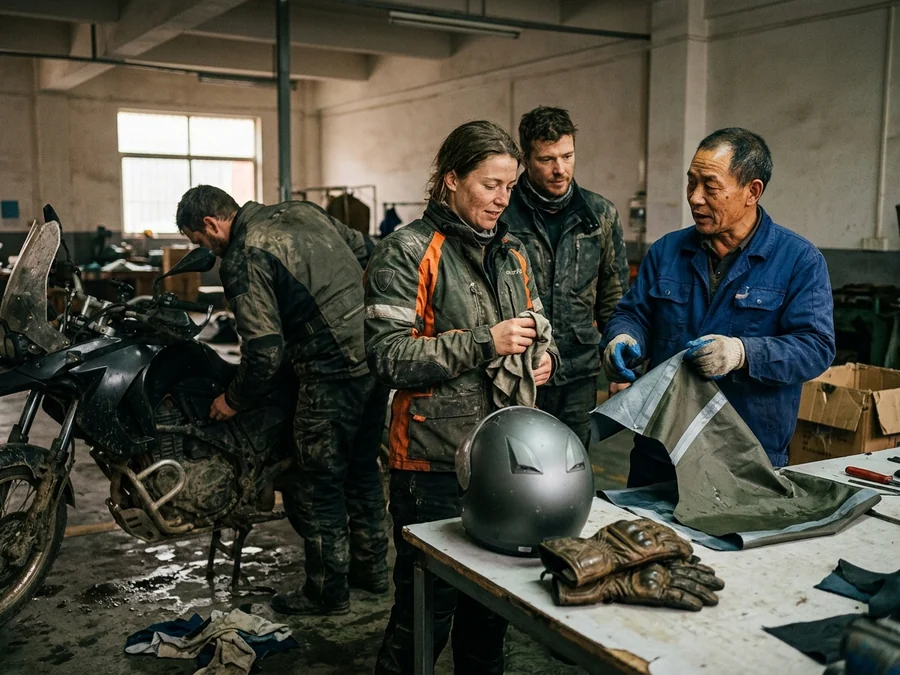
Order for long days where getting wet in hour two means being cold for eight more.
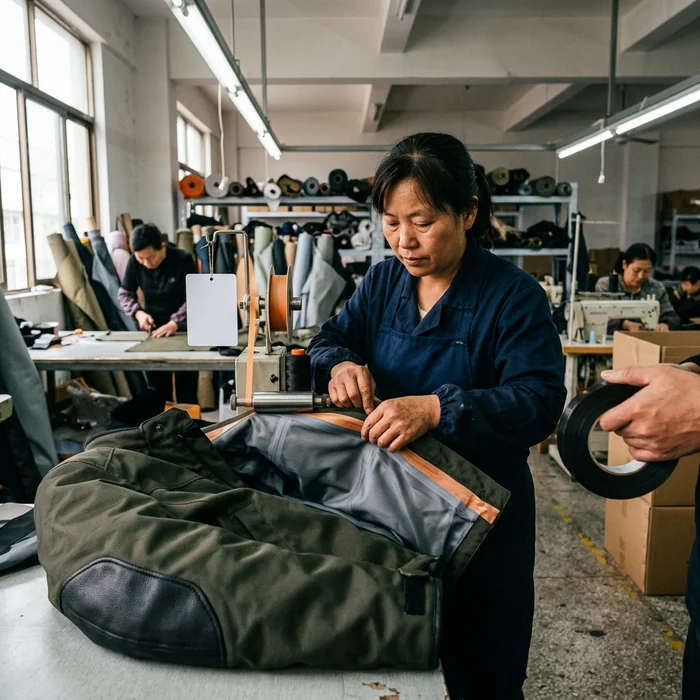
Both keep a rider dry in a test. Only one keeps a rider dry and light after two hours — and that is the honest basis for choosing.
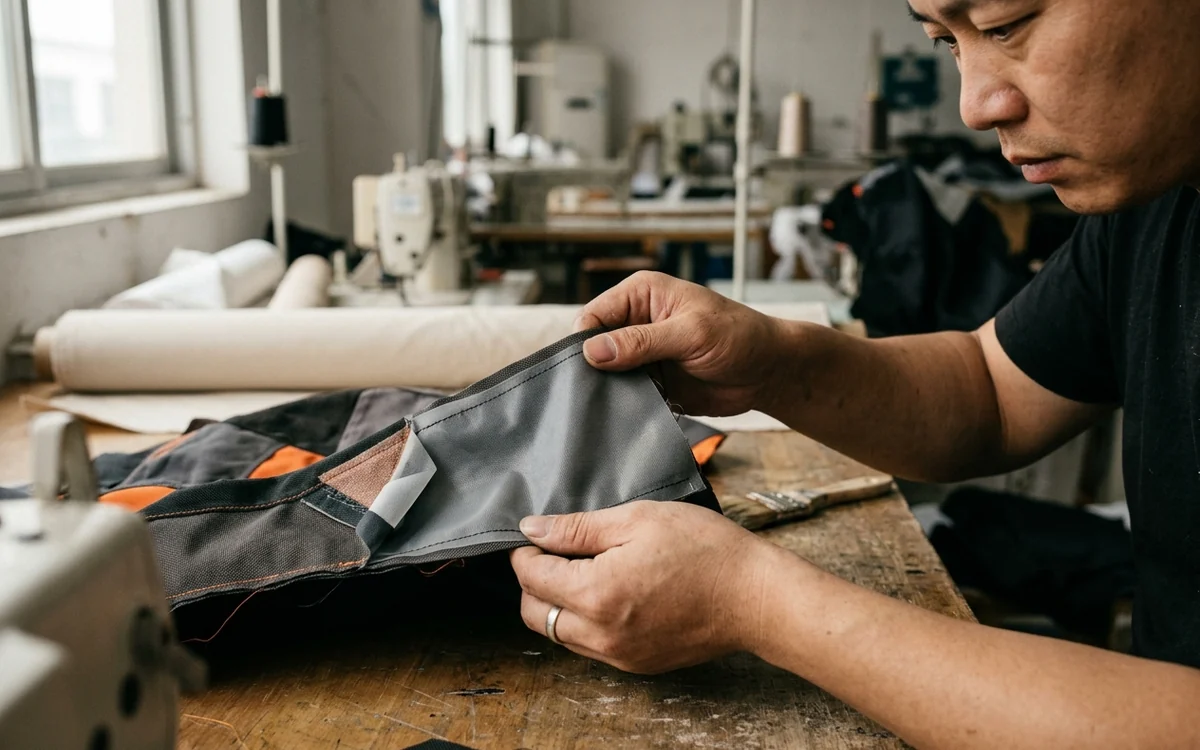
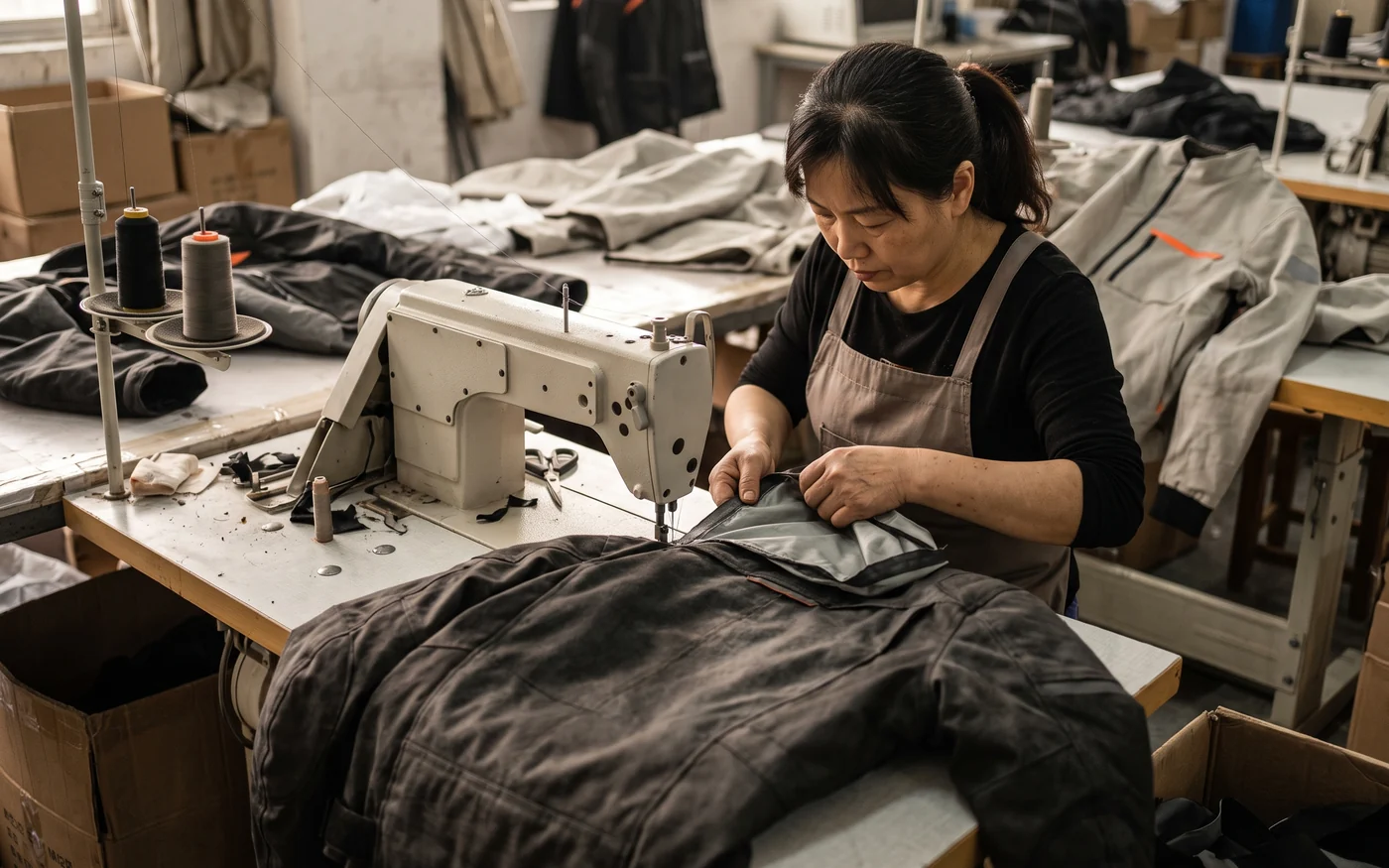
| Laminated | Drop liner | |
|---|---|---|
| Shell wets out less; garment stays lighter | Outer soaks before the membrane works | |
| Still close to dry weight | Noticeably heavier, even with a dry rider | |
| Thinner assembly, less forgiving of a bad seam | Cheaper and more flexible in production | |
| Riders out in rain for hours | Occasional rain, price-led ranges |
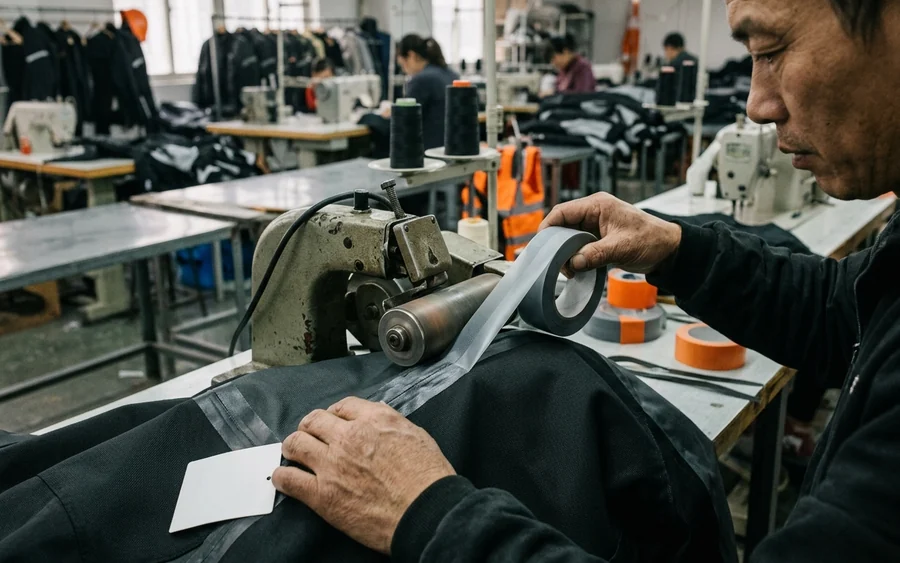
A needle makes a hole every few millimetres. Critically taped means the main seams; fully taped means all of them — both exist, and only one is usually what a customer assumes they bought.
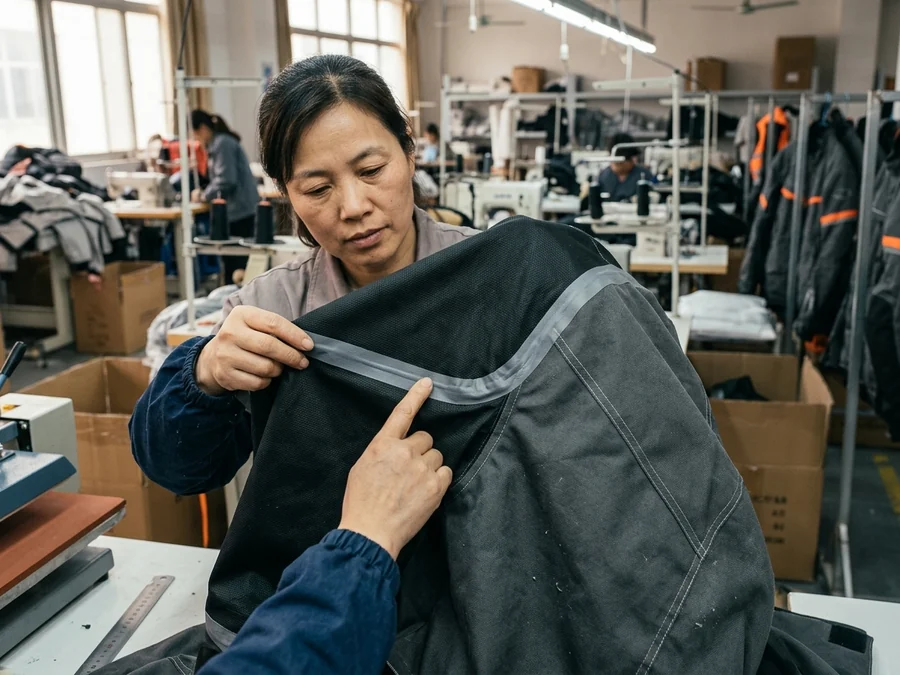
Too narrow and the stitch line is not covered; too wide and it bunches on a curve.
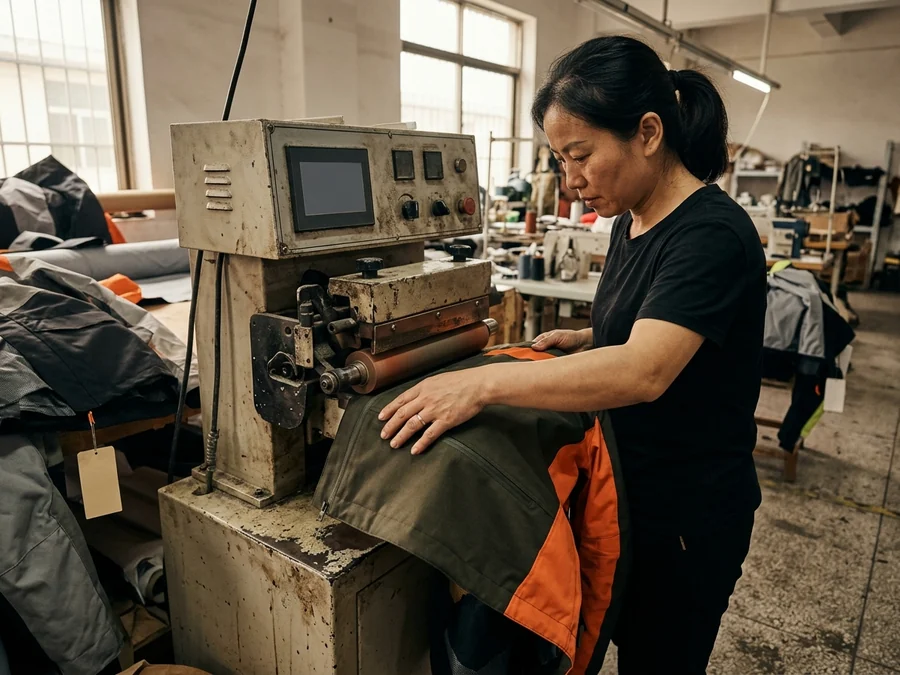
Temperature and pressure written down per fabric, not carried over from the last job.
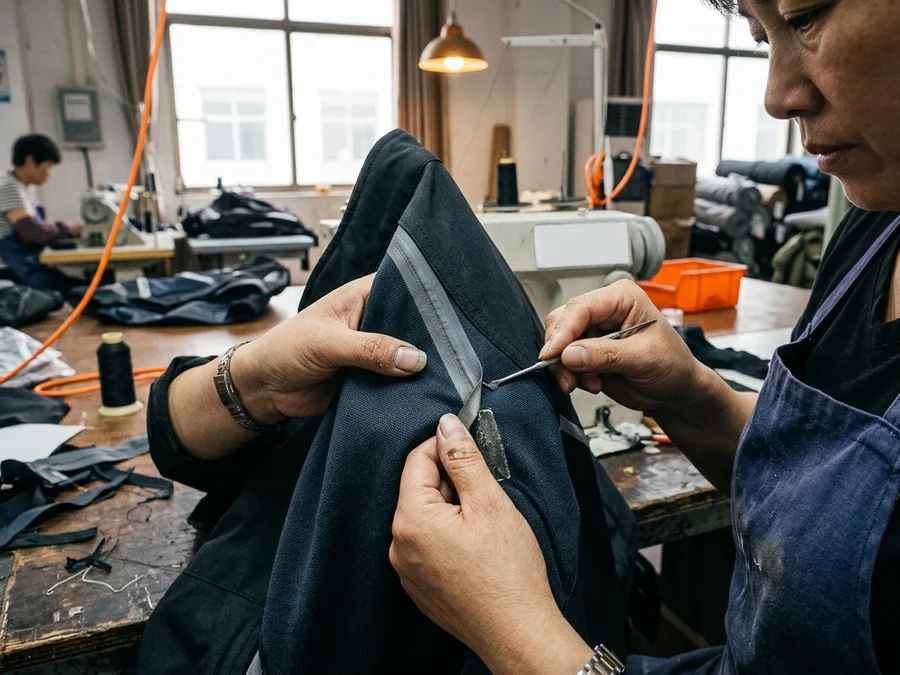
The ends of each run are the first thing to peel, so they are finished rather than trimmed.
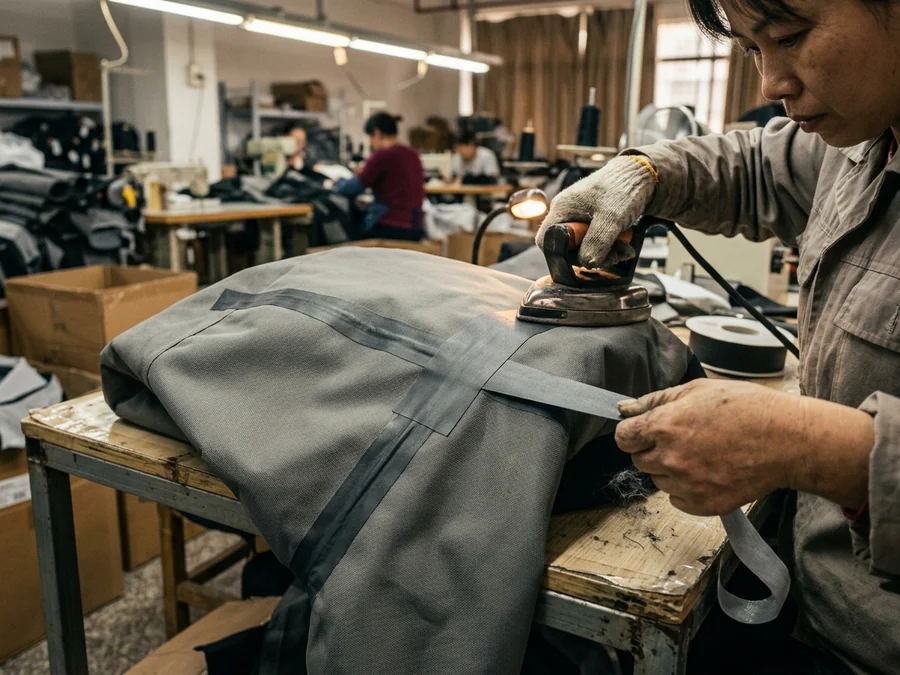
Where two taped seams meet, the tape has to bridge a step. This is the one that catches people out.
Scroll: they light up in the order water finds them. None of them is the middle of a panel — and a garment is only as waterproof as the worst one.
A specification that lists a membrane rating and stops there has described the easy part.
A rider who is wet from the inside is still wet
Waterproof and breathable pull against each other, and any garment is a position between them. Riding makes it harder: the rider is working, the air is moving over the outside, and the temperature gap that drives moisture out changes every few minutes.
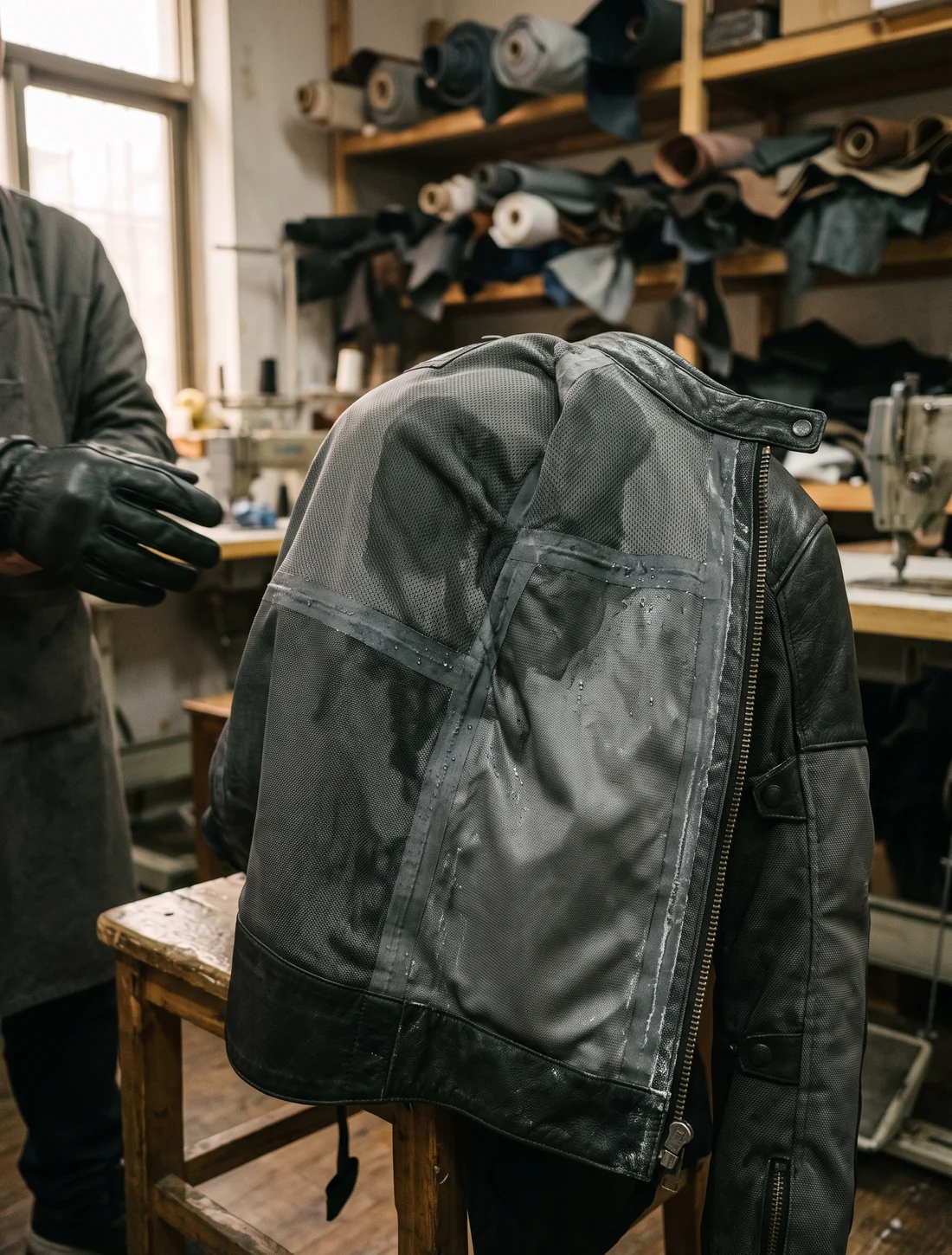
Opening a hole in a waterproof garment is easy. Opening one that still keeps water out, in the airflow of a riding position, is not.
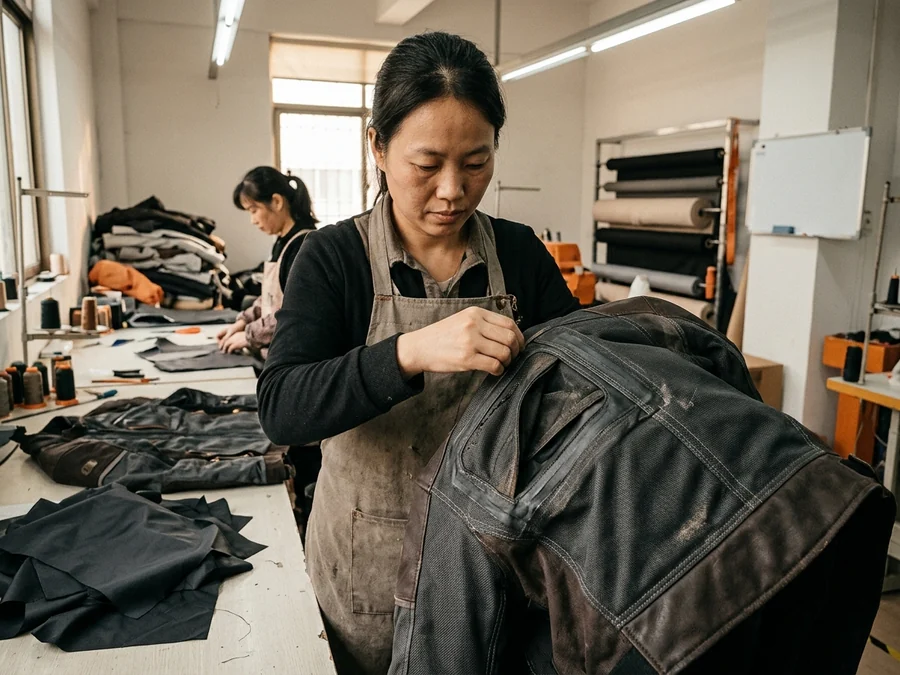
Positioned so air actually crosses the body rather than entering a dead pocket and sitting there.
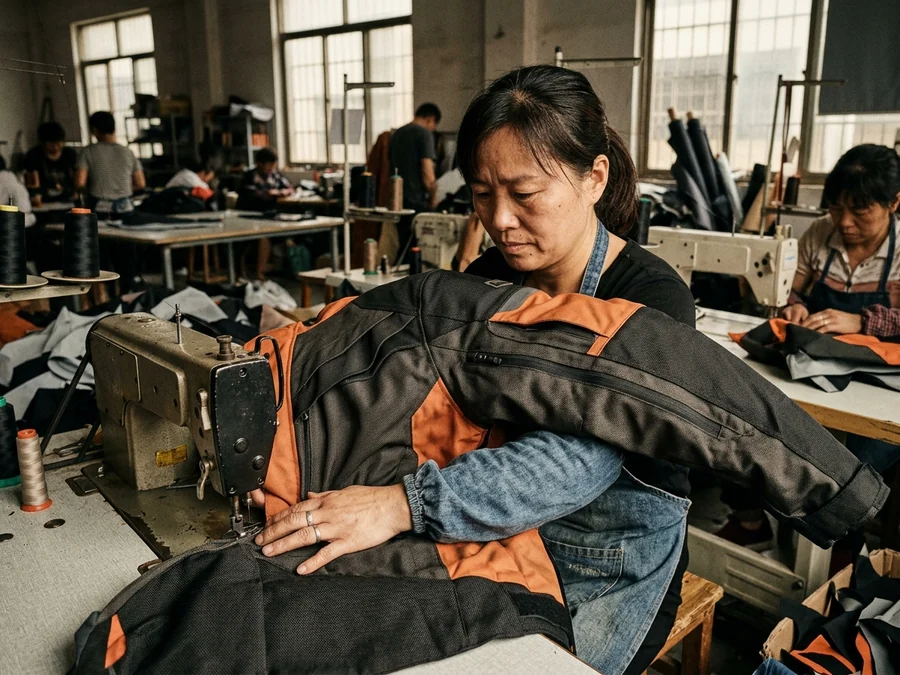
In the airflow at speed, and out of the path of water running down the sleeve towards the cuff.
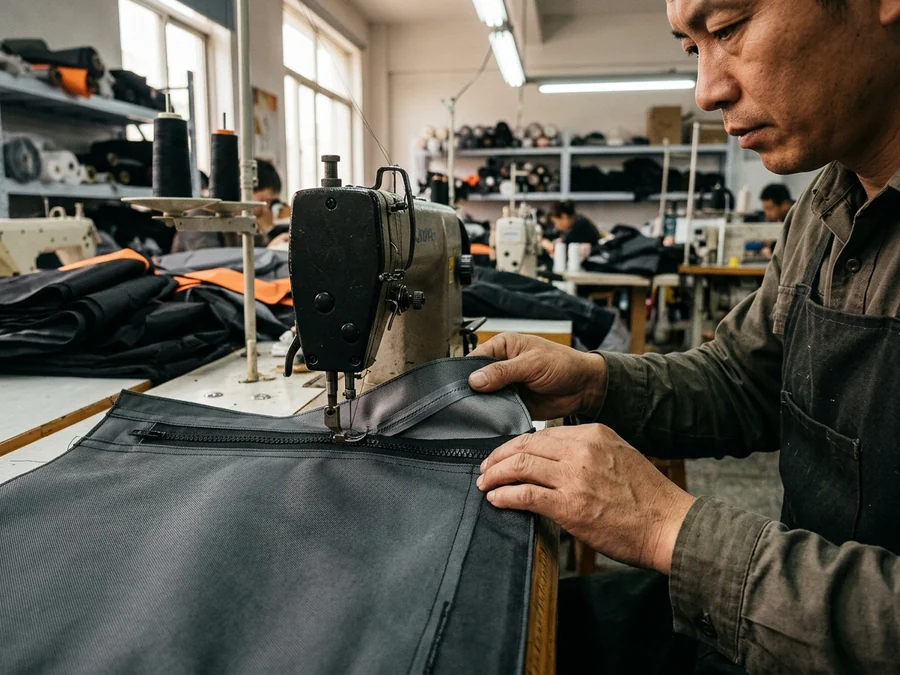
So a vent can be shut and stop being a hole — which is the entire difference between a vent and a leak.
A touring garment is worn in four seasons, and the layers are what make that possible
A removable thermal liner turns one jacket into two garments — but only if the outer fits properly without it. The common failure is a jacket cut around the liner: with it removed the garment is loose, flaps at speed and lets water in at the cuffs.
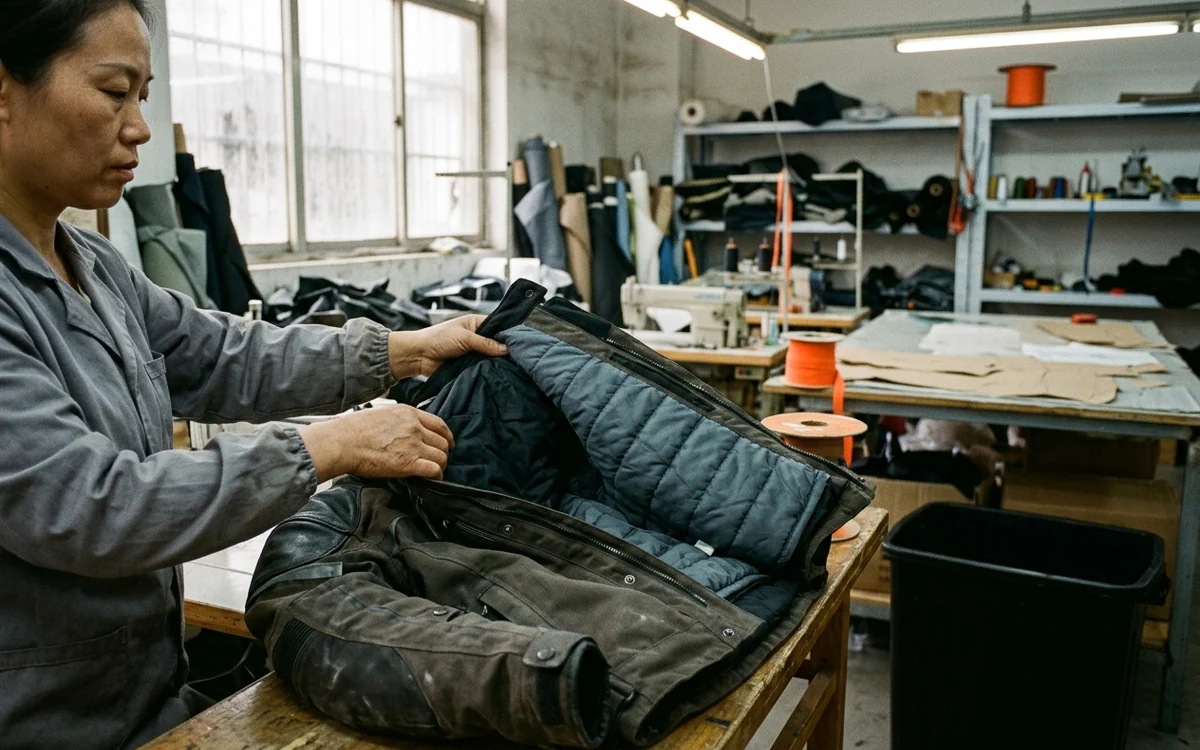
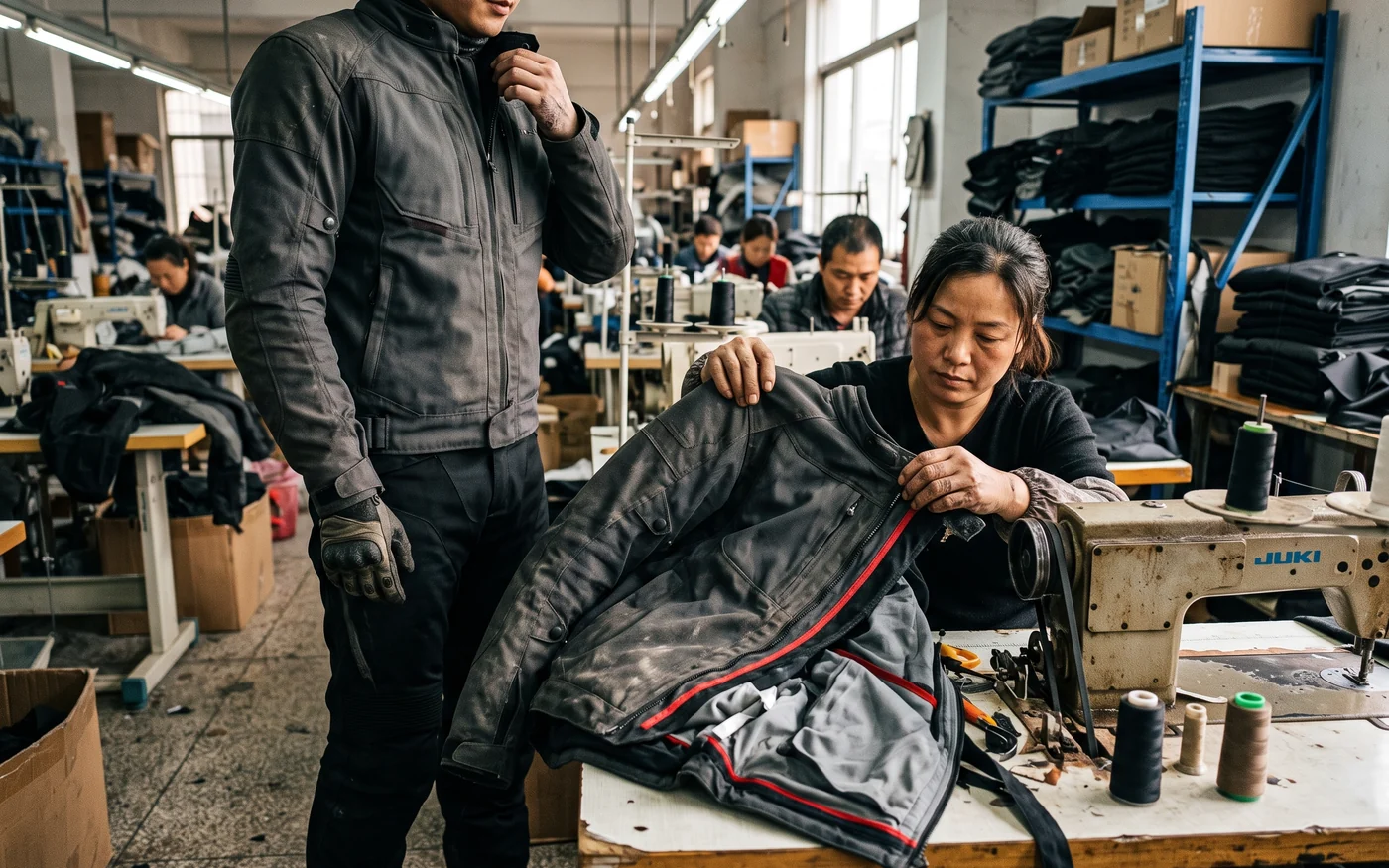
Pockets are holes in an inner layer, and they have to stay there
Shoulder, elbow and back pockets sit inside the garment, and their construction has to keep every needle hole out of the membrane layer. On a laminate this is one of the two or three decisions that separate a factory that has made waterproof gear from one that has made jackets.
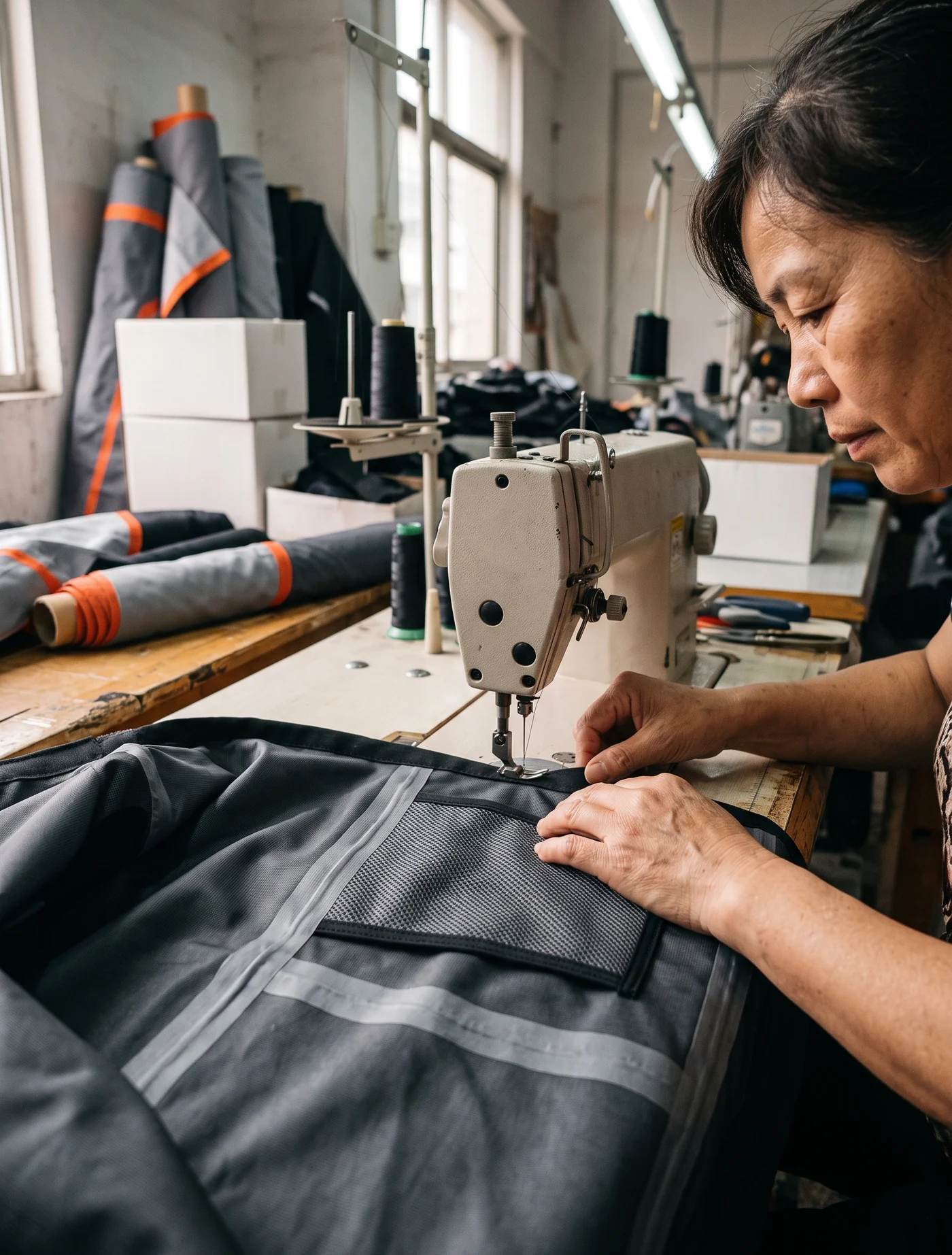
A spray test proves the fabric. Only a garment test proves the garment — and they are two different documents from two different people.
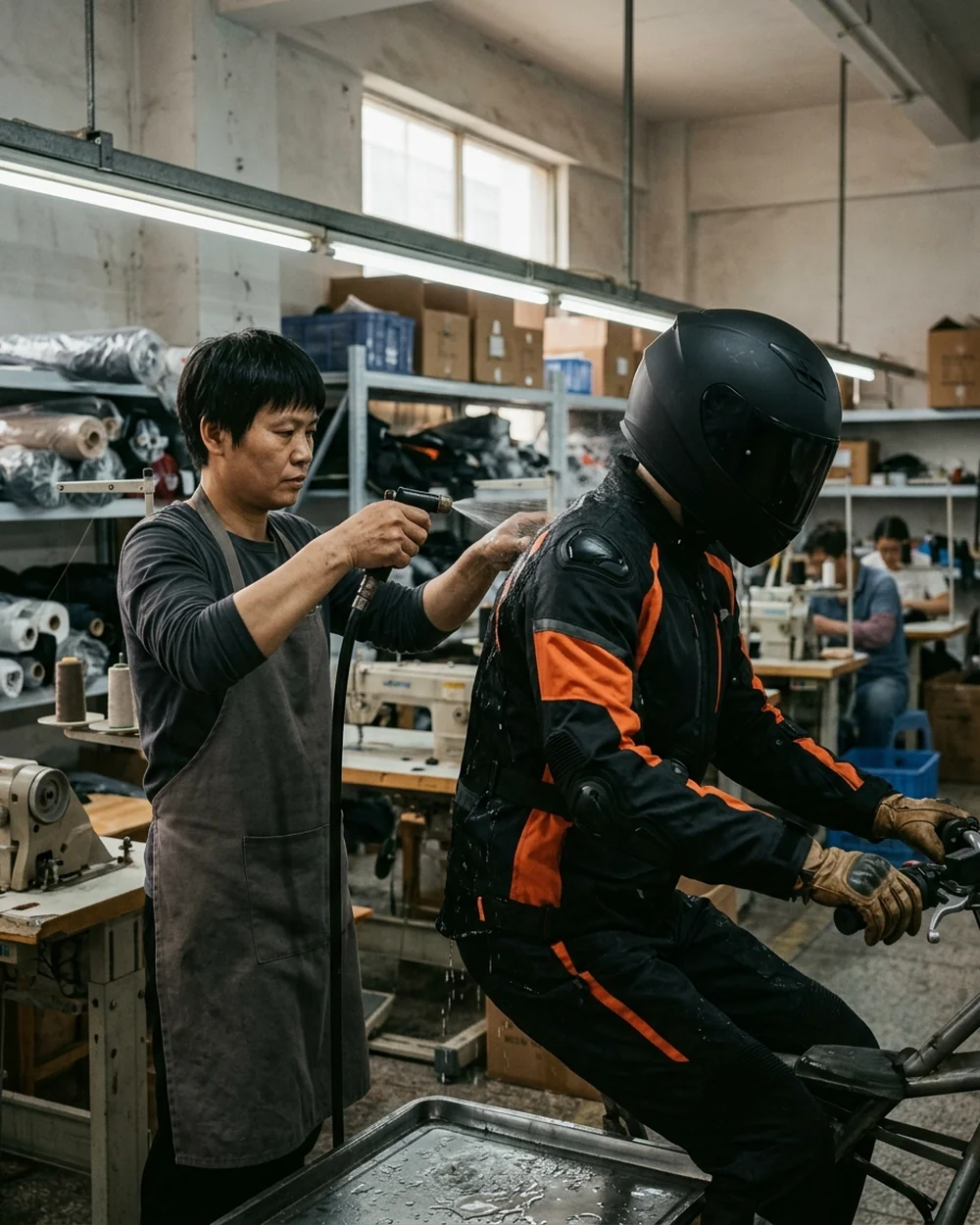
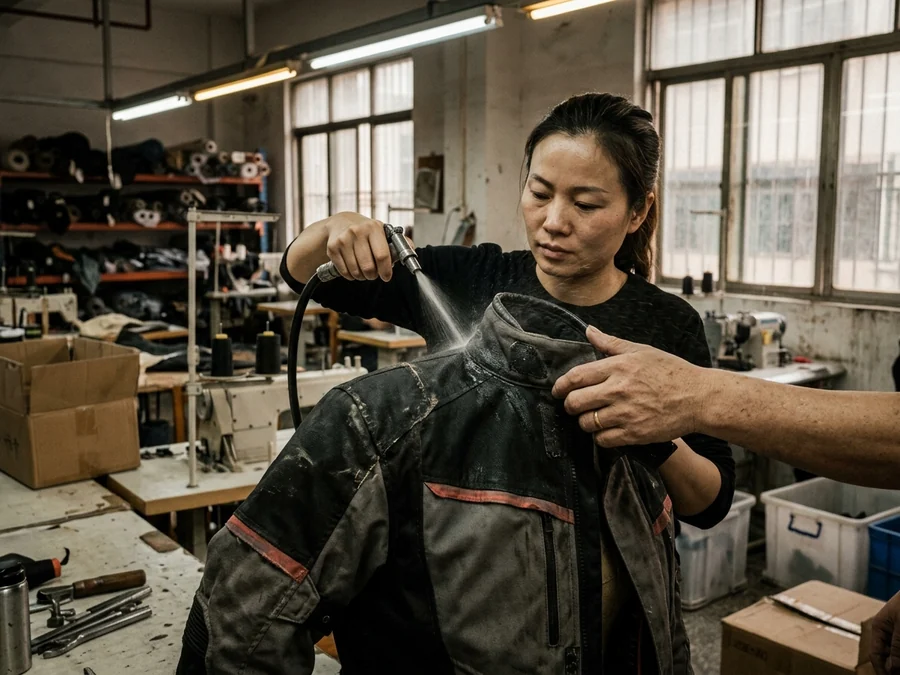
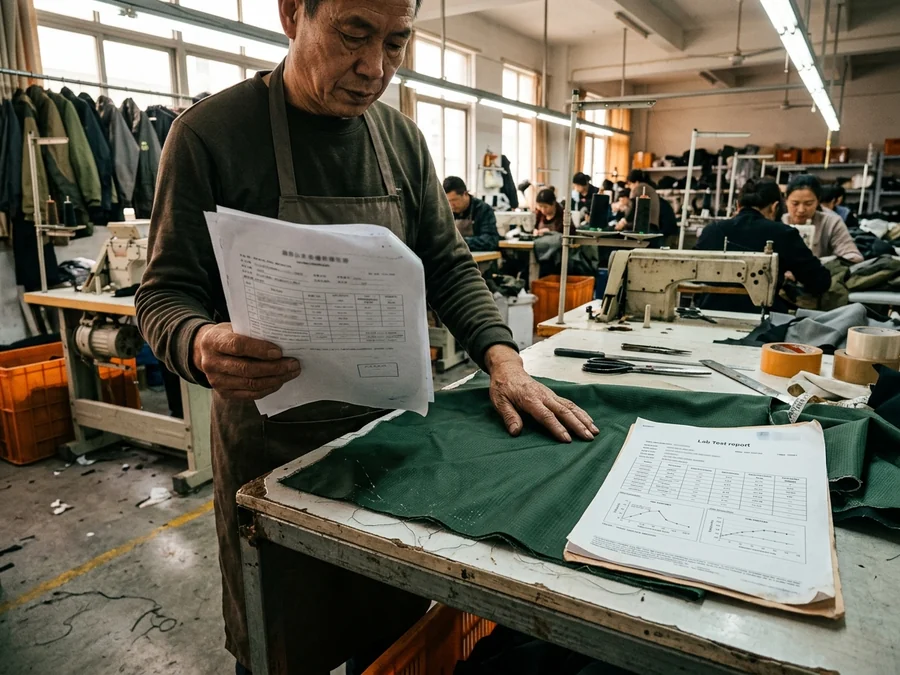
Fabric ratings come from the mill and describe a piece of fabric, not your jacket. A garment is checked as a garment: water directed at the collar, the cuffs and the pockets from the angles a rider meets them, with the garment on a form in a riding position rather than flat on a bench.
We do not publish a waterproof rating as if it were ours. The fabric figures belong to the mill's test report, which we can pass on. The garment-level claims that go on your packaging should come from a test you commission and own.
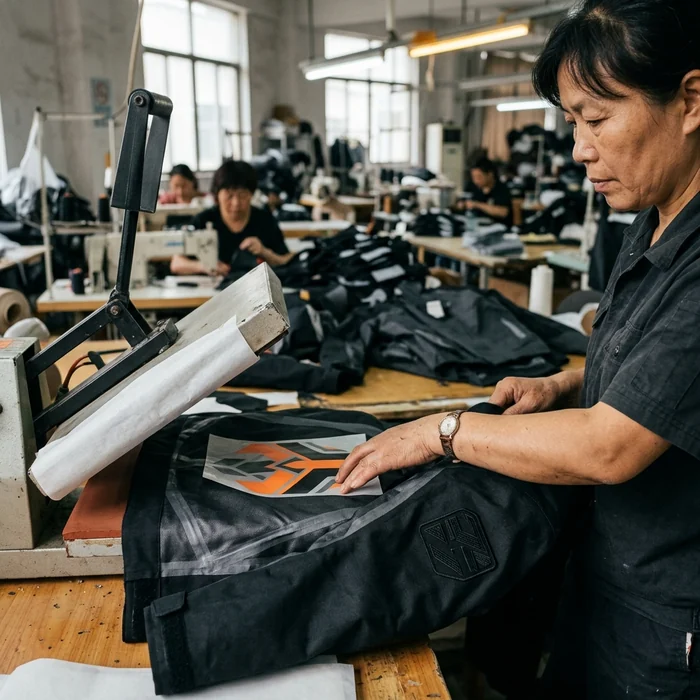
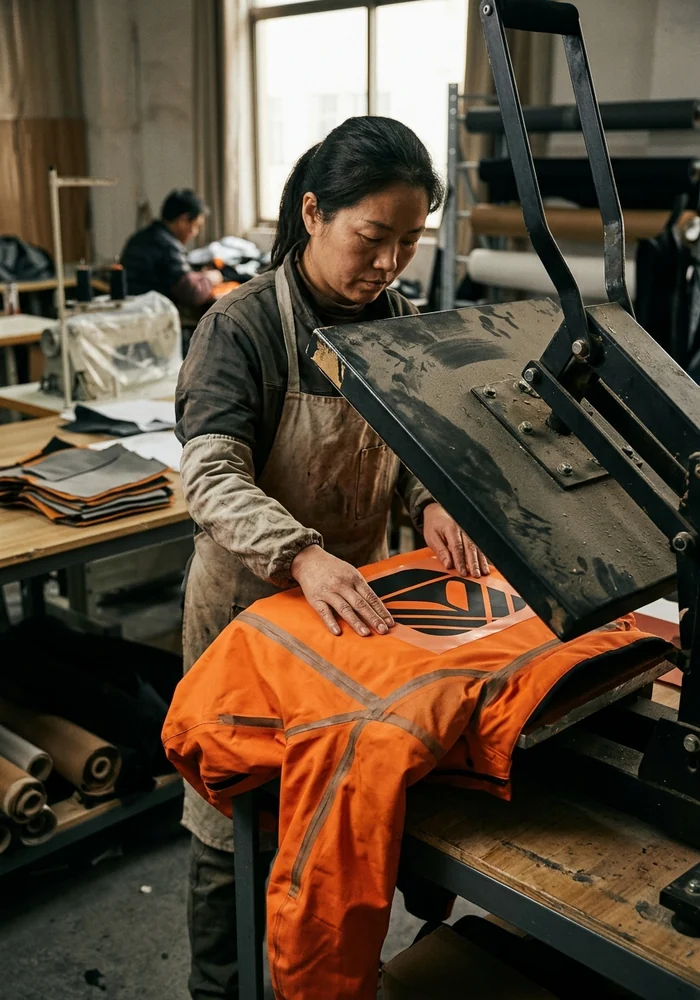
Every embroidery stitch is a hole through the laminate, so marks on waterproof shells are heat transfers — four films, each pressed with settings recorded per fabric.
Where the days go, and which changes are still free.
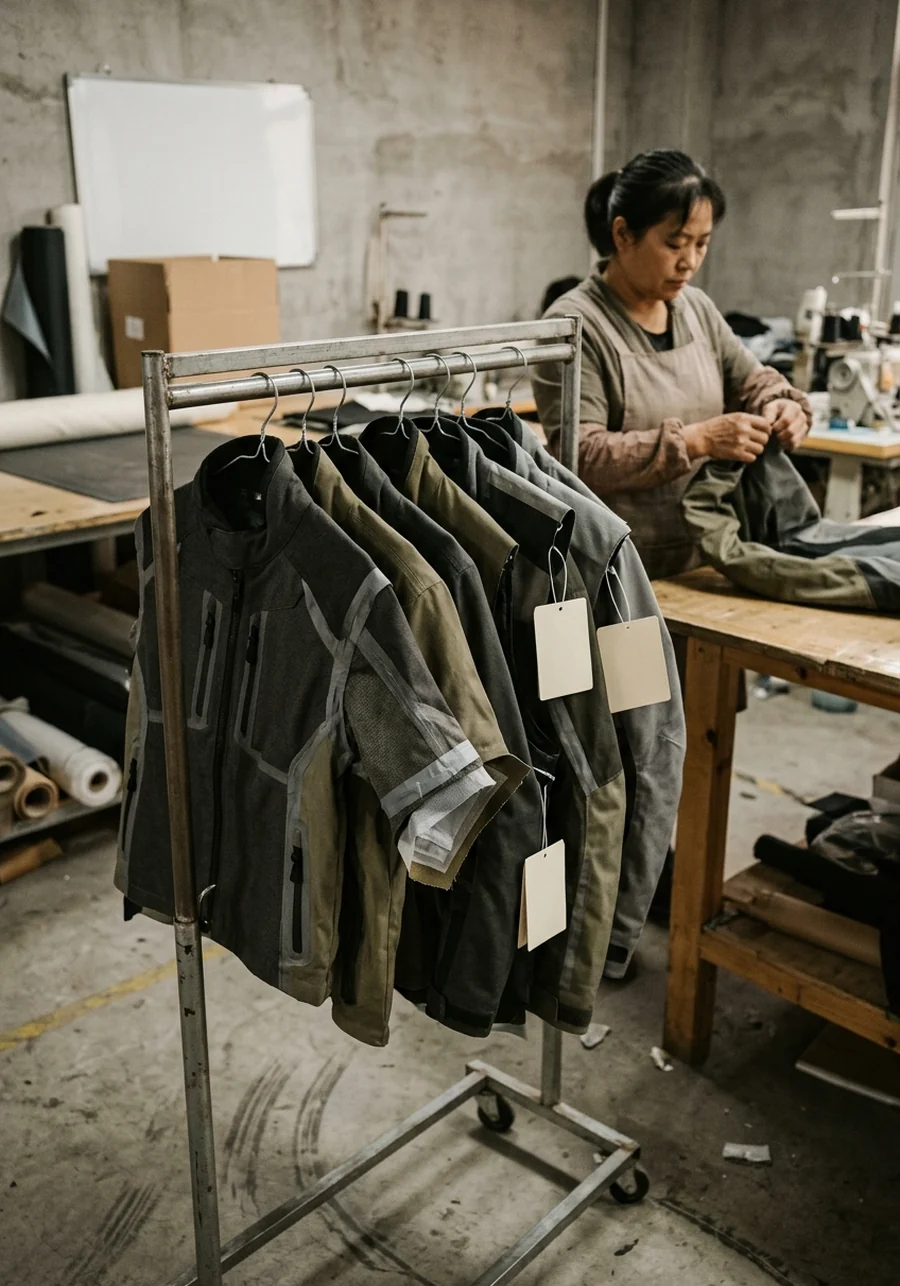
Send these six and Anna comes back within 24 hours on business days with the construction and the taping level.
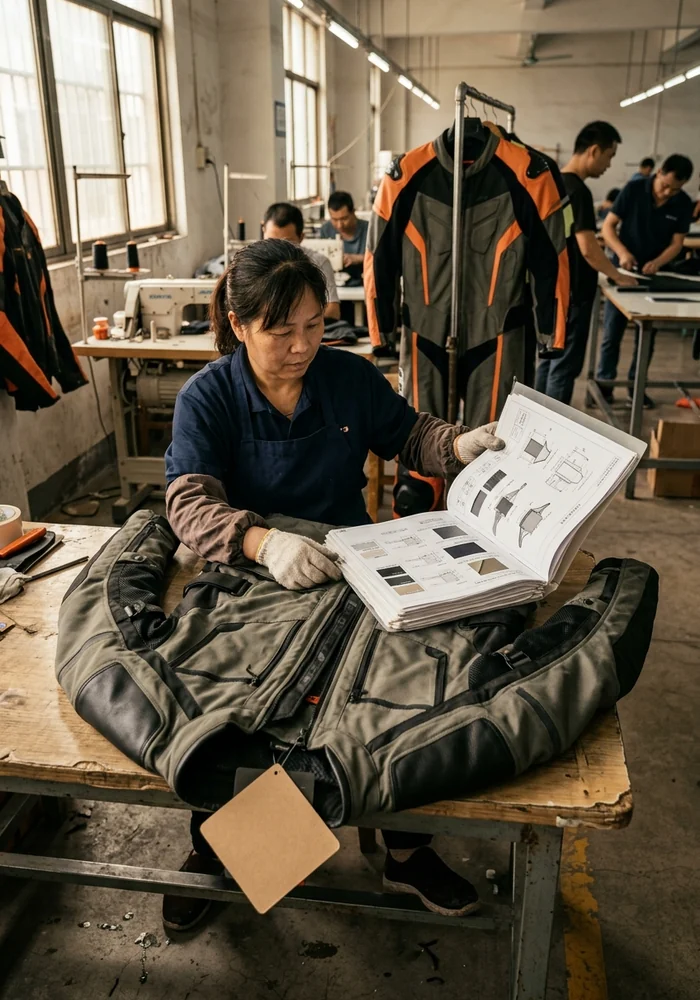
Where the pattern, the decoration and the related garments live — and where the same membrane logic turns up at a smaller scale.
Anna replies within 24 hours on business days with the construction we would build, the taping level, what the vents and closures need to be, and the lead time to your date.