Emerging riding-gear brands
A first line of 2–5 SKUs from a reference garment and a mood board, sampled in size M, produced at 50 pieces per style, with the patterns archived for the second run.
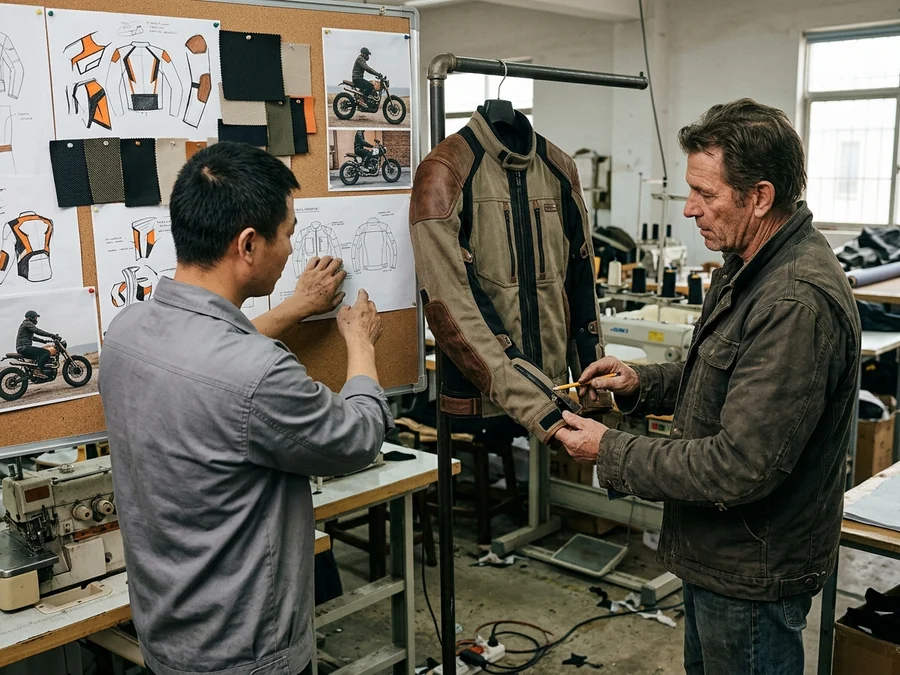
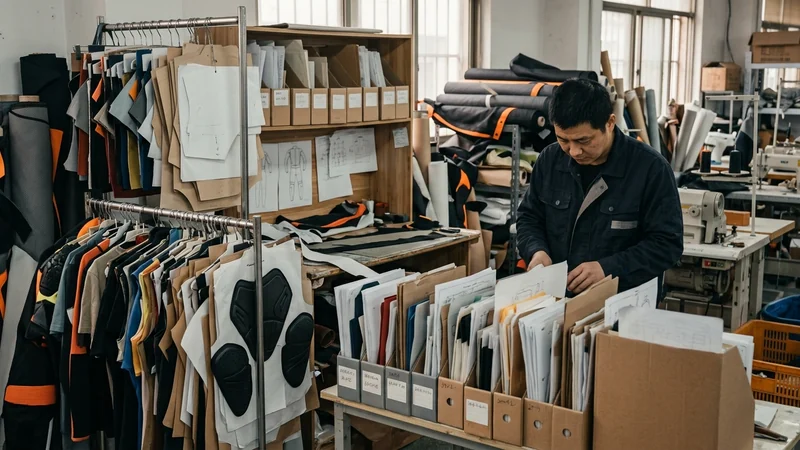
Start from a reference garment
Nine stages a product manager can follow on one sheet. The OEM/ODM development process at Run Moto Apparel, an OEM motorcycle apparel manufacturer since 2011, takes a riding-gear brand from a tech pack or a reference garment to an approved sample and a first run: one shared base block, a sample in your core size in 15–20 days, your label set at the sample stage, bulk from 50 pieces per style.
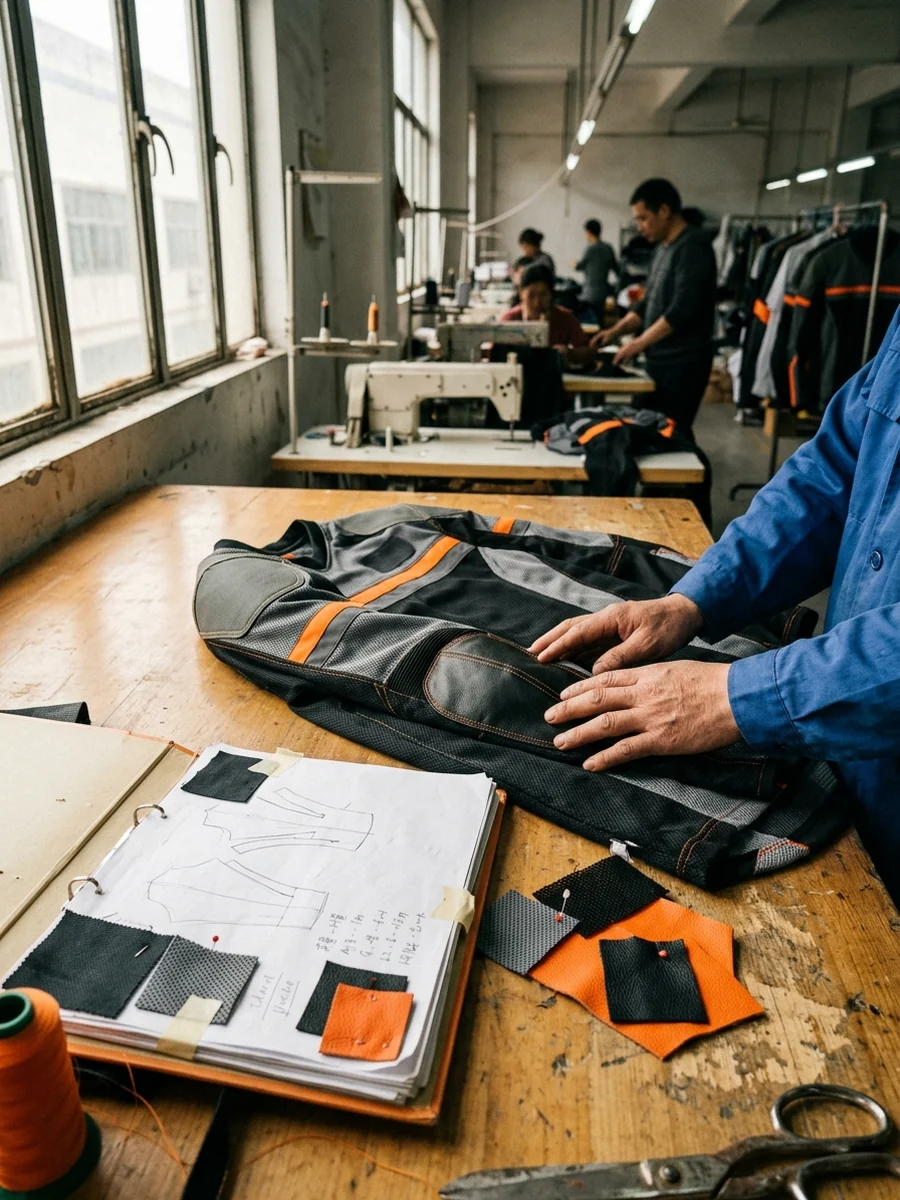 Tech pack · swatches · first sample
Four buyers of the OEM/ODM development process, each with a label to put on the garment and a different amount of paperwork behind it.
A first line of 2–5 SKUs from a reference garment and a mood board, sampled in size M, produced at 50 pieces per style, with the patterns archived for the second run.
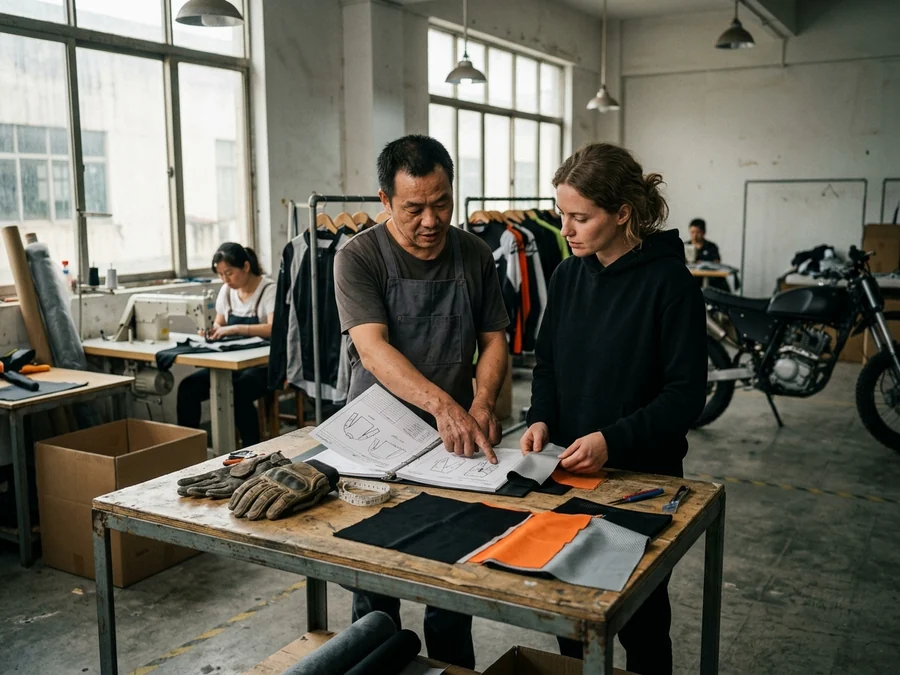
A jacket, glove or jersey line developed from a full tech pack to sit next to an existing range, on a base block that matches the fit the brand already sells.
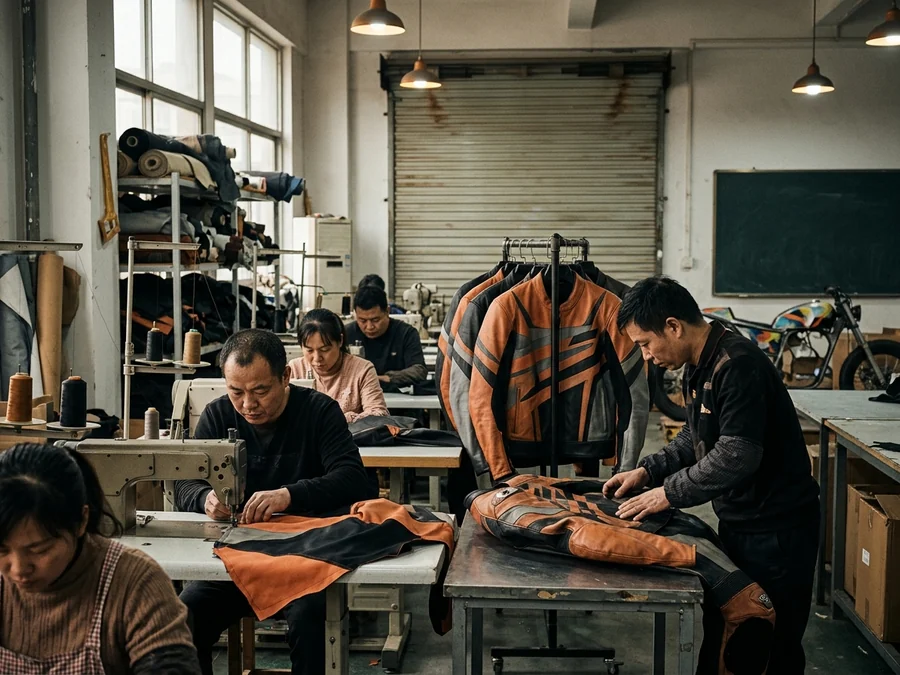
A store line in store colors, developed from a reference garment the dealer already stocks, sized for the dealer's market.
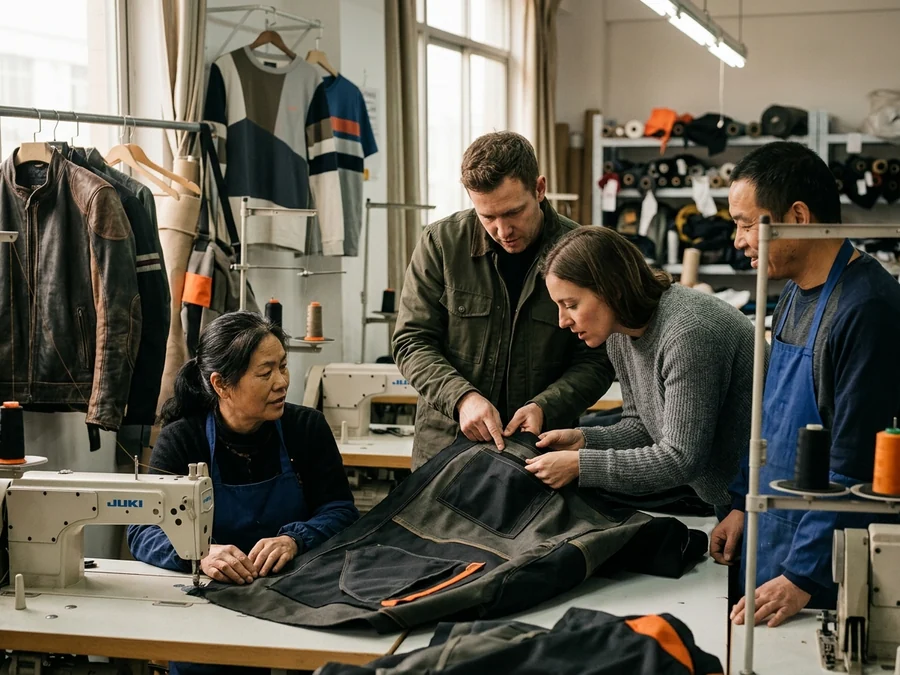
A brand with apparel experience but no armor pockets, membranes or leather; the tech pack is read for what it does not yet say.
Both arrive at the same base block; the first stage of the OEM/ODM development process is different, and so is what we ask for
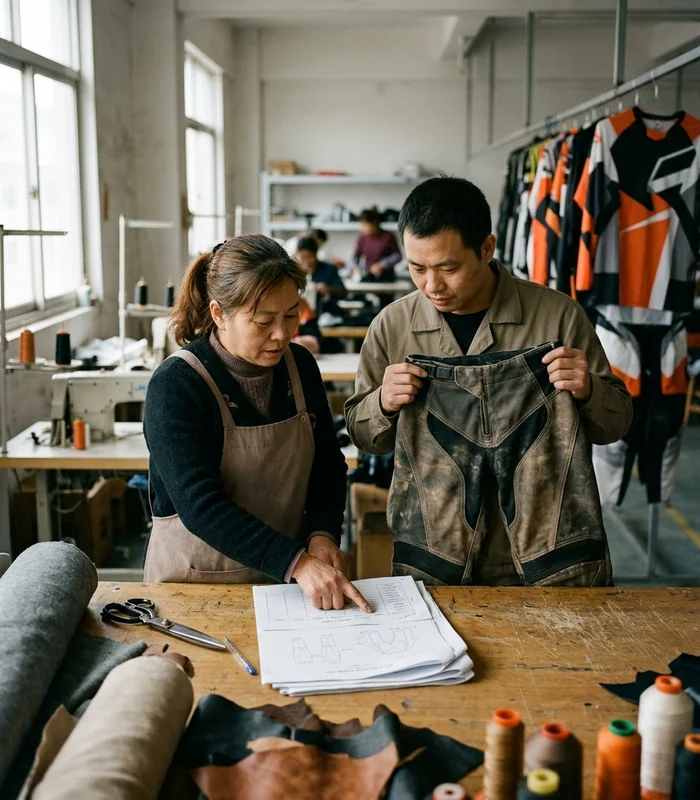
The tech pack is read line by line: measurements, materials, trims, construction notes, label positions. Questions come back within 24 hours on business days, in the tech pack's own numbering, before anything is drafted.
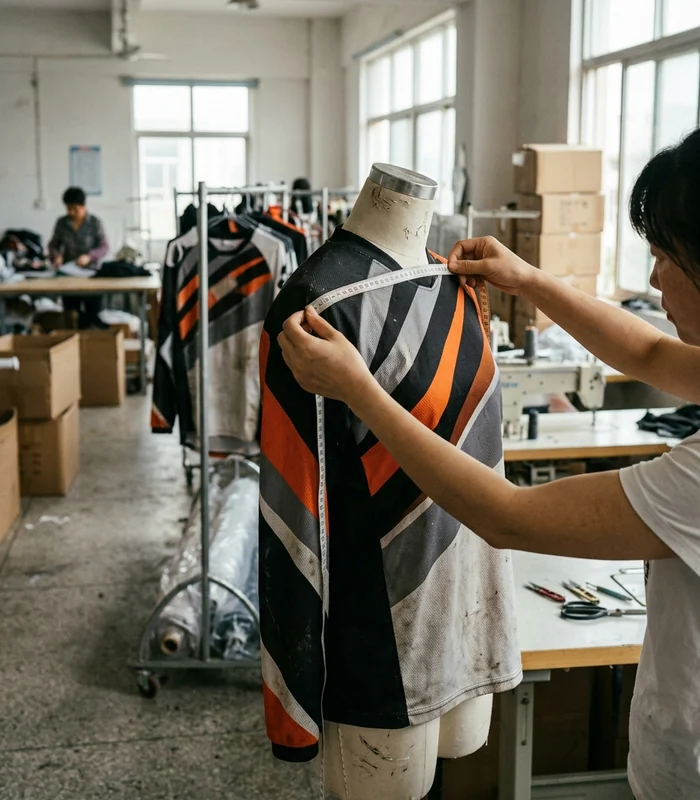
The reference is measured on the form and in the hand: panel by panel, seam by seam, with the fit the brand wants kept and the parts it wants changed listed. A measurement sheet and a construction note come back as the tech pack the brand did not have.
A brand that builds each SKU on its own block sells three fits under one label; the base block is why our lines fit like one brand
Drafted once, shared by every SKU. The base block is the fit foundation: the body length, the sleeve pitch, the shoulder slope and the ease that the brand's customer will feel in every piece. It is drafted once, from the tech pack or the reference garment, in the brand's core size, and every SKU in the line is built on it. A textile jacket, a jersey and a pair of gloves on shared blocks fit the same customer the same way, and a second-run SKU added next year starts from a block the brand has already approved.
Drafted for the riding position. Arms forward on the bars for a touring shell, the attack position for a jersey, the tuck for a leather suit. The armor pockets, where the garment has them, are positioned on the block for the riding position, to standard armor sizes, so the brand can fit the armor it already stocks.
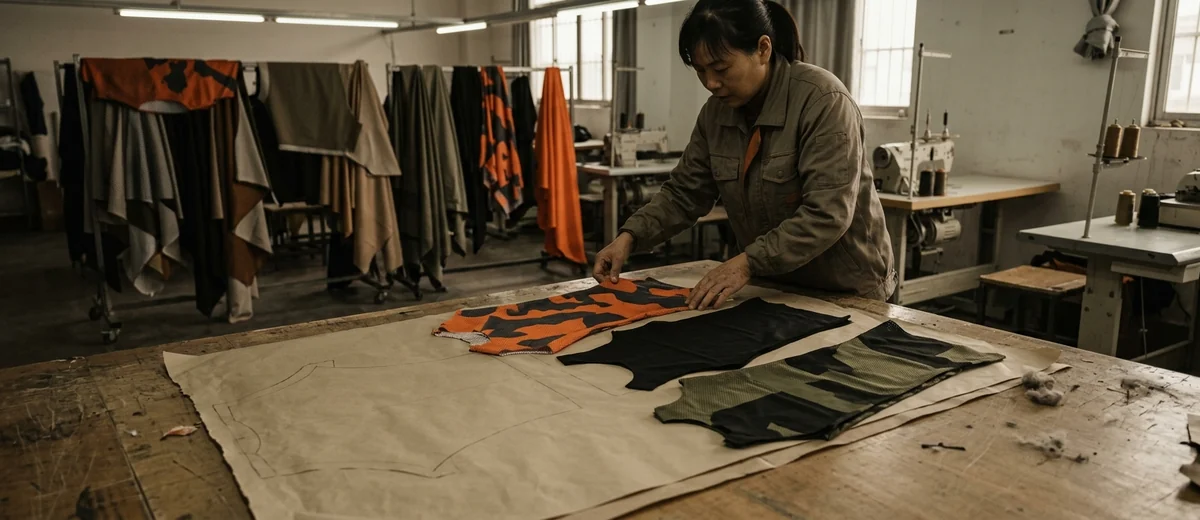
A second-run SKU starts from a block the brand has already approved, not from a new tech pack.
Tech pack to sample to archive on one sheet; each stage has one output and one check before the next starts. Scroll: the cards stack as you pass them.
Tech pack read or reference garment measured; questions back within 24 hours.
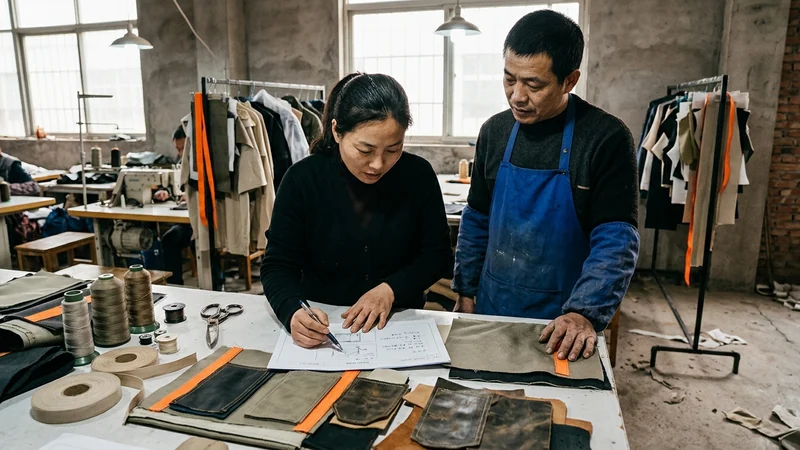
Base block, materials, trims, label positions and the sample date proposed.
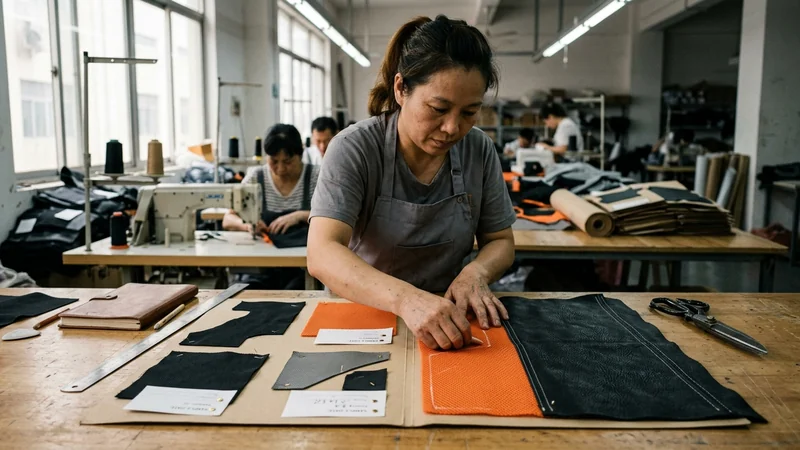
Drafted for the riding position; pattern pieces cut for the first SKU.
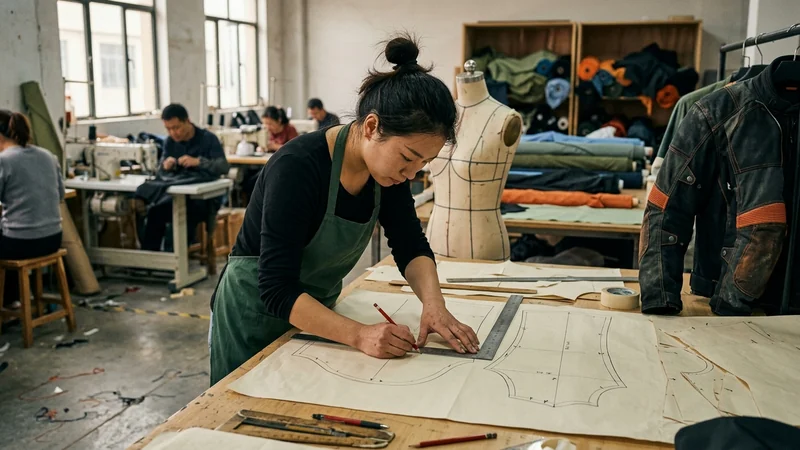
Shell, lining, membrane, leather, zips, armor pockets and labels from the standard options or your suppliers.
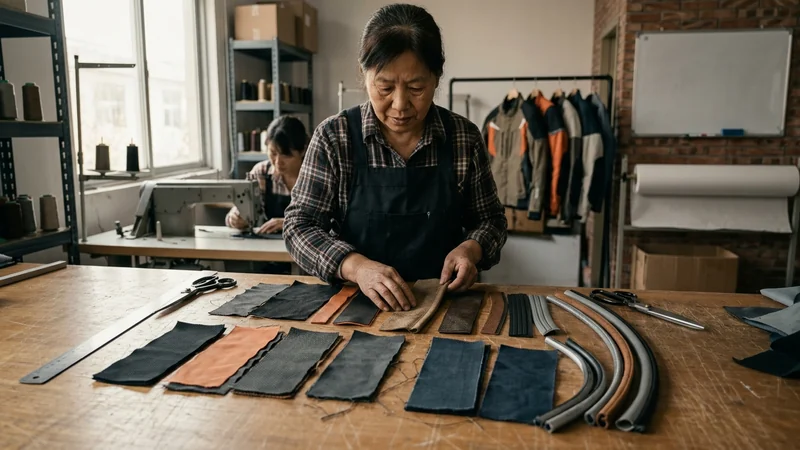
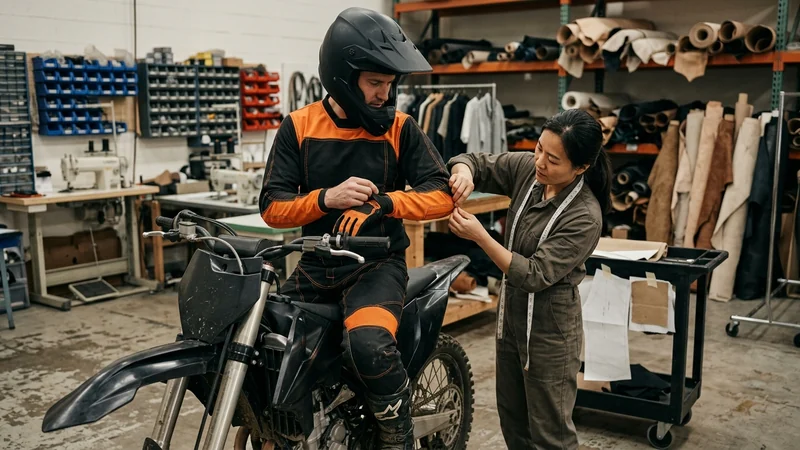
Fit comments taken on the bike, armor in.
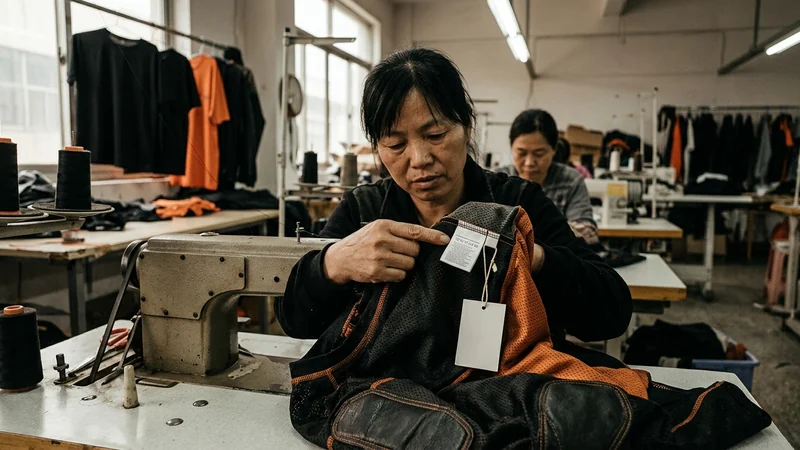
Woven label, care label, hangtag and polybag set on the sample.
The block graded across the range; the set tried on real people.
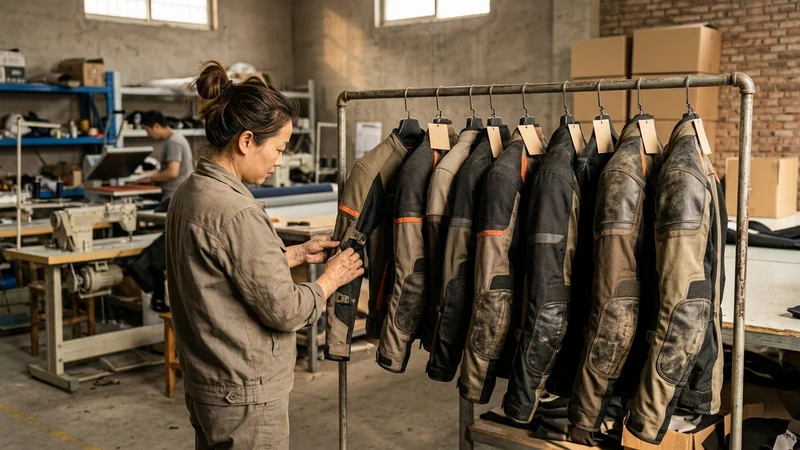
Start-of-line, mid-line at 20 percent and final inspection.
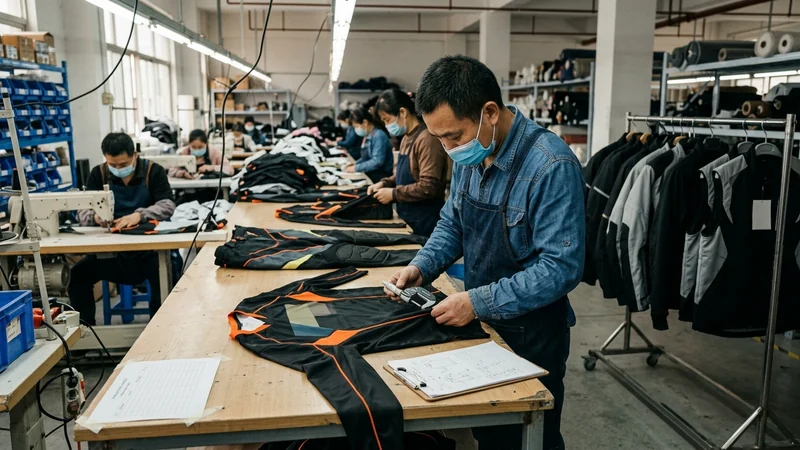
Blocks, patterns, digitized logo and color strips for the second run.
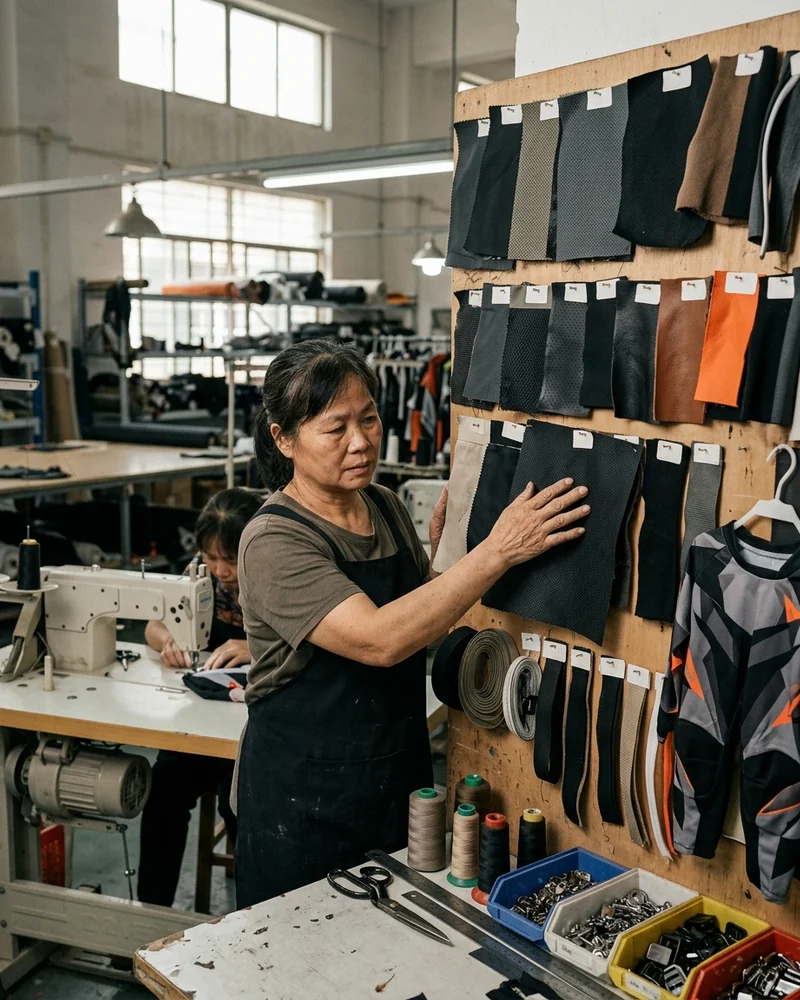
The reference table for private label motorcycle apparel; a brand can specify its own, and these are what the sheet proposes when it does not
| Component | Standard option |
|---|---|
| Textile shell | 600D polyester or Cordura-type nylon |
| Membrane | Waterproof membrane laminate, touring shells |
| Leather | 1.1–1.3 mm cowhide, gauged per hide |
| Mesh | 100% polyester moisture-wicking mesh, 140–160 gsm |
| Pants shell | 600D polyester, leather or synthetic inner knee |
| Fleece · glove palm | 280–320 gsm fleece · goat leather or synthetic palm |
| Armor · liner | CE-armor pockets, standard armor sizes · removable thermal liner |
| Branding | Sublimation, embroidery, heat transfer, leather perforation |
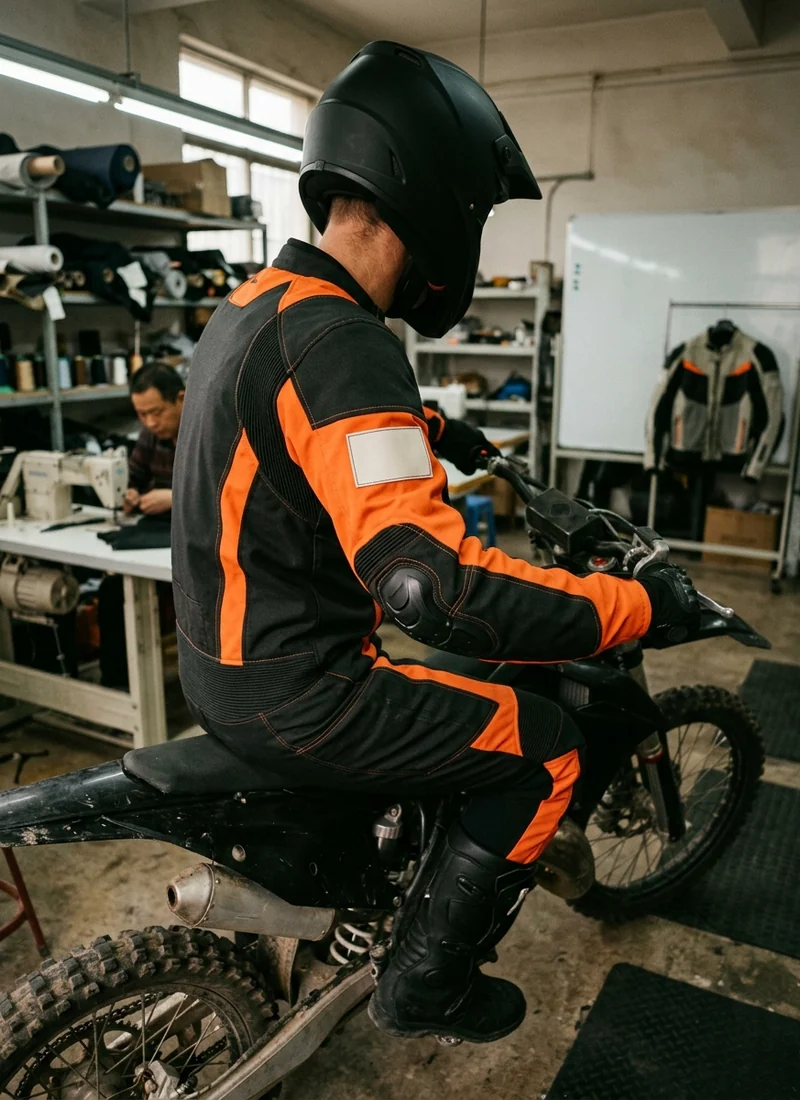
A sample approved on a hanger comes back with a sleeve that rides short; a sample without the label comes back as a second sample
Comments on the bike. The first sample is sewn in the brand's core size and sent with the development sheet, the swatches and the size chart. Fit comments are taken with the garment on a rider on the bike, arms forward or in the attack position, with armor in the pockets. Comments go back in the tech pack's numbering; a second sample is cut only if the comments move a seam, not for a color or a trim change.
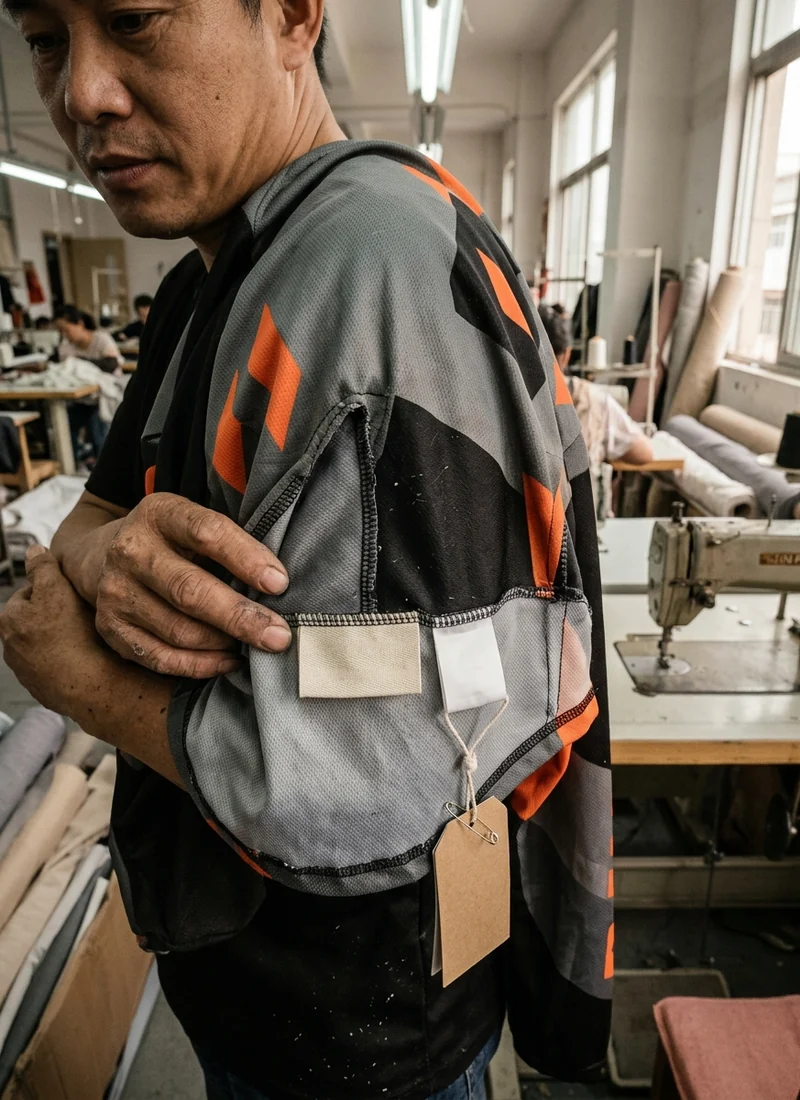
Label on the same sample. The woven label, the care label, the hangtag and the polybag are set on the same sample. The label position and the care wording are approved once, and the first production piece is a finished retail piece, not a blank with a label to come.
The OEM/ODM development process we run most often for a new brand, and what it teaches the brand about its own fit.
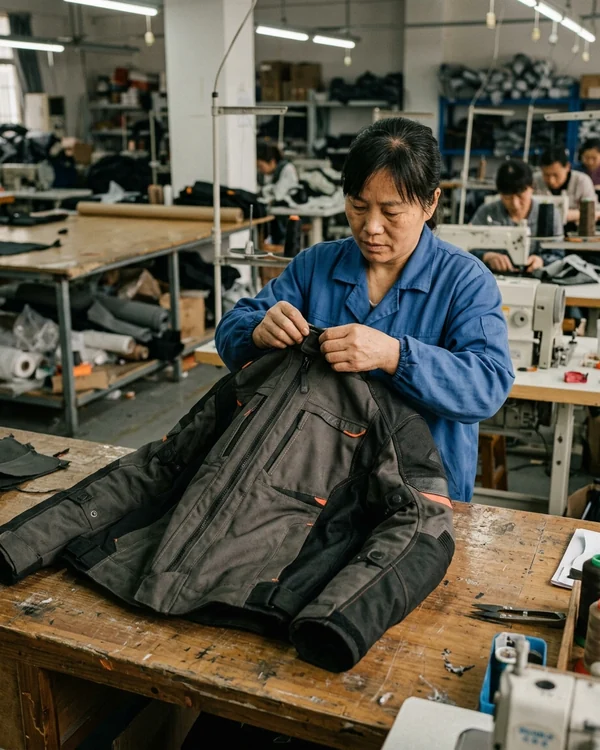 SKU 1Textile jacket
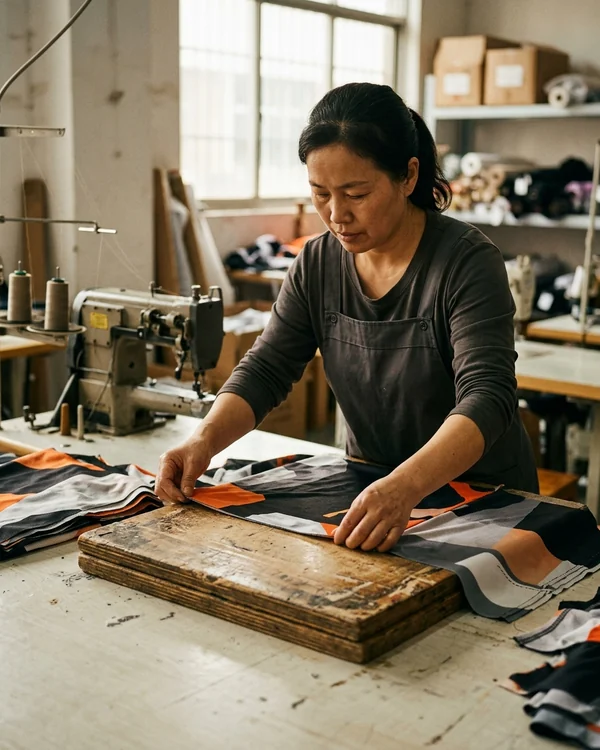 SKU 2Motocross jersey
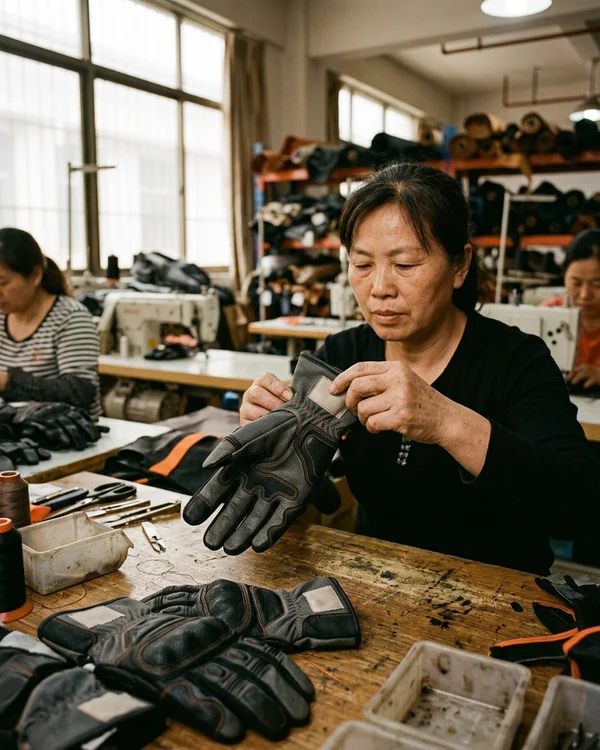 SKU 3Gloves
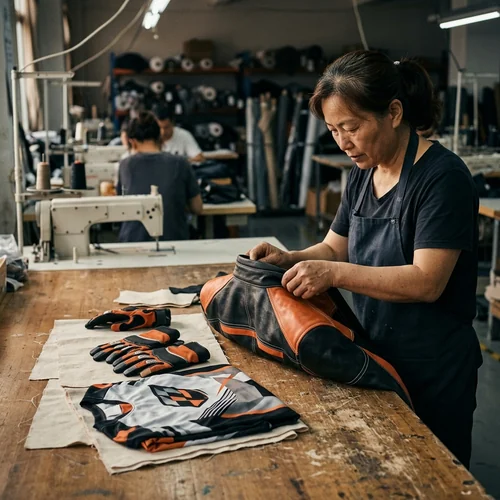
Three SKUs, three constructions, one season. The order we build most often for a new riding-gear brand is a textile jacket, a motocross jersey and a pair of gloves, on shared base blocks, sampled in size M, produced at 50 pieces per style, with the patterns archived for the second run. Three SKUs across three constructions tell the brand in one season which category sells, which size mix its customer buys and what its fit should be, without committing to a full range.
The second run starts from the archive. It adds SKUs on the same blocks, or corrects the size mix from the first run's sell-through, and starts from the archive rather than from a tech pack.
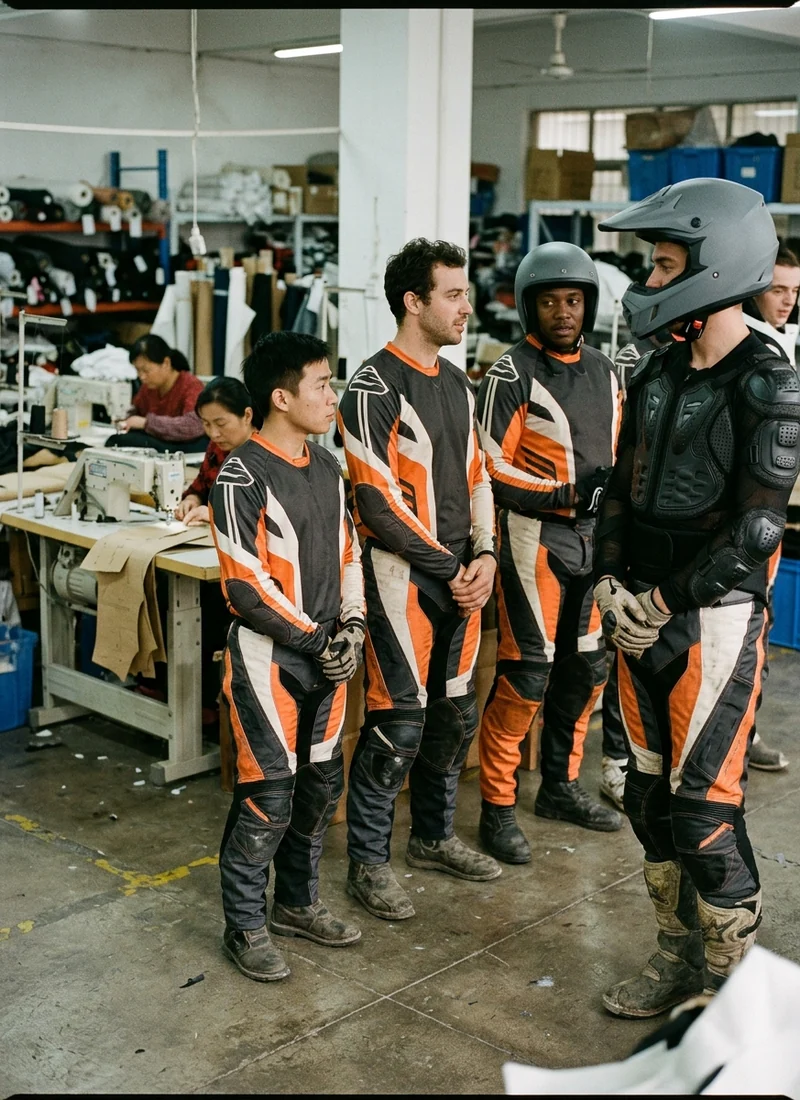
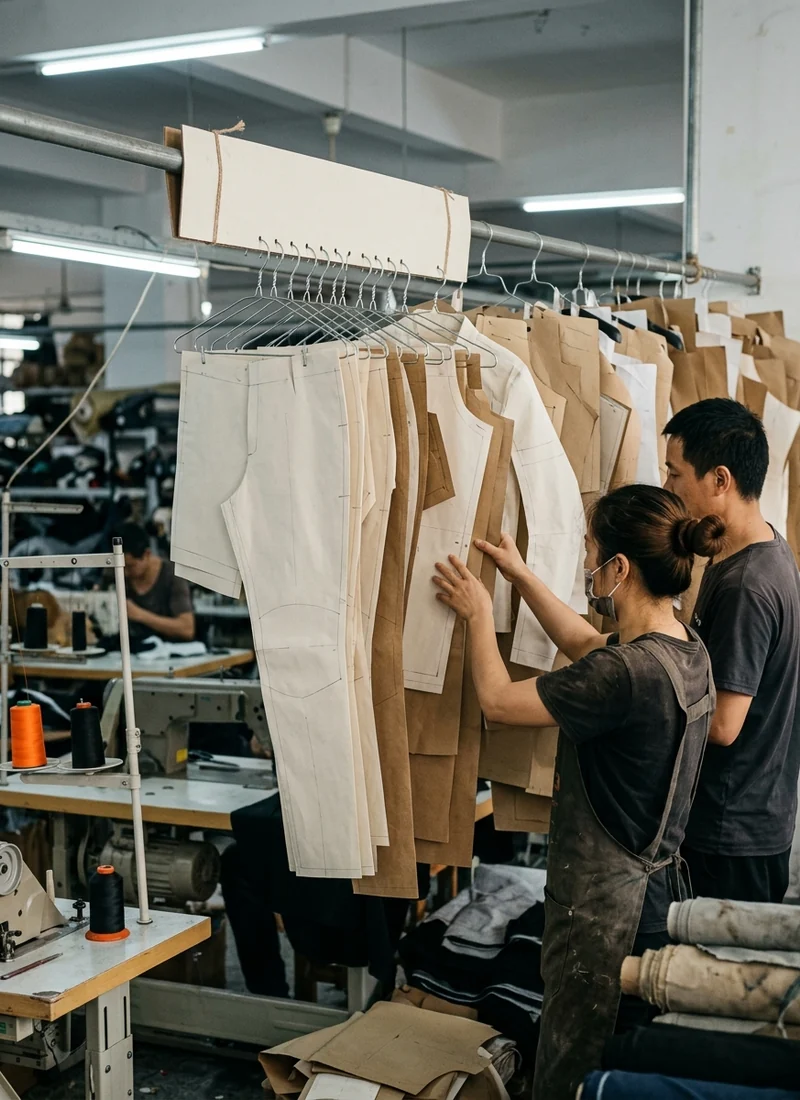
One approved sample does not approve a size range; the size-run set does
Graded, then tried on. After the sample is approved in the core size, the block is graded across the brand's size range, with youth sizes where the line needs them. A size-run set, one garment per size, is sent before bulk so the brand can check the grade on real people, not on a size chart. The signed size sheet then travels with the order through cutting, sewing and packing, and the carton list is checked against it before the box is sealed.
Two blocks for two fits. Women's blocks are drafted separately, not scaled from the men's block; a line that carries both has two base blocks and one label.
Where the OEM/ODM development process starts and how long each stage takes
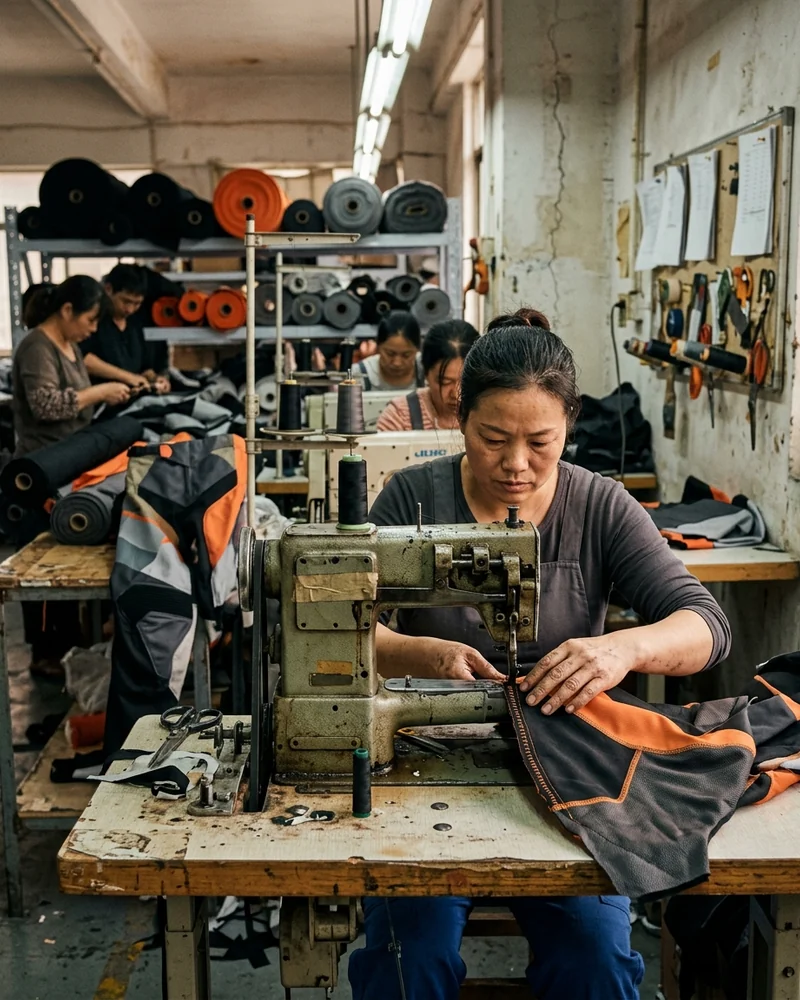
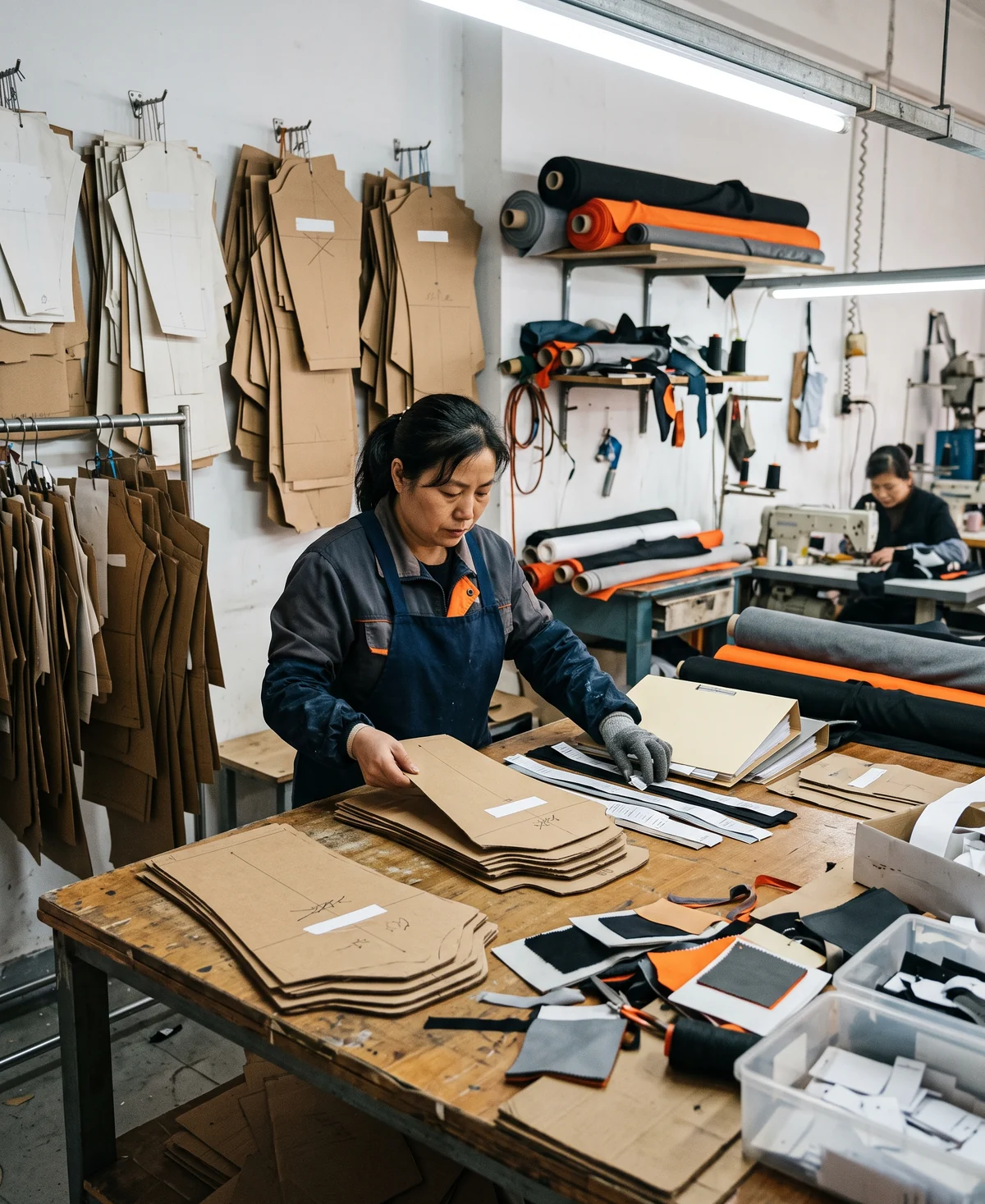
The OEM/ODM development process belongs to the brand that paid for it; the archive is how that is kept
Filed, and used for your orders. The base block, the graded patterns, the digitized logo files, the color profiles and the label specifications from a brand's development are filed under that brand's name and used for that brand's orders. A second run, a new SKU on the same block or a size-mix correction starts from that file. The development sheet lists what is in the archive after each order, so the brand knows what it can reorder without a new sample.
One sales manager owns the development from the first file to the archive, and the second run after it.
Five checks on the OEM/ODM development process a product manager can do with the sample, the swatches and a rider, without us there.
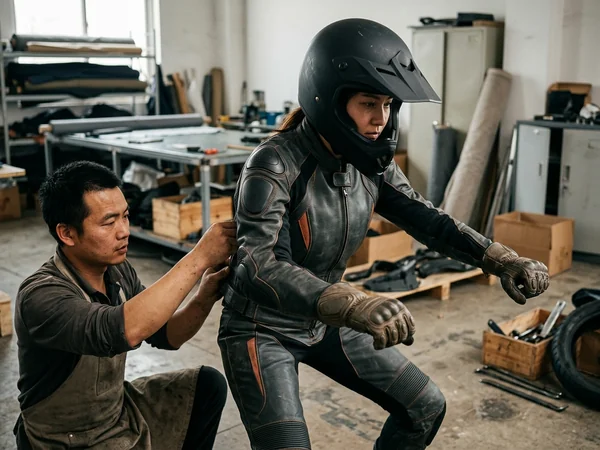
Sample on a rider in the riding position, armor in; sleeve, back length and hem stay where they should.
Every measurement on the sample against the tech pack or the measurement sheet, in the same numbering.
Woven label, care label and hangtag in the approved positions, with the approved wording.
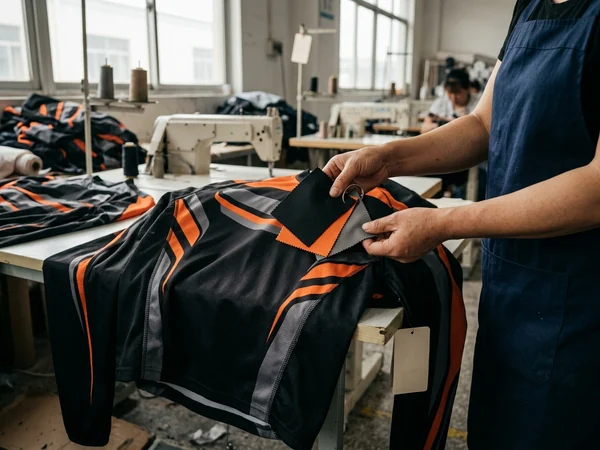
The shell, lining and trims on the sample match the approved swatches.
One garment per size on real people; the grade written up on the size sheet.
Changes to the OEM/ODM development process on the sheet cost nothing; the table shows the ones that move the schedule
| Materials or trims changed on the development sheetEdit the sheet, nothing else moves. | 0DAYS |
| Seam or fit moved after the first sampleSecond sample; 7–10 for sublimated pieces. | 15–20DAYS |
| Color or trim changed after the first sampleSwatch approval, no second sample. | SwatchONLY |
| SKU added on the same blockSample of the new SKU only; the block is already approved. | NewSKU SAMPLE |
| Size range extended after gradingExtra sizes graded; a size-run garment for each new size. | Grade+ SET |
| Bulk after sample approvalScheduled backwards from the launch date. | 25–35DAYS |
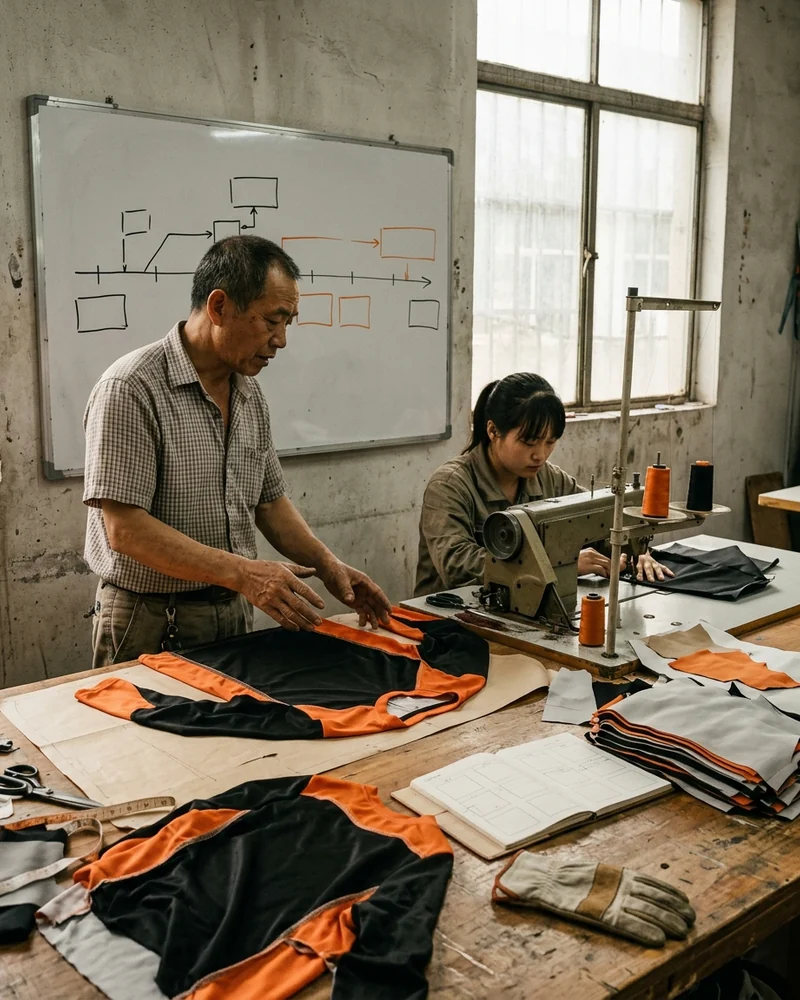
Send these and Anna answers with a feasibility check within 24 hours
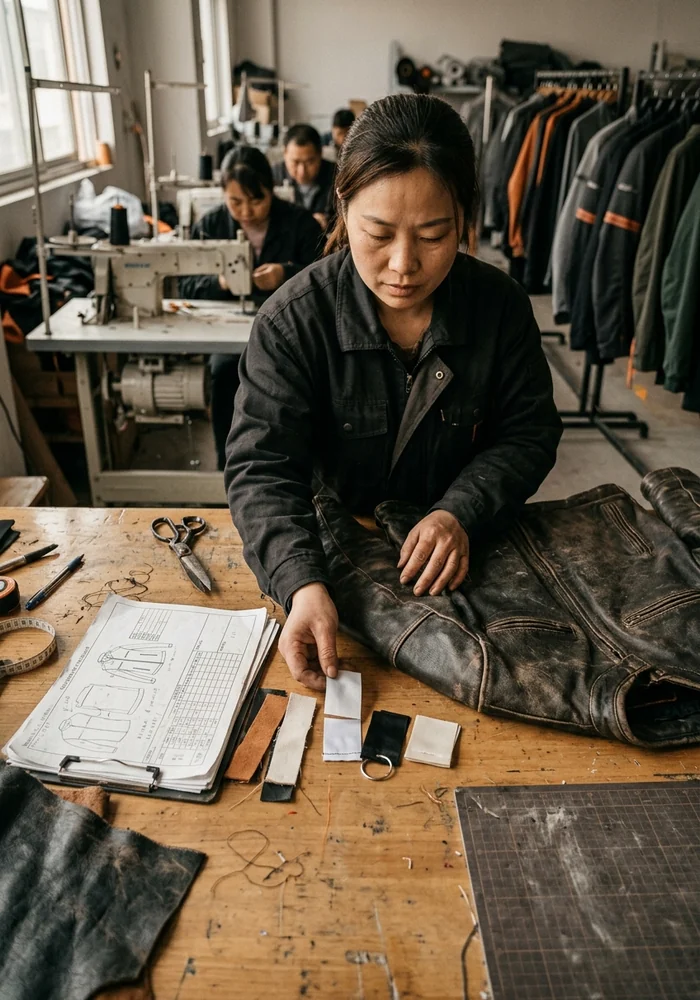
The lines most brands start with, and the process pages behind them
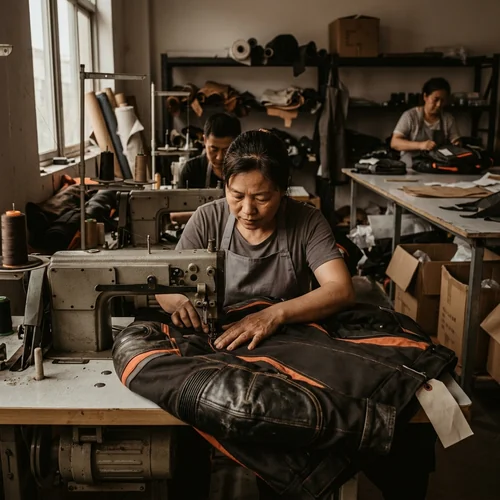
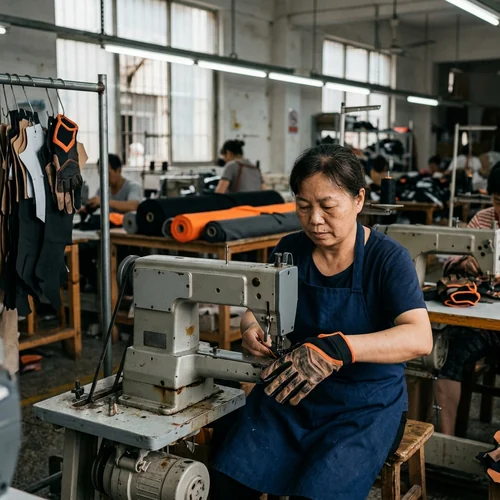
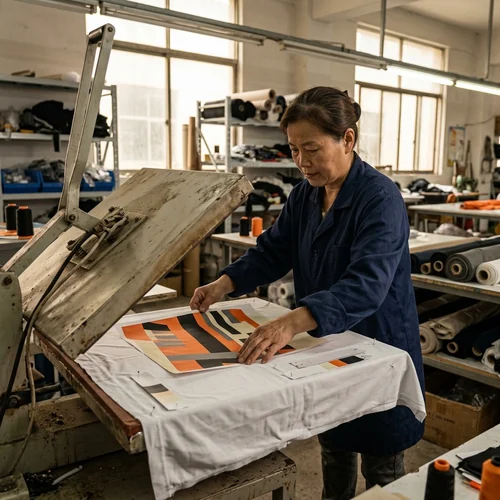
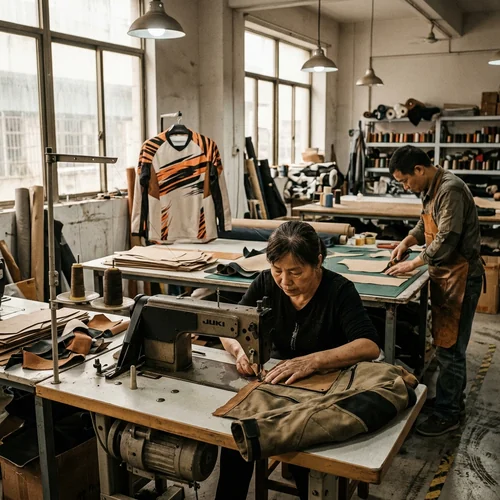
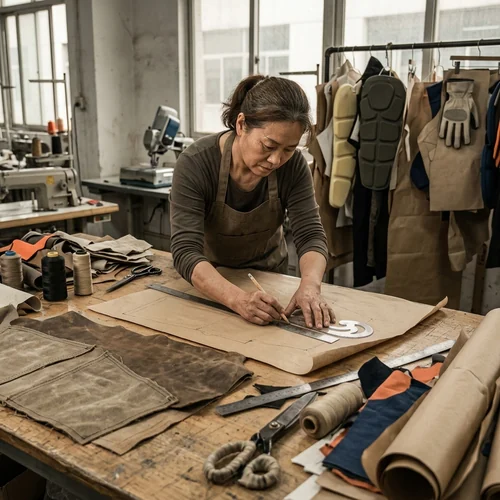
Anna replies within 24 hours on business days with the questions in your numbering, or with the development sheet. No brochure, no price list; a real answer about your line.