One profile per team · one strip per run

All-Over Sublimation Printing: How Team Colors Stay Exact from Sample to Reorder

Polyester onlymesh · 600D · crew · panelOne profile per fabricfiled under your team nameStrip before the presschecked under daylight

The sublimation printing process here is built around one question a team manager asks in year two: will the new jerseys match the old ones? The answer is a color profile saved per team and per fabric, a test strip printed and checked under a daylight lamp before every run, and an archive drawer where that strip lives — so a jersey reordered in 15 days matches the one printed last season.
Team managersClub officersBrand product managersPrint buyers comparing factoriesEmbroidery and heat transfer
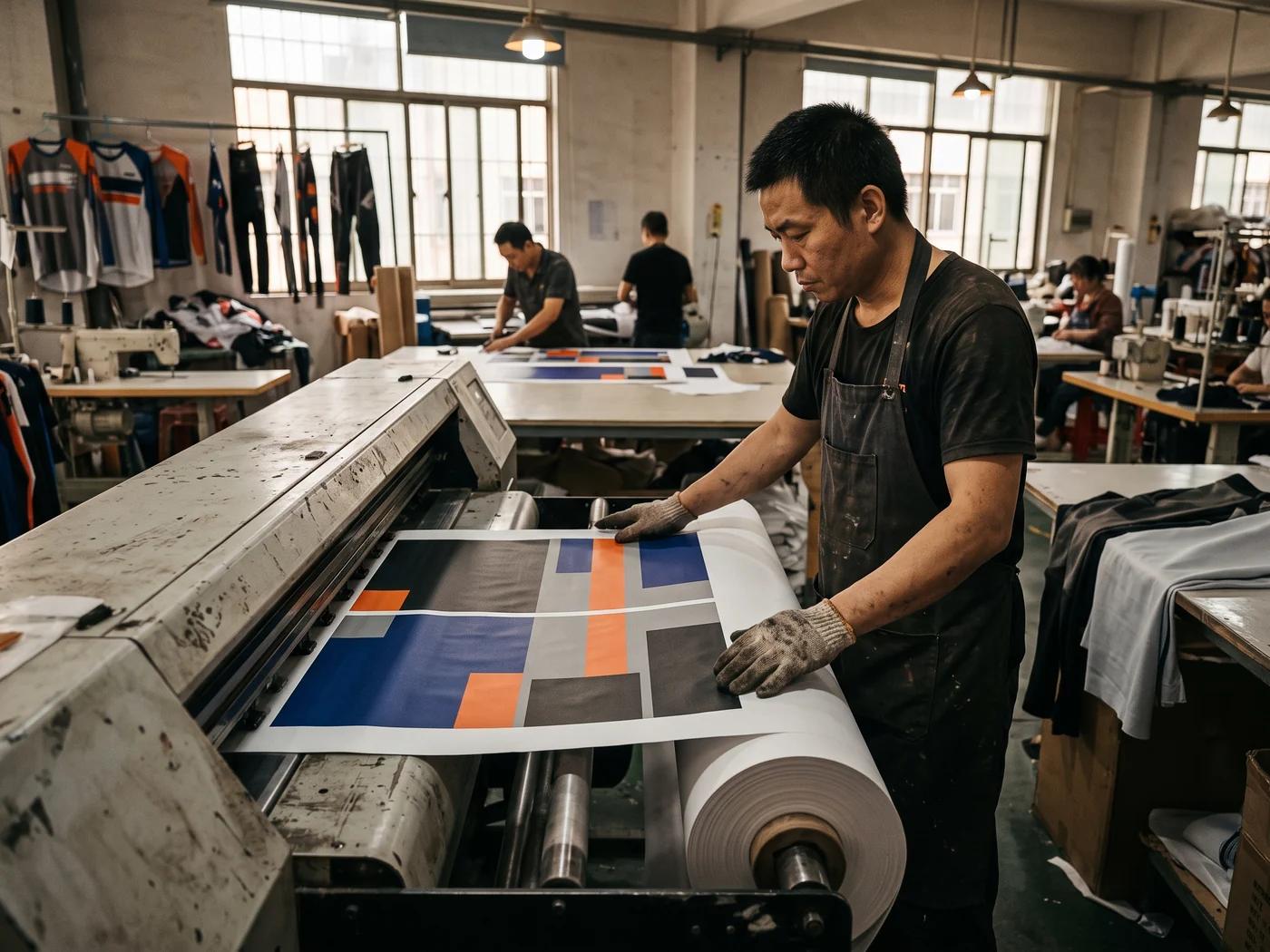
Team artwork printed in reverse on transfer paper, coming off the rollOn paper · reversedDye ink on transfer paper, mirrored, panel by panel in the cutting order
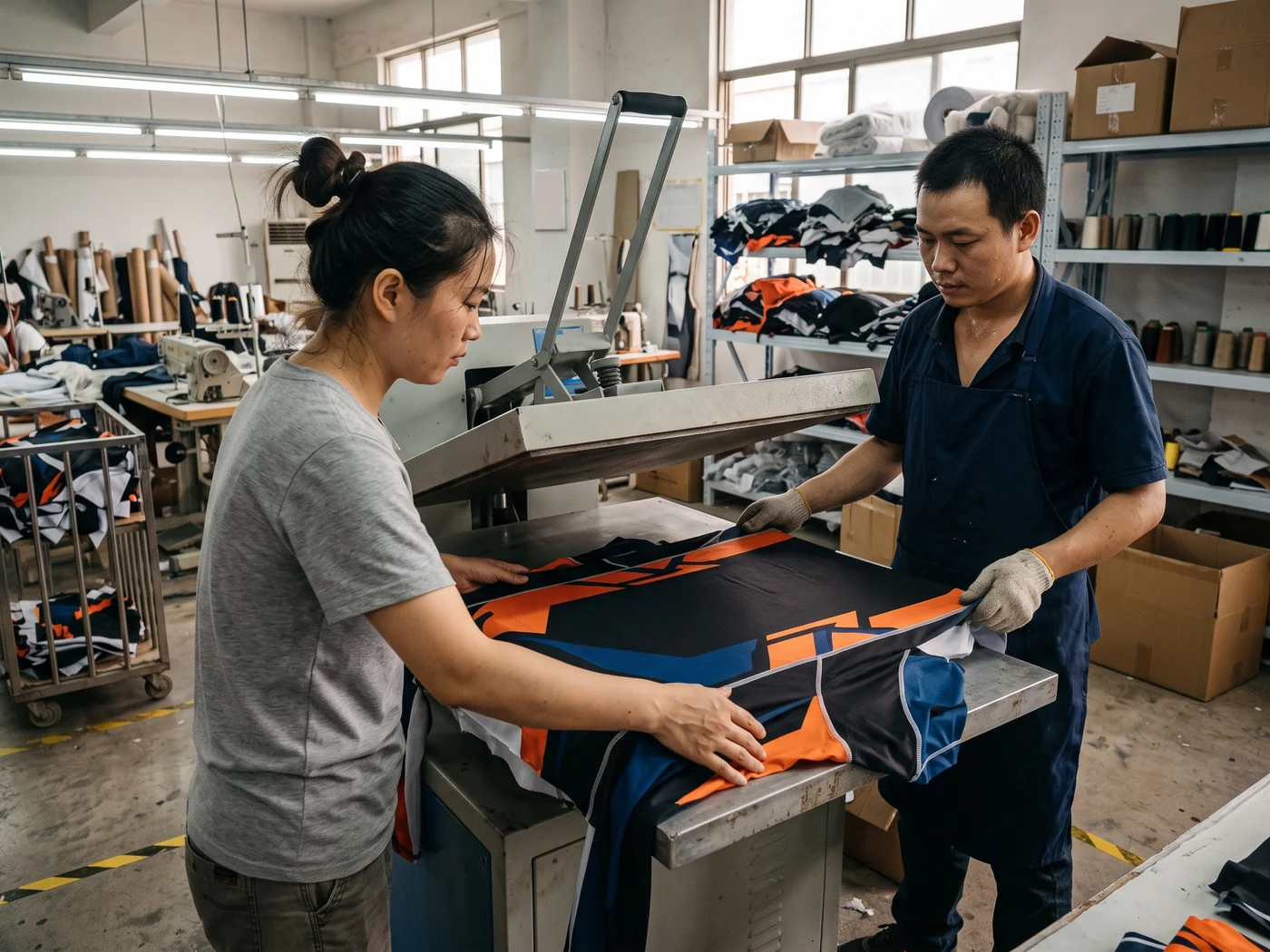
The pressed polyester panel with the design the right way round and the color in the fiberIn the fabric · right way roundAfter the press: the dye is inside the fiber, nothing sits on the surface
01 Team red
02 Deep red
03 Grey
04 Slate
05 Gun
06 Base

A strip like this is printed on your fabric, approved once, filed under your team name — and a copy travels to you in the sample pack.

Who reads this page

Who reads this page: team managers, clubs, brands and the people who reorder

Four readers who have been burned by a reorder that did not match, or who want to make sure they never are.

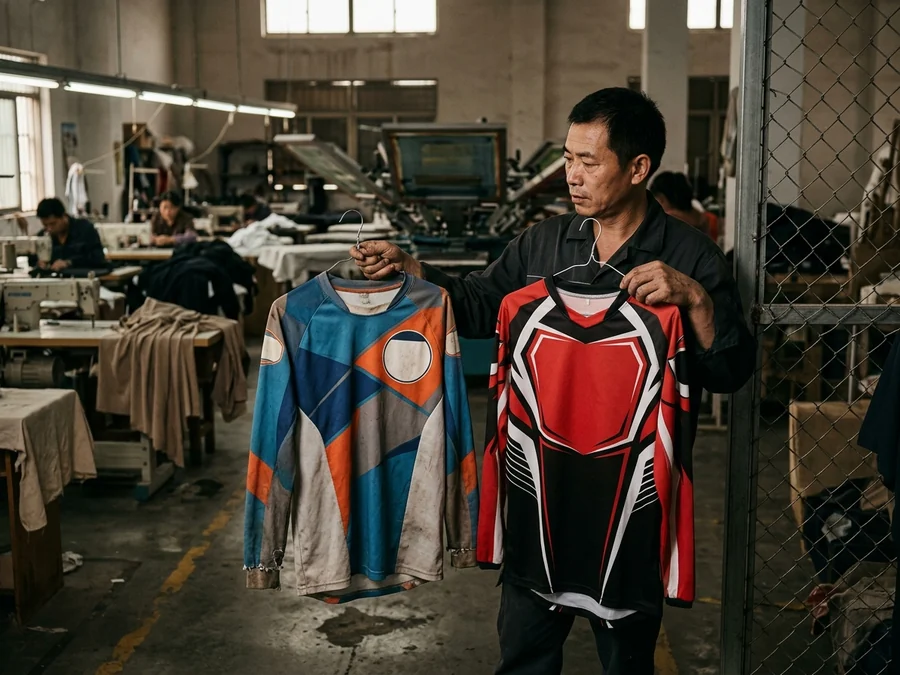
Team manager holding last season's jersey beside a new one on the gate

Team managers

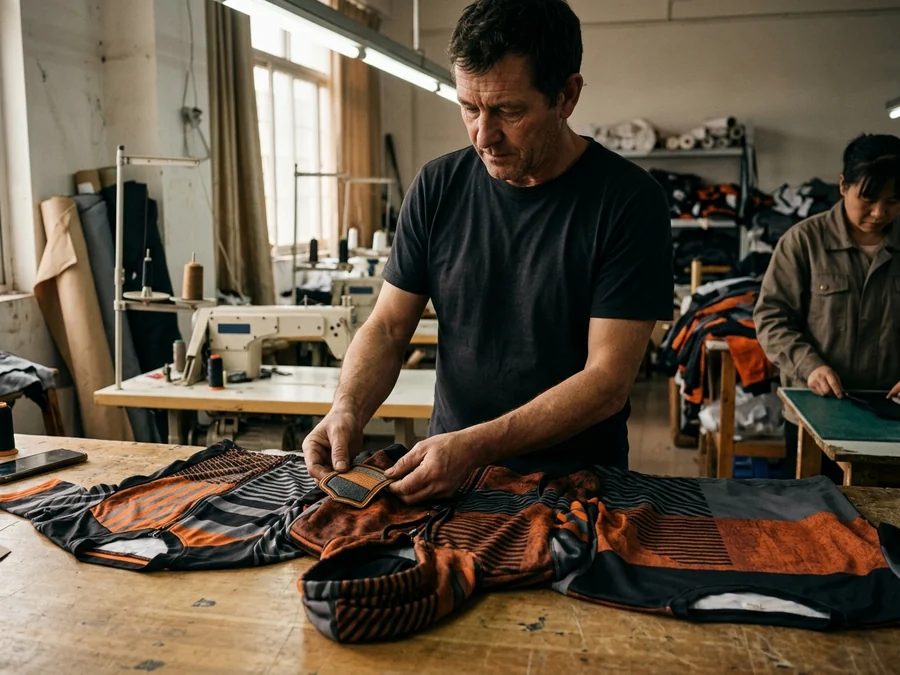
Want the season's second run and the mid-season additions to match the kit already on the gate.
Wants · the archive
Club officer comparing a badge across a jersey, a hoodie and a crew shirt

Club officers

Want the hoodie badge, the jersey and the crew shirt to read as one color across three different fabrics.
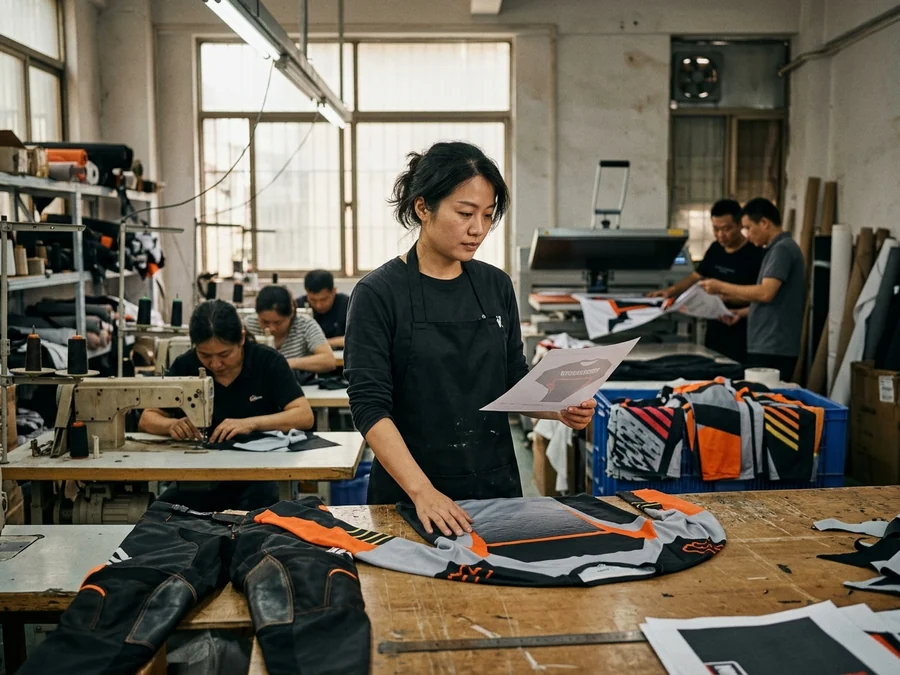
Wants · one color, three fabrics
Brand product manager with a layout sheet carrying the profile name

Brand product managers

Want the profile filed under the brand name, the strip in the sample pack, and the second run printed from the file rather than re-sampled.
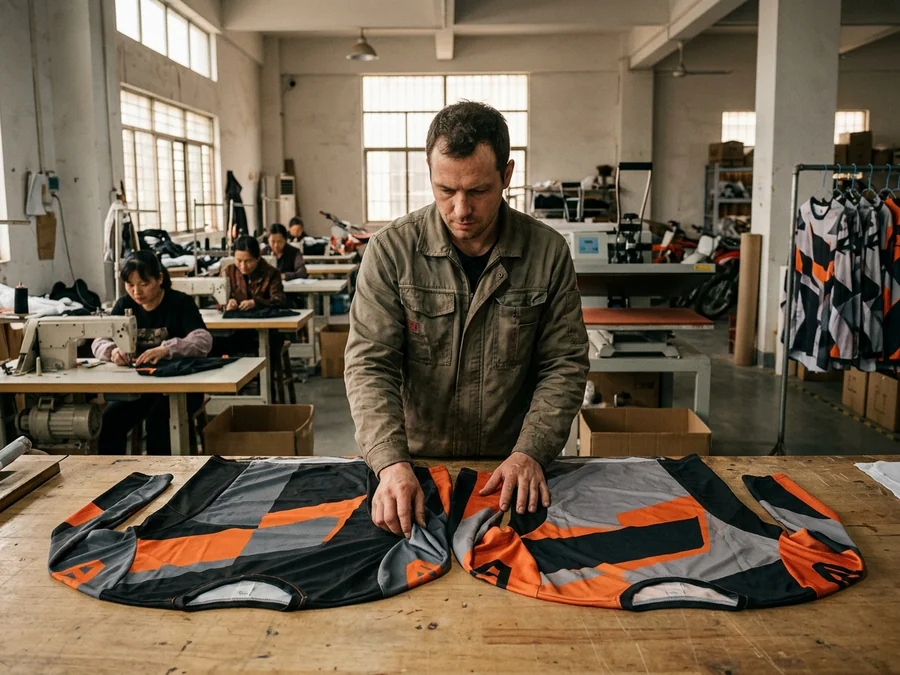
Wants · the profile name on file
Print buyer comparing two factory samples side by side on a bench

Print buyers comparing factories

Want to know what a color profile actually is, why a strip is printed before the press runs, and what to ask a factory for.

Wants · the questions to ask
Not this page
  • Embroidery and heat transfer, which have their own page
  • The garments themselves, which have theirs
What sublimation is

Sublimation, explained: the dye enters the fiber and stays inside it

Ink becomes gas, the gas becomes part of the polyester; there is nothing on the surface to crack or peel

The dye goes in, not on

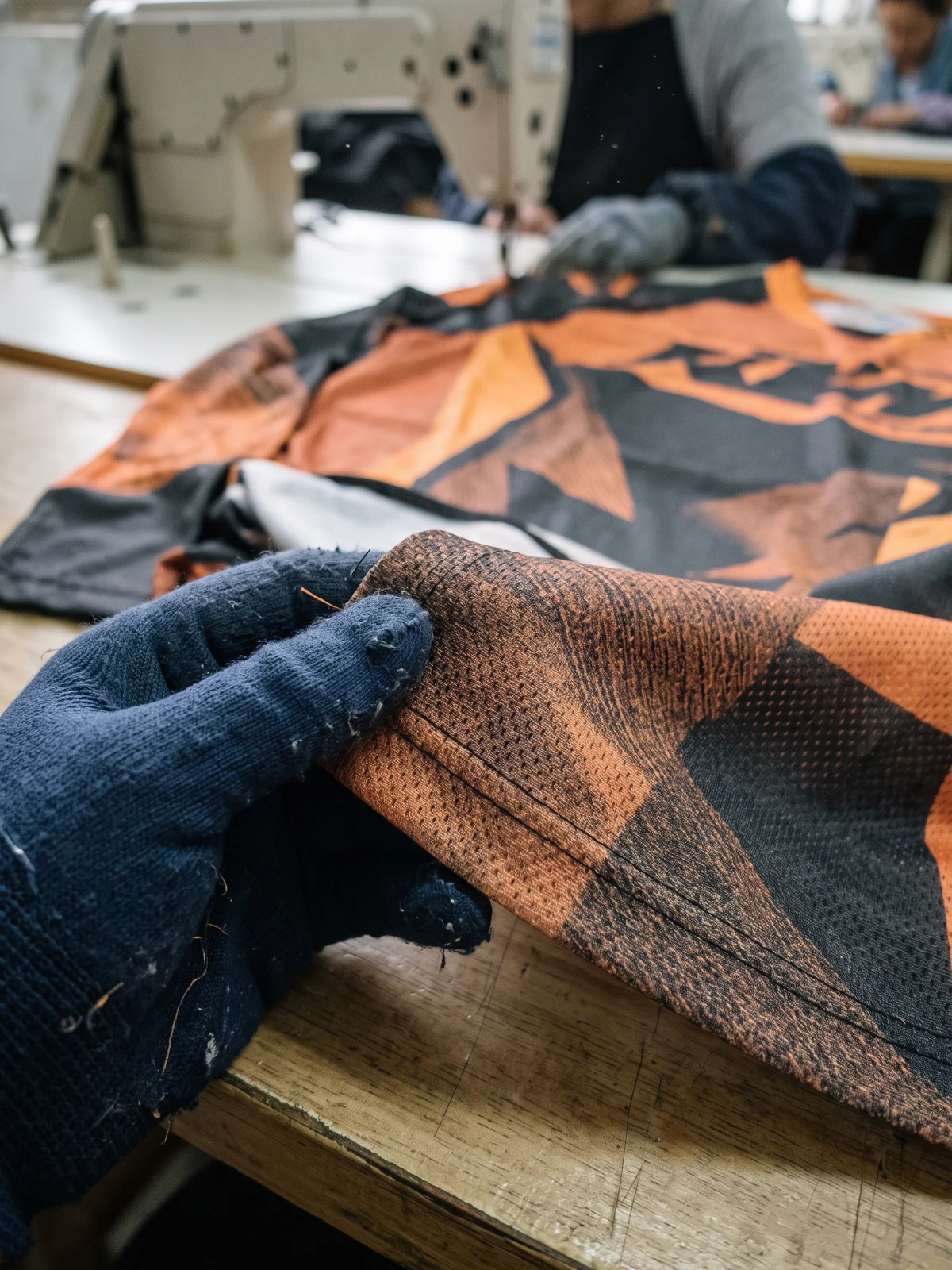
The print is part of the cloth. Sublimation prints the artwork in reverse onto transfer paper with dye inks, then presses the paper against polyester fabric under heat and pressure. The heat turns the dye to gas, the gas enters the open polyester fibers, and when the fabric cools the fibers close around the color. The print is in the fabric, not on it: it does not crack, peel or rub off, and it weighs nothing. That is why a motocross jersey can carry an all-over design across every panel and still be a 140–160 gsm mesh that breathes.
Two consequences shape the whole process

  • Sublimation only works on polyester and polyester blends — which is why club hoodies are embroidered and jerseys are printed.
  • Every fabric takes the dye a little differently — so the color is profiled on the fabric it will print on, not once for the team but once for the team on each fabric.
Only polyester takes it100% polyester mesh, 600D polyester panels, polyester crew shirts. Cotton, fleece and leather do not sublimate.
Every fabric takes it differentlyThe same ink mix reads as two colors on a mesh and on a 600D panel, so each fabric gets its own profile.
How to check itScratch the print on the sample with a fingernail, then stretch the mesh. Nothing lifts, and the color stretches with the fiber.
Macro of sublimated polyester mesh: color inside the fiber, no layer on the surface
In the fiber · not on it
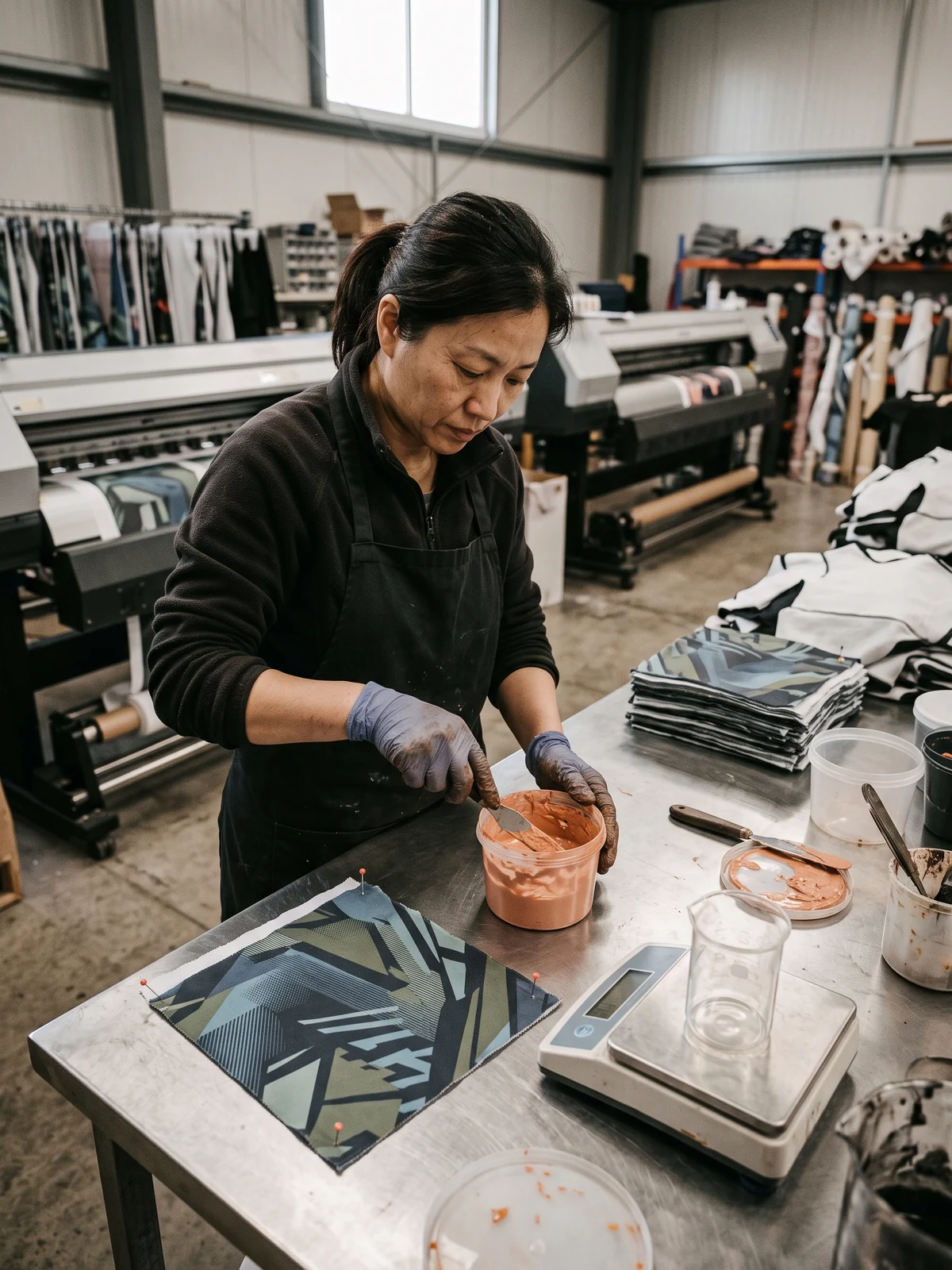
Print room bench where screen colors are translated into an ink mix for one fabric
One translation · one fabric
The color profile

The color profile: one per team, one per fabric

A red on screen is not a red on mesh; the profile is the translation, and it is made once per fabric and saved

What gets saved. The team's artwork arrives as screen colors. The print room translates each color to the ink mix that produces it on the exact fabric of the run, prints a test, checks it under a daylight lamp and adjusts until the printed color is the color the team approved. That set of translations is the color profile, and it is saved under the team name and the fabric name.

Why the fabric is in the name. The jersey mesh, the pant panel, the crew shirt fabric and the glove back panel each have their own profile, because each takes the dye differently. When the same team orders a crew shirt six months later, the crew shirt is printed from the crew shirt profile for that team, and its strip is checked against the jersey strip in the archive — so the two fabrics read as one color in the paddock.

What a profile is filed as
TeamThe club or brand name the artwork was approved under
FabricJersey mesh · 600D pant panel · crew shirt · glove back panel
StripThe approved physical strip, filed with it and copied to you
  • Mesh140–160 gsm jersey
  • 600Dpant panel
  • Crewclub shirt
  • Panelglove back
How to check itAsk for the profile name on the layout. It should name the team and the fabric, not just a color.
The test strip

The test strip: printed before every run, checked against the archive

The strip is the physical record of the color; the archive is where a reorder starts. Scroll: the daylight passes over both strips.

Archived strip · your first approved run
This run · printed on the run's fabric

Printed before the run, not after it

The strip decides whether the press starts. A test strip of the team's colors is printed on the run's fabric and laid against the archived strip under a daylight lamp. If the two match, the run starts. If they do not, the profile is adjusted and a new strip printed until they do; the press does not run on a strip that is off.

  • The first approved strip of your first order becomes the archived strip, filed under your team name.
  • A copy goes to you in the sample pack, so you can check the next run yourself instead of taking our word for it.

Checked on the fabric, under daylight

Not on a screen. The check is made under a daylight lamp, not under the print room's own lights and not on a screen, because the paddock is daylight and screens lie about red.

The same lamp is used for strip approval, the mid-line pull and the final check — one light for the whole run.
How to check itThe strip arrives with the sample. When the next run arrives, hold a jersey against it under daylight, by a window.
Artwork to archive

From artwork to panel: the eight steps of a sublimated run

The whole run in order. Note where step 03 sits: the strip check is before the press, not after it.
Rider names, numbers and sponsor logos placed on the pattern pieces in the layout
01

Artwork

Names, numbers and sponsors placed on the pattern pieces of the garment in the layout; back within 48 hours.
Screen colors translated into an ink mix for the fabric of the run
02

Profile

The colors translated to ink for the run's fabric; a new profile made, or the saved one pulled from file.
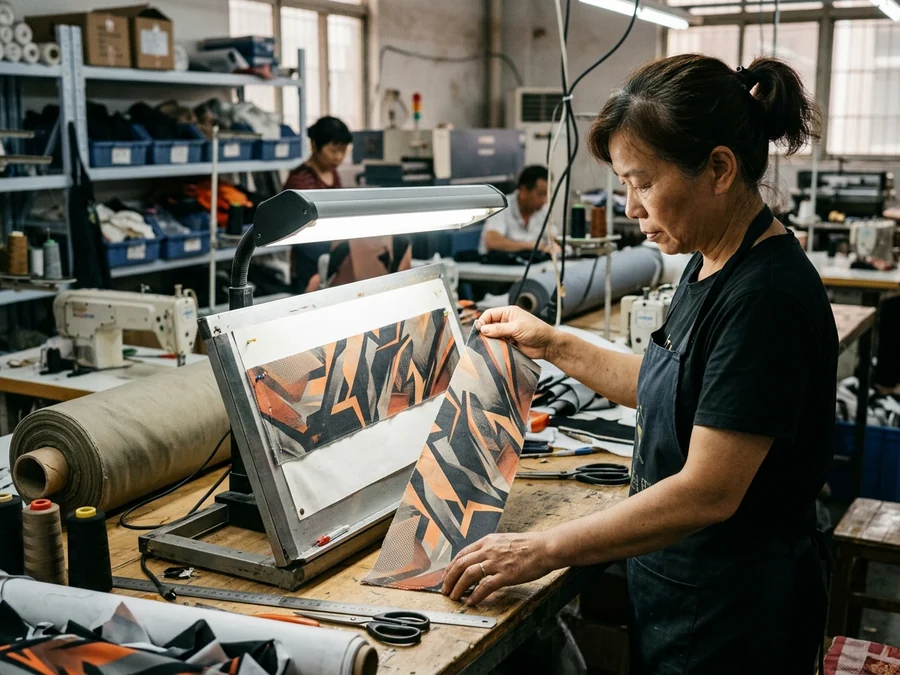
Test strip laid against the archived strip under the daylight lamp before the press runs
03

Test strip

Printed on the run's fabric; checked under daylight against the archive. The press waits on this one.
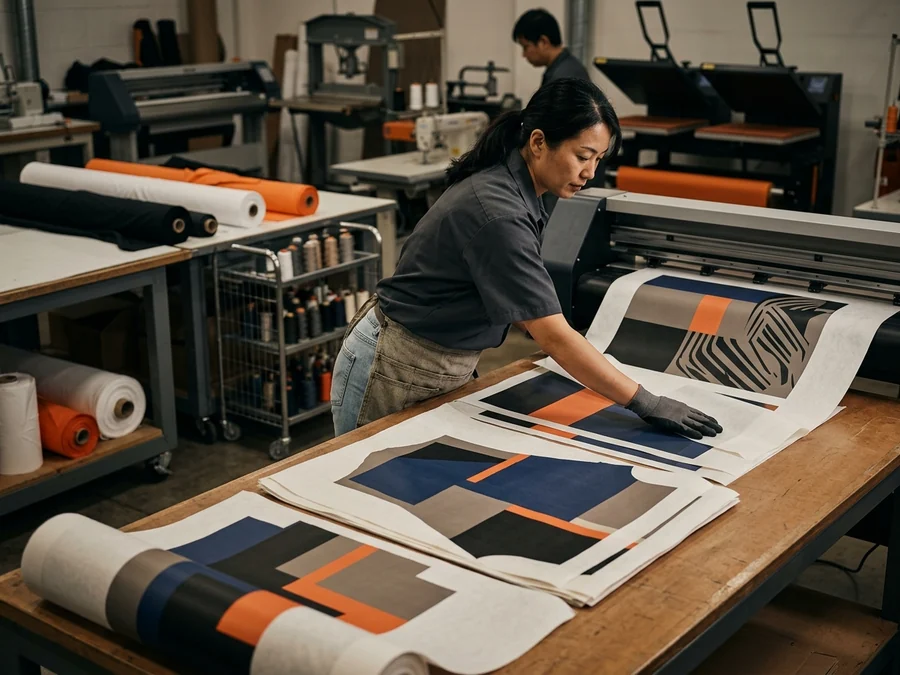
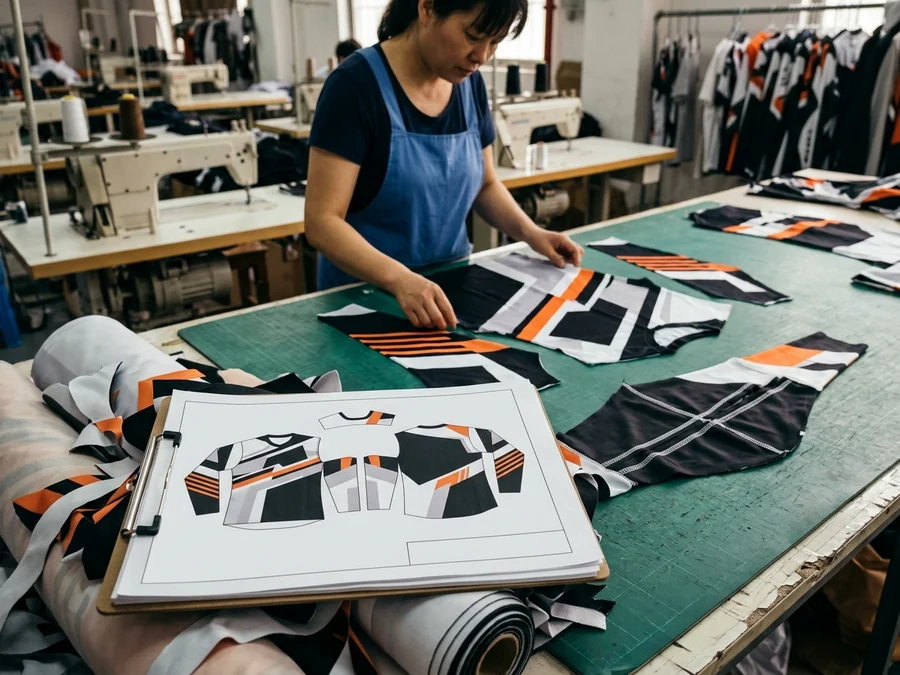
Transfer paper printed panel by panel in the cutting order
04

Print

Transfer paper printed, panel by panel, in the cutting order so the panels stay together.
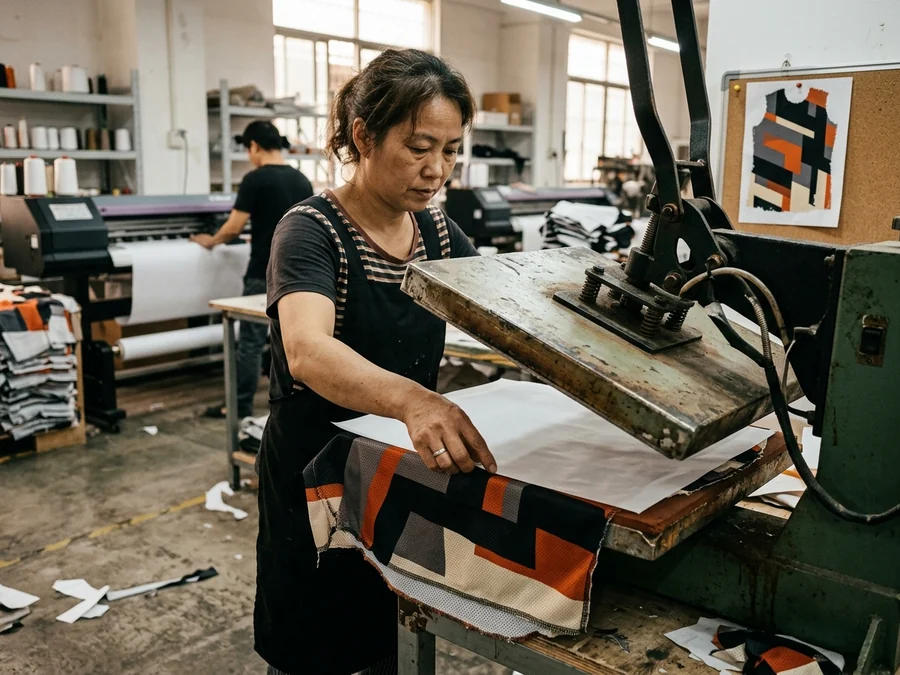
Transfer paper and polyester fabric going under the heat press
05

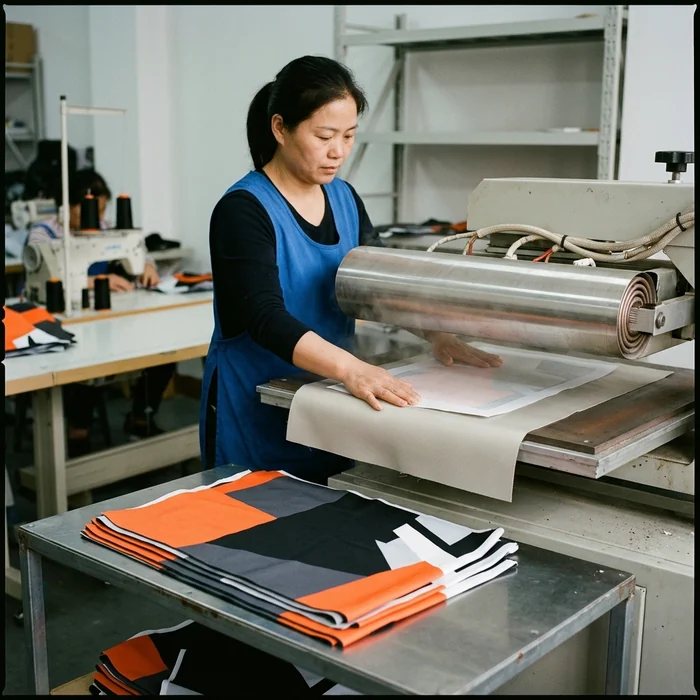
Press

Paper and fabric pressed under heat and pressure; the color enters the fiber and the paper comes away spent.
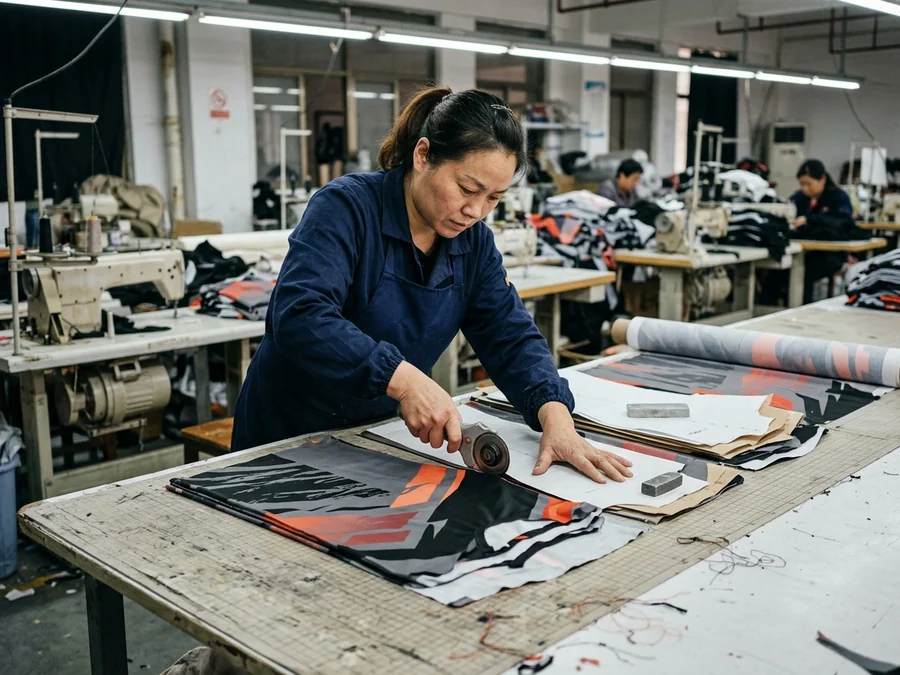
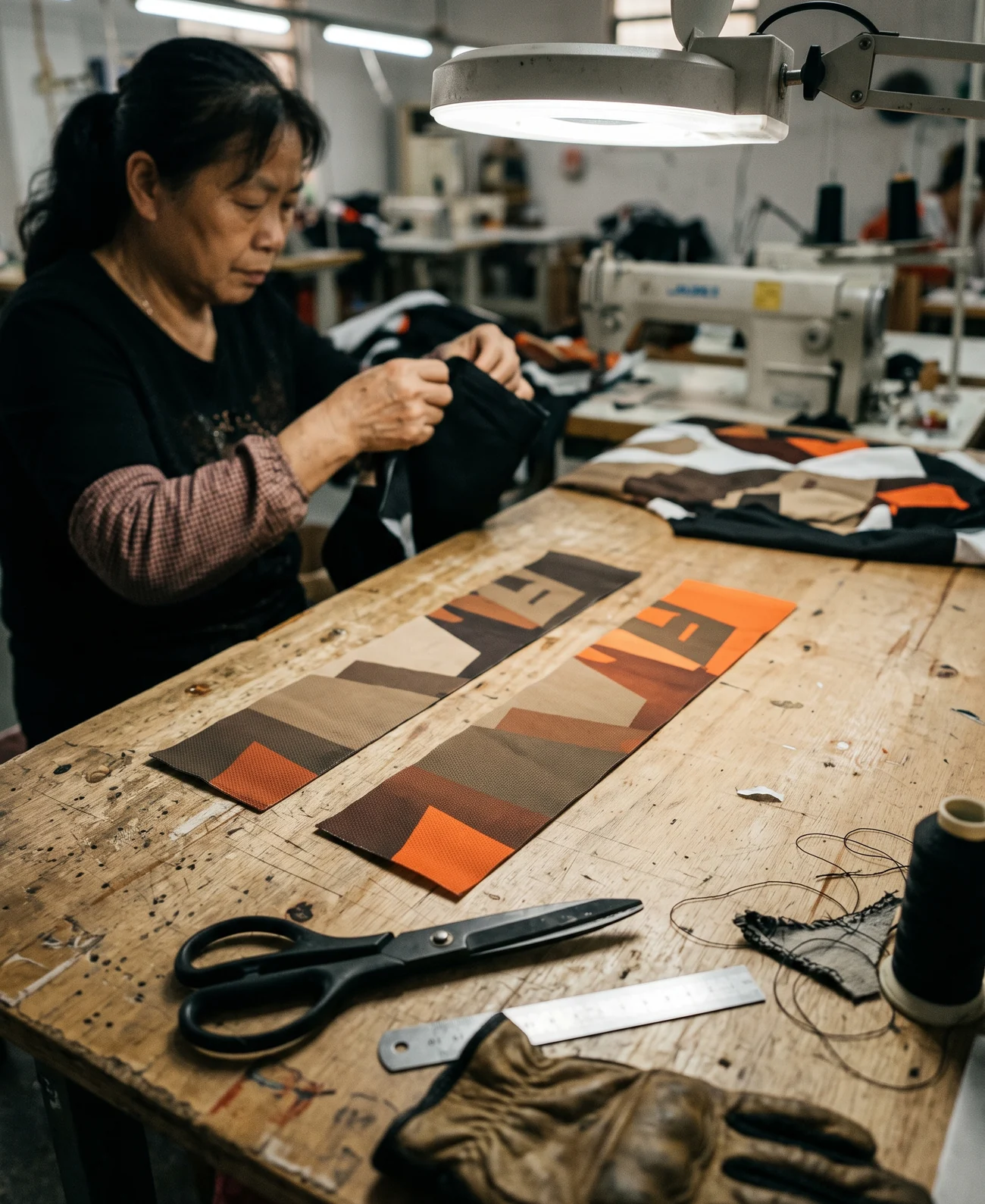
Printed panels being cut to the pattern, first panel laid against the strip
06

Cut

Printed panels cut to the pattern; the first panel is laid against the strip before the batch runs on.
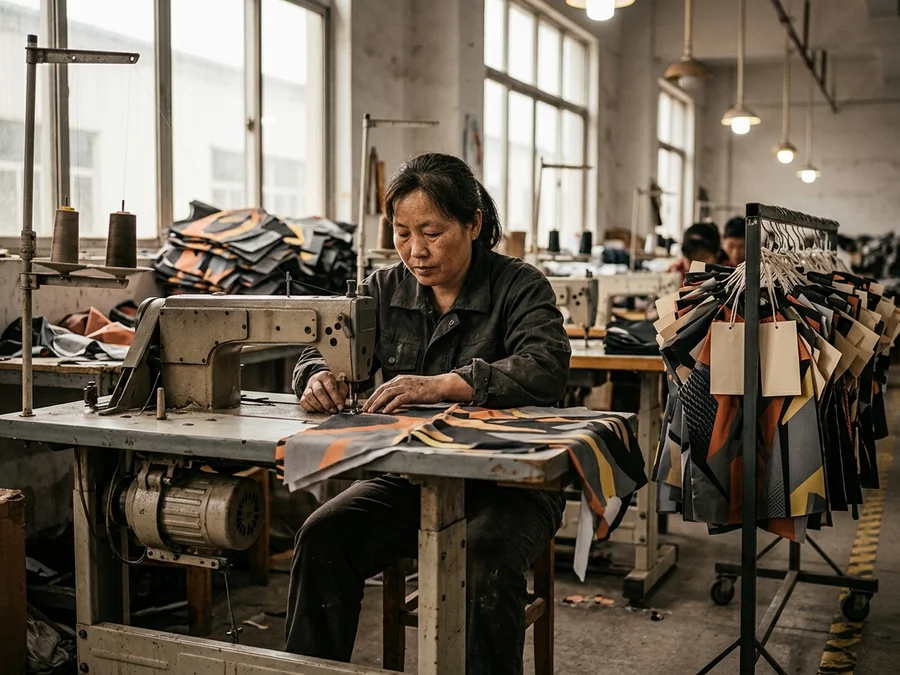
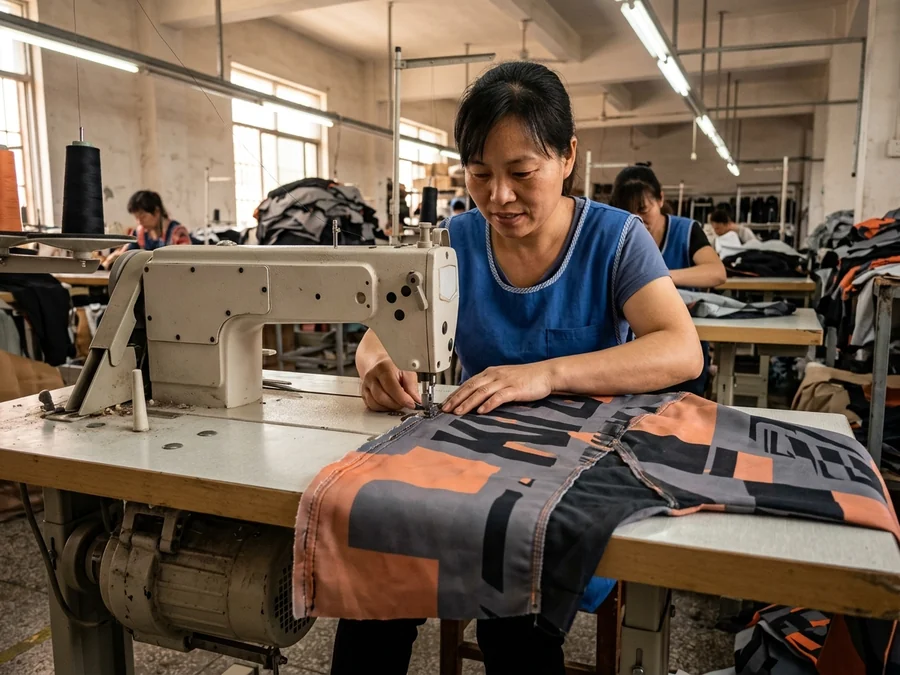
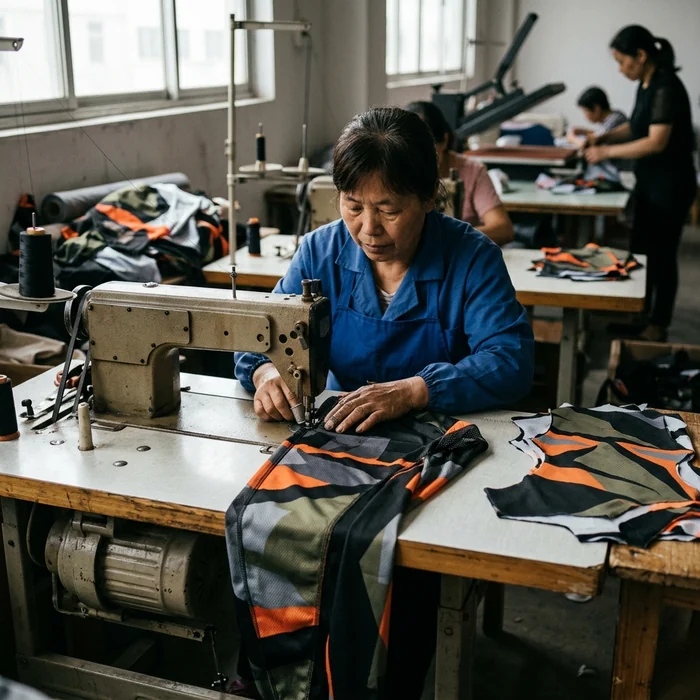
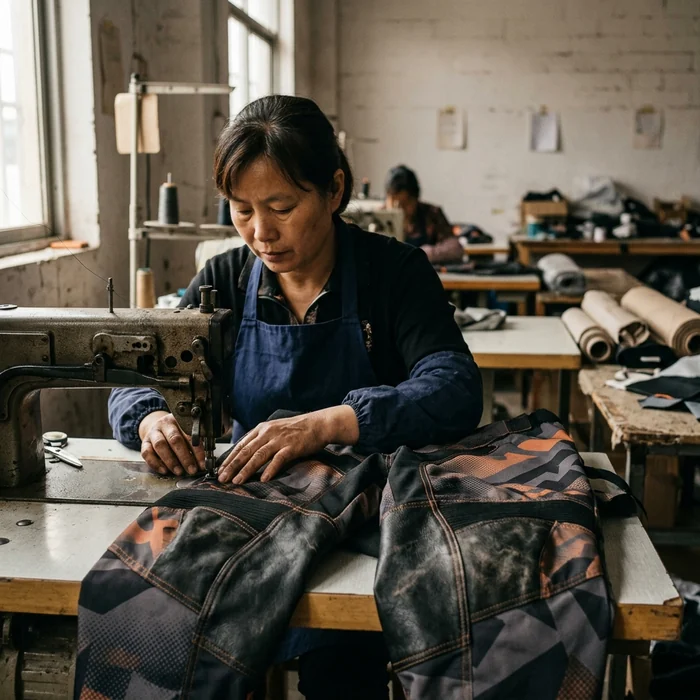
Printed panels sewn on the line, one team order kept together
07

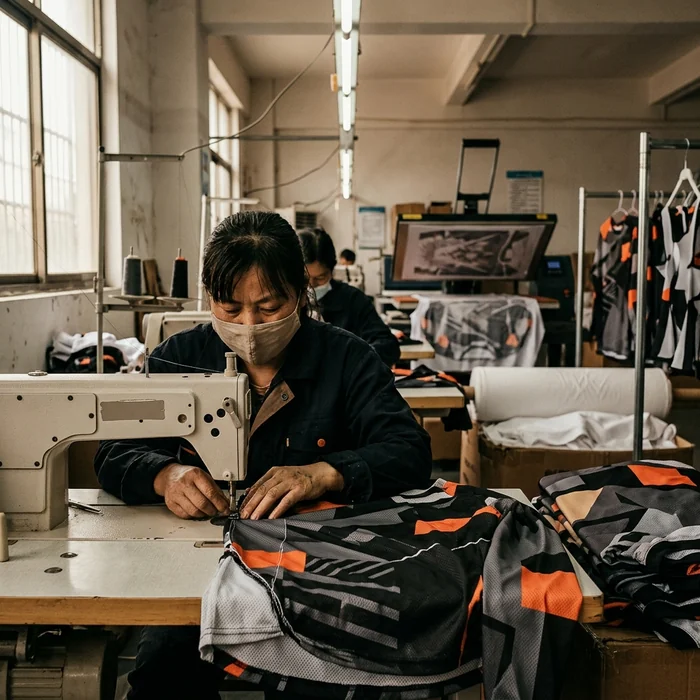
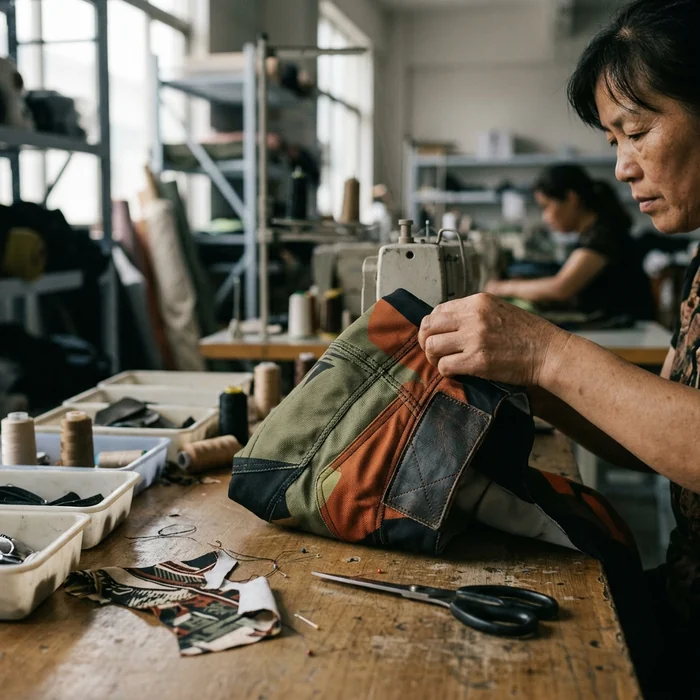
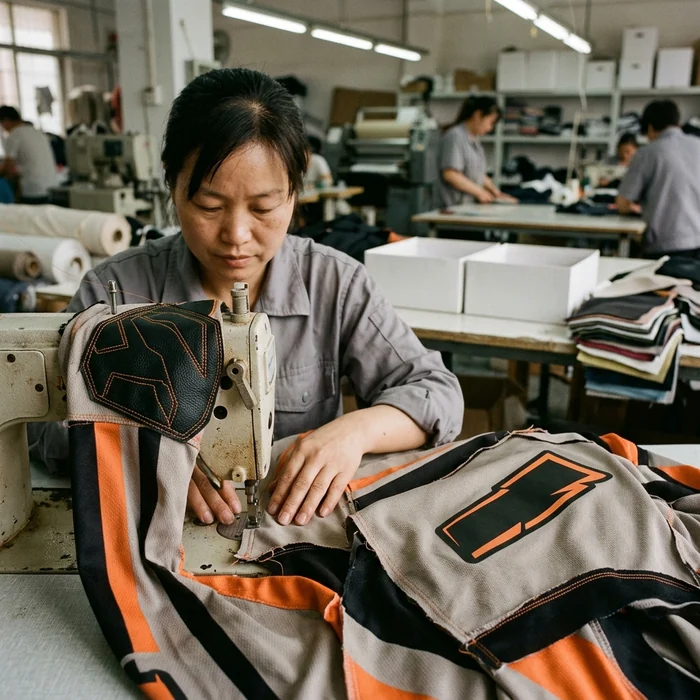
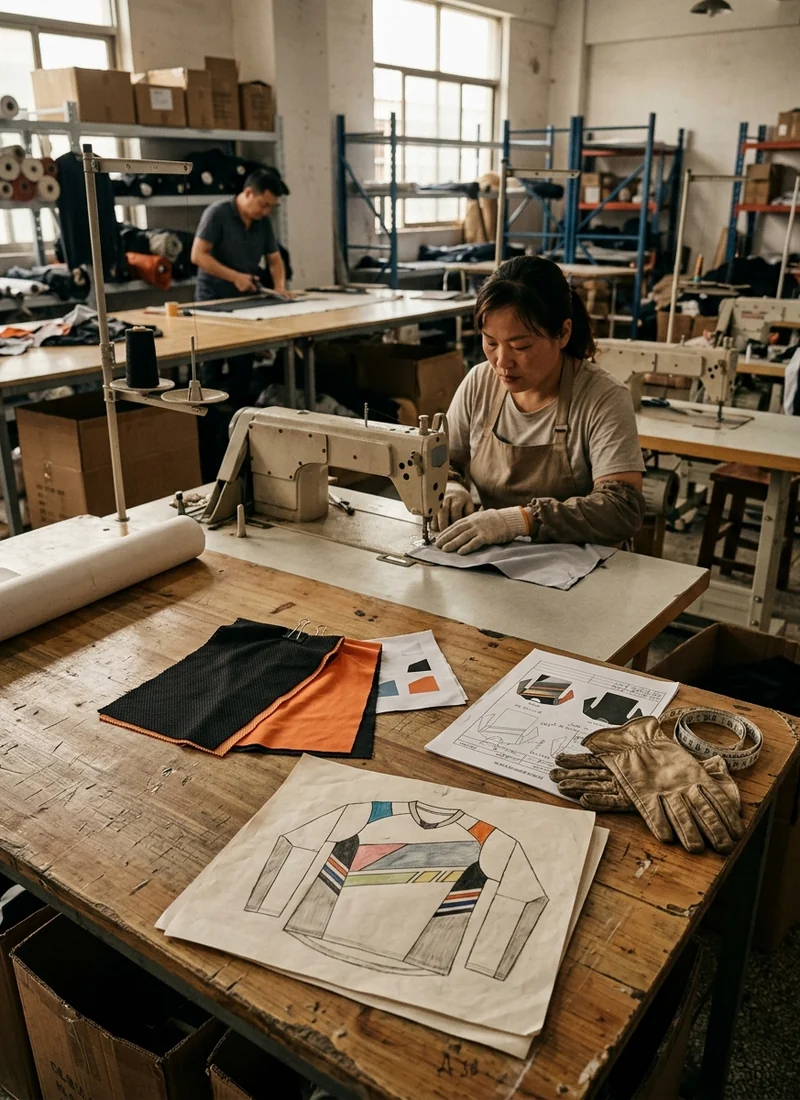
Sew

Panels sewn on the line by order, so one team's kit moves through the room together rather than in pieces.
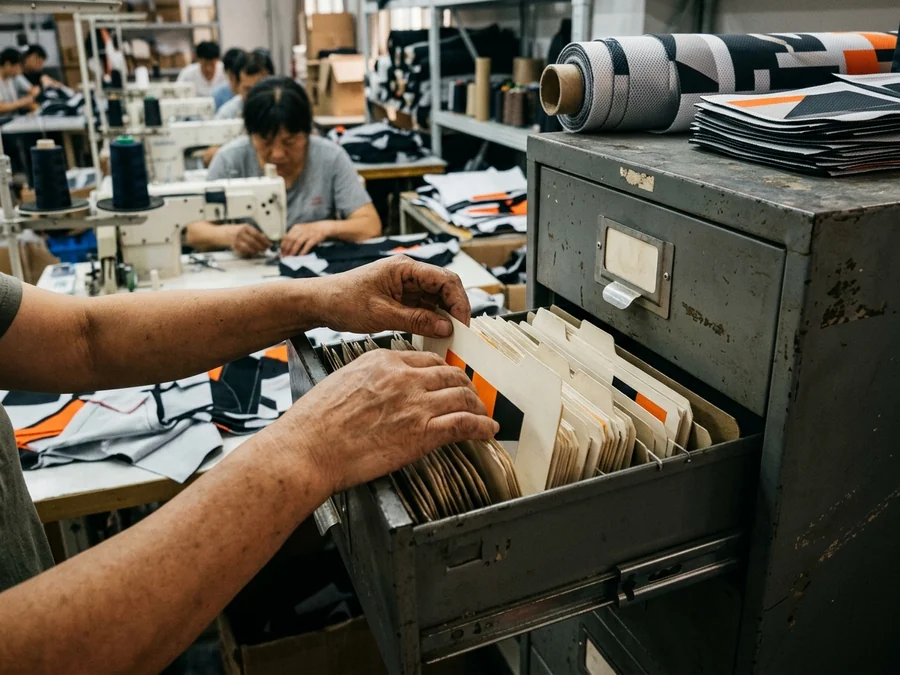
Approved strip and profile card filed in the archive drawer under the team name
08

Archive

The approved strip and the profile filed under the team name; a copy of the strip goes in the sample pack.

Before
the press

The press does not run on a strip that is off. The profile is adjusted and a new strip printed until it matches.

The lamp

The daylight lamp: why the check is not made on a screen

The color the rider wears is the color under the sun, so the check is made under a lamp that behaves like the sun

Screens and fabric do not agree. Screens show color with light; fabric shows color by reflecting it. A red that matches on two screens can be two reds on two fabrics, and print room lighting shifts the color again. The strip check is made under a daylight lamp, on the fabric, with the archived strip beside it — because the paddock, the pit lane and the sponsor's photographer all work in daylight.
  • Not a screenA monitor emits its own light and is calibrated to itself; two monitors disagree before the fabric even arrives.
  • Not the room lightWorkshop tubes push color one way; a strip approved under them can shift outdoors.
  • Not a printed swatch bookPaper and polyester mesh reflect differently; the check has to be on the fabric of the run.
How to check itWhen you check the sample against the strip, do it by a window, not under your own workshop's tubes.
Two color strips laid side by side on the bench under a daylight lamp
One lamp · the whole run
Reorders

Reorders in 15 days: the mid-season rider and the second run

The archive is the reason a reorder is a print run and not a new design

A reorder starts from the file, not from a new design

One rider or a full second run, the route is the same. A reorder of a sublimated piece starts from the archived profile and strip. A new strip is printed on the same fabric, checked against the archive under daylight, and the run goes to the press; the layout, the roster and the size sheet are already on file. Sublimated repeats ship in 15 days for that reason, and the new pieces match the ones already on the riders.

  • Nothing is re-approved: the profile, the layout and the size sheet stay as they were signed off.
  • The strip check still happens — a reorder skips the design work, not the color check.
15DAYS · SUBLIMATED REPEAT

Against 25–35 days for a bulk order after sample approval — the difference is the sampling and the profile work that a reorder does not have to repeat.
60 setsA motocross club season kit: jersey, pants and gloves from one roster
8 membersAdded mid-season from the saved profile; matched the founding sets on the gate
0 samplesA reorder from the archive does not need a new sample
How to check itAsk for the profile name and the strip after the first order. A reorder that needs a new sample is not a reorder.
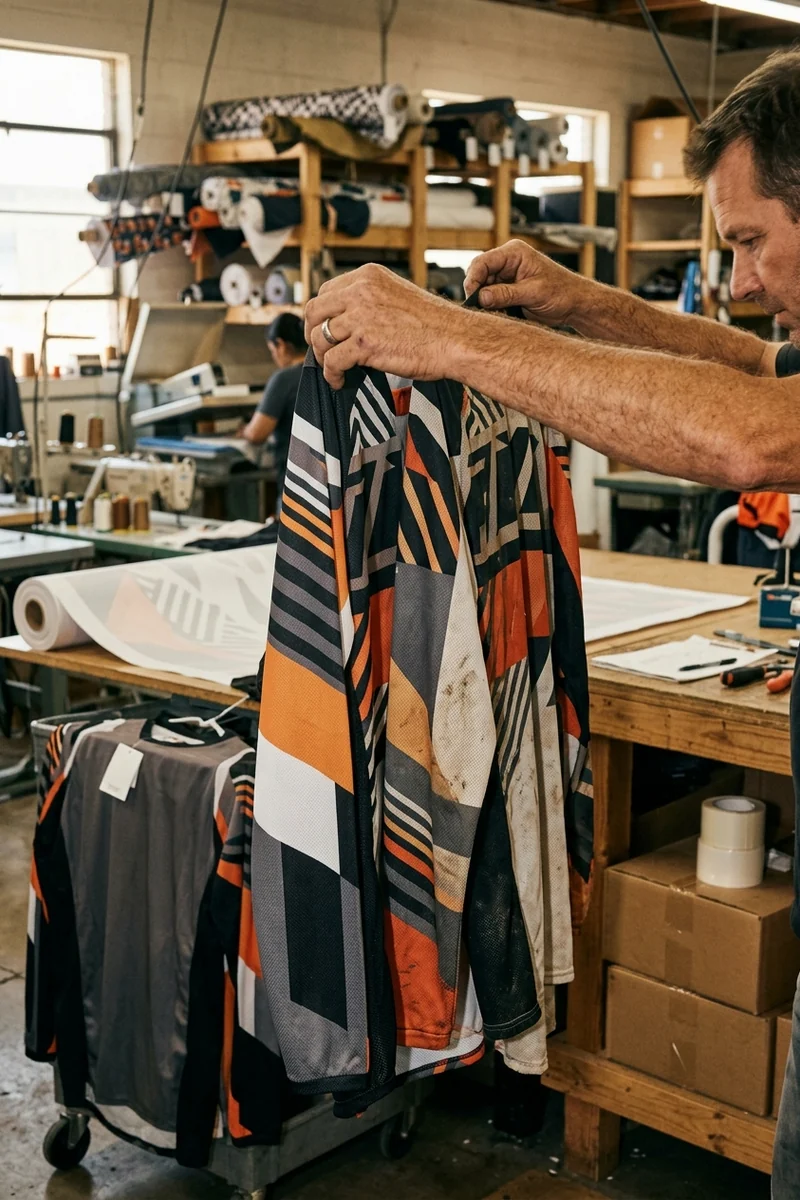
A newly printed jersey held beside one from last season, colors matching
New run · beside last season
48H LAYOUTPrint-ready layout back to you
7–10DAYS SAMPLESublimated sample from the profile
15DAYS REPEATReorder from the archived strip
20% MID-LINEWhere the batch is pulled and checked
What prints, what does not

Materials that print and materials that do not: where each one goes

Four materials that print, three that do not, and where each one goes instead.

MaterialSublimationWhere it goes
Polyester mesh jersey140–160 gsm, all-over design across every panelPrintsPrinted from the jersey mesh profile
600D polyester pant panelPrinted flat before the panel is cutPrintsOwn profile; checked against the jersey strip
Crew shirt and club polyesterPit-crew shirts, team tees, club piecesPrintsOwn profile, same team file
Glove back panel · kart suit shellSublimated branding on the outer shellPrintsPanel profile, matched to the kit
Cotton teeNo polyester for the dye to enterDoes notHeat transfer or screen print
Fleece hoodie280–320 gsm club fleeceDoes notEmbroidered badge, thread matched to the strip
LeatherRace suit and jacket hidesDoes notPerforation, embroidery or leather appliqué
The badge ruleA club badge that appears on both a printed jersey and an embroidered hoodie is profiled once for print and digitized once for thread, with the thread colors picked against the printed strip — so the two badges read as one under daylight. Where a design mixes fabrics, the print room and the decoration room work from the same strip.
Four checks on color

Sublimation quality checks on the run: strip, first panel, mid-line and final

Four checks on color and registration, every one of them made against the strip rather than against a memory of it.
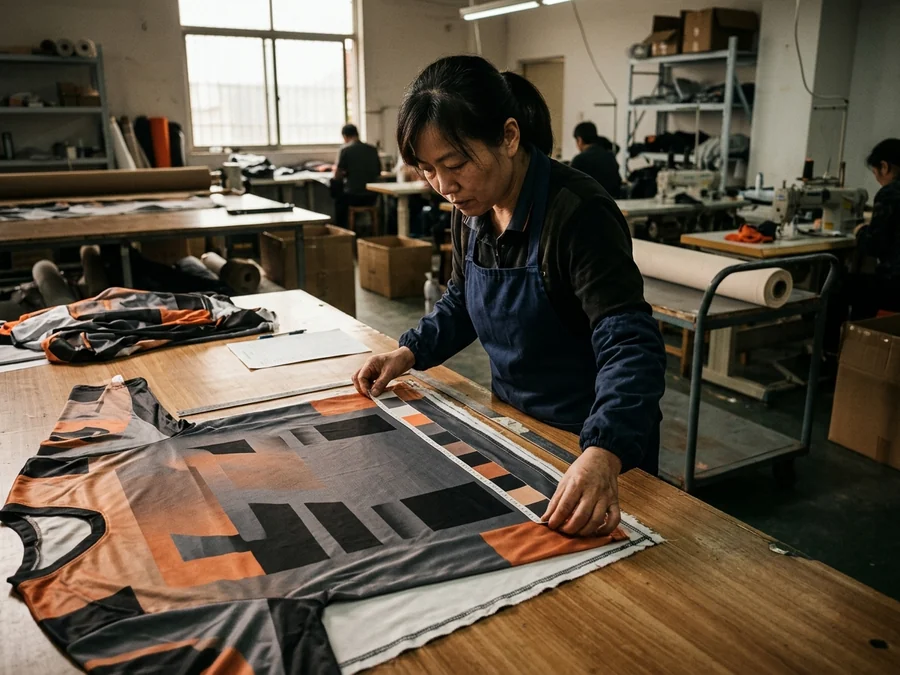
Strip check against the archived strip before the press runs

Strip against archive

Against · the archived strip

Before the press, under daylight. The run does not start on a strip that is off; the profile is adjusted and reprinted first.
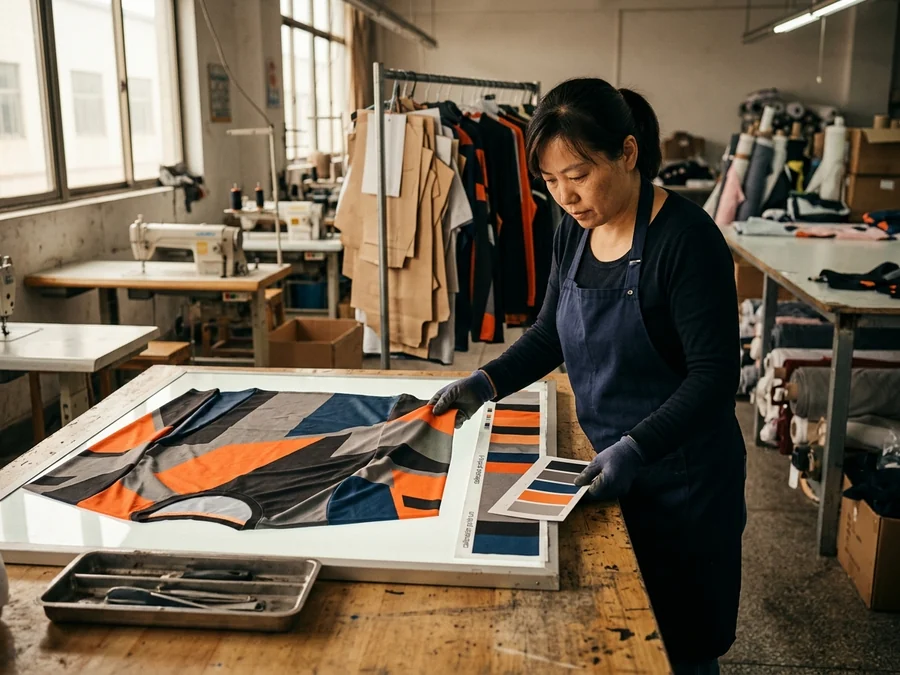
First printed panel of the run laid against the strip

First panel

Against · the strip and the layout

The first printed panel of the run is laid against the strip before the press runs the batch, so a drift is caught on one panel and not on sixty.
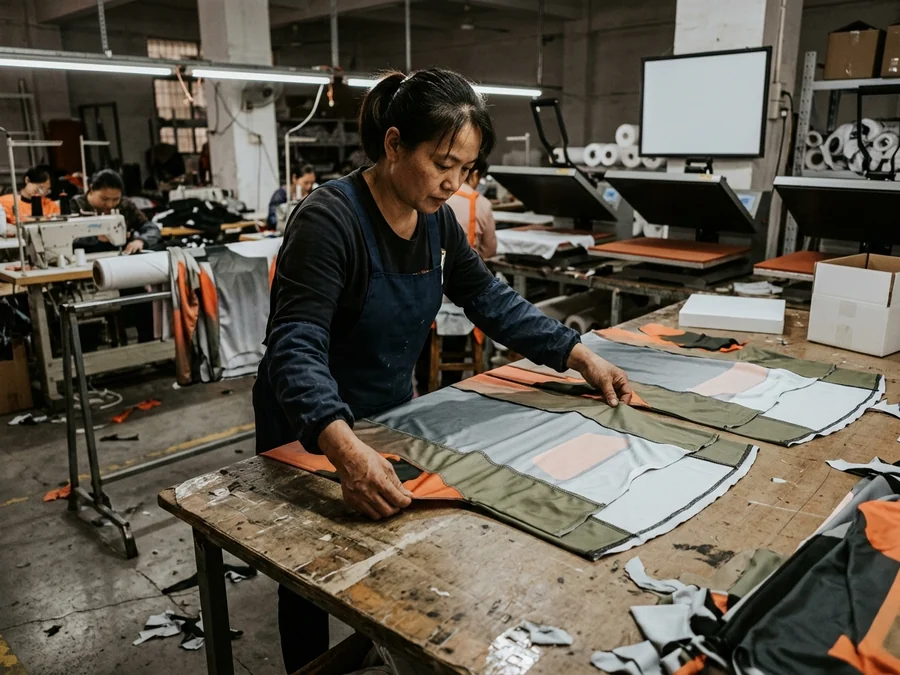
Panels pulled across the run at the mid-line check

Mid-line pull

Against · the strip and the roster

After the first 20 percent, panels are pulled across the run and checked for color drift and for registration against the layout.
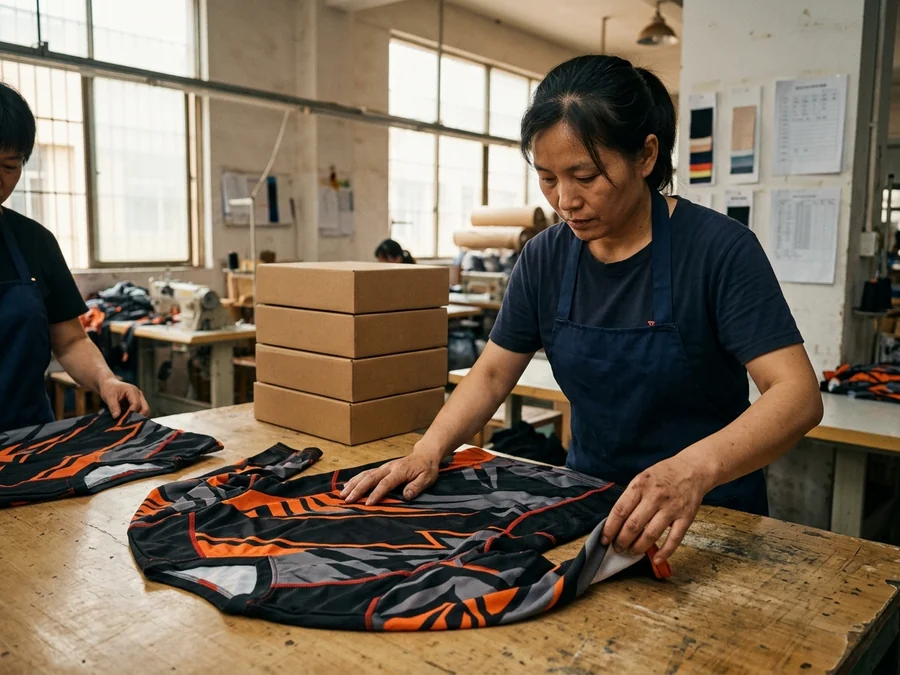
Final check of every finished piece before packing

Final

Against · the roster and the layout

Every piece checked for color, registration, ghosting at the seams and print through the full panel, with names and numbers read against the roster.

In the box

The sample pack: strip, layout, sample and photo set

The strip, the layout and the profile name — the three things that make the next order match.
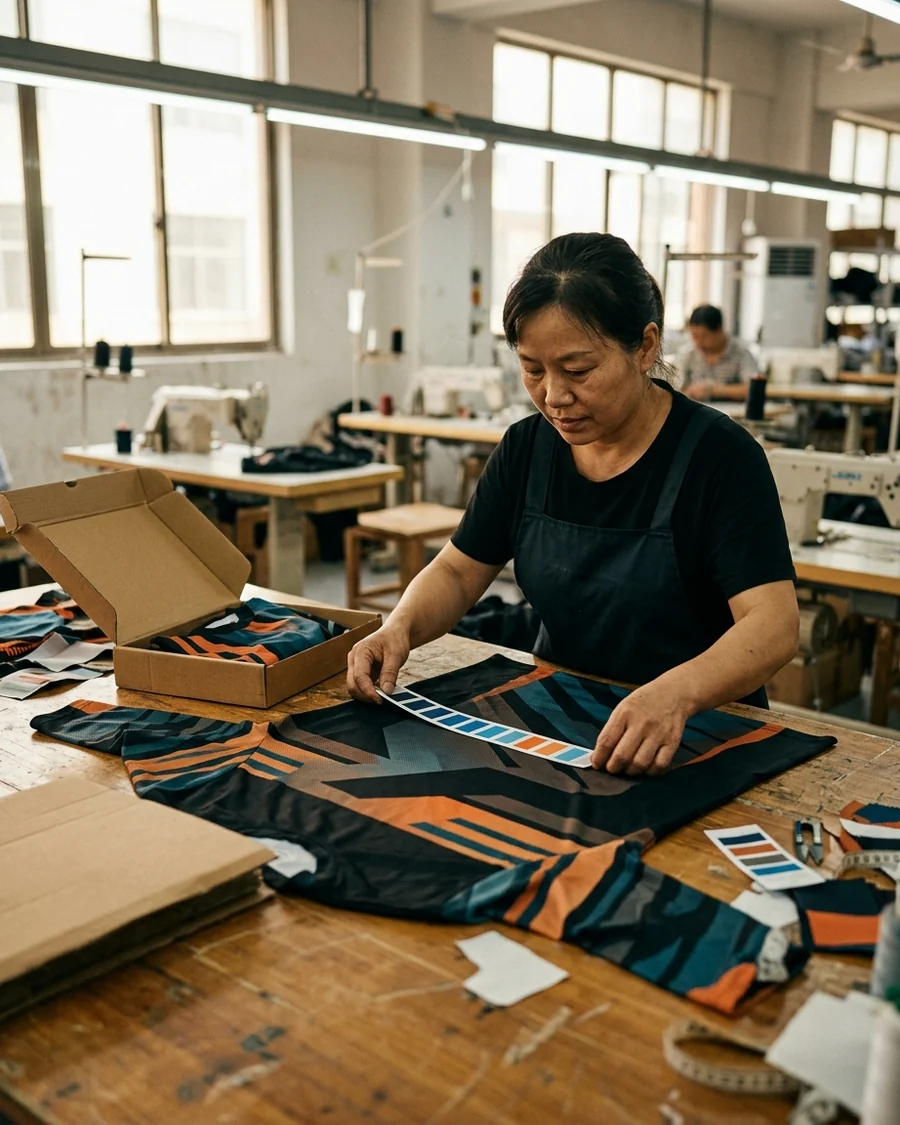
The customer's color strip on their own fabric, packed with the sample
Your strip · your fabric
Layout sheet showing the artwork on the pattern pieces with the profile name
Layout · profile name on it
Start-of-line photo with the first panel against the strip
Photo set · before shipping
  • The color stripYour archived strip, on your fabric, for checking the next run yourself under daylight.
  • The layoutThe artwork on the pattern pieces, with the profile name printed on it.
  • The sampleOne piece printed with one rider's fields, from the profile that the bulk run will use.
  • The photo setThe start-of-line photo with the first panel against the strip, and the packed-order set before shipping.
Why it is sent to youA team that holds its own strip can check a run without asking us whether it matched. That is the point of sending it.
Send the artwork

Send last season's kit and we will tell you whether we can print to it

Changes

Changes to a sublimated run, and what each costs in days

Changes before layout approval cost nothing; these are the ones that move the schedule.
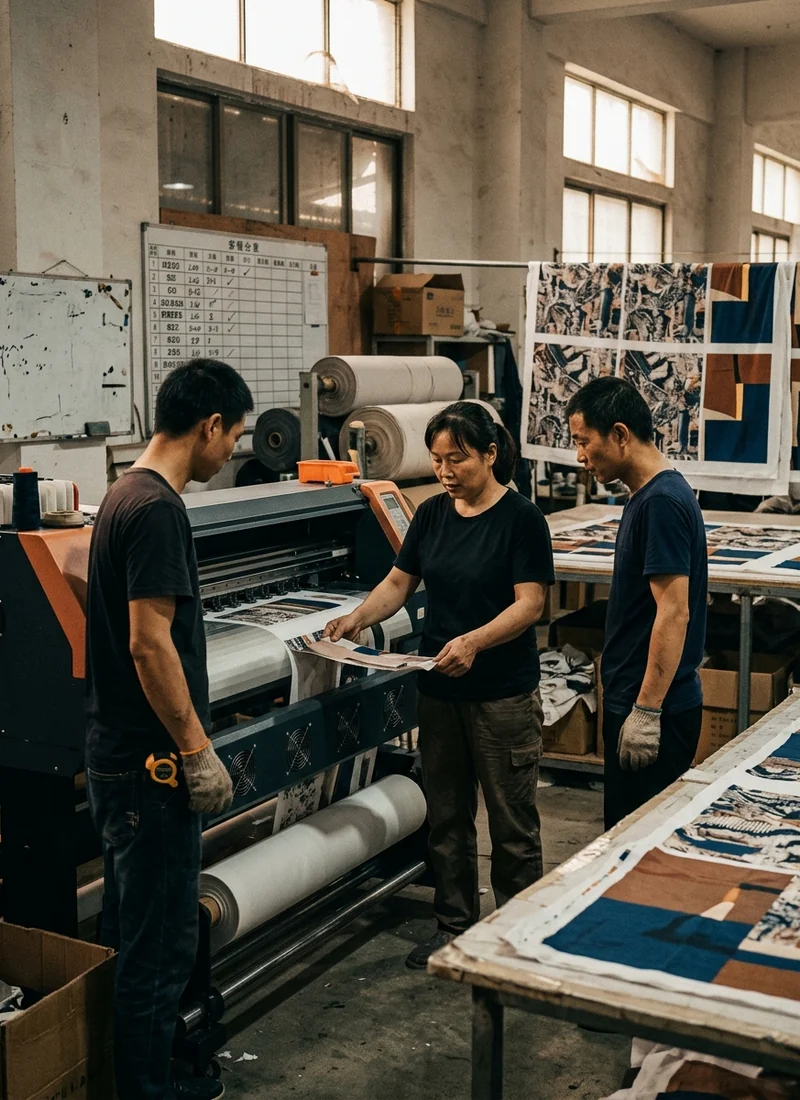
Artwork or name change before layout approvalNames, numbers or sponsor placement, before you sign the layout
0DAYS
Color changed after the strip is approvedNew profile and new strip; the sample is repeated if the change runs across the design
NewSTRIP
Fabric changed after samplingThe dye behaves differently on the new fabric, so it is a new profile, strip and sample
NewSAMPLE
Reorder from the archiveProfile and strip already on file; no new sample
15DAYS
Sponsor added mid-seasonAdded to the layout and printed on the next run from the saved profile
NextRUN
Bulk after sample approvalScheduled backwards from your date
25–35DAYS
Run schedule on the print room wall with the strip approval marked
Counted back from your date
Seven things

Sublimation quote: the seven things to send

Send these and Anna answers with a feasibility check within 24 hours on business days.
  1. The artwork

    Vector files, or last season's kit if we printed it.
  2. The garment

    Jersey, pants, crew shirt, kart suit or club piece; the fabric decides the profile.
  3. The roster or size mix

    Names and numbers, or the size split if the names come later.
  4. The colors

    Reference swatches if the brand colors are exact; we profile to them.
  5. Other pieces in the kit

    Embroidered pieces that have to match the print.
  6. The date

    Round one or launch; we count back from it.
  7. Delivery country

    For express, air or sea, and for DDP on request.
Artwork files, reference swatches and a roster laid out ready to send
Seven things · one email
Artwork and garment

Send the artwork and the garment, and we tell you which profile it needs

Anna replies within 24 hours on business days with a feasibility answer and the next step: whether the colors can be profiled as they are, which fabric they will be profiled on, and when the strip comes back.

Anna · Sales Manager WhatsApp / phone: +86 177 0272 7677 Email: sales@runmotoapparel.com Mon–Sat 9:00–18:00 (GMT+8)