Three-piece backs · from 10 per design

Custom Motorcycle Club Vests: The Garment a Club Is Recognised By

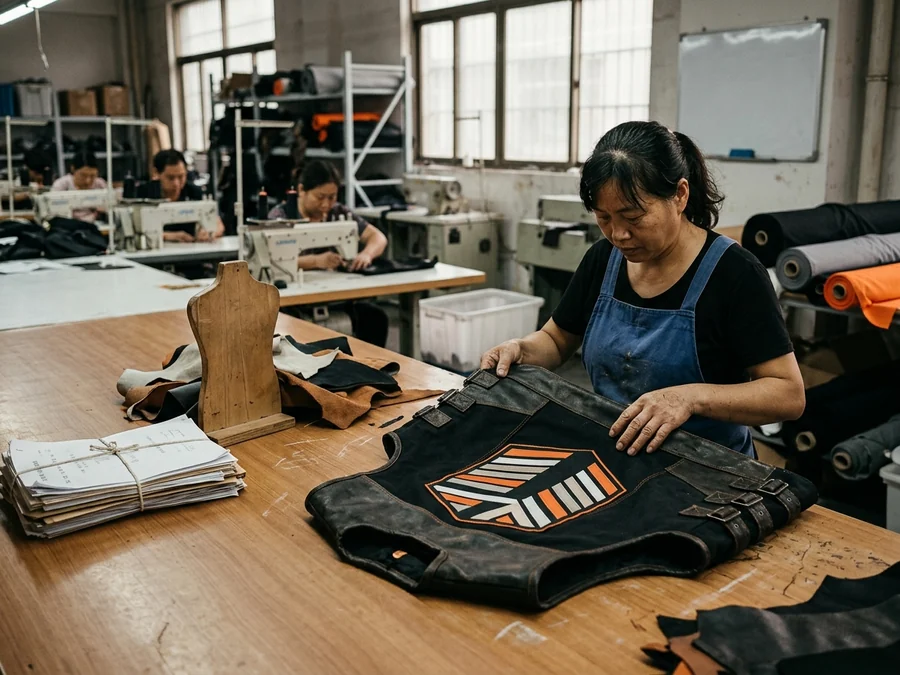
  • 01Top rockerThe group name, arced to a back rather than a circle
  • 02Centre emblemReproduced from what your members already wear
  • 03Bottom rockerTerritory, chapter or year — and the gap is reserved for it
The back of a club vest carrying a three-piece patch set
One back · three pieces · one gap

A club vest is the only garment in a riding group that everyone owns and nobody replaces. The patch on it has to look the same on the founding member's vest as on the one made for somebody who joined last month. That last part is the whole job.

Riding clubsCharity and veteran groupsOwner groupsRally organisersRace team kits
Club vest range

Custom Motorcycle Club Vest Collection

Custom leather, denim, canvas and mesh motorcycle vests developed for riding clubs, dealers and private-label apparel programs.

Leather club-cut motorcycle vest with a one-piece back, shown from behind

Leather Motorcycle Club Vests

A classic leather club-cut vest with a one-piece back and durable construction, suited to large back patches, embroidery and club insignia.

Request This Style →
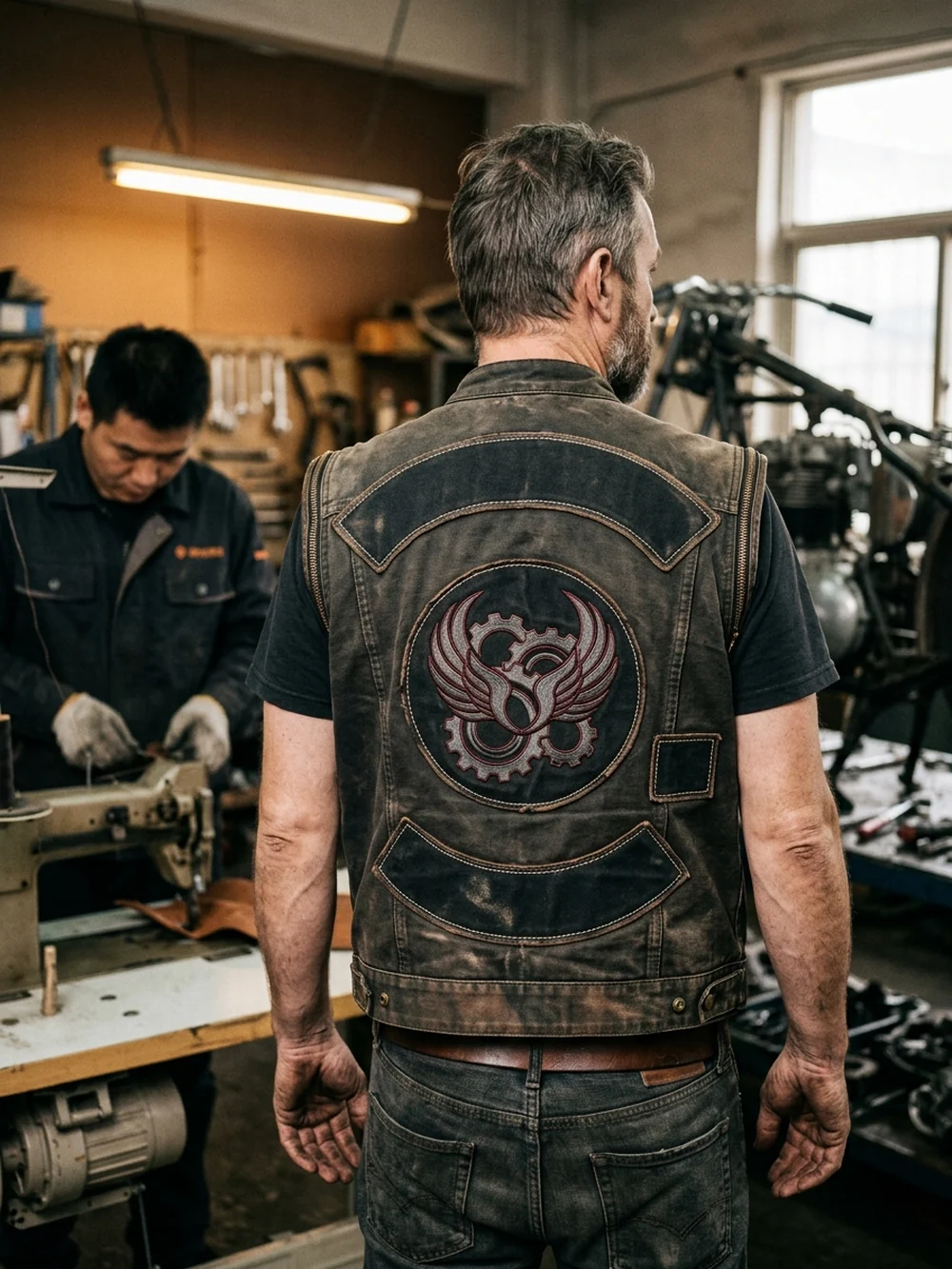
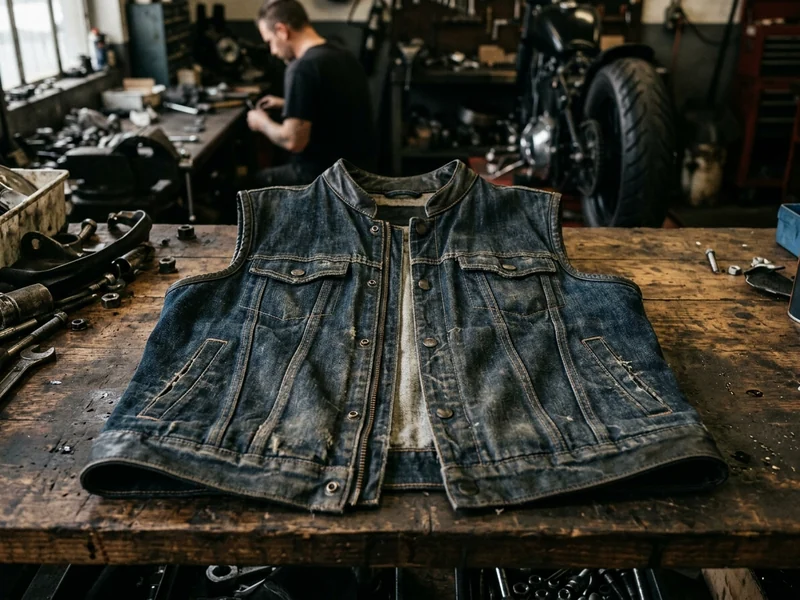
Denim motorcycle club vest with leather trim, laid flat

Denim Motorcycle Club Vests

Lighter than leather for everyday and warm-weather riding, with support for leather trim, embroidery, patches and custom labels.

Request This Style →
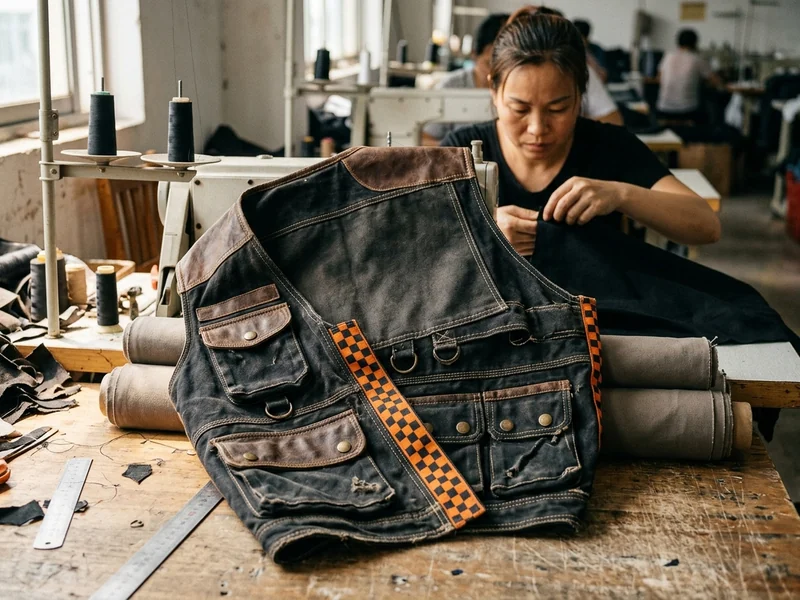
Canvas motorcycle club vest with leather panels and utility pockets

Canvas Motorcycle Club Vests

Hard-wearing canvas construction that can be combined with leather panels and utility pockets, suited to club bulk orders and branded retail programs.

Request This Style →
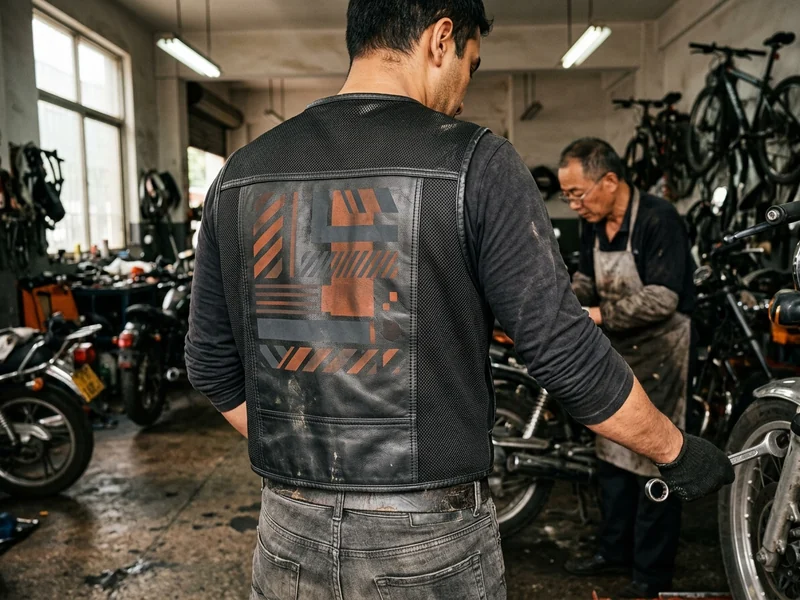
Mesh motorcycle club vest with a solid back-patch panel, shown from behind

Moto Mesh Club Vests

Highly breathable mesh construction for hot-weather riding, while keeping the full back-patch display area.

Request This Style →
Who orders them

Who orders club vests: clubs, charity groups, owner groups and organisers

Four kinds of group, all needing the same thing to look the same on thirty different bodies.
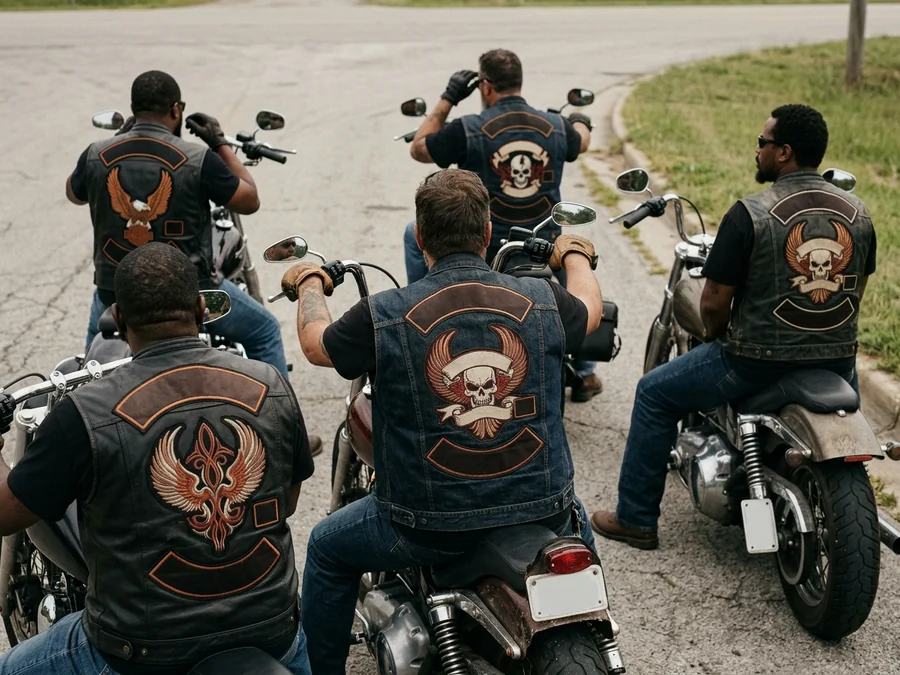
Riding club members with back patches, seen from behind at a stop

Riding clubs

Want a back patch that reads at distance, and a vest their members will actually wear.
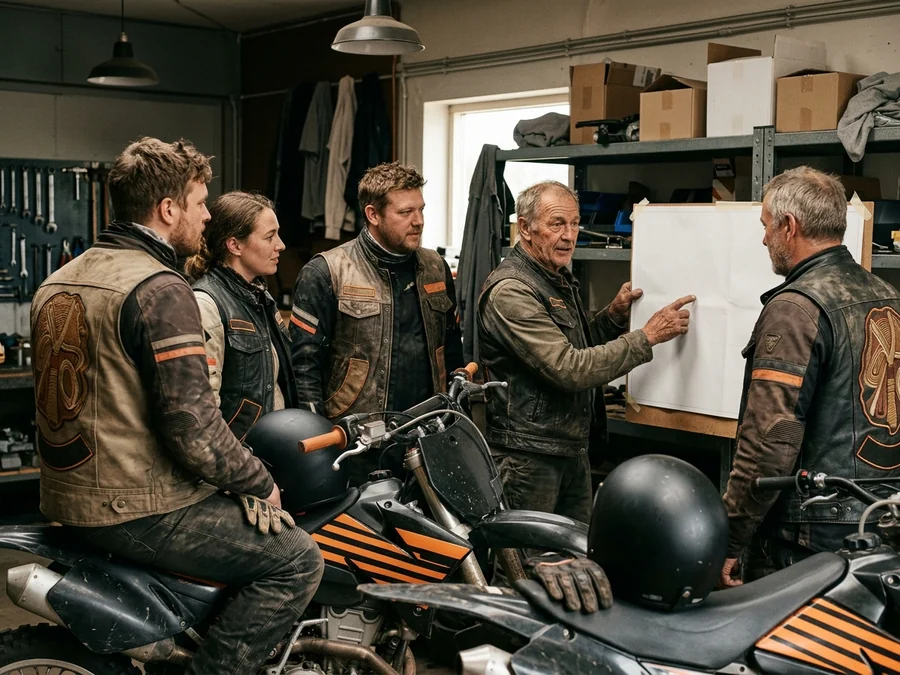
Wants · legible at distance
Charity ride group covering a wide range of sizes

Charity and veteran groups

Need a consistent look across a wide size range, plus a route to add members every year.
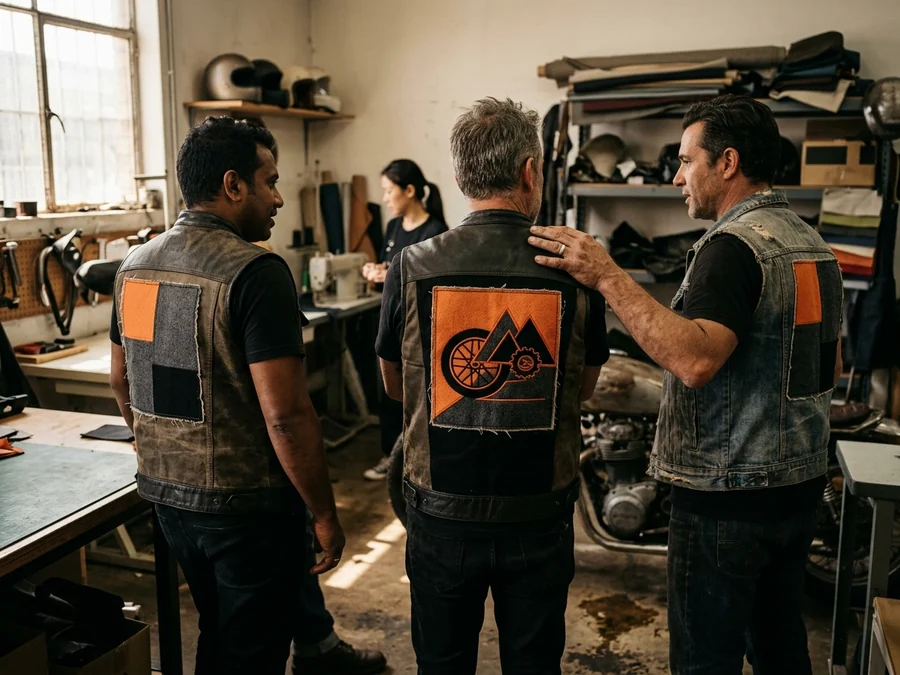
Wants · the same look, every size
Owner group with an existing emblem on their vests

Brand and model owner groups

Have an existing emblem and need it reproduced faithfully, not quietly re-drawn.
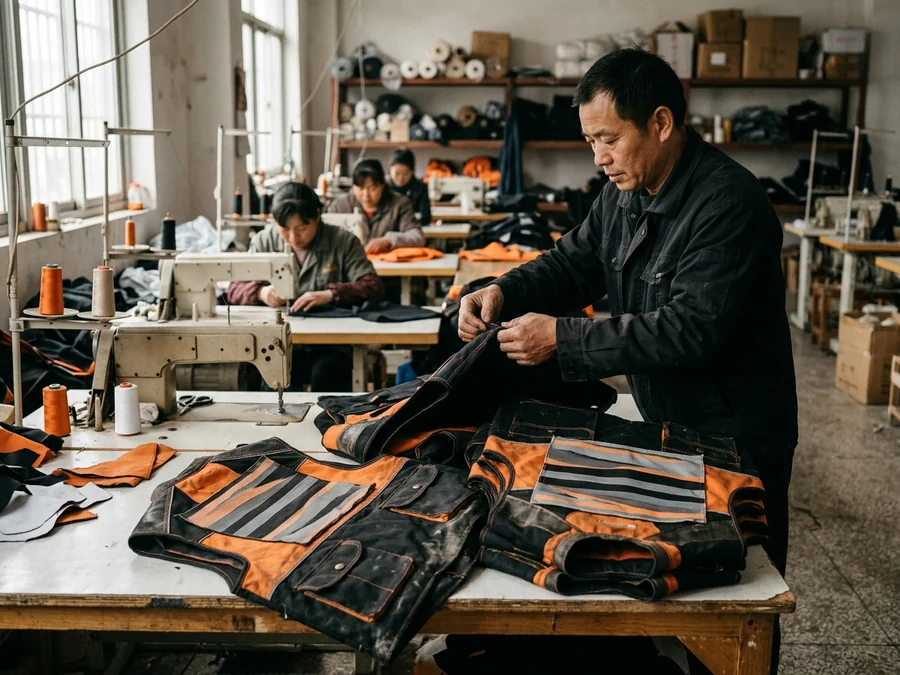
Wants · reproduction, not redesign
Rally organiser checking a run of vests against an event date

Rally and event organisers

Order a run of vests for an event and need them on a date that does not move.

Wants · a date that holds
Not this page
  • Race team kits and sponsor blocks, which have their own page
  • Leather race suits, which are a different build entirely
The shell

Leather or textile: the first decision

Two shells, two lifetimes, and two different ways of carrying a patch. The honest way to choose is by how long the design will stay the same.
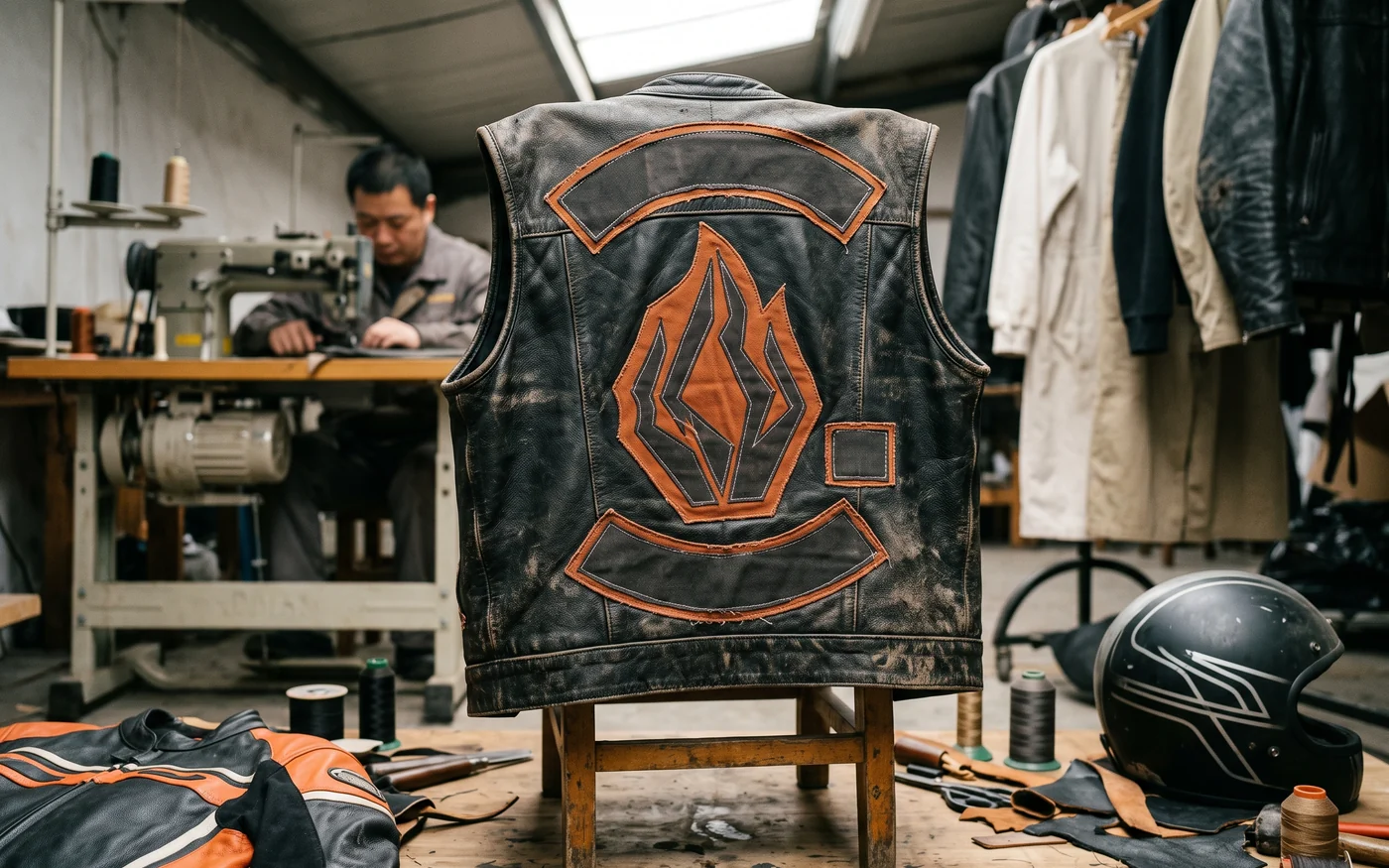
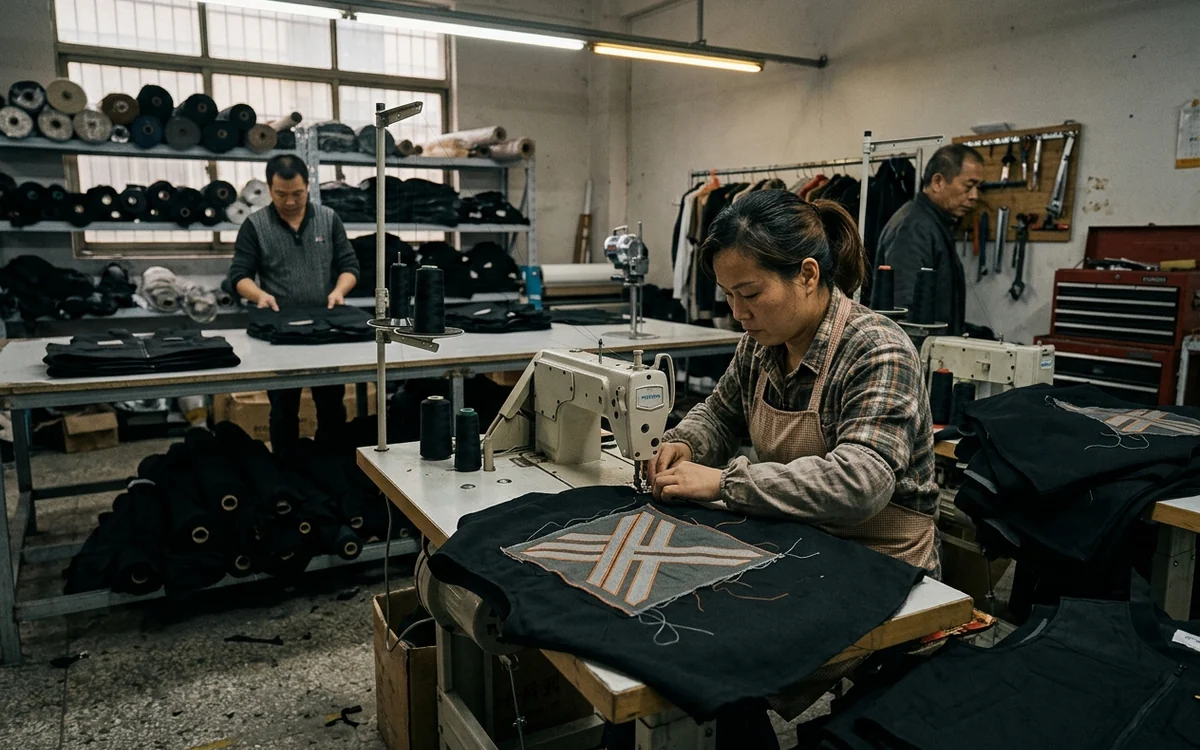
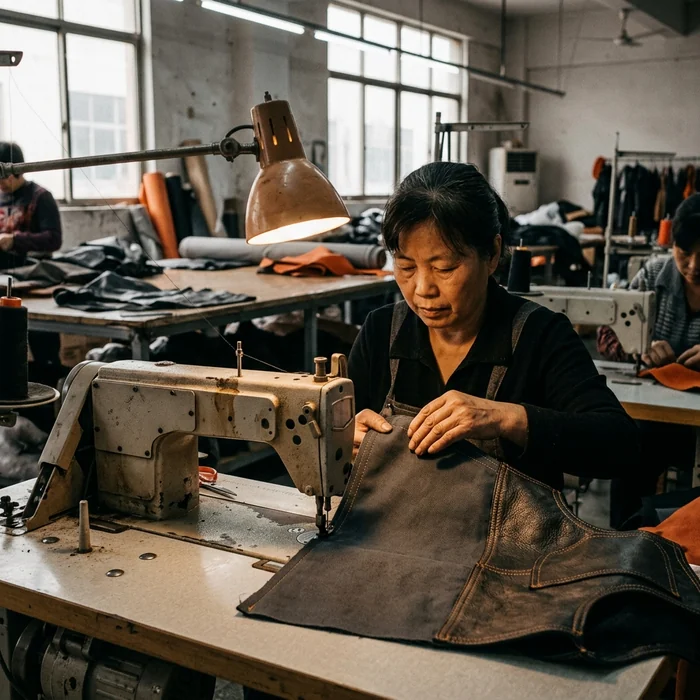
A cowhide club vest that has moulded to its wearer over a season
Leathersewn through, permanent
A 600D textile club vest, lighter and easier to wash
Textilelighter, more forgiving
 LeatherTextile
Shell1.1–1.3 mm cowhide600D polyester or canvas
LifetimeMoulds over a season, lasts a decadeLighter, washes easily, replaced sooner
PatchesSewn through — permanent from the first stitchSewn or panel-mounted — recoverable
If the design changesA new vestA new panel
SuitsA settled emblem and members who ride constantlyA group still forming, or one expecting to re-issue

Choose by how settled the design is, not by budget

A group with a settled emblem and members who ride constantly is a leather group. The vest moulds to its wearer, it survives a decade of being pulled on over a jacket, and the permanence of a sewn-through patch stops being a risk once nobody intends to change the design.

A group still forming should not put its first design into hide. Wording changes, a chapter name gets added, a committee decides the emblem is a little too busy — all of that is ordinary in a club's first two years, and all of it is cheap on textile and expensive on leather. Starting in textile and moving to leather once the design has stopped moving is not a compromise; it is the sequence that costs the club least.

How to check itAsk what happens if the design changes. On leather the answer is a new vest; on textile it is a new panel. A supplier who says "no problem" to both has not thought about it.
The three-piece back

The three-piece back, and why it is built in that order

Scroll: top rocker, centre, bottom rocker, then the stitch line. The gap between them is what your eye reads as one back rather than three patches.

gap gap

What is decided before any of them is stitched

  • The arc radiusOf each rocker — it has to match the curve of a human back, not a circle drawn on a screen.
  • The finished widthSet by the smallest vest in the run, not the largest. This one cannot be fixed later.
  • The letter heightDecides whether the name reads from the car behind you, or only from two metres.
  • The gapWritten down as a measurement, so every vest in the group is identical rather than approximately similar.
How to check itAsk for the placement measurements, not a picture. A picture is not a spec.
Placement

Placement: the rule that keeps thirty vests looking like one club

Everything is measured from a fixed point — and the fixed point is not the middle of the garment.
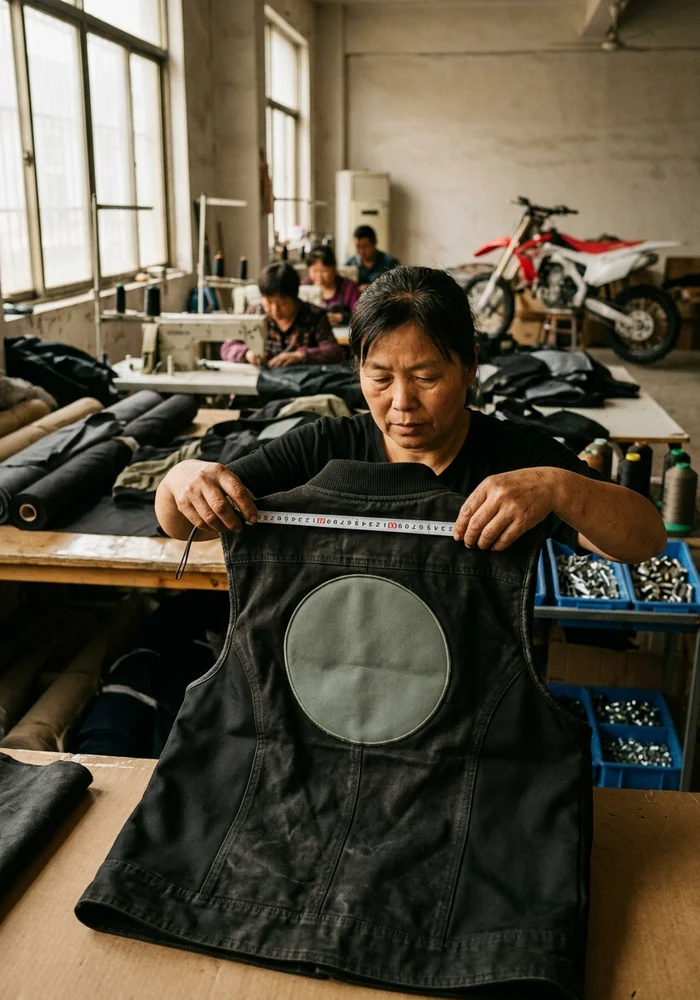
Top rockerMeasured down from the collar seam, out from the centre back seamper size
Centre emblemVertical centre set from the collar seam, not from the hemper size
Bottom rockerSet by the gap below the centre, so the trio stays a trioper size
Name tag, frontFrom the shoulder seam and the placket — not from a pocket that moves with sizeper size
Officer titleAbove or below the name tag, fixed once for the whole groupgroup rule
Small front emblemOpposite chest, aligned to the name tag rather than to the placket alonegroup rule
Patch placement being measured from the collar seam and centre back seam
From the seam · not by eye
How to check itAsk how placement changes between an S and a 3XL. "It doesn't" is the wrong answer — "centred and 10 cm from the top" produces two different-looking backs on those two vests.
Thirty vests
one back

A group photo is the only test that matters, and it is taken from behind.

Reproducing an emblem

Digitizing an existing emblem without redrawing it

Most groups already have an emblem, and the job is to reproduce it rather than improve it

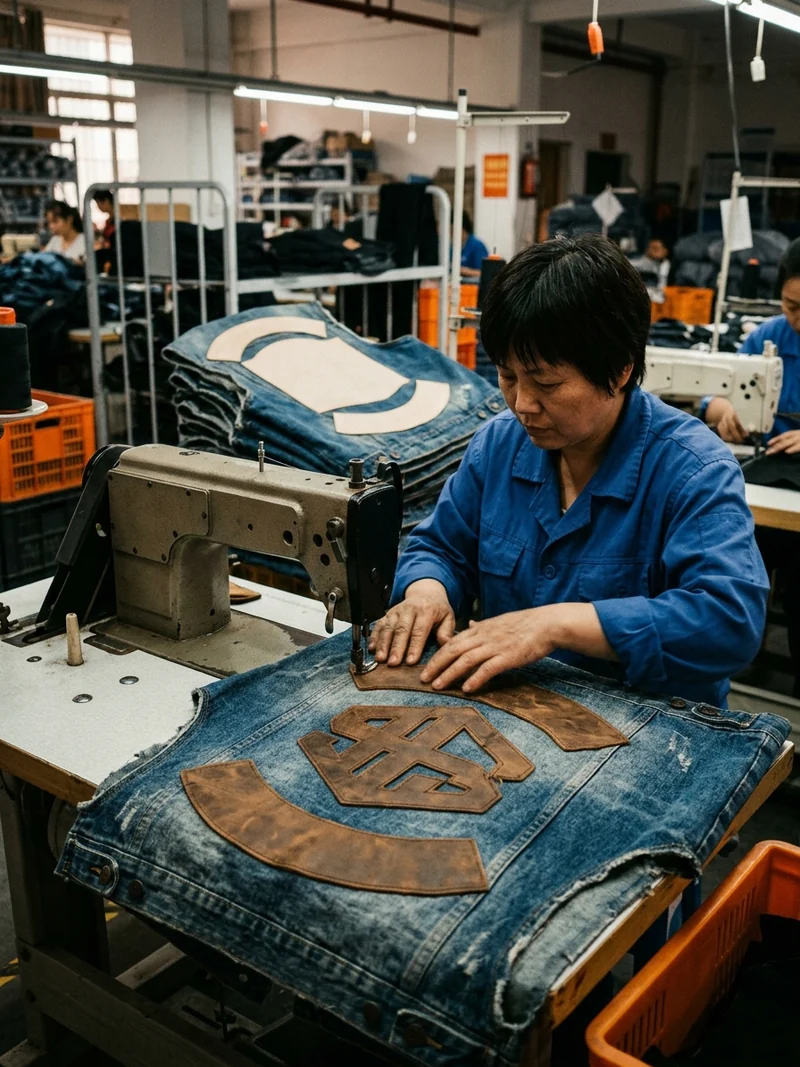
An existing emblem arrives as a photo of an old patch, a scan, or a file nobody can open. It is traced into a stitch path that reproduces what the group already recognises — the same proportions, the same weight, the same colours as the vests already in the club.
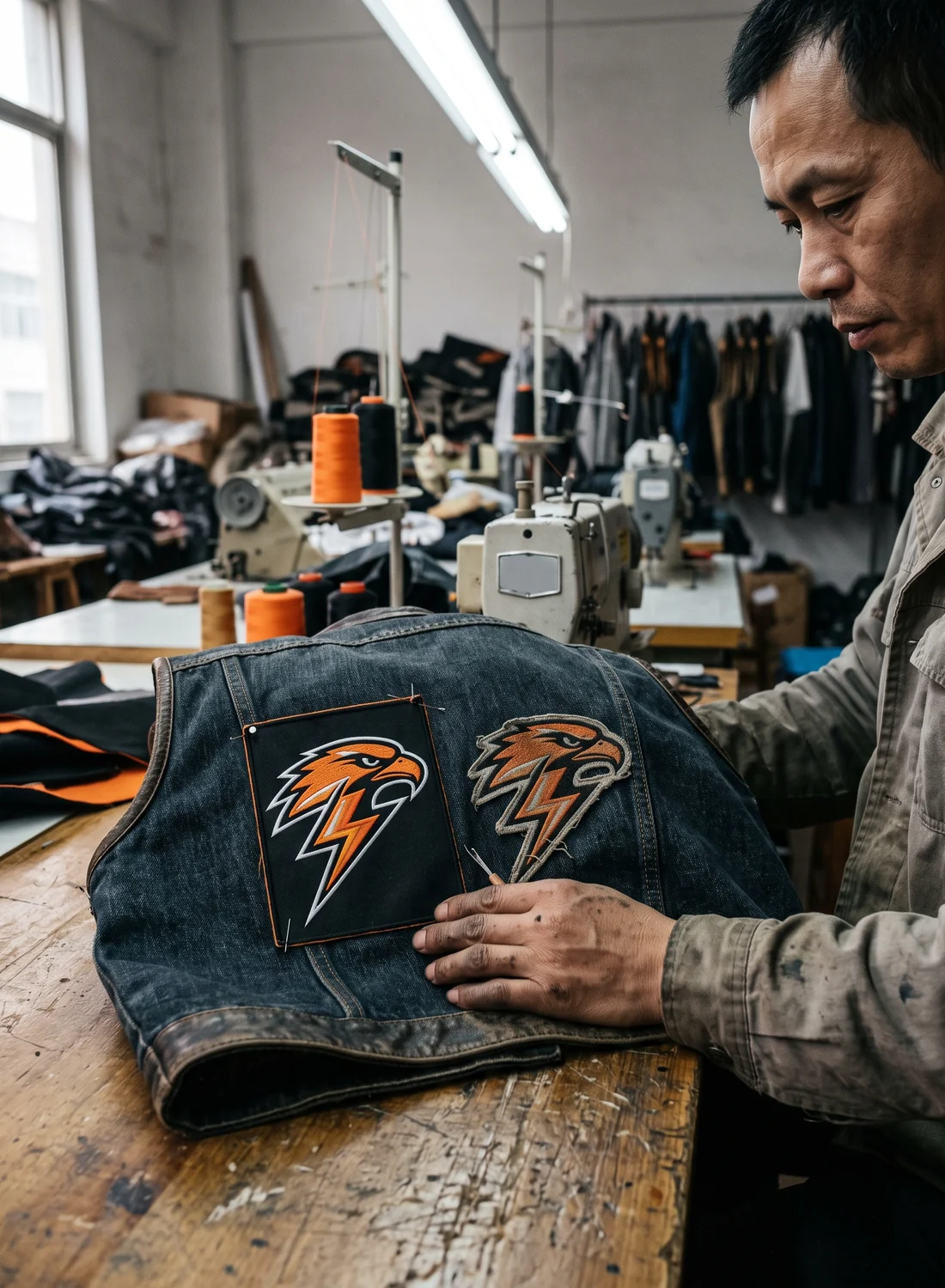
  • Where the original has details that cannot survive at stitch scale, we say so and propose the smallest change that keeps it legible.
  • We do not quietly simplify an emblem to make it easier to sew. A group notices, and it is their emblem, not ours.
  • Thread colours are matched against the existing patch under daylight, on the actual backing fabric.
How to check itAsk for the stitched sample beside a photo of an existing member's patch. That comparison is the approval — not a screen proof.
A newly stitched patch laid beside an existing club patch for comparison
New sample · beside the old patch
Sizes

One club, thirty bodies, one look

A vest range runs XS to 4XL, and the patch has to work at both ends of it

XS–4XLGRADED, NOT SCALED

Club vests are ordered as a size run rather than a size, and the vest block is graded so armholes, length and back width change properly rather than scaling together. The back patch size is chosen against the smallest vest in the run: a back designed for a 2XL and applied to an S runs into the side seams, and there is no fixing that after it is stitched.
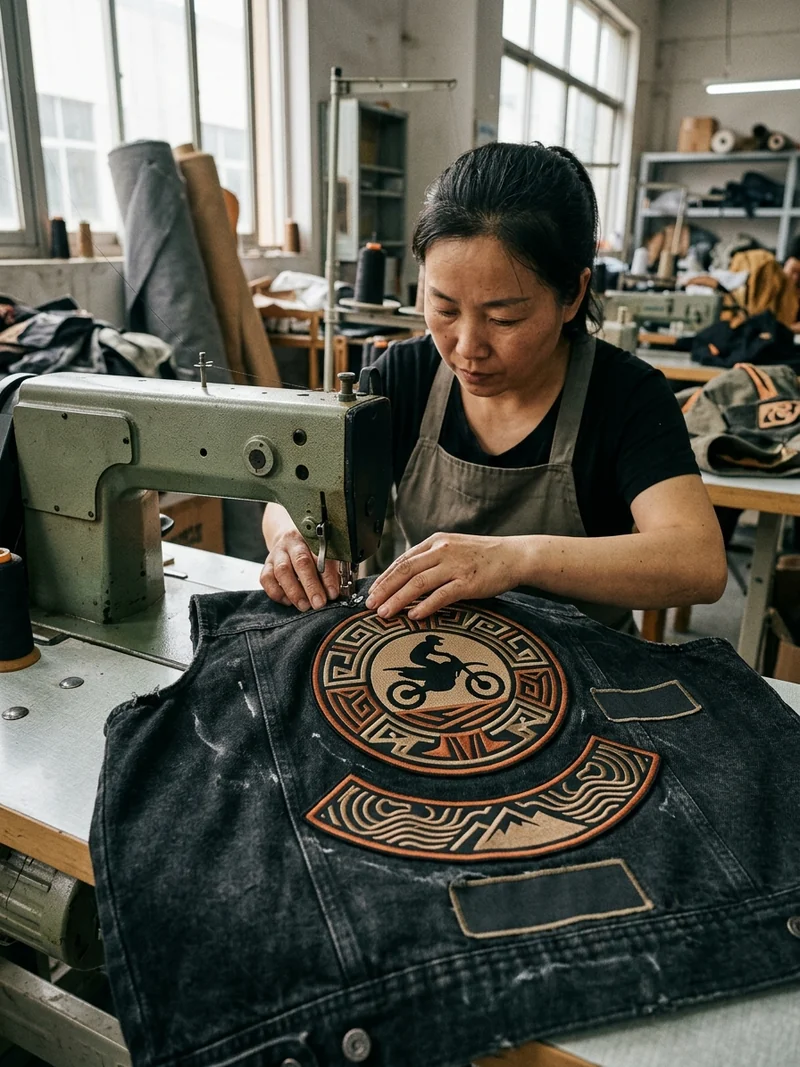
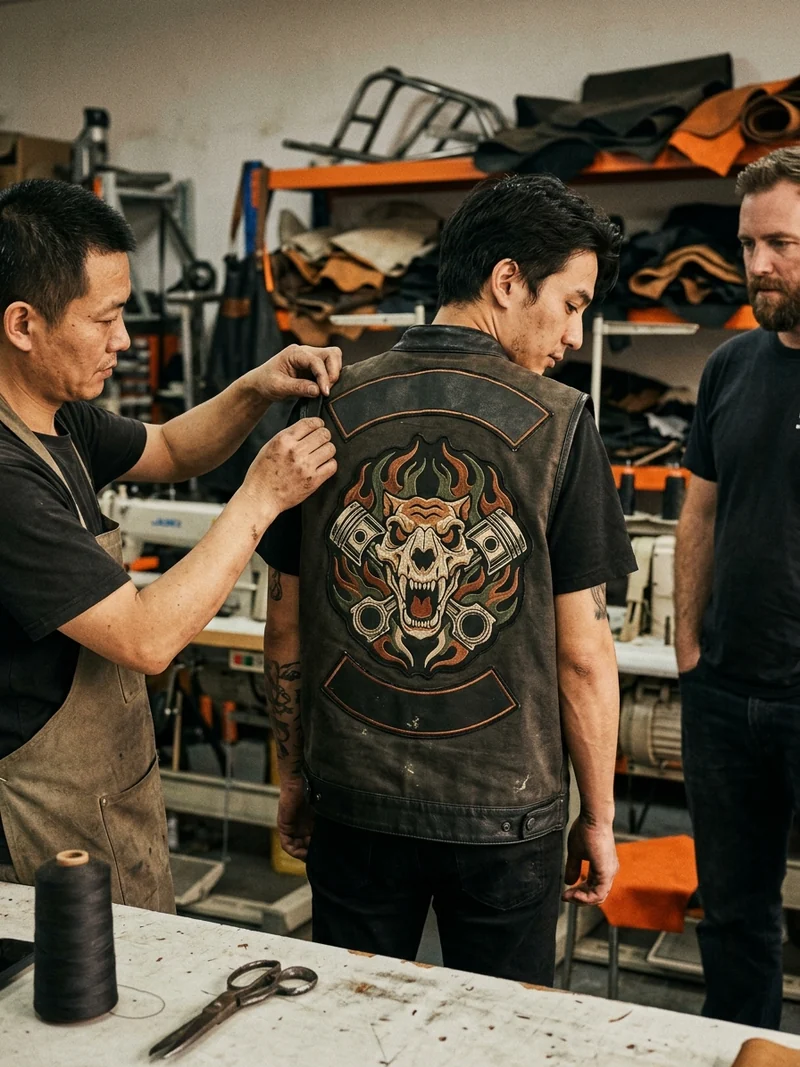
Ordering for a group whose sizes you do not fully knowOrder the sizes you are certain of first and add the rest from the file. Nothing about the second batch changes — same patches, same placement map, same shells.
The same back patch set on a small vest, clear of the side seams
On an S
The same back patch set on a large vest
On an L
The same back patch set on a 3XL vest with the proportion held
On a 3XL
3PIECESTop rocker, centre, bottom rocker
10PCS / DESIGNWhere a club order starts
XS–4XLGRADEDOne look across the whole run
1FILE, REUSEDLater members match the founders
Adding members

Adding members later: the reason the file matters

A club grows in ones and twos, and each new member has to match a vest made two years ago

After the first run, the digitized patch files, the thread numbers, the placement map and the vest block are archived under the club's name. A new member's vest is then a single garment made from the same files, with the same patches stitched to the same measurements.
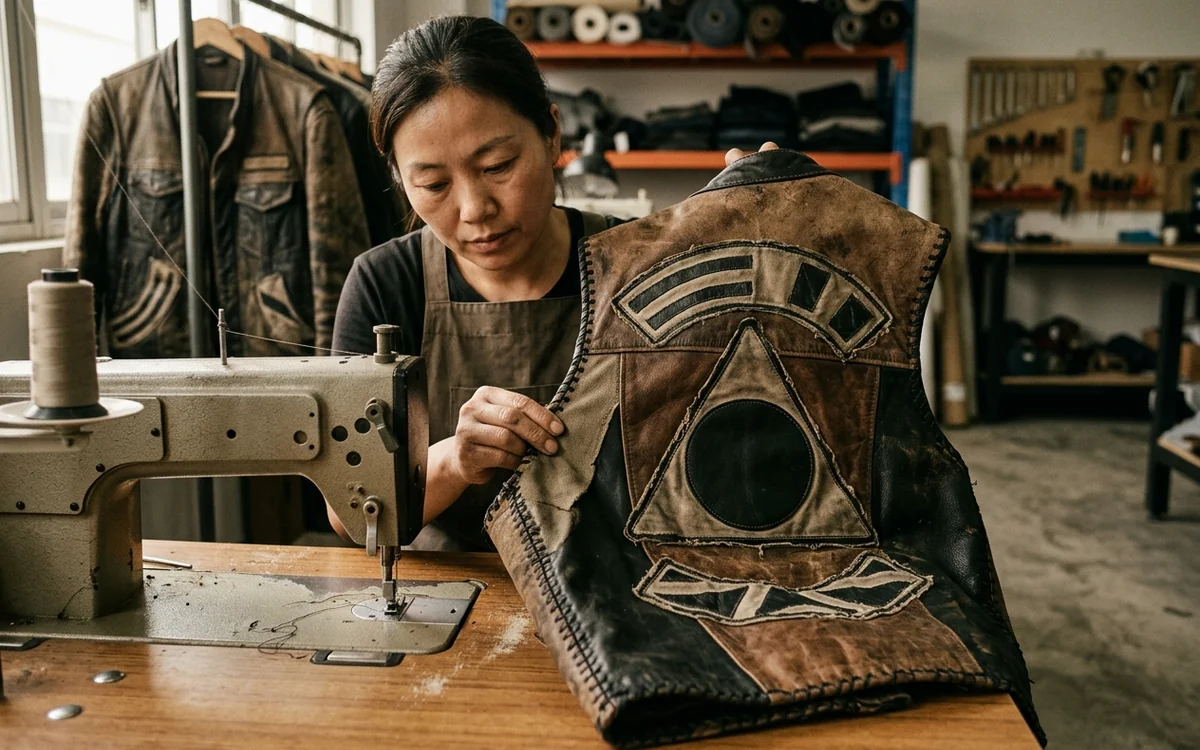
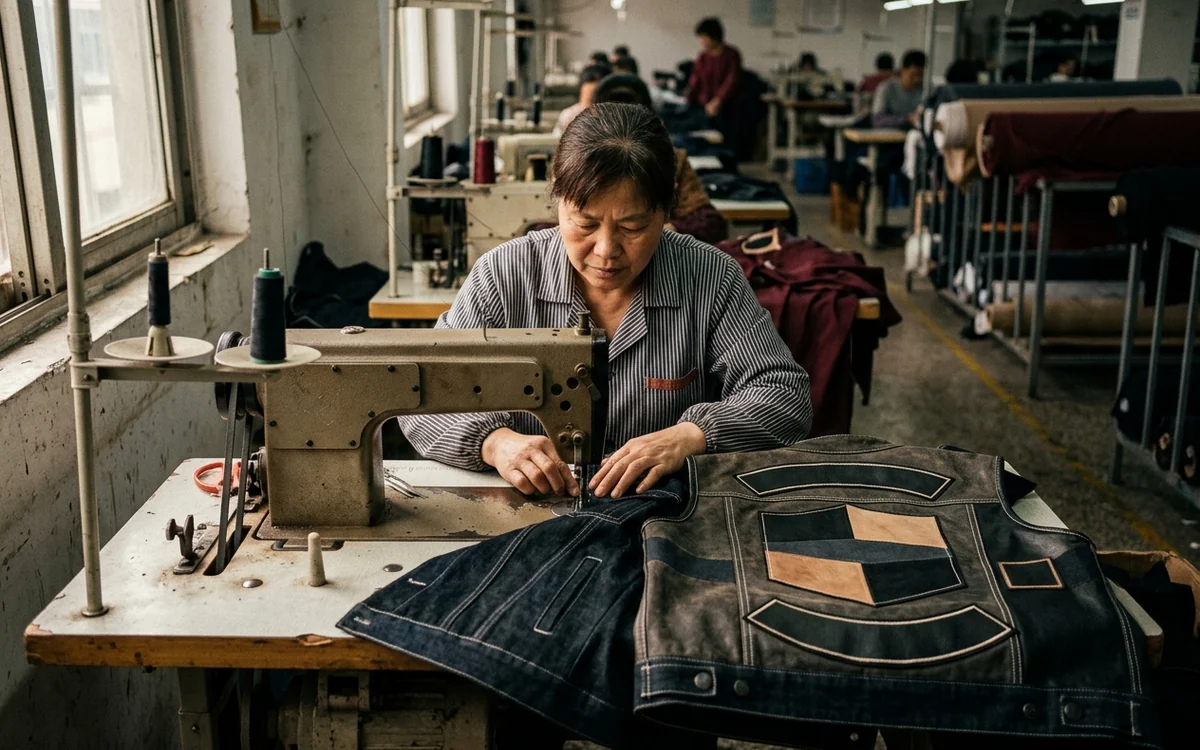
  • Nothing is re-approved and nothing is re-digitized.
  • A member who joins in year three does not stand out in the group photo — which is the entire point.
How to check itAsk what a single additional vest involves in year two. If the answer includes "re-approve the artwork", the file is not really archived — and the vest that comes back will be close enough to pass on a screen and obviously different in a line-up.
A founding member vest, worn in over several seasons
Year one
A new member vest made from the same file, matching the older one
Year three · same file
Construction

Construction details that decide whether a vest lasts

Where a club vest fails, and what is done about each one. None of these is visible in a photograph — which is exactly why they are the four things to ask about.
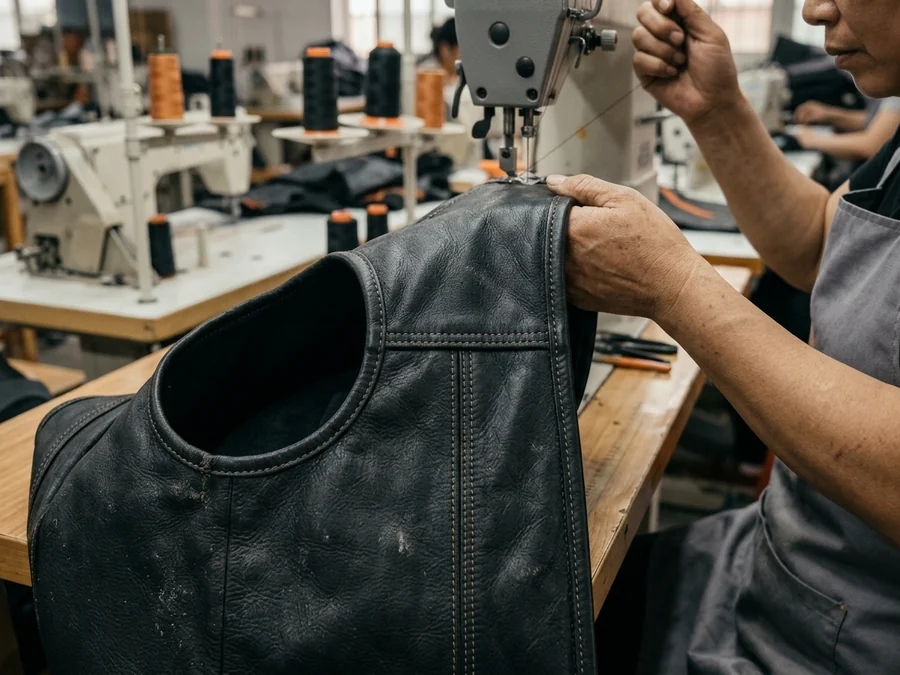
Double-stitched armhole and side seam on a club vest

Armhole and side seams

Fails when · pulled on over a jacket

They take the load every single time the vest goes on over leathers, so they are double-stitched and bar-tacked at the ends.
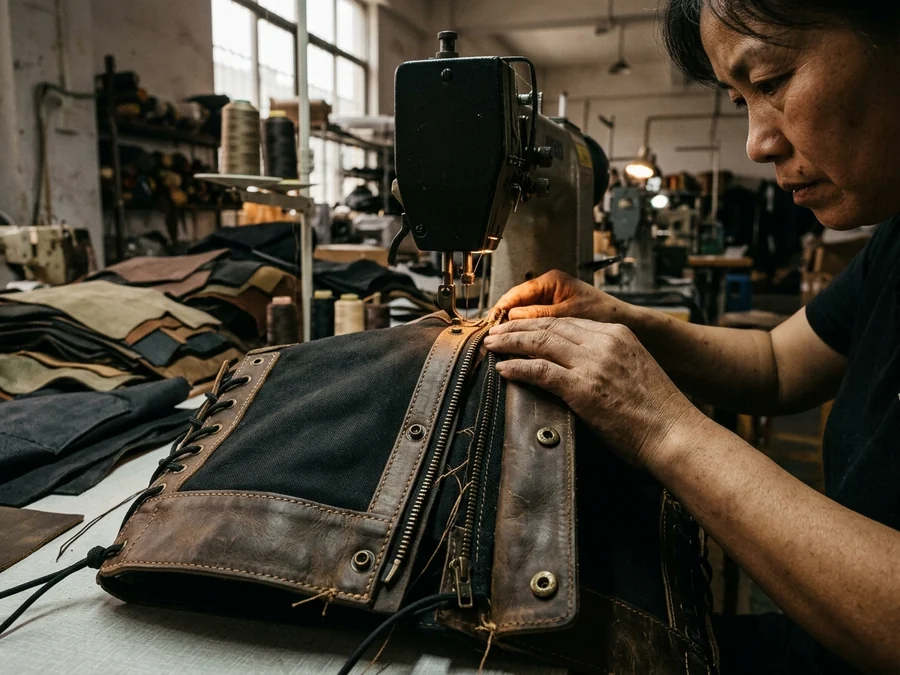
Snap, zip and lace closures for a club vest front

Front closure

Fails when · chosen by catalogue

Snaps, zip or lace, chosen for how the group actually wears it — over leathers, over a t-shirt, or both in the same week.
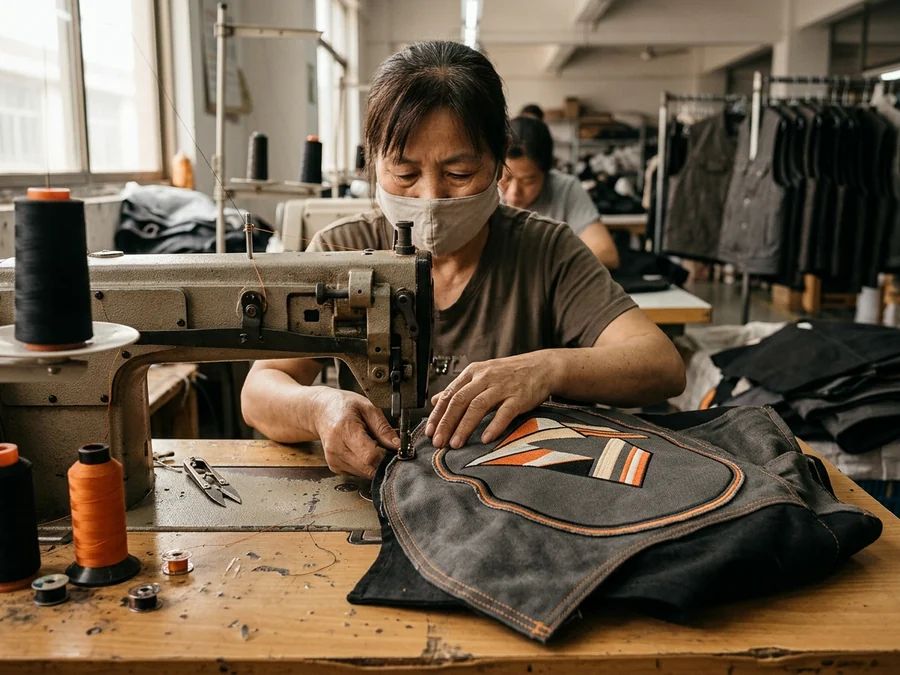
A patch stitched all the way around its edge rather than tacked at corners

Patch edges

Fails when · tacked at corners

Stitched all the way around rather than tacked, because a corner-tacked patch lifts first and then tears the shell it is on.
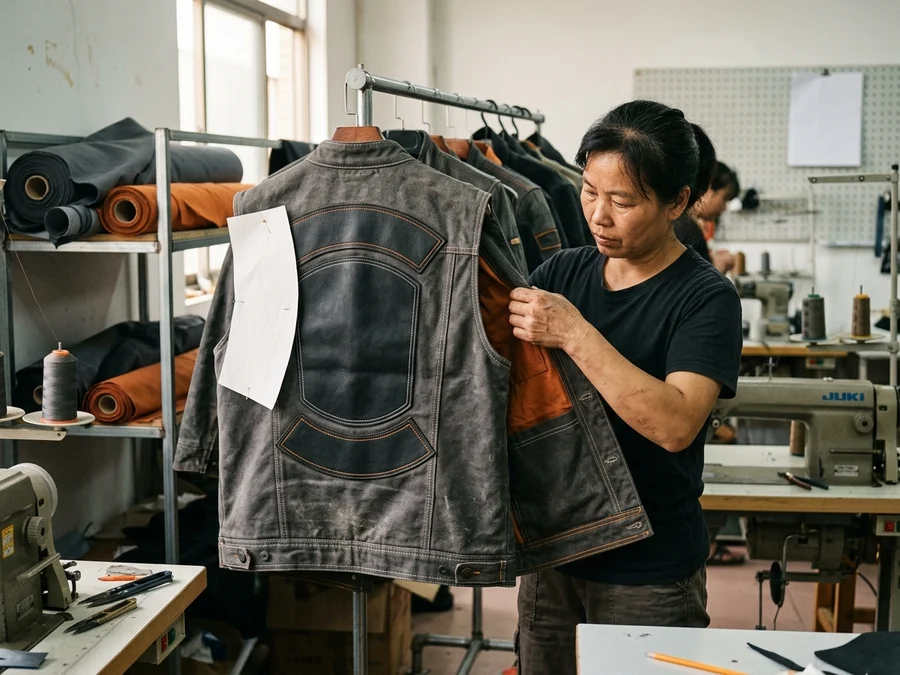
Inside pockets positioned clear of the back patch stitching

Lining and pockets

Fails when · a pocket meets the patch

Inside pockets are positioned so they do not sit under the back patch stitching, where the two would fight each other.

With the first order

The first order: vests, files and one physical reference

The vests, the files, and one physical reference the club keeps for itself — because in five years the person who approved the original may have left, and a drawer beats a memory.
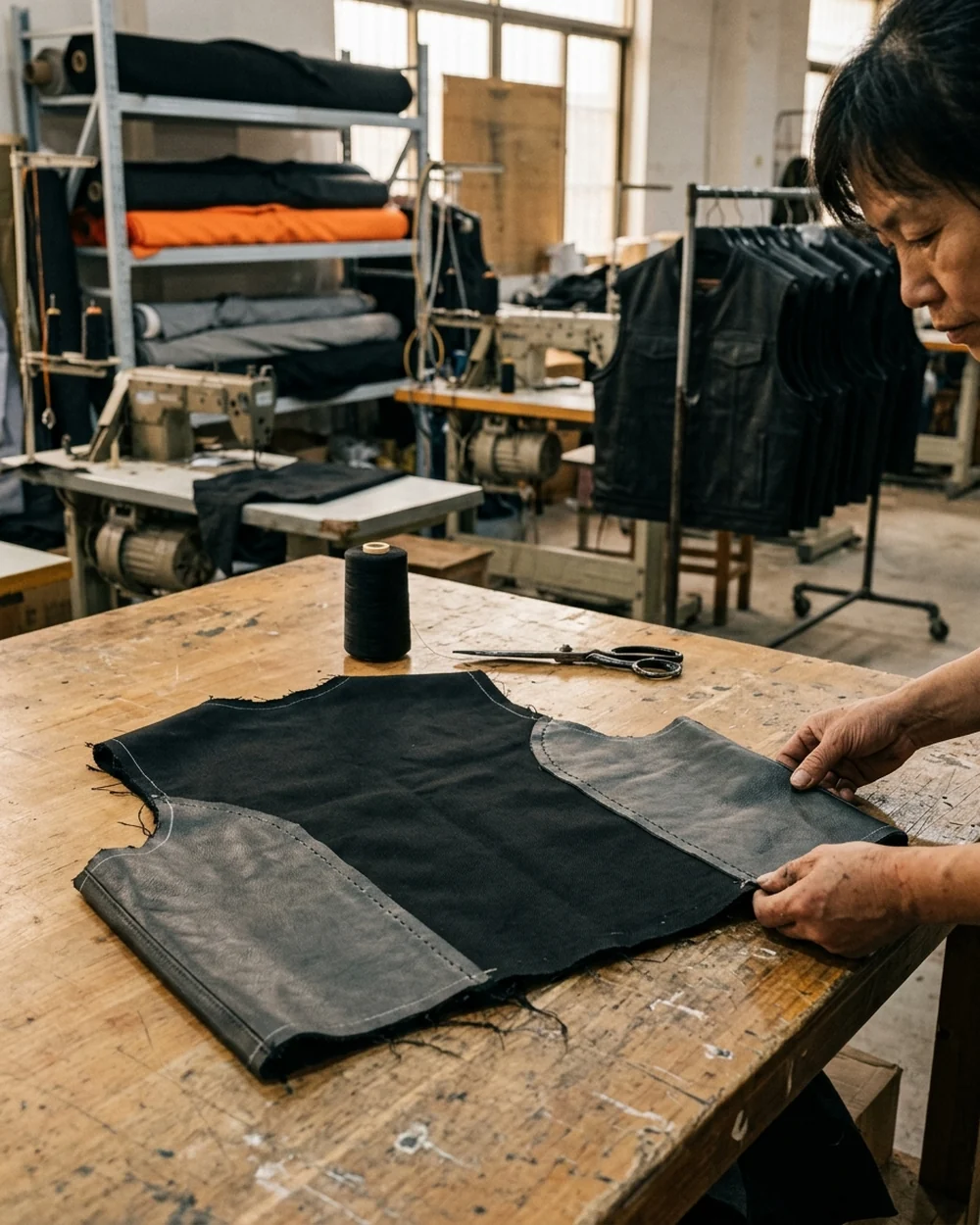
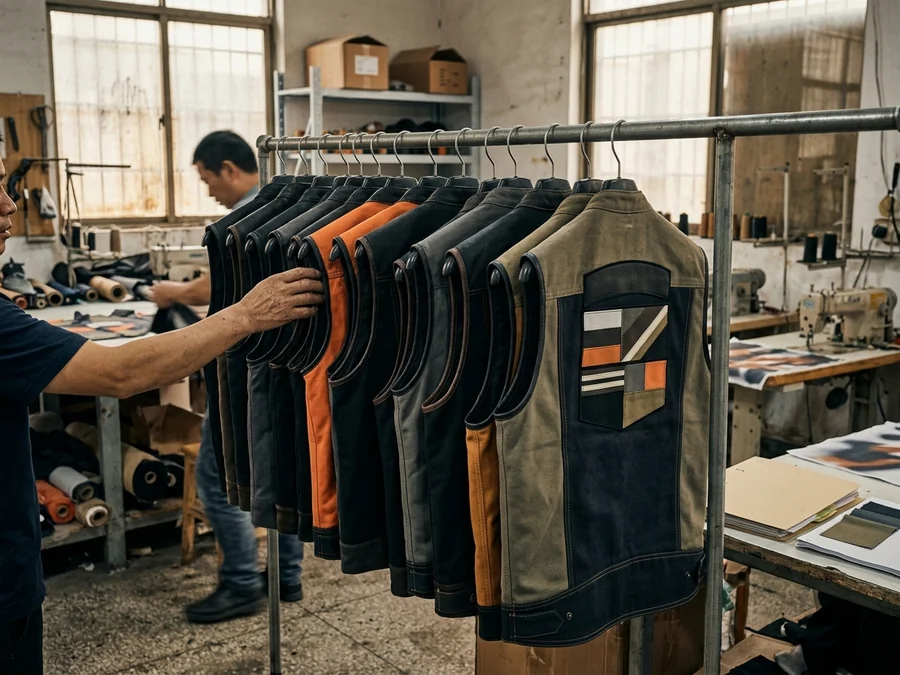
A spare set of the three back pieces, kept by the club as reference
Spare set · the club keeps it
The finished vests in their ordered sizes on a rail
Vests · in the sizes ordered
The placement map listing the measurements used per size
Placement map
  • The vestsIn the sizes ordered, with all patches applied to the placement map.
  • A reference patch setOne spare of each back piece, so the club holds a physical record of what was approved.
  • The placement mapThe measurements used per size, so any future work matches without a conversation.
  • The file recordWhat is archived under the club's name, and what a repeat actually needs from you.
Why the spare setBecause in five years the person who approved the original may have left the club, and a drawer beats a memory.
Emblem and size run

Send the emblem and the size run, and we will come back with the back layout

Lead times and changes

Lead times, and which changes are still free

What each stage costs, and where the line falls between a change and a new vest.
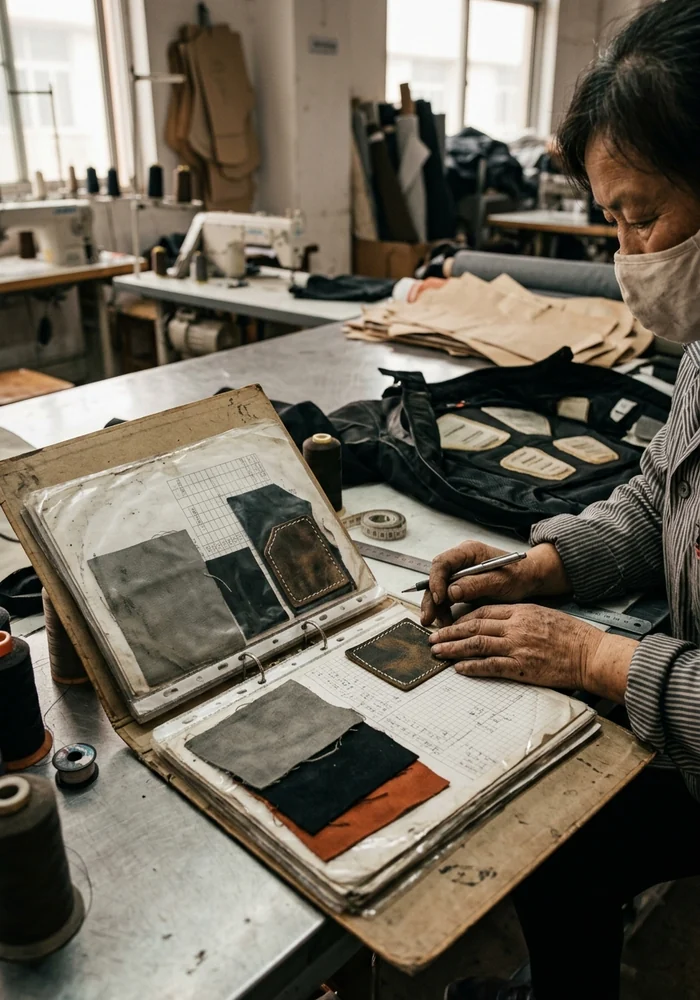
SamplingA leather or textile vest with the patch set
15–20days
Bulk after sample approvalScheduled backwards from your date
25–35days
Additional membersFrom the archived file, run with the next production slot
Fileno re-approval
Design change before digitizingNothing has been made yet
Noneno effect
Design change after patches are madeNew patches; on leather, new vests for any already stitched
Newpatches
Adding a bottom rocker laterPossible because the placement map leaves the gap for it by default
Gapalready reserved
A club file holding the patch files, thread numbers and placement map
Filed under the club name
Six things

Club vest quote: the six things to send

Send these six and Anna comes back within 24 hours on business days with the shell, the patch plan and the lead time.
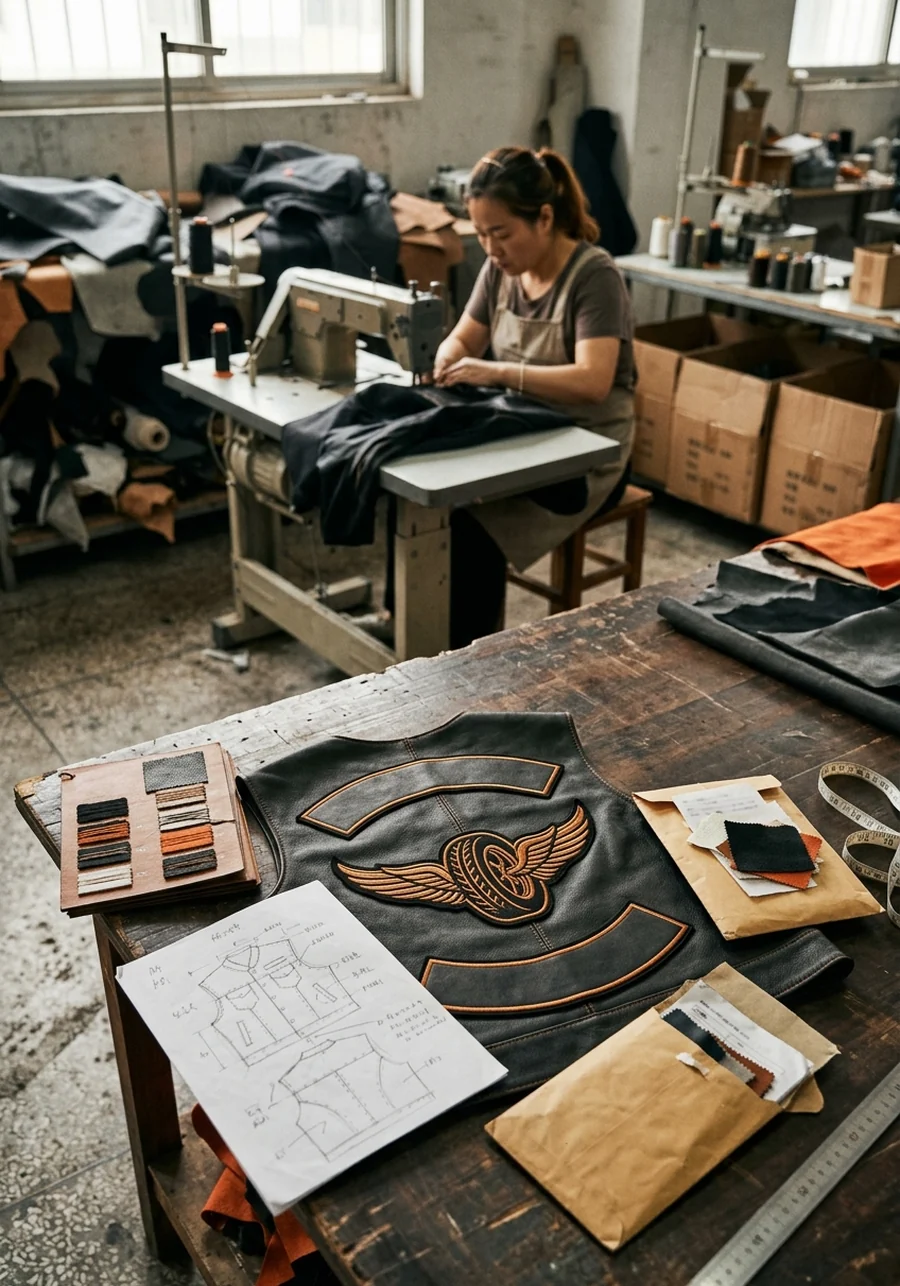
  1. Your emblem

    A photo of an existing patch is fine — and often better than a file.
  2. Leather or textile

    Or tell us how the group rides and we will say which we would use.
  3. The back layout

    Top rocker, centre, bottom rocker — and the exact wording of each.
  4. Front patches

    Name tags, officer titles, small emblems, and where you want them.
  5. The size run

    How many of each, or the member list and we build the run.
  6. The date

    A rally, an anniversary or a season opening; we count back from it.
An emblem photo, a back layout sketch and a member list ready to send
Six things · one email
Emblem and size run

Send the emblem and the size run, and we will come back with the back layout

Anna replies within 24 hours on business days with the shell we would use and why, the back layout with its measurements, what the patch set needs, and the lead time to your date.

Anna · Sales Manager WhatsApp / phone: +86 177 0272 7677 Email: sales@runmotoapparel.com Mon–Sat 9:00–18:00 (GMT+8)