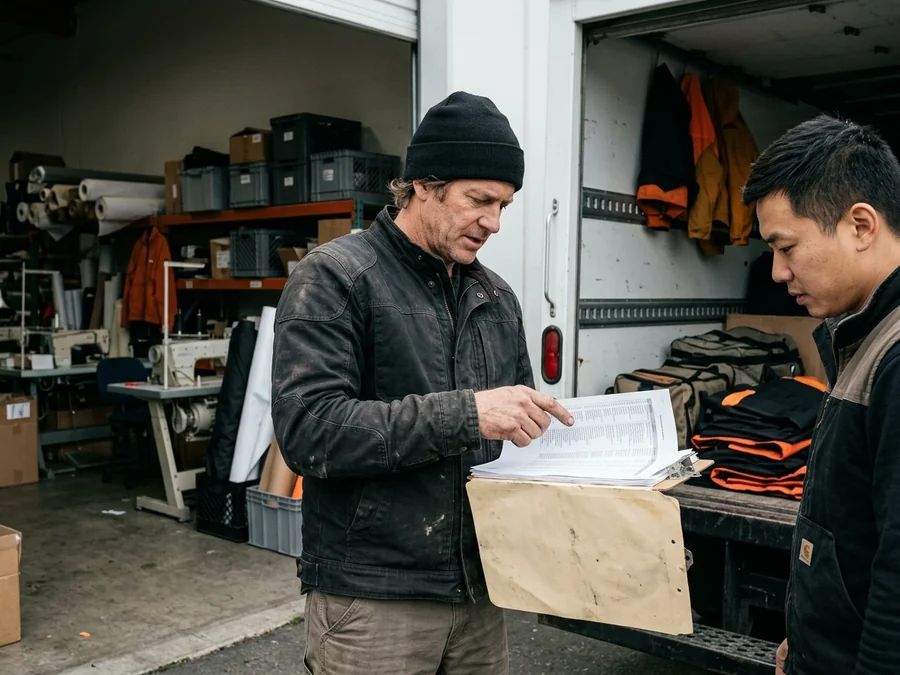
Team managers
Want to know why the layout takes 48 hours and not two, why the strip is archived, and who closes the box with the rider's name on it.
Rooms 01, 03, 07
A walk through seven rooms, in the order your order moves through them. The design room where the layout comes back within 48 hours, the pattern room, the print room where a color profile is saved per team, the cut-and-sew lines, the leather workshop, the decoration room, and a QC lead who reports to nobody on the production floor.
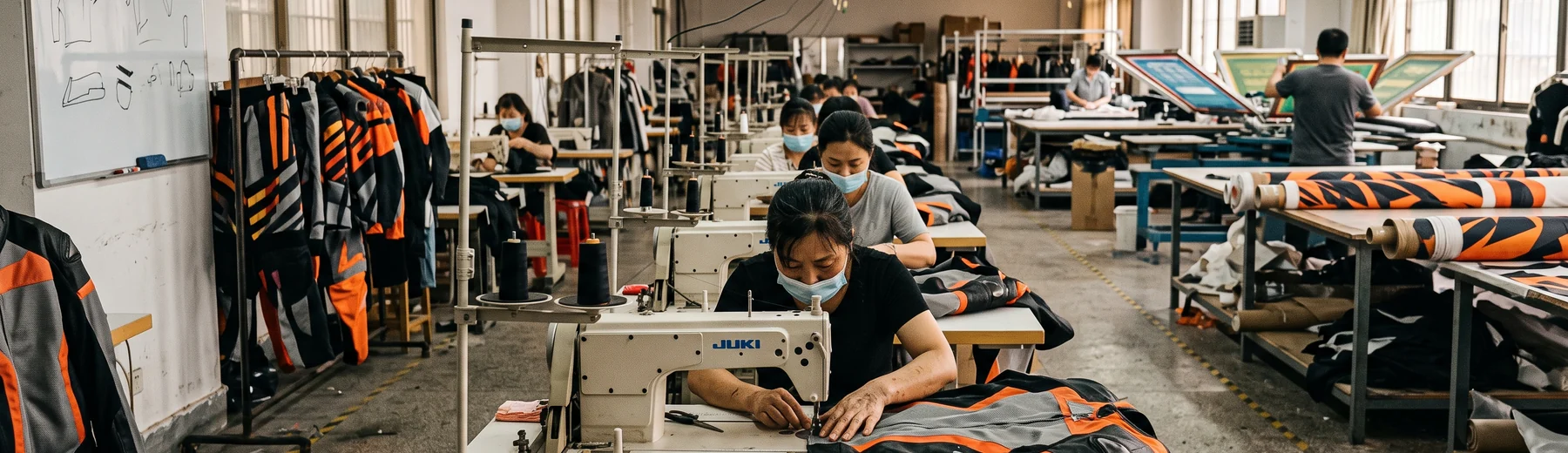 The floor · from the design room end
Four readers who want to know how we make motorcycle apparel between the roster and the box, before they send either.
Want to know why the layout takes 48 hours and not two, why the strip is archived, and who closes the box with the rider's name on it.
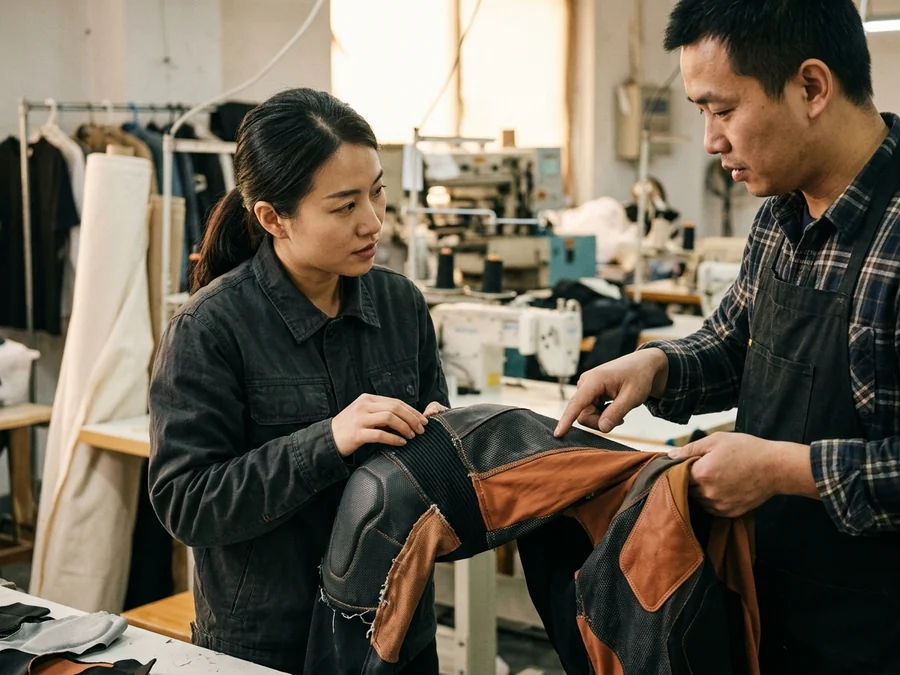
Want to see the pattern room and the sample stage before committing 50 pieces per style to a base block they have not touched.
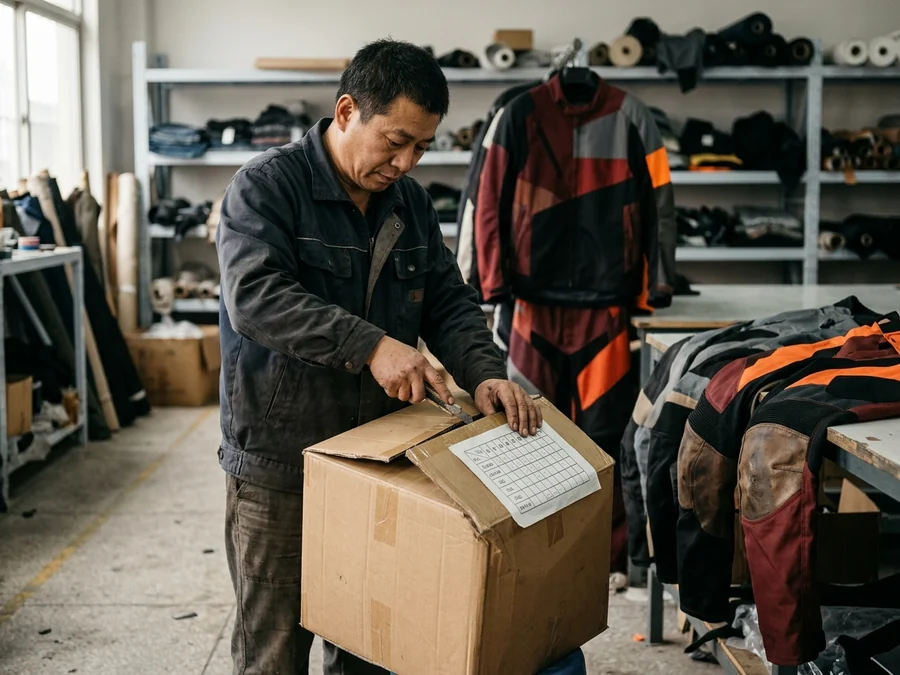
Want to know who inspects, how many times, and what arrives in the carton besides the garments.
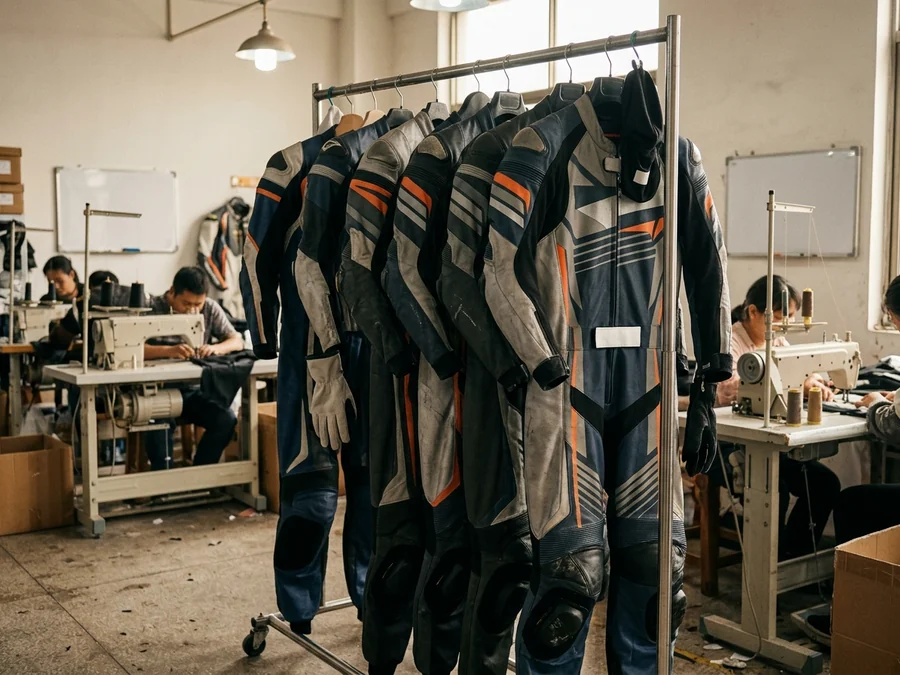
Want to know how a suit that is washed weekly is built, and how a size is reordered a year later.
The motorcycle apparel manufacturing process as one order, seven rooms and one file that travels with it. Each room has its own section below.
 01
01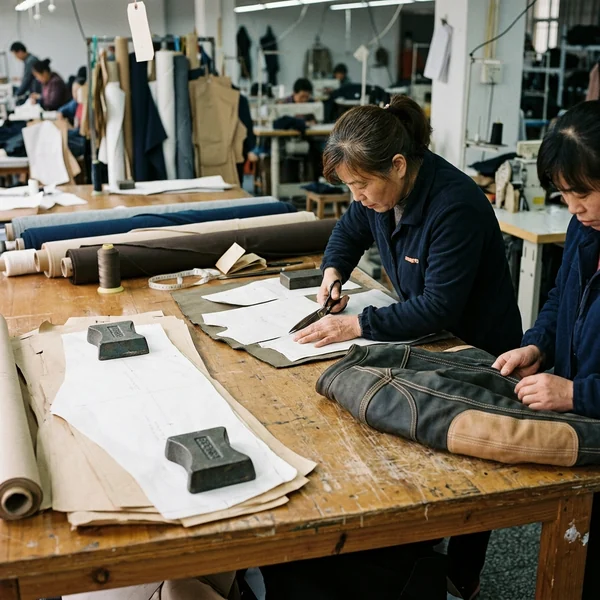 02
02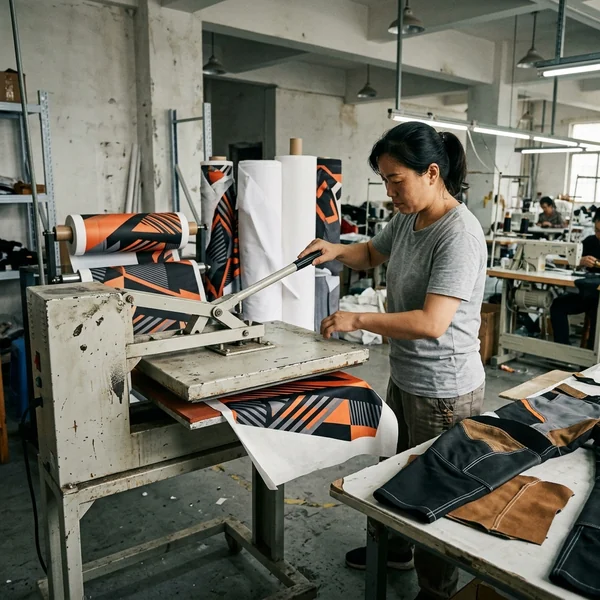 03
03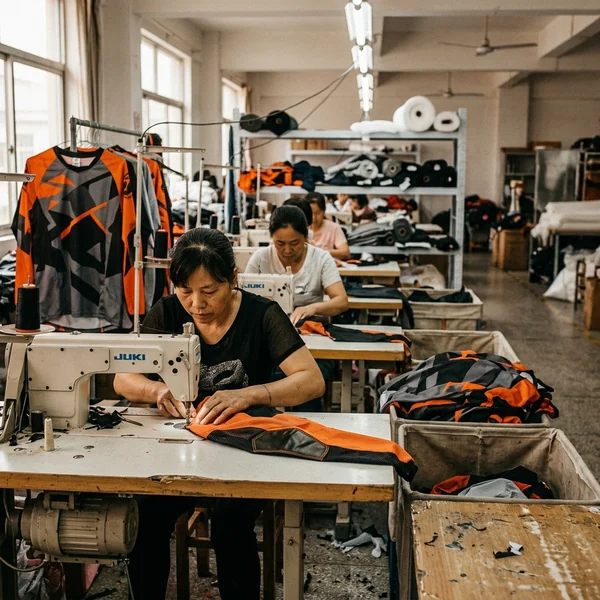 04
04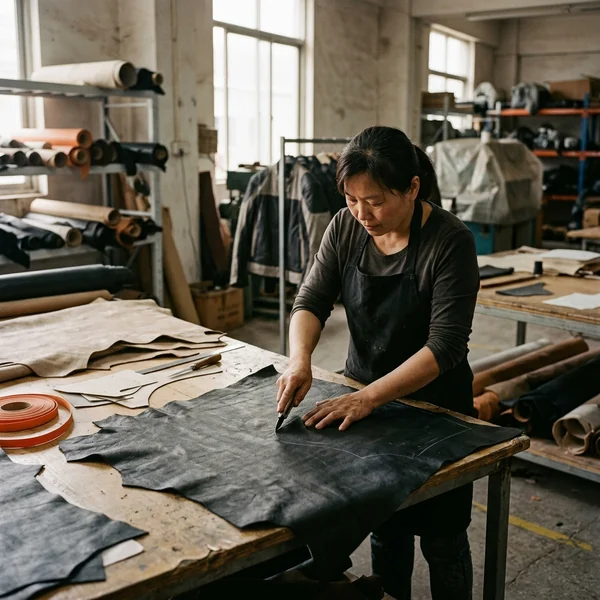 05
05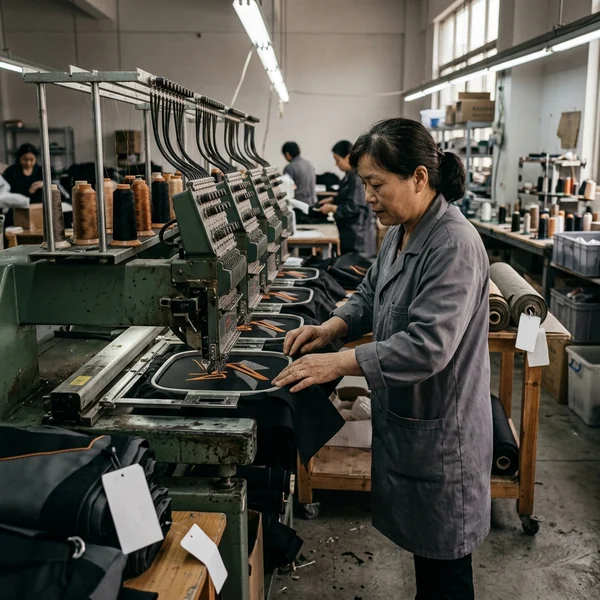 06
06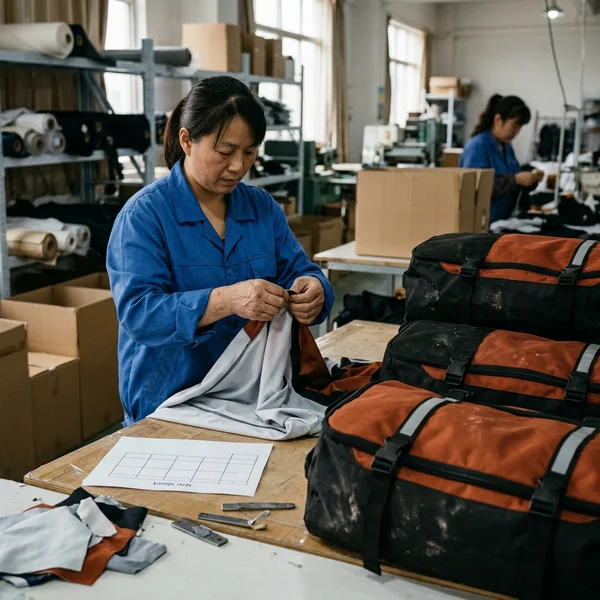 07
07How we make motorcycle apparel, in one line: orders move by team, not by fabric. One kit goes through the seven rooms together.
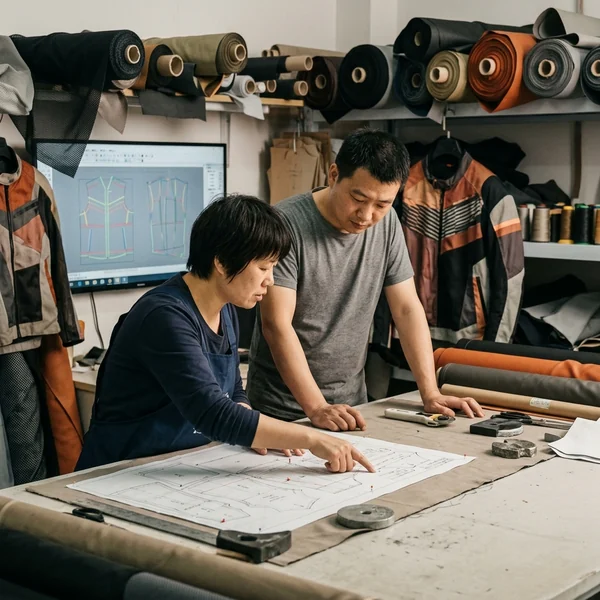
The layout is not a mock-up; it is the artwork placed on the actual pattern pieces of the garment you ordered
On the pattern pieces, not a template. The design team takes the roster and the artwork and places every element on the pattern pieces of the block that will be cut: the sponsor on the chest panel at the size it will print, the name on the back panel where the seam allows, the number in the field the rules require. That is why it takes up to 48 hours and not an hour. A layout drawn on a flat template looks right and prints wrong; a layout drawn on the pattern pieces prints as it looks.
The document you approve. Changes before approval cost nothing; the table on every line page shows which changes after approval move the schedule and by how much.
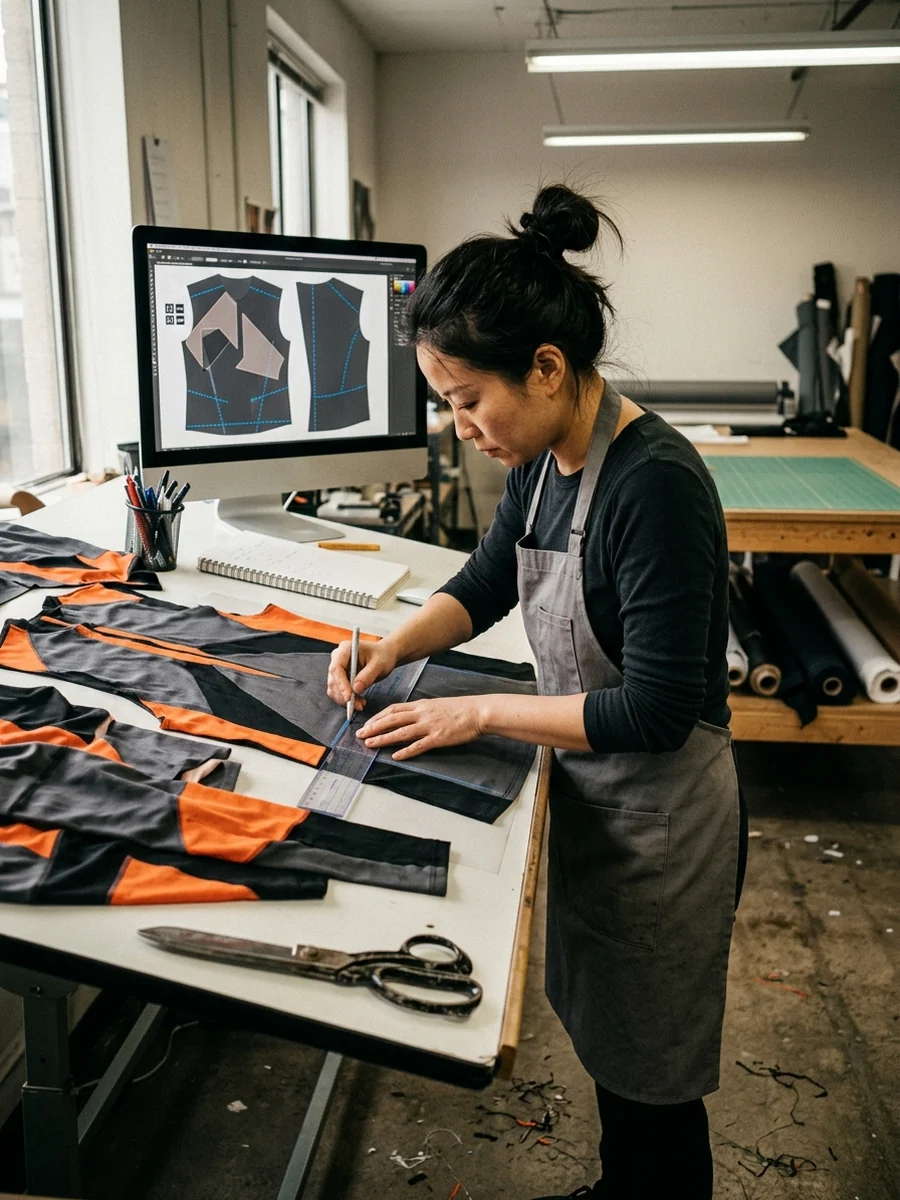
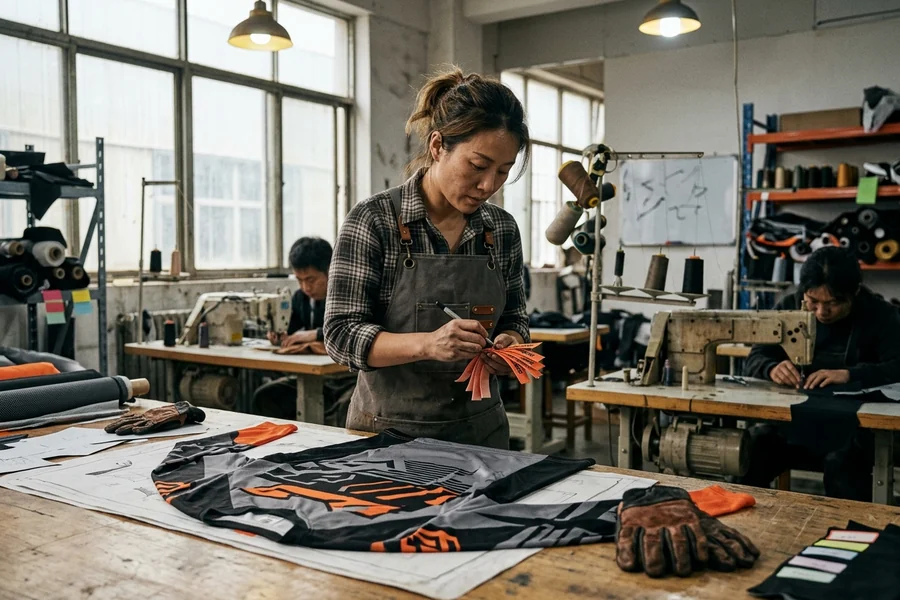
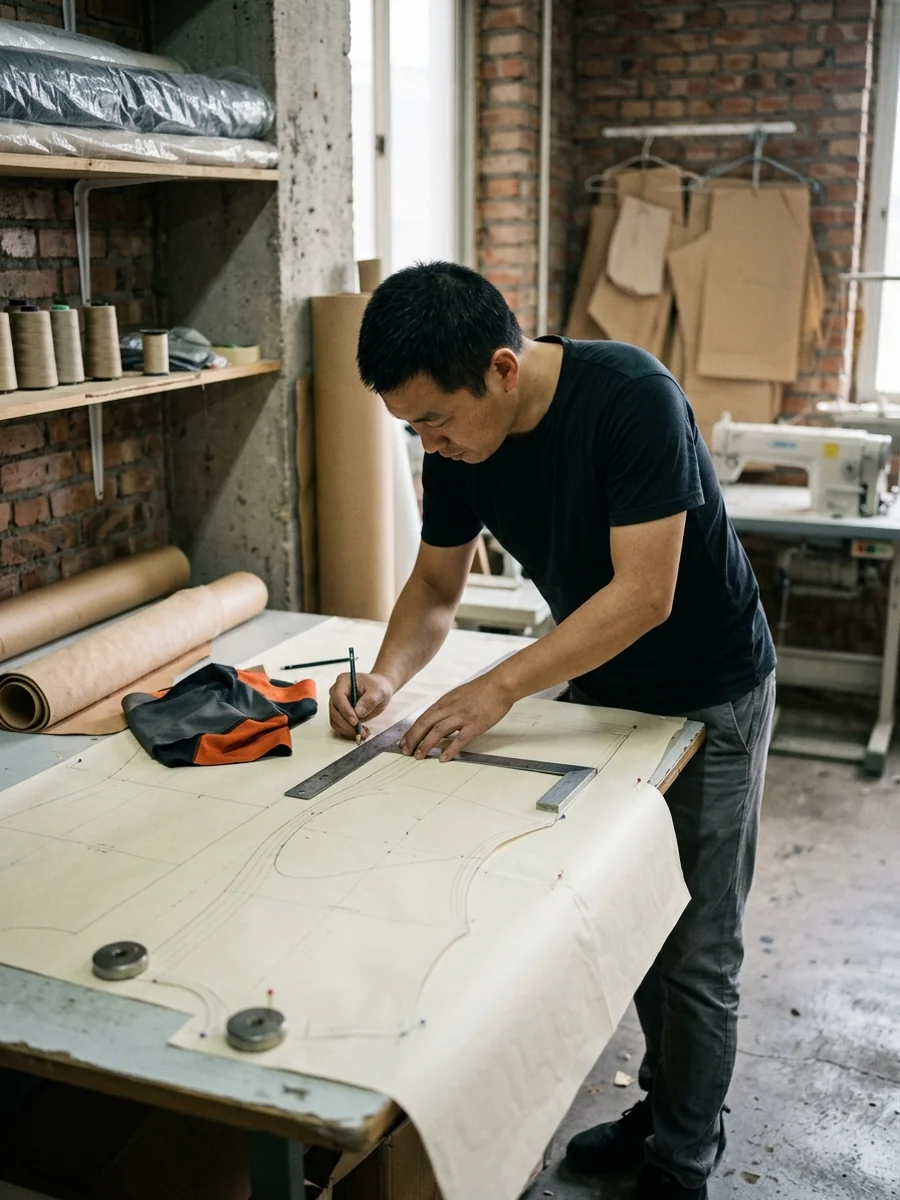
A garment that fits standing up rides short in the sleeve and tight across the back; the blocks here are drafted on the bike
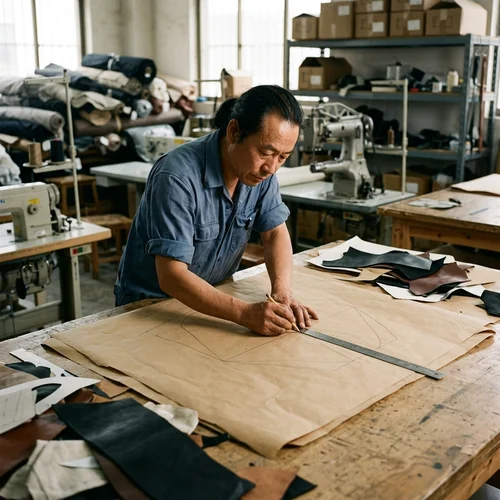
Drafted for the position. The motocross jersey and pant block is drafted for the attack position; the enduro pant block for standing and paddling, with brace room built into the knee; the race suit for the tuck, with stretch panels at inner arm, crotch and back; the touring jacket with the arms forward on the bars. Youth and women's blocks are drafted separately, not scaled from the men's.
One suit to one rider; a size run for the rest. For leather race suits, the pattern room works from a measurement sheet. For everything else, it grades a size run and sends a size-run set before bulk, so the sizes are tried on the bike before the run is cut.
The reason a jersey reordered next season matches the one from this season is a strip in a drawer
Profile, strip, archive. Sublimation prints the artwork into the polyester, and every fabric takes color differently. The print room profiles the artwork on the fabric it will be printed on, prints a test strip, checks it under a daylight lamp and saves the profile under the team name. Before every run, including repeat runs a year later, a new strip is printed and laid against the archived strip. If they do not match, the run does not start.
Why repeats take 15 days. The archive is why repeat sublimated orders ship in 15 days, and why a crew shirt, a glove back panel and a club jersey printed in different months read as one color.
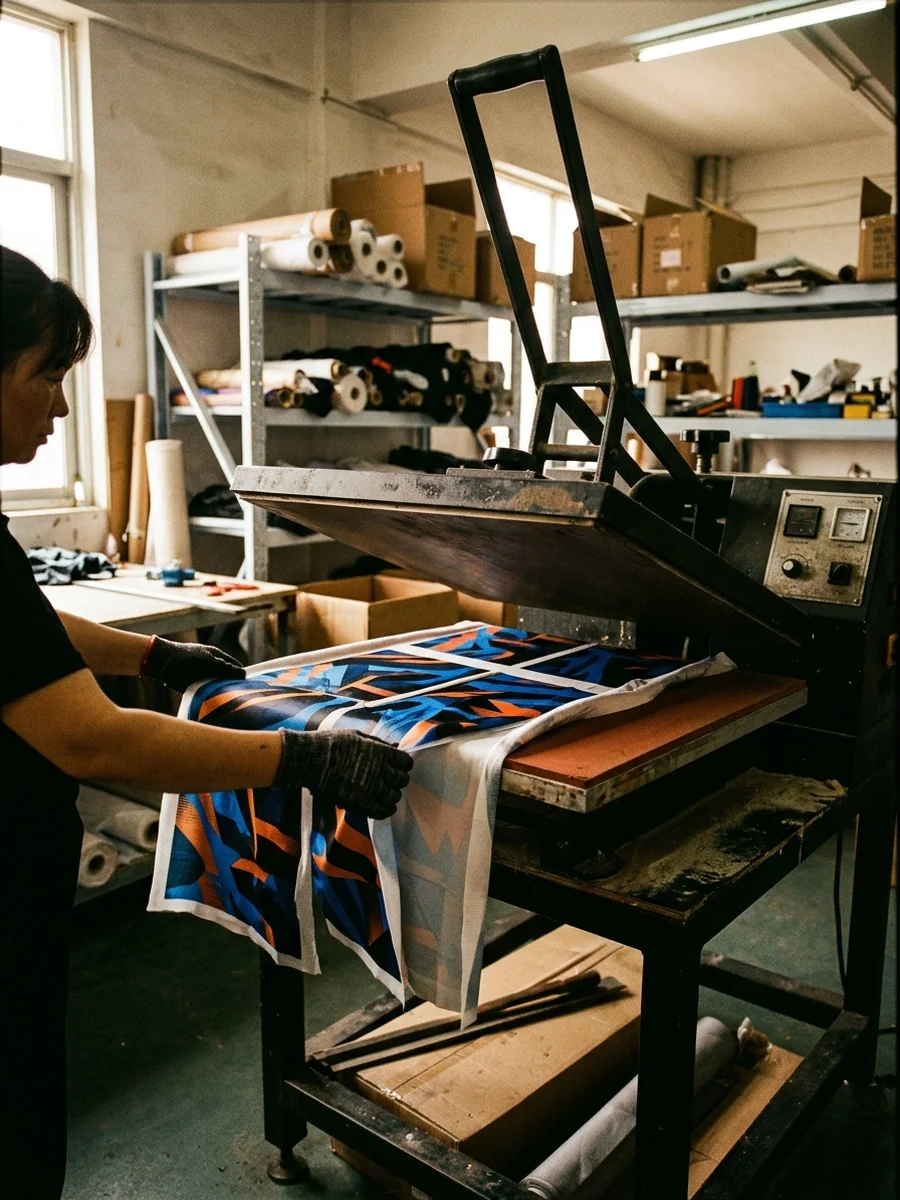
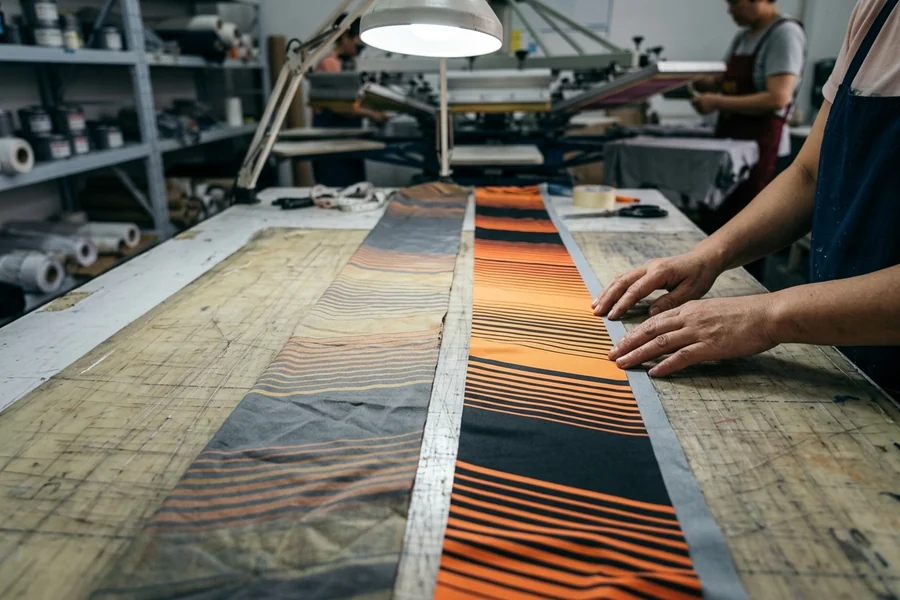
The line does not run until the first piece of each size has been laid on the size sheet
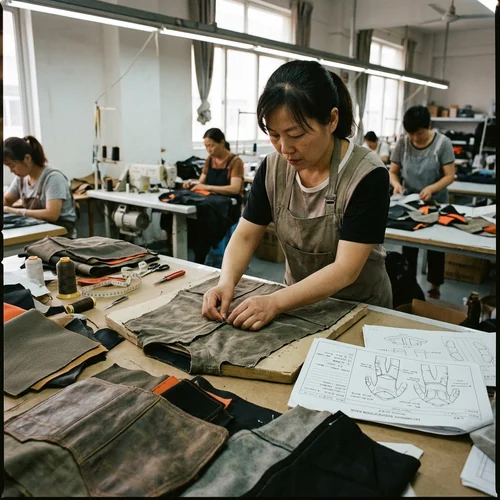
By order, not by fabric. Printed panels and cut shell pieces come to the lines by order, so one team's kit moves through together. The start-of-line check lays the first finished piece of each size on the signed size sheet, measures it, and only then releases the size to the line. After the first 20 percent of the batch is sewn, the QC lead pulls pieces across sizes for the mid-line check; a failed mid-line stops the line until the cause is found.
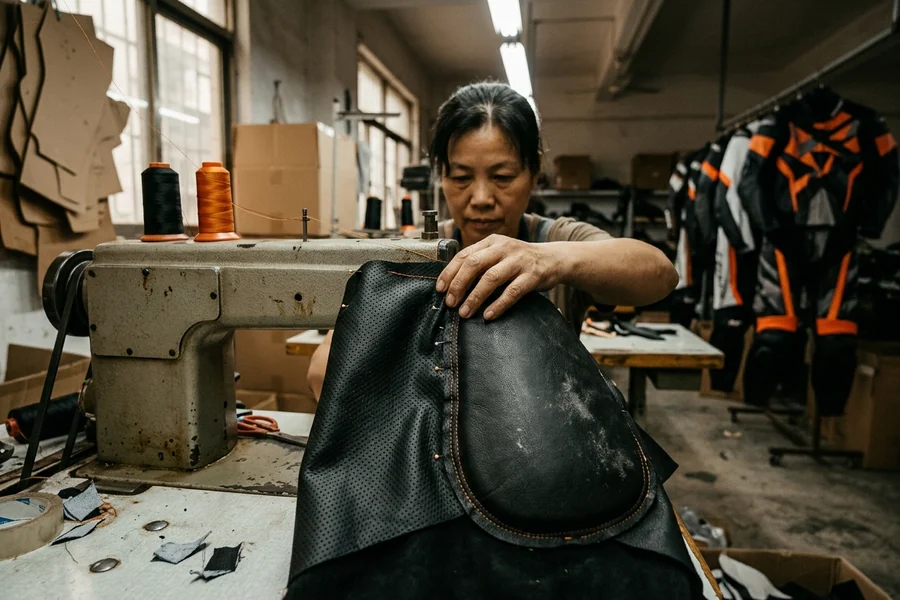
Sewn to the map. Reinforcements, stretch panels and armor pockets are sewn on this floor to the reinforcement map on the line's page: inner-knee panels to the top of a brace, a one-piece palm on a glove, a seam that does not cross the seat of an enduro pant.
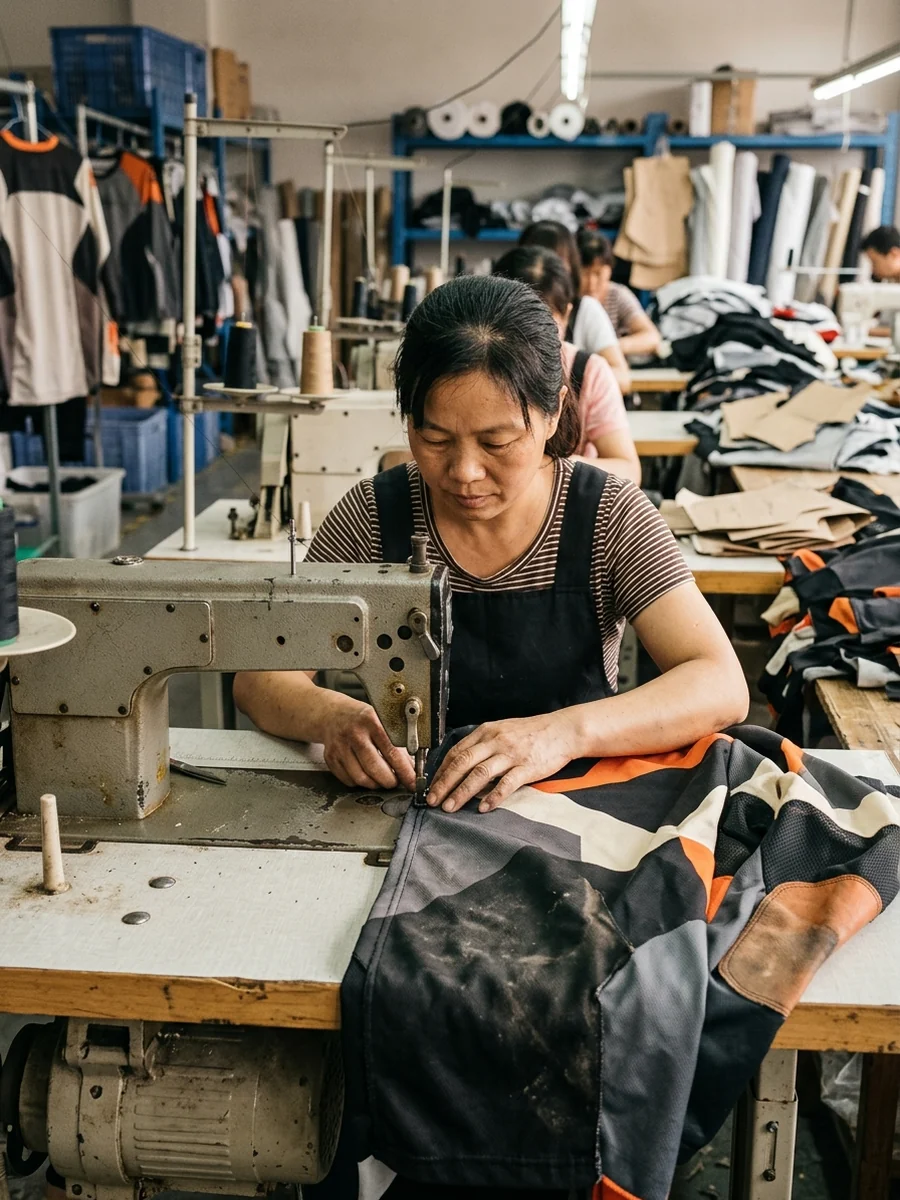
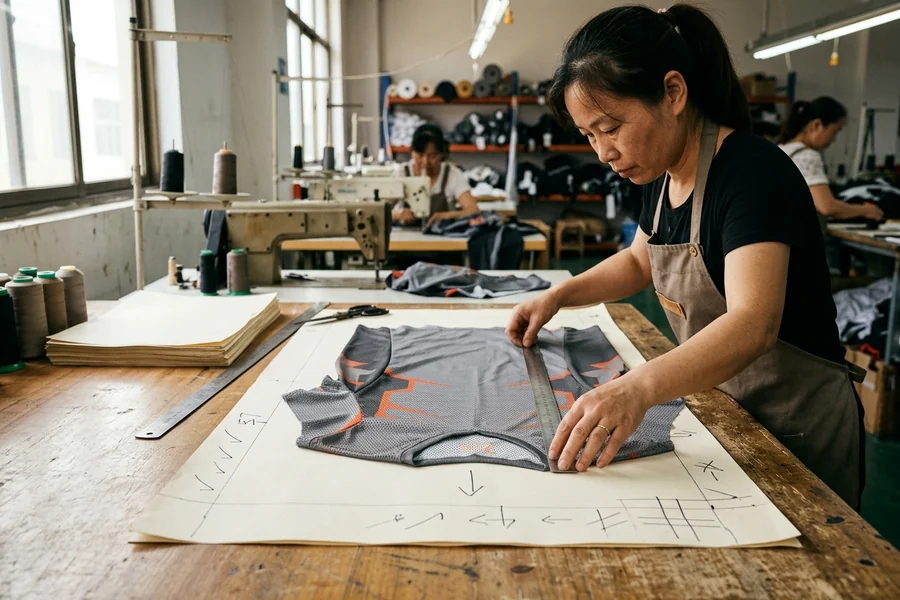
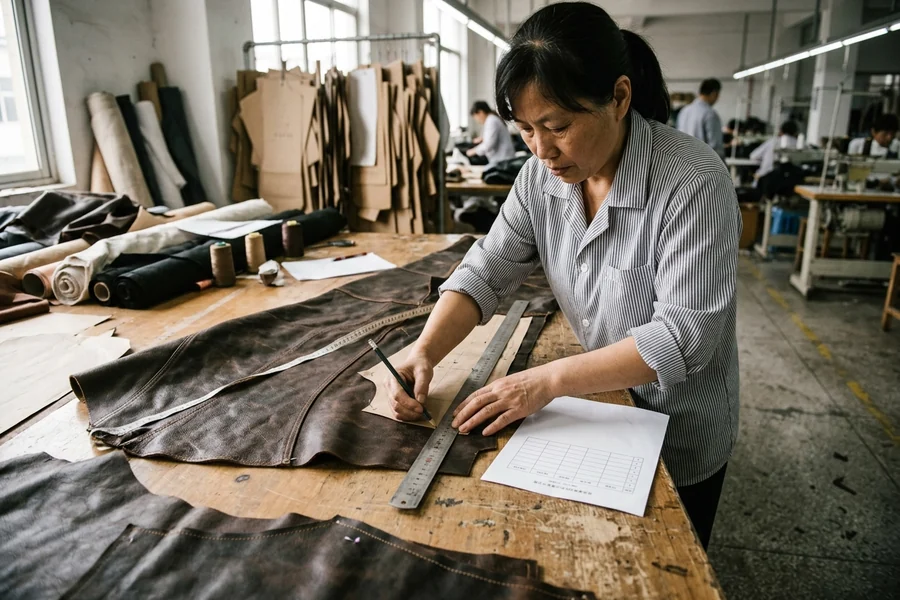
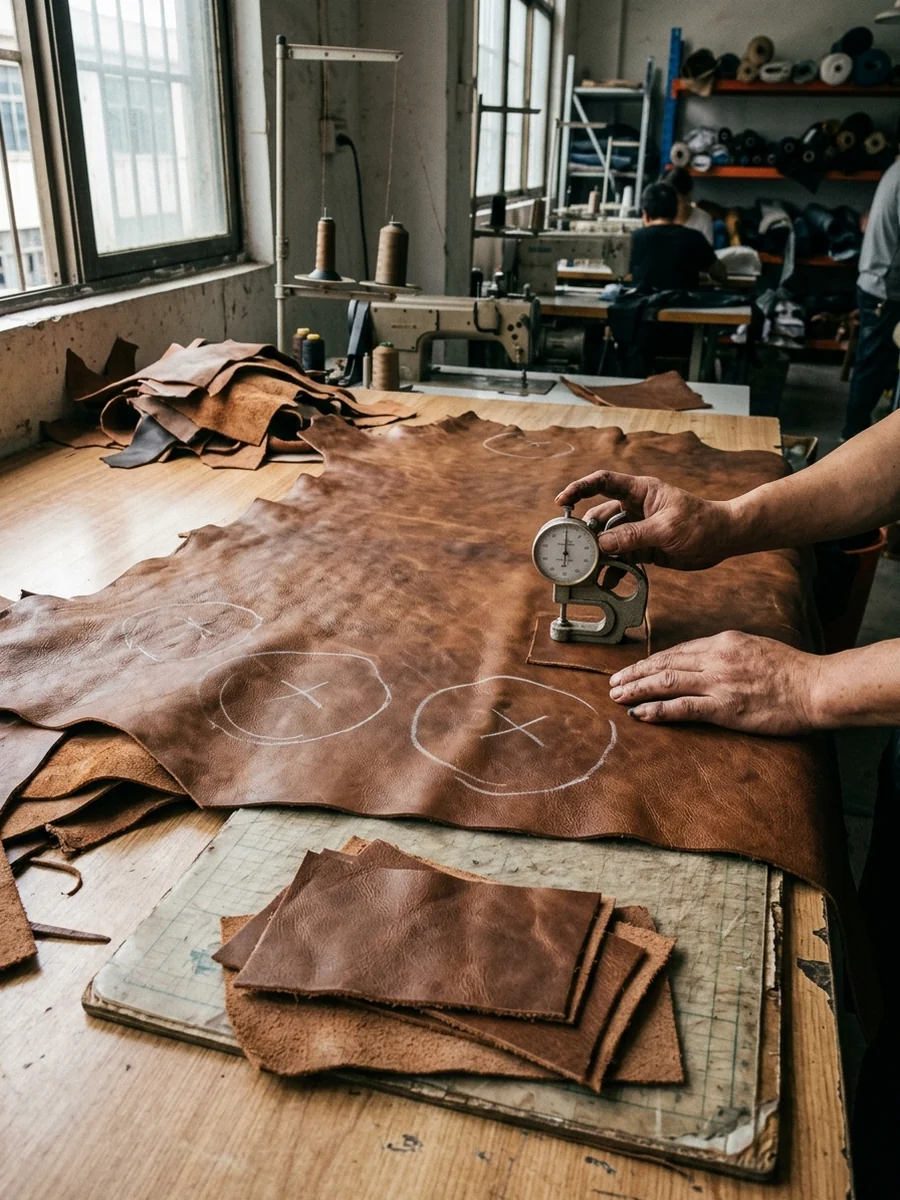
A leather suit is not sewn from a roll; every hide is different, and the workshop reads each one before it cuts
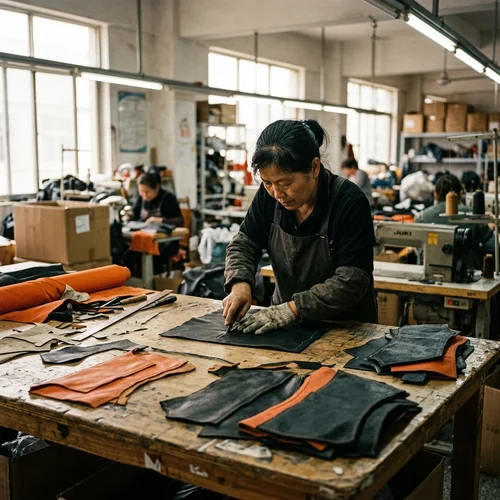
Read the hide first. The workshop gauges every hide for thickness and marks the areas that will not be used. Race suits and leather jackets are cut in 1.1–1.3 mm cowhide, with the heavier areas of the hide placed on the impact panels and the softer areas on the panels that flex. Perforation is done by panel, only where airflow is wanted, never through an impact panel. Stretch panels at inner arm, crotch and back are cut from a different material and set into the leather.
Fitted before the seams close. A made-to-measure suit is fitted on the rider or a form built to the rider's measurement sheet before the final seams are closed, which is why the leather sample takes 15–20 days rather than 7–10.
A badge that is orange on the jersey and rust on the hoodie makes the team look like two teams; this room stops that
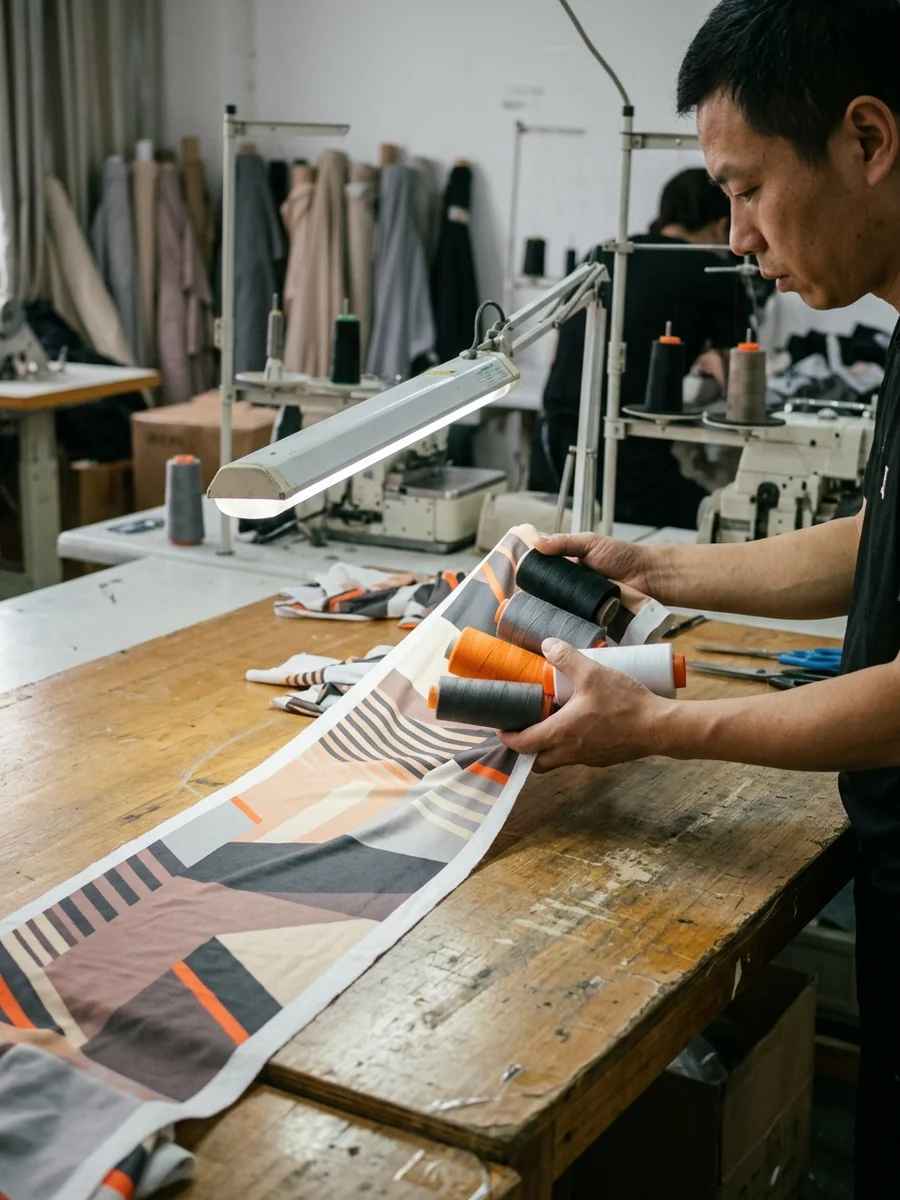
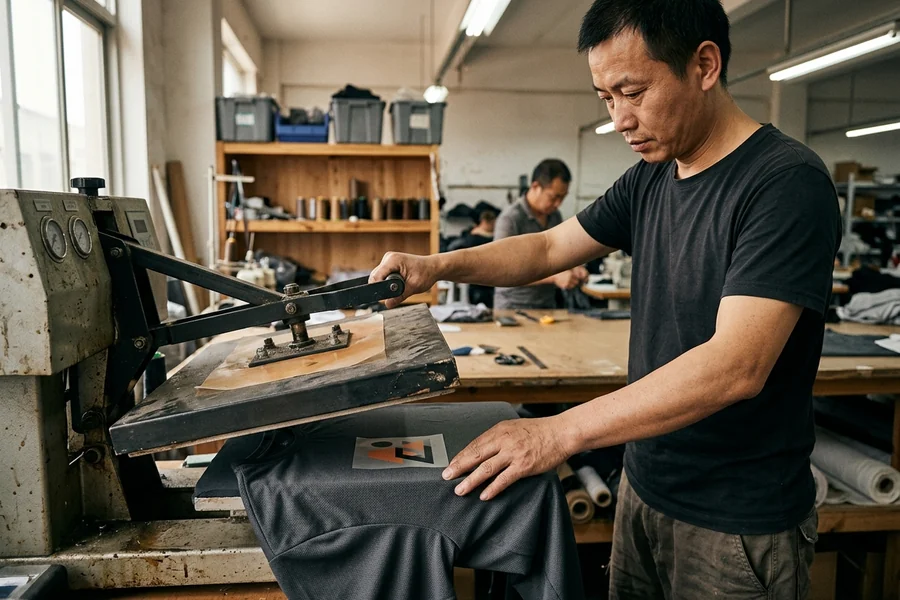
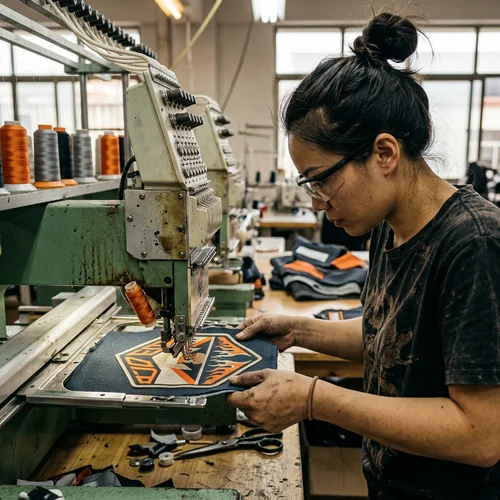
Digitize once per size. The badge or logo is converted to a stitch file once at each size it will be used at, chest and back, and that file is the one used on every future piece. Thread colors are picked against the printed jersey strip under daylight, not against the screen, and the thread numbers are filed with the digitized badge. Heat transfer is used where embroidery would be too heavy for the fabric or too small for the logo: tees, small sponsor logos, some jackets.
On the panel, before the line. Leather perforation and heat-pressed sponsor logos on suits are done here too, on the panel, before the panel goes to the line.
Quality control that reports to production finds what production wants found; ours reports outside it
Three inspections, one independent lead. Start-of-line on the first piece of each size, mid-line after the first 20 percent of the batch is sewn, and final on every piece. A failed mid-line stops the line. At final, every piece is checked, names and numbers against the roster, badges side by side under daylight, and then packed by rider, member or size with the photo set taken before the box is sealed.
After delivery. A quality issue reported within 7 days is repaired, remade or replaced, and the decision on which is made within one business day of the issue being confirmed. The sales manager who opened the order owns that decision, not a service desk.
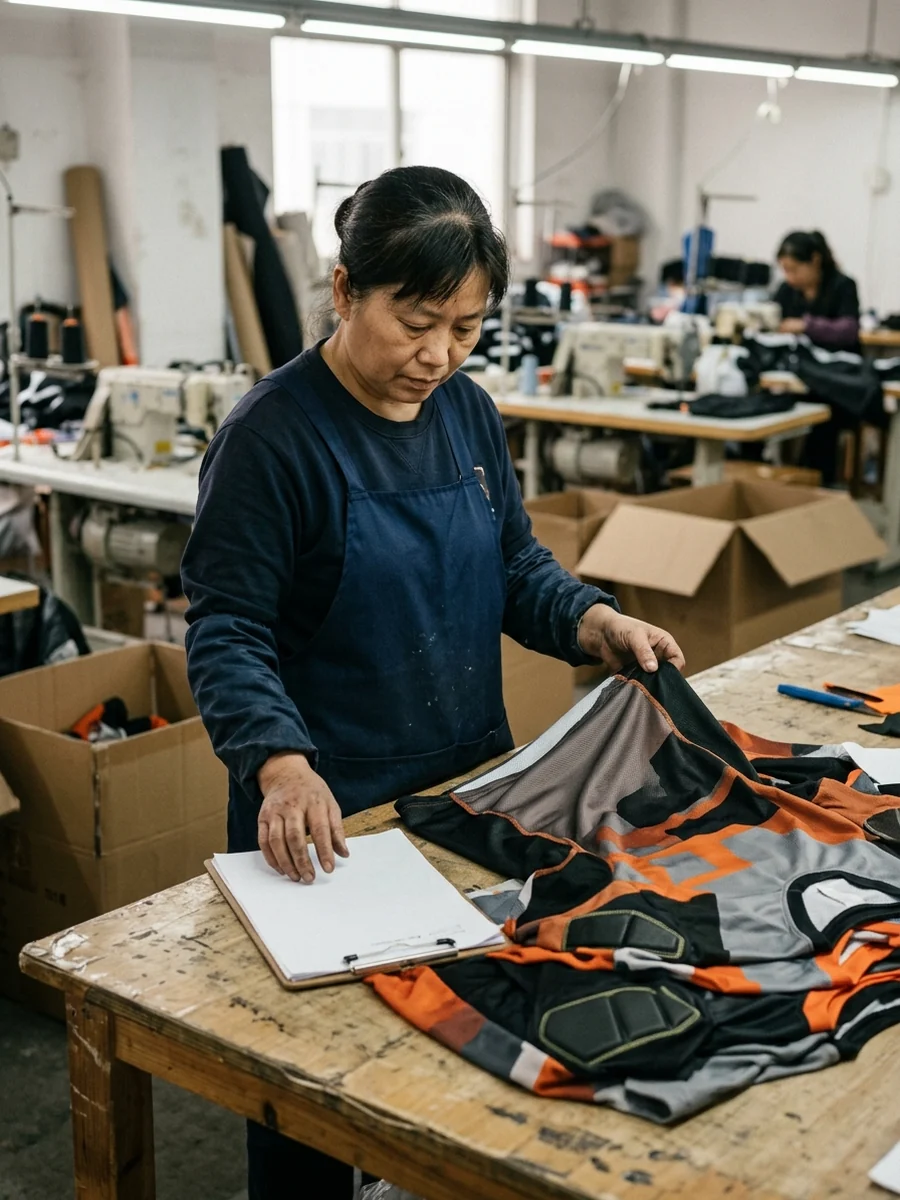
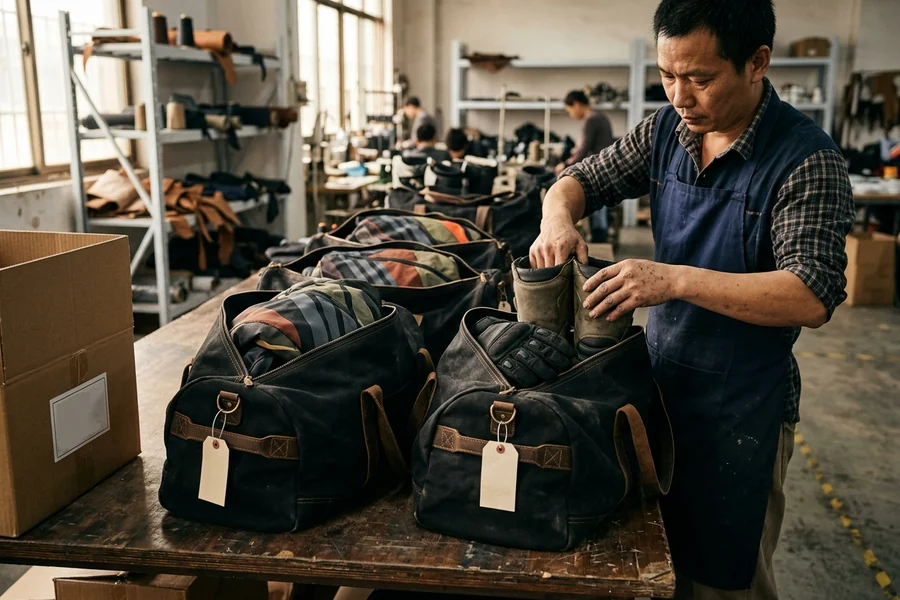
How we make motorcycle apparel in six stations, the same on every line; scroll the stations and the rooms light up where each one happens.
The sales manager reads the roster or the tech pack and returns questions within 24 hours on business days.
The design room places the artwork on the pattern pieces; the pattern room sets the block; back to you within 48 hours.
The print room prints against the archive; the leather workshop gauges and cuts; the cutting room cuts shells.
The lines sew; the decoration room embroiders from the digitized file and transfers where specified.
Start-of-line, mid-line at 20 percent, final on every piece, by the independent QC lead.
By rider, member or size, with the photo set; the profile, the digitized badge and the size sheet filed for the reorder.
Five documents that travel with the garments out of the motorcycle apparel factory, so the next order does not start from zero.
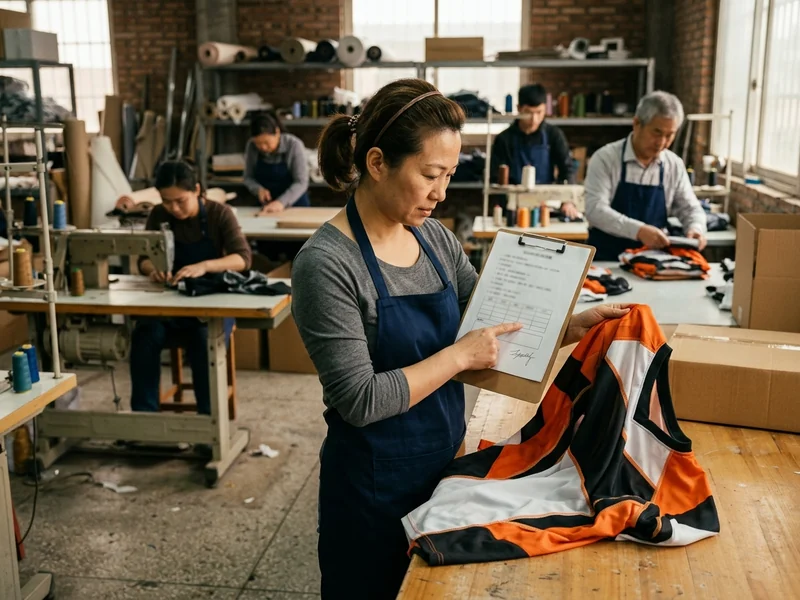
The sizes the run was cut to, signed before bulk.
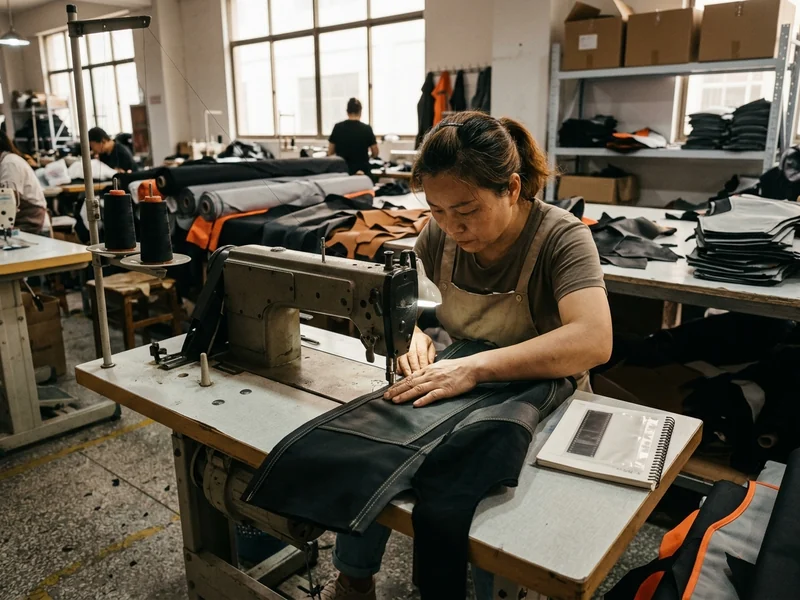
Your archived strip, so you can check the next run against it yourself.
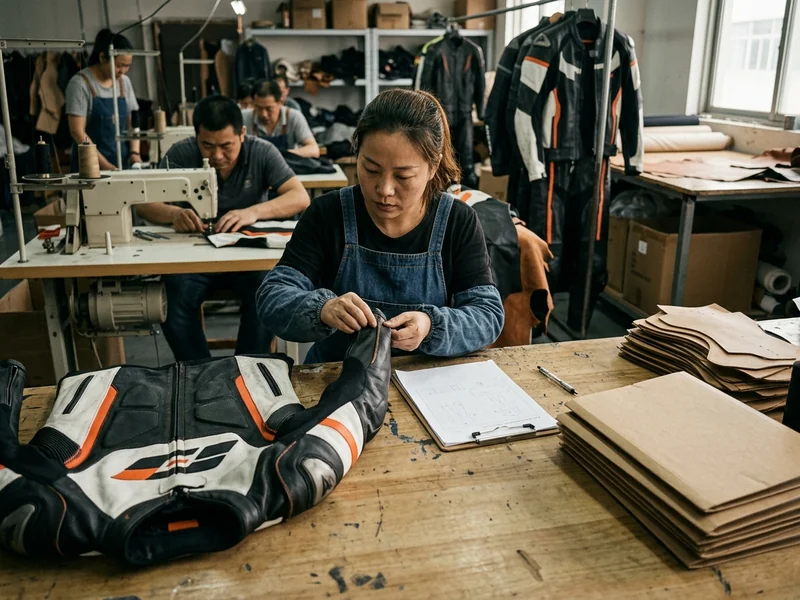
The approved layout with the artwork on the pattern pieces.
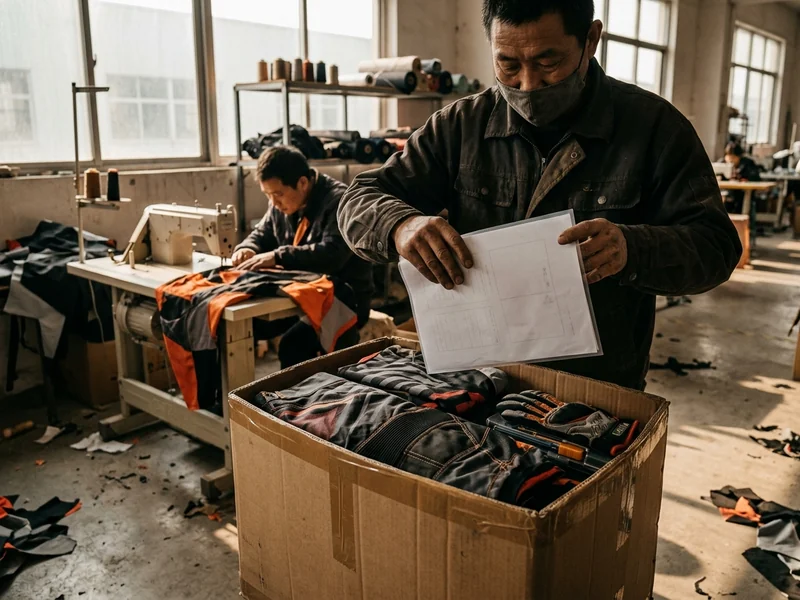
Start-of-line with the size sheet in the frame; packed-order with every bag in the frame.
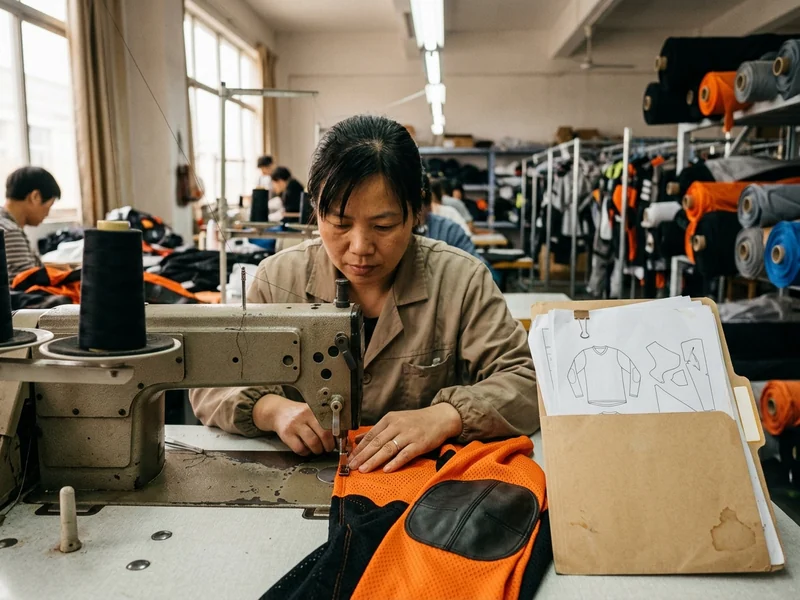
The profile name, the digitized badge reference and the thread numbers filed under your name.
Nobody hands your order to a department; one person carries it through the seven rooms of the motorcycle apparel factory
One person, seven rooms. One sales manager owns the order from the first message to the 7-day post-delivery window: reads the roster, returns the layout, sends the sample and the strip, schedules bulk backwards from your date, sends the photo sets, and makes the repair-or-remake call if something is wrong. The founder, Cindy, set the factory up this way after 15-plus years working with European and North American clients on sourcing, logistics and branding techniques, where the orders that went wrong were the ones that had been handed between departments.
The same first message. That is also why every line page ends with the same seven things to send: the sales manager reads the same first message for a kart suit as for a club hoodie.
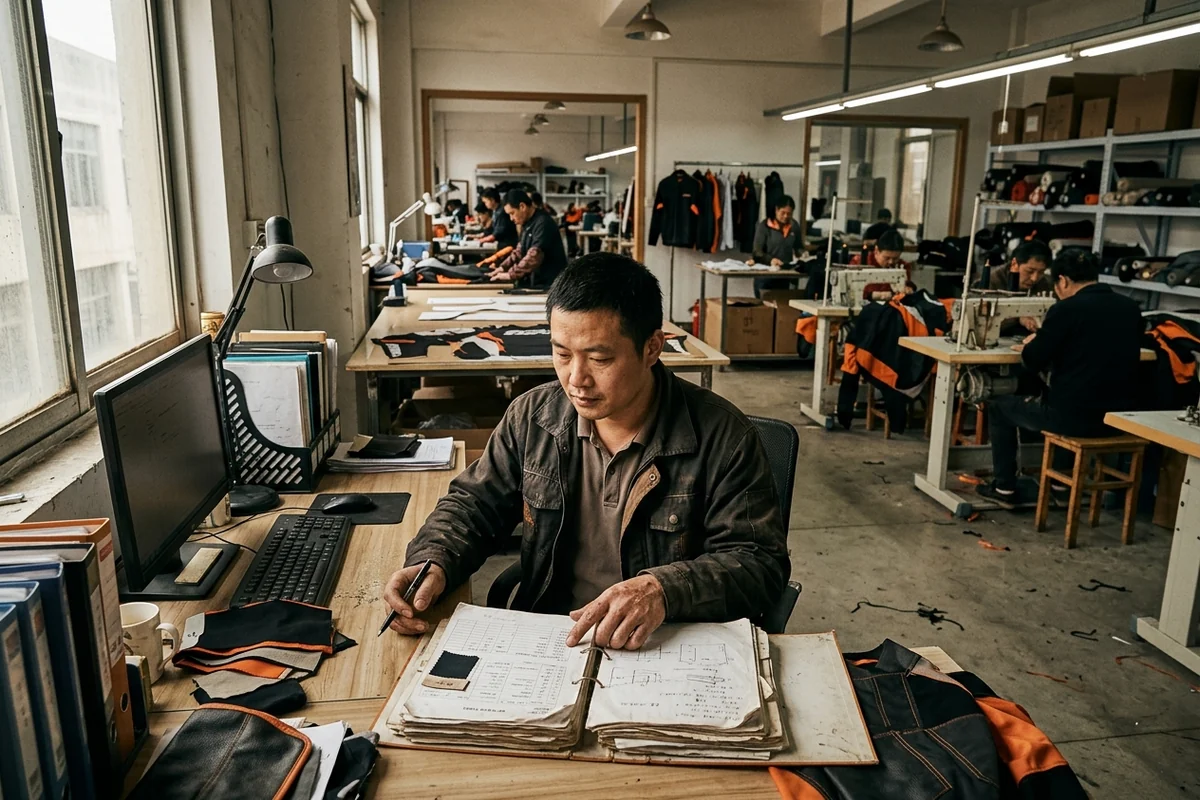
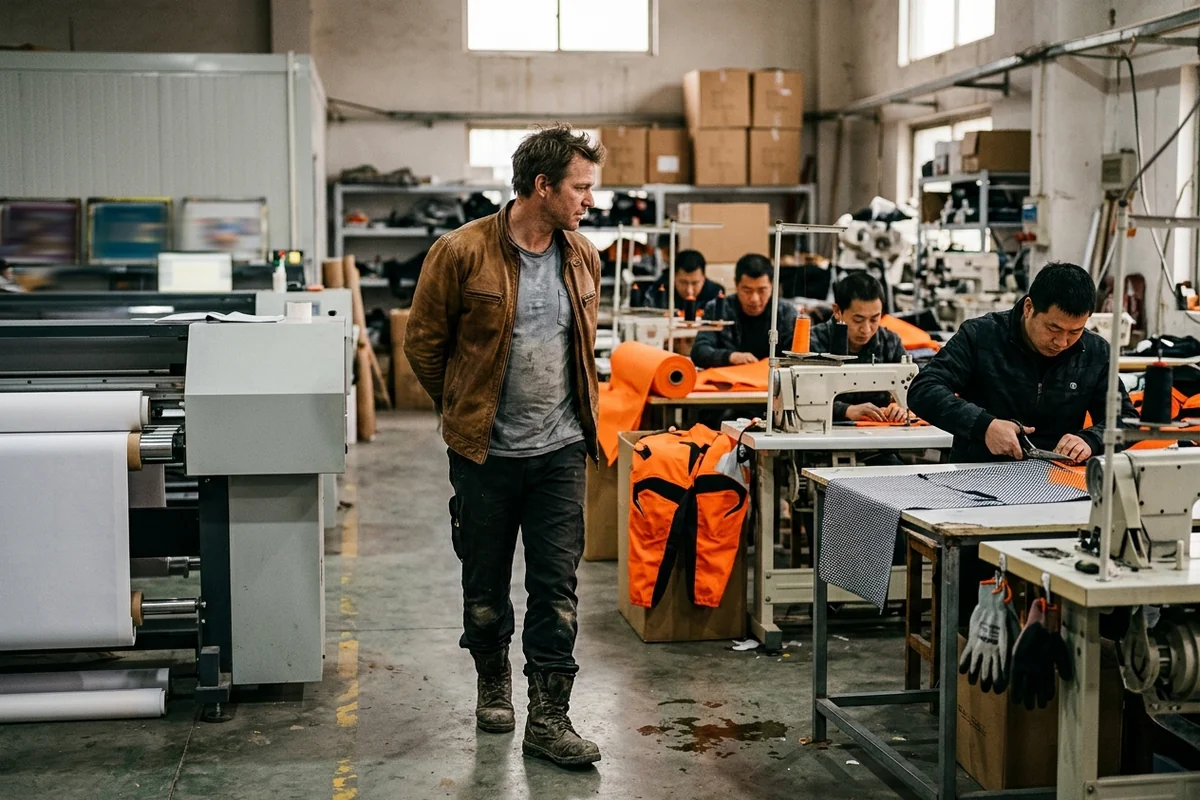
A video walk of the floor is available on request before the first sample.
How we make motorcycle apparel on a calendar: the days on the quote are the days in the rooms
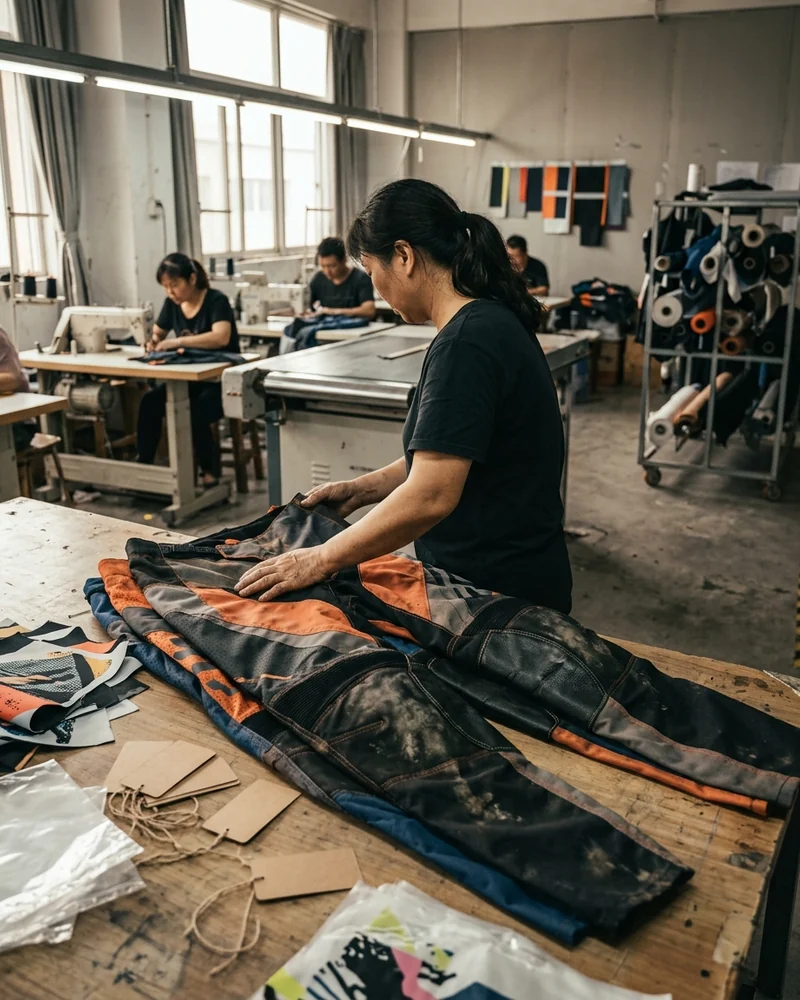
Six pages that go deeper into a single room
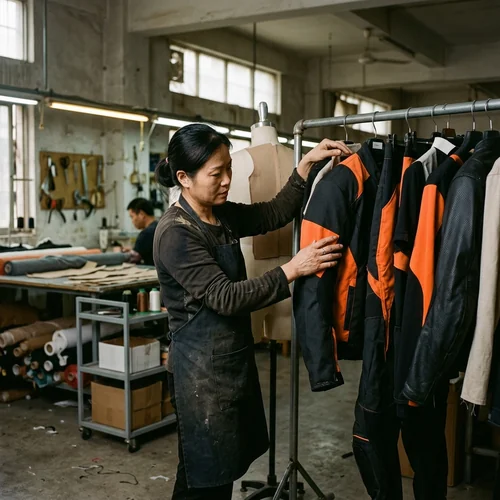
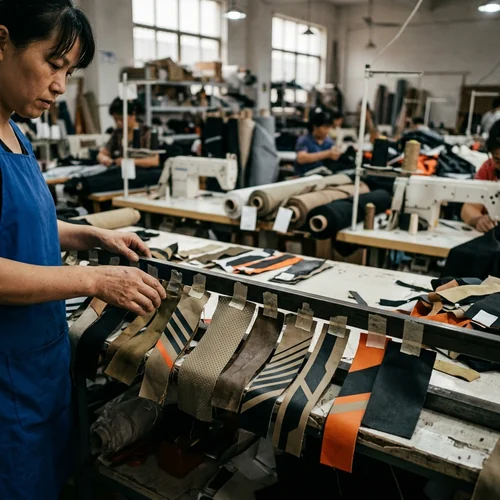
Anna replies within 24 hours on business days with the right line page and a feasibility answer. No brochure, no price list; a real answer about your order.