Most motocross team kit problems are decided before a single panel is printed. A jersey that rides up over a chest protector, a pant that will not close over knee braces, a number that clashes with a sponsor logo, a new rider in round five whose jersey is a different orange: none of these are sewing faults. They come from a roster that was missing a field, a size taken in street clothes, or a color that was never saved.
This guide is the order routine we walk team managers, club secretaries and riding schools through when they send their first roster. It follows the order in the same sequence the work happens: the roster, the sizing, the names and sponsor layout, the timeline, the size-run set, and what to keep on file for the riders who join mid-season.
Why Team Kit Orders Go Wrong Before Production Starts
A team kit is not one product in twenty sizes. It is twenty small personal orders that have to look like one set. Every rider has a name, a number, a jersey size, a pant waist and inseam, and a glove size, and every one of those values is a chance for the order to split. When a single field is missing, the usual workaround is a guess, and guesses are what turn up at the track as the one rider who looks different in the team photo.
The fix is not more checking at the end. It is collecting the right information at the start, in a format that the design desk, the print room and the packing table can all read without retyping it.
Build the Roster With the Five Fields Production Needs
We ask for one line per rider with five fields. A spreadsheet is ideal; a clear list in an email works too.
| Field | Why it matters | Common mistake |
|---|---|---|
| Rider name | Printed across the back exactly as written | Nicknames in one line, full surnames in another |
| Number | Placed on the back, the front and the pant thigh | Two riders sharing a number across classes |
| Jersey size | Cut size for the jersey, worn over armor | Street T-shirt size copied across |
| Pant waist and inseam | Pants are sized on two measurements, not one letter | Only "M" given, no inseam |
| Glove size | Packed in the same rider bag as the rest of the set | Left blank "to confirm later" |
Spell names exactly as they should appear, including capitals and accents, and mark which riders race in youth classes. The roster then travels with the order: it drives the layout, the print file for each jersey, the final name-and-number check, and the label on each rider's bag at packing.
Size Riders in the Gear They Actually Ride In
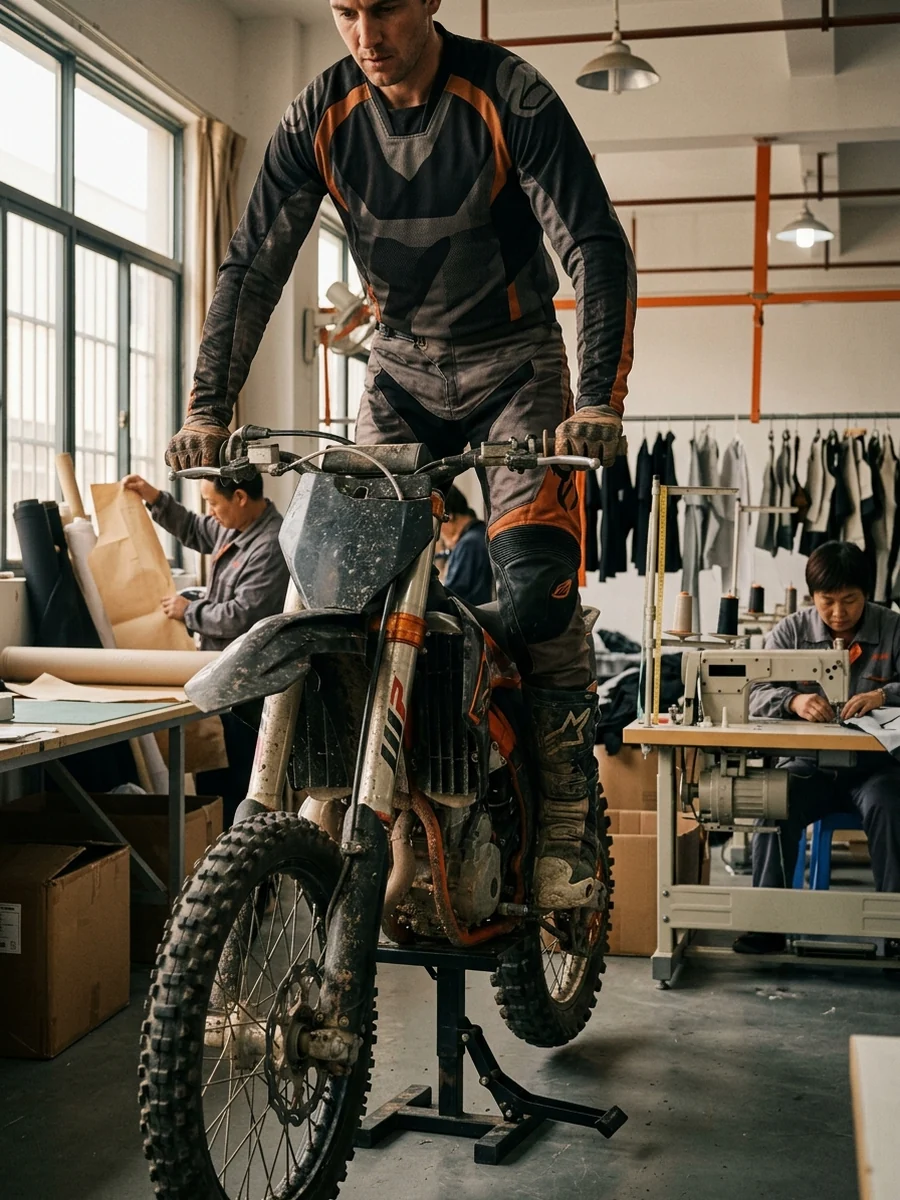
Riding apparel is cut for a riding position and worn over protection, so a size taken standing up in a T-shirt is the wrong starting point. The most reliable roster sizes come from riders who try the kit on in their own kit bag.
Jerseys over chest protectors and roost guards
A motocross jersey is typically 140–160 gsm polyester mesh with a drop tail, and it has to cover whatever the rider wears underneath. Ask riders to size over their own chest protector or roost guard, then raise their arms into a riding position. The hem should stay tucked and the sleeves should not pull back from the gloves.
Pants over knee braces and boots
Pants with a 600D polyester outer, inner-knee panels and a ratchet waist closure fit very differently once knee braces go on. Take the waist over the base layer the rider actually uses, and check the leg opening over braces and boots, not bare knees. This is why the roster asks for waist and inseam rather than a single letter.
Youth and women's riders
Adult sizes run XS–4XL, and youth sizes are available for MX jerseys and pants. Women riders are best served by a women's block rather than a smaller men's size: it is drafted from women's measurements, with a different back length, a larger chest-to-waist difference, armhole depth kept for armor, and pants graded on the hip. Flag these riders on the roster so their lines are built on the right pattern from the start. Our riding-fit pattern making page explains how each block is cut and fitted on the bike.
Lock Names, Numbers and Sponsor Placements Before the Layout
Once the roster is in, the design desk builds a print-ready layout, usually within 48 hours. That layout is where names, numbers and sponsor logos are placed together, so it pays to decide the rules before it is drawn rather than after.
- Number style: one font, one outline and one keyline color for the whole team, chosen so the number reads at a distance against the jersey graphic.
- Name placement: across the upper back, the same size on every jersey, with the longest name on the roster used to test the width.
- Sponsor tiers: a simple sponsor sheet that says which logo goes on the chest, which on the sleeves, which on the pants, and which are optional.
- Artwork files: vector logos where possible, with the brand color references each sponsor expects to see.
Approving one layout that already carries the real names and numbers is far safer than approving a blank design and hoping the lettering fits later. Our team race kit customization page shows how the roster, the sponsor sheet and the saved profile move through the order.
Work Backwards From the First Gate Drop
The single most useful date on an inquiry is the day the kit has to be at the track. From there the order can be planned backwards, stage by stage.
| Stage | Typical time | What you do |
|---|---|---|
| Print-ready layout | Within 48 hours | Check names, numbers, sponsor positions and colors |
| Sublimated sample | 7–10 days | Try it on over armor and braces, check color in daylight |
| Sample approval | Your decision | Confirm the roster and any size changes in one reply |
| Bulk production | 25–35 days after sample approval | Answer questions quickly so the line keeps moving |
| Shipping | Express, air or sea | Choose the mode that fits the race date |
The stage that most often slips is the one on the buyer's side: sample approval. A team that collects roster changes over two weeks of group messages loses those two weeks from the calendar. Name one person who signs off, and send the approval with the final roster attached.
Try the Size-Run Set Before Bulk
Before bulk production, a size-run set is sent: the kit in the sizes on the roster, so riders can try the actual cut rather than a size chart. This is the moment to catch a rider who sized from memory, or a youth rider who has grown since the roster was written.
Ask riders to try the set on in full gear, sit on a bike if one is available, and report back within a few days. Changes made here cost a line on the roster. Changes discovered after bulk cost a remake and a missed race.
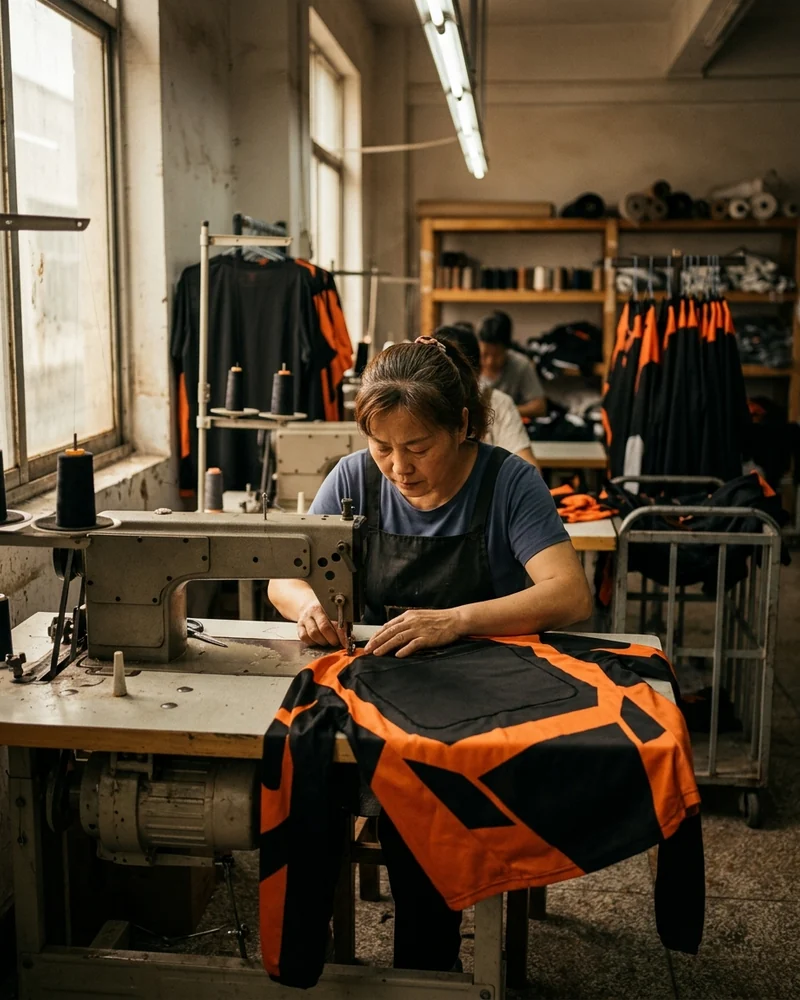
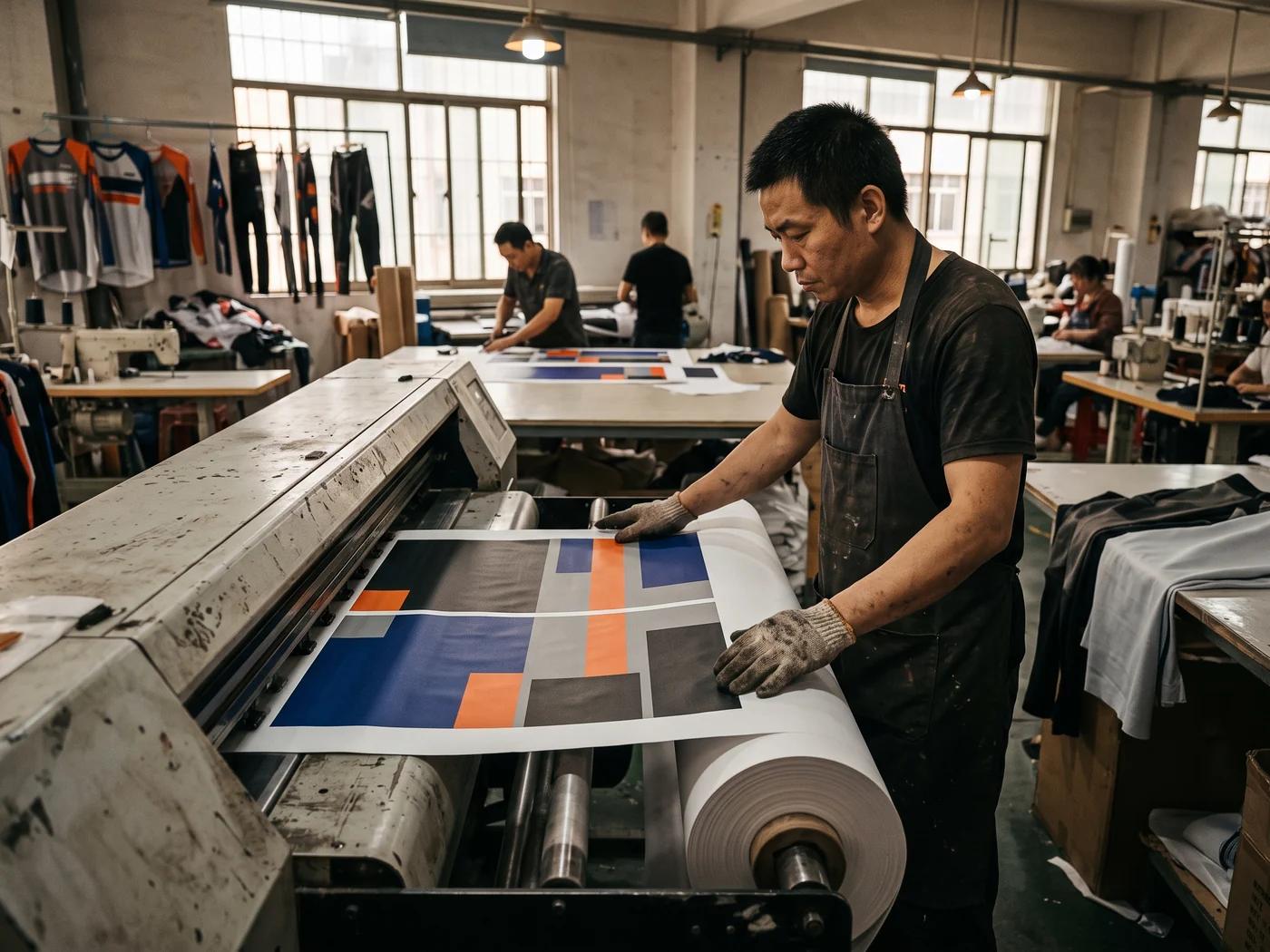
During production, every order then passes a three-stage inspection: at the start of the line, mid-line after the first 20% of the batch is sewn, and a final check where names and numbers are read against the roster before each rider's set is bagged. The sublimation printing process page covers how color is checked against the saved profile on each run.
What to Keep on File for Riders Who Join Mid-Season
New riders arrive after the season starts, and their kit has to match jerseys that have already been through weeks of mud and washing. That only works if the team's color profile and layout are saved from the first run.
Each team's sublimation color profile is archived after the first order, so a repeat run for new members can be turned around in about 15 days and printed against the same reference. A typical case: a motocross club orders a season kit of 60 sets of jerseys, pants and gloves, then adds 8 new members mid-season from the saved profile, and the new jerseys line up with the originals on the start gate.
On your side, keep three things together: the approved layout, the final roster, and a note of any sponsor changes agreed during the season. Sending those with a reorder request removes nearly every question the design desk would otherwise have to ask.
A Pre-Order Checklist for Team Managers
- Roster with rider name, number, jersey size, pant waist and inseam, and glove size for every rider
- Youth and women's riders flagged on the roster
- Sizes taken over chest protectors, knee braces and boots
- Number style, name placement and sponsor tiers decided
- Vector artwork and color references for every sponsor
- The date the kit must be at the track, and one person who approves
- Time in the plan to try the size-run set before bulk
If a quality issue does turn up after delivery, report it within 7 days with photos; the decision to repair, remake or replace is made within one business day of the issue being confirmed. With the checklist above complete, that call is rarely needed.
FAQ
Can riders in different classes share one team design?
Yes. Youth, adult and women's riders can wear the same graphic and color profile; only the pattern block and size change, and the roster flags which block each rider needs.
What if a rider's size changes after the sample?
Update that rider's line on the roster when you approve the size-run set. Changes at that stage are simple; changes after bulk production mean remaking the piece.
Do new members mid-season get the same colors?
Yes. The team's sublimation color profile is saved after the first run, and repeat orders are printed against it, typically in about 15 days.